Tanzania: safari, the ocean, and the geographical myth of East Africa
There are countries that one simply visits, and others that exist first and foremost in the imagination. Tanzania belongs to the latter category. Long before becoming a tourist destination, it was for generations of Europeans a mental construct nourished by explorers’ accounts, photographs of animals roaming the savanna, and literary pages that transformed East Africa into an almost metaphysical landscape. It is the scenery of infinite horizons dotted with acacia trees, of vast herds moving across the plains, and of red dirt tracks cutting through the savanna.
In reality, Tanzania is far more complex than the myth that surrounds it. From a geographical perspective it is one of the most diverse countries in the entire African continent. Within a few hundred kilometers the landscape shifts from the savannas of the Serengeti to the tropical forests of the mountains, from the great volcanic calderas of the highlands to the coral reefs of the Indian Ocean. This variety makes the country a surprisingly complete destination: safaris among Africa’s large mammals, diving in still relatively uncrowded marine environments, and historic cities shaped by the Swahili culture and by the intertwining of Arab, African, and Persian influences.
For travelers who prefer a slower and more analytical approach, Tanzania also offers an interesting case study in the overlap between natural landscape and cultural construction. Much of the way we imagine the African savanna today derives precisely from these territories of East Africa. The Serengeti, the Ngorongoro Crater, and the vast northern plains have ultimately come to define the very iconography of the safari.
This travel guide to Tanzania collects my posts dedicated to Tanzania (it therefore does not cover places I have not visited, such as Zanzibar or Pemba) and attempts to offer a comprehensive view of the country by weaving together three dimensions that are rarely discussed together: the safari experience, wildlife photography, and the marine world of the Indian Ocean.
Tanzania from a social and economic perspective
From a social and economic standpoint, Tanzania is one of the most populous countries in East Africa, with roughly 65 million inhabitants belonging to more than 120 different ethnic groups. The overwhelming majority of the population is of Bantu origin and lives in rural settings, where the economy remains strongly tied to subsistence agriculture, pastoralism, and small-scale local trade.
The main cities, Dar es Salaam, the former capital and still the country’s economic center; Dodoma, the current administrative capital; and Arusha, the gateway to the northern safari parks, represent the nodes of an economy that has been gradually expanding in recent decades. Growth is driven primarily by tourism, mining (especially gold and tanzanite), and export-oriented agriculture, including coffee, tea, and cashew nuts.
Politically, Tanzania is generally considered one of the relatively more stable countries in sub-Saharan Africa. After gaining independence from British colonial rule in 1961, the country was led by Julius Nyerere, a central figure in Tanzania’s national history. Nyerere promoted a model of African socialism known as ujamaa, based on agricultural cooperatives and a strong emphasis on national unity. Although this economic system eventually revealed significant structural limits, it played an important role in forging a relatively cohesive national identity in a country marked by considerable ethnic and linguistic diversity.
Today the Swahili language performs precisely this unifying function, allowing very different communities to share a common political and cultural space.
Among the groups best known outside Africa are the Maasai, a semi-nomadic pastoral population living between northern Tanzania and southern Kenya. Over time the Maasai have become a sort of iconic symbol of East Africa, with their pastoral way of life, their traditional red garments, and a culture deeply centered on cattle herding.
Their contemporary situation, however, is far more complex than the romantic imagery often associated with them. The creation of large national parks and conservation areas, such as Serengeti and Ngorongoro, has frequently imposed restrictions on traditional grazing lands, generating tensions between local communities and wildlife conservation policies. In recent decades the Tanzanian government has attempted to balance tourism development, environmental protection, and the rights of local populations, although the relationship remains delicate and at times controversial, particularly in regions where the growth of international tourism increases the economic value of land.
For the visitor, this social context serves as a reminder that the seemingly “wild” landscapes of safari imagery are in reality inhabited and managed by human communities that have coexisted with these ecosystems for centuries, long before they became one of the world’s most powerful travel myths.
The Landscape of Tanzania: A Geography of Ecosystems
To truly understand Tanzania, one must begin with its physical structure. The country lies along the system of the Great Rift Valley, the vast geological fracture that runs through East Africa from north to south and that, over millions of years, has shaped the territory by giving rise to plateaus, volcanic calderas, lake basins, and wide plains. This long geological process has produced a remarkably varied landscape in which volcanic uplifts, depressions, and gently undulating surfaces alternate, creating one of the most complex natural mosaics on the African continent.
The northern part of the country hosts the so-called Northern Safari Circuit, a network of national parks and protected areas that together form one of the richest wildlife ecosystems in the world. In this region lie places that have long entered the collective imagination of African travel: the Serengeti, which continues seamlessly across the Kenyan border into the Masai Mara; the imposing Ngorongoro caldera; the baobab-dotted savannas of Tarangire; and Lake Manyara, set between the escarpment of the Rift Valley and the surrounding plains.
Toward the east the land gradually descends toward the coast of the Indian Ocean, where a long coastal strip is characterized by mangroves, coral reefs, and tropical archipelagos. The islands of Zanzibar, Pemba, and Mafia represent the natural marine extension of East African ecosystems, a world made of coral reefs, lagoons, and currents rich in life.
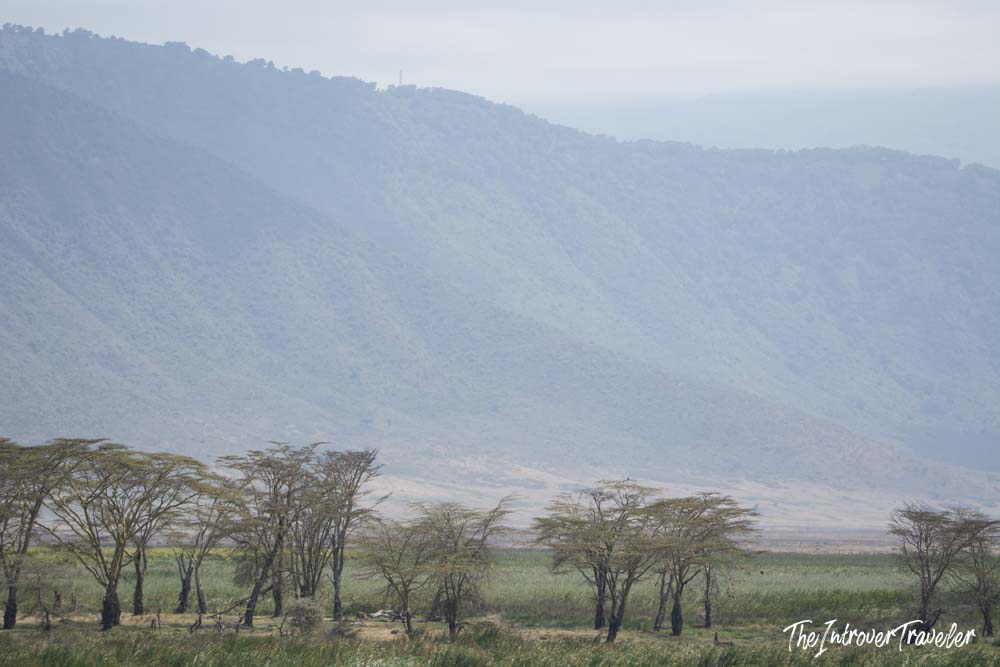
Inland, the central plateau stretches as a vast gently sloping surface interrupted by ancient volcanoes and depressions that over time have turned into lakes or fertile alluvial plains. Among the most spectacular geological forms are Mount Kilimanjaro, the highest mountain on the African continent, and the Ngorongoro Crater, an immense caldera generated by the collapse of a prehistoric volcano. Around these structures extend great expanses of savanna shaped by the seasonal alternation between rains and periods of drought.
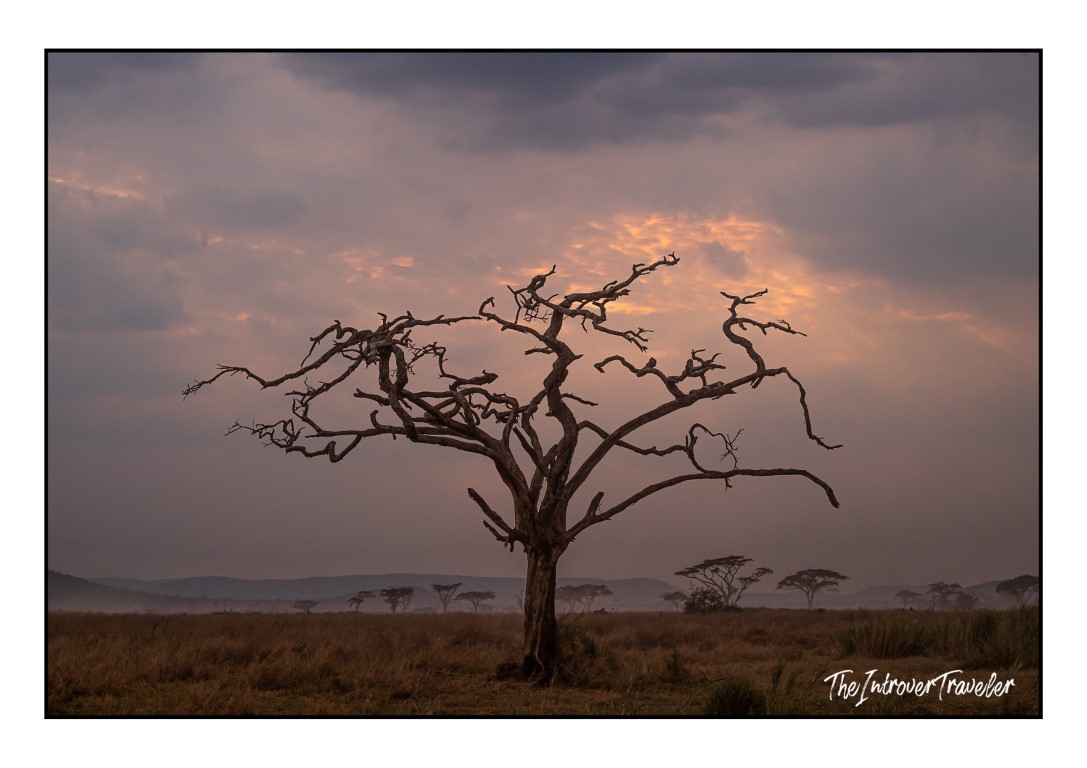
From a botanical perspective, the landscape is dominated by grassy savanna, where wide prairies of grasses are interrupted by isolated trees that punctuate the horizon. Acacia trees, with their broad flattened crowns, are probably the most recognizable image of these environments. In some regions the monumental baobabs also appear, trees of almost surreal forms capable of storing large quantities of water in their trunks and surviving for centuries.
Vegetation varies progressively with altitude and water availability. In the driest areas sparse grasslands and drought-adapted shrubs dominate, while along rivers and in lacustrine environments denser bands of vegetation develop, attracting a high concentration of wildlife. As elevation increases toward the mountains and higher plateaus, the savanna gradually gives way to denser and more humid tropical forests.
It is precisely this interplay between geology, climate, and vegetation that makes the Tanzanian landscape so distinctive. It is not a uniform wilderness but a dynamic system in which even slight variations in soil, altitude, or humidity can radically transform the appearance of the environment. From this complexity emerges the extraordinary biodiversity that has made Tanzania one of the most emblematic landscapes on the African continent.

Travel Impressions
Leaving Arusha, and even before crossing the border from Kenya, the landscape appears barren, flat, and repetitive, punctuated from time to time by small villages of corrugated-metal shacks stretching along the roadside, where locals carry out small essential commercial activities. Occasionally, along the endless straight roads, groups of Maasai can be seen walking along the edges of the road in their distinctive colorful garments.
On the main roads connecting Arusha to the national parks the asphalt is excellent and the journey is comfortable. I had often read online about the so-called “African massage”, the torment supposedly inflicted by the constant bouncing of the vehicle on rough roads, but apart from a few rare exceptions the dominant sensory experience during transfers is the deafening roar of the car rather than any involuntary massage.
The economic conditions of the local population appear relatively decent and one does not generally witness scenes of degradation. People are usually friendly toward tourists, and many understand English reasonably well.
In Arusha, the closest thing to a metropolis that I visited, the atmosphere is rather picturesque and curious. The prevailing clothing seems strikingly heavy relative to the climate, as if the local winter were perceived with a degree of severity somewhat disproportionate to the more typical African weather. In general people appear meticulously groomed, with a visible inclination toward vanity and an evident indulgence in exuberant colors. Unlike Westerners, who are systematically pushed toward standardization by marketing and social conventions, individuality here is expressed vividly through clothing, which displays an astonishing variety.
Moving through the city one encounters motorcycles equipped with umbrellas, sofas tied to rooftops, cows wandering through traffic, wheelbarrows of fruit, decaying buildings, colossal factories, cemeteries of tuk-tuks, welders assembling iron gates, a man cutting a motorcycle in half by sheer force, vegetable gardens, sheets of metal, and majestic hump-backed cattle. It seems as if there were no limit to the countless variations in which reality can manifest itself. Existence here unfolds in a way that feels entirely different from the Western world.
Another realm where heterogeneity proliferates is the infinite variations on the concept of the motorcycle or the tuk-tuk. It almost seems as though the elementary concept of a motorcycle had been handed to Africa on a blank musical score, upon which the continent then built endless jazz improvisations. Motorcycles carry spears, refrigerators, livestock, wardrobes, explosives, nuclear waste, limited only by creativity, which appears inexhaustible judging by the colors and decorations with which each vehicle is customized in order to distinguish itself from every other possible motorcycle.
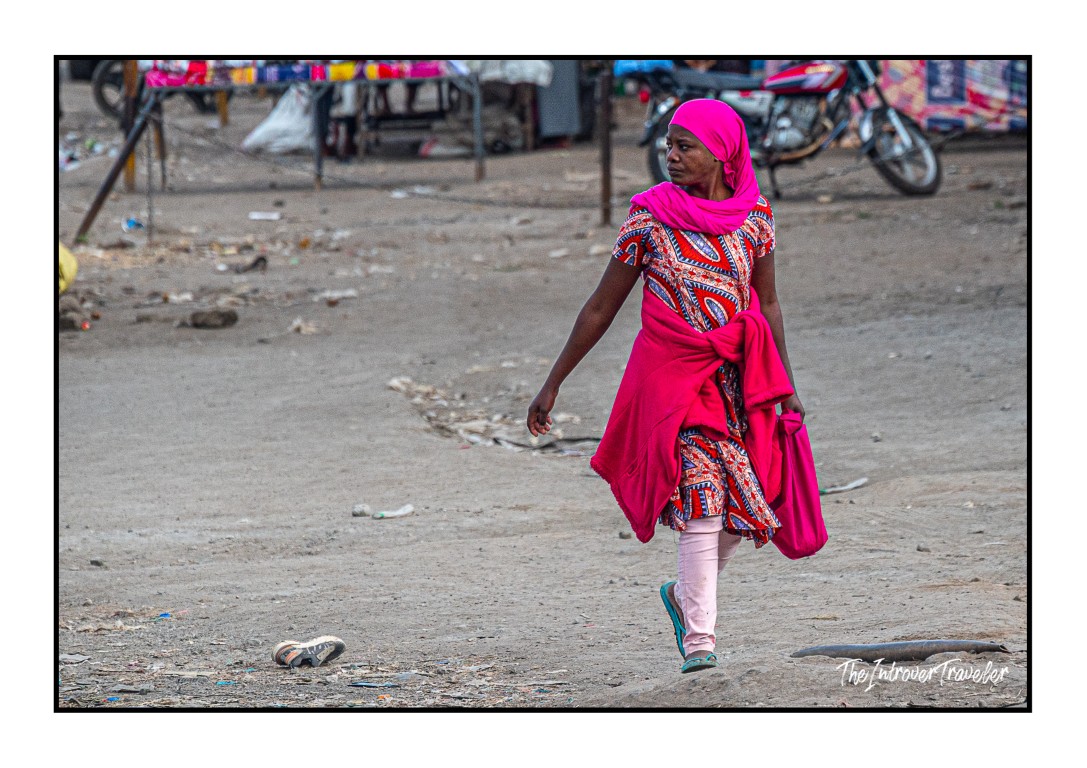
The same creativity seems to apply to traffic circulation and overtaking, which appear governed by unwritten conventions. Yet the flow of traffic somehow functions according to a kind of solidary anarchy, orchestrated by some invisible deus ex machina that coordinates events so that, inexplicably, accidents rarely occur. Or perhaps, more prosaically, everyone possesses a different perception of death as an inevitable event, which ultimately shapes the flow of traffic according to a large-scale manifestation of chaos theory. In any case, it is paradoxical that the people of “pole pole” (the famous Swahili expression for “slowly, slowly”) feel this constant urgency to overtake at all costs.
In everyday activities people seem animated by a peculiar form of industrious idleness. While one man works intensely with a welding machine, three others (this ratio seems almost constant) sit nearby watching him from car seats placed directly on the dirt. One wonders whether from time to time they rotate their respective roles of labor and leisure.
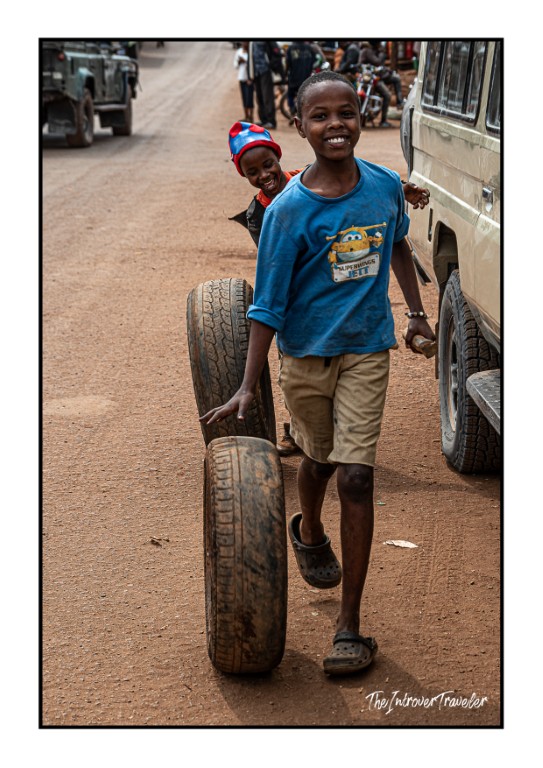
Another aspect that even the least attentive observer cannot fail to notice is that people tend to be remarkably smiling. It made me wonder whether, compared to me, who must often appear gloomy or unfriendly to an outside observer, they might simply be more serene and content.
Finally, since no discussion of Africa seems able to avoid them, I will briefly acknowledge here a few of the common clichés and stereotypes that circulate in Western discourse: Africa as the cradle of civilization, the “dark continent,” colonialism and the myth of the noble savage, Africans endowed with an innate sense of rhythm and extraordinary sexual prowess. Having mentioned them, we may now consider them dealt with.
Safari in Tanzania: The Great Theater of the Savanna
The safari is naturally the experience that has made Tanzania famous. The Northern Circuit connects some of the most important protected areas on the entire African continent and offers a concentration of wildlife that is difficult to match elsewhere. In just a few days of travel one moves through different ecosystems and has the impression of entering a vast natural system that remains relatively intact, where the dynamics between predators and prey still unfold according to ancient rhythms.
The great plains of the Serengeti represent one of the most spectacular ecosystems on the planet. This immense expanse of savanna covers roughly 15,000 square kilometers and hosts one of the largest concentrations of wild mammals on Earth. Every year the Great Migration takes place here, the cyclical movement of millions of wildebeest and zebras that cross the savanna following the rains in search of fresh grazing grounds. During this extraordinary natural phenomenon enormous herds move slowly along the horizon, forming columns of animals that can extend for kilometers. Alongside wildebeest and zebras one often encounters large groups of Thomson’s gazelles and Grant’s gazelles, smaller and lighter animals that exploit the same pastures.
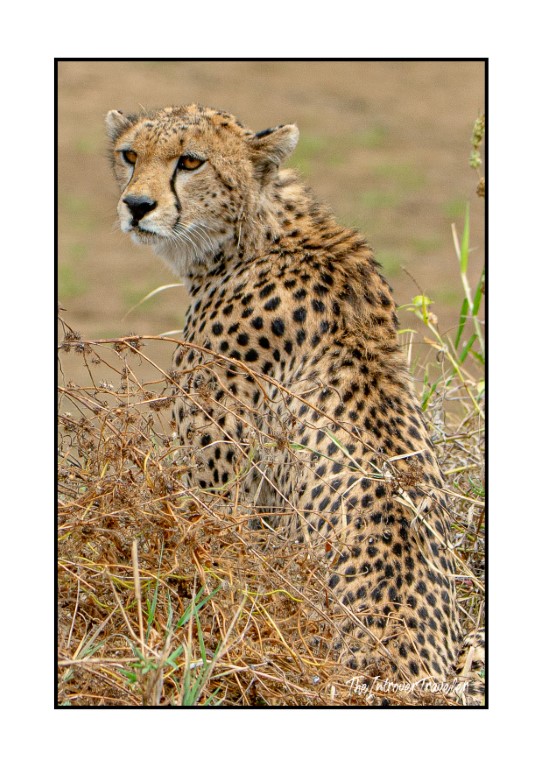
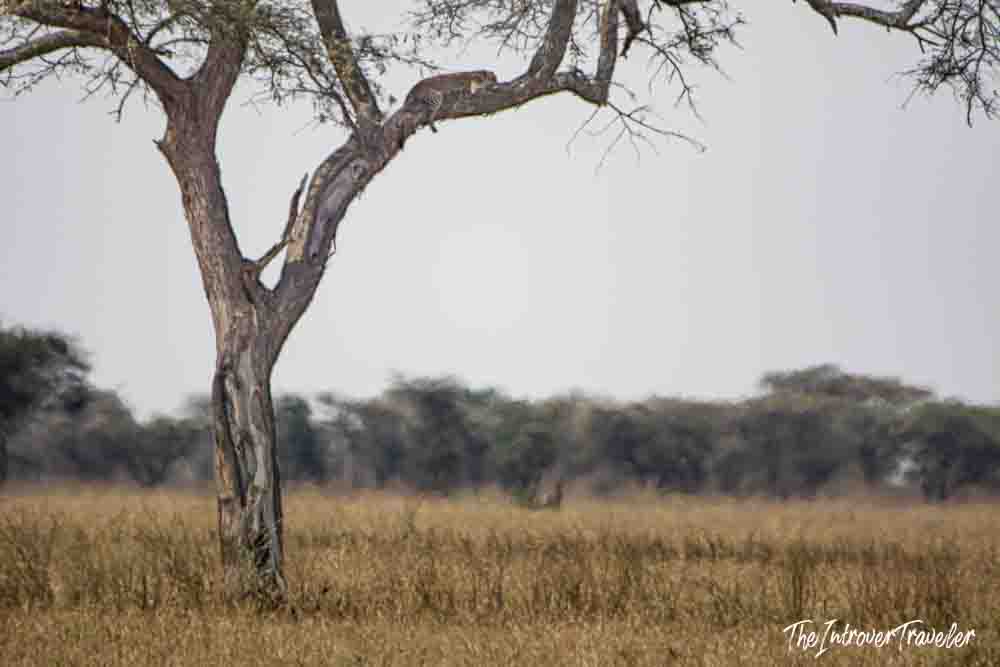
This remarkable abundance of herbivores naturally sustains an equally important population of predators. The Serengeti is one of the best places in the world to observe lions, often lying in the shade of acacia trees during the hottest hours of the day or engaged in hunting activities at dawn and dusk. Leopards, solitary and elusive animals, are also occasionally seen, spending much of their time resting in trees to protect their prey from other carnivores. Across the open plains one may also encounter cheetahs, perfectly adapted to the wide savanna landscape. Alongside these major predators live spotted hyenas, servals, and jackals, intelligent opportunists that play an essential role in maintaining the balance of the ecosystem.
The Ngorongoro Crater, by contrast, is a gigantic collapsed volcanic caldera that forms a nearly closed ecosystem. Its natural walls enclose a fertile plain where water and grazing are available throughout the year. This relative isolation has created an extraordinary density of wildlife. Numerous prides of lions can be easily encountered here as they patrol their territory. Ngorongoro is also one of the few places in the region where it is still possible to spot the black rhinoceros, a rare and protected species that survives in small numbers thanks to particularly strict conservation programs.
Parks such as Tarangire and Lake Manyara complete this ecological mosaic with distinct environments. Tarangire is famous for its large elephant herds, which during the dry season concentrate along the river that crosses the park. The landscape here is dominated by monumental baobabs and by acacia woodlands inhabited by giraffes, African buffalo, impalas, and kudu.
Lake Manyara, by contrast, offers a completely different environment. The alkaline lake attracts thousands of waterbirds, including spectacular flocks of flamingos that tint the shallow waters pink. In the forests surrounding the lake one may encounter baboons, vervet monkeys, and occasionally the famous tree-climbing lions, known for their unusual habit of resting on tree branches—a behavior observed here as well as in Tarangire.
During a safari the most striking sensation is not merely the number of animals but the way in which they are embedded within the landscape. Giraffes move slowly among the acacias like elongated silhouettes against the horizon, elephants advance silently through the grasslands raising clouds of red dust, and the great herds of ungulates transform the savanna into a living organism in motion. In my travel narrative I tried to describe precisely this immersive dimension of the safari, the way in which the landscape and the constant presence of animals gradually reshape one’s perception of space and time.
You might want to read my post dedicated to the experience of a safari in Tanzania.
Safari Photography: Observing Before Photographing
A safari is also an intensely visual experience. The light of East Africa, especially during the early morning and late afternoon, creates ideal conditions for wildlife photography. Yet photographing wild animals is not simply a matter of equipment.
Wildlife photography requires patience and, above all, observation. Animals move according to rhythms that do not always coincide with those of the visitor. Often the difference between a mediocre photograph and a memorable image lies precisely in the ability to anticipate an animal’s behavior or to recognize the moment when a scene acquires an interesting visual structure.
From a technical perspective, the use of telephoto lenses is almost indispensable. Animals must be observed from a distance for reasons of safety but also out of respect for their habitat. Fast shutter speeds help freeze movement, while the low-angle light of early morning produces images that are more three-dimensional and less visually flat.
I have collected several practical suggestions in my post dedicated specifically to safari photography.
Beyond the Savanna: The Indian Ocean and Diving in Tanzania
Tanzania is not only about savannas. Along the coast of the Indian Ocean stretches a system of coral reefs that remains relatively little visited by international diving tourism.
The most famous island is naturally Zanzibar, known primarily for its historical role in the commercial routes of the Indian Ocean and for its deep connection with Swahili culture. From a natural perspective, however, the lesser-known Mafia Island archipelago is probably one of the most interesting destinations. It does not offer the postcard-perfect Instagram scenery of white sand beaches and crystalline water typical of Zanzibar, but it is more authentic and, above all, far less affected by mass tourism.
Mafia hosts a marine protected area with remarkably well-preserved coral reefs and impressive biodiversity. The currents of the Indian Ocean bring nutrients that sustain an ecosystem rich in reef fish, sea turtles, and occasionally large pelagic species.
The island is also one of the few places where whale sharks, the largest fish in the ocean, can be observed with relative regularity during certain seasons.
When to Visit Tanzania
The best time to visit Tanzania depends largely on the type of experience one is seeking.
The dry season, between June and October, is generally considered the best time for safaris. Vegetation is less dense and animals tend to concentrate around water sources, making wildlife easier to observe. The climate is also pleasant, averaging around 28°C during the day, while nights remain comfortably cool.
Between January and March, the wildebeest calving season takes place in the southern Serengeti. From a naturalistic perspective this is a particularly fascinating period, as thousands of newborn animals attract a high concentration of predators.
As for diving in the Indian Ocean, many areas offer favorable conditions especially between October and March, when the sea is generally calmer. I visited Mafia Island in August, when diving was possible only inside the coral reef lagoon. I was told that the dives in the open ocean, beyond the barrier, can be spectacular, but they are generally accessible only during the local summer months. In any case, the dives in Chole Bay exceeded my expectations and turned out to be far more interesting than I had anticipated.
Tanzania travel guide: Practical Advice
From a practical standpoint, organizing a trip to Tanzania is relatively straightforward, although it requires a few preliminary considerations. The main international airports are Kilimanjaro International Airport (JRO), which serves the northern safari region; Dar es Salaam (DAR) on the coast of the Indian Ocean; and Zanzibar (ZNZ) for travelers heading primarily to the archipelago. It is also worth considering the possibility of flying into Nairobi (NBO) and then crossing the border by car.
For those planning to visit Serengeti, Ngorongoro, or Tarangire, the most logical option is to fly into Kilimanjaro, usually with a connection in Europe or the Middle East, for example Addis Ababa, Doha, or Istanbul. From there, most safaris depart from the city of Arusha, widely considered the gateway to the parks of the Northern Circuit.
For the islands of the Indian Ocean, travelers usually fly into Dar es Salaam or directly to Zanzibar, possibly continuing with small (and thrilling) domestic flights to Mafia Island or other coastal destinations. You might want to check now the available flights.
From a climatic perspective, Tanzania has a tropical climate with two main seasons: the dry season, generally between June and October, and the rainy season, which includes short rains between November and December and a heavier rainy period between March and May.
For safaris, the dry season is often preferable because the vegetation is less dense and animals gather around water sources, making sightings easier. Temperatures in the savanna regions are generally high during the day but can drop noticeably in the early morning and evening, especially on the highlands around Arusha and Ngorongoro.
For this reason it is advisable to dress in layers, wearing light but covering clothing during the day and bringing a jacket or fleece for the cooler hours. Neutral colors such as beige, khaki, or olive green are preferable, as they blend better with the environment and attract fewer insects than bright colors. A hat, sunglasses, and sunscreen are recommended, though not strictly necessary during the dry season. As for footwear, ordinary sneakers are sufficient, possibly accompanied by sandals or flip-flops that can be quickly removed, since during a safari a significant amount of time is spent standing on the seats of the vehicle.
From a health perspective, it is always advisable to consult a physician or a travel medicine clinic before departure. Several vaccinations are generally recommended for travelers to East Africa, including hepatitis A, hepatitis B, and typhoid, while yellow fever vaccination may be required if arriving from countries where the disease is endemic.
In many areas of Tanzania malaria is present, so prophylactic medication is often recommended, combined with insect repellent and clothing that covers arms and legs during the evening hours. It is also useful to bring a small travel medical kit containing basic medications, disinfectant, bandages, and any personal prescriptions.
From a logistical perspective it is important to remember that services within national parks are limited and distances can be considerable. It is therefore advisable to organize safaris through reliable operators and to rely on experienced local guides. Despite these precautions, Tanzania remains a relatively accessible and safe destination for travelers with a modest degree of preparation, and it is precisely this balance between adventure and organization that makes the safari experience particularly compelling.
Why Tanzania Remains a Unique Destination
There are many places in Africa where one can go on safari. There are many tropical islands where one can dive. There are also numerous countries with fascinating cultural histories.
Tanzania is one of the few places where all these dimensions coexist within the same geographical space.
Within a few days it is possible to move from a volcanic crater inhabited by lions to a coral reef in the Indian Ocean, crossing landscapes that have helped shape the very imagination of African travel.
For this reason Tanzania remains, more than a simple tourist destination, a kind of mental landscape, one of those places where the myth of travel and geographical reality ultimately overlap.
Further Reading: more posts, books (and music)
This page serves as an introduction to Tanzania. If you are interested in exploring the topic further, or if you are planning a trip, you may find the following posts useful:
- My guide to safaris in Tanzania: Arusha National Park, Lake Manyara, Tarangire, Serengeti and Ngorongoro
- My guide to safari photography
- My guide to Mafia Island: diving and whale shark snorkeling
- An in-depth article on the appropriation of Maasai land for the benefit of Saudi investors
Among the books I recommend reading before or during the trip are:
- Out of Africa by Karen Blixen (here is my review);
- Heban by Ryszard Kapuścinski;
- Dark Star Safari: Overland from Cairo to Cape Town by Paul Theroux;
- A Tourist in Africa by Evelyn Waugh;
- The Green Hills of Africa by Ernest Hemingway;
- In the Shadow of Man by Jane Goodall;
- Paradise by Abdulrazak Gurnah;
- The Tree Where Man Was Born by Peter Matthiessen;
- Serengeti: The Eternal Beginning by Nigel Pavitt.
As for music, to get into the African mood before the trip I listened a lot to Graceland by Paul Simon and to Ladysmith Black Mambazo.
A Few Essential Swahili Words
Swahili is one of the most widely spoken languages in East Africa and serves as a linguistic bridge between dozens of cultures along the Indian Ocean coast. When traveling through countries such as Tanzania or Kenya, learning a few basic expressions is not only useful but also appreciated by locals. The most common greeting is “Jambo” (hello), though “Habari?” (how are you?) is even more typical in everyday conversation. A polite reply is “Nzuri” (fine) or “Nzuri sana” (very well). Gratitude is expressed with “Asante” (thank you), often intensified as “Asante sana” (thank you very much). If you need to ask for something, “Tafadhali” means “please,” while “Karibu” literally means “welcome” but is also used to invite someone to come closer or to accept hospitality. Finally, when saying goodbye, you will hear “Kwaheri.”