Last visit: June 2025
My rating: 10/10
Length of visit: one hour
When I travel, I always fall – repeatedly – into the same bias. Before leaving, I study, I read, I watch YouTube videos, and in doing so I build a mental image of the places I am about to visit, inevitably feeding expectations. Often, the places I actually encounter do not match those expectations, and this generates, depending on the case, wonder, frustration, surprise, discomfort, hesitation. Only afterward do I reprocess the places as they truly are, and the previous expectations dissolve. Probably nowhere has this phenomenon occurred as strongly as in Istanbul.
The more I travel, the more I am convinced that the most extraordinary place in the world is the city of Rome, whose beauty and complexity are incomparable. As I prepared to visit Istanbul, the ancient Constantinople, the Rome of the East, I expected to find a second Rome, more exotic and oriental. This expectation was completely frustrated, because very little of Constantinople remains in Istanbul. At first, therefore, I was disappointed by Istanbul, because it did not correspond in any way to the idea I had formed of the city. (Now, after visiting it twice, I adore Istanbul—for reasons entirely different from those I originally expected it to satisfy.) The Basilica Cistern is probably, with Hagia Sophia, the site in Istanbul that most strongly appeals to those who come searching for the ghost of the ancient capital of the Eastern Roman Empire.
Visiting the Basilica Cistern means entering one of the places where Roman engineering, Byzantine urban vision, and the symbolic perception of subterranean space converge in an almost exemplary way. It is not merely a suggestive attraction, but a monumental infrastructure conceived to ensure the survival of the imperial city and which, over time, has become an extraordinary, unintended aesthetic machine. The Cistern deserves to be visited because it allows one to read Istanbul not only on the surface, among mosques, palaces, and Ottoman stratifications, but at its deepest, most technical and conceptual level: the one in which water, shadow, and architectural repetition become instruments of power, control, and representation.
If you are planning a trip to Istanbul you may be interested in these posts or these pictures.
This post is part of my full Istanbul travel guide.
The history of the Basilica Cistern of Istanbul (Turkey)
The Basilica Cistern was built in the 6th century AD, during the reign of Justinian I, at a crucial moment in the history of Constantinople, when the city was reaching its highest level of demographic, administrative, and symbolic complexity. The 6th century AD (500–599) lies at a temporal distance of roughly 170 to 270 years from the founding of the city. In the specific case of Justinian I’s reign (527–565), we are just under two centuries after the birth of Constantinople as an imperial capital.
This fact is historically significant: by the 6th century, Constantinople was no longer a “new capital,” but a fully mature metropolis, with a population estimated among the largest in the Mediterranean world, a complex administrative apparatus, and an urban fabric already deeply stratified. The great Justinianic projects, including hydraulic infrastructures such as the Basilica Cistern, therefore do not belong to a founding phase, but to a moment of ideological and monumental refoundation, in which the Empire sought to reaffirm its continuity with Rome and its universal vocation.
The cistern was conceived as an integral part of the sophisticated imperial water system, necessary to guarantee a constant supply of water to the Great Palace, representative buildings, and the most densely populated areas of the capital. In a city structurally vulnerable to sieges, and destined to endure many over the centuries, water was not merely a primary resource, but a strategic element of political and military survival.
The construction of the cistern must be placed in the immediate aftermath of the Nika Revolt (532 AD), which devastated large portions of the city and offered Justinian the opportunity for an extensive urban and monumental refoundation. This was the same period in which Hagia Sophia, the imperial palace complex, and numerous public infrastructures were rebuilt: the Basilica Cistern fully belongs to this broader program of reasserting imperial power through architecture. Its traditional name probably derives from its proximity to the Basilica Stoa, a late-antique public building, but also from the “basilical” character of the interior space, articulated by regular rows of columns that evoke, albeit in a subterranean and functional context, the monumentality of civic spaces above ground.
Within the broader arc of Constantinople’s history, the cistern belongs to the phase of greatest splendor of the Byzantine city, when the capital conceived of itself as Nova Roma, heir to and surpassing the Urbs. Supplied by the aqueducts of Thrace, particularly the system of Valens, the Basilica Cistern could hold tens of thousands of cubic meters of water, ensuring sufficient reserves even in the event of prolonged sieges. With the gradual decline of Byzantine administration and, later, the Ottoman conquest of 1453, the cistern progressively lost its original function, but it was never completely abandoned: it remained part of the urban subsoil, used intermittently and eventually rediscovered in the modern era, when its existence came to be understood not only as a technical infrastructure, but as material testimony to the extraordinary organizational capacity of late-antique Constantinople.
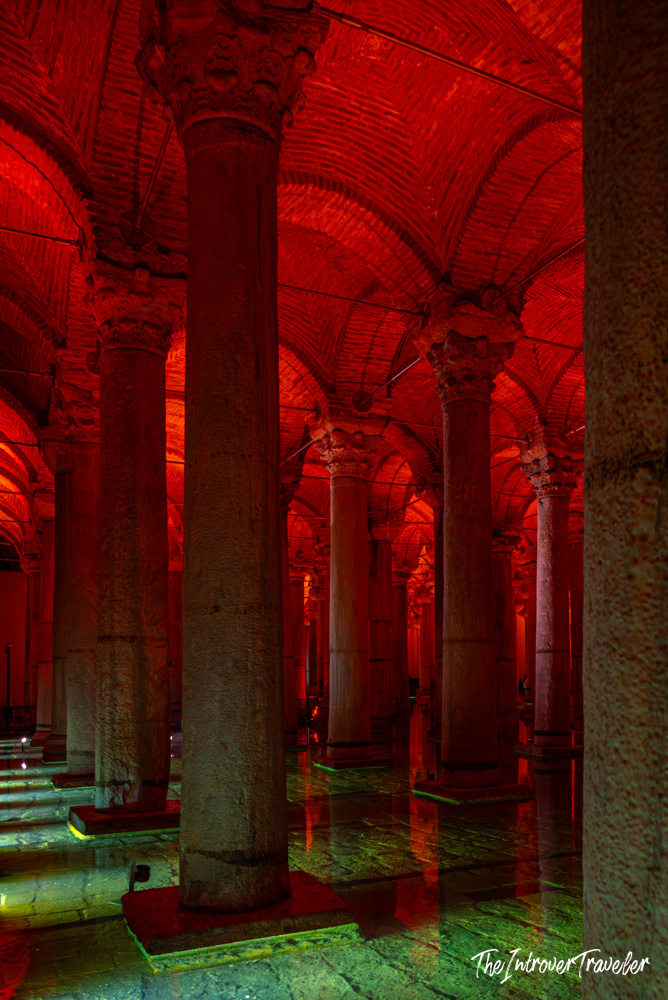
The Basilica Cistern from a technical–hydraulic perspective
From a technical and engineering standpoint, the Basilica Cistern represents one of the high points of late-antique hydraulic engineering applied to an extremely high-density urban context. The primary challenge faced by Byzantine engineers was twofold: on the one hand, to create a water reservoir of exceptional size in an area that was already heavily built up, immediately adjacent to the Great Imperial Palace; on the other, to ensure the perfect hydraulic sealing of a structure intended to hold tens of thousands of cubic meters of water, without infiltration or structural failure over the long term.
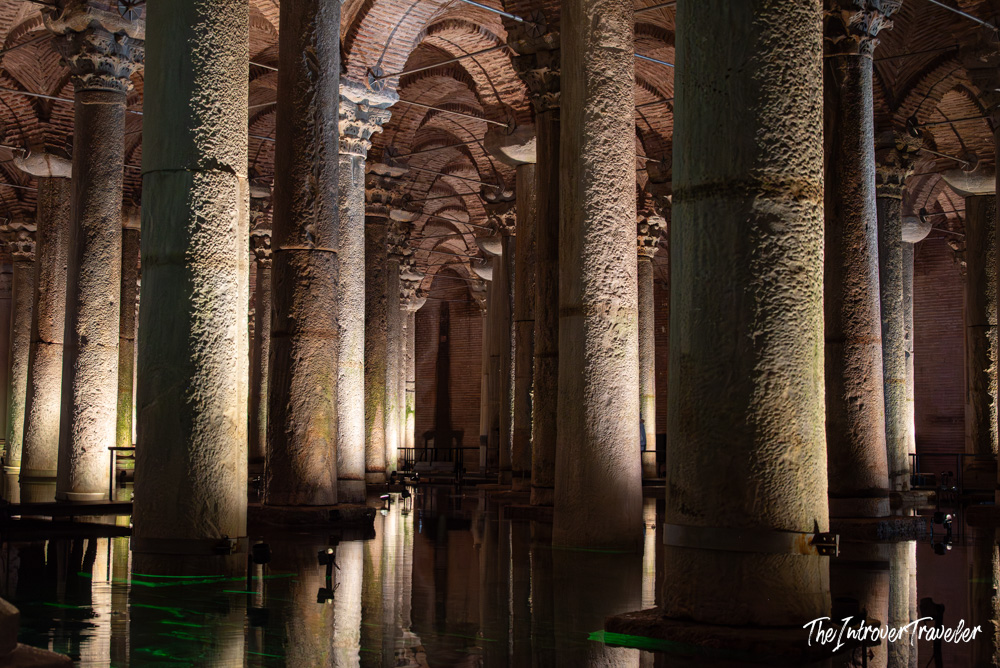
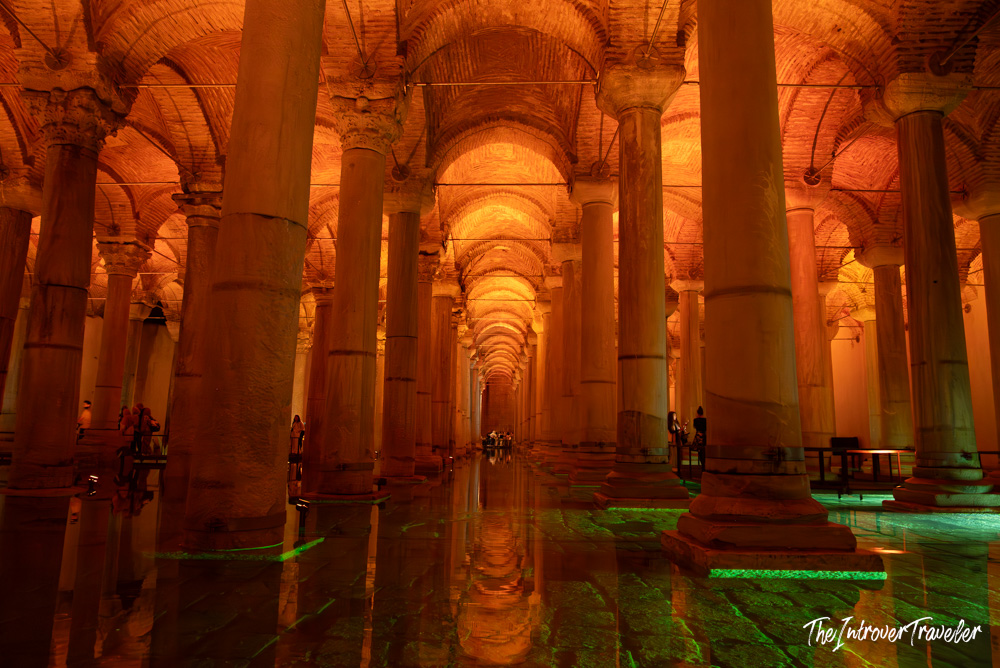
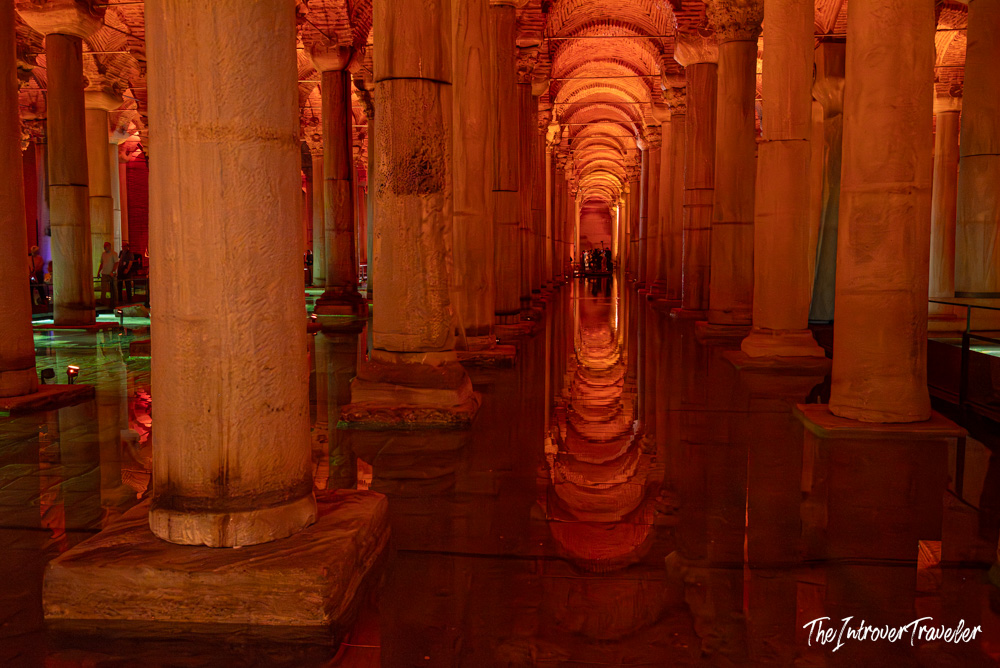
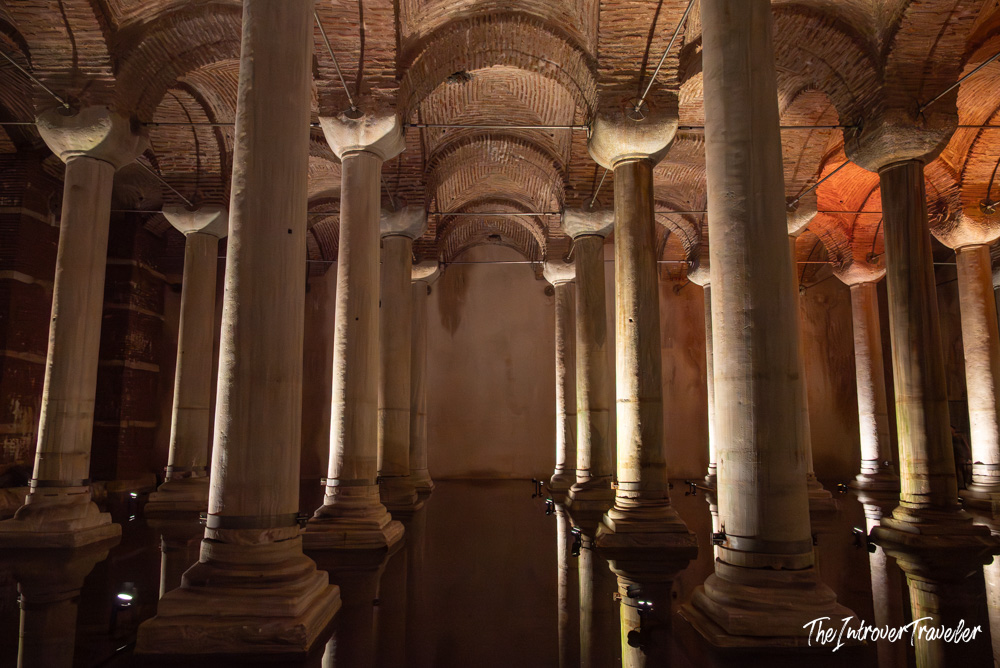
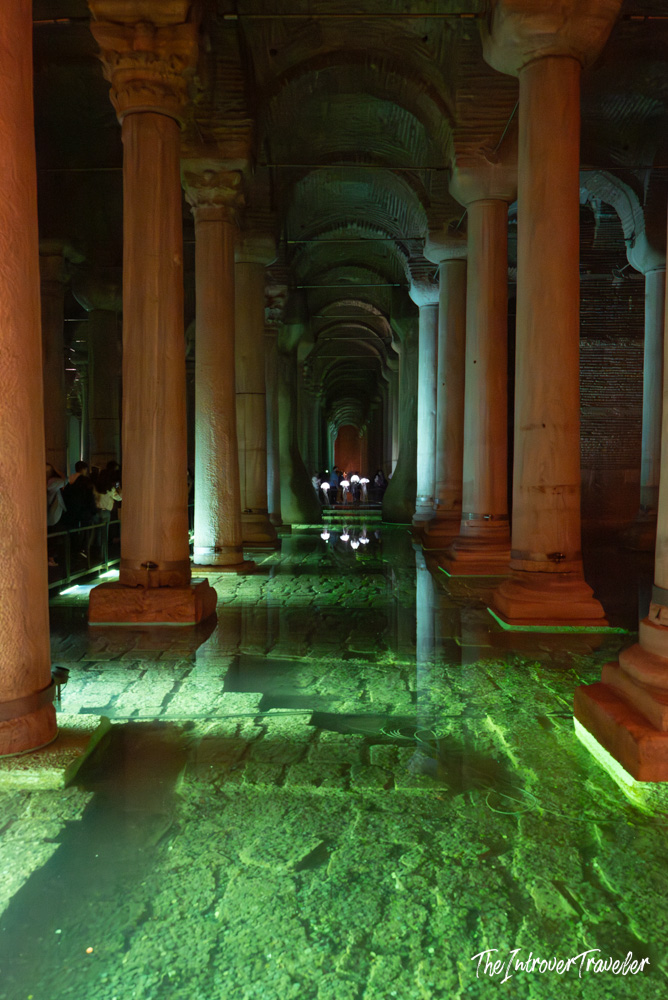
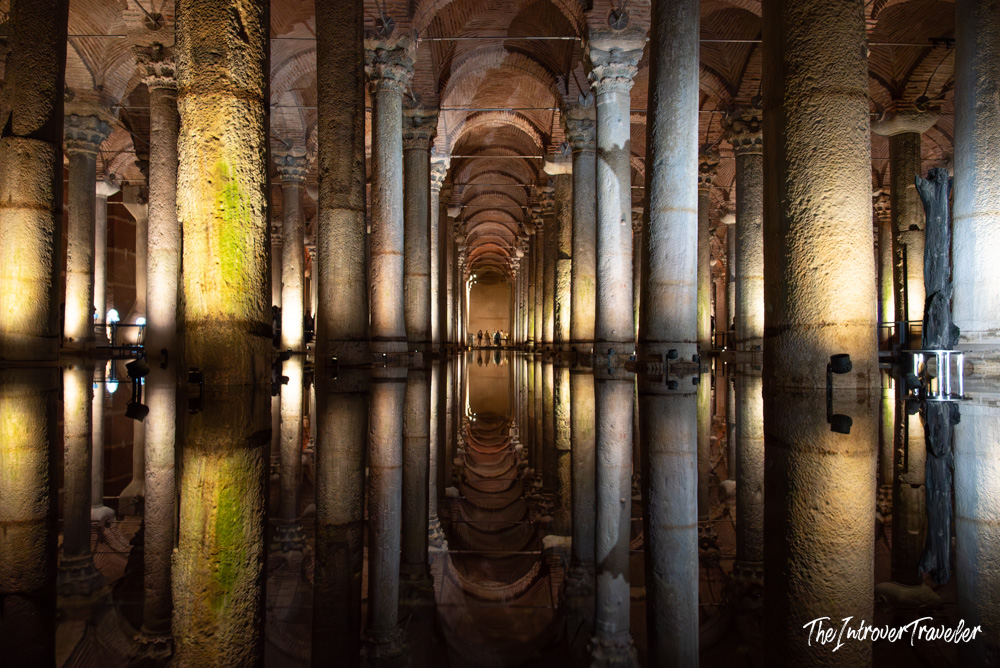
The cistern was conceived as a vast subterranean hypostyle hall, approximately 138 meters long and 65 meters wide, roofed with groin and barrel vaults supported by 336 columns arranged in 12 rows of 28 elements each. From a structural perspective, the systematic use of modular repetition is not a mere aesthetic device but a rational solution: the uniform distribution of loads reduces lateral thrust on the perimeter walls and allows the structure to adapt to irregularities in the terrain. The brick vaults, relatively light compared to solid stone, make it possible to cover large spans without massive supports, while maintaining good resistance to humidity.
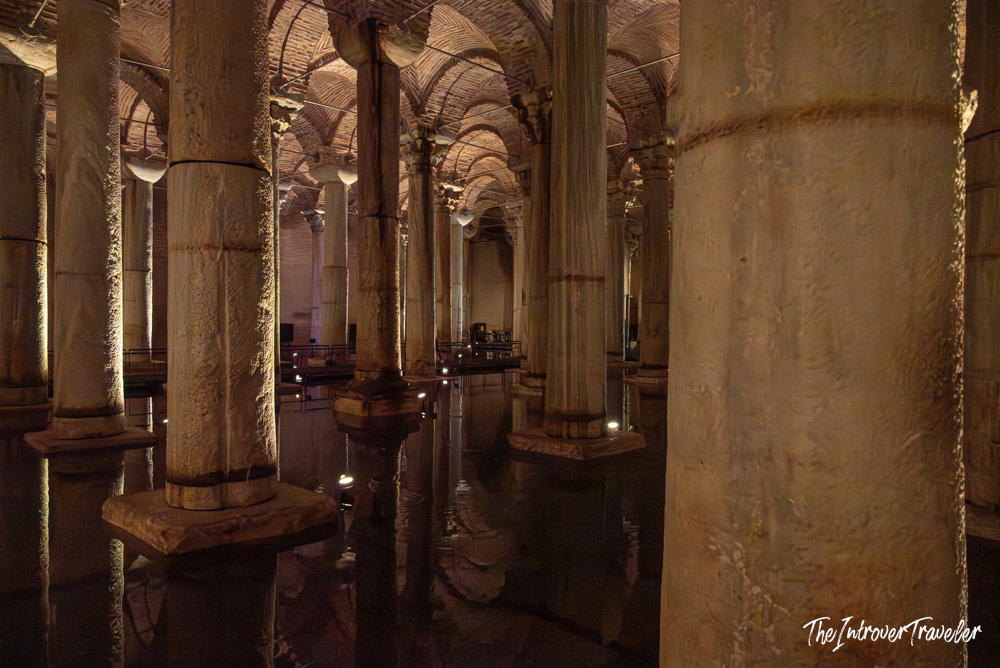
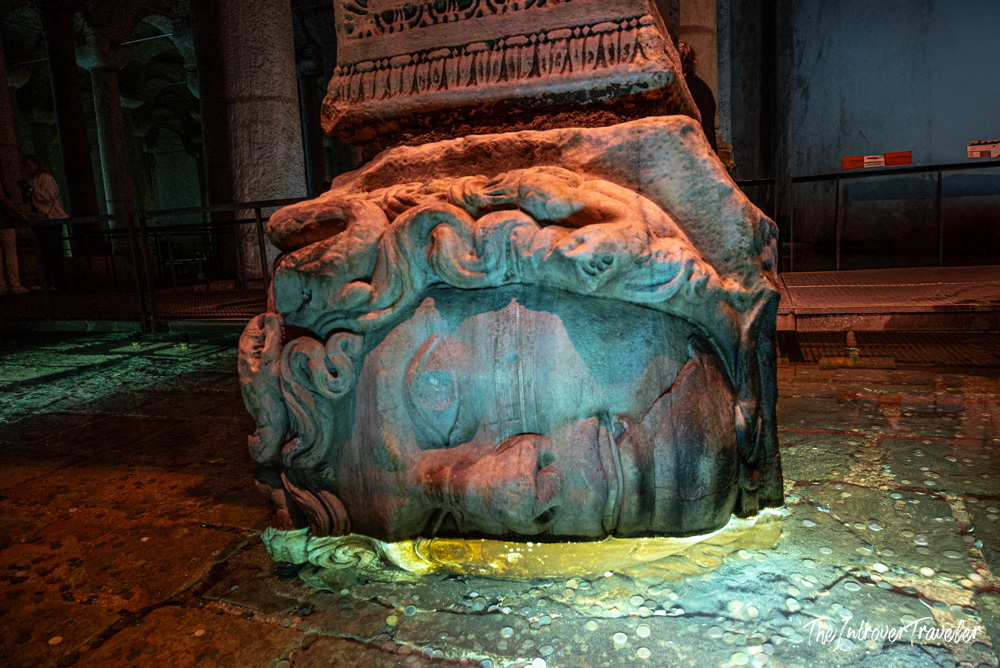
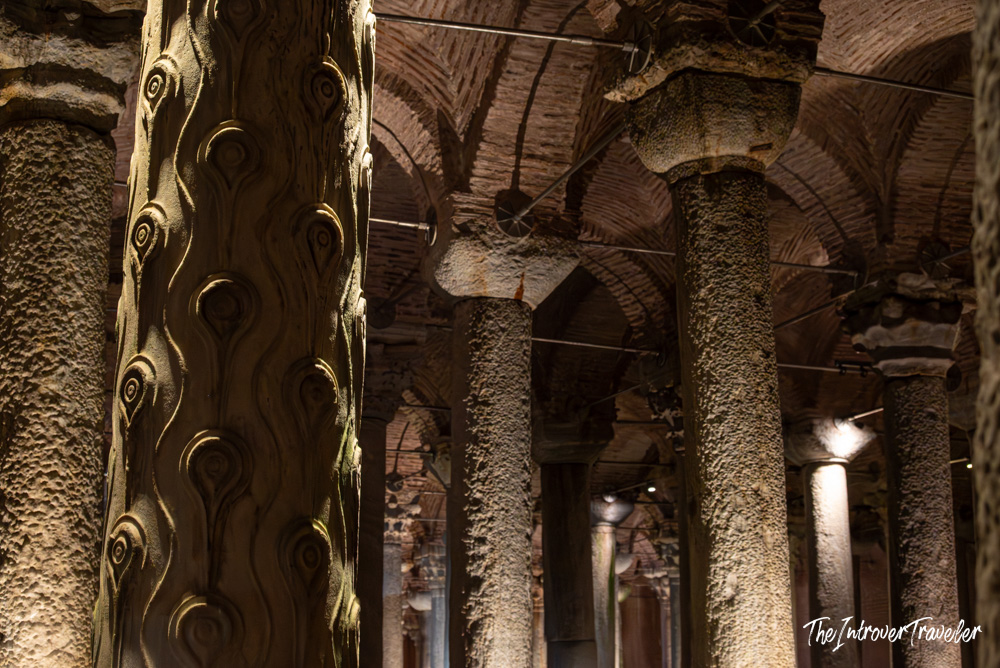
One of the most significant technical features is the extensive use of spolia, that is, reused materials taken from the demolition or dismantling of earlier buildings. These elements constitute the most striking aesthetic feature of the cistern and contribute decisively to its fascination. Nearly all of the columns, made of marbles of different origins and topped with Ionic, Corinthian, or Composite capitals, were not produced ex novo, but salvaged from Roman-period structures in the city or its immediate surroundings. This approach should not be read as a makeshift solution, but as a conscious choice typical of late-antique construction practice: reuse reduced construction time and costs, exploited elements already proven from a static point of view, and at the same time produced an effect of controlled variety that today is perceived as one of the most captivating aspects of the space. Some apparent anomalies, such as the famous Medusa heads used as column bases, rotated or inverted, are not evidence of occult symbolism, but the pragmatic result of reuse: sculptural elements adapted to new structural functions, regardless of their original orientation. In this sense, the Basilica Cistern stands as a manifesto of Byzantine engineering: not an exercise in purely celebratory monumentality, but a sophisticated functional machine capable of integrating technique, economy of materials, and spatial control with extraordinary effectiveness.
From a hydraulic point of view, the watertightness of the cistern was ensured by a thick waterproof lining of cocciopesto, applied to floors and walls—a mixture of lime and crushed ceramic fragments which, once hardened, offers excellent resistance to water. The supply system was integrated into the network of aqueducts that carried water from Thrace to Constantinople, while control of water levels and distribution was managed through channels and sluices that are now partly lost.
The spolia
As noted above, the defining characteristic of the Basilica Cistern, the feature that immediately captures the attention of any visitor and largely determines the building’s appeal, is the systematic use of reclaimed material derived from the demolition or destruction of older monuments.
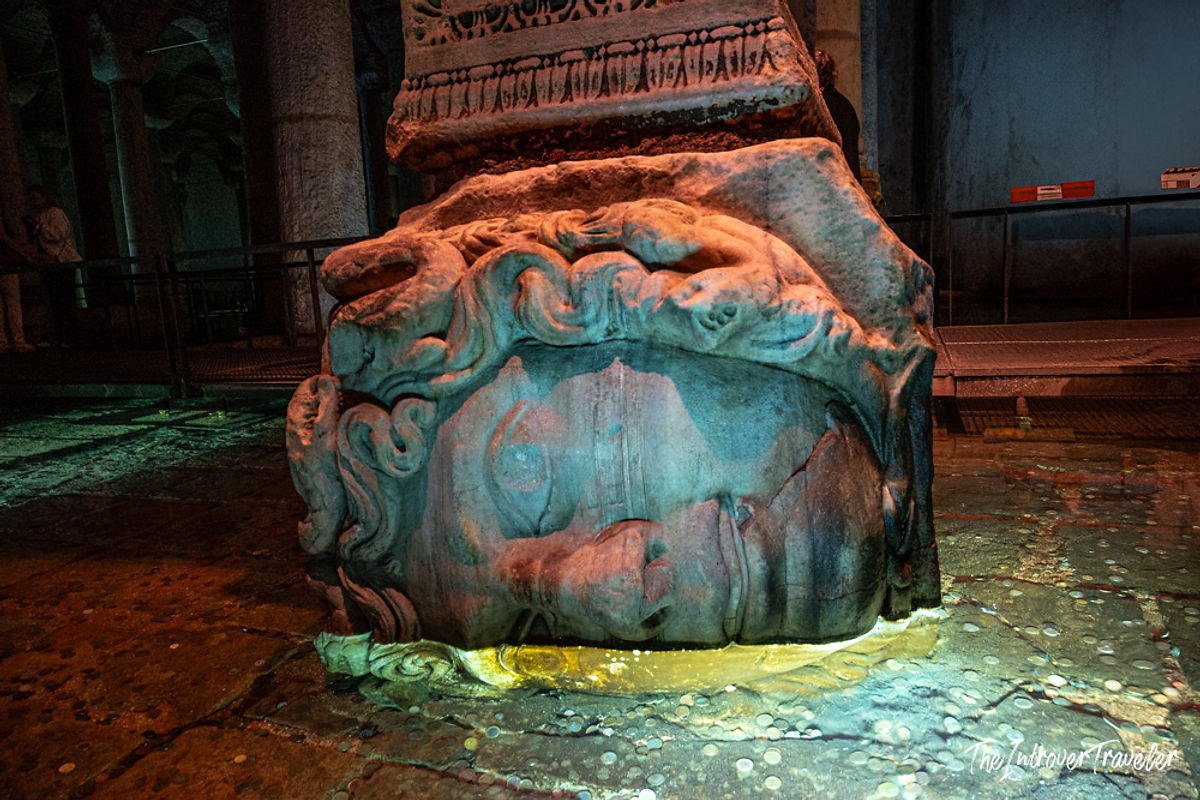
The most famous examples are undoubtedly the Medusa heads used as bases for two columns in one corner of the cistern. These are Roman-period sculptural elements, probably originating from a monumental building (perhaps a nymphaeum, a portico, or a public complex) datable to the 2nd or 3rd century AD. Their reuse is not symbolic but eminently practical: the function of a column base required a large stone block, and the heads were simply adapted to this purpose, rotated (one upside down, the other turned sideways) to achieve the necessary height.
From an art-historical perspective, their interest lies precisely in this decontextualization: a powerful apotropaic image in the Roman world is stripped of its original iconographic meaning and reduced to a purely structural element. It is a paradigmatic example of how late-antique architecture treated the figurative heritage of the past—not destroyed, but repurposed without regard for its original significance.
A second group of noteworthy spolia consists of the columns and capitals, which display considerable typological heterogeneity. Alongside well-executed Corinthian capitals appear Ionic and Composite examples, often with differing proportions and styles. This suggests multiple sources: Roman public buildings, civic basilicas, porticoes, and perhaps even bath complexes dismantled or reorganized during the 4th and 5th centuries. For the attentive observer, this variety is not accidental: it reflects the urban transformation of Constantinople after its foundation in 330 AD, when the city absorbed materials from Byzantium, from cities of Asia Minor, and from earlier Roman buildings in order to rapidly construct an imperial capital worthy of Rome. The cistern thus inherits, so to speak, a second generation of spolia: materials already ancient at the moment of their reuse.
The column bases and some of the shafts (rocchi) also show differences in workmanship and lithology (white and gray marbles, sometimes with pronounced veining) confirming that there was no unified decorative project. Visual unity arises exclusively from modular repetition, not from material homogeneity. This fact is crucial for understanding the engineering logic of the structure: function takes precedence over stylistic coherence.
In sum, the spolia of the Basilica Cistern should be read as material traces of lost buildings. They constitute an involuntary archive of Roman and late-antique Constantinople, preserved because they were incorporated into an essential piece of infrastructure. It is precisely this condition (art reduced to a structural component) that makes them particularly valuable from a historical standpoint: not as objects to be admired, but as lapidary documents of a city that continually rebuilds itself upon its own remains. Pushing the interpretation slightly further, one might view the Basilica Cistern as a library of ancient architecture from the Roman provinces: a catalog of architectural styles and fragments from different periods, gathered and preserved underground.
Visitor experience
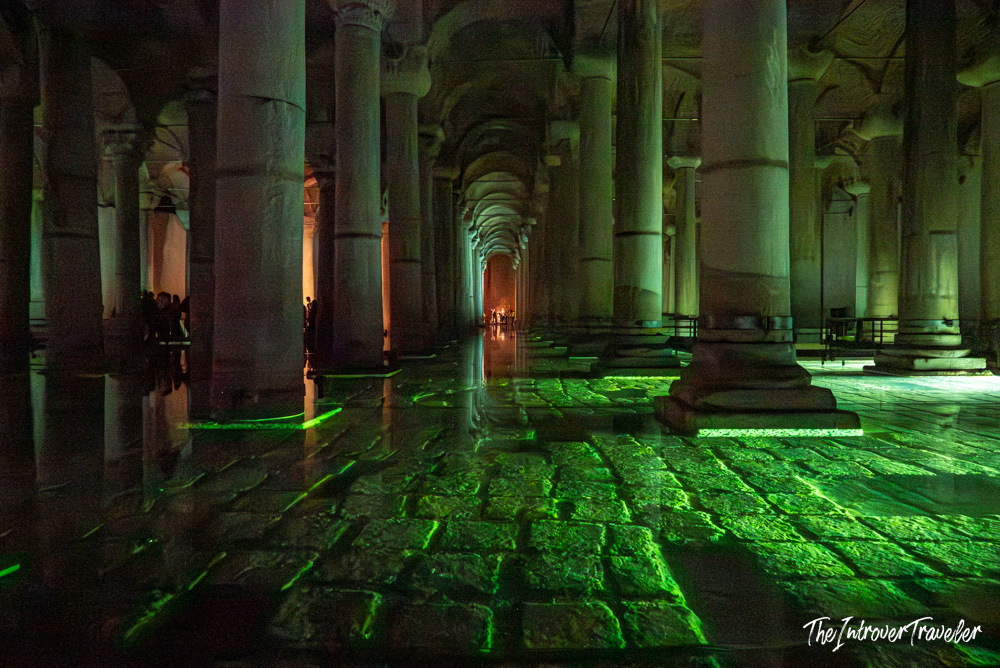
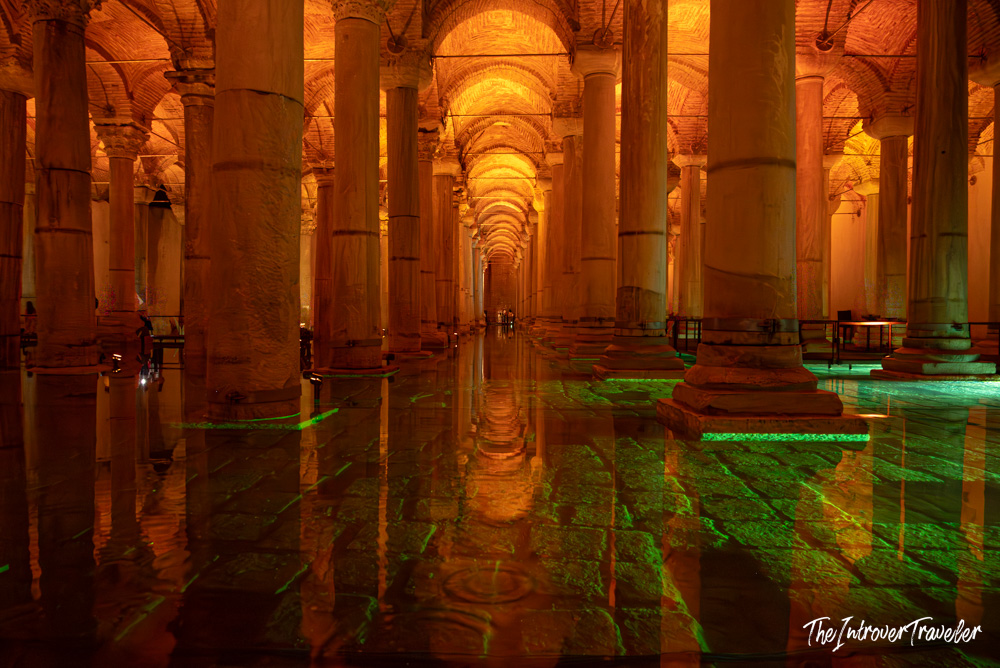
The visitor experience of the Basilica Cistern is deliberately conceived as an immersive journey, in which sensory perception both precedes and accompanies historical understanding. Access is via a descending ramp that marks a sharp break from the noise and light of the surface: just a few steps are enough for the temperature to drop, the acoustics to change, and the space to open suddenly into the vast hypostyle hall. The columns emerge from the darkness in regular sequences, reflected in the shallow water that covers the floor and visually multiplies the architecture, creating an almost vertiginous sense of depth. A horseshoe-shaped steel walkway spans the entire cistern, suspended above the water.
The contemporary lighting system plays a central role in the experience. Raking lights placed at the bases of the columns emphasize their verticality and the texture of the marbles, while shifting reflections on the water introduce a dynamic dimension into an otherwise structurally static space. Periodically, the lighting changes color, from warm white to red, green, and blue, not for narrative purposes, but to modulate the atmosphere, turning the cistern into a kind of large perceptual chamber. At first, the effect can feel slightly kitsch and theatrical, but as the minutes pass it becomes clear how the chromatic variations contribute to the perception of form. The risk of excessive spectacle exists, but it is generally contained: the light does not obscure the structure, it underscores it.
A visit can last anywhere from 15 minutes to an hour, depending on crowd levels and the visitor’s degree of attentiveness. The points where people tend to linger are inevitably the most famous, the Medusa heads, some particularly irregular columns, but the real value of the experience lies in the rhythm of walking, in the repetition of the bays, and in the gradual loss of spatial reference points.
Overall, the visit is neither physically demanding nor disorienting, but it does require a willingness to slow down and to surrender to a sense of wonder. Emerging once again into the light of Istanbul, the prevailing sensation is not that of having seen a monument, but of having traversed fifteen centuries of history.