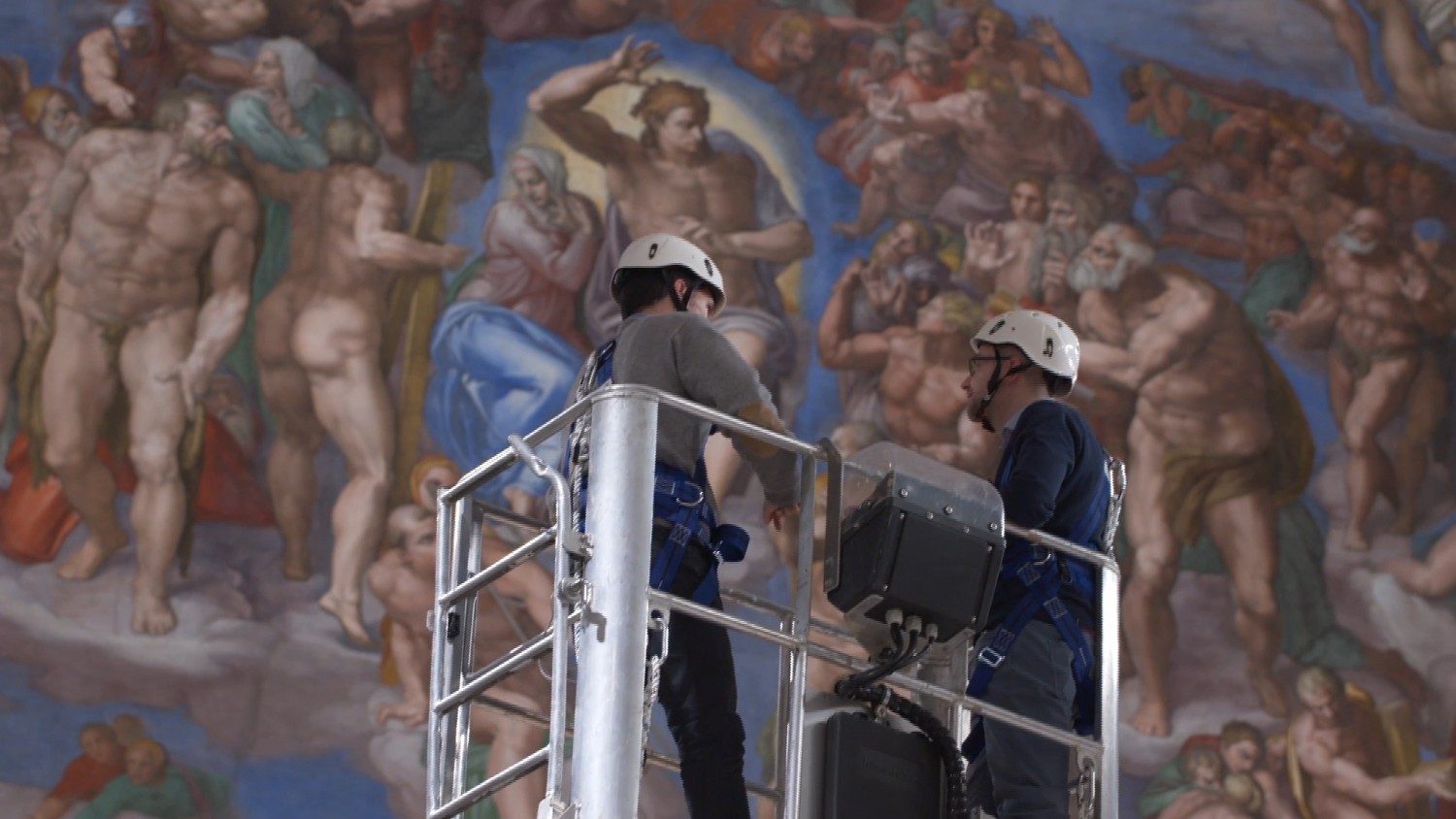
For the past few days, Michelangelo’s Last Judgment fresco in the Sistine Chapel in Rome has been concealed behind a large scaffold as restoration work has begun to remove a thin whitish film that has formed over the decades since the work’s last comprehensive restoration in 1999.
One might wonder how this film developed and whether, in order to ensure the fresco’s preservation, it is appropriate to allow the continuous influx of the large crowds of tourists who fill the Sistine Chapel every day.
Indeed, if one reflects on some of the most renowned Italian fresco cycles, anyone visiting the Scrovegni Chapel, Leonardo da Vinci’s Last Supper, and the Sistine Chapel often has the impression of encountering three entirely different worlds in terms of access and visitor management. In Padua, visitors enter in small groups after spending time in a climate controlled chamber that functions as an environmental buffer. In Milan, only twenty five people at a time are admitted for a few minutes, following a filtered path that feels almost clinical in its rigor. In the Vatican, by contrast, one flows into a monumental hall together with hundreds of others, with the sensation of continuous pressure, regulated but not rarefied. The difference is not the result of varying degrees of concern for conservation, nor, evidently, of any implicit ranking of artistic value. Rather, it derives from the physical nature of the works, the material history of their supports, and the function that each of these spaces continues to serve. To understand the differing conservation approaches, one must begin with the material itself, because conservation is not an ideological act but a technical response to a specific system of vulnerabilities.
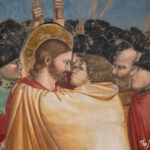
The Scrovegni Chapel is a relatively small structure, a rectangular hall entirely covered by Giotto’s cycle painted between 1303 and 1305. The technique is true fresco, that is, pigment applied to fresh lime plaster which, through carbonation, incorporates the color into a matrix of calcium carbonate. This provides remarkable chemical stability, yet it does not render the work immune to environmental fluctuations. The chapel’s volume is limited, the painted surface is total, and the masonry lacks the thermal inertia of a large basilica. In such an environment, a few dozen people are enough to significantly alter relative humidity, temperature, and carbon dioxide concentration. Humidity is the key issue. Every visitor introduces water vapor through breathing and perspiration and brings with them organic particulate matter and microorganisms. If these peaks are repeated several times a day, thermo hygrometric cycles are generated which, over time, may promote salt mobilization, the formation of biological films, and the appearance of compounds such as calcium lactate, produced by the reaction between organic acids and the calcium carbonate of the plaster. For this reason, Padua has adopted a compensation chamber system that stabilizes the air before entry. Visitors spend several minutes in a buffer space that rebalances temperature and humidity before accessing the chapel. It is a cautious model, almost didactic, transforming microclimatic control into part of the visitor experience.
The case of the Last Supper is even more radical. Leonardo’s work in the refectory of Santa Maria delle Grazie is not a fresco in the strict technical sense. Impatient with the rapid timing required by fresh plaster, Leonardo experimented with a dry technique using organic binders on a gesso preparation. The result was extraordinary in expressive terms but disastrous in terms of durability. Within decades of its completion, the work was already showing detachments and paint loss. In the centuries that followed it endured overpainting, invasive interventions, war damage, and infiltration. The major restoration concluded in 1999 recovered as much as possible while also highlighting the intrinsic fragility of the pictorial surface. Here, microclimatic control is not mere caution, it is a condition for survival. Visits are limited to a few minutes because the painting reacts sensitively even to minimal humidity variations. The buffer chamber and strict visitor limits are not museographic choices but a form of conservation therapy. One might say that the Last Supper is a chronic patient living in precarious equilibrium and requiring a carefully controlled, almost clinical regime.
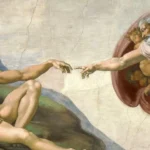
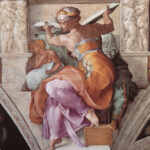
The Sistine Chapel belongs to another category in terms of scale and complexity. Michelangelo’s ceiling and the Last Judgment are true frescoes executed with technical mastery on massive masonry within a vast space. The volume is imposing, the height helps dilute anthropogenic emissions, and the thermal inertia of the walls ensures greater stability compared to a small enclosure. This does not mean that the Sistine Chapel is invulnerable. On the contrary, the number of visitors is enormous and the anthropogenic pressure is constant. For this reason, in recent years a new generation climate control system has been installed to continuously regulate temperature, humidity, carbon dioxide concentration, and fine particulate matter. The chosen strategy has not been to drastically reduce visitor numbers, but to dimension the system so as to manage them. It is a different, technologically sophisticated approach, also connected to the chapel’s institutional function. The Sistine Chapel is not only a museum space but a central liturgical and symbolic setting for the Catholic Church. It must remain accessible for celebrations and events such as the conclave, and this affects management strategies. Moreover, the millions who visit the Vatican Museums each year come primarily to see Michelangelo’s frescoes, and restricting access severely would be not only logistically impracticable but clearly economically unsustainable.
As mentioned, a new intervention on the Last Judgment began last week, the previous comprehensive restoration having been completed in 1999 as part of the major campaign that also involved the ceiling. The start of this new work is a reminder that conservation is a continuous process rather than an isolated event. Even a technically robust fresco such as Michelangelo’s is subject to constant monitoring. Dust, surface deposits, interactions between pollutants and pigments, and micro fissures in the plaster are phenomena requiring periodic assessment. Restoration is not necessarily a response to dramatic deterioration; it may also be a form of scheduled maintenance, monitoring, and prevention. In this sense, the Sistine Chapel is no less protected than the Scrovegni Chapel or the Last Supper. It simply adopts a different strategy, based on a balance between technology, visitor management, and institutional requirements. The new intervention on the Last Judgment also stems from the need to address chemical alteration processes that can develop almost imperceptibly over the years, including the formation of what is known as calcium lactate. This is a salt that forms when organic acids, produced by microorganisms present in the environment or resulting from the degradation of organic residues, react with the calcium carbonate of the plaster, which is the very mineral matrix constituting the structure of the fresco. Under conditions of elevated humidity or thermo hygrometric fluctuation, these compounds may partially dissolve, migrate toward the surface, and then recrystallize, forming opaque veils or micro deposits that alter the legibility of the colors. The issue is not merely aesthetic. The presence of calcium lactate can modify the chemical equilibrium of the plaster, increase surface porosity, and over time promote further cycles of dissolution and recrystallization that weaken the cohesion between the pictorial layer and its support. Removing these deposits therefore means not only restoring chromatic brilliance but interrupting a process which, if left unchecked, could compromise the work’s long term stability.
The comparison among these three sites shows that there is no universal conservation model. There is instead a case by case analysis that takes into account execution technique, conservation history, architectural morphology, and anthropogenic pressure. In the case of the Scrovegni Chapel, the primary risk lies in rapid environmental fluctuations within a limited volume. In the case of the Last Supper, the risk is intrinsic to the pictorial material itself. In the case of the Sistine Chapel, the risk derives mainly from the sheer number of visitors, counterbalanced by a climate control system designed to handle large flows. From the standpoint of compounds such as calcium lactate or other secondary salts, the decisive variable remains humidity combined with the presence of organic nutrients and microorganisms. Reducing fluctuations means slowing the chemical and biological processes that may attack the plaster.
For the visitor, these differences translate into distinct experiences. In Padua, one perceives a kind of rite of passage that prepares for the encounter with Giotto. In Milan, the brevity of the visit before the Last Supper produces an almost forced intensity. In the Vatican, the impact is that of monumentality and crowd, yet behind that crowd operates a technical system regulating the environment invisibly. Understanding these differences means moving beyond the assumption that conservation always coincides with reducing public access. Sometimes it requires drastic limitations, sometimes investment in advanced technology, and sometimes the scheduled maintenance of a work restored relatively recently, as demonstrated by the new campaign on the Last Judgment.
The conservation of cultural heritage is an exercise in balance between accessibility and protection. None of these works is intended to be withdrawn from view, yet none can withstand indiscriminate use. The differing approaches adopted in these three cases do not reflect a hierarchy of attention but rather the consequence of distinct material and institutional conditions. If the Last Supper demands almost ascetic discipline and the Scrovegni Chapel a rigorous environmental filter, the Sistine Chapel entrusts its protection to advanced technological systems and continuous monitoring, now extended through the new intervention on the Last Judgment. It is proof that conservation is not a concluded act but a dynamic process accompanying the life of the work over time, adapting, case by case, to its fragility and its public destiny.
If you are planning to visit Rome, you might be interested in these posts and this portfolio.
This post is part of my section about the most important italian fresco paintings; you can also use ArtAtlas to find the main works of your favorite artist in Italy or around the world.