Last Visit : April 2022
My rating : 10/10
Visit duration : 2 to 3 days
Anyone with a solid education on Instagram knows that there are only two things to see in Jordan: Petra and Wadi Rum (spoiler: there’s many other things to see…). I’ve already done a post about Petra, so here’s the post about Wadi Rum.
Wadi Rum is one of the most complex and stratified desert landscapes in the Middle East. Located in southern Jordan, between Aqaba and Petra, Wadi Rum is a vast system of valleys, sandstone and granite massifs, natural rock bridges, and sandy plains covering approximately 720 km². Its uniqueness lies not only in its visual impact (vertical walls over 1,700 meters high, sands ranging from iron red to pale ochre) but in the rare combination of geology, archaeology, and anthropological continuity. Here, the landscape is an open-air archive preserving rock carvings, Thamudic, Nabatean, and Arabic inscriptions, traces of pastoral settlements, and millennia-old caravan routes. It is no coincidence that the site was recognized as a UNESCO World Heritage Site in 2011, as a mixed natural and cultural heritage, a classification that is far from common. Wadi Rum is also a place that has undergone strong modern narrative mediation, from Lawrence’s “Arab Revolt” myth to its cinematic use as a stand-in for Mars or alien planets (The Martian and Dune are among the most obvious examples), but beneath these superstructures, it maintains a still-active Bedouin settlement. Understanding Wadi Rum therefore means reading it on multiple levels: as a geological formation shaped by wind erosion, as a traversed and inhabited historical space, and as a living territory, today at the center of a delicate balance between tourism, environmental protection, and local identity. In this sense, visiting it is not simply “seeing the desert,” but entering a cultural landscape in the fullest sense of the term, and above all contemplating a stunning natural landscape, albeit one heavily anthropized and besieged by mass tourism.
Some geological rudiments
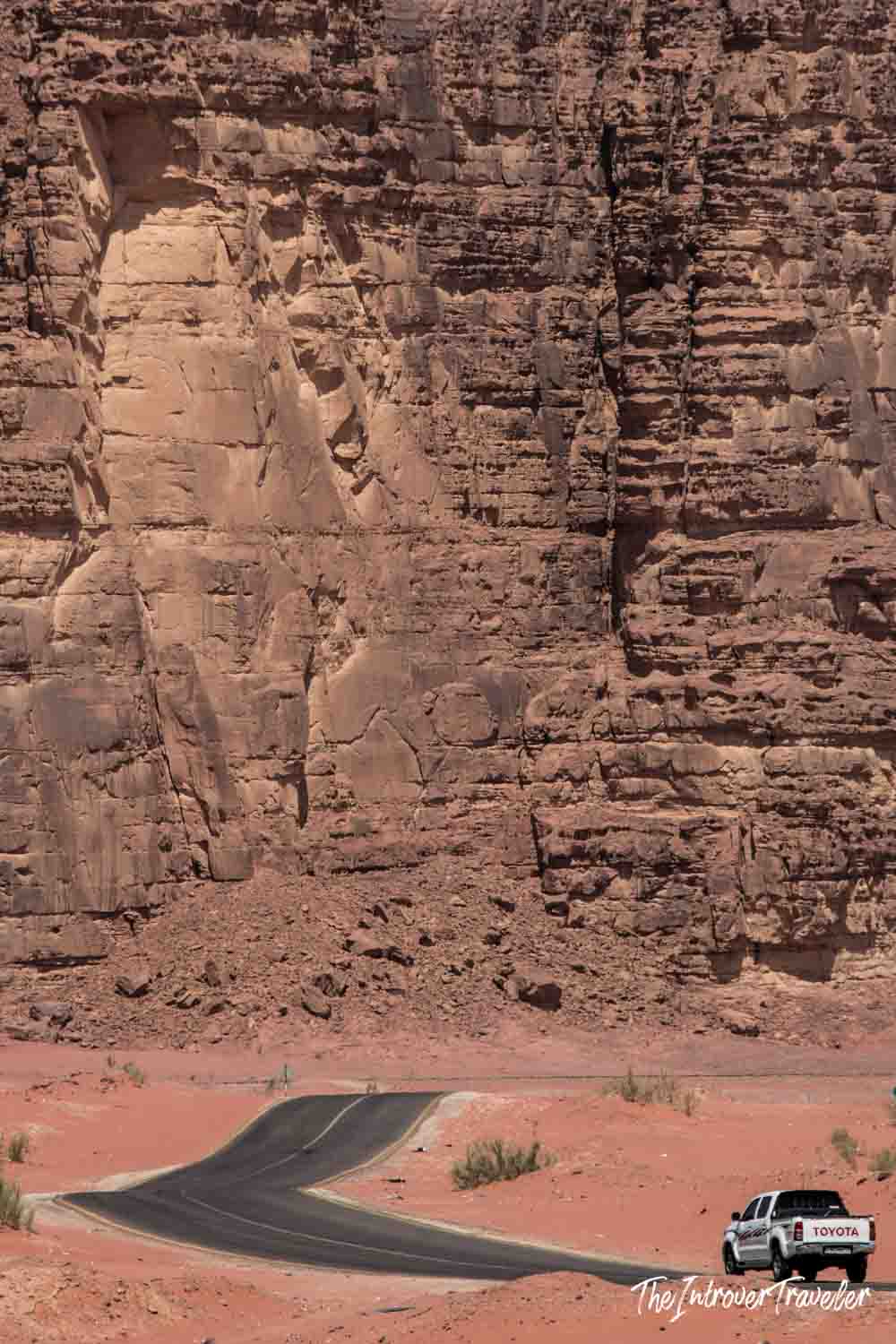
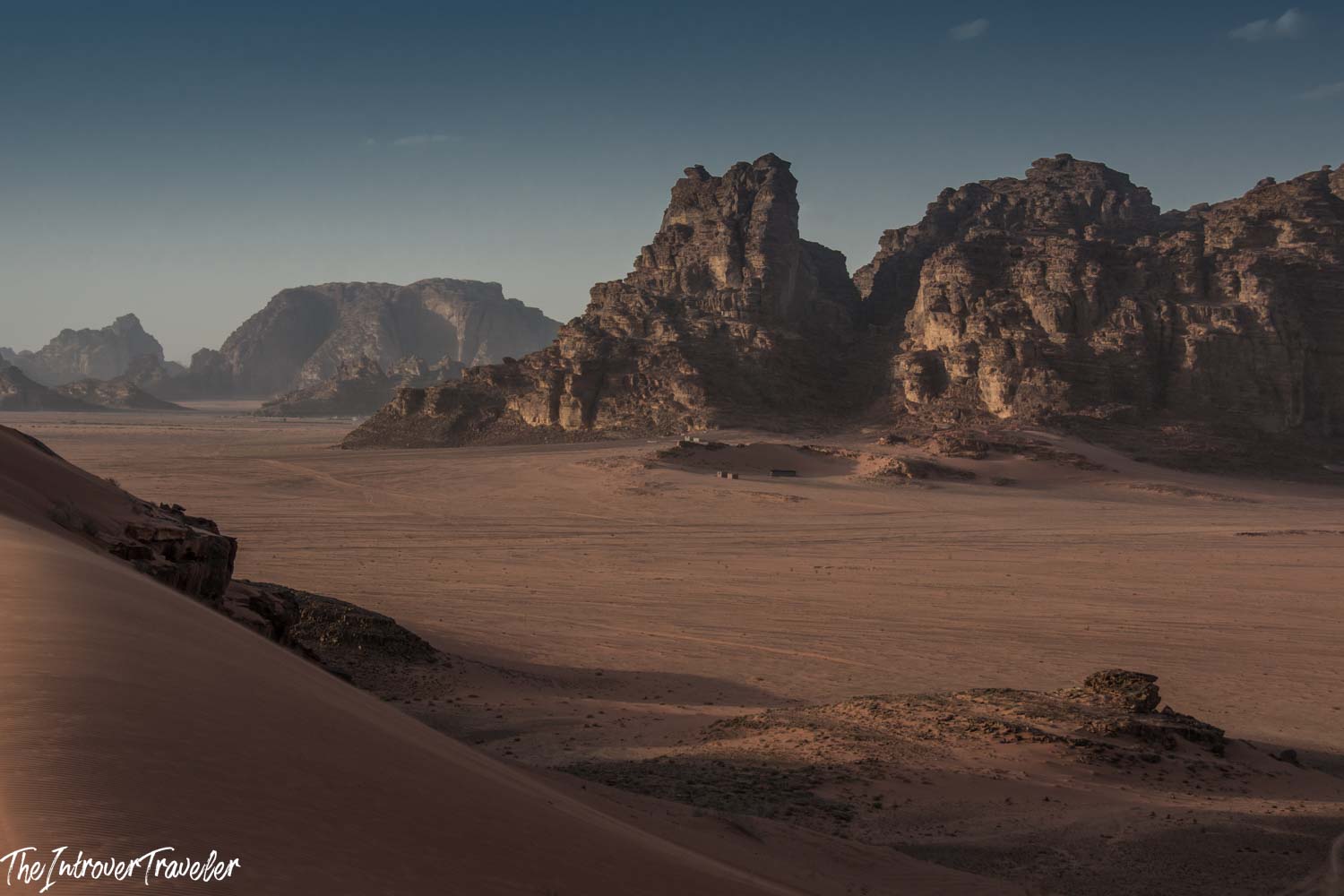
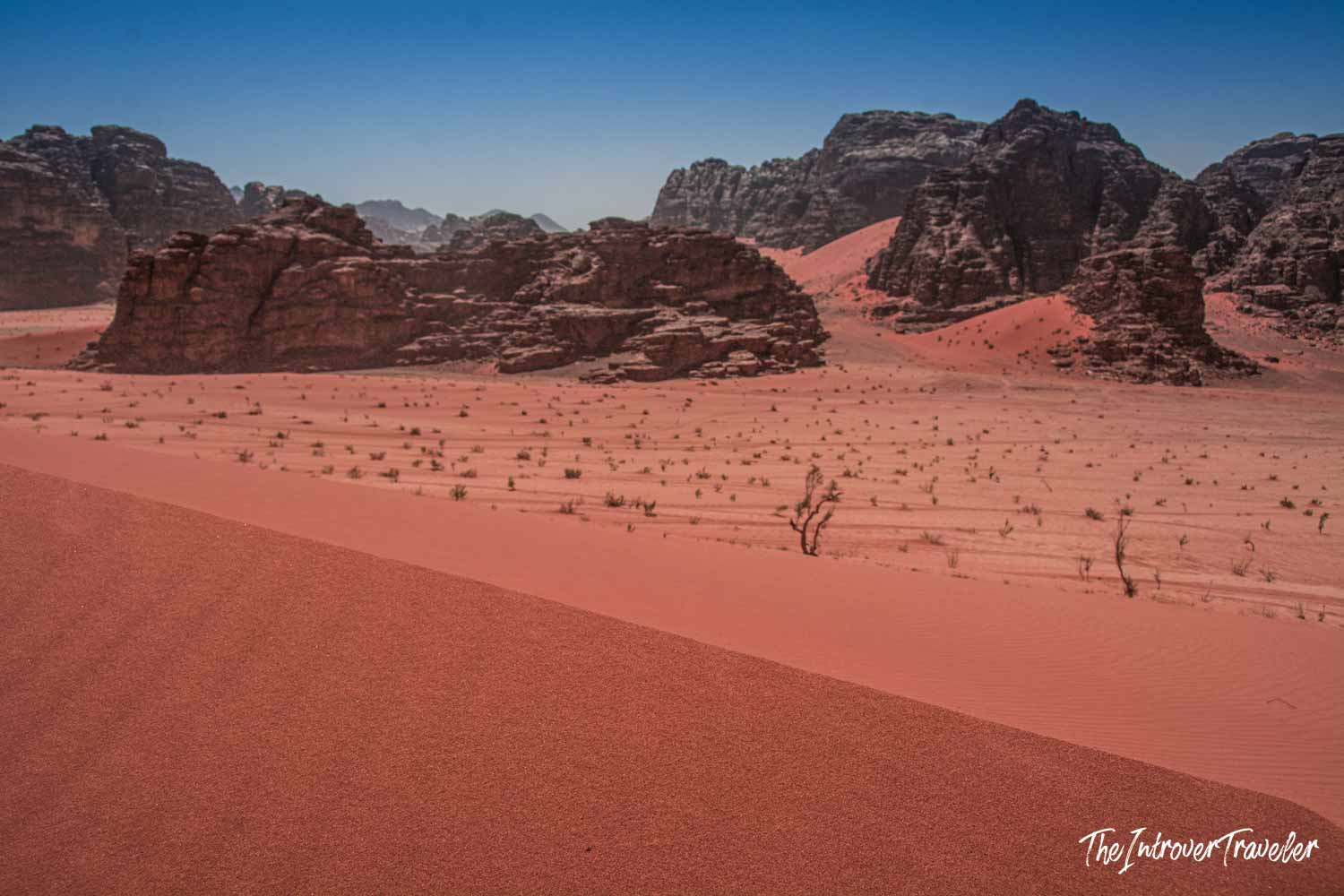
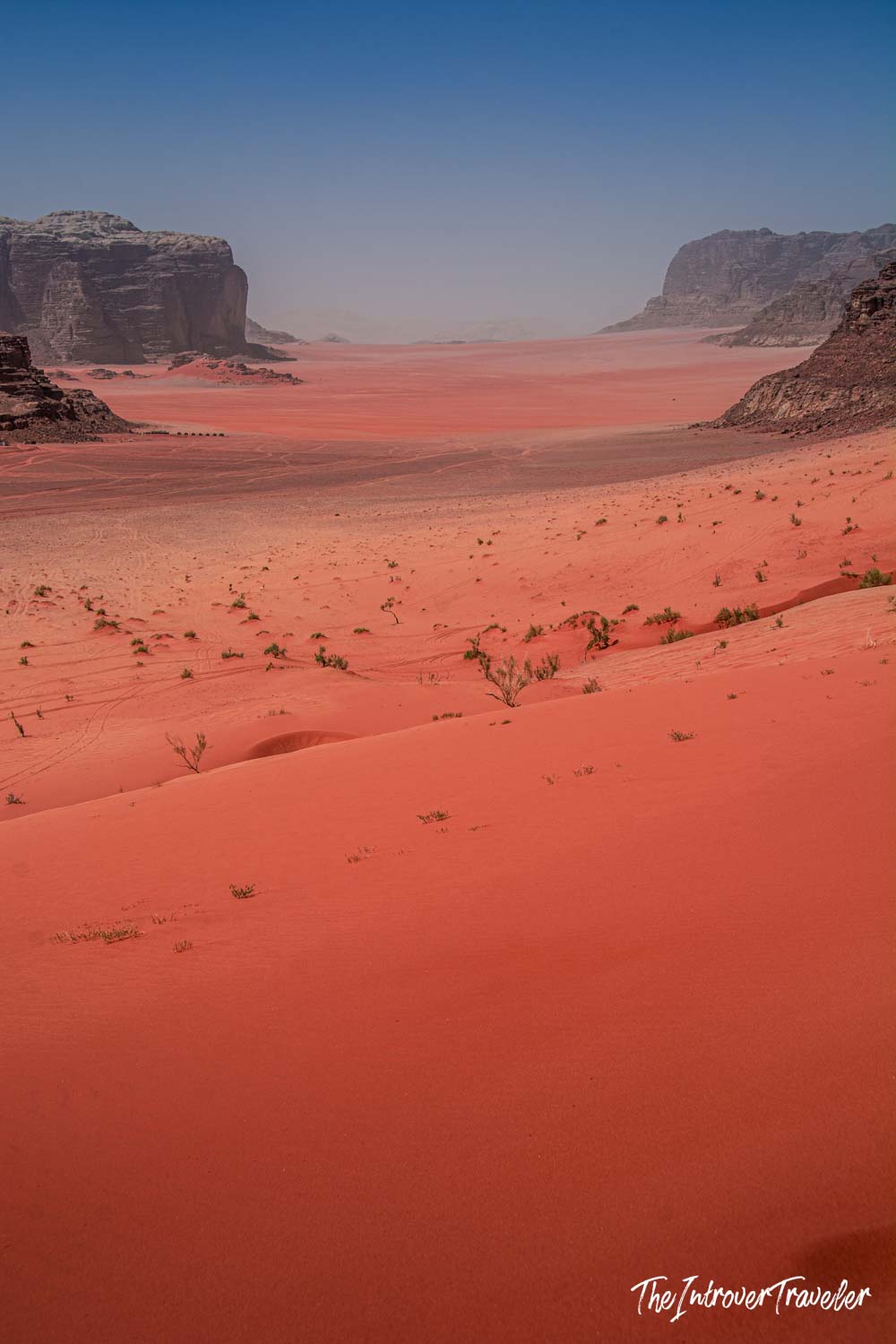
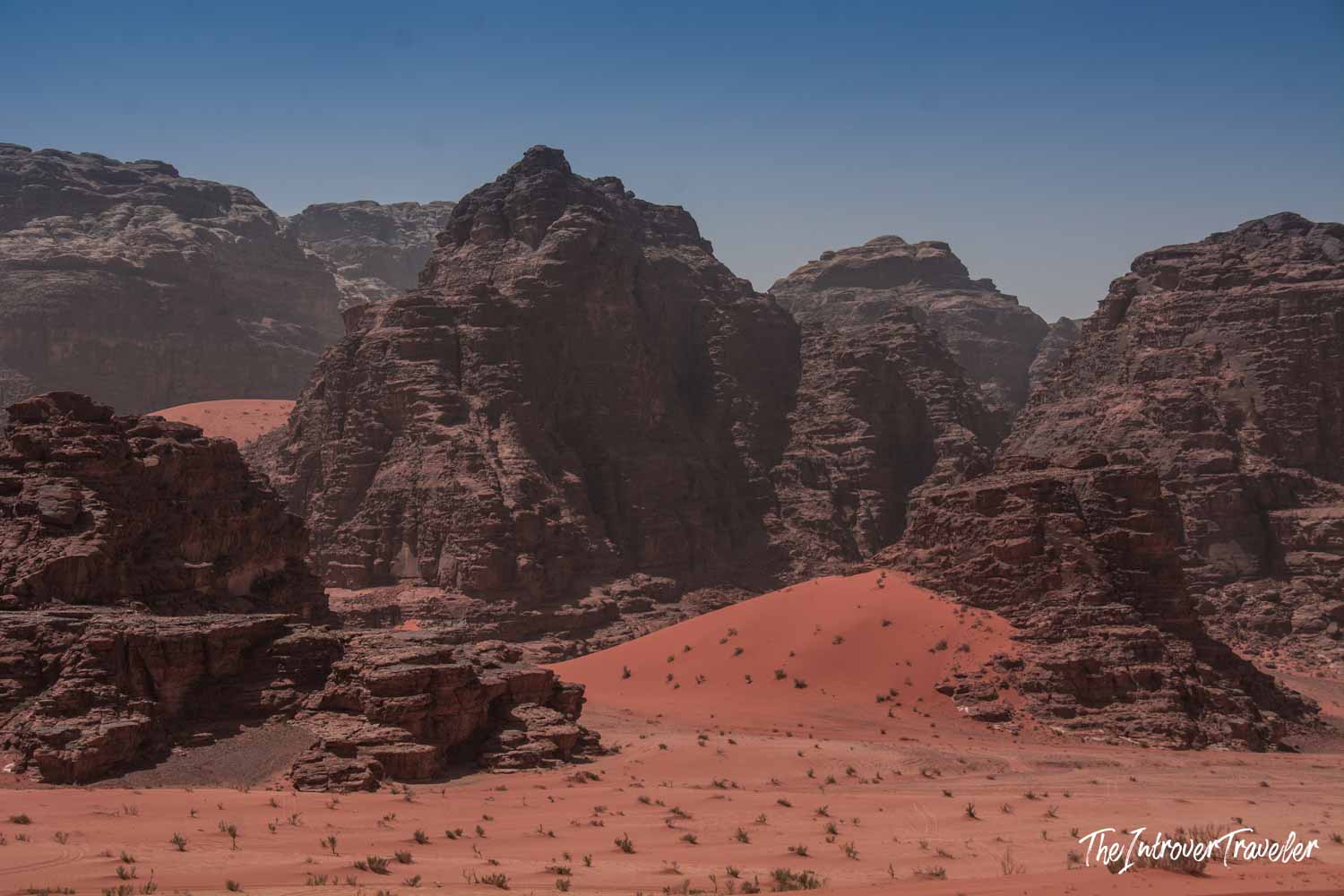
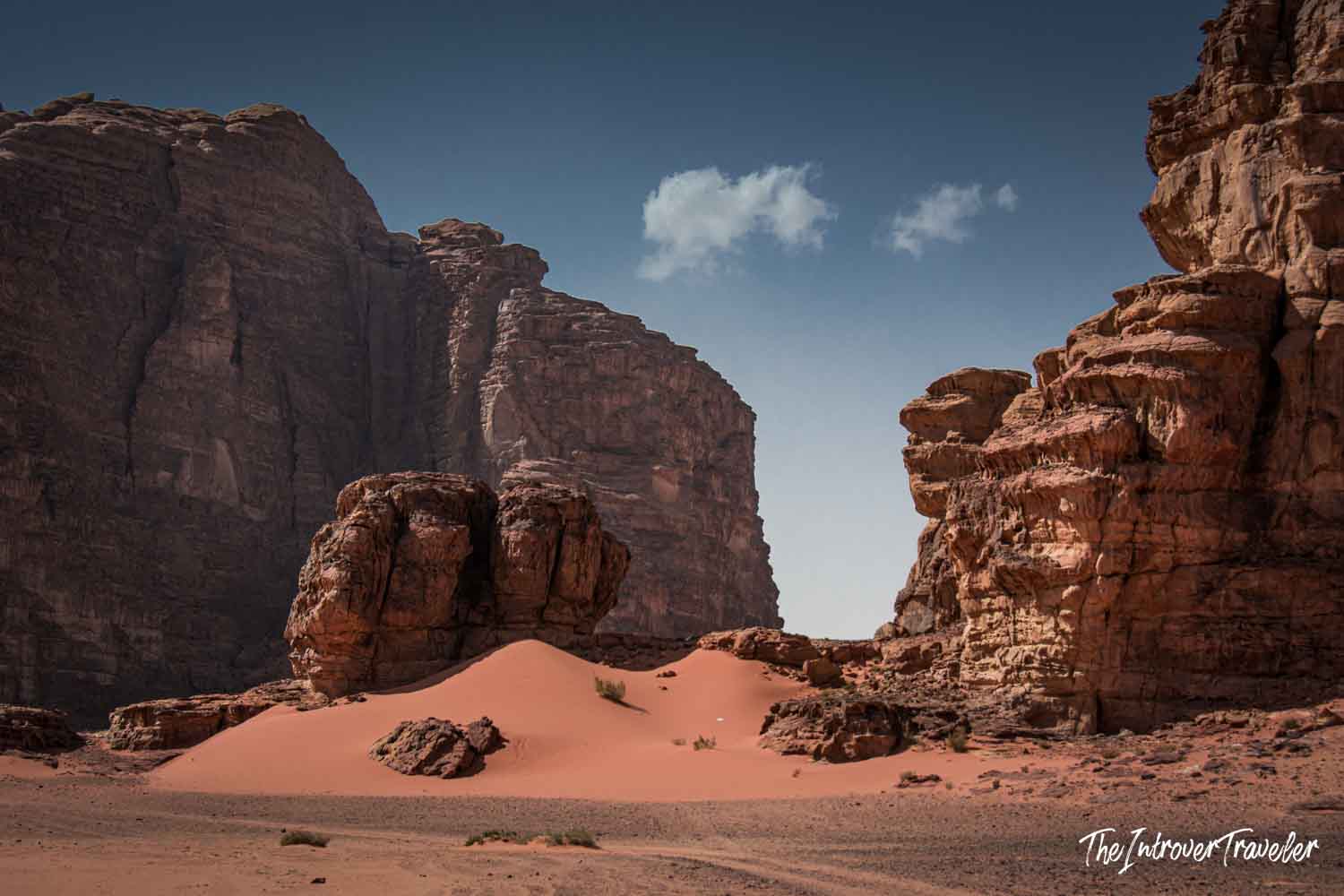
Images of Wadi Rum have become extremely popular and recognizable in recent years, thanks in part to social media. The vast canyons with vertical walls and deep red sands make it instantly identifiable, distinguishing it from most other deserts.
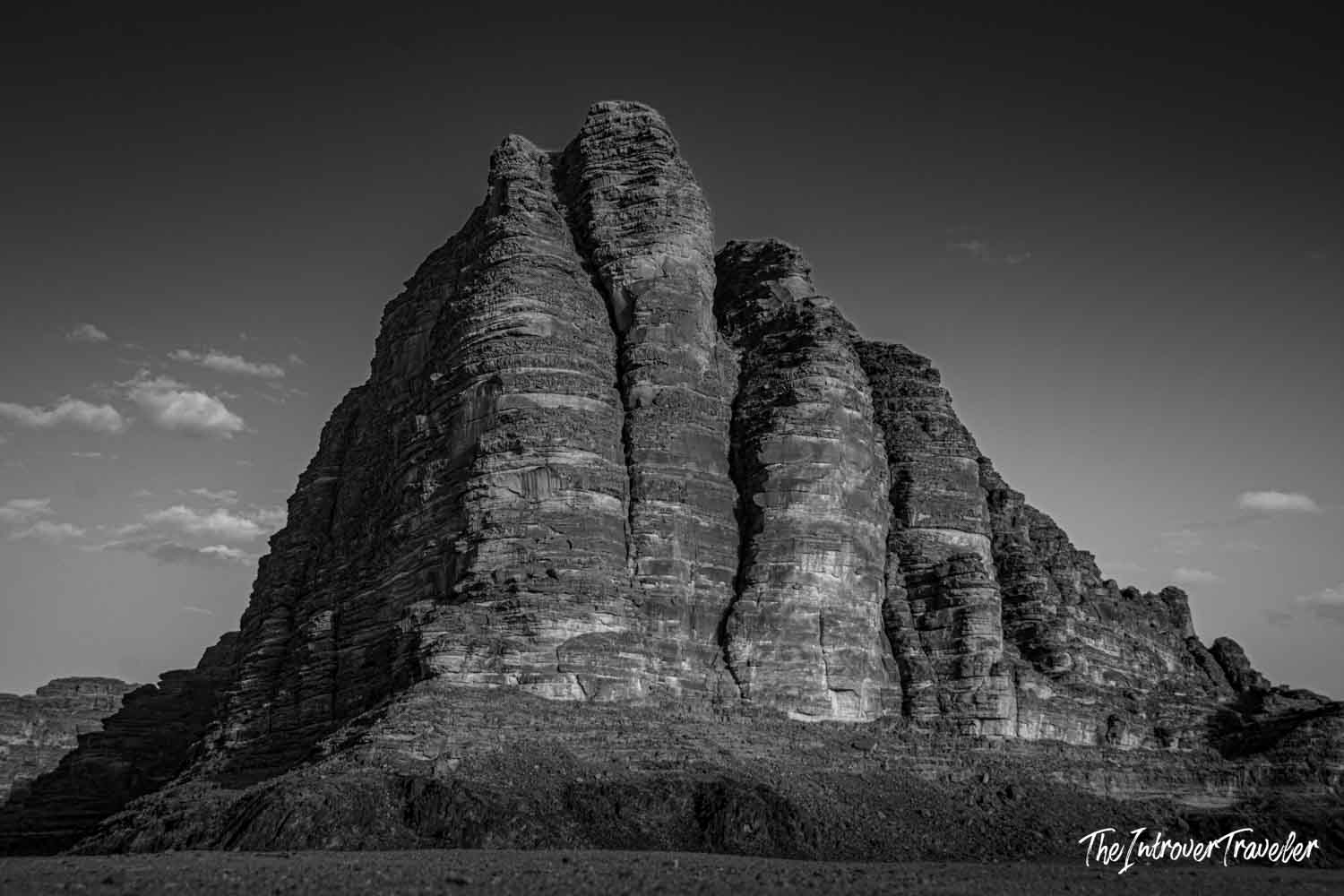
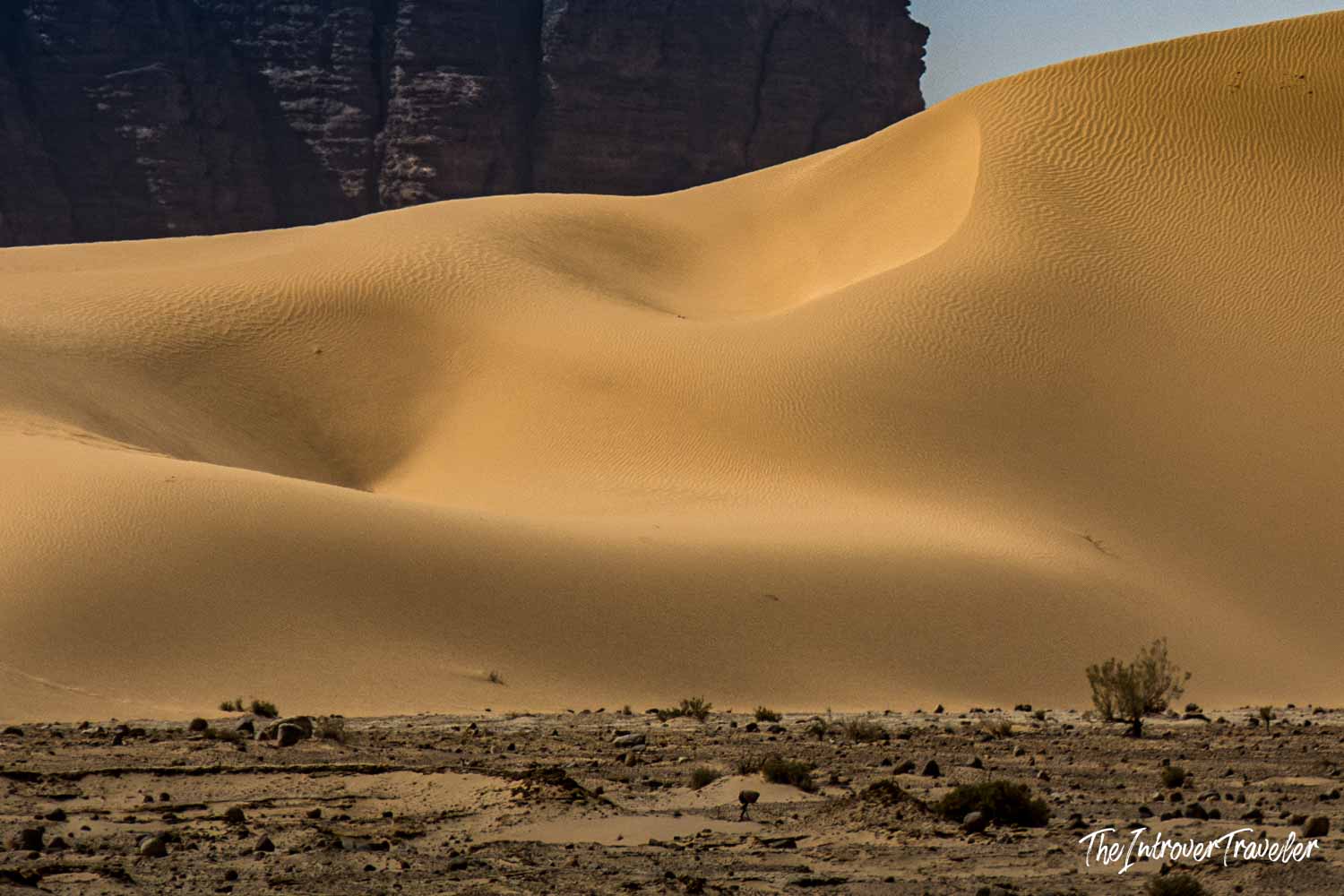
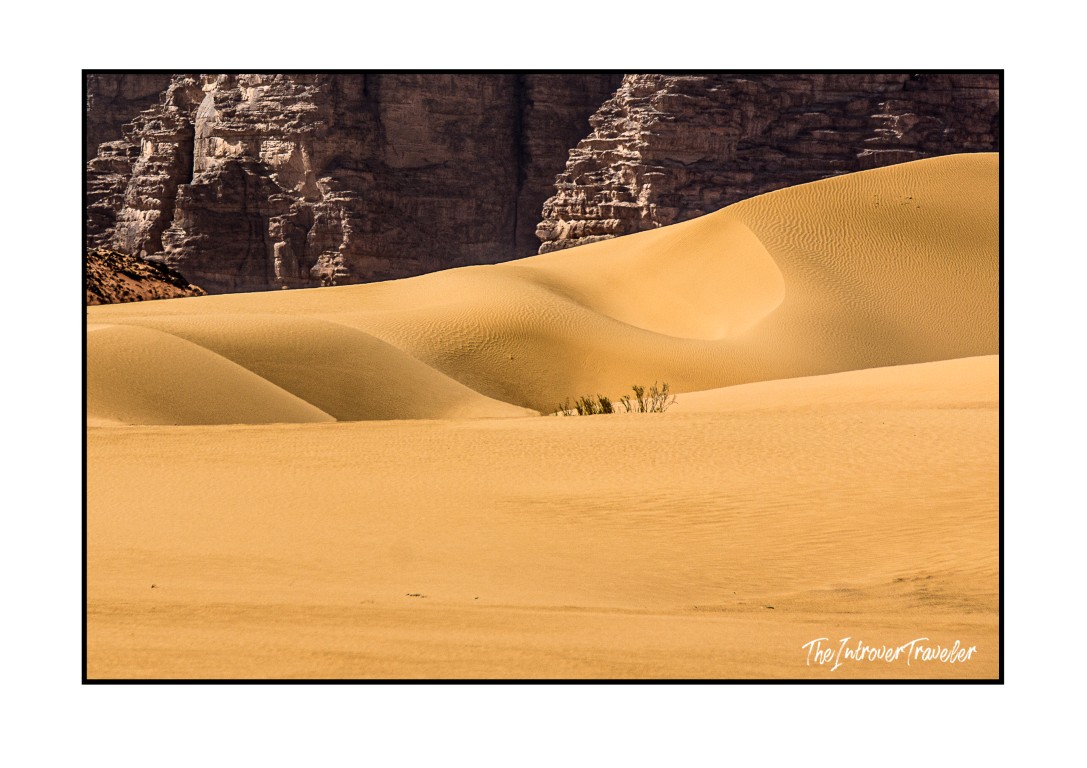
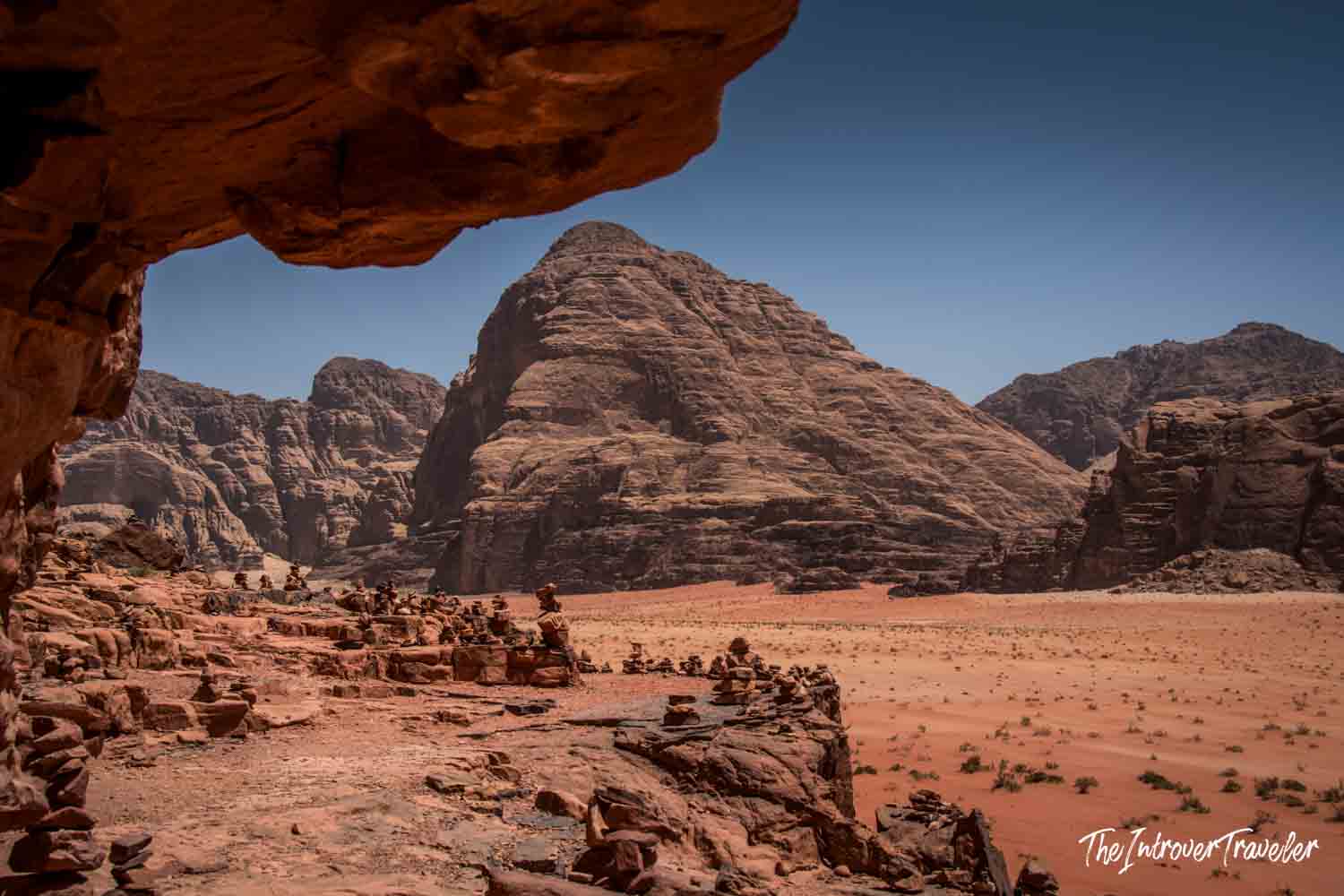
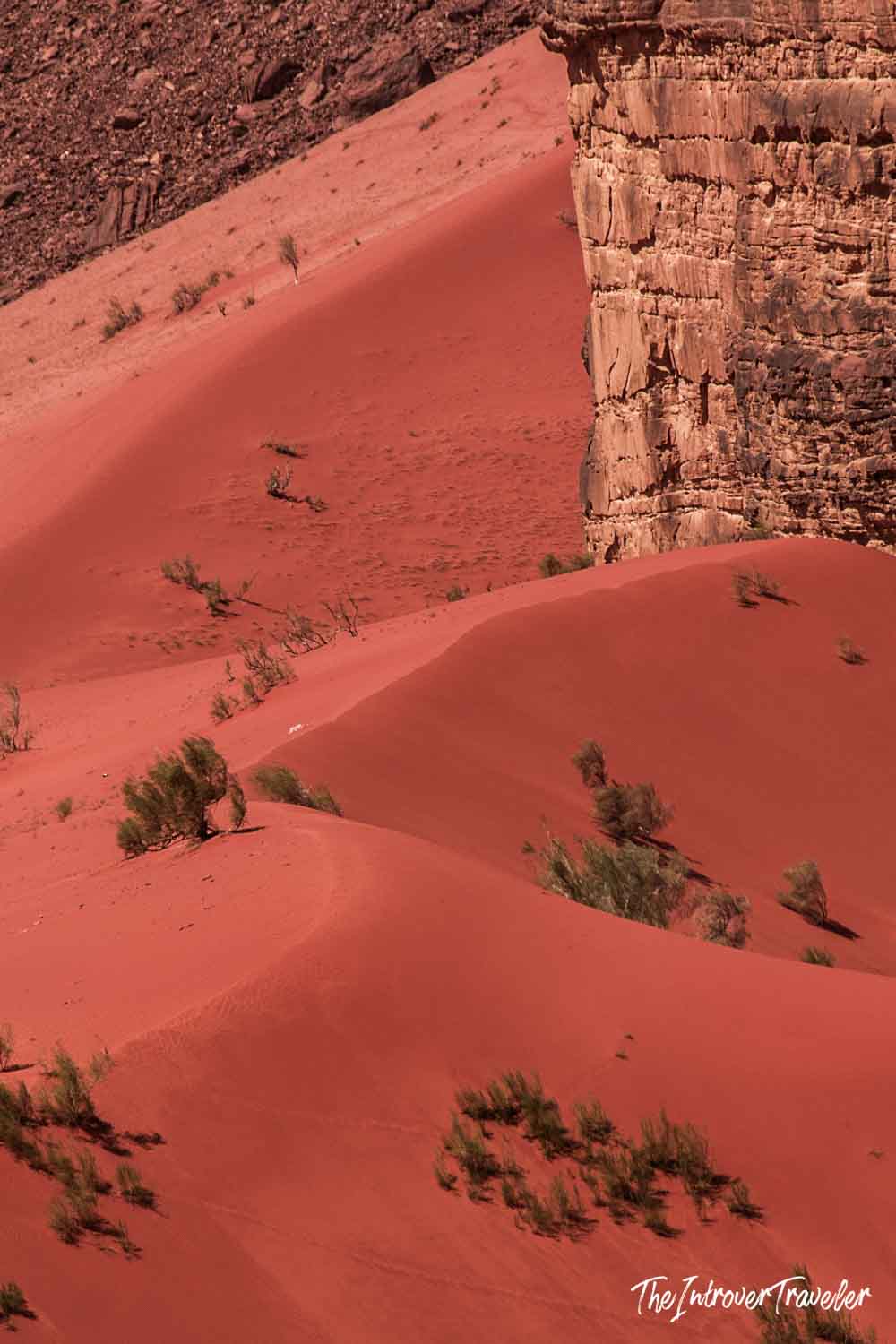
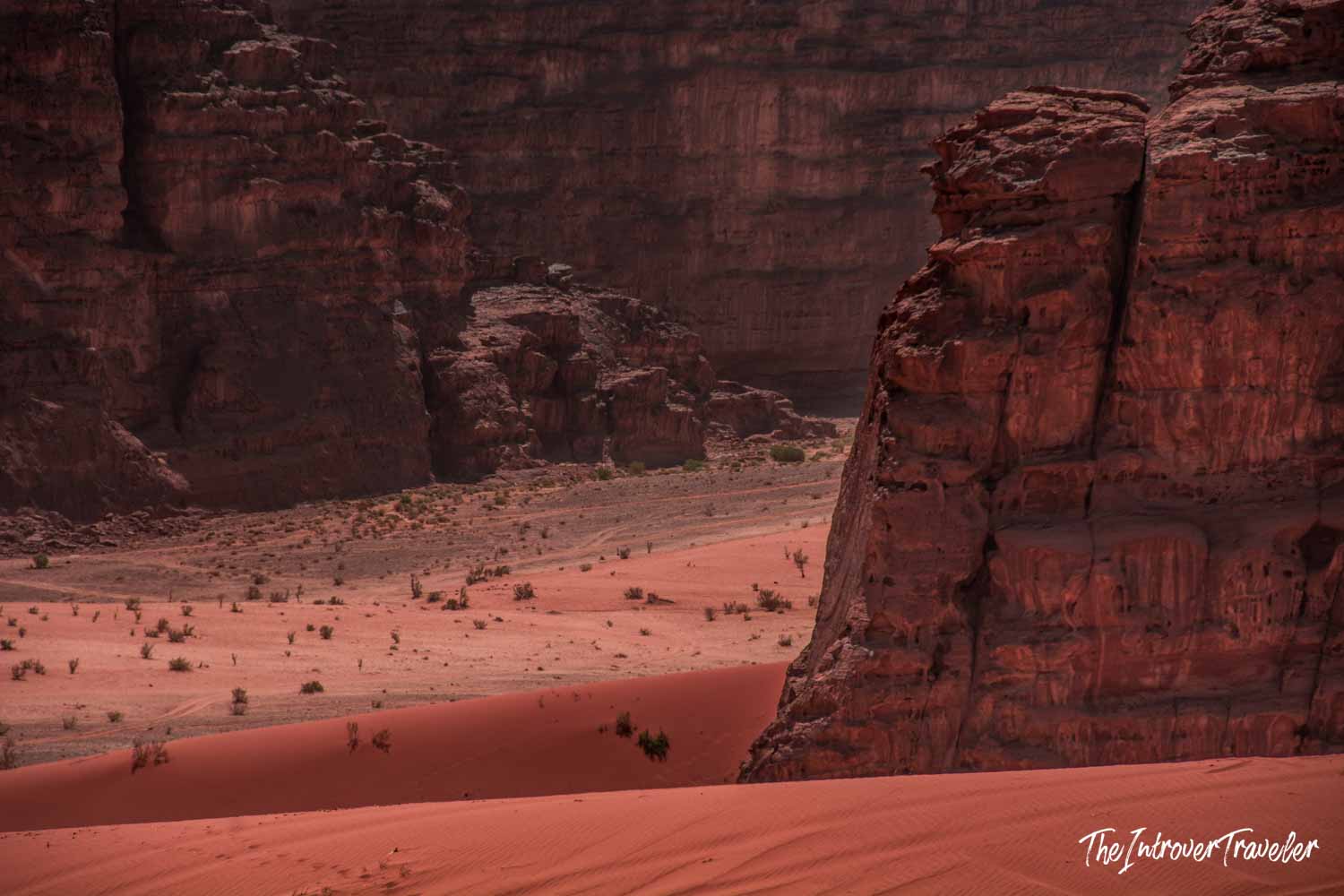
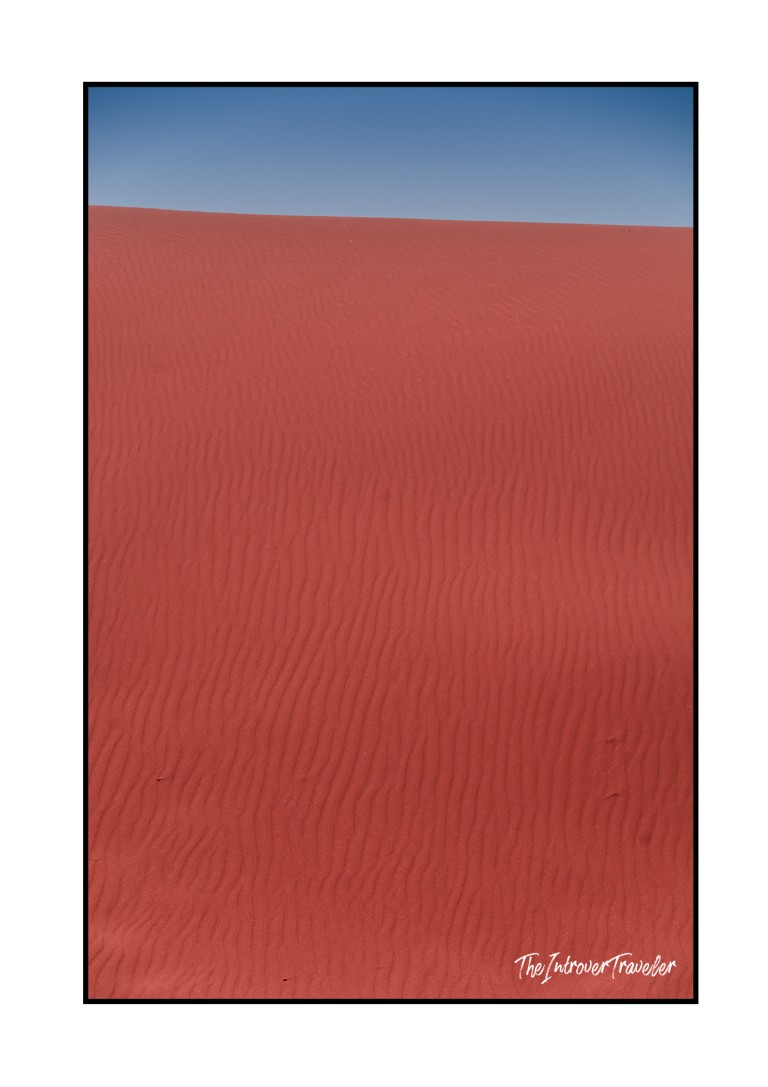
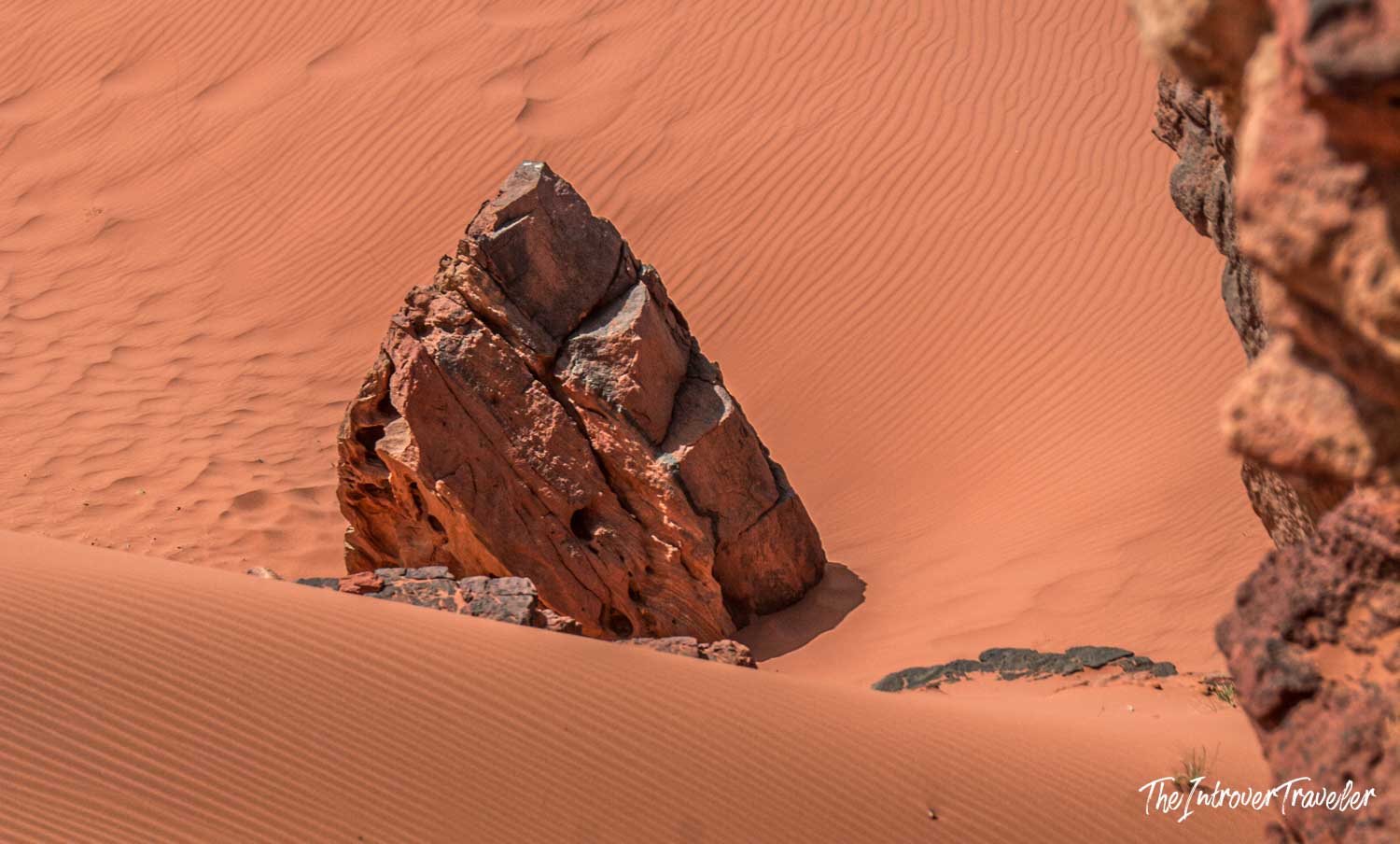
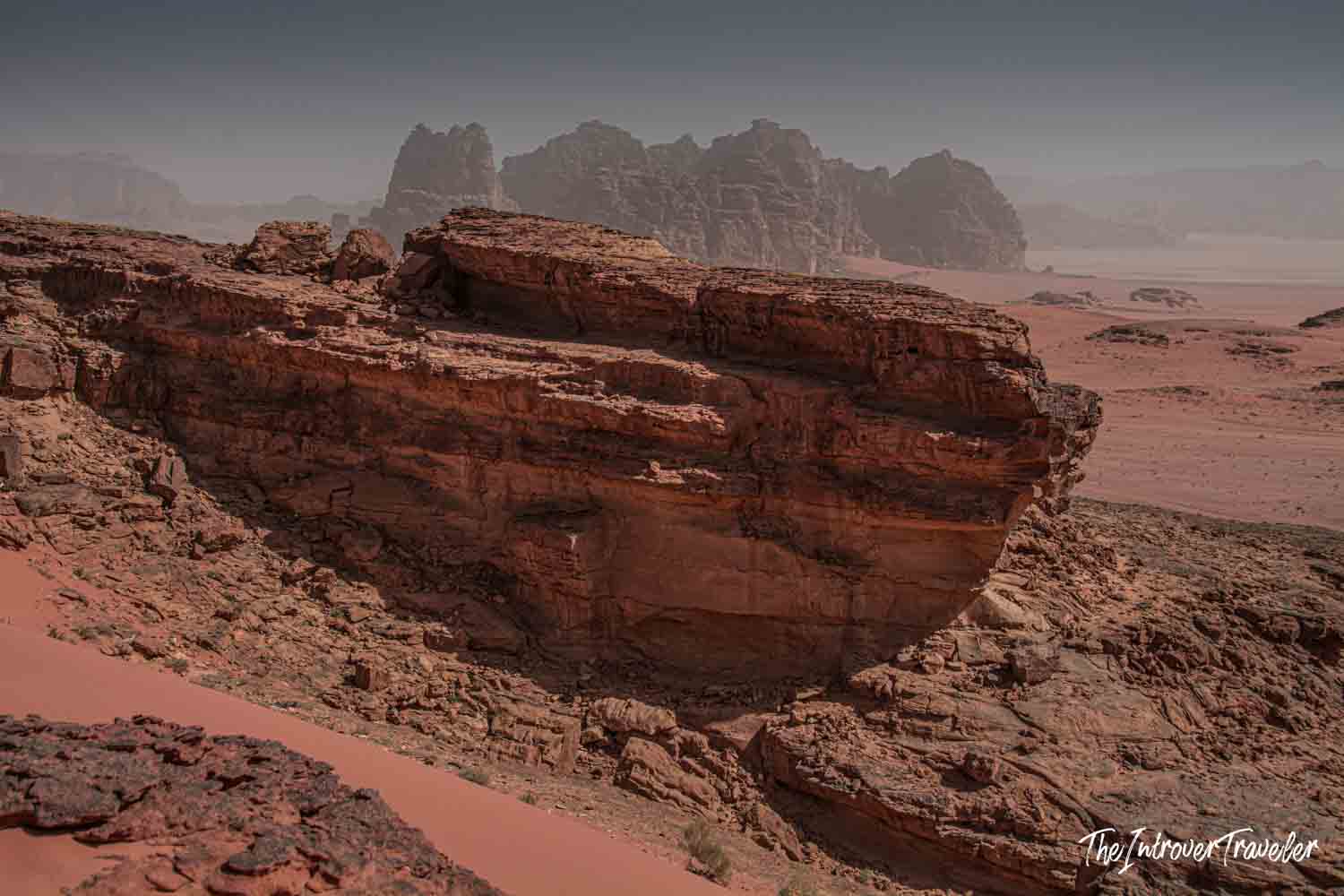
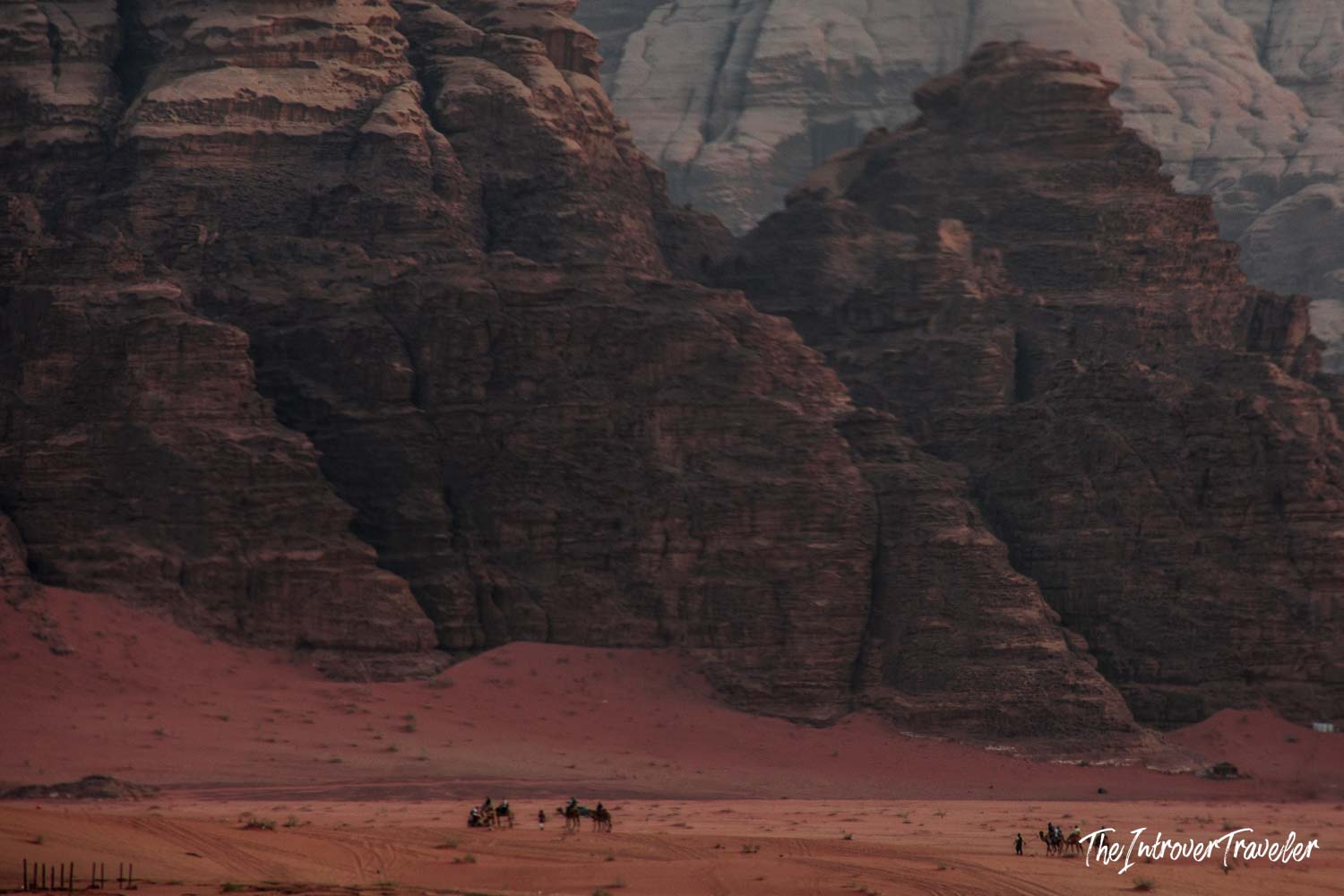
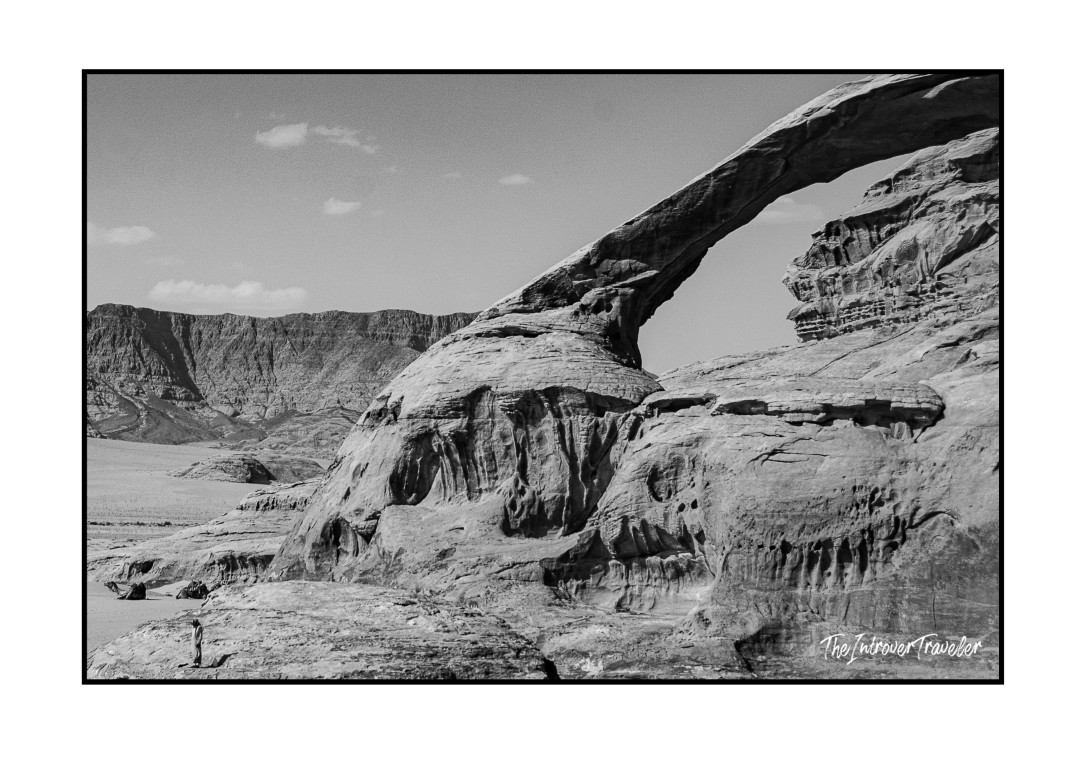
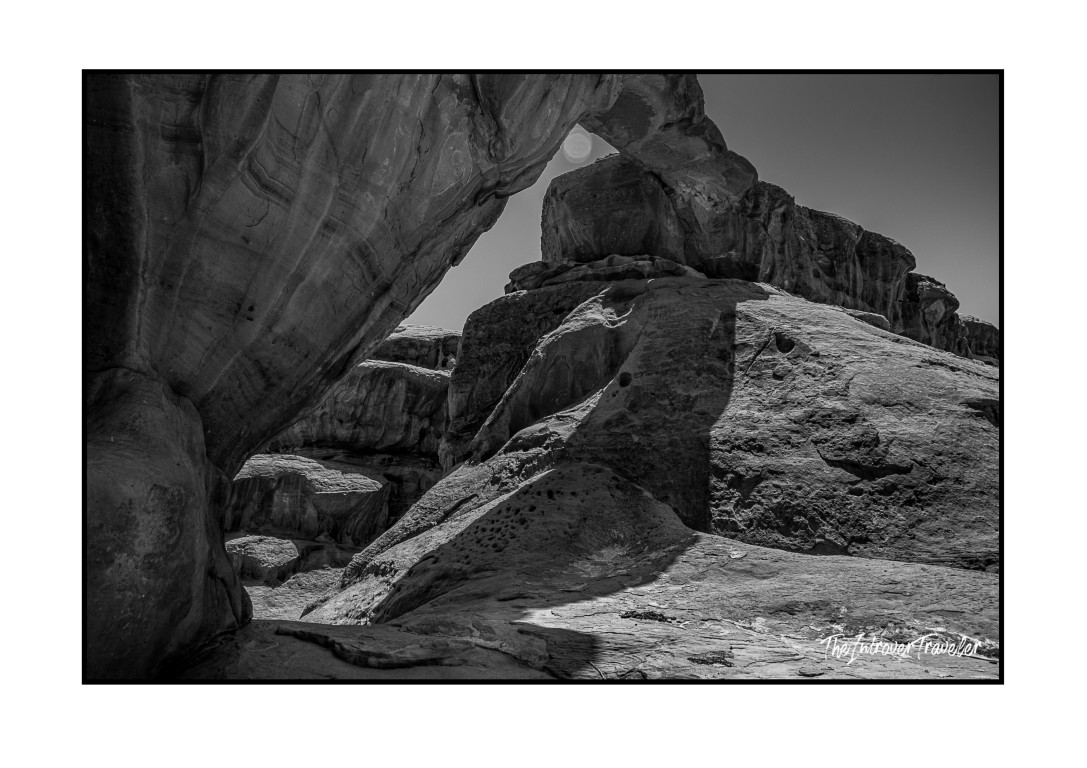
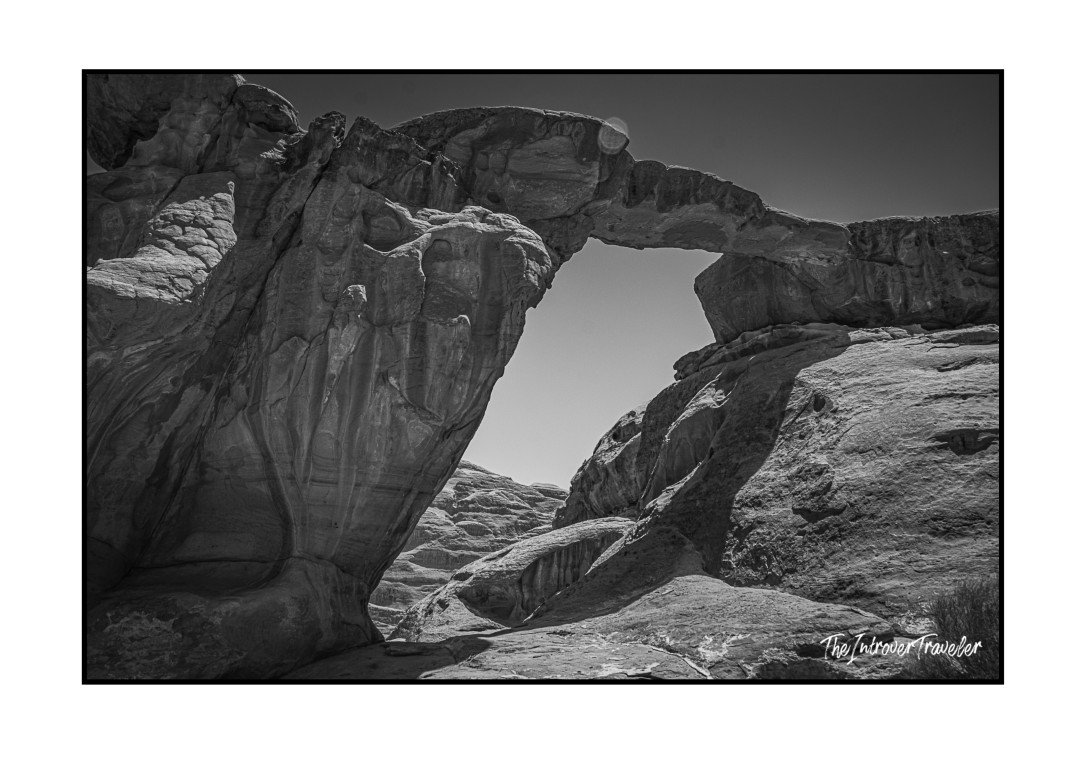
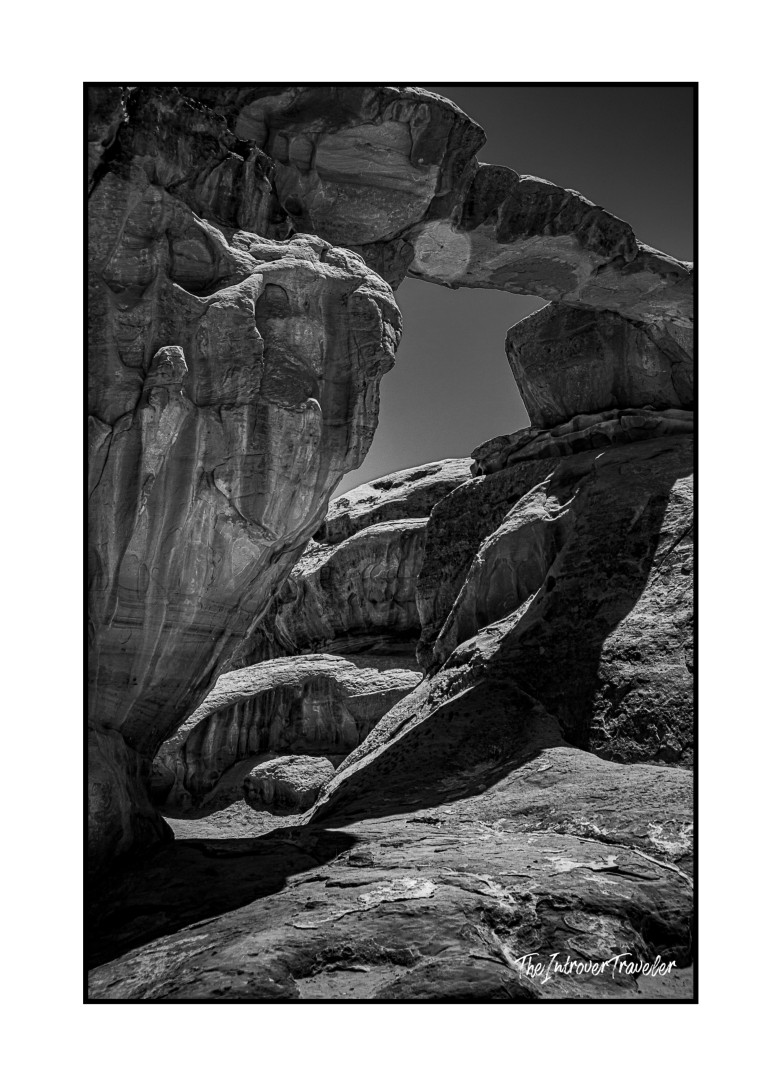
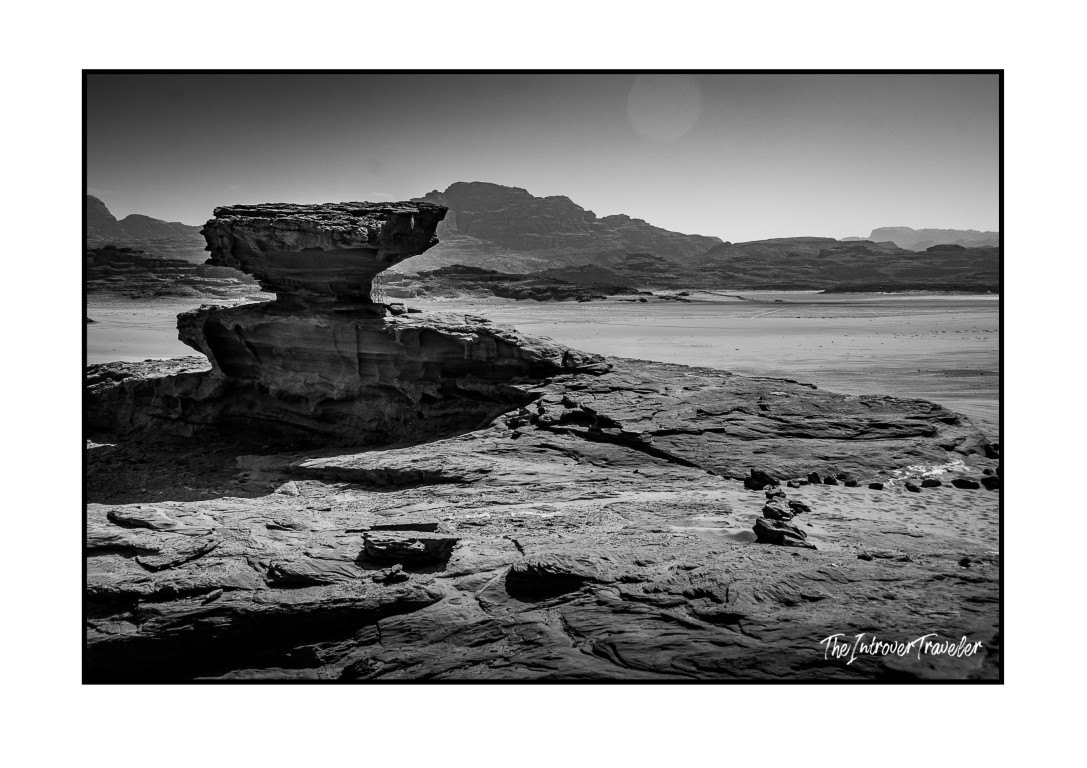
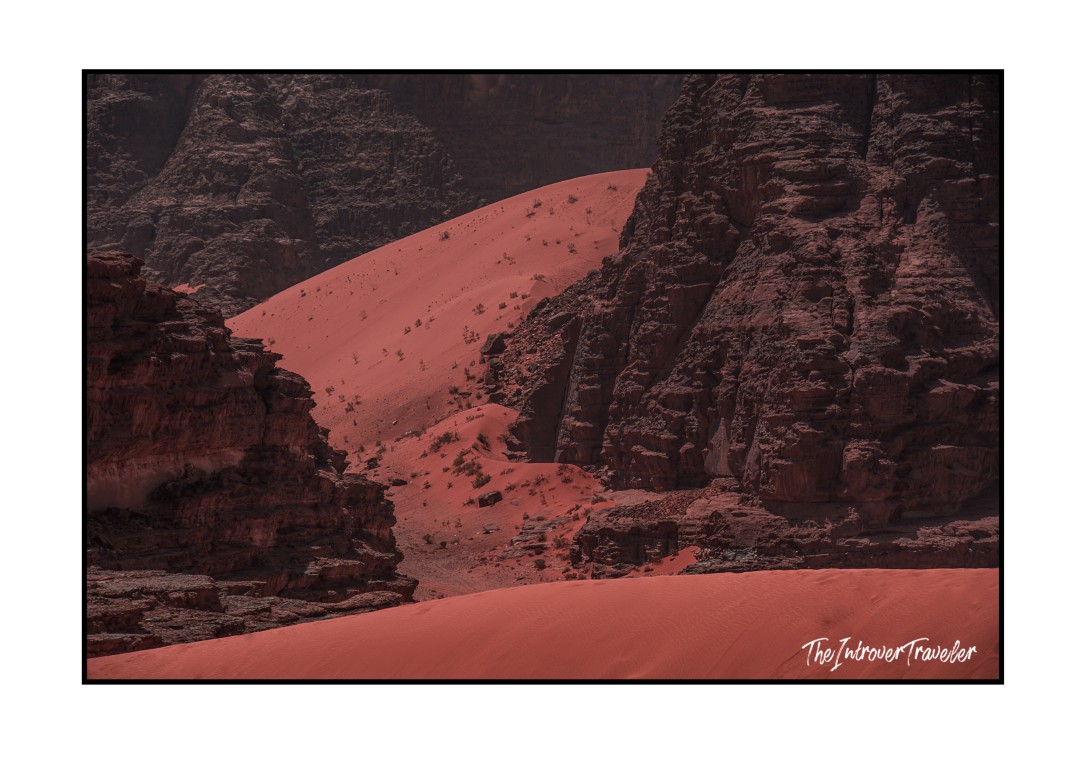
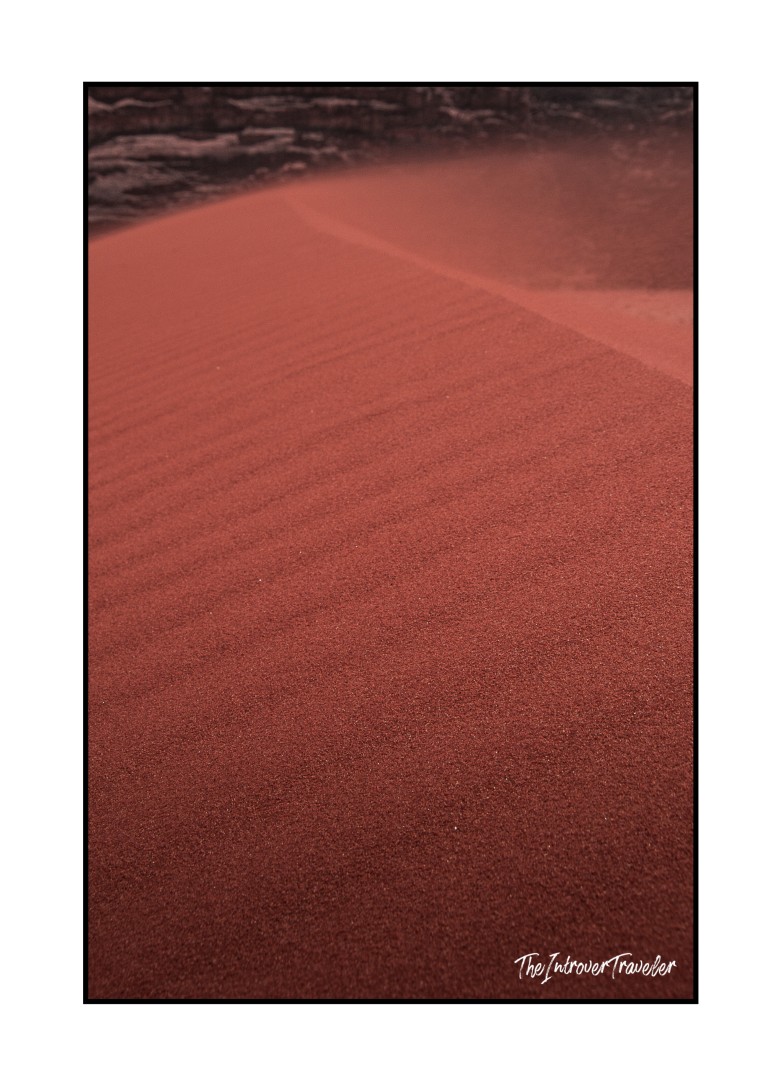
Wadi Rum appears so radically different from many other deserts because it is the result of an exceptionally distinct geological superposition, in which profound time, mineralogical composition, and erosive processes have acted coherently and continuously. Its physiognomy derives primarily from the contact between two large units: the Precambrian crystalline basement of the Arabian-Nubian Shield, composed of extremely resistant granites and metamorphic rocks, and a thick cover of Paleozoic sandstones deposited in fluvial and desert environments between the Cambrian and Ordovician. These sandstones, less compact than the underlying basement, have been selectively shaped by erosion, creating a landscape dominated by vertical walls, isolated blocks, rectilinear canyons, and sandy plateaus, where the geometry of the forms faithfully reflects the internal structure of the rock. The colors , which are one of the most distinctive elements of Wadi Rum, are mainly due to the presence of iron oxides and hydroxides (hematite and goethite) dispersed in the quartz grains of the sandstone: minimal variations in the concentration of these minerals, in the degree of oxidation, and in surface humidity produce a chromatic range that goes from intense red to purple, from orange to light yellow, up to almost violet hues at sunset. Added to this is the effect of differential erosion, which exposes layers of slightly different ages and compositions, accentuating the visual stratification of the rock walls. The most spectacular formations (natural arches, rock bridges, pinnacles, and “mushrooms”) are not the result of sudden collapses, but of the very slow work of aeolian abrasion, in which the sand, driven by the wind, acts like natural sandpaper, preferentially excavating the more friable areas and leaving the more cemented ones in relief. Rare but violent episodes of rain complete the process, channelling the water along fractures and lines of weakness which are progressively widened until they form wadis ( large sandy valleys framed by sandstone walls) and siq (narrow, deep gorges). The end result is a landscape that appears almost “architectural,” made of clear volumes and clean surfaces, devoid of the chaotic randomness typical of other desert landscapes. Wadi Rum is striking because it makes visible what elsewhere remains abstract: the direct dialogue between mineralogy, geological time, and erosion, transforming the rock itself into the landscape’s main narrative element.
The history of Wadi Rum
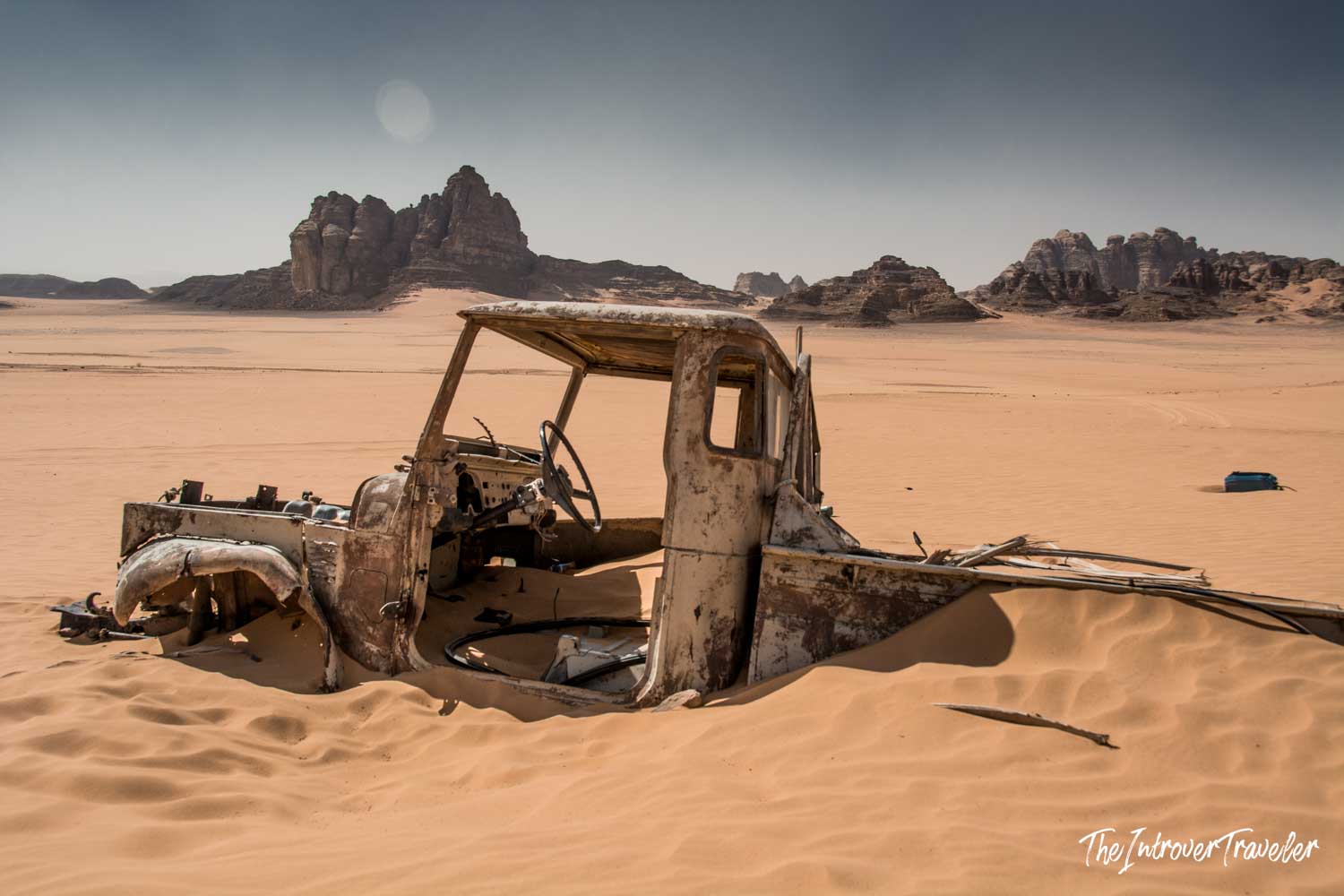
The history of Wadi Rum unfolds over an extraordinarily broad time span, far beyond our usual perception of a “natural landscape.” The first traces of human presence date back thousands of years, with rock carvings and petroglyphs covering large sections of the rock faces, evidence of prehistoric and nomadic communities who passed through and lived in this arid environment as early as the Neolithic and Bronze Ages. These inscriptions, along with ancient graffiti in languages such as Thamudic and Aramaic codices, represent tangible documentation of the earliest forms of human graphic expression in the area and reflect a functional use of the land as a hunting ground, resting place, and collective memory for itinerant groups.
With the evolution of trade routes and sedentary societies, Wadi Rum assumed a significant role along the routes connecting southern Arabia, the Levant, and the Mediterranean, facilitating not only the exchange of goods such as incense and textiles, but also of cultural customs and technologies. In historical times, between the 4th century BC and the 1st century AD, the area came under the influence of the Nabatean Kingdom, the civilization that built the famous city of Petra. The Nabateans, skilled at capturing and conserving water in arid environments, left behind evidence in the desert such as canal systems, collection cisterns, and temple remains. Their presence indicates a more organized use of the land, not only as a passageway but also as a space for gathering and controlling water resources in an otherwise extremely harsh landscape.
After the Roman conquest of the region in 106 AD, the Wadi Rum area gradually fell under the influence of the Roman Empire and subsequent powers that dominated Jordan, such as the Byzantines and the Abbasids, until the Ottoman conquest in the 16th century. Throughout these long centuries, the region continued to be inhabited by nomadic and tribal groups, particularly Bedouin populations, who woven their existence with the desert’s natural resources, developing local knowledge essential for survival in extreme environments.
Wadi Rum’s connection to modern and international history was consolidated during the Arab Revolt during the First World War. Between 1917 and 1918, one of the most famous episodes of the revolt against the Ottoman Empire took place in this region: Arab forces, led by Prince Faisal bin Hussein and supported by figures such as the British Captain T. E. Lawrence, exploited their knowledge of the territory to conduct guerrilla operations and logistically isolate the Ottoman garrisons. The young Lawrence built relationships with the local Bedouin tribes, a fact that not only contributed to the success of certain military actions, such as the battle for Aqaba, but also consolidated in Western memory the image of the desert as an epic theater of adventure and strategy.
In the 20th century, especially after Jordan’s independence in 1946, Wadi Rum was gradually recognized not only for its historical significance but also for its scenic and cultural value. In 1998, the area was established as a nature reserve, and in 2011 it was added to the UNESCO World Heritage List, recognizing its extraordinary integration of natural and archaeological heritage.
Today, the desert maintains a living dialogue with ancient and modern memories, visible in petroglyphs, archaeological remains, and traces of historical routes. It continues to be inhabited and narrated by the Bedouins, whose history has been intertwined with that of the landscape itself for millennia.
The visit to Wadi Rum
During my short visit to Jordan I rented a car to travel from Amman airport to Petra and from Petra to Wadi Rum (with a beach stop in Aqaba along the way).
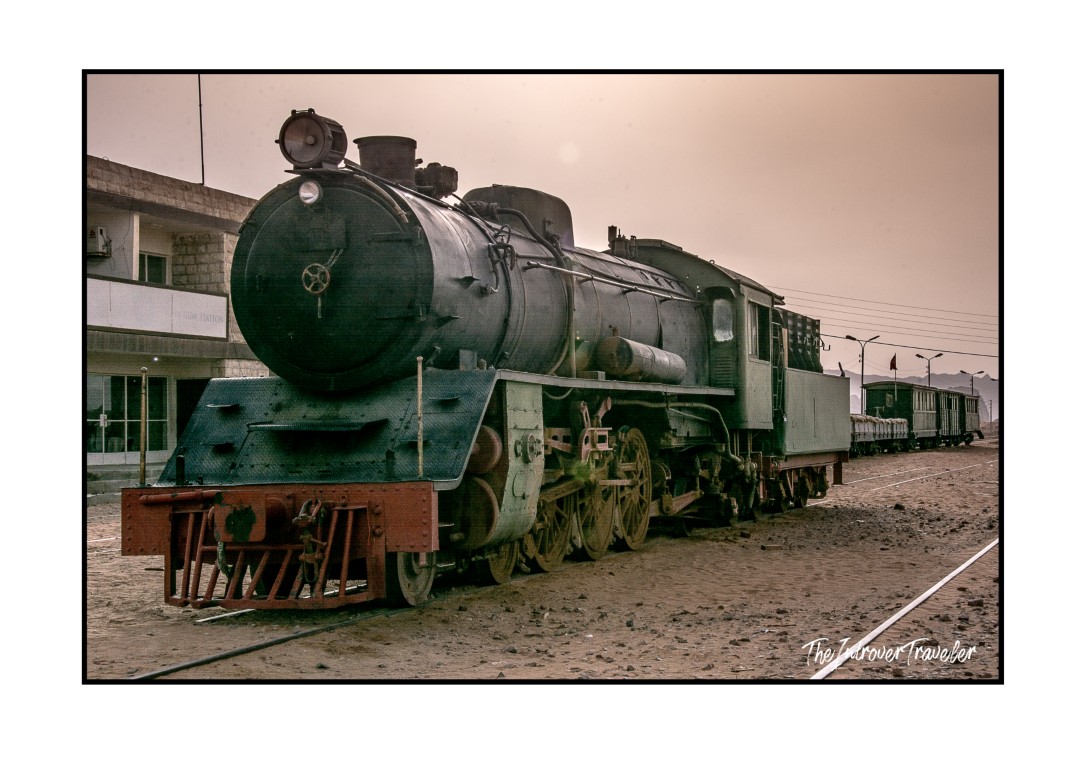
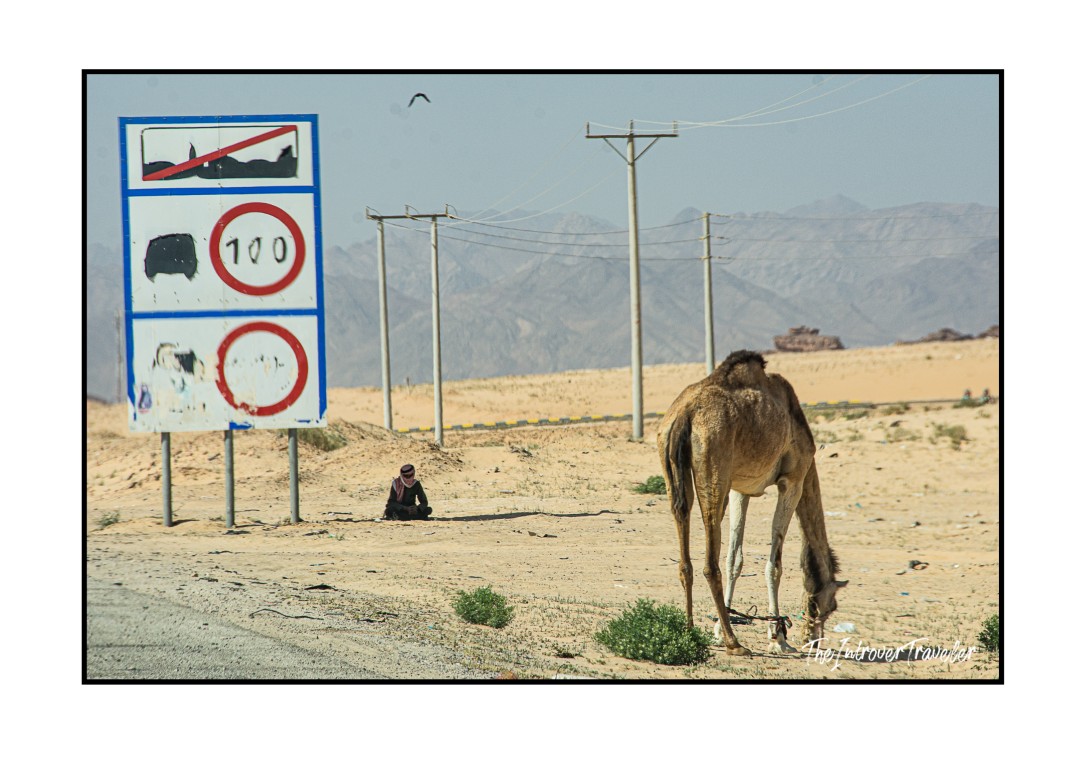
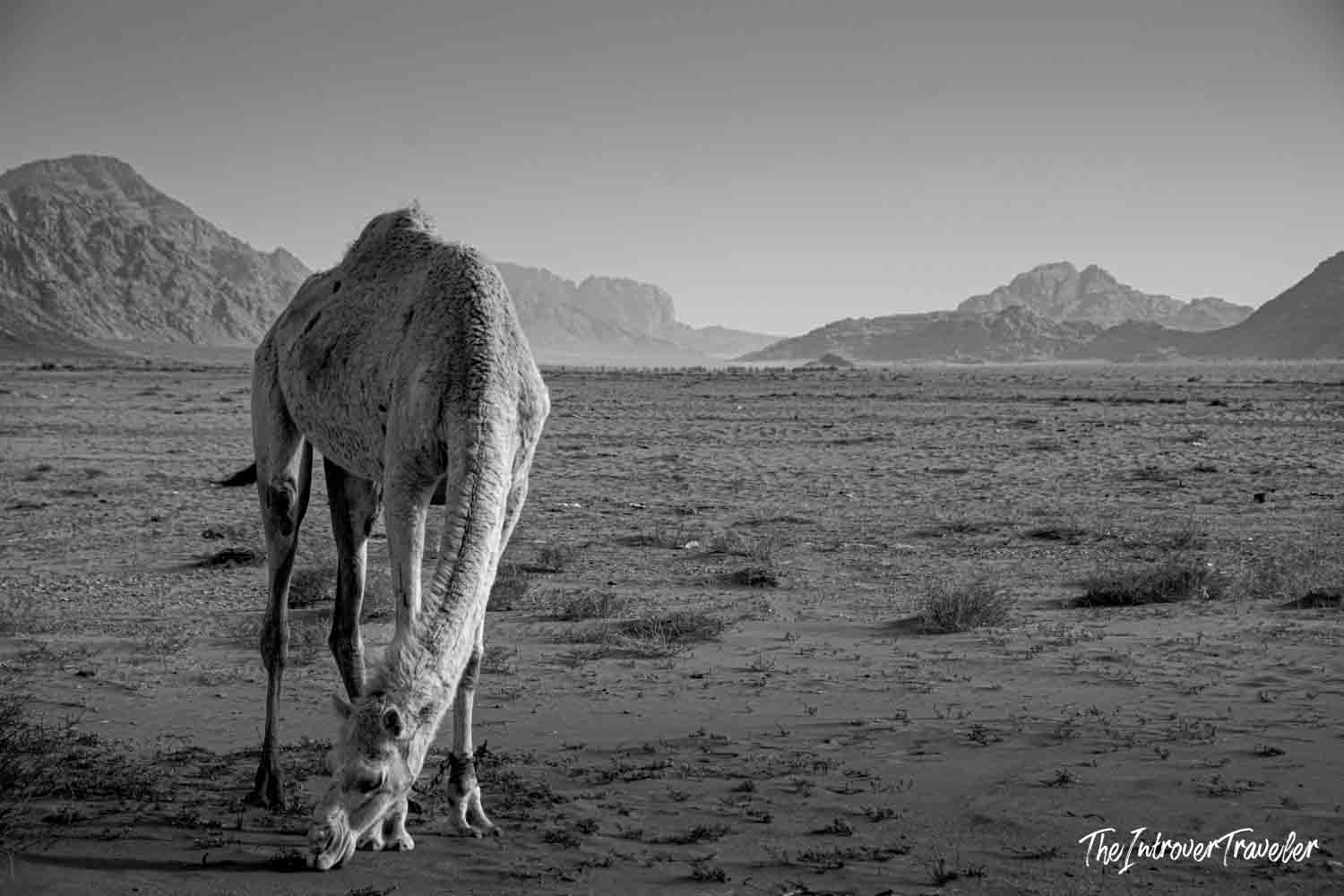
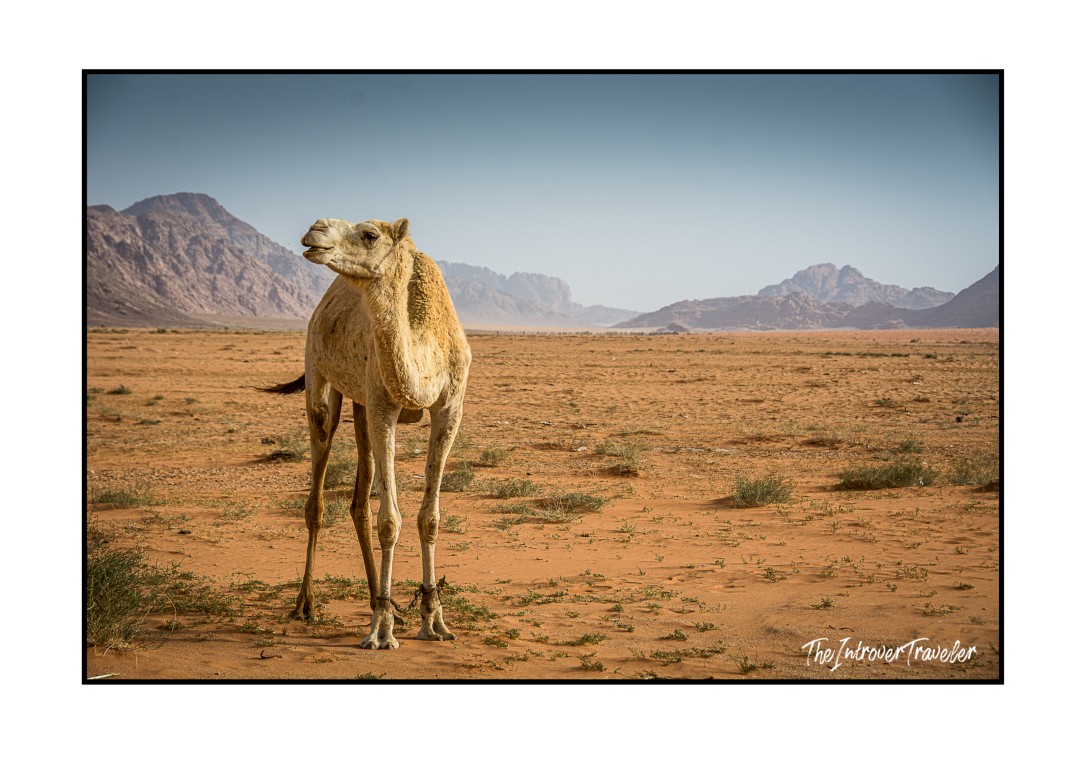
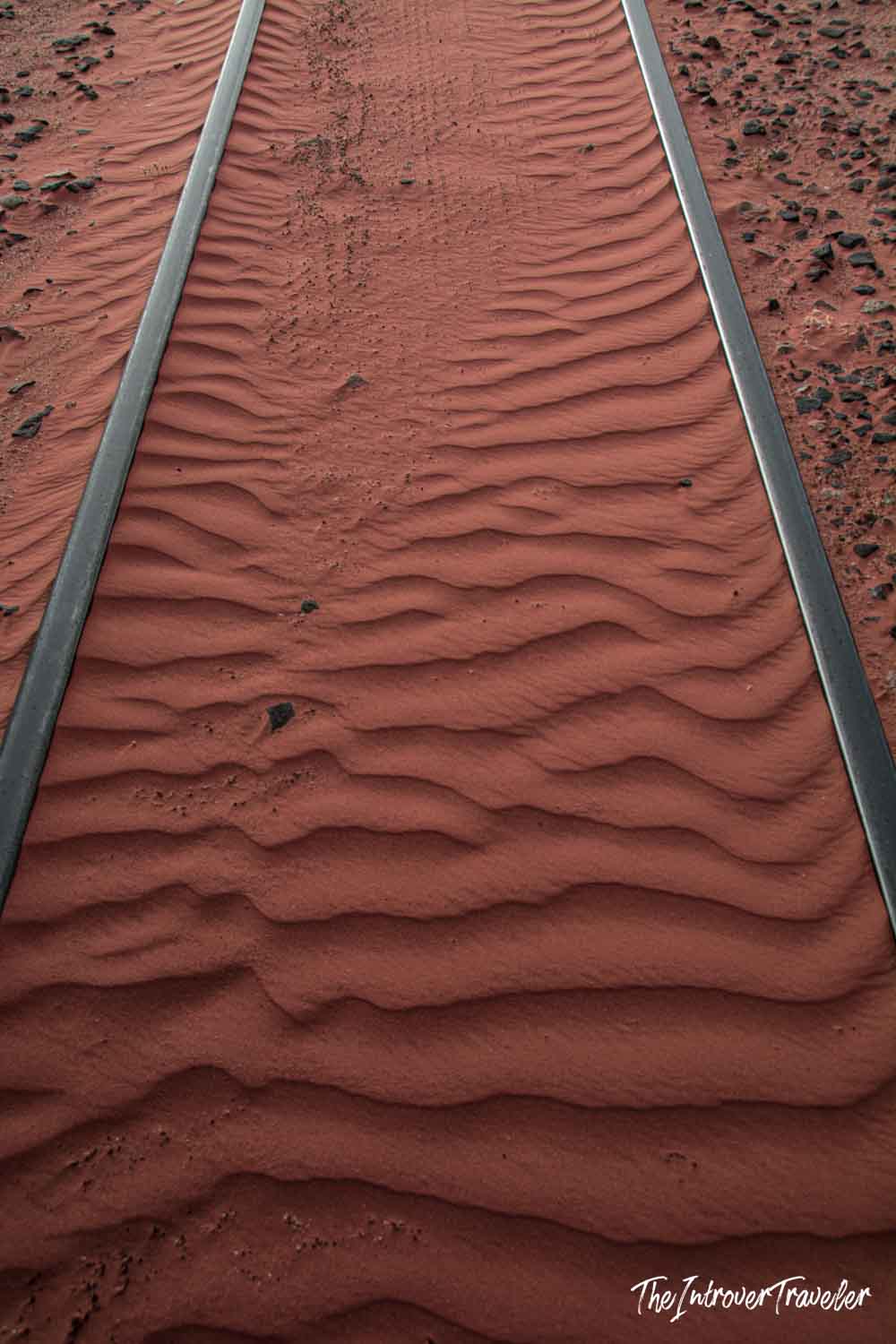
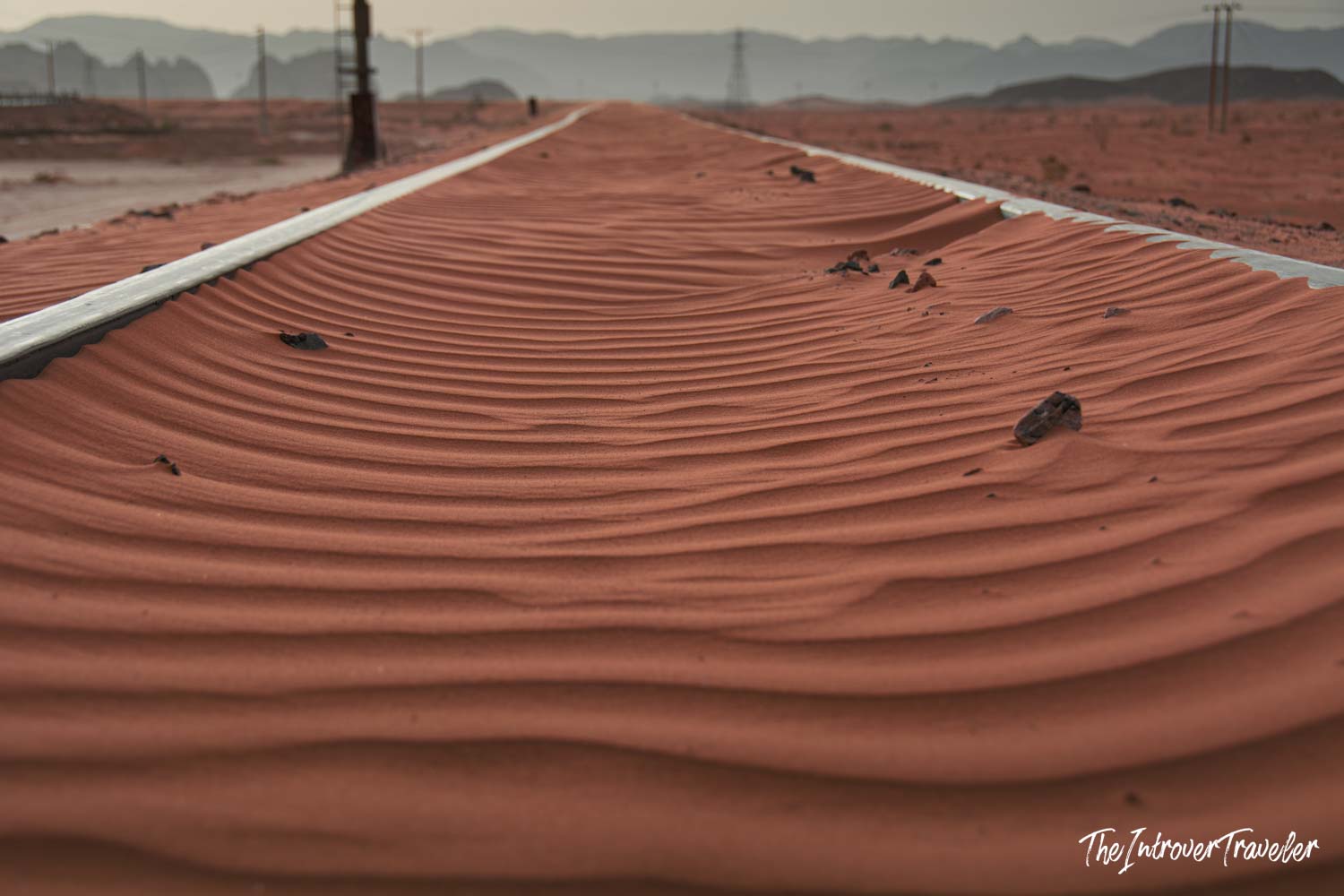
The drive from Wadi Musa to Wadi Rum takes about two hours to complete, but I recommend allowing more. Aside from a half-day stop in Aqaba to dive into the Red Sea (which I enjoyed after my exertions in Petra the previous day, but which is in itself dispensable, as I don’t think Aqaba is the best way to experience the Red Sea), the drive from Wadi Musa to Wadi Rum is picturesque and, in my opinion, warrants more than one stop. In particular, in addition to the frequent Middle Eastern influences due to the widespread presence of dromedaries along the highway (dromedaries that, among other things, roam freely even on the road, requiring double attention when driving), about three-quarters of the way along the route I encountered the stretch of railway where Lawrence of Arabia (one of my all-time favorite films) was filmed, noting that the train from the famous railway assault scene is still there! When I left the highway and turned toward Wadi Rum, and after a few minutes, beyond the railway embankment that ran alongside the road, I saw a Turkish flag waving, after a few moments of confusion, I was startled. Recognizing the iconic locomotive with its troop carriages, I couldn’t help but stop to take dozens of photos, significantly slowing down my journey. But even if you’re not a movie buff, I suggest planning at least an extra hour for the journey, as it will be natural to stop frequently to admire the scenery.
The minimum time to visit Wadi Rum is two days: a half-day for the outward journey, a full day for the desert excursion with pickup, and a half-day for the return journey (the time may be longer or shorter depending on whether your next destination is Petra, Amman, Jerash, or Madaba). In retrospect, I regret having only dedicated one full day and would have preferred at least two, because as I’ll explain in more detail later, Wadi Rum is so spectacular that at the end of the single day I spent there, I was far from satisfied.
When I visited, in late April, the temperature was just below 30 degrees Celsius, with a very dry and pleasant climate. Since we were always protected by the canopy of the pickup truck, I don’t consider sunscreen strictly necessary, but I strongly recommend sunglasses, not only for the bright light but also to protect yourself, where possible, from the sand. For photographers, sand is a significant problem, so I recommend carrying a sand pump and tissues to properly clean your equipment.
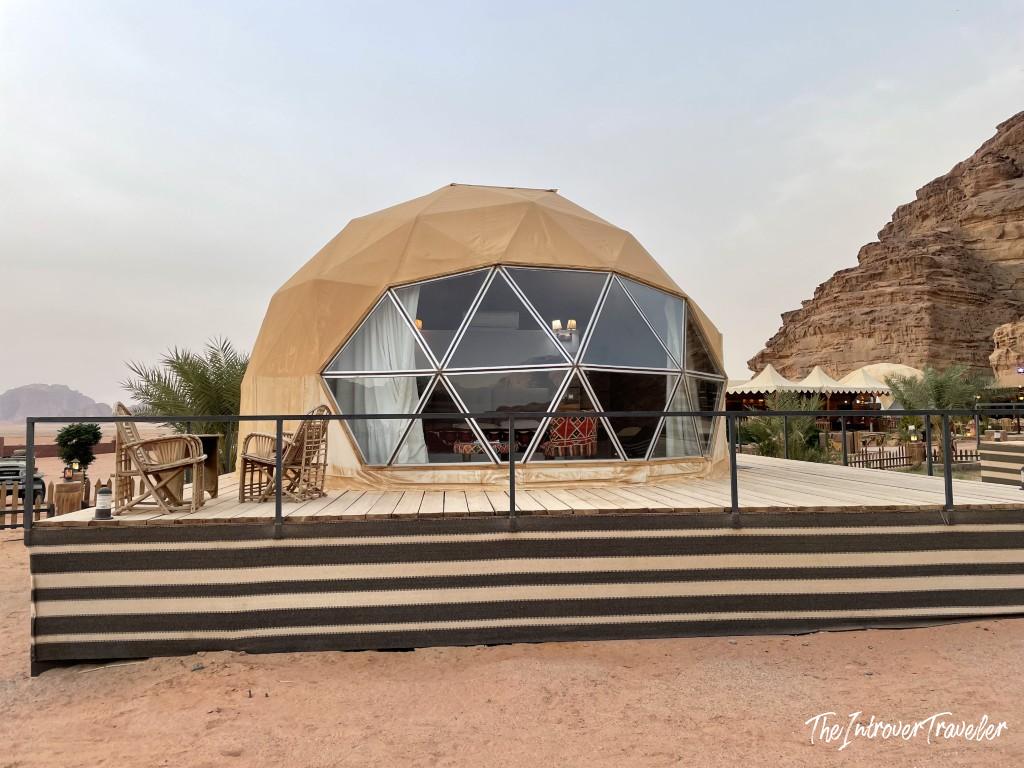
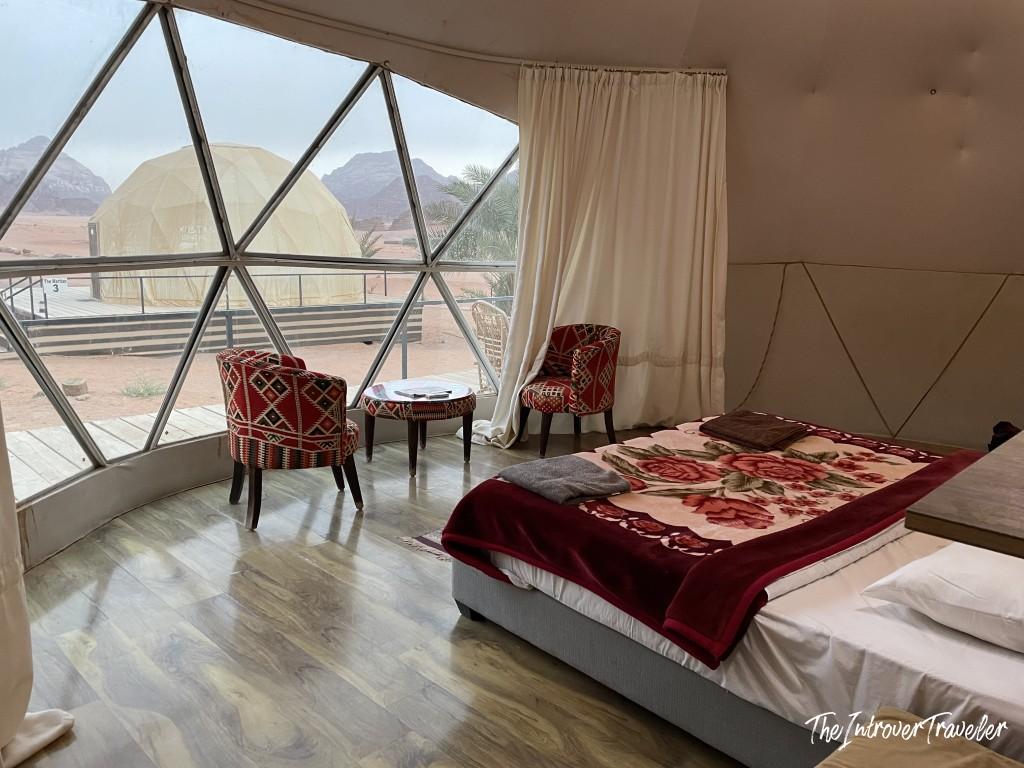
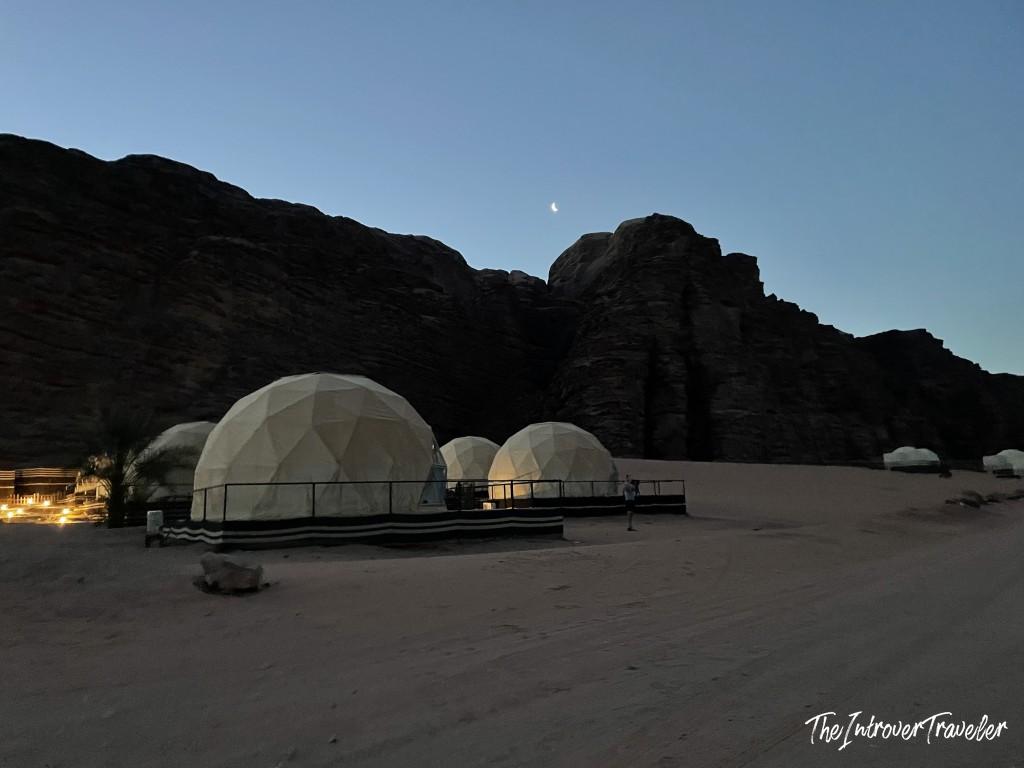
For a blogger who never misses an opportunity to hurl invectives against Instagram influencers and mass tourism, the most coherent choice for a stay could only be a bubble tent camp… specifically, the Hasan Zawaideh Camp. The camp organizes, as I assume all camps in Wadi Rum, the entire circus-like repertoire of tourist entertainment: meat cooking in a pit in the ground according to Bedouin custom, a dawn ride on dromedaries (I insist, for crying out loud, they’re dromedaries, not camels), a pick-up tour of the desert, and nighttime stargazing with telescopes. I’ll detail all the services below.
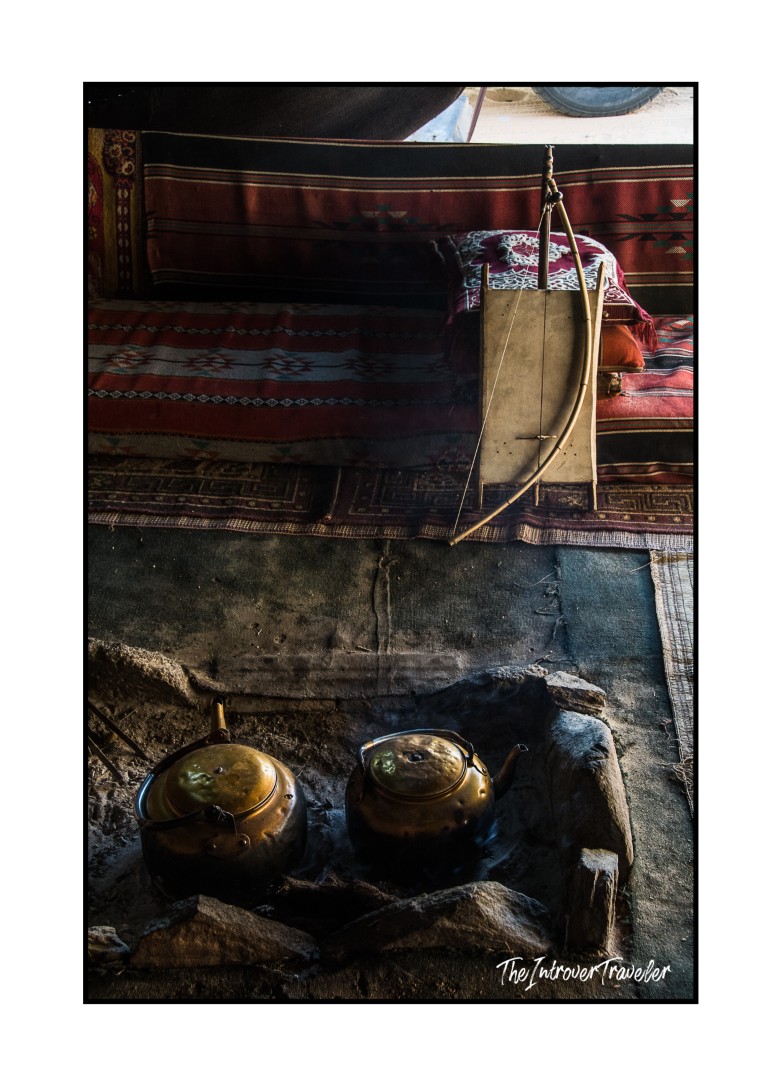
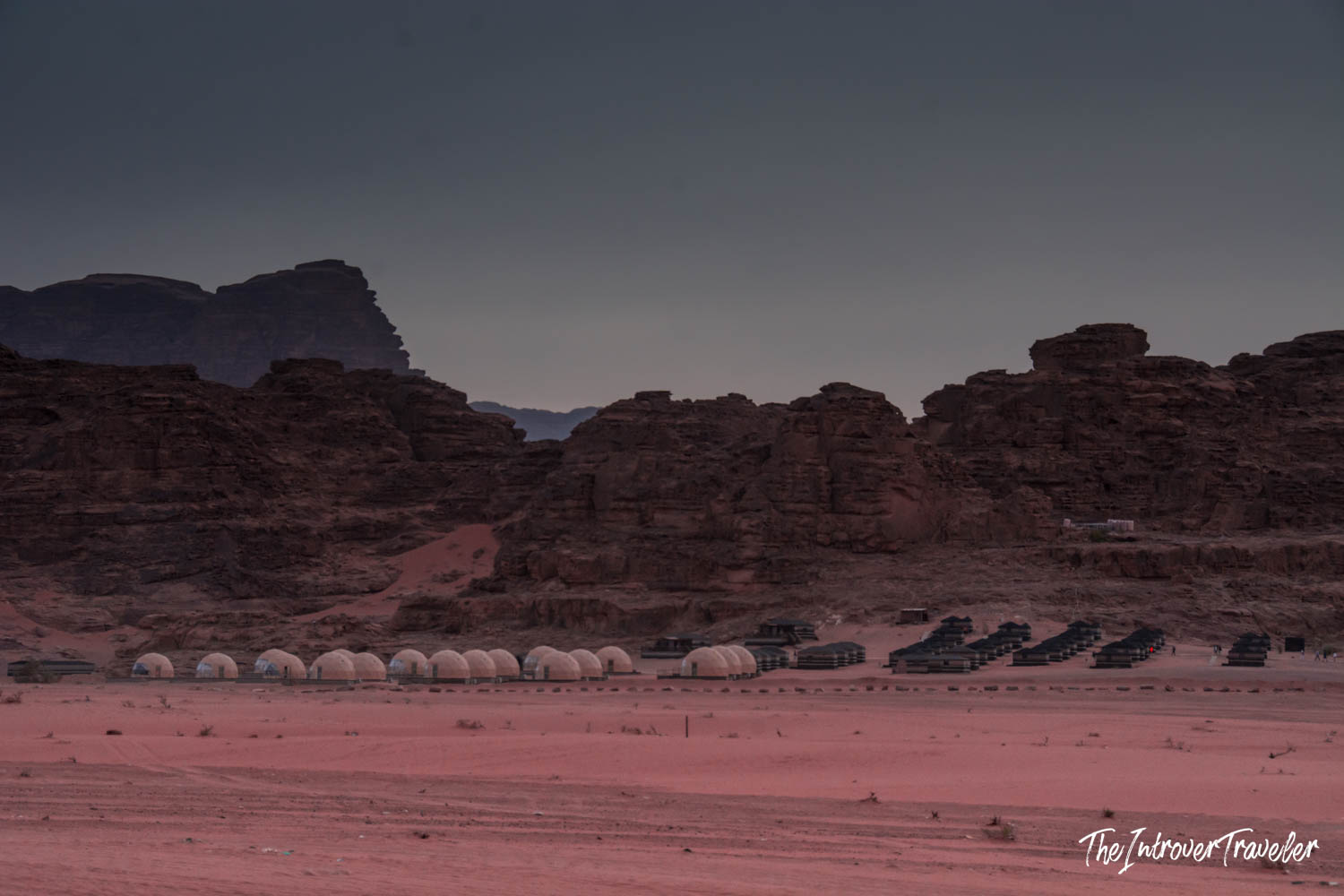
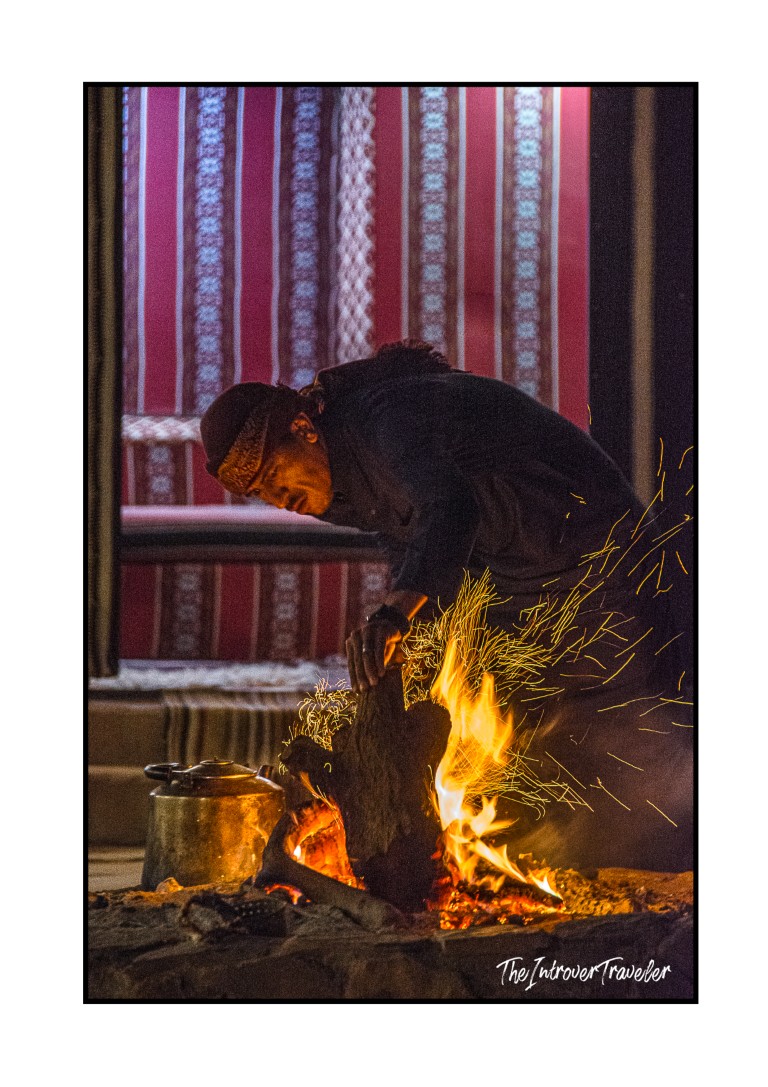
The camp. The camp is effectively a consumerist shack catering to Westerners that has little or nothing to do with Bedouin traditions, but… for two nights of sleep overlooking the desert under a starry sky, quelling my inner urges of rebellion, I’d say I thoroughly enjoyed it. For first-time visitors to Wadi Rum who aren’t stalwart travelers with an uncompromising devotion to suffering, sacrifice, and aesthetic purity, I highly recommend it, at least for a couple of nights. The meat-preparation show in the underground pit is a circus act I would have gladly done without, especially since it adds nothing to the flavor of the meat and simply makes you feel like you’re being treated like a fool, swindled out of every penny. The food quality is decent but not exceptional, while I find it a joke in extremely bad taste to serve a non-alcoholic pomegranate beer as beer. But walking at night under the starry sky among the bubble tents, or admiring the desert from your bed, is simply breathtaking. If I were to return to Wadi Rum, which I certainly wouldn’t rule out, I’d most likely choose a more authentic and less touristy alternative, but for once in my life, it’s an experience I honestly wouldn’t advise against.
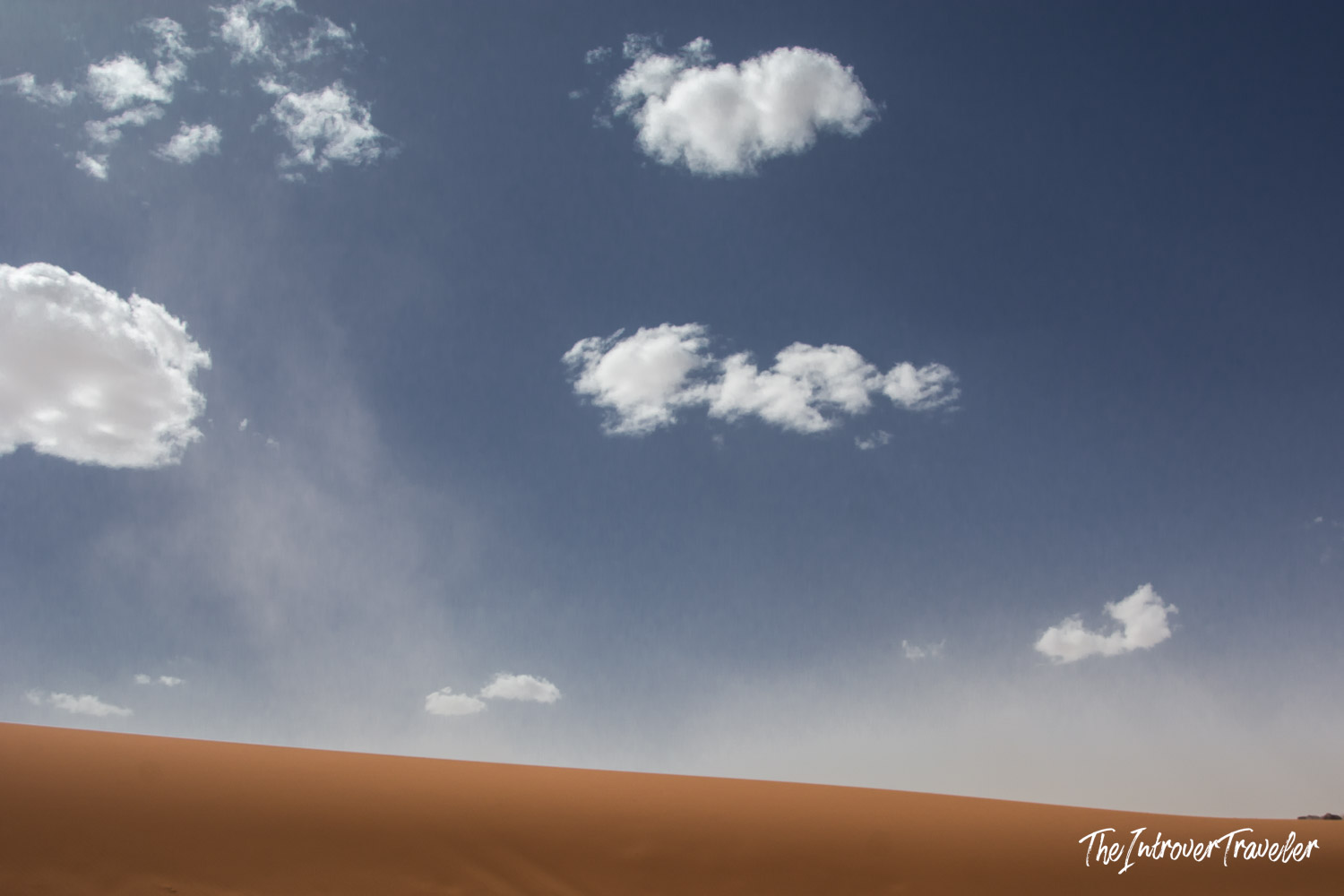
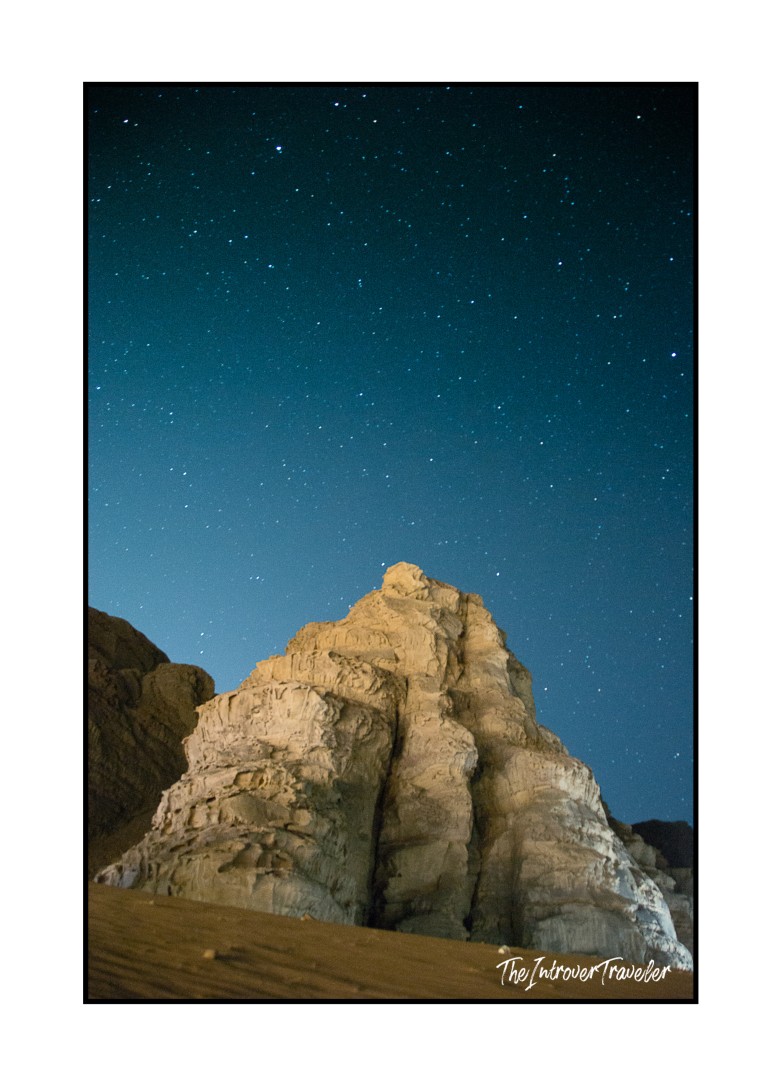
Stargazing. Besides being a photography enthusiast, I’m also moderately curious about astronomy, though it’s a subject I’ve never found the time to delve into as deeply as it deserves. Wadi Rum also has the reputation of being one of the world’s best locations for stargazing. Among the burning hopes I harbored before reaching Wadi Rum, therefore, in addition to the chance to take some nighttime landscape photos, was the prospect of witnessing some spectacular night skies the likes of which are rarely seen in the West, where light pollution prevails. Then, during dinner on the first evening, when I was approached by a camp staff member who asked if I’d be interested in participating in an evening of stargazing with astronomical telescopes, I had to resist handing over my credit card. The show lasted an hour and was led by a Jordanian astronomer who spoke impeccable English and did his utmost, with the skill of a consummate entertainer, to justify the price of an evening that was a complete dud. Not only did the suspended sand make the sky essentially inscrutable, but the four telescopes available to the public (some more powerful than others) didn’t significantly alter the naked-eye view. One of them was pointed at Arcturus (if I remember correctly, the others were Sirius and Alpha Centauri, not coincidentally three of the brightest stars in the observable night sky), which was a pinpoint of less than a millimeter both to the naked eye and through the telescope. For the rest, our host dedicated himself to providing some basic astronomy knowledge (generally speaking, nothing I didn’t already know), and considering that for an hour of work, he must have raised around a thousand euros, I concluded that it had been an excellent commercial initiative for the camp, but a wasted hour for the guests who had been fascinated by the proposal. As for star photography or simply contemplating spectacular starry skies, it goes without saying that the sand dashed all expectations, although, according to what the locals told us, we had bad luck visiting Wadi Rum on unfavorable weather days.
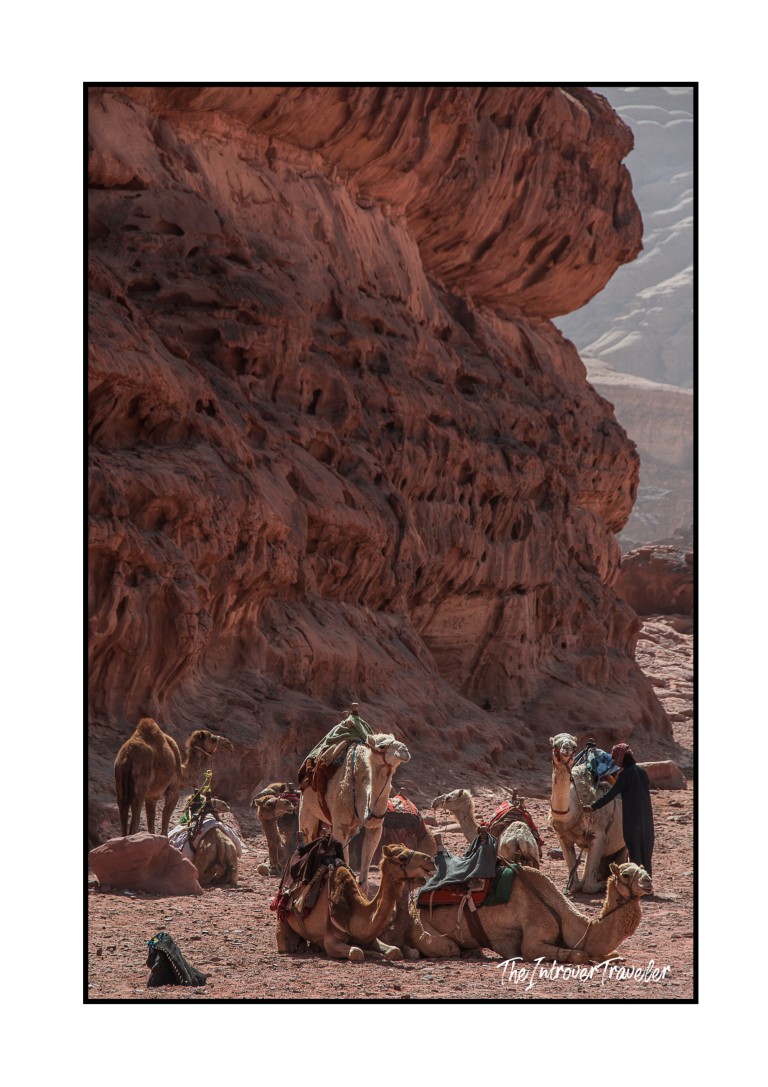
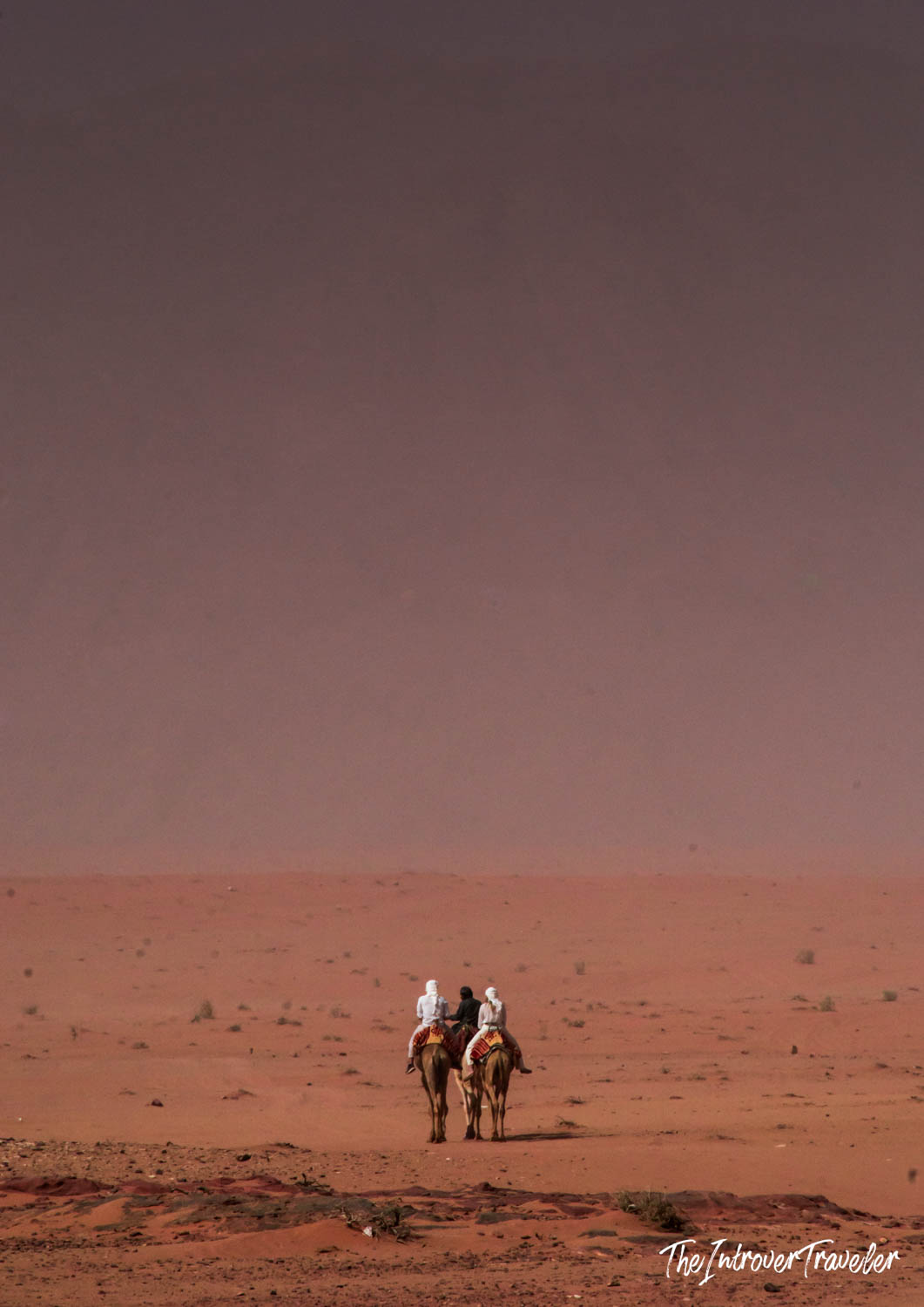
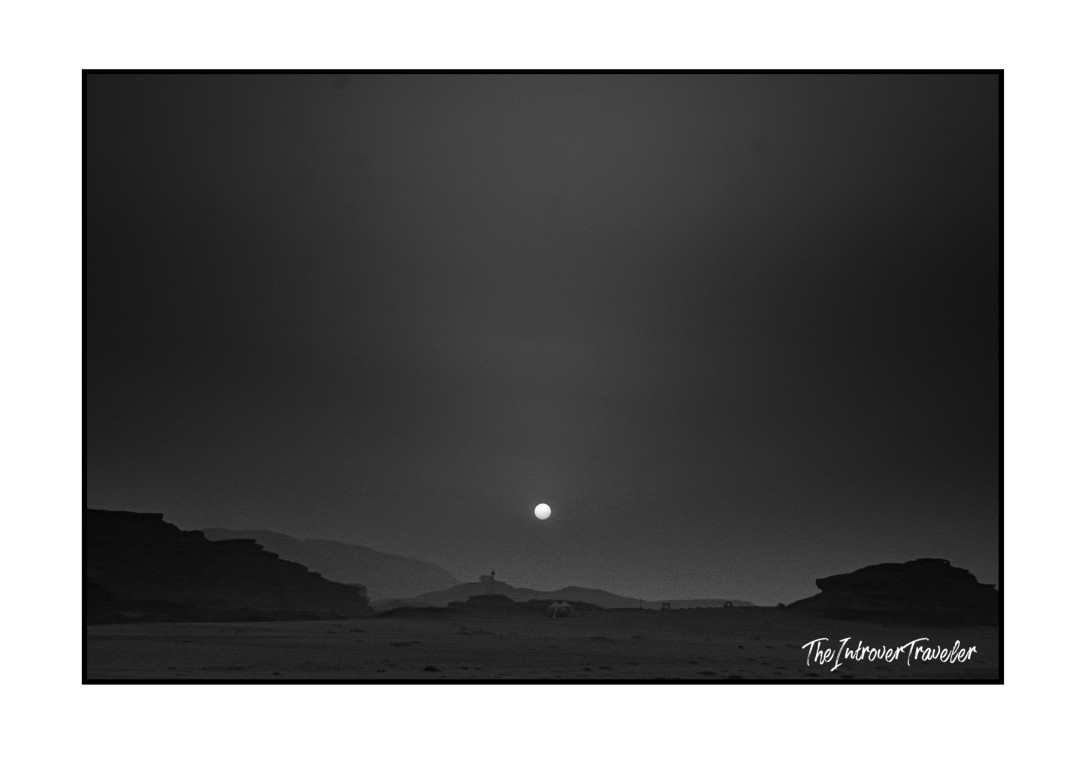
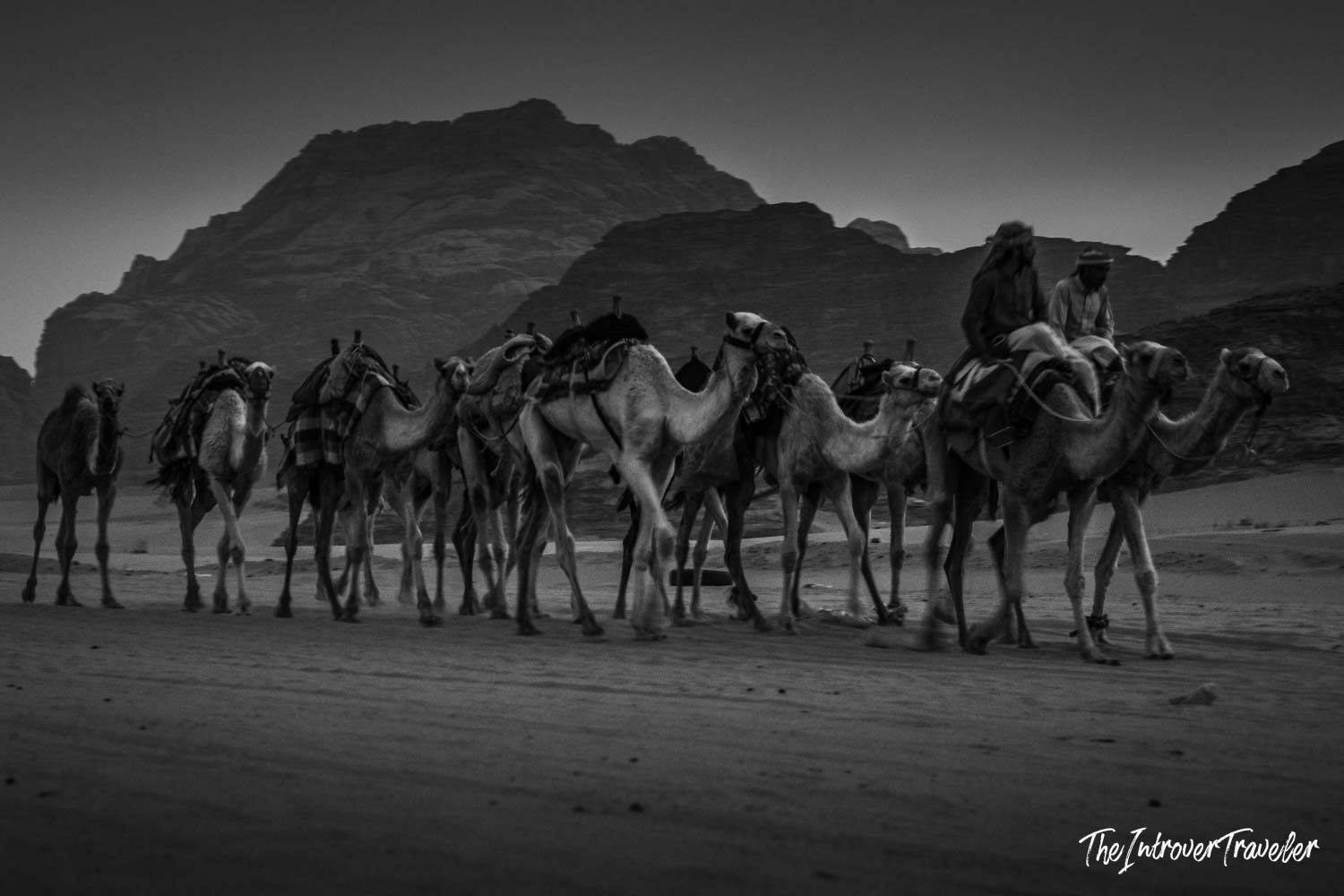
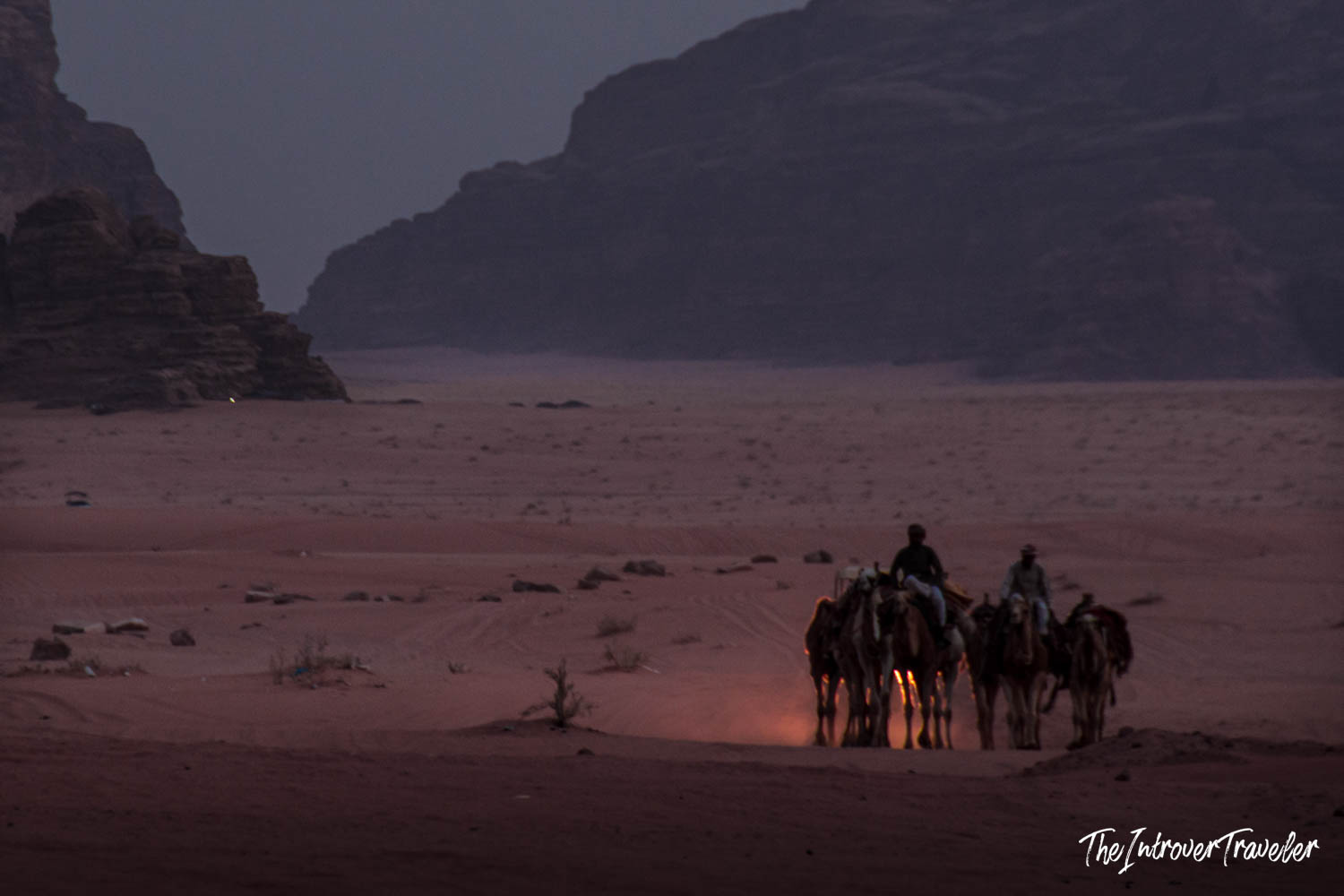
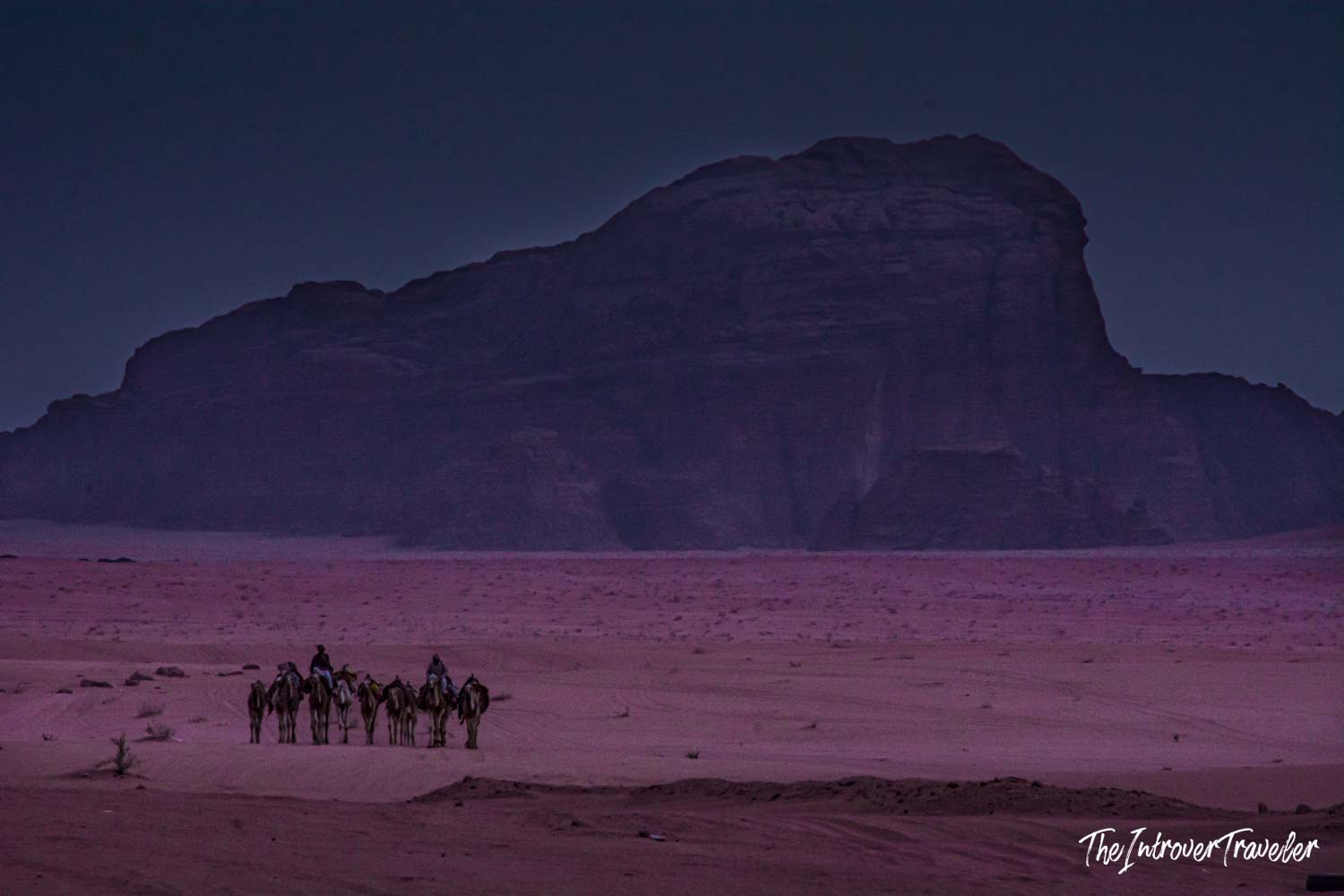
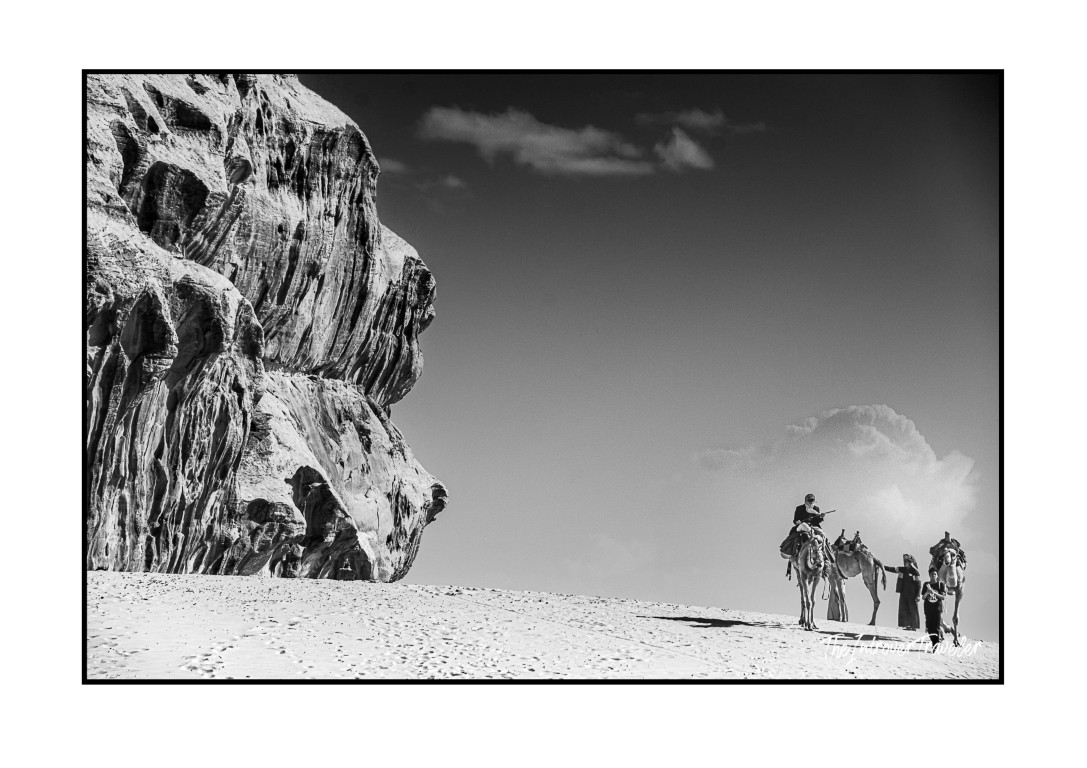
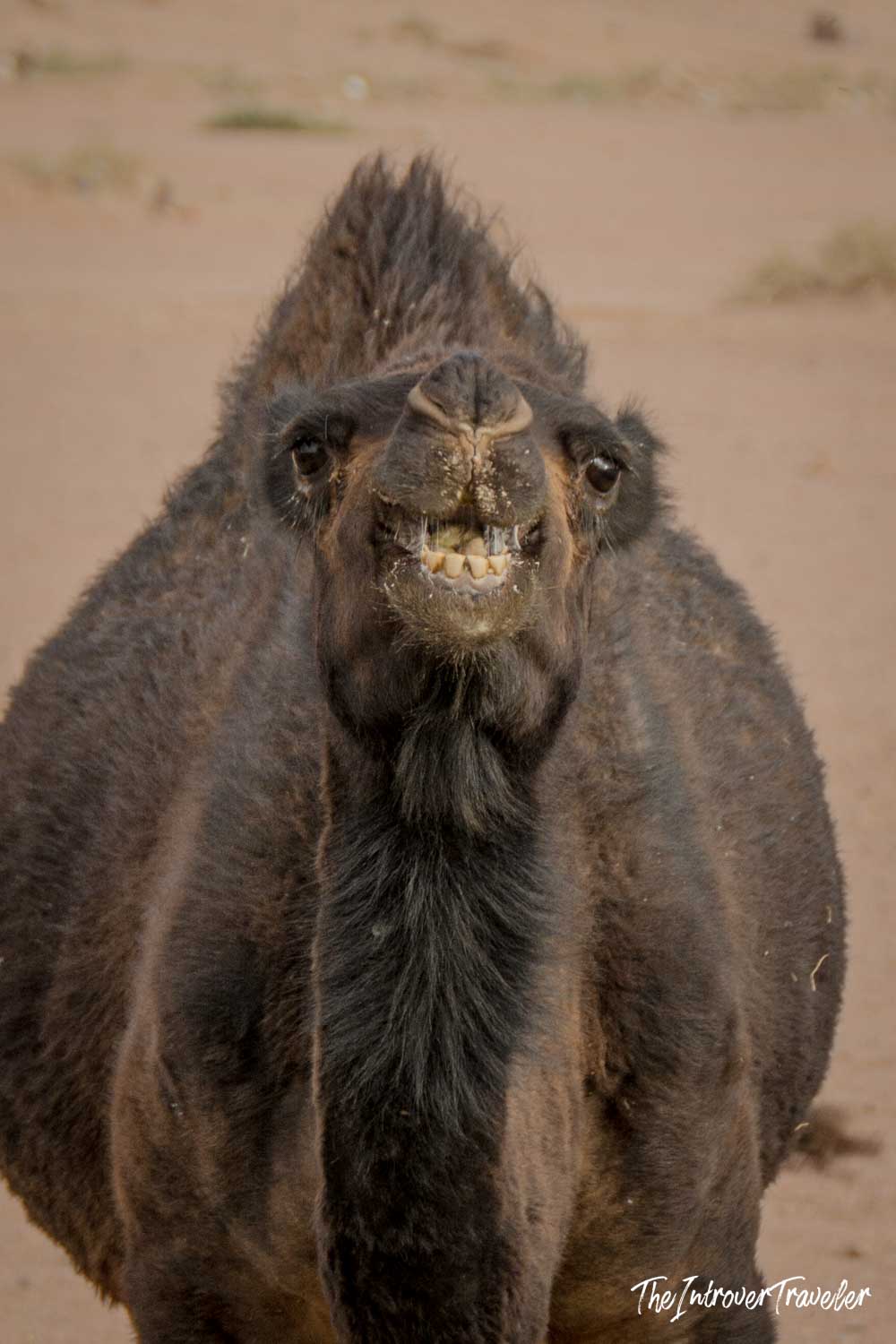
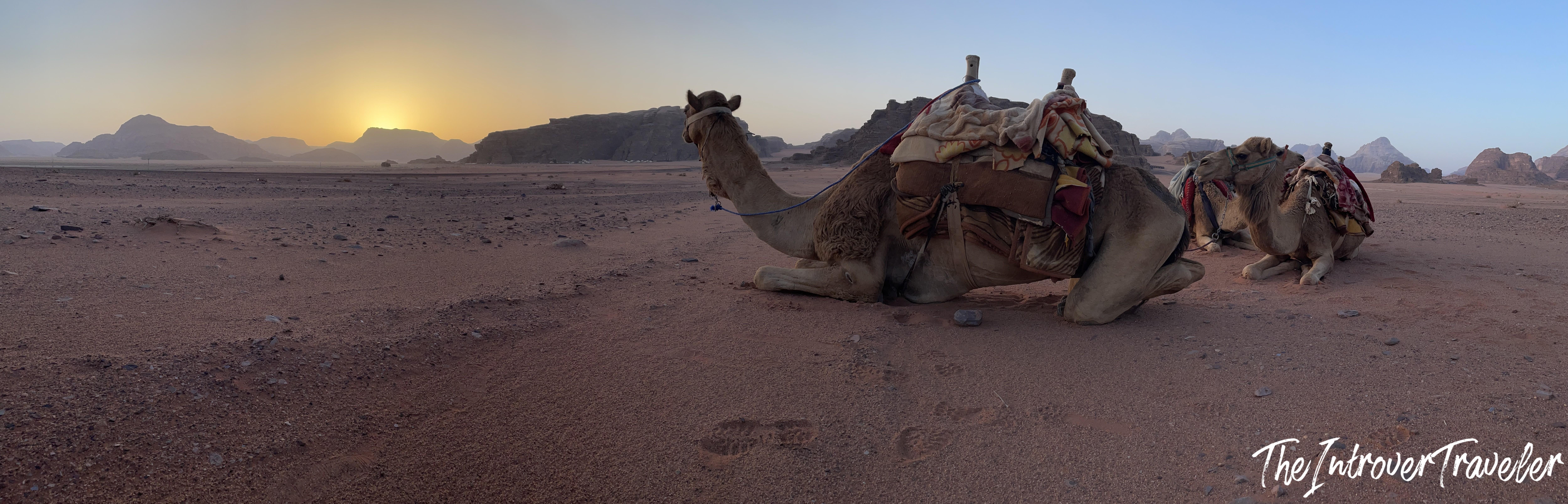
The sunrise excursion on dromedaries (please: dromedaries, not camels…). What I’ve already said about bubble tents in general applies here. A dromedary excursion is shamefully touristy and commercial, but I’m glad I did it once in my life. I’ll start by saying that in this specific case I don’t think it’s animal exploitation; the relationship between Bedouins and dromedaries is a centuries-old and intense one. From what I’ve seen, the dromedaries are treated by the Bedouins a little roughly, perhaps, but they are still cared for and treated with the respect that Bedouin culture reserves for these animals. Experiencing firsthand, even for just 20 minutes, the experience of riding across the desert sand on the back of a dromedary satisfied a harmless curiosity of mine. Watching the sunrise from a relatively isolated spot in the desert, with only the spectacular landscape of Wadi Rum and the dromedaries crouching on the sand in my field of vision, is an indelible memory.
How it works in practice: you agree to meet at 5:30 a.m.; you’ll be there promptly at that time, and the Bedouin who’s supposed to accompany you will be punctually absent (they’re wonderful idiots; there’s no way they’d remember an appointment, much less honor it; the concept of punctuality is interpreted fluidly). After a 10-minute wait, you’ll wake the camp manager, who, sleepy-eyed, will wake the camel driver, who will rush out of bed to fetch three camels and take them to the meeting point 20 minutes later than the agreed-upon time. The journey takes 20 minutes, just enough to get a bit further from the camp and reach a point that appears reasonably isolated. At that point, you spend half an hour watching the sun rise while, behind you, the camel driver, finally free to attend to his hygiene after his abrupt awakening, urinates kneeling on the sand in Bedouin custom, enriching the sensory experience with the sound of his watery splash. Once the sun rises, you return to camp within an hour.
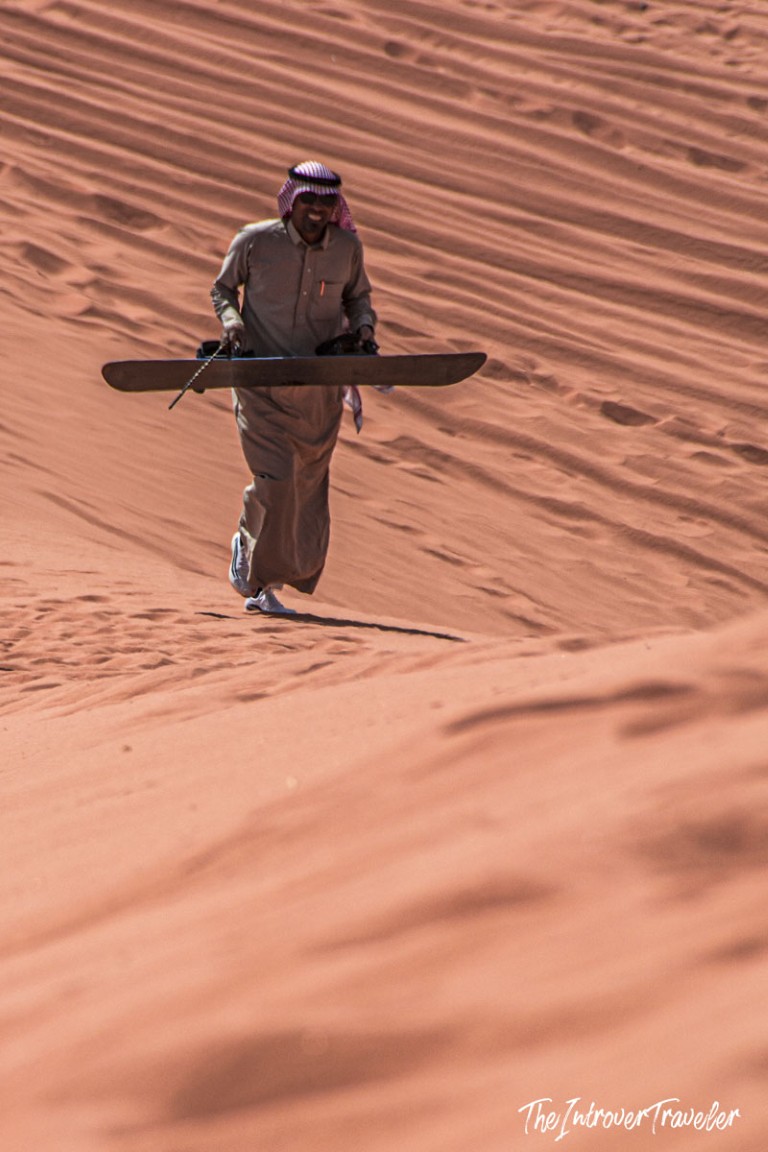
The desert excursion. Now we come to the main course, the real reason for staying at the camp: the desert tour by pickup truck. We often set off early in the morning, when the air is still cool and the desert hasn’t acquired the harsh light that will later make it more hostile. The pickup truck advances rapidly along the wadis, or rather, speeds along, sliding over compact sand and rocky stretches, following paths clearly traced by other tires. The dominant sensation is made up of jolts, the roar of the engine, mechanical noises, and creaks.
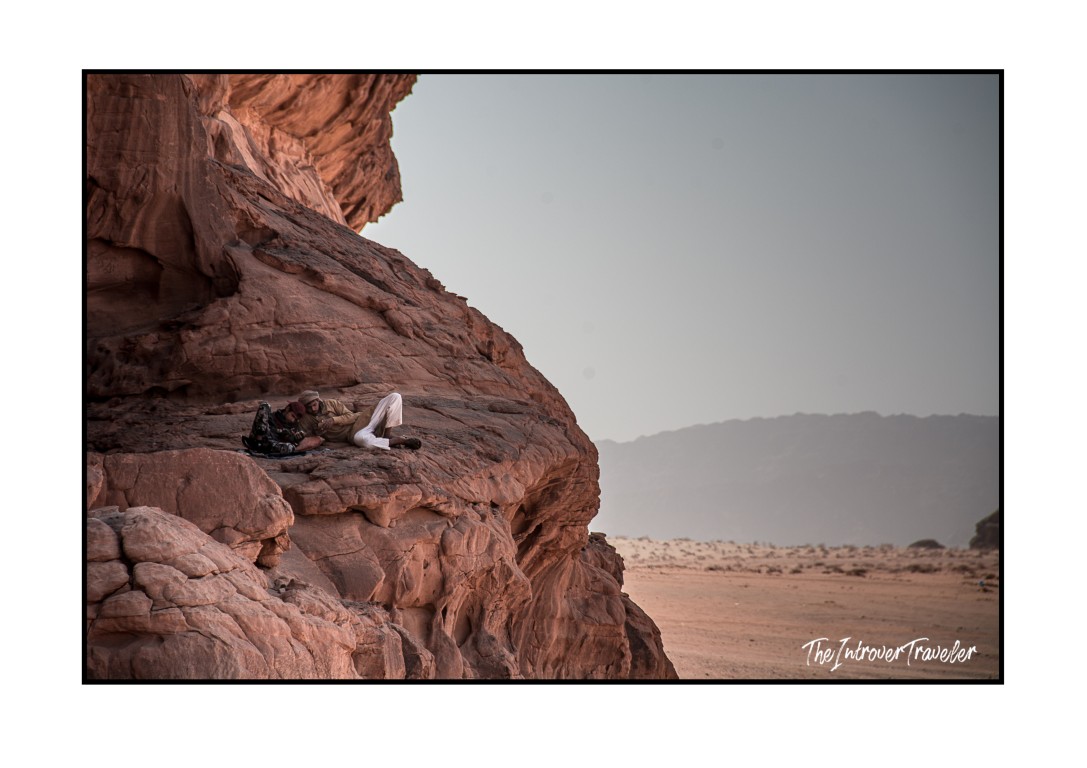
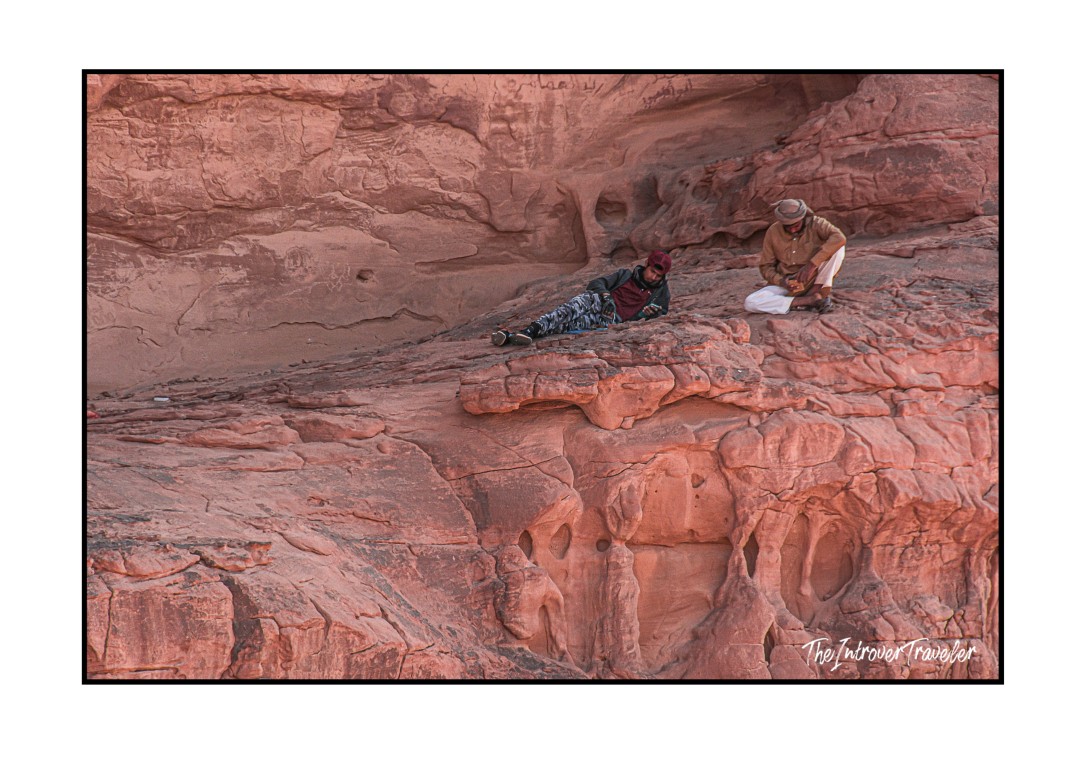
As you delve deeper, the sandstone walls get closer and vast spaces of theatrical spectacle quickly open up before your eyes. Every stop is a change of scale. At the archaeological sites, where you pause to observe the rock carvings, graffiti, and ancient inscriptions, you’ll often find Bedouins lounging in small groups, a reminder that these are communities that have inhabited and traversed this space for millennia.
Visiting places associated with Lawrence of Arabia introduces a different level of memory. Not so much for the literary or cinematic echo, but for the concrete perception of how important these places have played a role in the history of various eras. The heights dominating the horizon, the gorges that protect and conceal, immediately make it clear why this landscape was experienced not as a void, but as a working space; with the usual markedly commercial approach, tourists are taken to visit Lawrence’s cave, Lawrence’s dining table, Lawrence’s hut, Lawrence’s toothbrush… yet, when questioned on the subject, the Bedouins demonstrate they know nothing about it, much less the famous film.
Throughout the day, the light changes continuously and significantly. The seemingly motionless dunes change color with an almost imperceptible gradualness: the intense red of the morning shifts toward orange, then fades to lighter hues, reaching pink and purple hues in the late afternoon. The light alternates between harshness and softness as the sun’s position changes relative to the observer and the landscape as it passes through the roads and canyons. Even the mountains seem to change character: compact and severe in the midday hours, softer and more layered when the sun sets and shadows begin to etch their surfaces. From the back of the pickup, or during a short walk to a scenic spot, one gets the distinct impression that the landscape is never the same, yet always recognizable. What remains unchanged is the spectacular and monumental nature of the mountains, canyons, and dunes. Inevitably, the landscape is polluted, especially near the spectacular tunnels, by the usual displays of collective idiocy, represented in this case by influencers dressed, completely inappropriately, in luxury clothes, who plague the most evocative locations for dozens of minutes to take completely irrelevant photo shoots.
When you return to the camp or village, with the light now slanting and the air cooler again, your eyes are not yet satiated with such magnificence.