
This is the account of a week-long trip I made in June 2021 through southern Sicily, from Catania to Trapani. I travelled with my (beloved) partner and my (also beloved) children; some choices might seem senseless but were shaped by the presence of kids — some places I wanted to show them, others I judged too slow for them, so the itinerary was partly negotiated. This is not THE ideal tour of Sicily. It is a possible tour, and an honest one.
Search for flights to Sicily here.
Why a trip to southern Sicily
Sicily has always exerted a particular fascination on me that I’m not sure I can fully convey to a foreign reader. Running the risk of cliché: Sicily is the land of Giuseppe Tomasi di Lampedusa, Leonardo Sciascia, Andrea Camilleri; the films of Luchino Visconti, Pietro Germi and Francesco Rosi; the land of Ettore Majorana, Giovanni Falcone and Paolo Borsellino. It is the place where two of the greatest cultures ever expressed by civilisation — the Greek and the Arab — fused in ways still tangible today in the language, the place names, the food, the architecture and the general texture of Sicilian life. Sicily is not Italy. It is not Greece. It is not Morocco. It is something else.
Sicily is the land where Sebastião Salgado photographed the fishermen of the tonnara of Favignana, and among them you can see men with blond hair and blue eyes — unmistakable heirs of the Norman occupation — working alongside companions who seem to have stepped out of the pages of Homer’s Odyssey.
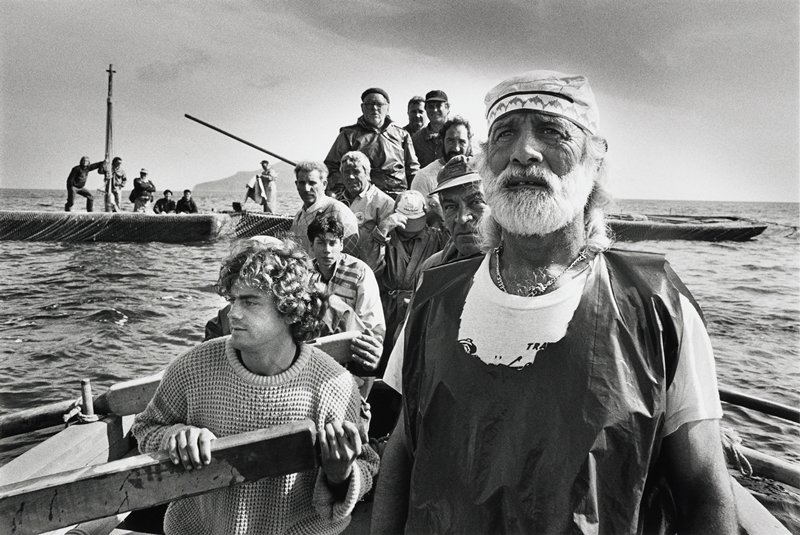
Decades of literature and cinema have built and consolidated an image of Sicily made of citrus and prickly pears, gargantuan banquets, tough and hospitable men, Baroque churches overflowing with stucco, and Greek temple ruins emerging from landscapes full of gorse and wild palm trees.
Leaving for Sicily, I inevitably think of the Prince of Salina watching his sun-scorched estates and reflecting on how the Sicilian attitude — adapting to the passage of time by leaving everything exactly as it is — might be the defining trait of the island. Some of these expectations were disappointed. Others were powerfully confirmed.
These are just a few of the thoughts that I had in my mind at the beginning of my trip. As with any trip, some expectations were disappointed and others powerfully confirmed.
The Itinerary: All Stops with Links
This is the route we took, east to west. Each stop has its own post with practical information, first-hand impressions and, where relevant, specific recommendations.
Catania — The volcanic, chaotic, magnificent starting point. Black lava stone streets, the finest fish market in Sicily, a Benedictine monastery where a 17th-century lava flow is still frozen against the outer walls. Base yourself here for the first two days.
Mount Etna — Because you cannot fly into Catania and not go up the volcano. A guided trek from Rifugio Sapienza covers 10 km and roughly 300 metres of altitude gain. The lunar landscape above 2,500 metres is genuinely unlike anything else in Europe. MUST SEE.
The Three Aci: Acireale, Aci Trezza, Aci Castello — Three small coastal towns north of Catania built on and around Etna’s lava flows. Aci Trezza has extraordinary columnar basalt formations rising from the sea. Good for a slower half-day between more intense stops.
Ragusa Ibla, Scicli, Modica, Noto — The four UNESCO Baroque towns of the Val di Noto, rebuilt after the catastrophic 1693 earthquake. Among the most scenographic urban landscapes in Italy. Budget at least two days: I did all four in one afternoon and paid the price.
Marzamemi — A small fishing village a few kilometres from Pachino, built around an 18th-century tuna fishery. Enchanting at sunset, best avoided in July and August. Good as an evening stop after the Val di Noto.
Ortigia, Syracuse — The ancient island at the heart of Syracuse, connected to the mainland by two short bridges. A cathedral built directly over a Greek temple. One of the most layered places in the entire Mediterranean.
Agrigento, Selinunte, Segesta — The Greek temples of the south-west: a completely different register from the Baroque of the south-east, and in some ways more affecting. The Valle dei Templi at Agrigento is one of the best-preserved ancient Greek sites outside of Greece itself.
Mazara del Vallo — The most unexpected place on the entire tour. A small port city with a North African quarter unlike anything else in Sicily. Worth a dedicated stop.
Marsala and Trapani — The westernmost stops on the tour. Posts in progress.
Worth adding if you have more time
These are places I had to skip or rush through, which I intend to return to:
Caltagirone (ceramic tradition, extraordinary Baroque staircase), Piazza Armerina (Roman villa with extraordinary floor mosaics), Castle of Donnafugata, Ispica, Randazzo, Militello, Grammichele, Gorge of Alcantara.
A Note on How to Structure a Sicily Trip
I believe the best way to visit Sicily is to divide it into four quadrants — north-east, north-west, south-east, south-west — and dedicate a week to each. Doing all of the south in seven days, as I did, inevitably means visiting some places too hastily and skipping others entirely. All the stops listed above are in the south and south-east of the island. My honest recommendation: if you are starting from Catania, focus on the south-east first (Etna, the Three Aci, the Val di Noto, Ortigia, Marzamemi), and save Agrigento and the south-west for a separate trip.
Practical Information for the Trip
Safety
The prejudice that Sicily is dangerous is, in my experience, unfounded. I drove through the entire south, including non-touristic peripheral areas, carrying a backpack full of camera equipment that announced its contents at every step. I never felt threatened or intimidated. On the contrary, Sicilian hospitality is the real thing — spontaneous and genuine, not performed for tourists.
I took out theft insurance on the rental car at Catania airport. In retrospect, I wasted the money. My advice: exercise the same precautions you would in any unfamiliar city. Avoid leaving valuables visible in the car. That is about it.
Driving
Here I must be honest in a different direction: Sicilian driving is genuinely alarming. Three days in central Catania is the equivalent of a master’s degree in defensive driving. Do not assume other drivers respect right of way. Expect unmarked potholes, scooters appearing from impossible angles, and motorways that end against a wall with no warning. The three-hour drive from Syracuse to Agrigento was probably the worst driving experience of my life.
Two specific warnings: first, there is a serious shortage of petrol stations outside urban areas. Never let the tank go below half. Second, GPS routing in Sicily occasionally has a creative relationship with road conditions. Verify any route that seems to take you through the middle of nowhere.
Rent a car at Catania airport — available operators include Hertz, Sixt and several local companies.
When to Go
June to September is HOT. Spring (April, May) and autumn (September, October) are significantly more comfortable for driving and walking, and the most popular sites are less crowded. Winter brings mild temperatures in the coastal areas, though some mountain roads may be affected by snow.
Food
Anyone who visits Sicily for reasons other than the food is missing the point, or at least half of it. A few things you must try:
Arancino (or arancina, if you are in Palermo — the gender debate is serious and local): deep-fried rice balls stuffed with meat ragù, peas and cheese. Try every variation you find. There is no bad version, only varying degrees of excellence.

Granita: a specialty of eastern Sicily, made from water, sugar and fruit frozen slowly and stirred continuously to maintain a soft, creamy consistency. Almond and pistachio are the canonical flavours; mulberry, lemon and coffee are also outstanding. In eastern Sicily, breakfast means granita and brioche — the brioche here has a distinctive rounded top called a tuppo. This is non-negotiable.

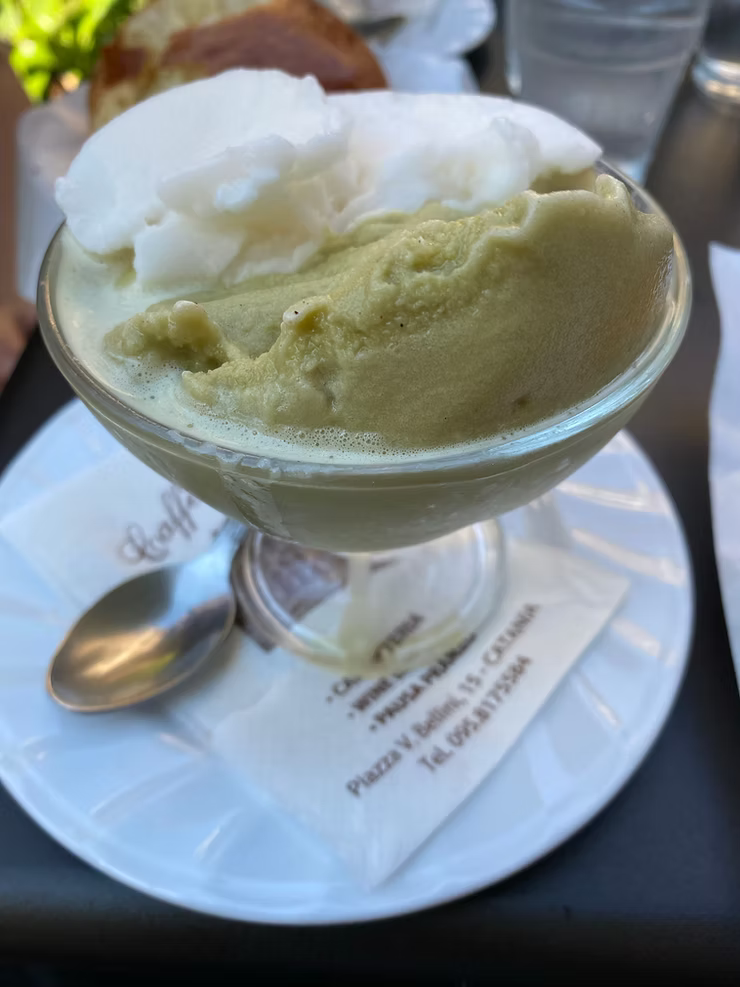
Almond cakes: found in countless variations across eastern Sicily. If you find them fresh and well made, they are an unforgettable thing.

Cannoli: ricotta, chocolate chips and candied fruit in a crispy fried pastry shell. The canonical version is from Palermo and the western part of the island; in the south-east they exist but are not at their best. Save serious cannoli consumption for the north-west.

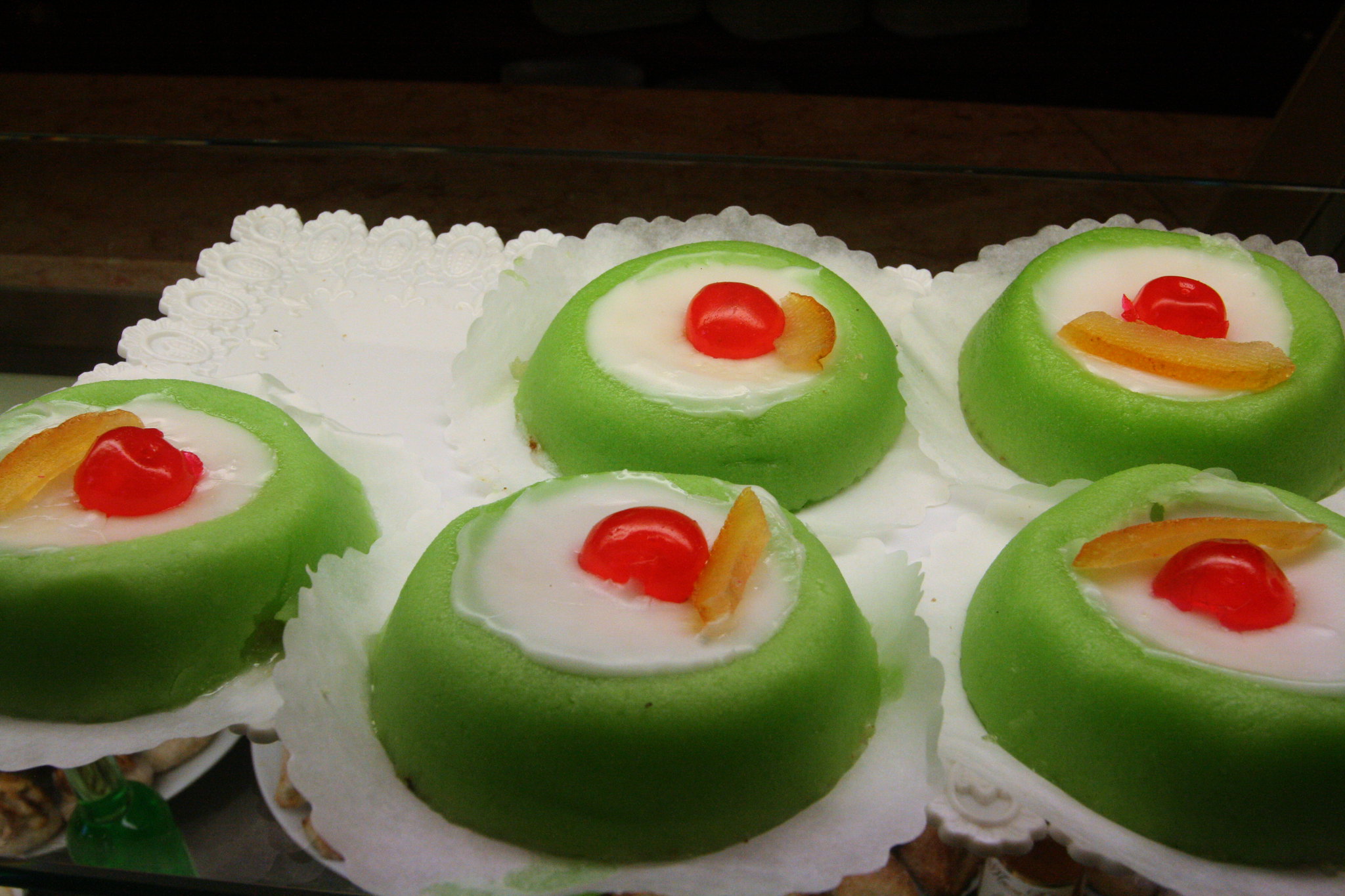
Cassatine: sponge cake, sweetened ricotta, marzipan and candied fruit. The same geographical caveat as for cannoli.
Soundtrack
No trip is complete without the right music. Three Sicilian artists worth having on rotation:
Films to Watch Before You Go
- Divorce Italian Style (Pietro Germi, 1961)
- The Leopard (Luchino Visconti, 1963)
- La Terra Trema (Luchino Visconti, 1948)
- The Day of the Owl (Damiano Damiani, 1968)
- Cinema Paradiso (Giuseppe Tornatore, 1988)
A Few Other Things Worth Knowing
Sicily is an ancient land, where the monuments of ancient Greece and the Arab and Norman occupation alternate with Baroque architecture, with small stone villages perched on the mountains; it is a neglected land, where enchanting places suspended in time unfortunately alternate with open-air dumps, ruined buildings, abandoned car carcasses, so be prepared for an alternation of amazement and disenchantment. Sicily is a land of farmers and fishermen, of blue sea and wheat fields, of fish stalls, markets and banquets. Sicily is an island with an identity of its own; being Italian is one thing, being Sicilian is another matter.
The temperature from June to September is HOT; my advice is to choose spring and autumn to get there; on the other hand in winter you should find a mild climate.
Be prepared to the careless attitude of Sicilians; here the rules are interpreted in a flexible way; It applies to timetables, to the highway code…
Credit cards are widely accepted but you might still occasionally find a shop proudly displaying the “cash only” sign, so bring some cash with you.


