Index
- Istanbul travel guide. Istanbul as a continuous imperial capital from Byzantium to Constantinople.
- The geography of the city: how to navigate the Historic Peninsula, the Bosphorus, and the Asian Side
- Hagia Sophia: The Symbolic Center Between Christian Empire and Islamic Empire (specific post here)
- The Basilica Cistern: The Invisible Infrastructure of the Byzantine Capital (specific post here)
- The Hippodrome of Constantinople: The Political Theater of the Empire
- Topkapı Palace: Government, Ceremony, and Daily Life of the Ottoman Empire (specific post here)
- The Imperial Mosques: Architecture, Power, and the Construction of the Ottoman Skyline
- The Istanbul Archaeological Museum and the Ottoman Discovery of Antiquity
- From Topkapı Palace to Dolmabahçe: The Westernization of the Ottoman Empire and the Birth of Modern Istanbul
- Contemporary Istanbul: Beyoglu, Kadıköy, and the City Beyond Its Monuments
- The Grand Bazaar and the Egyptian Market: Commerce, Empire, and Everyday Life
- Istanbul Today: Between Urban Modernity, Religion, and Geopolitical Tension
- Istanbul to Be Tasted: An Unexpected Gastronomic Surprise
- Hammams: The Turkish Bath as a Social Institution (specific post here)
- The Cats of Istanbul: An Unexpected Urban Presence
- Tea, Coffee, and Hookah: Social Rituals and Urban Pauses in Istanbul
- How to Visit Istanbul: An Ideal 3, 4, and 5 Day Itinerary
- Practical Tips for Visiting Istanbul: A Complete Guide
- First Time in Istanbul: Essential Planning Tips
- Books
- Istanbul: A City Between Imperial Legacy and Contemporary Islamic Identity
Every travel guide about Istanbul begins by telling you it is a city where East meets West. This one will not, because that sentence has been written approximately forty thousand times and tells you nothing useful.
What Istanbul actually is, is the only city that has been the capital of a Christian empire and an Islamic empire and has never been particularly bothered by the contradiction. It did not grow through expansion, like Rome or Paris or Vienna. It grew through superimposition. Every civilization that arrived here looked at what the previous one had built and decided, more or less, to keep it and rename it. The Eastern Roman Empire is not archaeology here. The Ottoman Empire is not nostalgia. They are simply earlier floors of the same building, still load-bearing.
This means there is no natural itinerary. Ottoman domes rise above converted Byzantine basilicas, imperial complexes still anchor the skyline, and the Bosphorus functions not as a border but as a connective tissue between cultural worlds that elsewhere would be separated by centuries and thousands of kilometers. Understanding Istanbul requires accepting that no single narrative center exists: the city was Byzantium, then Constantinople, then an Islamic imperial capital, then a republican metropolis pointing simultaneously toward Europe and Asia, and it has never fully stopped being any of these things. This transformation emerges not only through universally known monuments but above all through the spatial relationship between imperial mosques, Bosphorus palaces, Ottoman commercial districts, archaeological museums, and contemporary urban areas where visual creativity replaces religious monumentality as a form of collective identity.
Western visitors tend to arrive looking for a familiar hierarchy, the kind of linear sequence that works reasonably well in Rome, Paris, or Vienna. Istanbul resists this. Unlike the other Rome, the western one, where imperial, Baroque, and modern layers are more or less legible at a glance, Istanbul requires time to be understood. Visiting the Church of Saint Saviour in Chora after the Süleymaniye Mosque, or entering the Archaeological Museum after crossing the courtyards of Topkapı, does not simply add information. It changes the entire frame through which the city becomes visible.
The purpose of this guide is to provide exactly that frame. Not a checklist of monuments, but a cultural map connecting history, architecture, everyday life, and practical strategy, designed to let Istanbul be explored through a progressive rather than accumulative logic. Istanbul rewards slow travel. It requires patience, recalibrated expectations, and a willingness to accept that some cities do not reveal themselves. They are simply there, layered and indifferent, and it is you who must learn to read them.
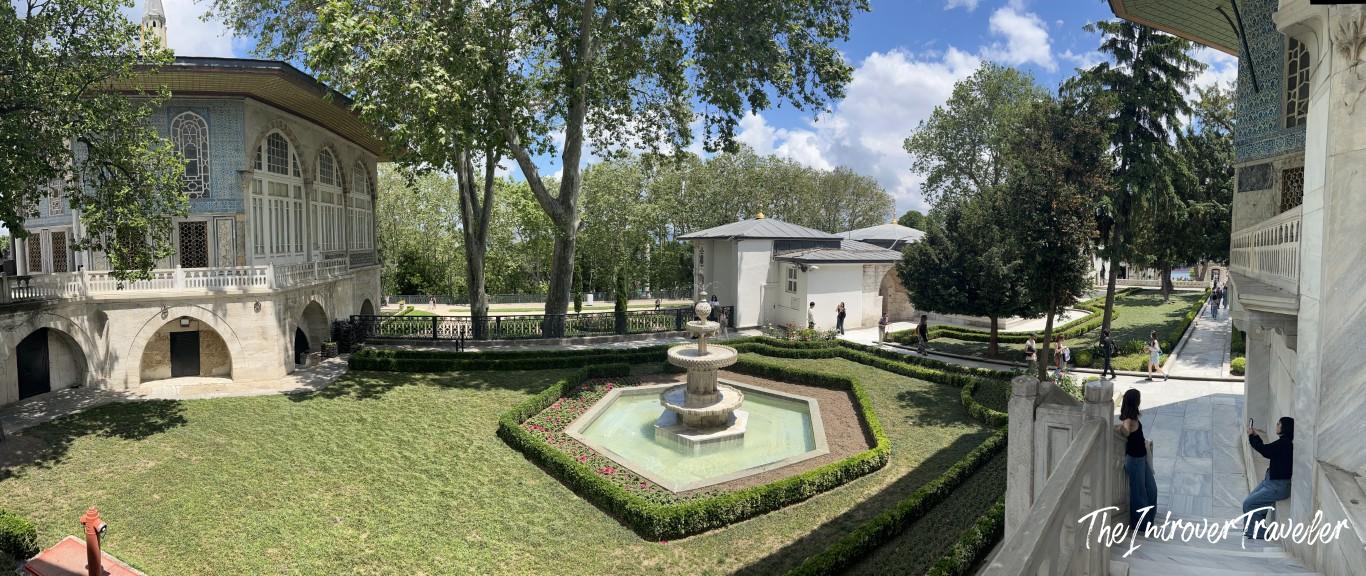
Istanbul travel guide. Istanbul as a Continuous Imperial Capital from Byzantium to Constantinople.
The first distinctive characteristic of Istanbul is that, unlike most cities, it did not develop organically but rather emerged as a genuine geopolitical project that shaped the destiny of the entire Eastern Mediterranean for more than fifteen centuries. The city’s location is not accidental. The historic promontory overlooking the Golden Horn and controlling access to the Bosphorus represents one of the most extraordinary strategic positions of the ancient world, capable of simultaneously dominating commercial routes between the Black Sea and the Mediterranean and the land connections linking Europe and Asia. When Emperor Constantine I decided in 330 AD to refound the Roman capital here, he was not merely transferring power from Rome toward the East but fundamentally redefining the political and economic equilibrium of the entire empire.
The new city, officially named Nova Roma but quickly known as Constantinople, was conceived as a complete imperial capital. Monumental forums, administrative palaces, the hippodrome, defensive walls, and great Christian churches formed an urban system designed to embody Roman continuity rather than replacement. This aspect is essential because Constantinople was never perceived by its inhabitants as an eastern city distinct from Rome. It was Rome itself surviving within a new political geography.
During the centuries of the Byzantine Empire, the city developed a unique urban model in which imperial authority and Orthodox Christianity became inseparable. The construction of Hagia Sophia under Emperor Justinian I in the sixth century represented the culmination of this vision. It was not merely the largest church in the Christian world but an architectural declaration of universal power. The suspended dome appeared to defy gravity itself, transforming religious space into a visible manifestation of imperial cosmic order. Even today, entering the building reveals how profoundly Byzantine architecture influenced both Eastern Christian tradition and, later, Ottoman architectural forms.
Constantinople endured for centuries as a political and cultural stronghold between Europe and the Islamic world. The massive Theodosian Walls, still visible along extensive stretches of the city, were not only a defensive structure but one of the principal reasons Byzantine civilization survived repeated invasions and sieges. When the city fell in 1453 to the army of Sultan Mehmed II, the event symbolically marked the end of the European Middle Ages but did not bring about the destruction of the imperial capital, even though the sack was brutal. It is precisely at this moment that Istanbul becomes historically unique.
The Ottomans did not destroy Constantinople. They reused it. Mehmed II immediately understood the symbolic value of the city and chose to transform it into the new capital of the Ottoman Empire while preserving its universal function. Major basilicas were converted into mosques, the imperial administrative system was adapted to an Islamic political structure, and the city continued to operate as a global center of power. This continuity explains why Istanbul’s urban landscape does not display sharp fractures between historical periods. Each succeeding empire incorporated rather than erased its predecessor.
During the sixteenth and seventeenth centuries, under rulers such as Suleiman the Magnificent, the city entered a new phase of monumental development through the construction of the great imperial mosques designed by the architect Mimar Sinan. These religious complexes were not conceived merely as places of worship but as Islamic equivalents of Roman forums and Byzantine imperial foundations. Schools, hospitals, public kitchens, and caravanserais formed self sufficient urban centers that reshaped the social life of the Ottoman capital.
The Ottoman transformation therefore did not eliminate the Roman and Byzantine city but reinterpreted its symbolic structures. The domes of the mosques still engage in dialogue with those of earlier churches, while the monumental axis of the historic peninsula continues to reflect urban planning decisions made more than sixteen centuries ago. Walking through Istanbul means moving across a continuous imperial capital, perhaps the only city in the world to have maintained without interruption its geopolitical role across radically different civilizations.
Understanding this continuity is essential before approaching individual monuments. Mosques are not simply Ottoman religious buildings, archaeological museums are not merely collections of antiquities, and the palaces along the Bosphorus are not decorative residences. All belong to a single logic of imperial representation that, despite changes in religion and language, has continued to use Istanbul as a symbolic center between East and West.
The Geography of the City: How to Navigate the Historic Peninsula, the Bosphorus, and the Asian Side
One of the most common mistakes made by first time visitors to Istanbul is to regard it as a large yet conceptually unified city comparable to modern European capitals. In reality, Istanbul operates according to an entirely different geographical logic, shaped not by radial urban expansion but by a naturally tripartite structure that still governs spatial perception and everyday life. Understanding this geography is not merely a logistical detail but the essential prerequisite for constructing a coherent itinerary.
The first point to grasp is that Istanbul does not possess a single center. The historic city developed on a peninsula bordered by the Sea of Marmara to the south, the Bosphorus to the east, and the Golden Horn to the north. This promontory forms the original core of the ancient city, first Byzantium and later Constantinople. It is here that the great Byzantine and Ottoman imperial monuments are concentrated, including Hagia Sophia, Topkapı Palace, and the principal monumental mosques. From a cultural perspective, this area represents the imperial capital in its most immediately recognizable form, the one that continues to dominate the Western historical imagination.
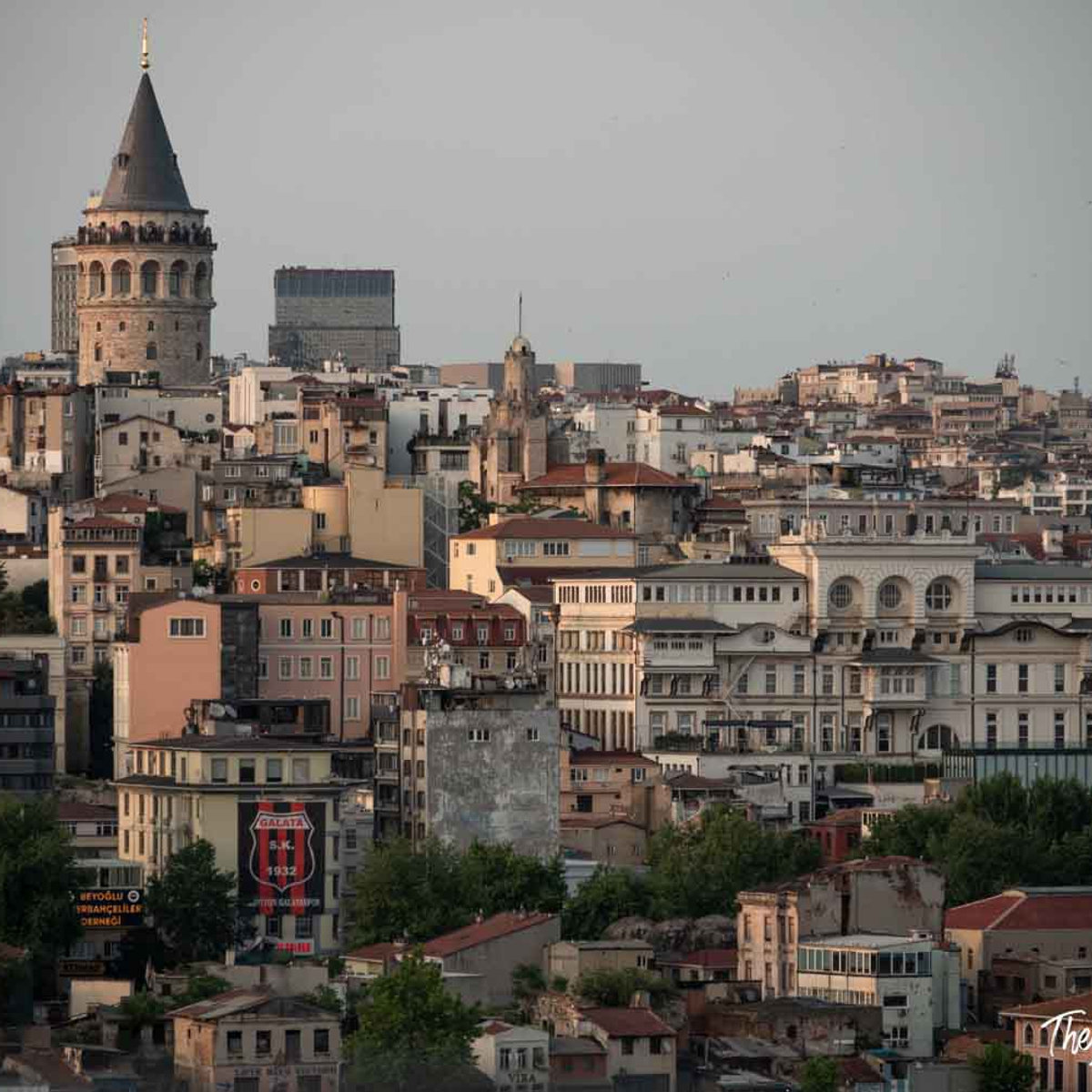
The historic peninsula, however, cannot be understood in isolation. Crossing the Golden Horn via the Galata Bridge and continuing toward the Galata Tower, which dominates the skyline of the city’s northern shore, one enters a second urban space that developed primarily during the Genoese period and later under the late Ottoman Empire. Districts such as Galata and Beyoglu introduce a European and commercial dimension reflecting the city’s gradual international opening between the nineteenth and twentieth centuries. Embassies, banks, commercial arcades, and eclectic architectural forms bear witness to a historical moment in which Istanbul sought dialogue with Paris and Vienna while preserving its imperial identity.
This geographical transition also produces a psychological shift clearly perceived by visitors. While the historic peninsula conveys religious authority and imperial continuity, the areas of Beyoglu and Taksim Square represent modern Turkey, contemporary urban life, and the social transformation of the republican city. Here the rhythm accelerates, the urban fabric becomes denser, and monumentality gives way to everyday life.
The third geographical element, often underestimated by visitors who remain confined to the European side, is the Asian shore. Crossing the Bosphorus by ferry toward districts such as Üsküdar or Kadıköy does not simply mean changing continents but entering a version of Istanbul that is less monumental and more lived in. Here the city loses the character of a historic capital and takes on that of an inhabited metropolis shaped by markets, cafés, waterfront promenades, and residential neighborhoods. The crossing itself becomes an integral part of the urban experience, as the ferry offers one of the most effective perspectives on the imperial skyline, allowing simultaneous views of mosques, palaces, and hills that define the visual identity of the city.
The Bosphorus should therefore not be interpreted as a geographical barrier but as the true vital axis of Istanbul, whose defining characteristic lies precisely in its position between Europe and Asia. Since antiquity it has functioned as both a commercial and symbolic corridor, connecting rather than separating different cultural worlds. Even today urban mobility remains deeply dependent on maritime traffic, and understanding the city requires accepting water as a structural component of the visitor experience.
From a practical perspective, this configuration renders ineffective any itinerary based solely on cartographic proximity. Istanbul demands planning according to historical and cultural zones rather than isolated attractions. Attempting to visit the historic peninsula, Beyoglu, and the Asian side within the same day inevitably results in fatigue and perceptual disorientation. By contrast, dedicating separate days to each area allows visitors to grasp the profound differences between the city’s multiple urban identities.
Once the origins and position of Istanbul are understood, a position that is geopolitical rather than merely geographical, the first unavoidable stop becomes the Basilica of Hagia Sophia, the building that has accompanied the entire history of the city across the centuries and that, at every major historical transformation experienced by Istanbul, has been employed as a true political manifesto.
If you want to find the best hotels in Sultanahmet for first-time visitors click here.
For Boutique hotels in Beyoglu click here.
If you want to find apartments in Kadıköy click here.
Hagia Sophia: The Symbolic Center Between Christian Empire and Islamic Empire
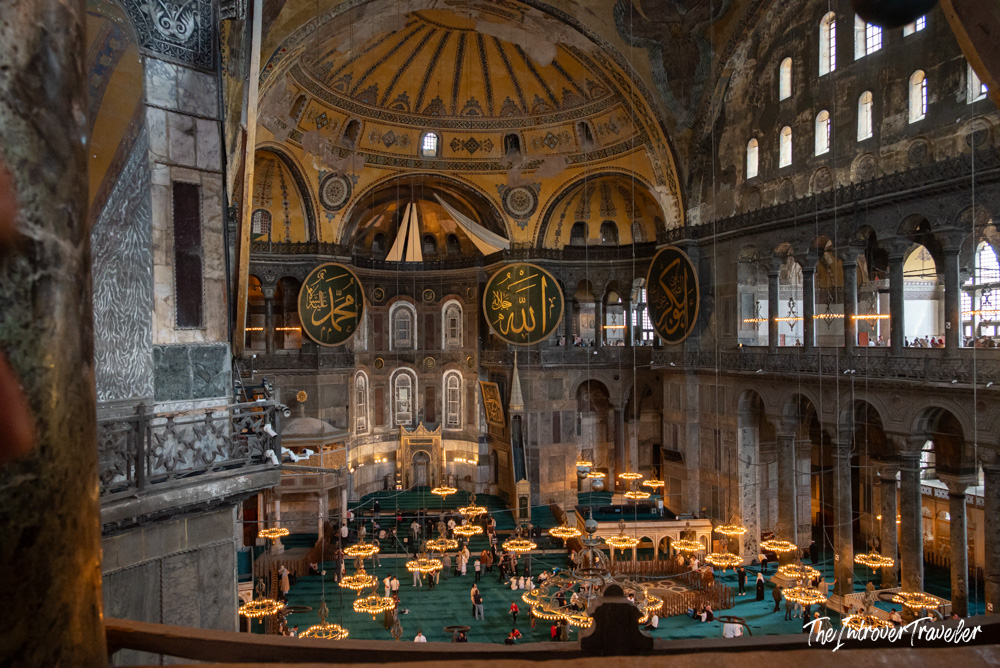
No building allows an understanding of Istanbul’s history with the same immediacy as Hagia Sophia, the basilica that for nearly two millennia (…) has witnessed and shaped the historical, political, and religious transformations of the city. Its presence dominates the historic peninsula not only through architectural scale but through symbolic density, since every civilization that governed Istanbul was compelled to confront this structure and redefine its meaning.
Constructed in the sixth century under Emperor Justinian I, Hagia Sophia was conceived as the architectural manifestation of the universal authority of the Eastern Roman Empire. Contemporary chronicles recount that, at the moment of its inauguration, Justinian proclaimed that he had surpassed the Temple of Solomon, a statement that clearly reveals the theological and political ambition underlying the project. The basilica was intended not merely as the principal Christian church but as the spiritual center of the imperial world.
The architectural innovation lies in the immense central dome suspended above a space that appears almost unsupported. Through the use of pendentives, a revolutionary engineering solution for its time, the structure creates a continuous interior environment in which walls and vault seem to dissolve into light. This spatial effect profoundly influenced later Byzantine architecture and, centuries afterward, Ottoman design as well. The great imperial mosques designed by Sinan cannot be fully understood without recognizing Hagia Sophia as their foundational model.
Key Facts
- Built: 537 AD, under Emperor Justinian I
- Dome diameter: 31 meters, at 55 meters height
- Function: Christian cathedral (537), mosque (1453), museum (1934), mosque again (2020)
- Architect: Isidore of Miletus and Anthemius of Tralles
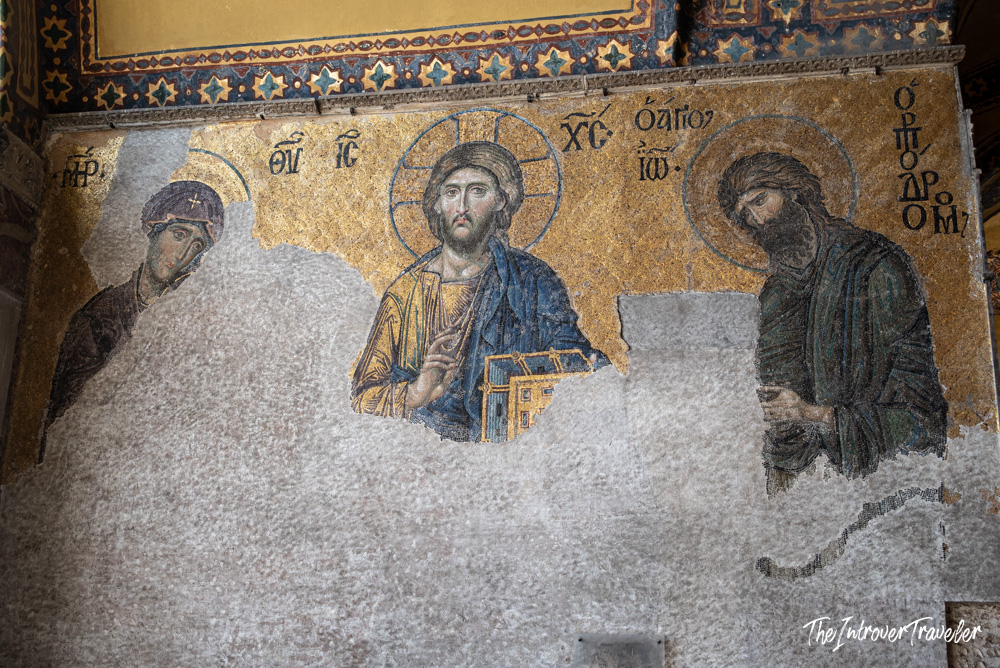
When Mehmed II conquered the city in 1453, the conversion of the basilica into a mosque did not constitute an act of destruction but one of symbolic appropriation. Minarets, a mihrab, and Islamic architectural elements were added while preserving the Byzantine structural core. The building thus continued to function as an imperial religious center, changing faith yet maintaining its political role.
In the twentieth century, its transformation into a museum under Mustafa Kemal Atatürk introduced a secular reinterpretation of Turkish history, while the recent reconversion into a mosque has reopened international debate regarding the monument’s contemporary meaning. Hagia Sophia therefore remains a living building, continuously reinterpreted by successive historical eras.
Visiting Hagia Sophia at the beginning of an itinerary allows the entire city to be read as a sequence of adaptations rather than ruptures. Here one clearly perceives how Istanbul has never ceased to function as an imperial capital, regardless of the dominant religion or language.
Only a few minutes from Hagia Sophia stands another structure whose image has become inseparable from the collective imagination of what survives today of Constantinople: the Basilica Cistern.
Tickets and guided entry can save considerable waiting time, especially in high season; you can buy a Skip the Line ticket with Guided Tour here.
The Basilica Cistern: The Invisible Infrastructure of the Byzantine Capital
If Hagia Sophia represents the spiritual and symbolic dimension of imperial Constantinople, the Basilica Cistern reveals a less visible yet equally essential aspect of the city, its infrastructure. No capital can survive for centuries without an efficient water supply system, and in the case of Istanbul this necessity assumed vital importance. Situated on a peninsula exposed to frequent sieges and lacking substantial natural freshwater reserves, Constantinople was compelled from the Roman period onward to develop an extraordinarily advanced engineering network.
The Basilica Cistern was constructed in the sixth century and formed part of a vast hydraulic system supplied by aqueducts transporting water from the forests of Thrace across dozens of kilometers to the imperial capital. Its purpose was to guarantee urban autonomy even during prolonged sieges, a circumstance that repeatedly occurred throughout Byzantine history.
Key Facts
- Built: 6th century, under Emperor Justinian I
- Dimensions: 140 × 70 meters
- Columns: 336, mostly reused from earlier Roman structures
- Capacity: up to 80,000 cubic meters of water
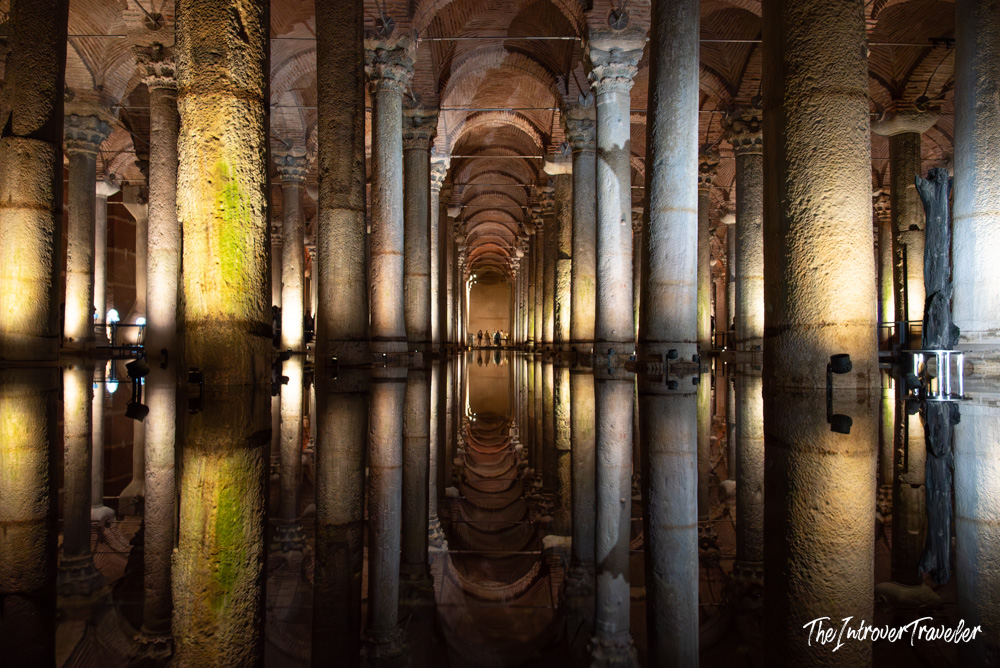
Upon entering the cistern, one immediately perceives a transformation of urban space. Light fades, the noise of the city disappears, and the visitor finds themselves immersed in a forest of columns emerging from still water. The structure measures approximately one hundred forty meters in length and seventy meters in width and is supported by more than three hundred marble columns reused from earlier Roman buildings.
The visual effect created by the repetition of columns and brick vaults produces a surprisingly monumental environment for what was fundamentally a technical installation. Unlike visible aqueducts that celebrated Roman power through external monumentality, the Basilica Cistern represents a hidden architecture of power, intended not for representation but for the daily survival of the capital.
Particularly famous are the column bases decorated with Medusa heads, most likely originating from an earlier Roman structure and repositioned here as structural supports. Their inverted or lateral placement reflects pragmatic reuse rather than symbolic intent, yet they contribute today to the enigmatic atmosphere that defines the site.
Visiting the Basilica Cistern assumes a precise interpretative value within an Istanbul itinerary. After encountering the theological dimension embodied by Hagia Sophia, visitors begin to understand that imperial greatness depended not only on religious monuments or palaces but also on complex technical systems capable of sustaining a vast urban population. Constantinople was one of the best engineered cities of the medieval world, and its political longevity derived in part from this infrastructural sophistication.
The visit to the Basilica Cistern therefore forms a natural complement to Hagia Sophia and, together with the Hippodrome Square, represents one of the principal surviving testimonies of ancient Constantinople. Before moving on to the third indispensable monument encountered by nearly every visitor upon arrival in Istanbul, it is worth dedicating attention to the Hippodrome Square, which today may appear merely as a transitional urban space yet possesses a historical significance of considerable importance.
You can buy a Skip the Line ticket for the Basilica Cistern here.
The Hippodrome of Constantinople: The Political Theater of the Empire
Between Hagia Sophia and the Blue Mosque stretches an urban space that today appears relatively calm, often crossed by visitors without a full awareness of its historical significance. Present day Sultanahmet Square in fact corresponds to the ancient Hippodrome of Constantinople, one of the most politically important locations in the entire Roman and Byzantine world. Long before churches and palaces defined the monumental identity of the city, it was here that the relationship between emperor and population was publicly enacted.
Originally constructed during the Roman period and later expanded on a monumental scale under Emperor Septimius Severus and subsequently by Constantine I, the Hippodrome was capable of accommodating tens of thousands of spectators gathered to watch chariot races. These competitions, however, were far more than sporting events. The factions of the Blues and the Greens functioned as genuine political and social groups capable of influencing public order and even imperial stability. The most famous episode associated with this space was the Nika revolt of 532, during which large portions of the city were destroyed and the authority of Emperor Justinian came close to collapse.
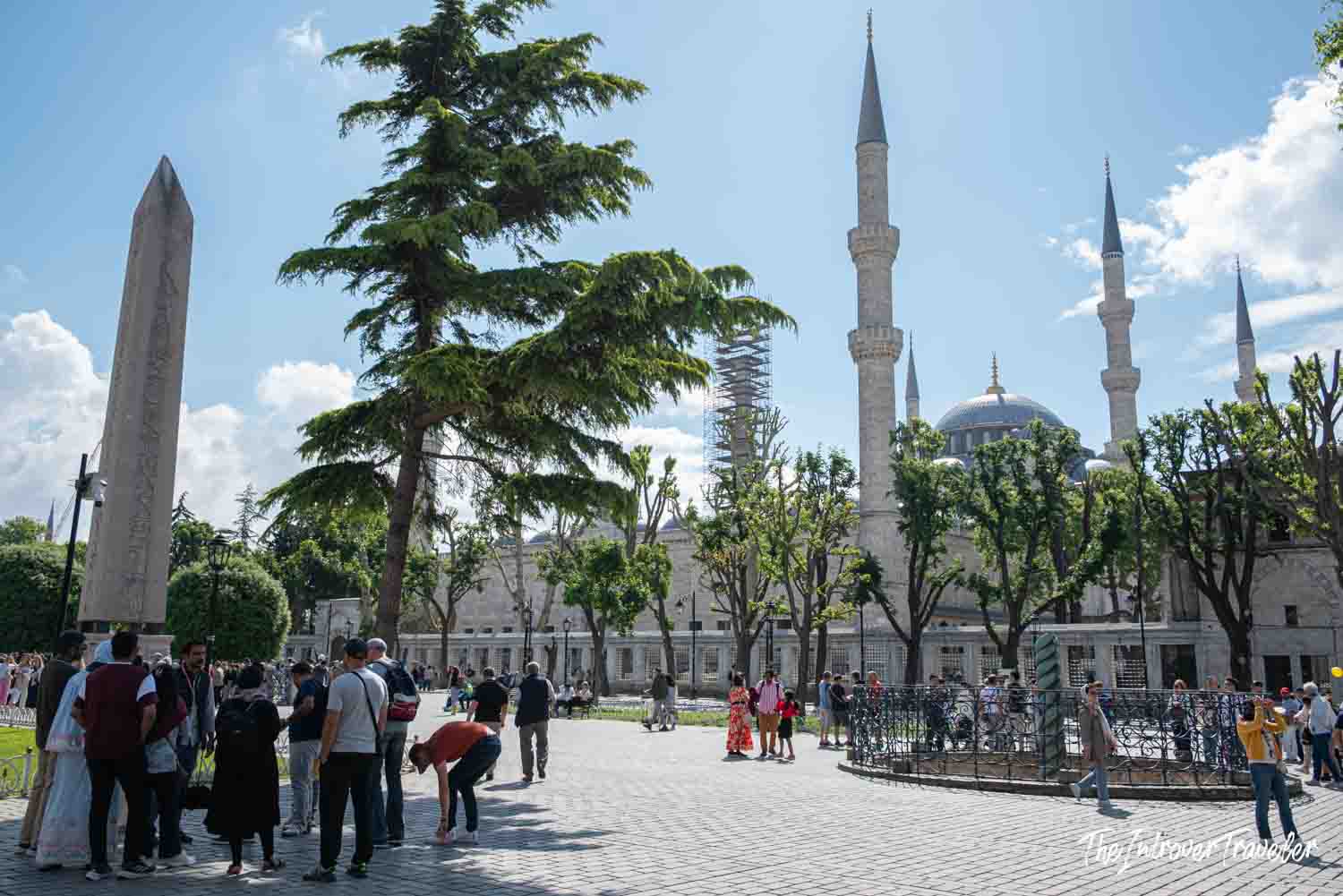
The Hippodrome therefore functioned as a political arena, a space in which the population could express approval or dissent directly before the ruler. The emperor observed the events from the kathisma, an imperial tribune connected directly to the Great Palace, symbolizing the continuity between public spectacle and the governance of the state. Even today, several surviving monuments allow this history to be reconstructed. The Obelisk of Theodosius, transported from pharaonic Egypt, the Serpent Column brought from Delphi, and the Walled Obelisk mark the former central spine of the arena, reminding visitors how Constantinople presented itself as the universal heir to Mediterranean civilizations.
After the Ottoman conquest, the space lost its original function but was never entirely erased. Its transformation into a public square unintentionally preserved the memory of what had once been the principal civic center of the Byzantine capital. Walking today through Sultanahmet therefore means crossing what was once the true political heart of the imperial city, a place where power, spectacle, and collective participation were inseparably intertwined.
Having acknowledged the importance of a site that played an essential role in the history of the imperial capital, the itinerary naturally proceeds to what for centuries constituted the true center of imperial authority: the Topkapı Palace.
Topkapı Palace: Government, Ceremony, and Daily Life of the Ottoman Empire
After crossing the public and political space of the ancient Hippodrome, the natural progression of the itinerary leads toward the place where Ottoman imperial power was exercised in concrete terms. Topkapı Palace was not merely the residence of the sultans but the true administrative center of one of the largest and most enduring empires of the early modern world. For nearly four centuries, from the fifteenth to the nineteenth century, territories stretching from the Balkans to the Arabian Peninsula, and from North Africa to the Caucasus, were governed from this complex overlooking the Bosphorus.
When Mehmed II conquered Constantinople in 1453, he immediately understood that legitimizing the new authority required symbolic control over urban space. The decision to construct the palace on the site of the former Byzantine acropolis was therefore deliberate. Occupying this promontory meant physically appropriating the imperial heart of the Eastern Roman city and transforming it into the nucleus of the new Islamic capital.
Unlike contemporary European courts, often conceived as monumental theatrical settings intended to impress diplomats and visitors, Topkapı developed according to an almost opposite logic. The complex is organized as a sequence of successive courtyards reflecting the hierarchical structure of the Ottoman state. Each architectural threshold corresponds to an increasing degree of proximity to power. The first courtyard remained relatively accessible and hosted administrative and military functions. Passing through the Gate of Salutation led into the second courtyard, the true operational center of the empire.
Here stood the Imperial Council chamber, where the viziers responsible for political and judicial administration conducted the affairs of state. One of the most revealing aspects of the Ottoman system was that the sultan did not sit openly among his ministers. Instead, he listened to deliberations from a concealed elevated chamber hidden behind a screened window, maintaining absolute authority while remaining physically unseen. Architecture thus became the material expression of a conception of power founded upon distance and the sacralization of sovereignty.
Key Facts
- Built: 1459, commissioned by Mehmed II
- In use: administrative seat of the Ottoman Empire until 1856
- Area: approximately 700,000 square meters
- Residents at peak: up to 4,000 people within the palace complex
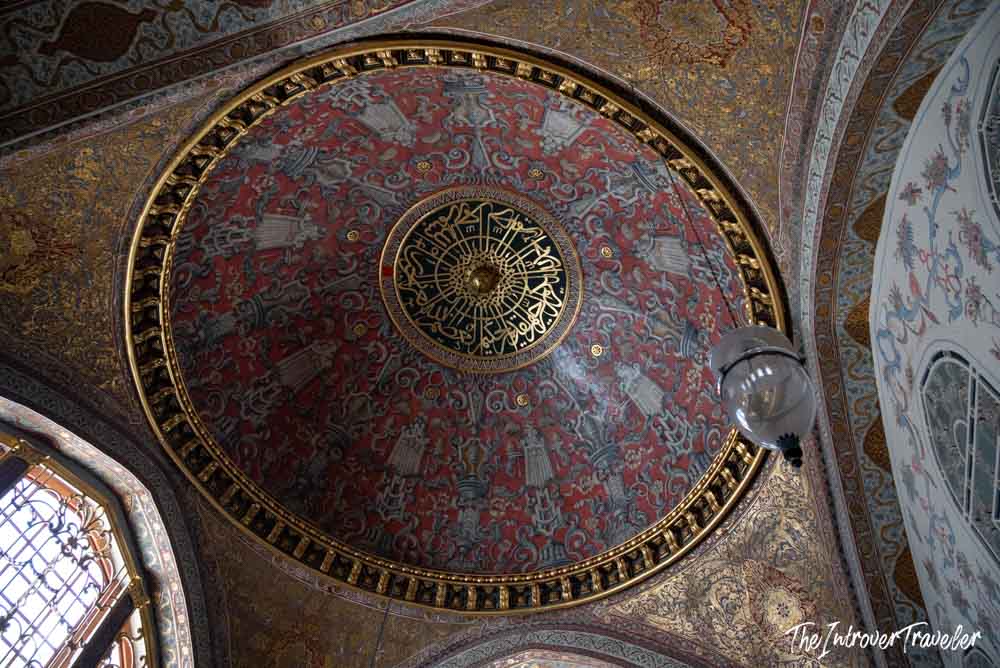
Moving further inward, the palace gradually assumes a more intimate character. Decorated pavilions, libraries, and gardens open onto panoramic terraces overlooking the entrance to the Bosphorus. This relationship with the maritime landscape distinguishes Topkapı profoundly from fortified Western royal residences. Ottoman authority manifested itself less through defensive enclosure than through visual control over the commercial and military routes crossing the strait.
The most famous sector of the complex is the Harem, frequently interpreted through romantic or orientalist stereotypes. In reality, it constituted a central political space. Members of the imperial family and numerous court officials resided here, while the Valide Sultan, the mother of the reigning sultan, often exercised decisive influence over succession dynamics and political decision making. The Harem therefore functioned as an institutional component of governance rather than a purely domestic environment.
Topkapı also housed the imperial treasury and important Islamic relics that reinforced the sultan’s role as both political ruler and religious authority. This fusion of temporal and spiritual legitimacy strengthened the empire’s position within the Islamic world and contributed to transforming Istanbul into the principal political center of the Eastern Mediterranean.
It is at Topkapı, more than anywhere else in the city, that the splendor and magnificence commonly associated with the Ottoman court reveal themselves in their most striking form. Yet if political power displayed its immense wealth within the palace, elsewhere in the city religious authority expressed itself with far greater restraint.
The Imperial Mosques: Architecture, Power, and the Construction of the Ottoman Skyline
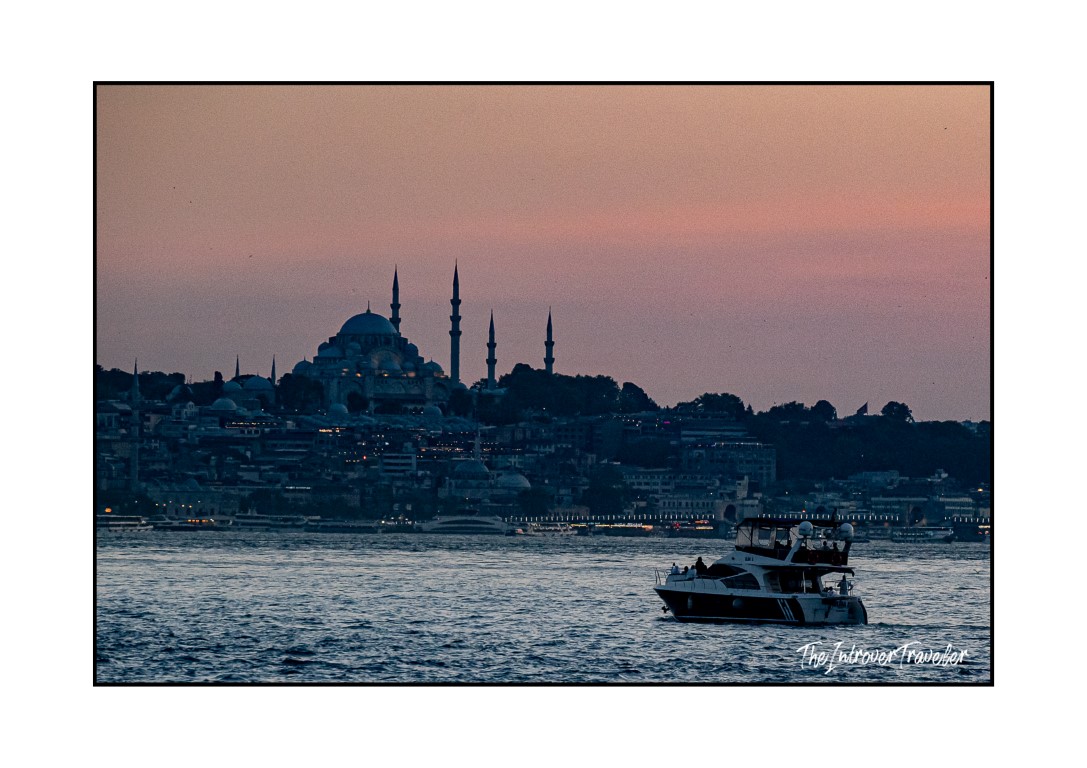
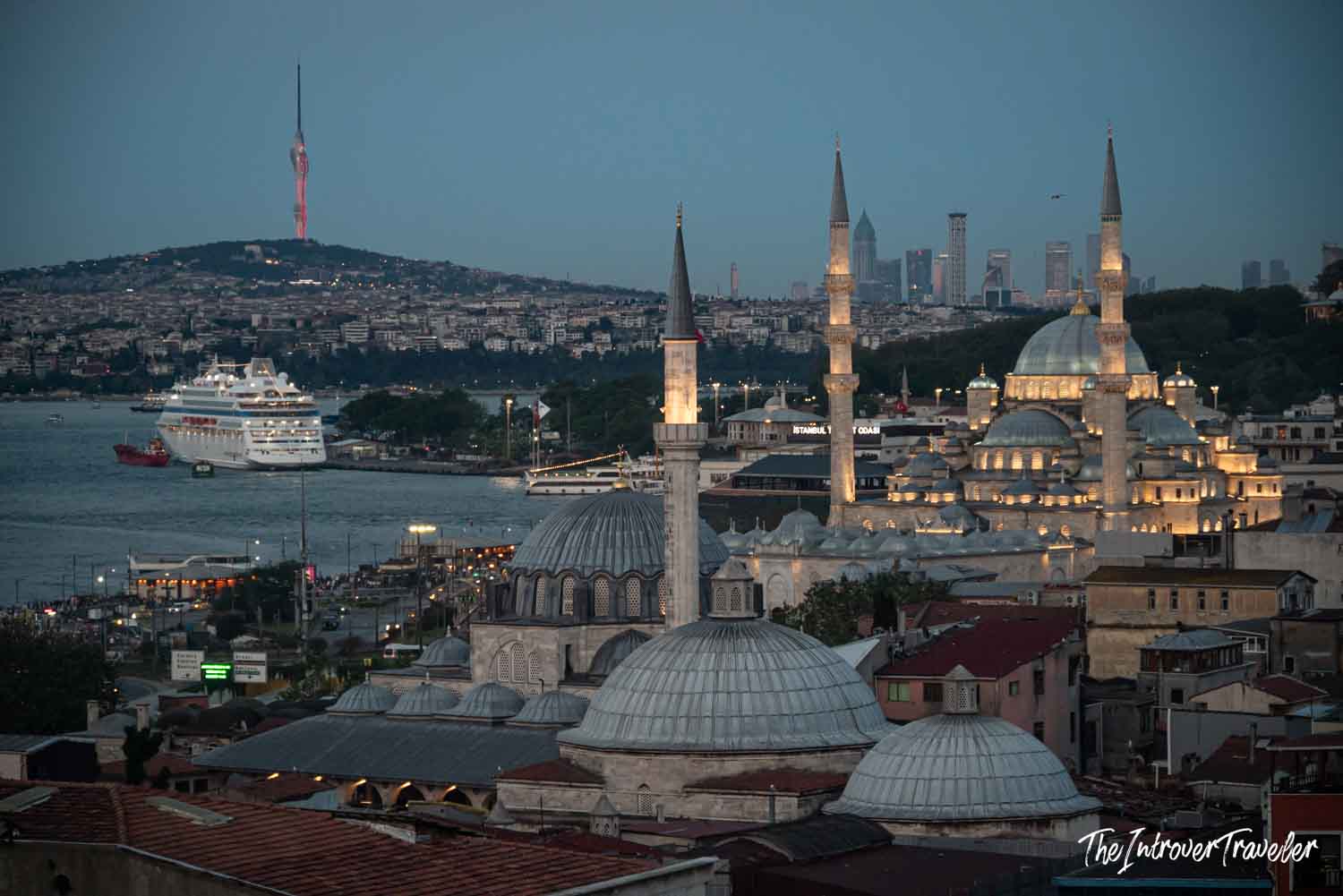
If Byzantine Constantinople had expressed its universal ambition through the monumentality of Hagia Sophia, and Topkapı Palace displayed imperial wealth, Ottoman Istanbul redefined its visual identity through an architectural system that was equally coherent and politically explicit. The great imperial mosques were not merely religious buildings intended for collective prayer but instruments through which Ottoman power made visible both continuity with and transformation of the former Eastern Roman capital. Even today, Istanbul’s skyline is dominated by a succession of domes and minarets that respond not to accidental aesthetic development but to a deliberate urban project shaped between the sixteenth and seventeenth centuries.
After the conquest of 1453, Sultan Mehmed II immediately understood that ruling Constantinople required symbolic appropriation of its imperial legacy. The conversion of Hagia Sophia into a mosque represented the first political act in this process, yet the true urban transformation unfolded in the following decades through the construction of new religious complexes capable of redefining the city according to an Islamic imperial vision. These complexes, known as külliye, included not only the principal mosque but also theological schools, hospitals, libraries, public baths, and kitchens dedicated to food distribution for the poor. In practical terms, they functioned as self sufficient social centers that replaced the earlier Byzantine urban foundations.
The central figure in this architectural transformation was the imperial architect Mimar Sinan, arguably the greatest designer of the Ottoman age. Sinan did not invent Ottoman architecture ex nihilo but developed a sophisticated reinterpretation of Byzantine spatial principles, taking Hagia Sophia itself as his primary reference. His objective was to resolve a complex architectural problem, namely the creation of unified interior environments dominated by a single central dome capable of accommodating thousands of worshippers without visual fragmentation.
The Süleymaniye Mosque, the Blue Mosque, the Rüstem Pasha Mosque are just a few of the main and most obvious stops that first time visitors to Istanbul may include in their itinerary as a starting point for their journey.
What unites these constructions is their urban function. Ottoman mosques were not conceived as isolated monuments but as visual and social nodes capable of organizing entire districts. Each complex reshaped surrounding economic and cultural life, gradually replacing earlier Byzantine urban structures without completely erasing them. This process explains why Istanbul presents no abrupt rupture between historical periods but rather a continuous transformation of the same urban space. To understand Istanbul, one must in a sense read the city from above downward. The domes emerging along the hills are not scenic embellishments but territorial markers of imperial authority. Entering these architectural spaces reveals how religion, politics, and urban planning operated together in the construction of the Ottoman capital.
Once this monumental system has been understood, the next stage of the visit naturally leads toward the archaeological museums and collections that preserve the material memory of civilizations preceding the Ottoman conquest. If the mosques represent the transformation of the imperial city, the museums narrate what Istanbul inherited from the ancient world, surviving a transition that must nevertheless have been profoundly violent.
The Istanbul Archaeological Museum and the Ottoman Discovery of Antiquity
After observing how the Ottoman Empire reshaped urban space through the construction of imperial mosques, a visit that I recommend, time permitting, is the Istanbul Archaeological Museum. Its very existence testifies to a decisive moment in the city’s history, when the Ottoman Empire began systematically to recognize and preserve the pre Islamic past of the territories under its rule. If the mosques asserted imperial continuity through religious architecture, the museum instead represents the construction of a modern historical consciousness.
During the nineteenth century the Ottoman Empire underwent profound political and cultural transformation. The reforms known as the Tanzimat aimed to modernize the state and realign it with European powers. Within this context emerged a new awareness of the scientific and symbolic value of archaeology. Classical antiquities, previously often regarded as remnants of a distant past, became instruments through which the empire could demonstrate possession of a legitimate Mediterranean historical inheritance rather than appearing solely as an eastern power external to European tradition.
The central figure in this process was Osman Hamdi Bey, painter, archaeologist, and cultural administrator who radically transformed the Ottoman approach to antiquities. Under his direction, legislation was introduced to prevent the uncontrolled export of artifacts to Western museums, a widespread practice throughout the Middle East at the time. The foundation of the museum therefore responded not only to scholarly needs but also to a precise political intention to affirm cultural sovereignty.
The museum complex stands adjacent to Topkapı Palace, a highly significant location that places the preservation of classical antiquity within the very heart of Ottoman imperial authority. This decision reflects a profound conceptual transformation. The empire no longer presented itself solely as heir to Islamic tradition but as custodian of multiple civilizations that had preceded and made possible its own existence.
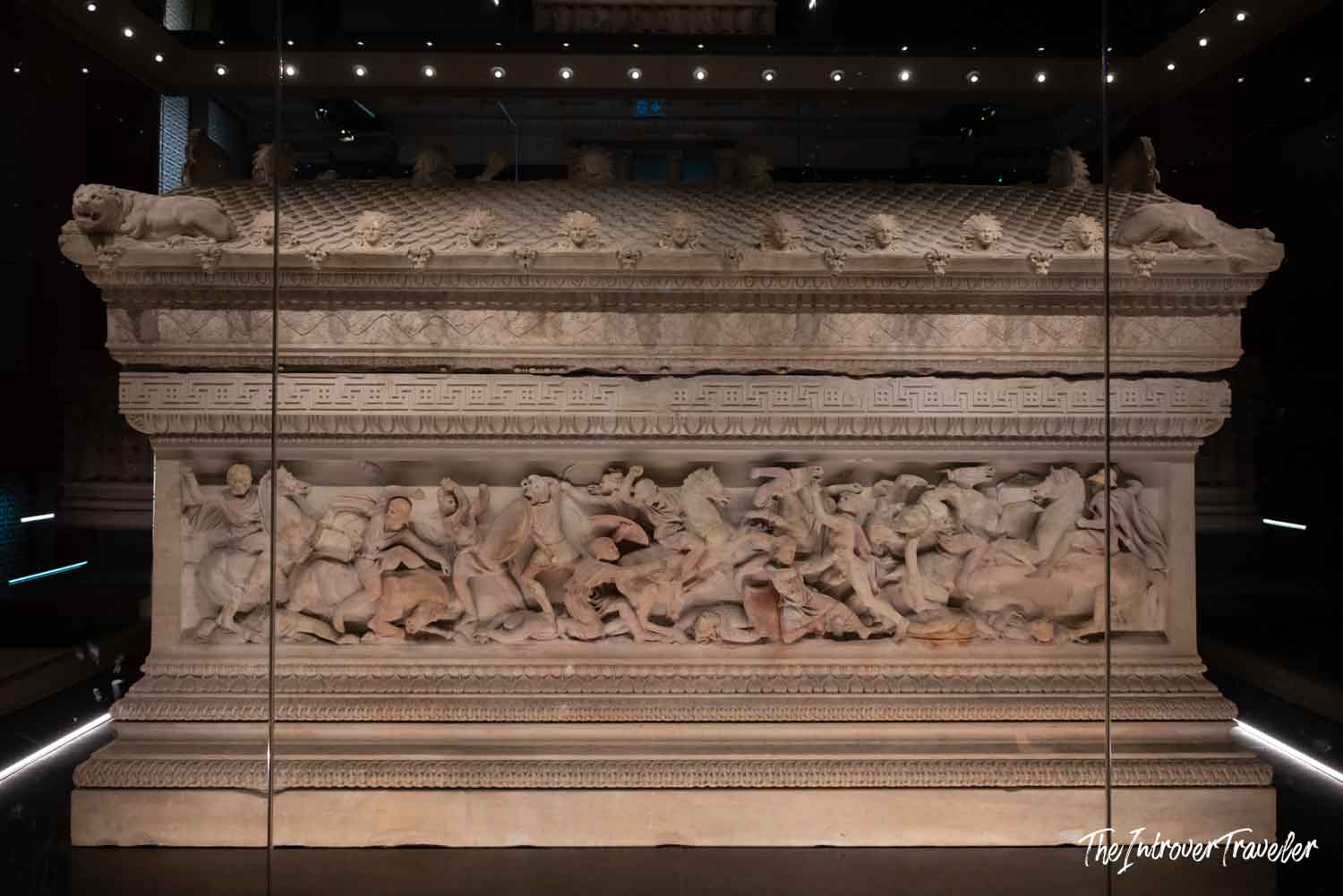
Among the masterpieces preserved within the museum, the celebrated Alexander Sarcophagus occupies a central position. Despite its traditional name, the work did not belong to Alexander the Great but to a local ruler shaped by Hellenistic culture. Its sculpted scenes depicting battles, hunts, and ceremonial processions display extraordinary plastic quality and reveal artistic dialogue between Greece and the Near East during the fourth century BC.
Alongside the classical collections, the Museum of the Ancient Near East further expands this perspective through Mesopotamian, Anatolian, and Egyptian artifacts. Cuneiform tablets, Assyrian reliefs, and monumental inscriptions demonstrate that the Ottoman Empire governed territories constituting the original core of the earliest urban civilizations in human history.
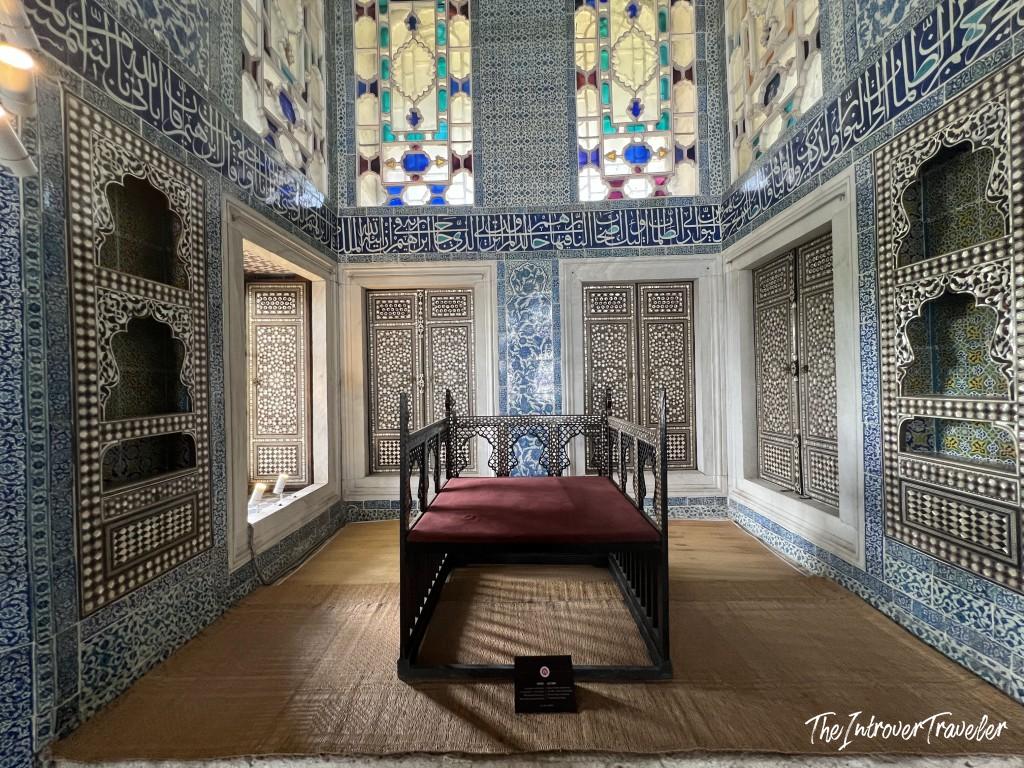
Particularly significant is also the Tiled Pavilion, one of the oldest surviving Ottoman buildings in Istanbul. Its integration within the museum complex creates a direct dialogue between Ottoman architecture and archaeological collections, reinforcing the cultural continuity that characterizes the city as a whole. No clear separation exists between ancient and modern periods but rather a permanent superimposition of historical layers.
After the religious and archaeological dimensions, another fundamental component of the imperial city emerges in the palaces and waterfront residences along the Bosphorus, where Ottoman power gradually abandoned medieval rigidity in favor of increasingly European architectural models.
From Topkapı Palace to Dolmabahçe: The Westernization of the Ottoman Empire and the Birth of Modern Istanbul
The transition from Topkapı Palace to Dolmabahçe Palace represents one of the most revealing moments in the history of Istanbul, marking the definitive transformation of the Ottoman Empire from a medieval imperial power into a state increasingly compelled to confront European modernity. This shift was not merely architectural but deeply political and cultural.
For centuries, Topkapı had embodied a model of governance founded upon ritual separation between the sovereign and the outside world. Ottoman authority operated through successive courtyards, controlled access points, and a court deliberately insulated from the urban environment. By the nineteenth century, however, this structure appeared increasingly anachronistic when compared with European monarchies, where monumental palaces, diplomatic receptions, and public ceremonial life had become essential instruments of international political representation.
Under Sultan Abdülmecid I, during the height of the Tanzimat reforms, construction began on Dolmabahçe along the European shore of the Bosphorus. The choice of location itself carried clear symbolic meaning. The center of power abandoned the medieval historic peninsula and opened toward the strait, and therefore toward Europe and contemporary diplomatic routes. Istanbul gradually ceased to look exclusively toward its imperial past and began presenting itself as a modern capital integrated within the European political system.
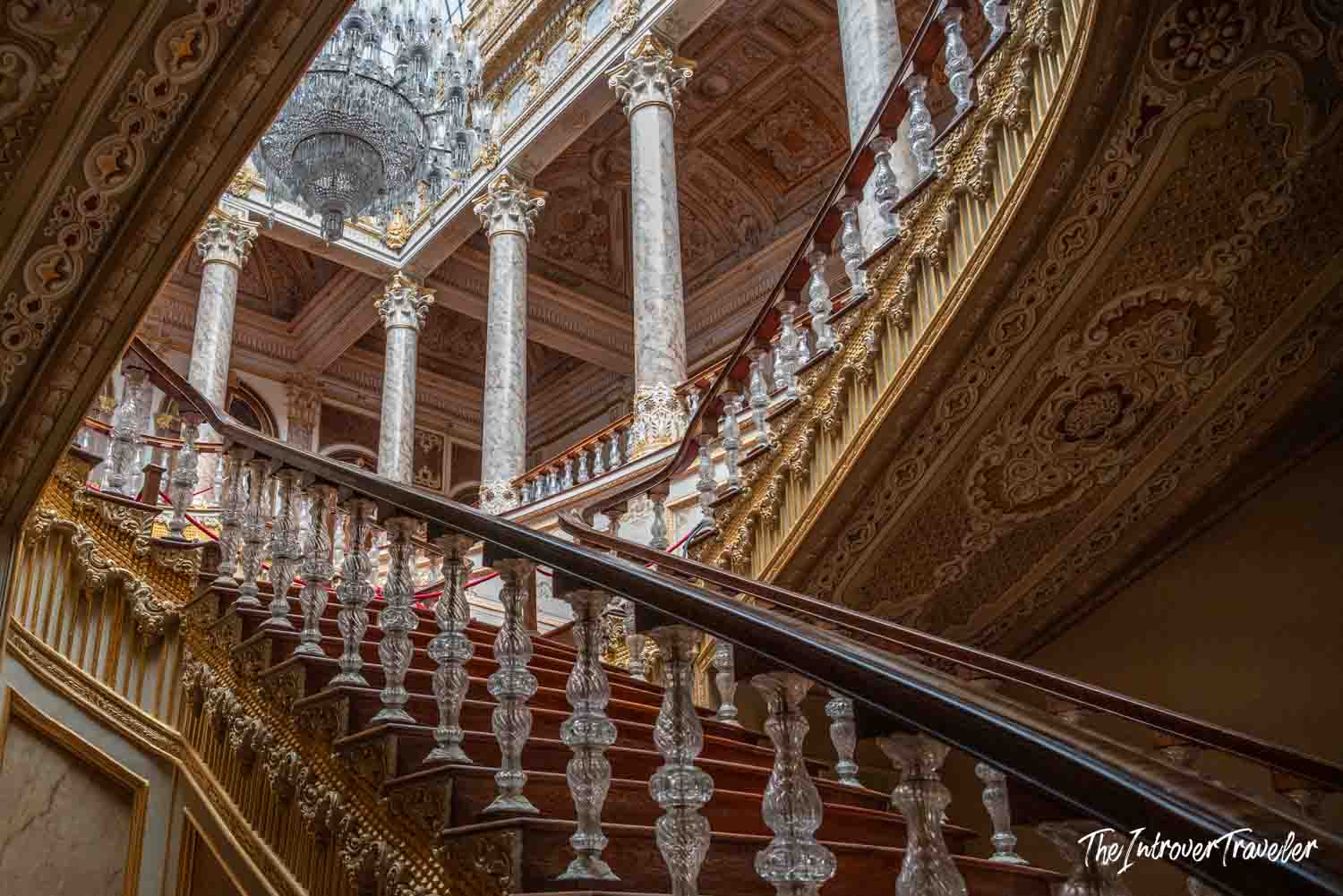
From an architectural perspective, Dolmabahçe represents a complete break with classical Ottoman tradition. The complex adopts an eclectic language influenced by Baroque, Rococo, and Neoclassical European styles while integrating Ottoman decorative motifs. Symmetrical façades, vast ceremonial halls, and spatial organization reflect models closer to the courts of Vienna or Paris than to the pavilion based structure of Topkapı. Dolmabahçe may be understood as Istanbul’s equivalent of Schönbrunn Palace, a setting in which the Ottoman Empire attempted modernization while preserving its political and religious identity. The palace thus became the symbol of a difficult equilibrium between tradition and reform, between imperial continuity and the necessity of adaptation within a world increasingly dominated by European industrial powers.
Through this transition, Istanbul fully enters modernity. After traversing the Byzantine and classical Ottoman dimensions of the city, the visitor is prepared to encounter the final essential component of Istanbul’s identity: the urban districts where contemporary daily life coexists with a millennial historical legacy.
Contemporary Istanbul: Beyoğlu, Kadıköy, and the City Beyond Its Monuments
After moving through more than fifteen centuries of imperial history among Byzantine basilicas, Ottoman mosques, and Bosphorus palaces, visitors may be tempted to interpret Istanbul as an essentially monumental city defined almost entirely by its past. Nothing could be more misleading. Istanbul is first and foremost a living metropolis inhabited by more than fifteen million people, where contemporary daily life does not represent a mere appendix to history but its natural continuation.
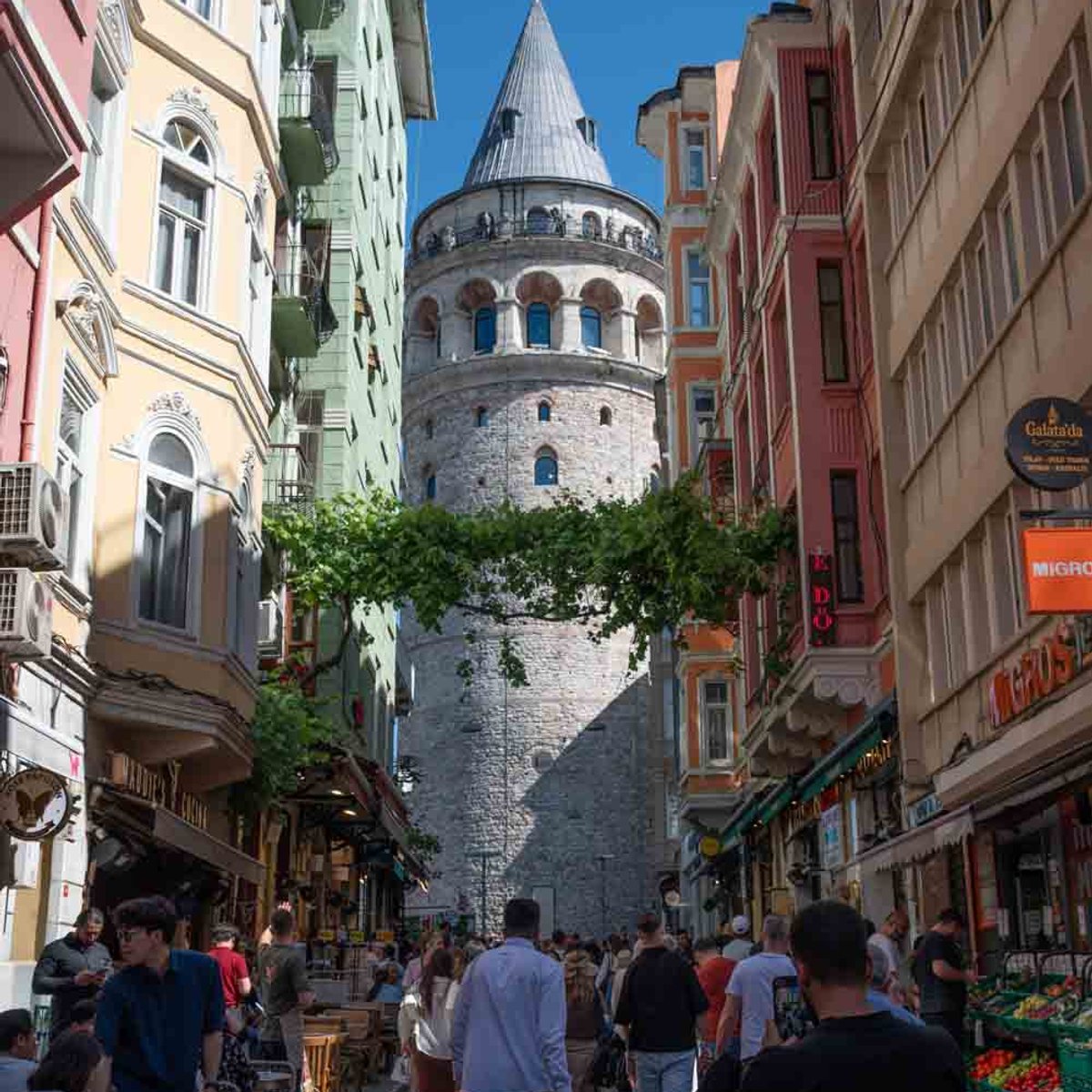
The most evident transition toward the modern city occurs by crossing the Galata Bridge and ascending toward the districts of Galata and Beyoglu. Here the urban landscape changes radically. Great imperial foundations give way to nineteenth century buildings, commercial arcades, bookstores, historic cafés, and pedestrian arteries animated by dense urban life. The principal axis of this transformation is Istiklal Avenue, along which the historic tram still runs, connecting Taksim Square with the area surrounding Galata Tower.
During the nineteenth century, Beyoglu represented the European face of the Ottoman capital. Foreign embassies, international banks, and Levantine communities transformed this district into a laboratory of cultural modernization. Even today the architecture reflects this stratification, blending French, Italian, and Austro Hungarian influences with local traditions. Walking along Istiklal Avenue means observing the historical phase during which Istanbul attempted to redefine itself as a cosmopolitan capital capable of engaging with Europe without abandoning its own identity.
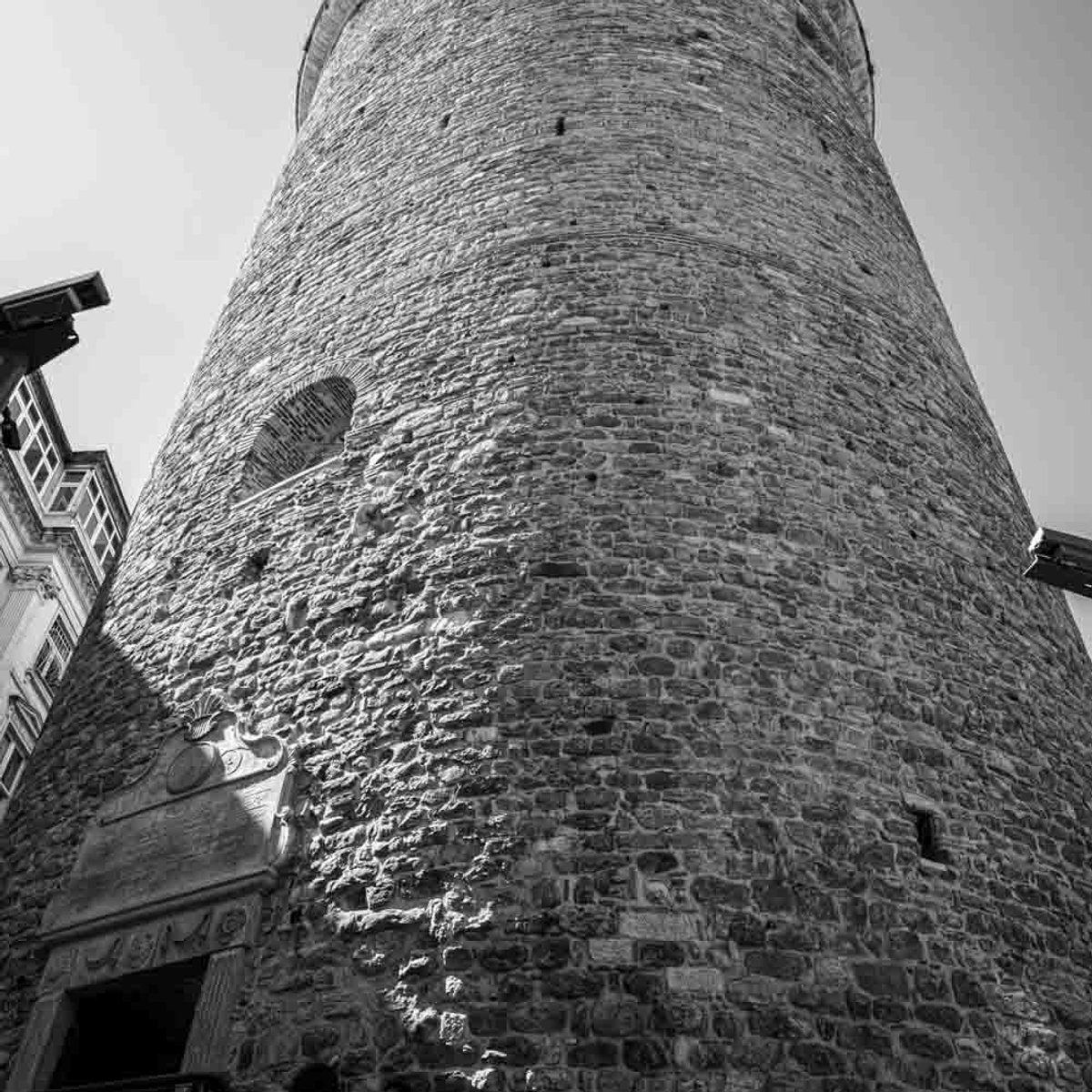
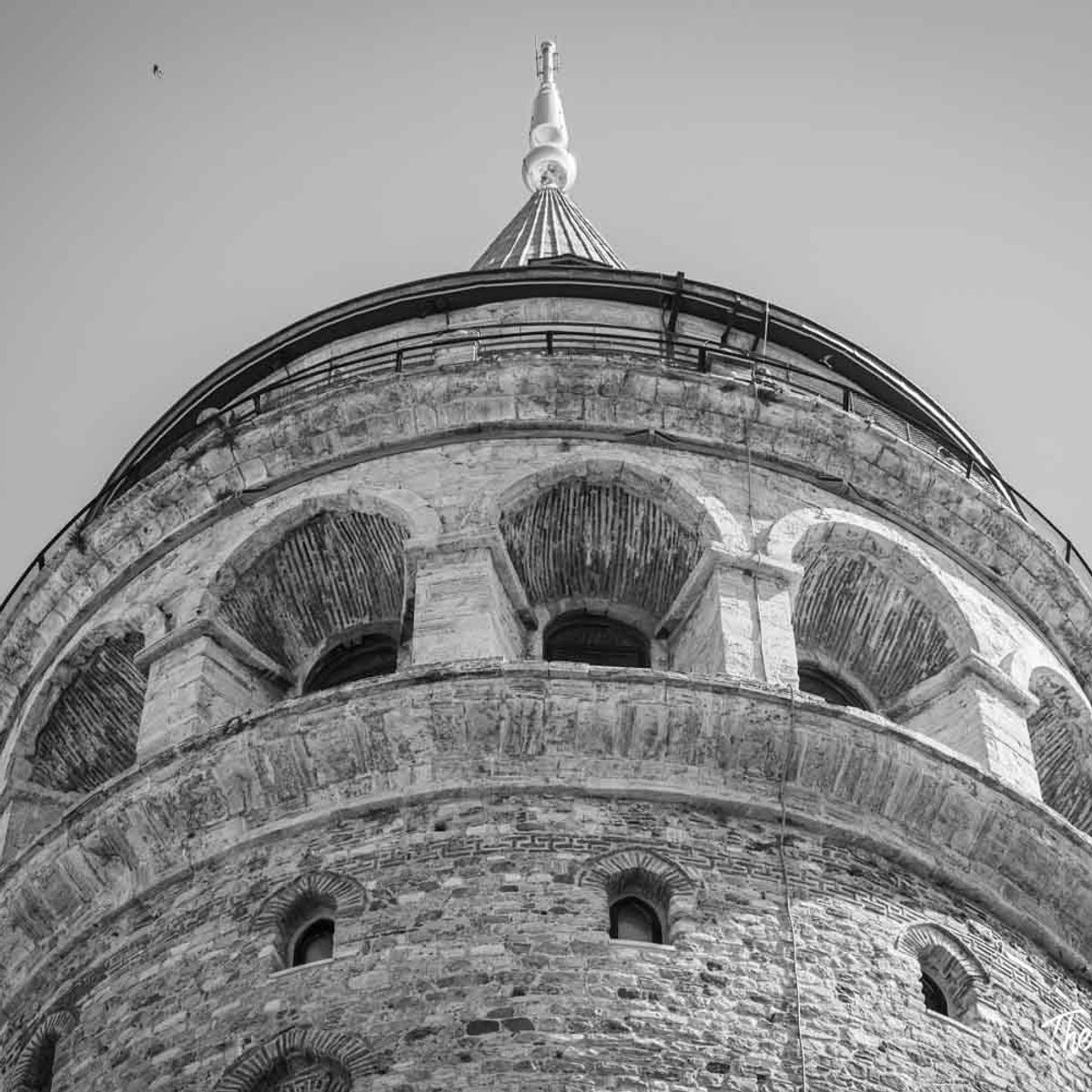
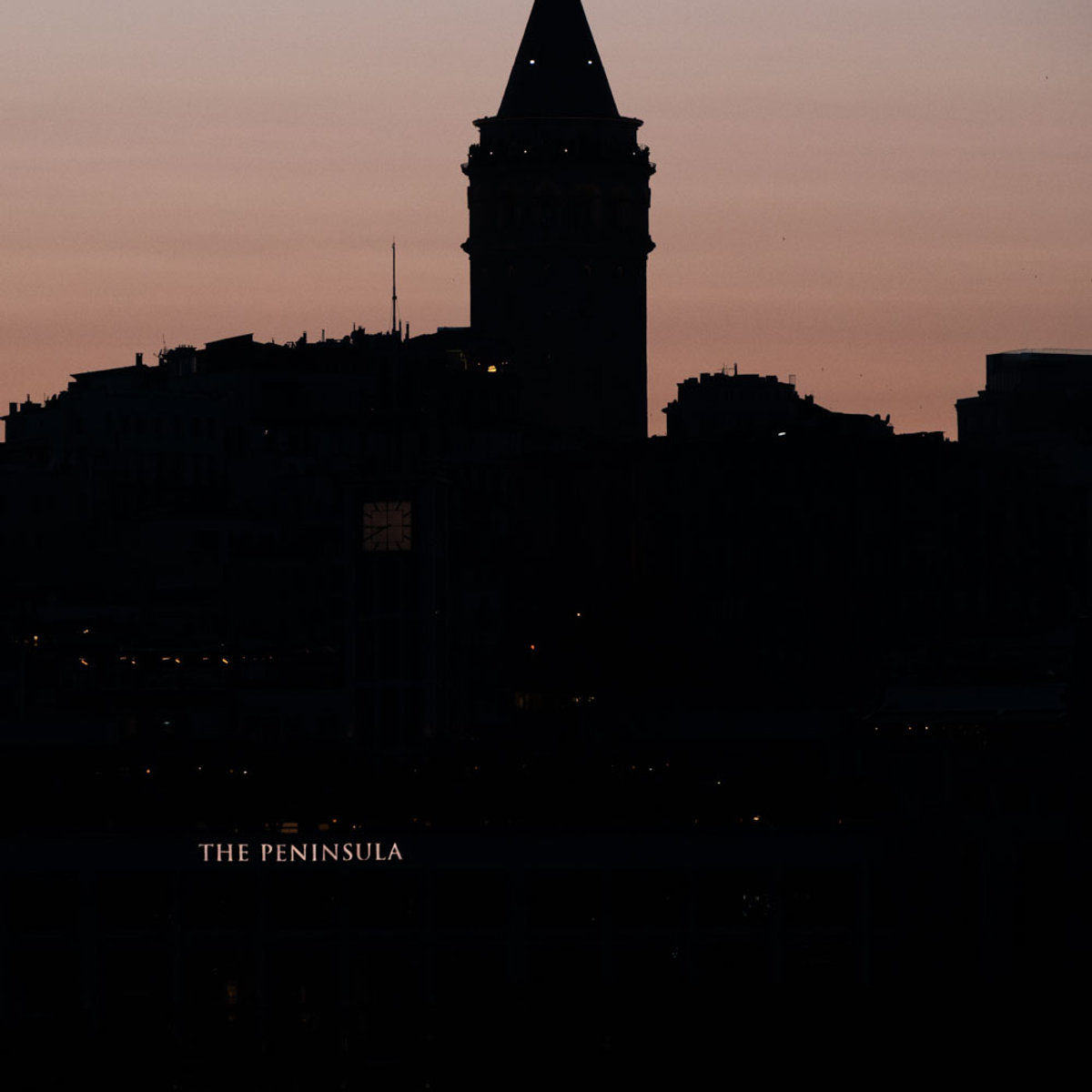
Within this district, both physically and historically, the central landmark is Galata Tower. Unlike the imperial monuments of the historic peninsula, it does not originate within either Byzantine or Ottoman tradition but rather as an expression of the European commercial presence in the medieval city. The tower was constructed in the fourteenth century by the Genoese colony established in Galata, which at the time existed as a politically distinct mercantile enclave separated from Constantinople. Its original function was defensive and related to the control of maritime traffic along the Golden Horn, reflecting the crucial role played by the Italian maritime republics in trade between the Mediterranean and the Black Sea. The cylindrical stone structure, sober and massive, contrasts sharply with the religious monumentality of the imperial city rising on the opposite shore. Over the centuries the tower assumed multiple functions, ranging from fire watch post to urban observatory, eventually becoming one of the most recognizable elements of Istanbul’s skyline. Today its importance lies above all in the perspective it offers visitors. From its summit, the geographical logic of Istanbul becomes immediately intelligible. The historic peninsula appears as a succession of domes and minarets, while the Bosphorus and the Golden Horn reveal the decisive role played by water in shaping the city itself.
If Beyoglu represents the city’s historical modernity, the truly contemporary face of Istanbul emerges when crossing the Bosphorus toward the Asian shore. Districts such as Kadıköy offer an entirely different perspective, far removed from the tourist dynamics of the historic peninsula. Here Istanbul appears as a city lived in rather than visited. Food markets, independent bookstores, cafés, and waterfront promenades frequented primarily by residents restore an urban dimension rarely conveyed by traditional travel guides.
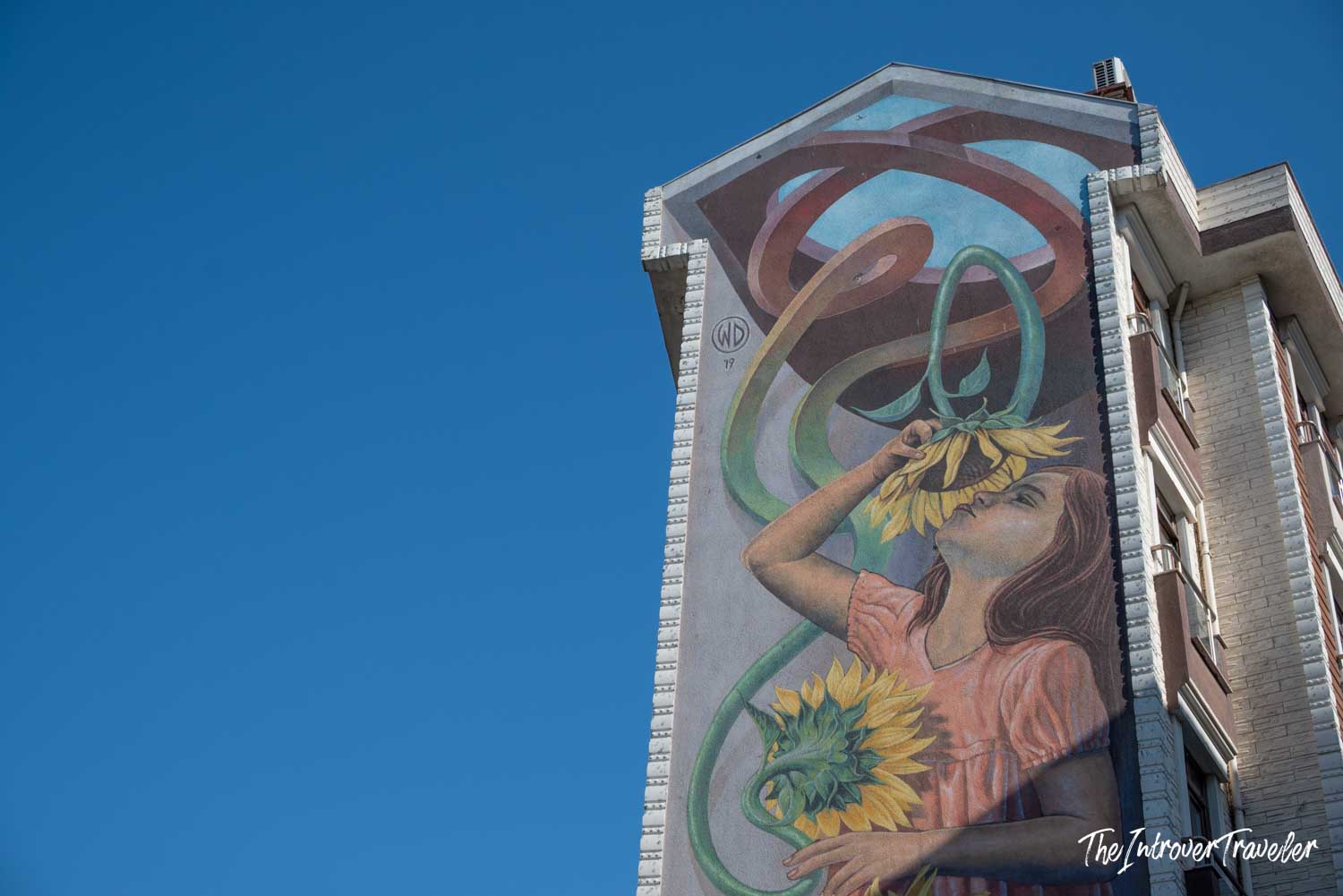
In recent years Kadıköy has also become one of the principal centers of contemporary artistic expression in the city. Monumental murals and street art interventions transform building façades into narrative surfaces reflecting social tensions, generational identities, and the cultural transformations of modern Turkey. This artistic production does not replace historical heritage but enters into dialogue with it, demonstrating how Istanbul continues to reinvent itself without interrupting its cultural continuity.
Visiting these neighborhoods after exploring imperial mosques and palaces produces a fundamental perceptual shift. The city ceases to appear as an open air museum and reveals its dynamic nature. The past does not dominate the present but coexists with it organically. The ferry connecting Europe and Asia therefore becomes more than a simple means of transportation. It functions as a symbolic passage between different historical periods and urban identities. Understanding contemporary Istanbul ultimately requires accepting that the city cannot be reduced to a catalogue of monuments. Its identity emerges from the continuous interaction between imperial history and everyday life, between monumental architecture and urban creativity, between religious tradition and social modernity. Only by integrating these dimensions can visitors fully grasp the true complexity of the metropolis.
The Grand Bazaar and the Egyptian Market: Commerce, Empire, and Everyday Life
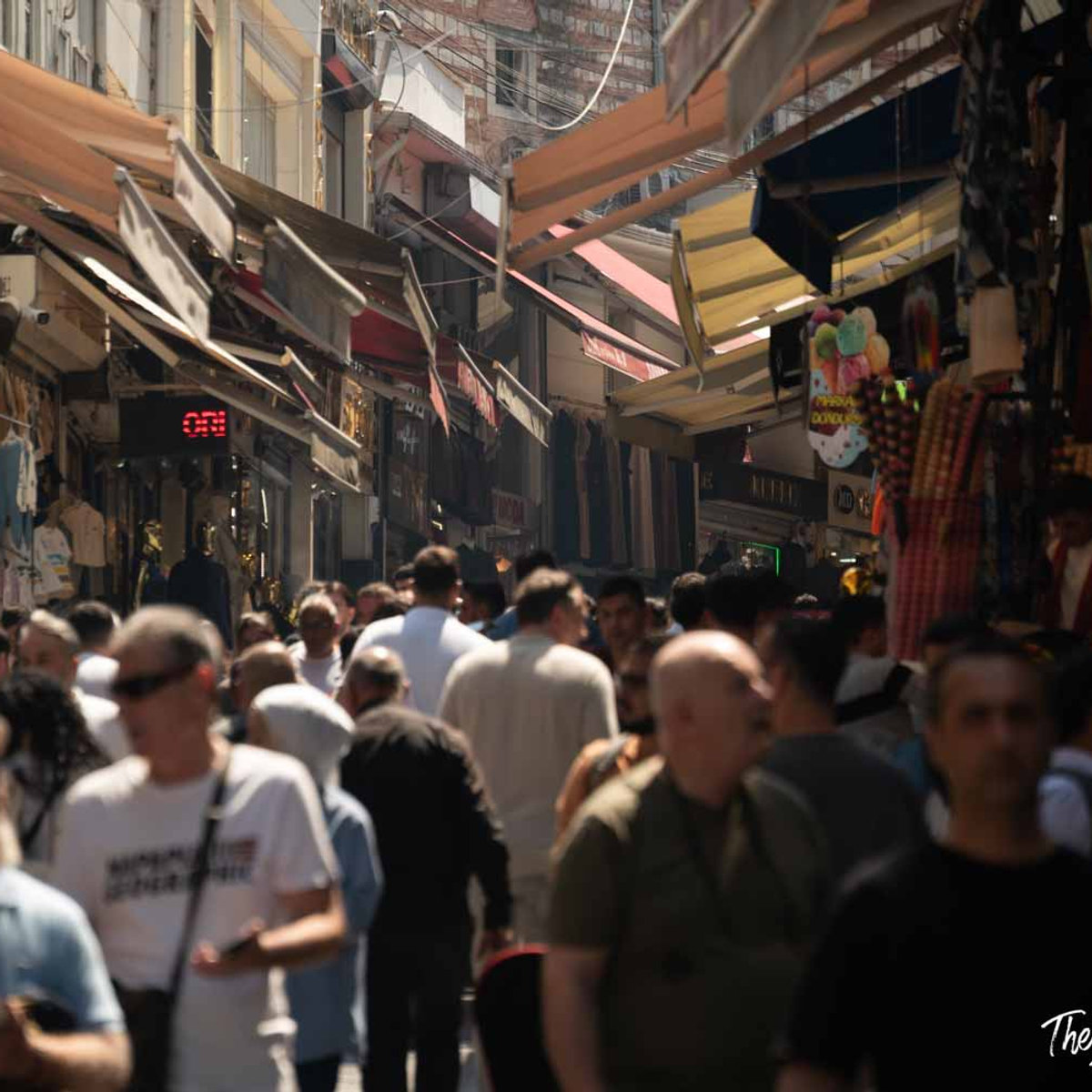
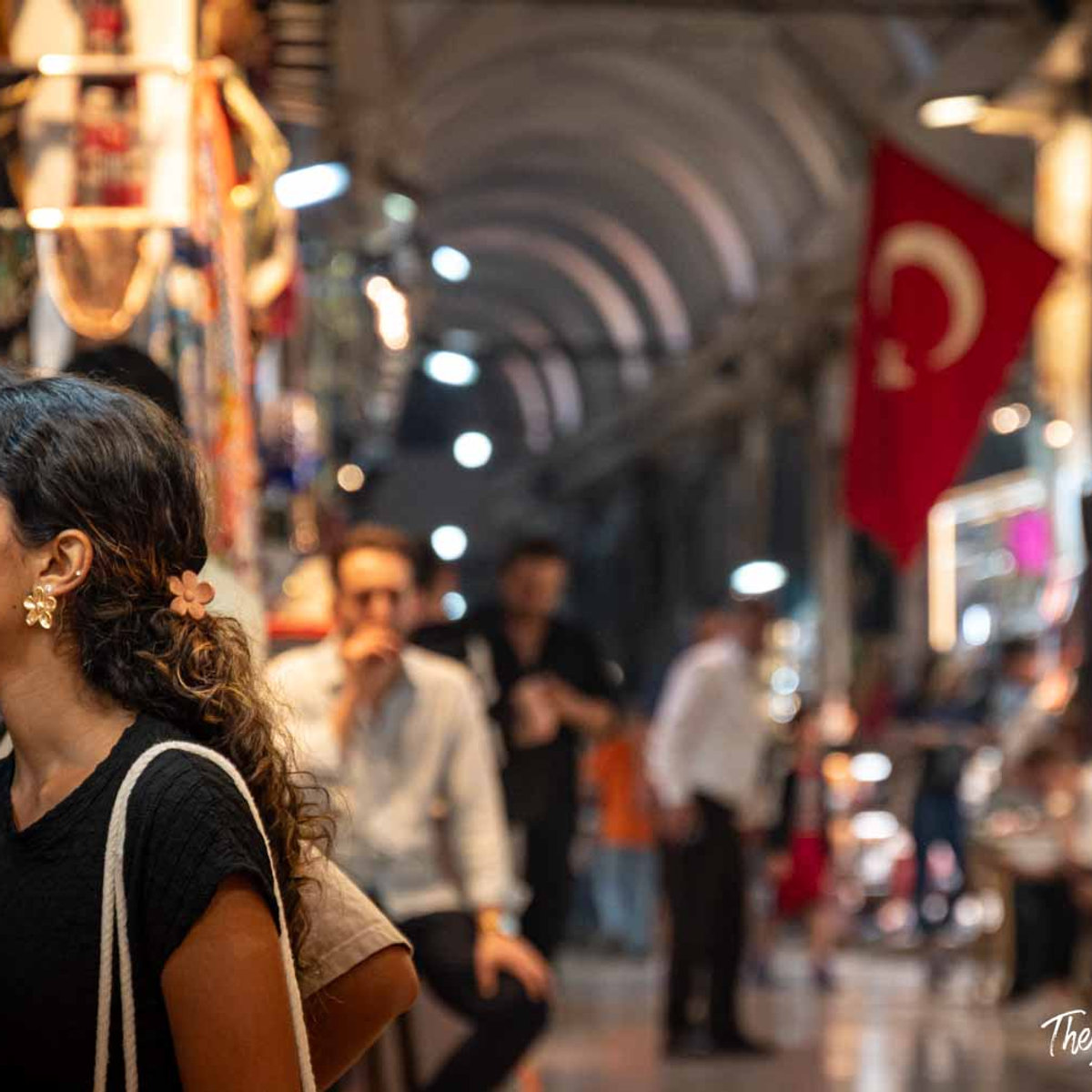
Alongside great religious and political monuments, an essential dimension of Istanbul’s historical identity emerges through the spaces where the empire generated wealth and exchanged goods. In every city markets represent privileged places for encountering local life and culture, yet nowhere is this more evident than in Istanbul. The Grand Bazaar and the nearby Spice Bazaar, also known as the Egyptian Market, embody the economic dimension of the Ottoman capital, the force that transformed the city into one of the principal commercial hubs linking Europe, Asia, and the Middle East.
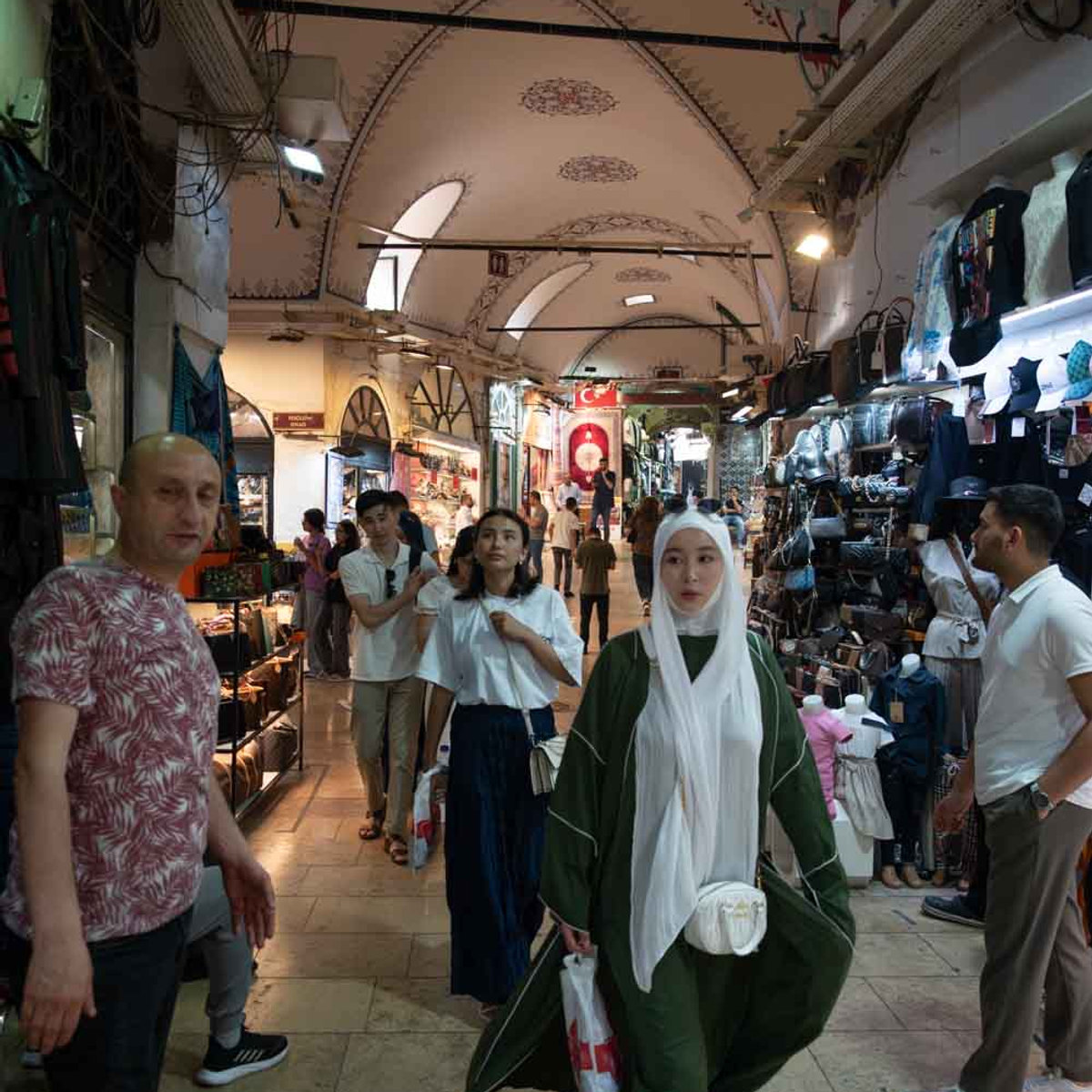
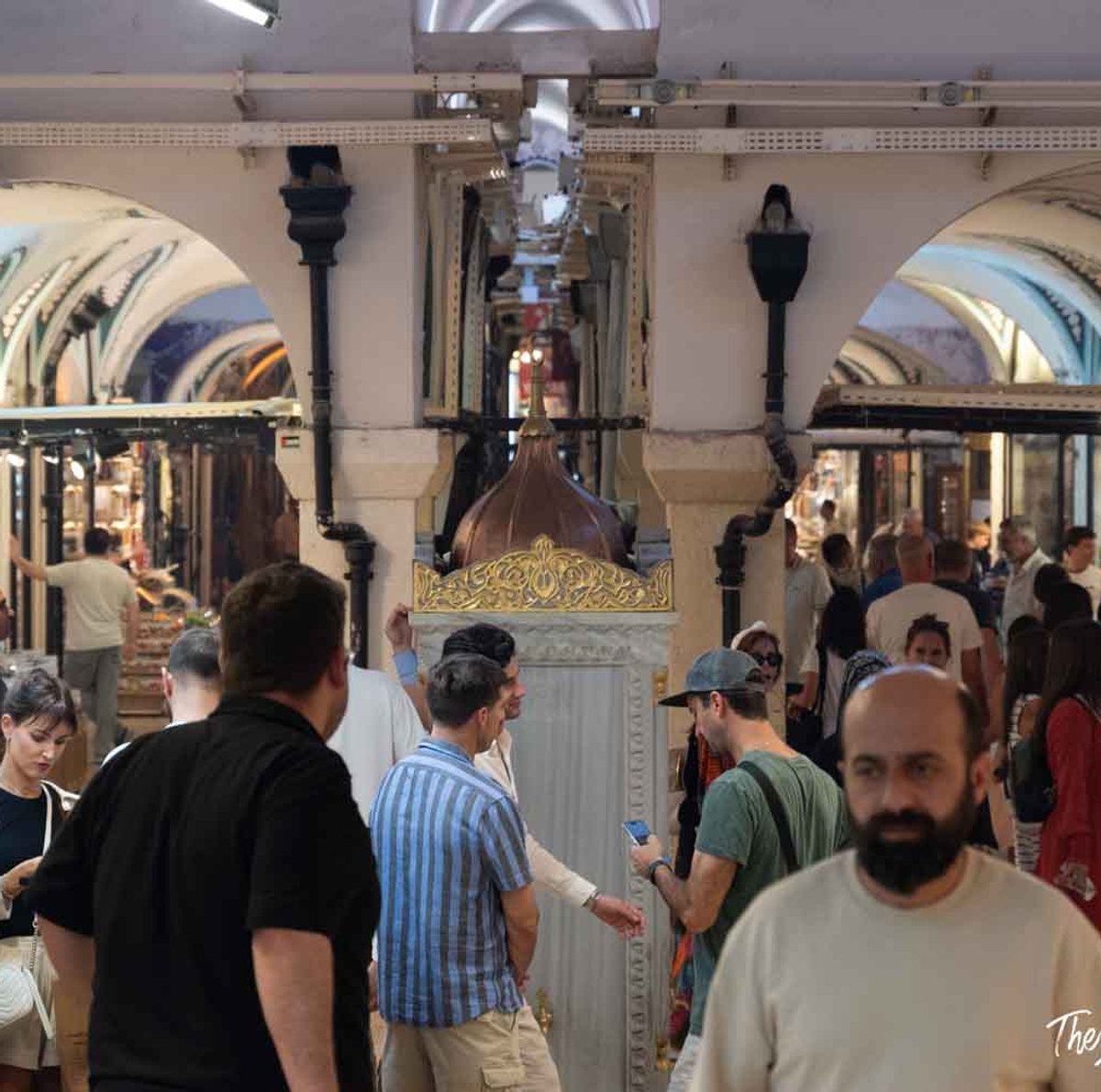
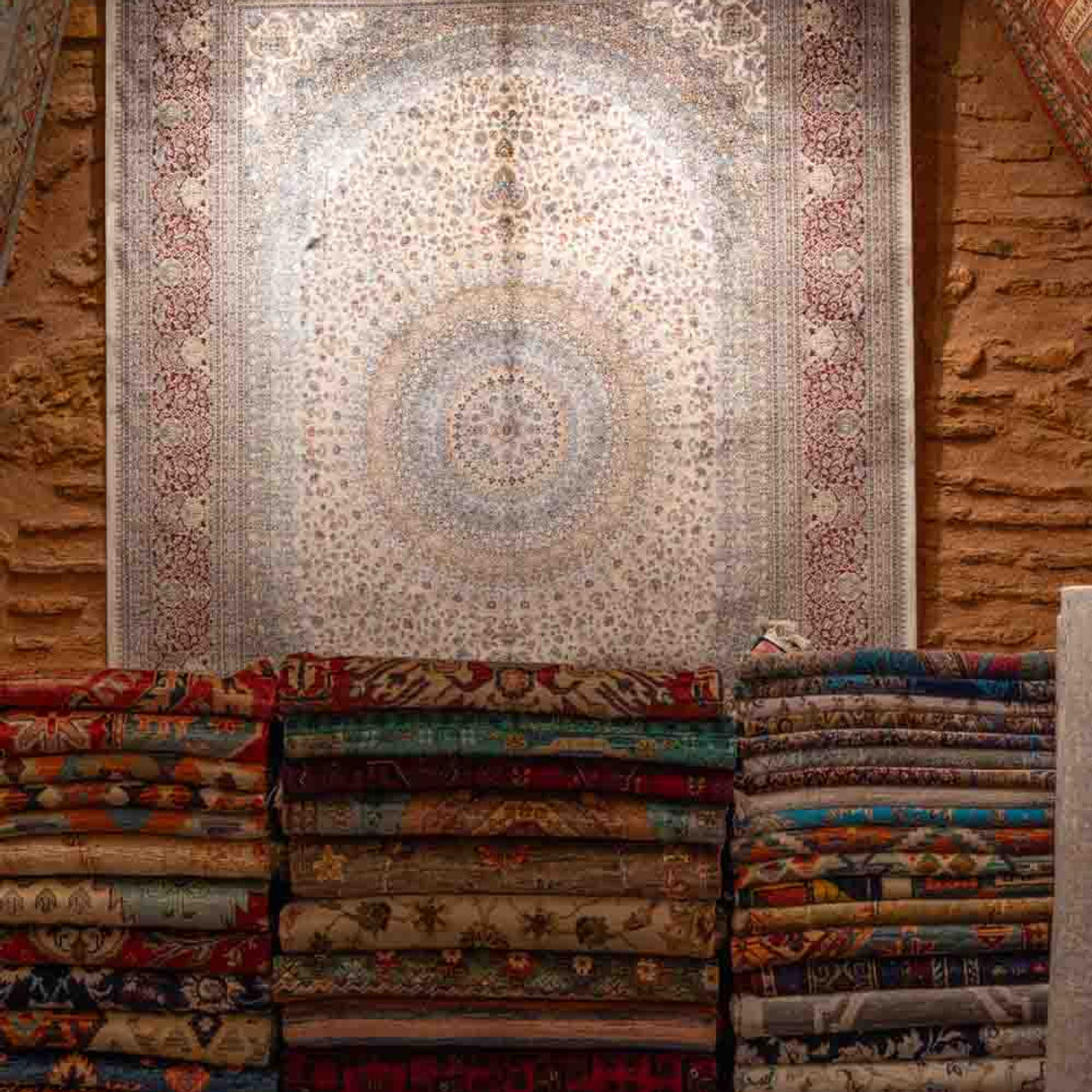
Founded shortly after the Ottoman conquest in the fifteenth century, the Grand Bazaar is not simply a covered market but a true piece of urban infrastructure. With thousands of shops distributed along a network of internal streets covered by vaults and domes, it functioned not only as a commercial center but also as a financial heart of the empire. Jewelers, textile merchants, carpet traders, and money changers operated within strictly organized guild systems that reflected a highly regulated economic structure. Even today its spatial complexity preserves the original layout to such an extent that navigating its corridors resembles moving through a city within the city.
In a market of such scale, and in a city historically defined by trade, it is inevitable that a significant portion of commercial activity is now oriented toward low quality souvenirs and tourist traps. Nevertheless, the Grand Bazaar remains deeply impressive and deserves to be visited, even briefly, not merely for its size but for its urban and architectural structure, for the way it integrates seamlessly into the surrounding fabric and occupies the very heart of the city. Alongside stalls selling mass produced goods of questionable origin, visitors still encounter authentic local craftsmanship that preserves elements of Istanbul’s long mercantile tradition.
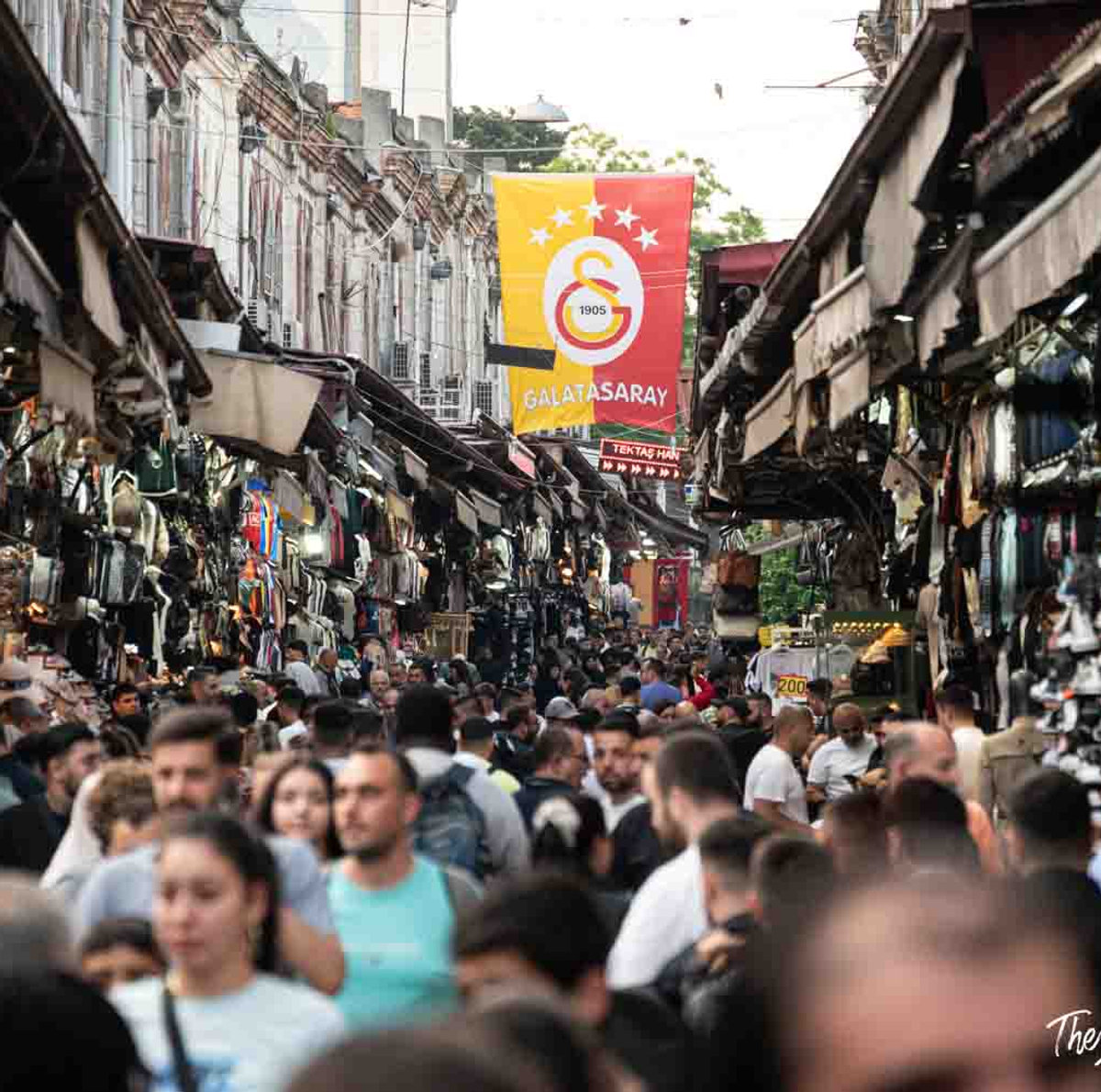
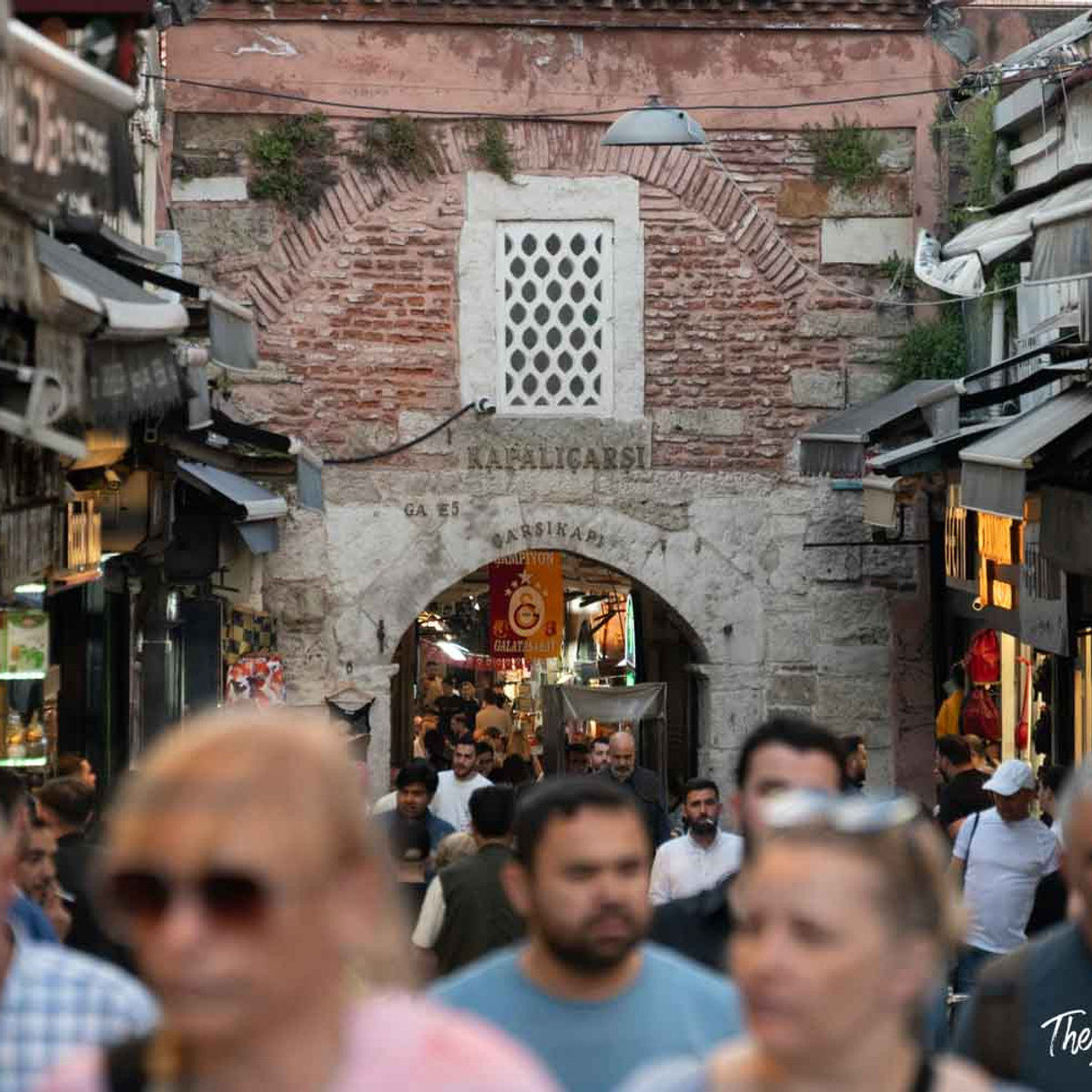
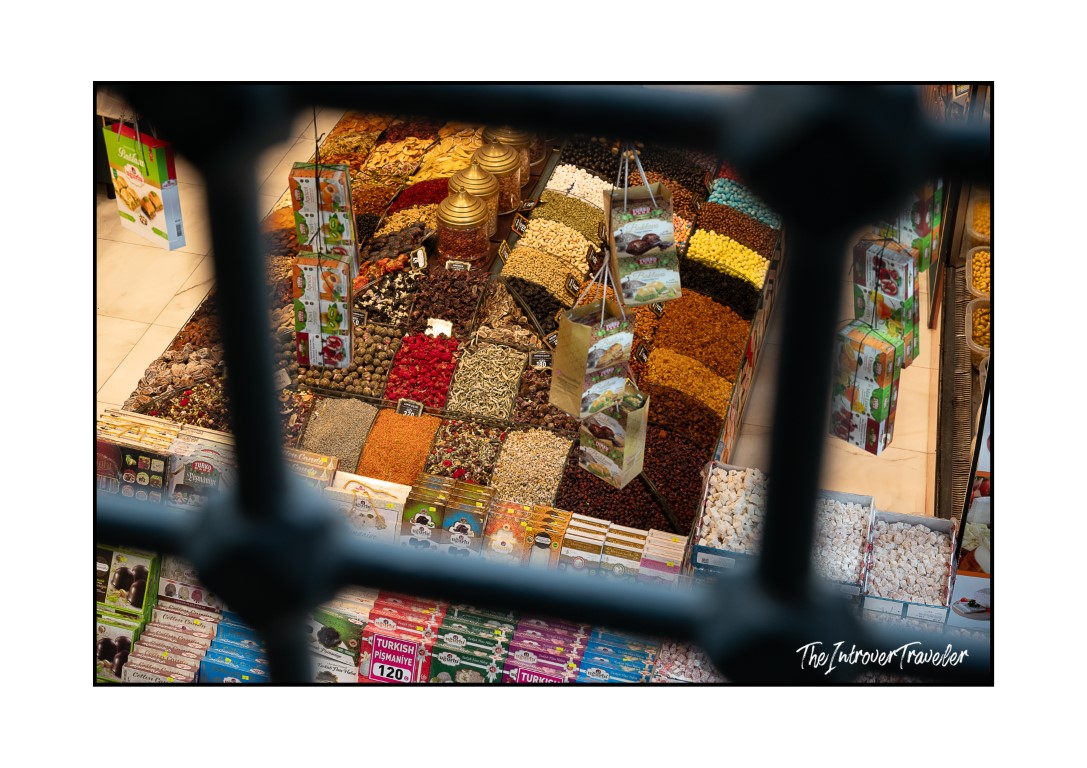
Different yet complementary is the atmosphere of the Egyptian Market, located at the edge of the Golden Horn beside the Yeni Cami. Constructed in the seventeenth century, the bazaar specialized in the trade of spices, medicinal herbs, and goods arriving from the southern provinces of the empire, particularly Ottoman Egypt, from which its name derives. Merchandise transported along commercial routes linking the Indian Ocean, the Levant, and the Mediterranean converged here, reinforcing Istanbul’s role as a crucial node within premodern global trade networks.
The Egyptian Market is structurally more conventional and arguably less compelling than the Grand Bazaar, yet it remains worth dedicating some time to while moving toward Eminönü and the Galata district. Visiting these markets after exploring mosques and imperial palaces allows an often overlooked dimension of imperial history to emerge. The political and religious authority of the city rested upon an exceptionally dynamic commercial economy. The domes of the bazaars, less spectacular than those of the mosques yet equally pervasive within the urban landscape, testify to how economic prosperity formed an integral component of Ottoman greatness.
Even today the Grand Bazaar and the Egyptian Market retain a living function, oscillating between tourist attraction and authentic commercial space. Walking through them means entering the most everyday dimension of the historic city, where continuity between past and present becomes perhaps more evident than in any official monument.
Istanbul Today: Between Urban Modernity, Religion, and Geopolitical Tension
Describing contemporary Istanbul exclusively through its imperial history risks producing an incomplete image. Today the city is not merely a stratified museum suspended between Byzantium and the Ottoman Empire but one of the most politically and culturally complex metropolises of Eurasia. With more than fifteen million inhabitants, Istanbul constitutes the true economic, financial, and cultural center of Turkey, even though the political capital remains Ankara. Understanding Istanbul today requires engaging with a reality shaped by profound contradictions in which urban modernity, religion, political authority, and individual aspirations coexist within an unstable equilibrium.
From an institutional perspective, Turkey in recent years has experienced a progressive consolidation of presidential authority under Recep Tayyip Erdogan. Many international observers describe the Turkish political system as an illiberal democracy or a strongly centralized presidential model. Yet reducing Istanbul to the mere expression of a religious autocracy would be misleading. Sociologically, the city remains far more pluralistic than many other regions of the country and preserves a historically open, commercial, and cosmopolitan urban tradition.
Islamic religion is visibly present in public space more than during the secular phase of twentieth century Turkey, particularly through the dense network of mosques and the wider diffusion of religious practices in daily life. The call to prayer continues to structure urban rhythm, and a growing segment of the population adopts more conservative lifestyles. At the same time, Istanbul remains a city of striking diversity. Central districts such as Beyoglu and Kadıköy display strongly secular patterns of life characterized by youthful, cultural, and artistic vitality. Religion therefore exerts a significant social influence without uniformly determining urban experience.
Regarding individual freedoms, the situation appears complex. Documented limitations on press freedom and political criticism are frequently highlighted by international organizations. In everyday experience, however, such dynamics are generally less perceptible to visitors. Istanbul functions operationally as a global metropolis in which cultural institutions, universities, technology companies, and international tourism continue to operate normally. Urban residents often display a pragmatic rather than ideological outlook, focused primarily on employment, mobility, and economic opportunity.
In terms of safety, Istanbul is generally considered secure for international travelers and broadly comparable to other major European cities. The principal risks concern common urban phenomena such as pickpocketing in crowded or tourist areas, while serious violent incidents remain relatively rare in districts frequented by visitors. The visible presence of security forces also reflects the city’s strategic importance as a national economic and tourism hub. While personal safety is rarely a major concern, minor scams targeting tourists are widespread and may involve taxi drivers, restaurant operators, or street service providers. From this perspective Istanbul can present challenges comparable, in practical experience, to destinations such as Egypt. There is typically no reason to fear for personal safety more than in any large global metropolis, yet maintaining constant situational awareness toward small but persistent opportunistic practices remains advisable.
Culturally, the stereotype describing Istanbul as a gateway between East and West remains partially valid yet insufficient. Rather than functioning as a boundary between two worlds, the city operates as a permanent zone of transition. Europe and Asia do not oppose one another but overlap within everyday life, commercial practices, and cultural identities. Istanbul belongs fully to neither geopolitical sphere. It is instead a space in which political, religious, and economic models continuously coexist and negotiate equilibrium, within a context where Islamic cultural influence nonetheless remains clearly predominant.
Istanbul to Be Tasted: An Unexpected Gastronomic Surprise
Understanding Istanbul exclusively through mosques, palaces, and museums would mean overlooking one of the elements most deeply embedded in its historical identity. For centuries the city has been one of the principal culinary crossroads of the known world, a meeting point between Anatolian, Balkan, Middle Eastern, and Mediterranean traditions. Istanbul’s cuisine therefore does not represent a national gastronomy in the modern sense but the direct outcome of Ottoman imperial geography.
The Ottoman Empire controlled commercial routes linking the Black Sea, the Levant, North Africa, and Central Asia. Spices, grains, fish, meat, and culinary techniques constantly flowed toward the imperial capital, where they were refined within court kitchens and subsequently disseminated throughout urban society. Many dishes now perceived as typically Turkish originate precisely from this imperial synthesis.
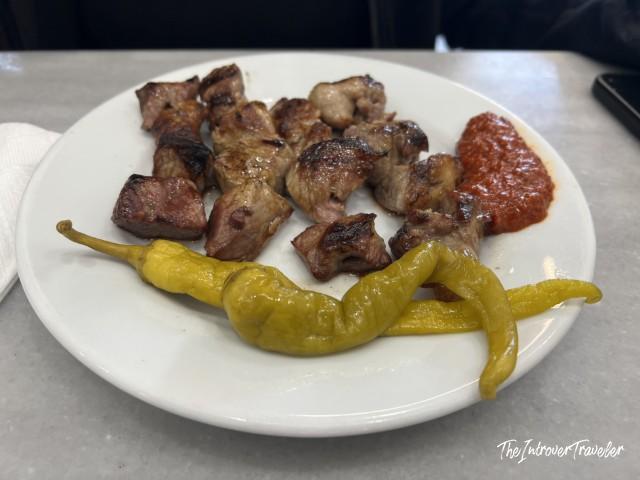
For visitors, the essential distinction lies between everyday cuisine and the culinary tradition rooted in Ottoman court culture. On one side exists street food, immediate and deeply urban, reflecting the rhythm of contemporary life. Simit sold on street corners, balık ekmek eaten along the Golden Horn, or modest lokanta frequented by residents embody the continuity of a commercial and maritime city. On the other side survives a more elaborate gastronomic tradition centered on meze, Bosphorus seafood, and a sophisticated culture of convivial dining once cultivated within Ottoman elites.
A particularly revealing moment is the Turkish breakfast, an experience that transcends simple nourishment to become a social ritual. Tables covered with cheeses, olives, fresh bread, honey, eggs, and black tea transform the morning meal into an extended shared occasion, reflecting an urban culture that still assigns value to conversation and collective time. As I have admitted elsewhere, this is one aspect of local gastronomy I ultimately chose not to confront fully, partly in order to preserve the energy required to explore the city rather than surrender it to an excessively demanding digestion. What proved genuinely surprising, however, was the overall quality of Istanbul’s cuisine. From köfte to kokoreç, and extending to refined contemporary fine dining reinterpretations of Ottoman culinary heritage, one quickly realizes that even extended visits barely scratch the surface of a remarkably rich gastronomic tradition.
Hammams: The Turkish Bath as a Social Institution
Speaking of earthly pleasures in Istanbul inevitably leads to what may be considered the quintessential Ottoman expression of well being: the hammam.
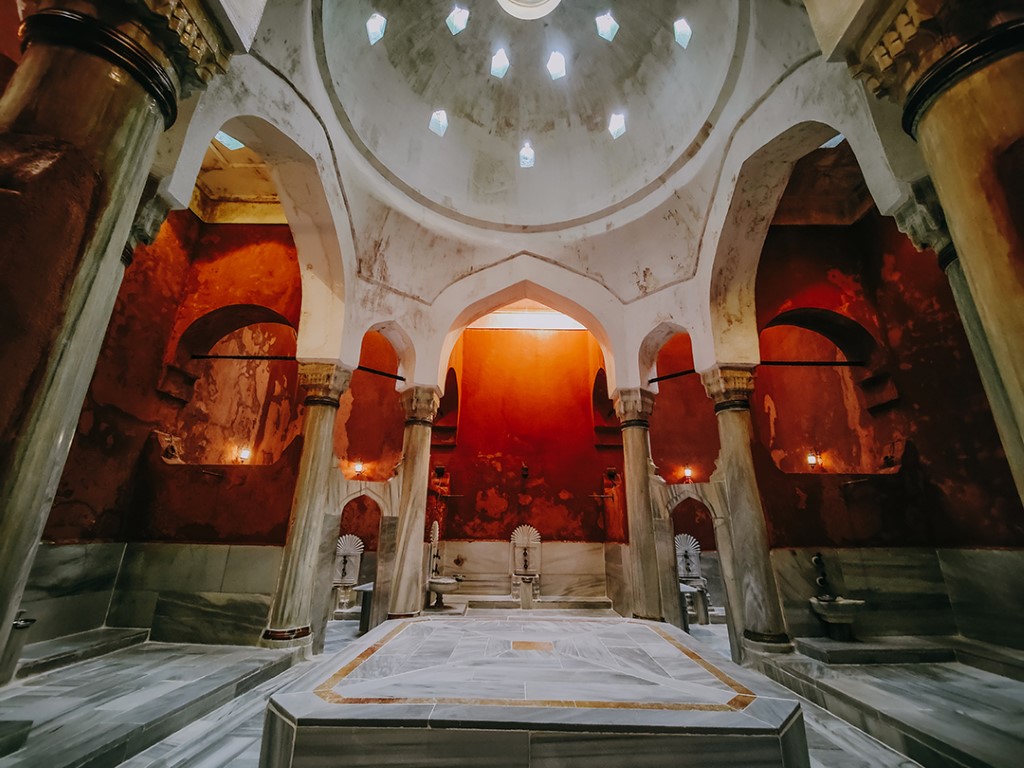
Alongside the mosque and the marketplace, the hammam constituted one of the fundamental pillars of Ottoman urban life. Public baths were not merely spaces devoted to hygiene but genuine social institutions in which religious ritual, community relationships, and everyday practices intersected.
The hammam tradition derives directly from Roman and Byzantine bath culture, later adapted to Islamic society, which places strong emphasis on bodily purification before prayer. In Istanbul this continuity remains particularly evident. Many hammams were designed by the same architects responsible for imperial mosques, including once again Mimar Sinan, demonstrating how hygiene, religion, and urban planning formed interconnected components of a single social system.
Structurally, the bathing experience follows a precise sequence of progressively warmer spaces culminating in the central marble hall beneath a dome perforated by small openings that filter natural light. Bathing was never limited to physical cleansing but functioned as a collective experience marking important social occasions such as weddings or family celebrations.
Today Istanbul’s historic hammams oscillate between tourist oriented services and authentic cultural continuity. Some continue to serve predominantly local clientele, while others provide experiences adapted to international visitors. In both cases they remain among the few environments where the continuity between Roman, Byzantine, and Ottoman Istanbul can be physically perceived.
Entering a hammam after days spent among museums and monuments produces a distinctive effect. The history of Istanbul ceases to be something merely observed and becomes a bodily experience. Heat, stone, and silence restore a slower temporal dimension that contrasts sharply with the relentless energy of the modern metropolis. It is an experience strongly worth recommending to anyone visiting Istanbul, even for a single day.
The Cats of Istanbul: An Unexpected Urban Presence
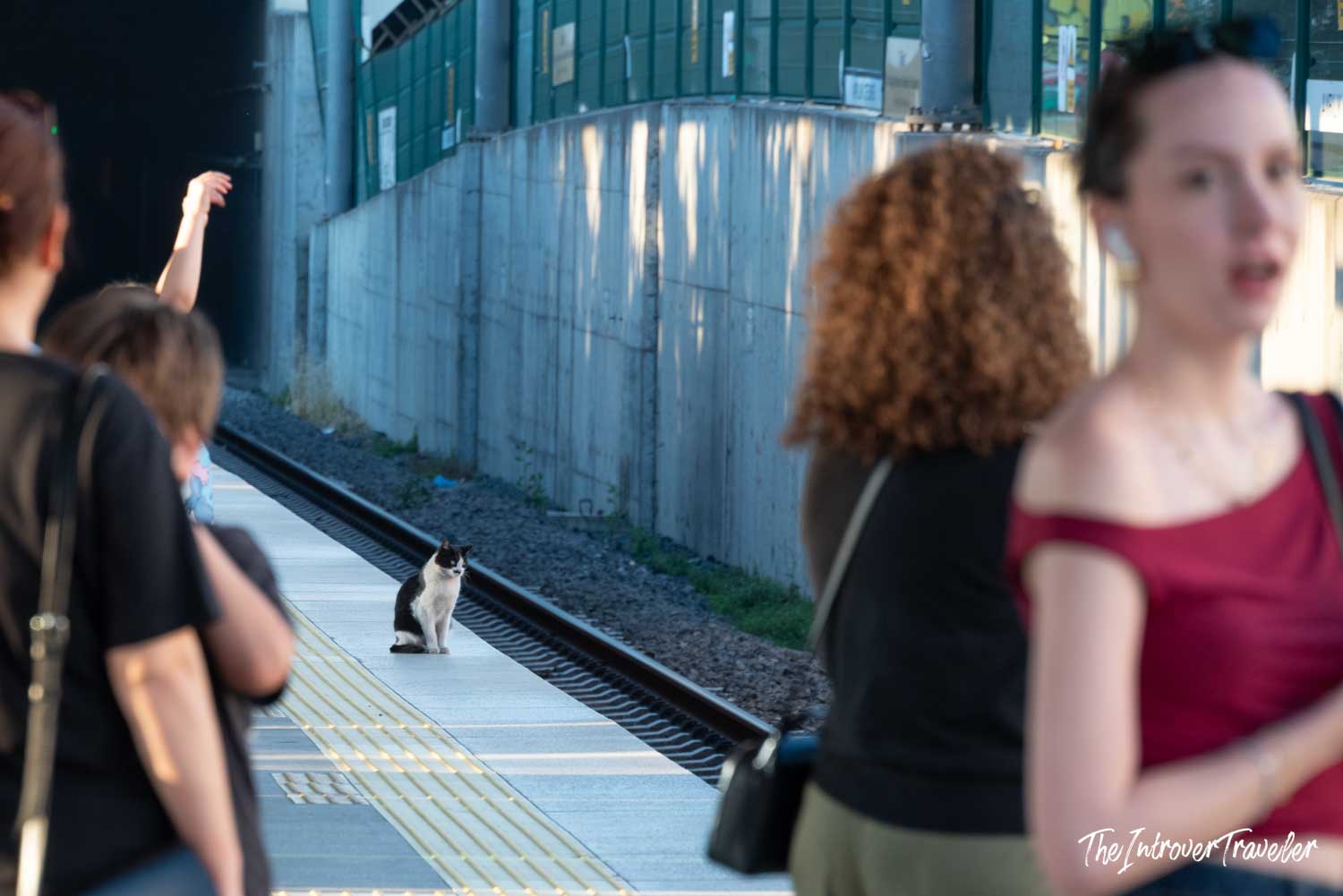
One of the most surprising aspects of everyday life in Istanbul is the constant presence of cats, as integral to the urban landscape as mosques and ferries crossing the Bosphorus. Thousands of felines live freely throughout the city’s neighborhoods, collectively cared for by residents, shopkeepers, and even local administrations that provide food, water, and improvised shelters along streets and public squares.
This coexistence is also rooted in Islamic cultural tradition, in which the cat has historically been regarded as a clean and respected animal. The result is a distinctive relationship between city and animal life in which cats belong to no individual yet function, in a sense, as shared inhabitants of the urban community. Watching them sleep at the entrance, or sometimes inside, mosques or move undisturbed through cafés and markets offers a discreet but deeply authentic glimpse into the most everyday and human dimension of Istanbul.
Tea, Coffee, and Hookah: Social Rituals and Urban Pauses in Istanbul
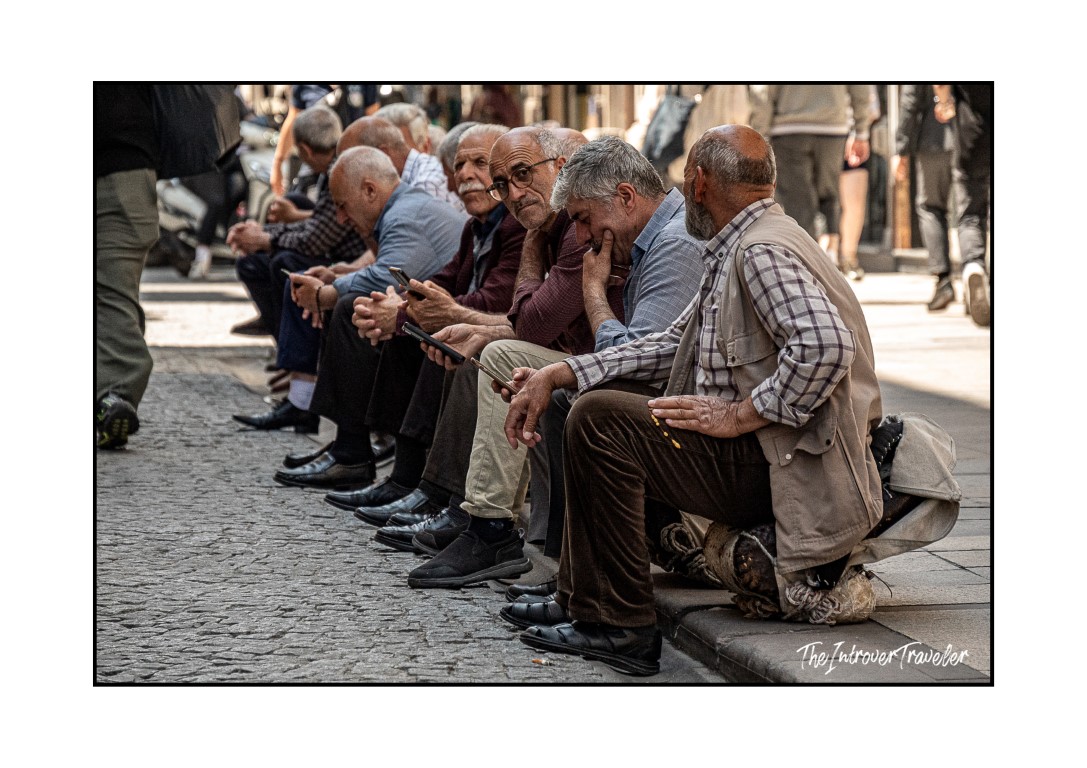
Alongside imperial monuments and the relentless movement of a vast metropolis, an essential part of everyday life in Istanbul unfolds within spaces dedicated to conversation and pause. Tea houses, neighborhood cafés, and traditional establishments form a widespread social infrastructure in which time follows a rhythm markedly different from that of most European capitals. Stopping for a drink is not merely a moment of refreshment but a deeply rooted cultural practice.
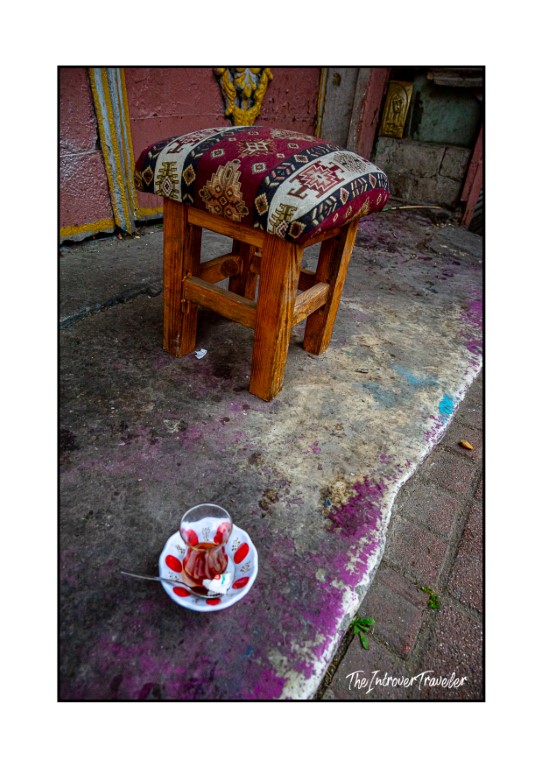
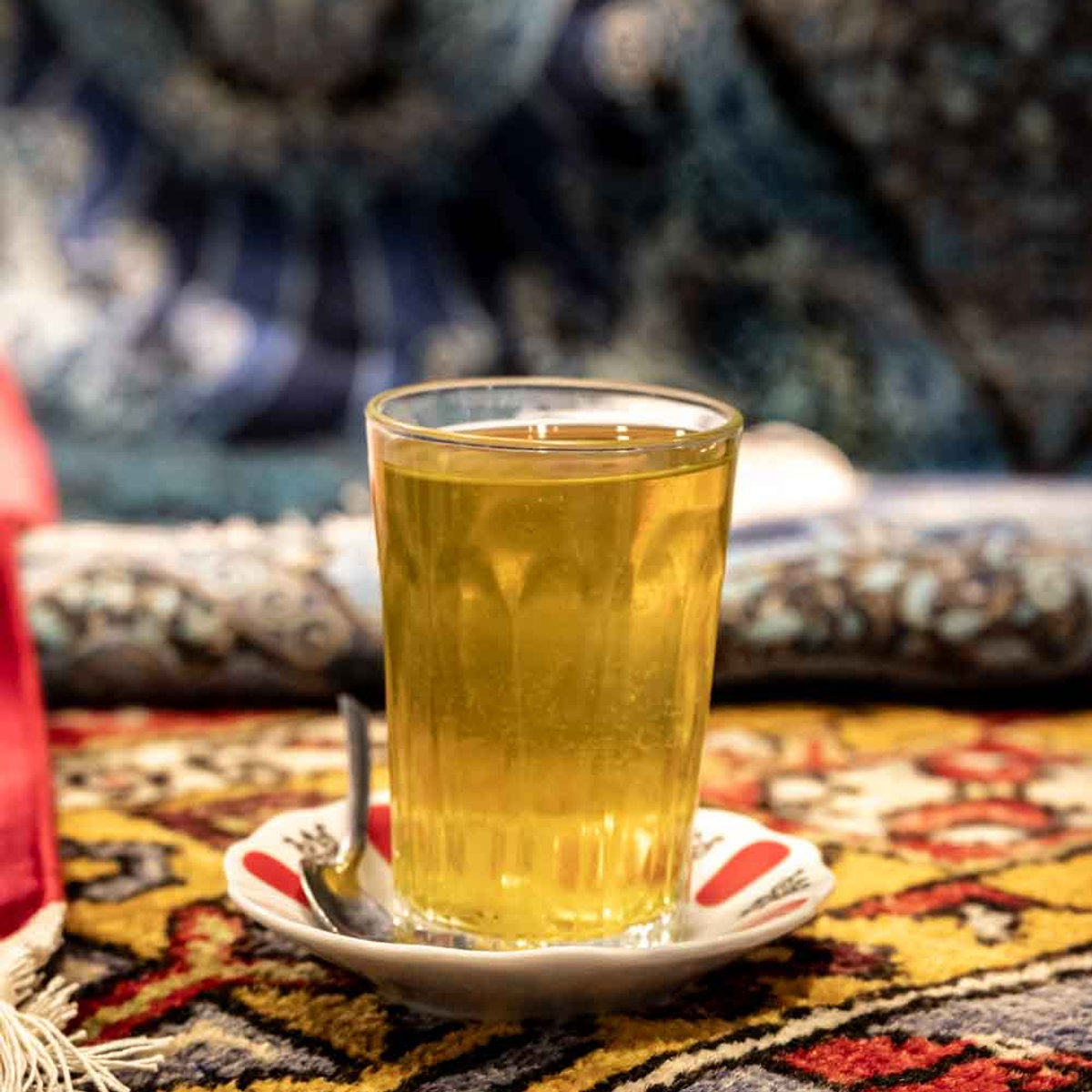
Turkish tea is unquestionably the most widely consumed beverage. Served in the distinctive tulip shaped glass, it is prepared through a double infusion method and poured continuously throughout the day. It is common for tea to be offered in shops, markets, or even during informal commercial negotiations. Accepting a glass of tea often means temporarily participating in local social life rather than performing a touristic gesture.
Turkish coffee belongs instead to an older and more ritualized tradition inherited directly from Ottoman culture. Prepared in a cezve, a small metal pot placed over direct flame or hot sand, the coffee is served unfiltered, with finely ground powder settling at the bottom of the cup. One practical rule is essential: the coffee should neither be stirred nor consumed entirely. After several sips it is advisable to stop before reaching the dense sediment.
When ordering, the desired level of sweetness is usually requested, commonly indicated as sade without sugar, az sekerli slightly sweet, orta moderately sweet, or sekerli very sweet. For a first experience, the intermediate option generally provides the most balanced introduction. Traditionally the coffee is accompanied by a glass of water and sometimes a small sweet such as lokum, although quality varies considerably. The water is meant to be drunk before the coffee in order to cleanse the palate, a detail reflecting the importance attributed to tasting. In some establishments the custom of reading coffee grounds survives, a popular form of divination still present in urban culture.
Alongside tea and coffee, many visitors inevitably encounter the hookah, particularly in historic districts and along the Bosphorus. The device consists of a water pipe in which flavored tobacco, often mixed with molasses and fruit aromas such as apple, mint, or grape, is heated. Smoke passes through water before being inhaled through a flexible hose, producing a slower and more social experience compared with cigarette smoking.
Trying a hookah may hold cultural interest when approached as an occasion to observe local sociability rather than as a tourist attraction. It remains important, however, to recognize that despite the smoother sensation of the smoke, it contains nicotine and harmful substances comparable to those found in traditional tobacco. The experience can be worthwhile once, ideally in venues frequented by residents, but it should not be regarded as a harmless alternative to smoking.
Sitting in a çayhane or in a café overlooking the Bosphorus while slowly drinking tea or coffee as the city flows around you perhaps reveals more about Istanbul than any monumental visit. Within these seemingly insignificant pauses, the metropolis discloses its most human dimension, shaped by conversation, observation, and shared time.
How to Visit Istanbul: An Ideal 3, 4, and 5 Day Itinerary
Visiting Istanbul without a clear strategy almost inevitably produces a sense of disorientation. The city does not lend itself to casual exploration because its geographical and historical complexity requires a progressive approach. Istanbul should not be experienced as a sequence of isolated attractions but as a journey through successive historical periods and urban identities. The most common mistake consists in repeatedly moving between the Bosphorus, the historic peninsula, and modern districts within the same day, transforming the visit into an exercise in transportation rather than understanding.
An effective itinerary instead follows a historical and geographical logic that gradually accompanies the visitor from Byzantine Constantinople to the contemporary metropolis.
Three Day Itinerary: The Imperial Essentials
Three days represent the realistic minimum required to understand the city without reducing it to a checklist of monuments.
The first day should be entirely dedicated to the historic peninsula. Hagia Sophia, the Blue Mosque, the ancient Hippodrome, the Basilica Cistern, and Topkapı Palace form a unified system narrating the birth and transformation of the imperial capital. Visiting these sites within the same day allows visitors to perceive continuity between Byzantium and the Ottoman Empire without interrupting the historical narrative.
The second day can focus on the great imperial mosques and historic markets. The Süleymaniye Mosque offers an elevated perspective from which the urban logic of Istanbul becomes intelligible, while the Grand Bazaar and the Egyptian Market introduce the commercial dimension that sustained Ottoman power. In the afternoon, crossing the Galata Bridge and ascending Galata Tower provides a comprehensive understanding of the city’s skyline.
The third day should include the Bosphorus and the Asian side. A ferry crossing toward Kadıköy or Üsküdar offers relief from monumental tourism and allows entry into the rhythms of contemporary urban life. The evening may be dedicated to Beyoglu and Istiklal Avenue, where Istanbul reveals its modern identity. Many online guides recommend visiting the Fener district as well. While it retains a certain nostalgic charm, it is today heavily dominated, actually flooded, by visitors focused primarily on producing social media content and shooting selfies, a circumstance that significantly diminishes much of its potential atmosphere.
Four Day Itinerary: Beyond the Monuments
With an additional day, it becomes possible to explore dimensions often overlooked.
The fourth day should be devoted to sites slightly removed from the main tourist axis yet essential for understanding the city’s cultural history. Visiting the Church of Saint Saviour in Chora reveals the final flowering of Byzantine artistic culture, while experiencing a historic hammam introduces an experiential dimension that complements intellectual understanding of Ottoman society. This day also offers the ideal opportunity to explore residential neighborhoods or dedicate unhurried time to local gastronomy. From a logistical perspective, Chora may also be scheduled at the end of the trip, conveniently aligning with the route toward the airport.
Five Day Itinerary: A Complete Istanbul
Five days finally allow Istanbul to be experienced in greater completeness.
At this stage it becomes natural to include Dolmabahçe Palace and the Bosphorus waterfront, which illustrate Ottoman modernization and the transition toward contemporary Turkey. Although architecturally significant, Dolmabahçe may feel comparatively less essential and is not strictly recommended for visitors with limited time. A cruise along the Bosphorus or an extended urban ferry journey allows the city to be interpreted through its most decisive element, water itself.
Additional time can then be devoted to secondary museums, emerging neighborhoods, or simply to slowing the pace, an indispensable condition for genuinely absorbing the complexity of Istanbul’s urban experience.
Practical Tips for Visiting Istanbul: A Complete Guide
From a logistical perspective, Istanbul is a surprisingly easy destination to manage, especially considering the scale of the city and its geographical position. A number of practical aspects nevertheless deserve advance attention, as they can significantly influence the overall travel experience.
Airports and Transfers
The city is served by two main airports. Istanbul Airport (IST), located on the European side, is now the primary international hub and handles most intercontinental and flag carrier flights. It is modern and efficient but relatively distant from the historic center, with transfer times that can easily exceed one hour depending on traffic conditions and with transport costs that are not insignificant.
Sabiha Gökçen International Airport (SAW), by contrast, lies on the Asian side and is frequently used by low cost carriers. The two airports are not geographically equivalent. Travelers staying on the historic peninsula or in Beyoglu will generally find Istanbul Airport more convenient, whereas Sabiha Gökçen may be practical for accommodation on the Asian side.
Flights to Istanbul vary enormously depending on airport choice and timing. Checking fares early often makes a substantial difference. Check flights to Istanbul.
In both cases it is advisable to avoid taxis during peak hours and instead rely on metro connections or dedicated airport buses, which are significantly cheaper and often more predictable, particularly from Istanbul Airport. In case you want to book a private transfer from Istanbul airport, click here.
Moving Around the City
Distances on the map can be misleading. Istanbul suffers from chronic traffic congestion, and crossing the city by taxi during rush hours may require highly unpredictable travel times. Whenever possible, tram lines, metro systems, funiculars, and ferries represent faster and more reliable alternatives to private vehicles. Even apparently short journeys may become lengthy due to the city’s hilly topography and dense traffic.
Official taxis remain inexpensive by European standards but are not always transparent in fare management. It is essential to verify that the meter is activated or to use widely adopted applications such as BiTaksi or Uber. For shorter distances, walking or using the tram often proves more efficient. A cautious approach toward taxi services remains advisable.
Given the city’s terrain, comfortable walking shoes are strongly recommended. Steep streets, stairways, cobblestones, and continuous elevation changes are common throughout the historic peninsula, Galata, and the Asian districts.
Electricity and Connectivity
Turkey uses standard European type C and F electrical sockets operating at 220 volts. Travelers from continental Europe will not require adapters, while visitors arriving from the United Kingdom or the United States should bring one.
European roaming agreements generally do not apply in Turkey. For stays of several days, purchasing an eSIM or a local SIM card at the airport or in city stores is often convenient. Reliable mobile data greatly facilitates navigation, transport planning, and translation.
Money and Payments
The local currency is the Turkish lira, although Istanbul increasingly functions as a cashless city. Credit cards and contactless payments are accepted almost everywhere, including restaurants, transport systems, and small businesses. Maintaining a modest amount of cash may still be useful for markets, traditional taxis, or minor purchases in less touristic neighborhoods, yet electronic payment is widely sufficient in most situations. ATM withdrawals are common and usually more advantageous than currency exchange counters at airports. As far as I am concerned, I spent an entire week in Istanbul using only electronic payments and converting only the equivalent of 100 dollars into local currency.
Drinking Water and Alcohol
Tap water is technically potable according to local standards but is rarely consumed by residents. For short stays, bottled water remains the preferable option and is inexpensive and widely available. Alcoholic beverages are quite hard to find and may be absent from most traditional restaurants.
Public Transport and the Istanbulkart
Public transportation constitutes the most efficient way to move through the city. Tramways, metro lines, funiculars, buses, and ferries operate within an integrated network. Purchasing an Istanbulkart, a rechargeable travel card valid across nearly all modes of transport, greatly simplifies mobility while reducing costs.
Scams
Attempts at small scams targeting tourists are very frequent and, after a few days, can become exhausting. Only in Egypt, in my experience, have I encountered a more persistent approach. From restaurants attempting to charge double the standard price to taxi drivers who take you to your destination without activating the meter and then demand excessive fares, caution, common sense, and a good deal of patience are essential. If, particularly in the area north of the Galata Bridge, a shoeshiner walking past you accidentally drops a brush, ignore it and keep walking. It is a common scam in which petty hustlers rely on your politeness to impose an unsolicited service and then demand payment.
Cultural Etiquette
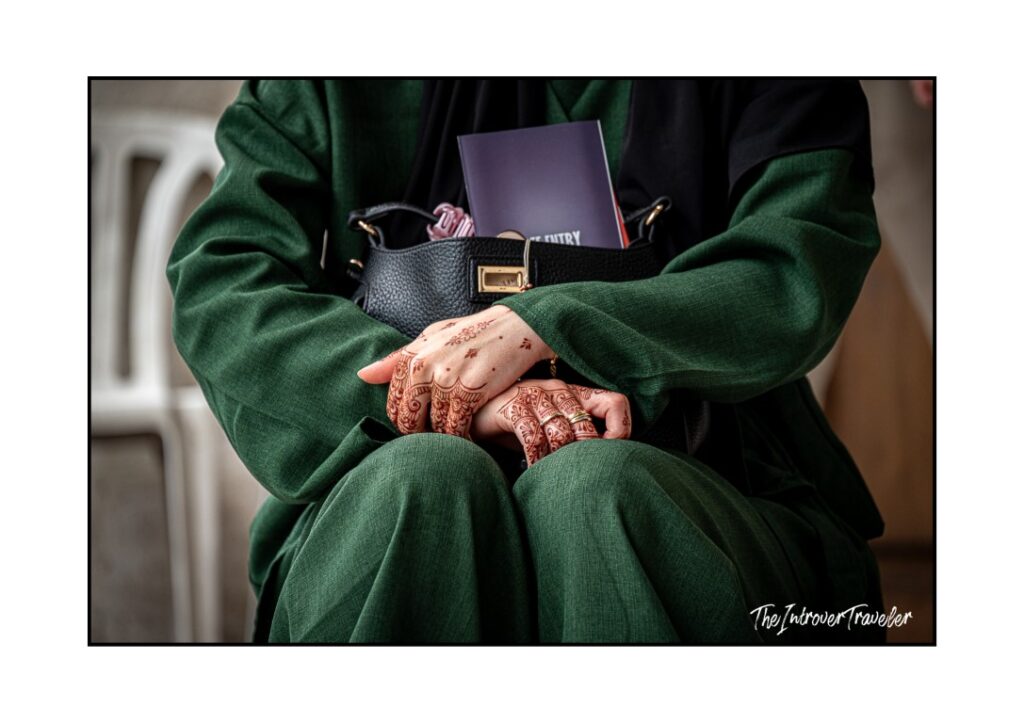
Informal clothing is generally acceptable throughout the city. However, respectful attire is required when entering mosques. Shoulders and legs should be covered, shoes must be removed before entry, and certain areas may become temporarily inaccessible during prayer times.
With these straightforward precautions, Istanbul reveals itself as an exceptionally accessible destination in which immense historical and cultural complexity does not translate into practical difficulty for the contemporary traveler.
First Time in Istanbul: Essential Planning Tips
For first time visitors, Istanbul can appear overwhelming simply because it is not organized around a single center or a linear sightseeing logic. The most effective approach is to think in terms of historical and geographical zones rather than individual attractions. Staying in or near the historic peninsula (Sultanahmet) allows immediate access to Hagia Sophia, the Blue Mosque and Topkapı Palace, while Beyoglu offers a more contemporary urban atmosphere and easier evening life. Three full days represent the minimum reasonable duration for a first visit, although four or five days allow a more balanced experience that includes the Asian side and the Bosphorus. Distances on the map are deceptive and traffic congestion is constant, therefore tramways, metro lines and ferries should be preferred over taxis whenever possible. Purchasing an Istanbulkart early simplifies nearly all urban transport. Major monuments are best visited early in the morning or late in the afternoon to avoid cruise crowds and peak tour groups, and advance ticket booking can save considerable waiting time, particularly at Hagia Sophia and Topkapı Palace. Visitors should also remain aware of common minor scams involving taxis or unsolicited services in tourist areas, exercising normal urban caution without unnecessary concern about safety. Finally, Istanbul rewards a slower rhythm than most European capitals. Planning fewer daily stops and allowing time for ferry crossings, neighborhood walks and café pauses often results in a far deeper understanding of the city than attempting to see everything in a single visit.
Books
Inevitably, before visiting Istanbul I did not manage to read ten books in preparation. Instead, I read only one, and on this blog I recommend only books I have actually read. It is nevertheless a perfect introduction to the emotional atmosphere of the city. The book is Istanbul by Nobel Prize winner Orhan Pamuk, a melancholic and nostalgic black and white portrait of this complex metropolis seen through the eyes of a great writer.
Istanbul: A City Between Imperial Legacy and Contemporary Islamic Identity
At the end of a journey through Istanbul, it becomes clear that the city cannot be understood solely as the heir of Byzantium or as the former capital of the Ottoman Empire. Contemporary Istanbul is also, increasingly visibly, a major Islamic metropolis in which religion, history, and everyday life remain deeply intertwined. The mosques that dominate the skyline do not belong exclusively to a monumental past but continue to function as active spaces, frequented daily by a population for whom religious identity still represents a meaningful cultural reference.
The call to prayer resonating across the city several times each day serves as a constant reminder that Istanbul is not a secularized European capital in the Western sense of the term. Islam manifests itself not only through religious architecture but through the rhythm of urban life itself, in social habits, public celebrations, and collective behavior. At the same time, this religious dimension coexists with a complex and stratified urban society in which secular lifestyles, global aspirations, and more conservative traditions exist simultaneously without canceling one another.
What makes Istanbul unique lies precisely in this overlap. Byzantine basilicas transformed into mosques, still functioning Ottoman imperial complexes, and contemporary districts animated by a young and cosmopolitan population all testify to a historical continuity in which Islam today represents one of the most visible components of urban identity. The city does not merely preserve a religious past but continues to live within it, constantly reinterpreting that inheritance within the reality of a twenty first century metropolis.
For Western visitors, Istanbul therefore offers a rare experience. It is not simply a symbolic gateway between East and West but a modern global city, heir to ancient Constantinople and Byzantium, in which Islamic tradition remains an integral part of public space without preventing the economic, cultural, and social dynamics typical of major international metropolises. To understand Istanbul ultimately requires accepting this permanent tension between modernity and religion, between international openness and cultural rootedness.
It is perhaps precisely this coexistence that renders Istanbul inexhaustible, a city where imperial legacy continues to dialogue with a living Islamic identity, transforming every visit into a direct encounter with one of the most complex and significant urban realities of the contemporary world.
If you are planning a trip to Istanbul, you may be interested in these posts and these pictures.
If you want to get into the right mood before your travel, you may want to have a look at my pictures from Istanbul.
As an Amazon Associate, I may earn a small commission from qualifying purchases made through the links in this article, at no additional cost to the reader.