Last visit: June 2025
My rating: 7/10
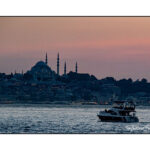
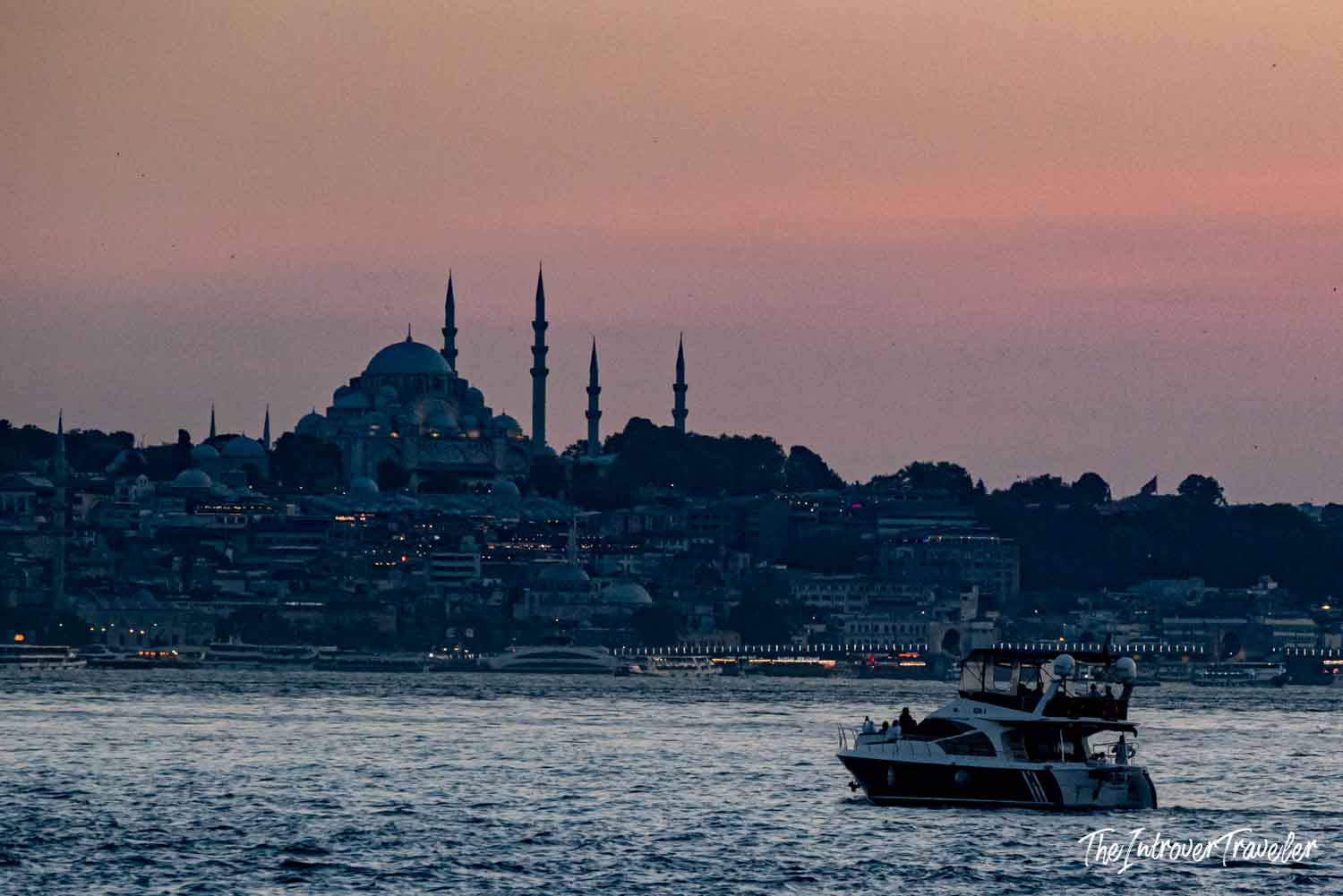
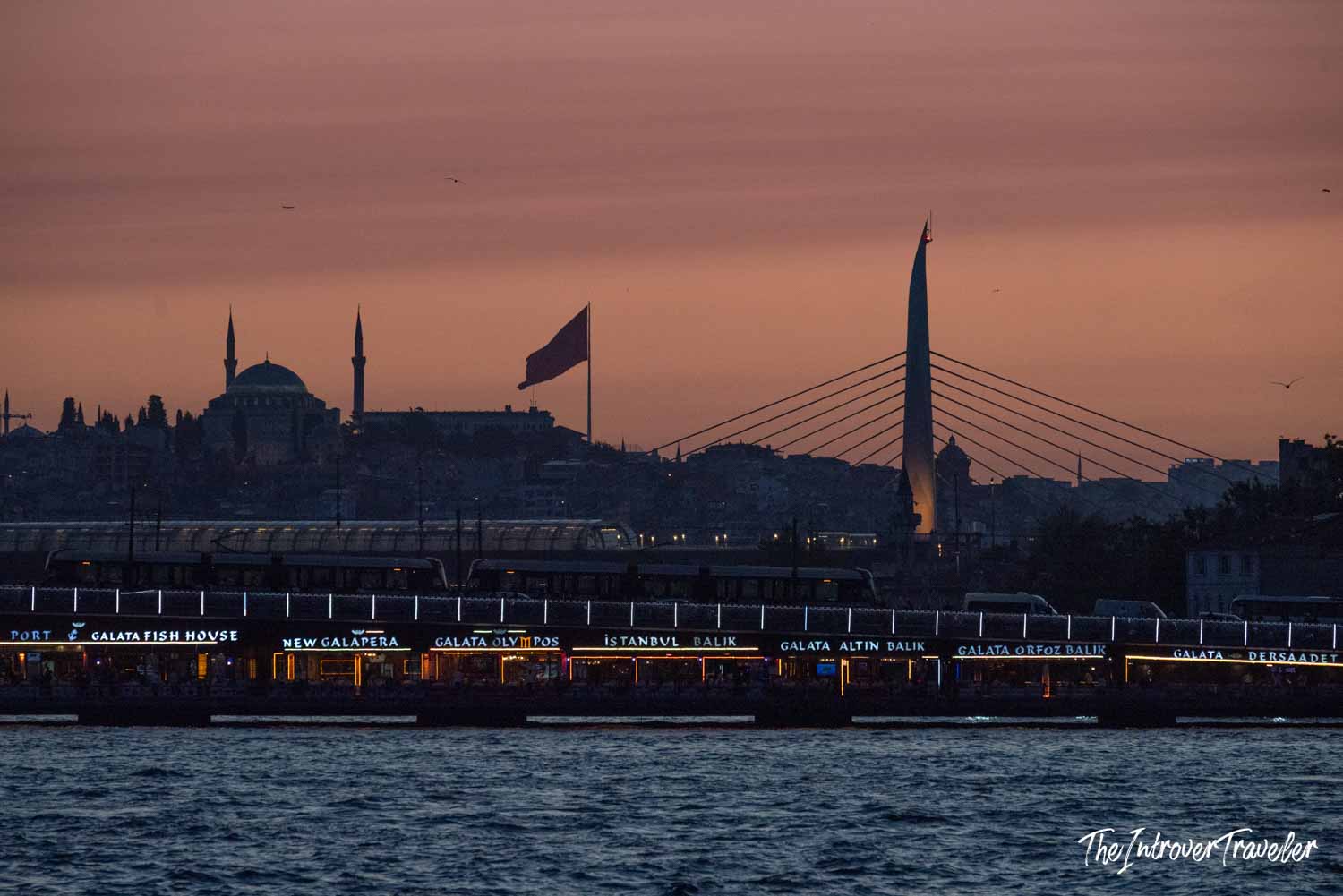
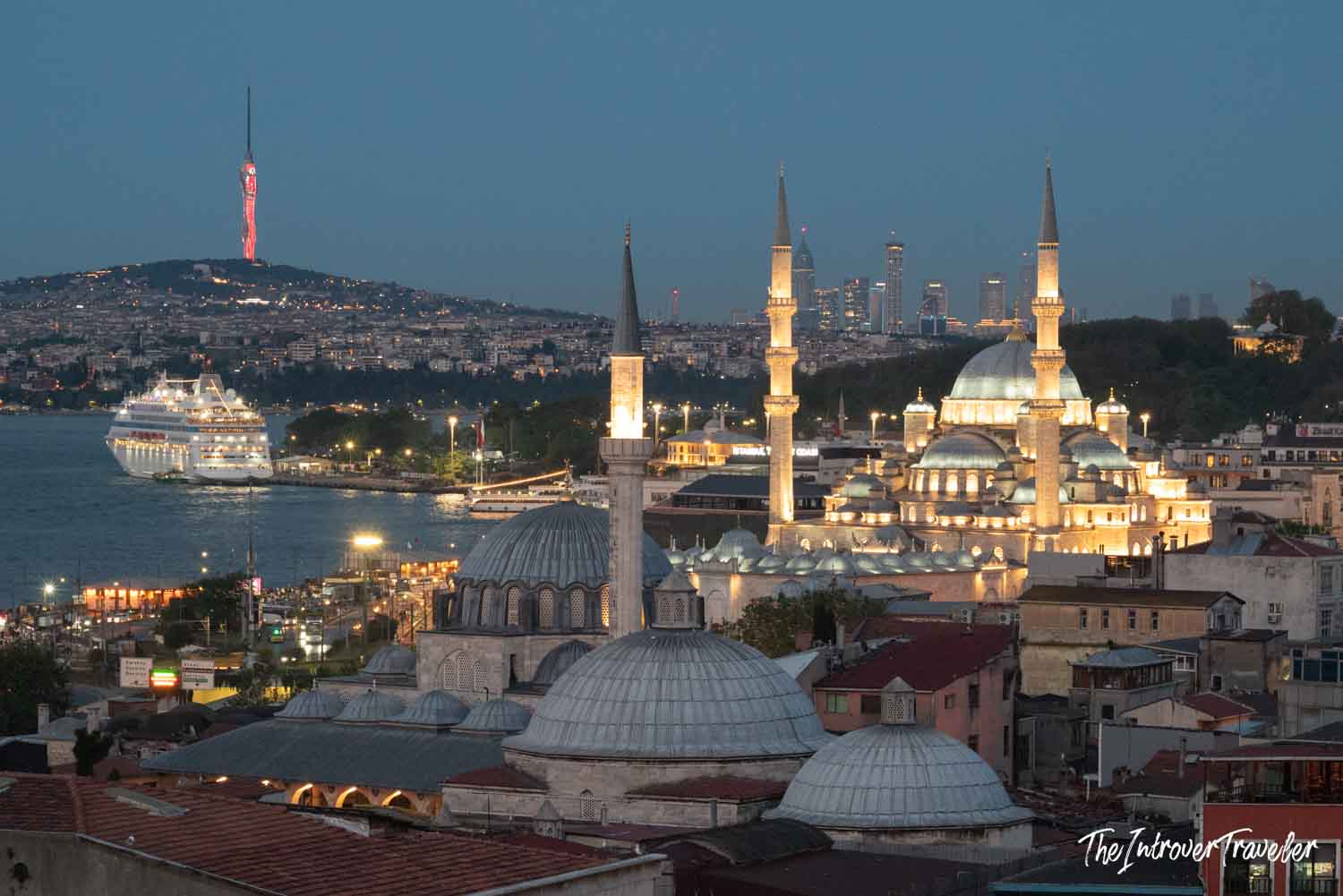
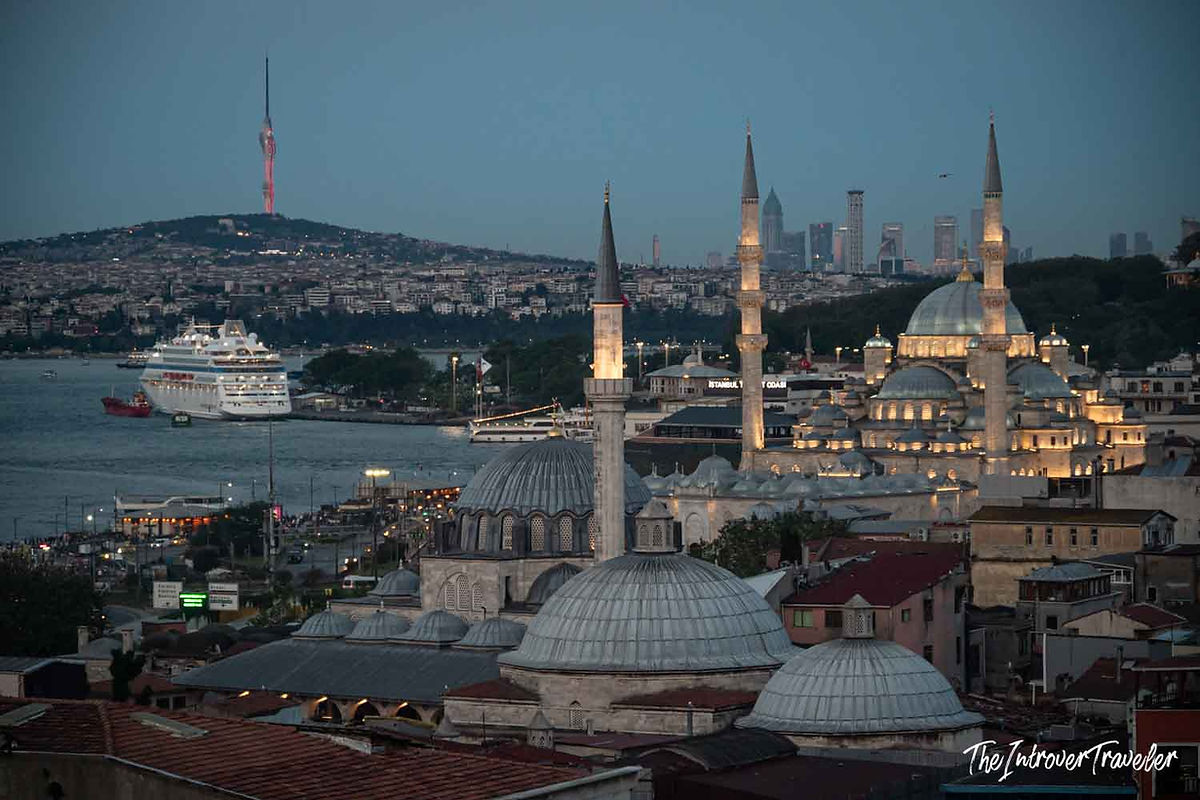
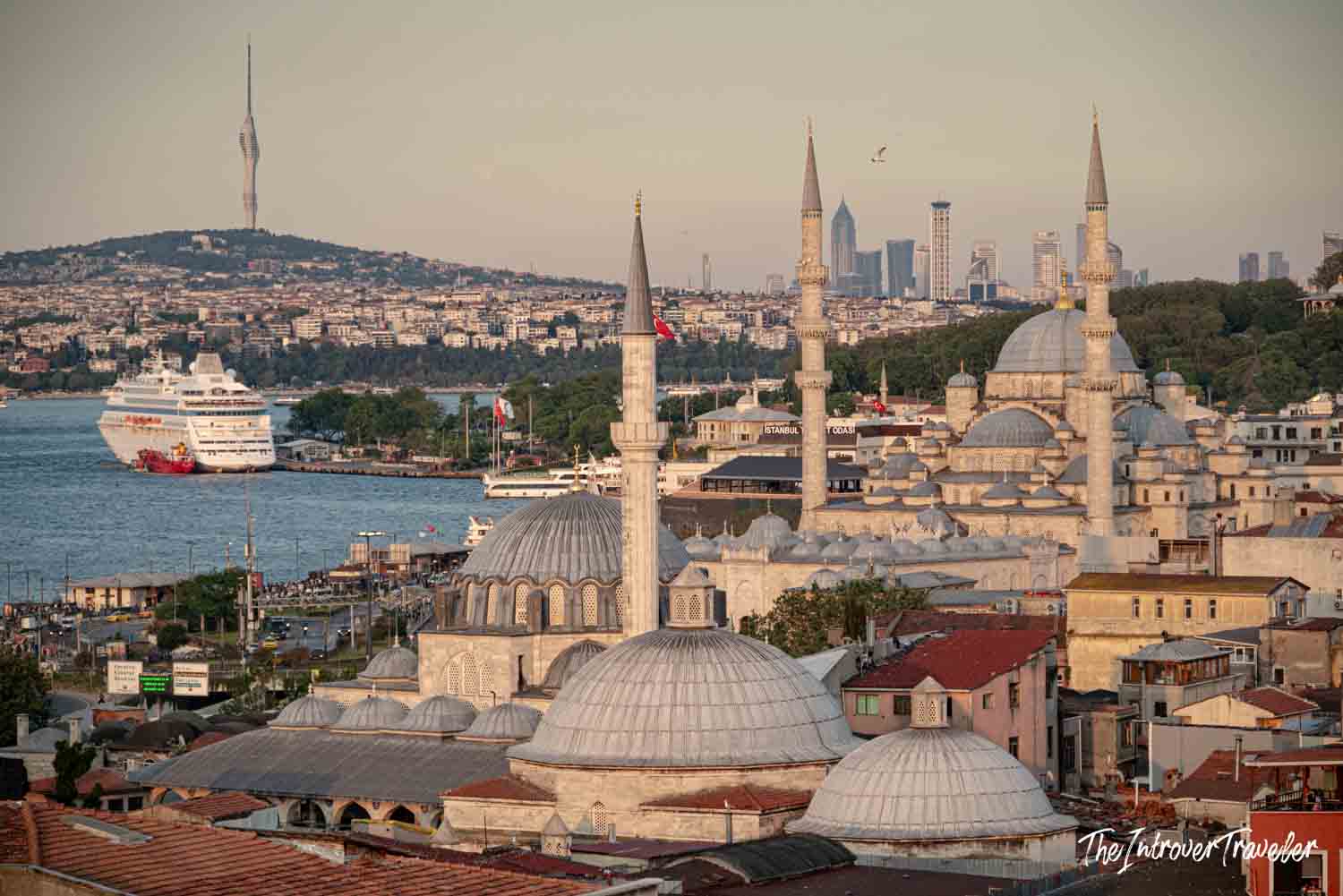
Istanbul is a city understood first through the eye and only afterwards through history. First-time visitors see, rising along the horizon, an almost unreal succession of domes and minarets multiplying endlessly between the Golden Horn, the Bosphorus, and the Sea of Marmara. This skyline is not merely an aesthetic feature nor an urban accident. It is the visible outcome of a political, religious, and symbolic transformation that began in 1453, when Constantinople ceased to be the capital of the Eastern Roman Empire and became the capital of the Ottoman Empire. The mosques of Istanbul are therefore not simply places of worship. They represent the language through which a new civilization asserted possession of the most coveted city of the eastern Mediterranean, progressively replacing the Byzantine Christian landscape with an Islamic visual order that still defines the identity of the metropolis today. To understand Istanbul inevitably means entering its mosques, even while accepting that the aesthetic experience they offer differs profoundly from that familiar to a European visitor shaped by Gothic cathedrals or Italian Baroque churches.
The difference becomes immediately apparent and concerns not only architectural style but the very theological premise underlying religious art. The Christian tradition, especially in Western Europe, gradually transformed the church into a narrative and theatrical space in which painting, sculpture, and decoration combine to produce a complex sensory experience. The conspicuous display of opulence and wealth in Catholic churches, achieved through the patronage of spectacular works commissioned from the finest artists and architects, fulfilled precise ideological and political functions over the centuries; in the Western world it has consequently become customary, at least for non-believers, to visit churches with an attitude similar to that adopted in a major art museum. Ottoman Sunni Islam follows a different logic. Figurative imagery is absent, human representation excluded, and ornament assumes a disciplined role, subordinated to spatial harmony and to the recitation of prayer. Even when imperial mosques appear richly decorated to the visitor, this richness remains controlled, governed by a religious principle that discourages excessive ostentation. This does not mean that Istanbul’s mosques lack beauty or monumental ambition. Rather, their grandeur manifests itself not through decorative accumulation but through proportion, light, and balance. Visiting them thus becomes less an encounter with isolated artistic masterpieces and more an immersion in a living, everyday religious practice that remains fully functional.
After the Ottoman conquest, the conversion of Hagia Sophia into a mosque provided the initial symbolic model. For more than a century, imperial architects attempted to equal and reinterpret the great Byzantine dome, eventually achieving an original synthesis under the guidance of Mimar Sinan, the greatest architect of the Ottoman Empire. The imperial mosques that dominate Istanbul today are not isolated buildings but urban complexes known as külliye, incorporating Qur’anic schools, hospitals, public baths, soup kitchens, and caravanserais. Building a mosque meant founding a social and political center, affirming the legitimacy of the ruler, and organizing the life of the city itself.
If you are planning a trip to Istanbul you may be interested in these posts or these pictures.
This post is part of my full Istanbul travel guide.
Some Preliminary Notes
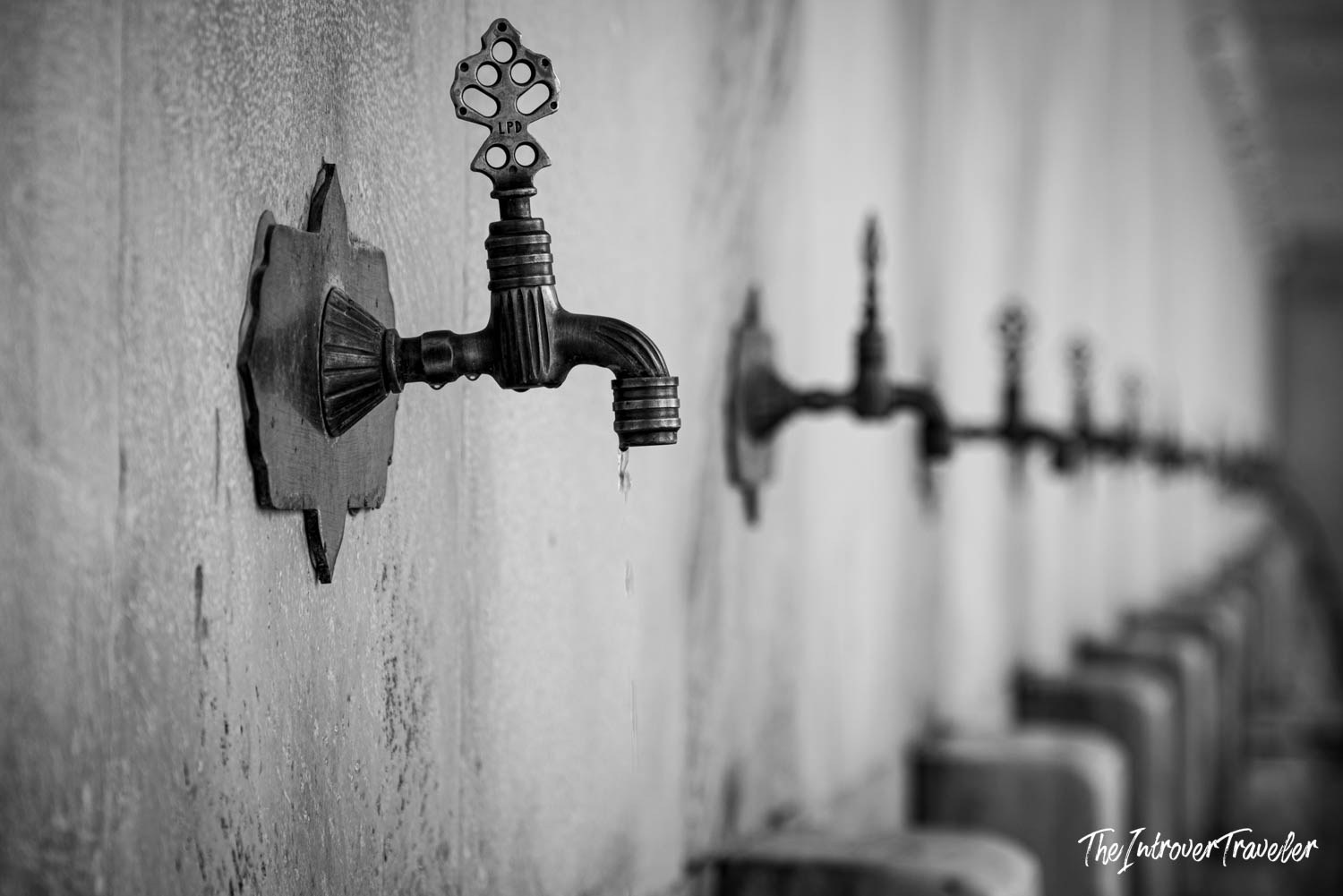
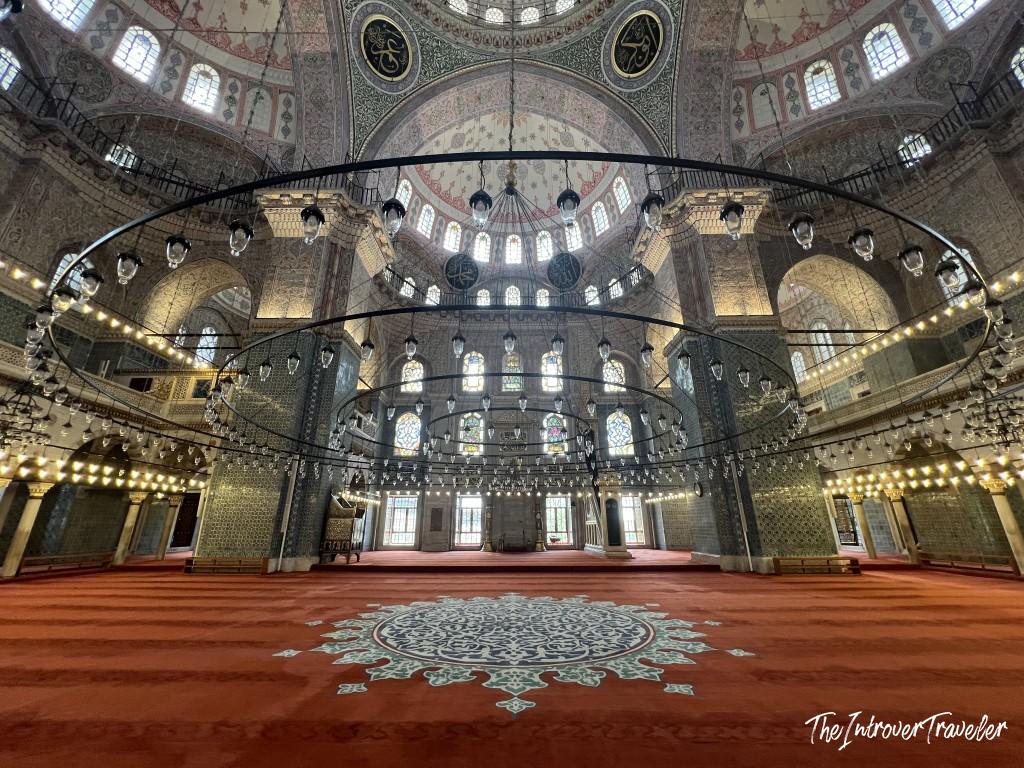
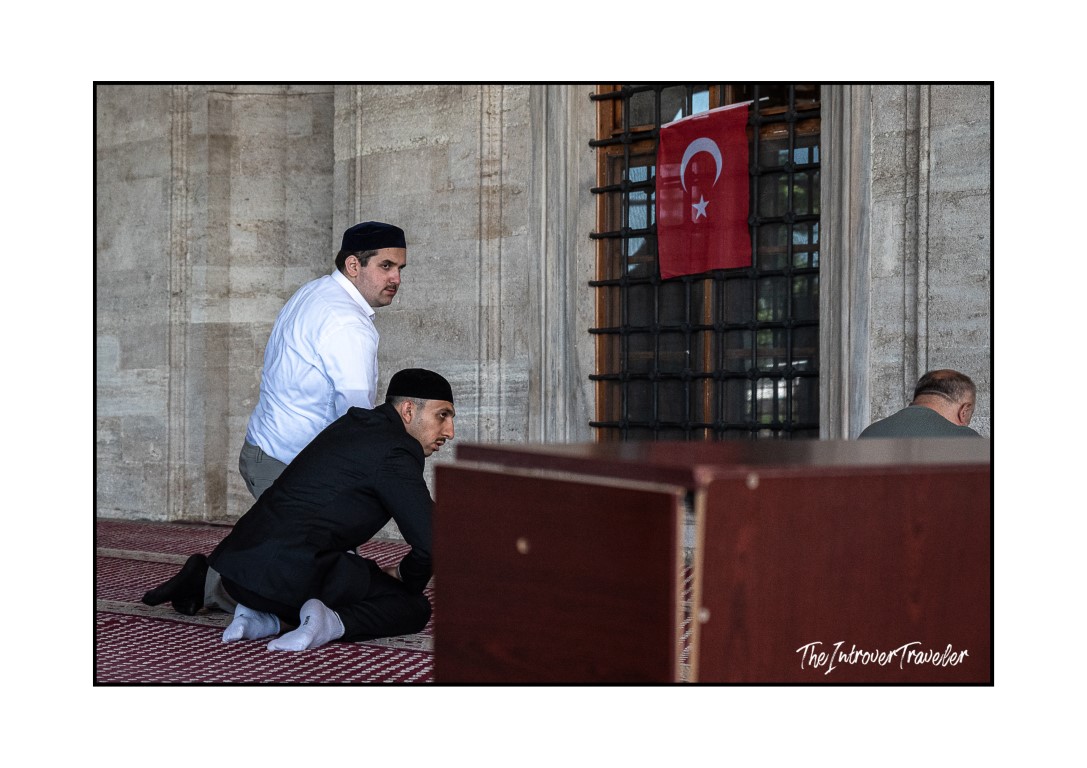
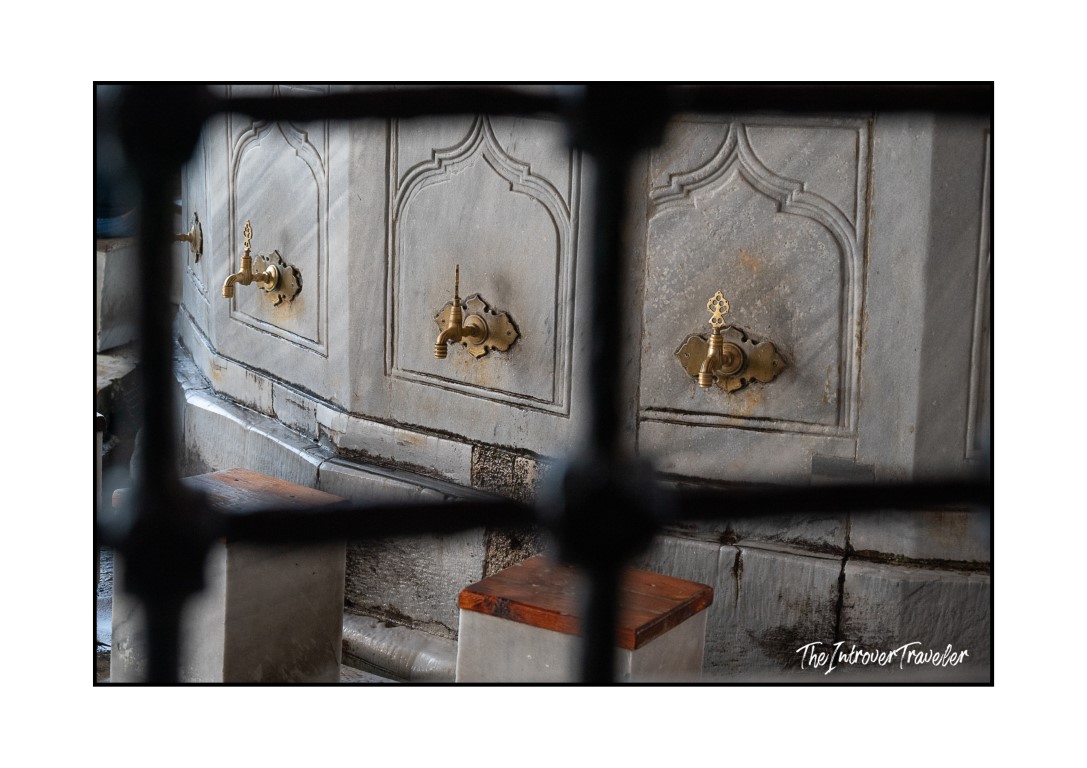
For a Western visitor, the first difficulty when entering a mosque lies in understanding that one is not facing the Islamic equivalent of a church, but rather a space conceived according to a radically different religious and social logic. A mosque is not primarily designed for individual contemplation or sightseeing; it is a functional environment intended for collective prayer and for the everyday presence of the community. The first striking element is the absence of pews and the presence of a large carpet entirely covering the floor. The carpet serves neither a decorative nor ornamental purpose, but a ritual and practical one. Islamic prayer involves a codified sequence of movements including standing, bowing, and above all prostration, with the forehead touching the ground. Praying directly on stone or marble would be uncomfortable and would create a physical separation from the ground, which instead must remain clean and welcoming. For this reason, visitors remove their shoes, and the interior space takes on something of the domestic character of a large shared room. The patterns woven into the carpet often subtly indicate the alignment of worshippers facing Mecca, a direction architecturally marked by the mihrab, a niche carved into the main wall that constitutes the true focal point of the mosque. Beside it stands the minbar, a pulpit-like structure from which the imam delivers the Friday sermon, the only moment of the week in which prayer assumes a formally obligatory communal dimension.
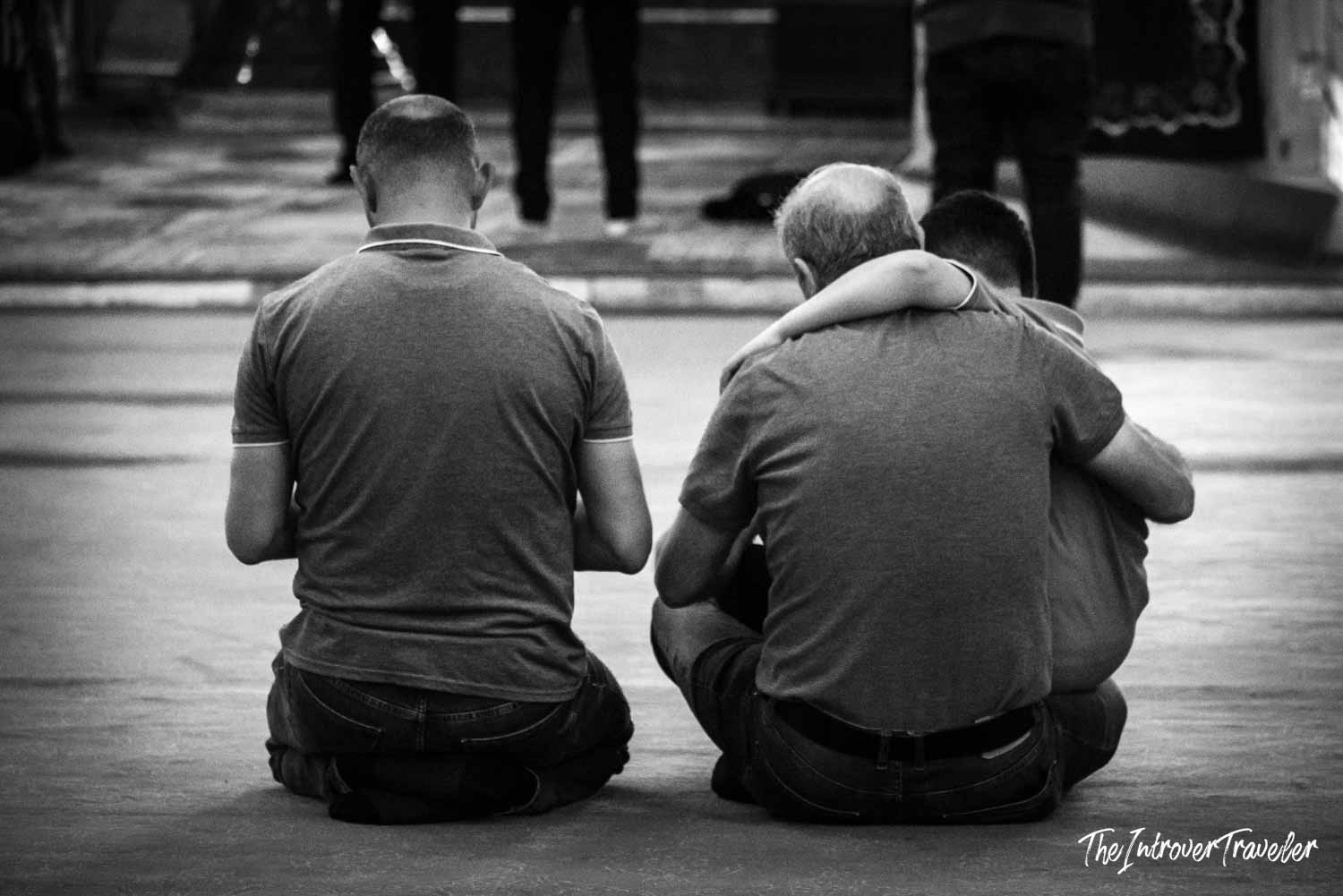
Unlike Christian liturgy, there is no priest acting as an intermediary between humans and God, and prayer may be performed individually at any moment of the day, provided one faces the correct direction and has undergone ritual purification. This explains why many people spend long periods inside mosques, reading the Qur’an, resting, or even sleeping. Historically, the mosque has always functioned as a place of study, a refuge from summer heat or winter cold, and a social space as much as a religious one. In a city such as Istanbul, where urban life is intense and often chaotic, the mosque continues to provide a rare zone of quiet accessible to everyone.
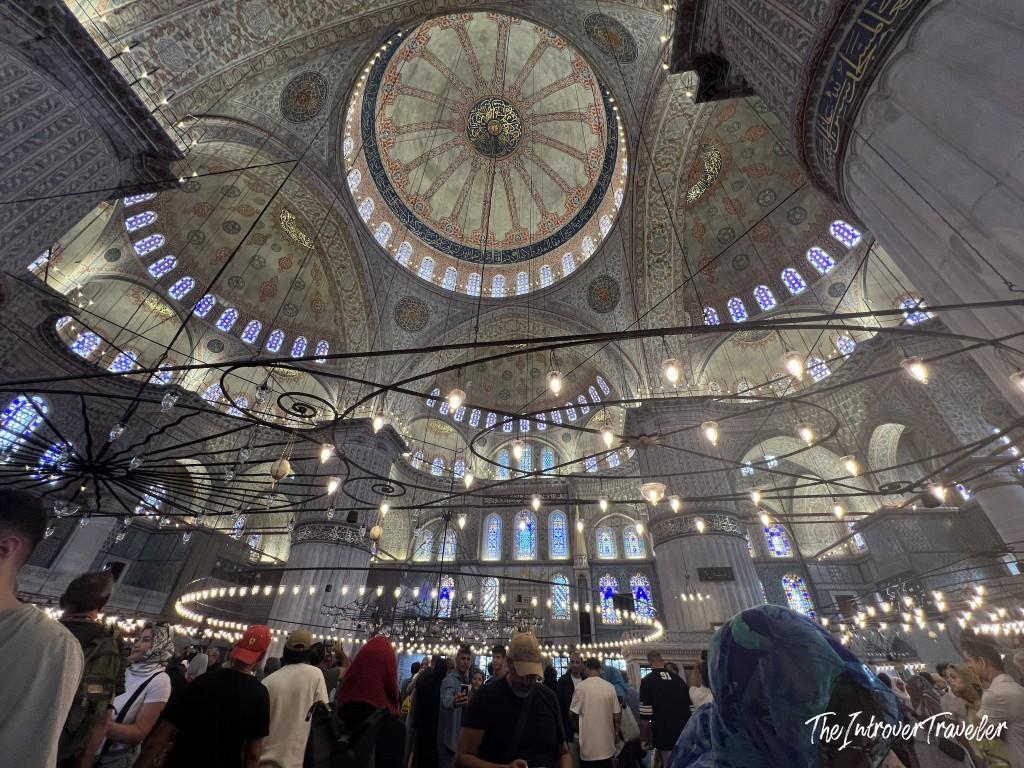
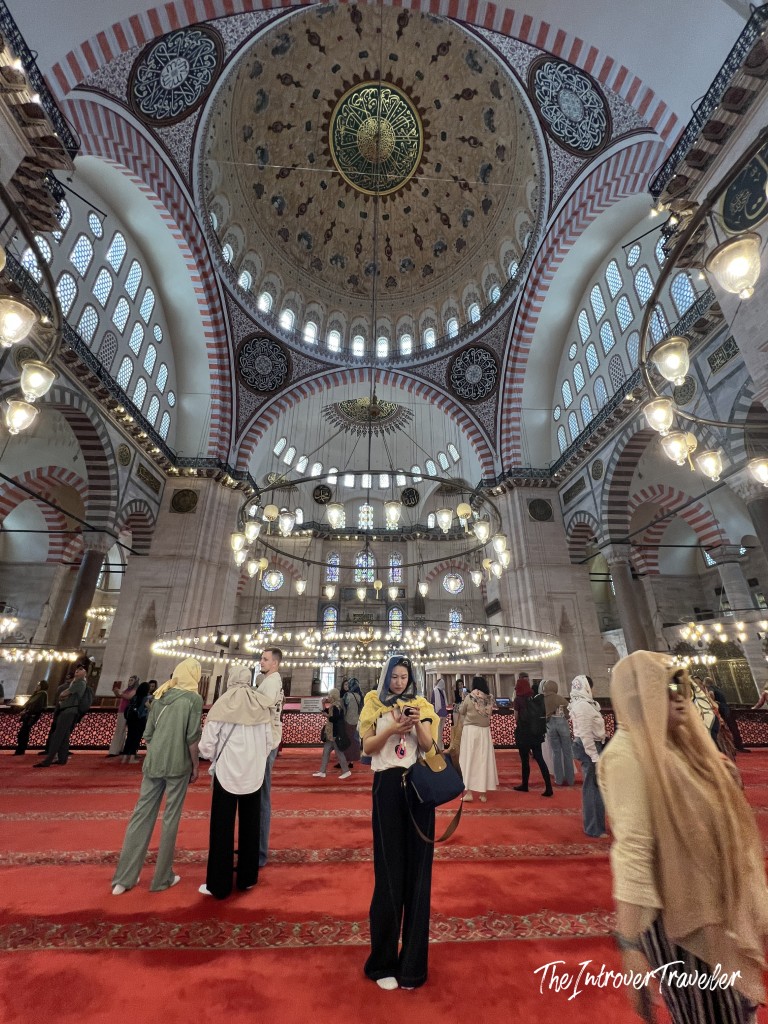
The large circular chandelier suspended at the center of mosque interiors also responds primarily to functional rather than aesthetic needs. Traditionally positioned relatively low beneath the dome, it creates a uniform cone of light illuminating the area occupied by worshippers during prayer without emphasizing the verticality of the building. In European churches, light tends to guide the gaze upward, suggesting transcendence and spiritual elevation. In the Ottoman mosque, the opposite occurs. Light is brought back to a human scale, distributed horizontally across the shared communal space. The result is a surprisingly intimate environment despite monumental dimensions, where architecture, lighting, and furnishings work together to eliminate visual hierarchies and place all worshippers on the same level before God (or Allah, ultimately the same deity…). Understanding this spatial organization allows the Western visitor to read the mosque not as a building to be observed, but as a lived space, designed to accommodate the body and the temporal rhythm of everyday religious practice.
(Some of) The Main Mosques of Istanbul
During my visit to Istanbul, I explored several of the city’s most renowned mosques, all of which I believe deserve a visit, without claiming that the following list is exhaustive.
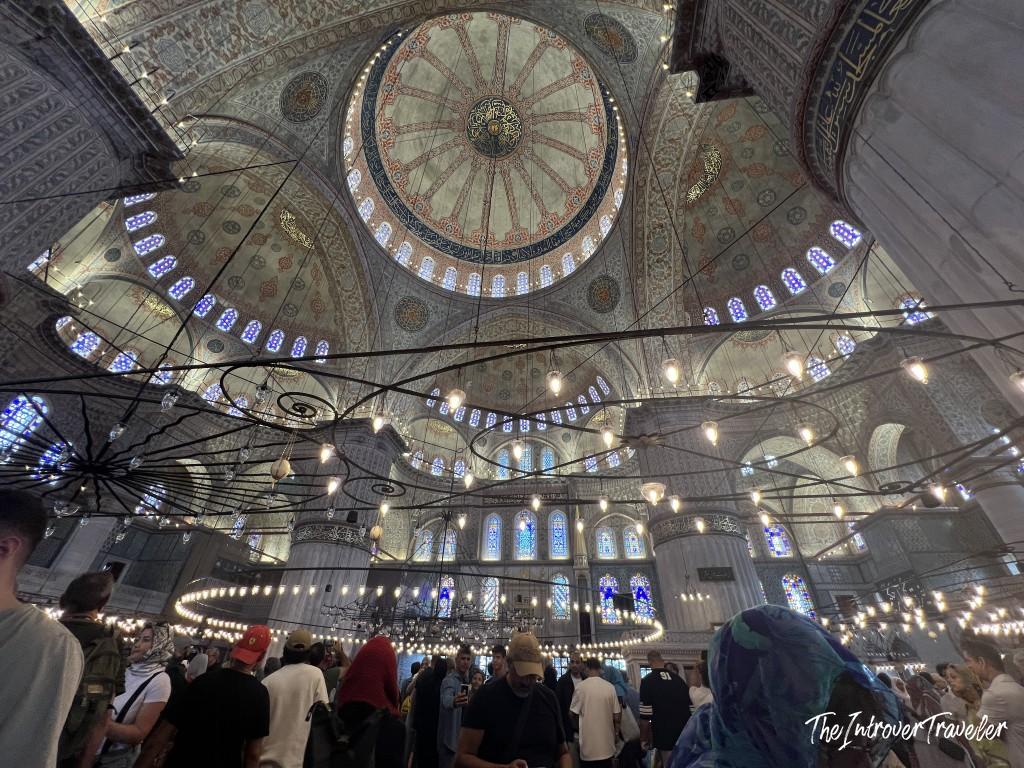
The Blue Mosque, officially Sultanahmet Camii, probably represents the most recognizable image of Istanbul and is, together with Hagia Sophia, almost inevitably the first mosque visited upon arrival in the city, standing adjacent to both Hagia Sophia and Topkapı Palace (not to mention the seductive aromas drifting from the grills of Tarihi Sultanahmet Köftecisi nearby).
Built in the early seventeenth century at the behest of Sultan Ahmed I, it was deliberately positioned opposite Hagia Sophia in an architectural dialogue that also constituted a political statement. Its six minarets, a controversial choice at the time, since this feature was associated with the mosque of Mecca, expressed the imperial ambition to affirm the religious centrality of the Ottoman capital. The interior is famous for the thousands of Iznik tiles reflecting bluish tones from which the mosque derives its Western name; yet, as in all mosques, it is essential to remember that these are spaces in which everything remains functional to the practice of worship. Even in monumental structures such as the Blue Mosque, one should not expect pyrotechnic displays of architectural invention or artistic virtuosity. Nonetheless, even within the sobriety typical of the architecture and decoration of all great historic mosques, the Blue Mosque still manages to astonish with the refinement of its decorations, and it certainly deserves its renown among the great mosques of Istanbul.
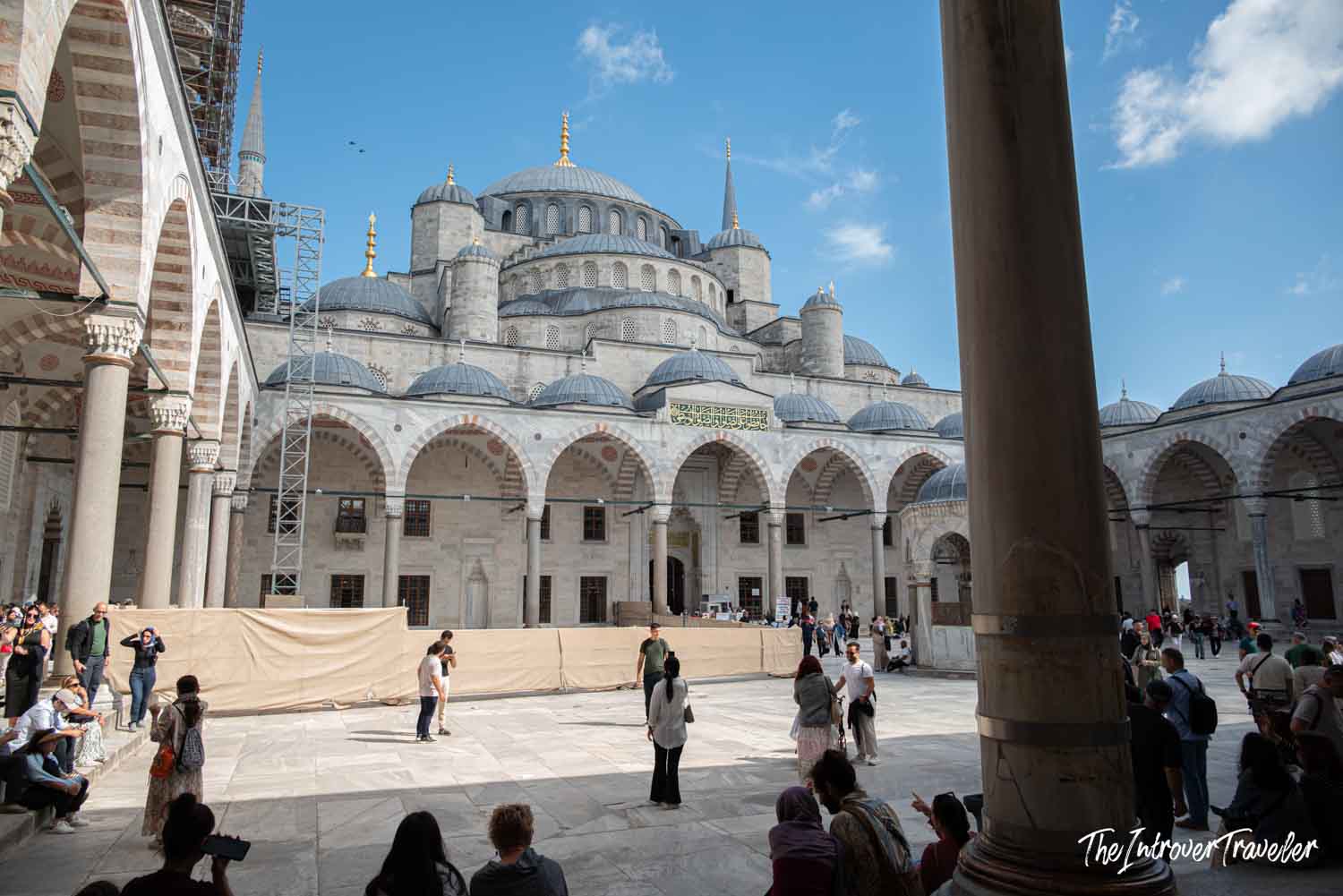
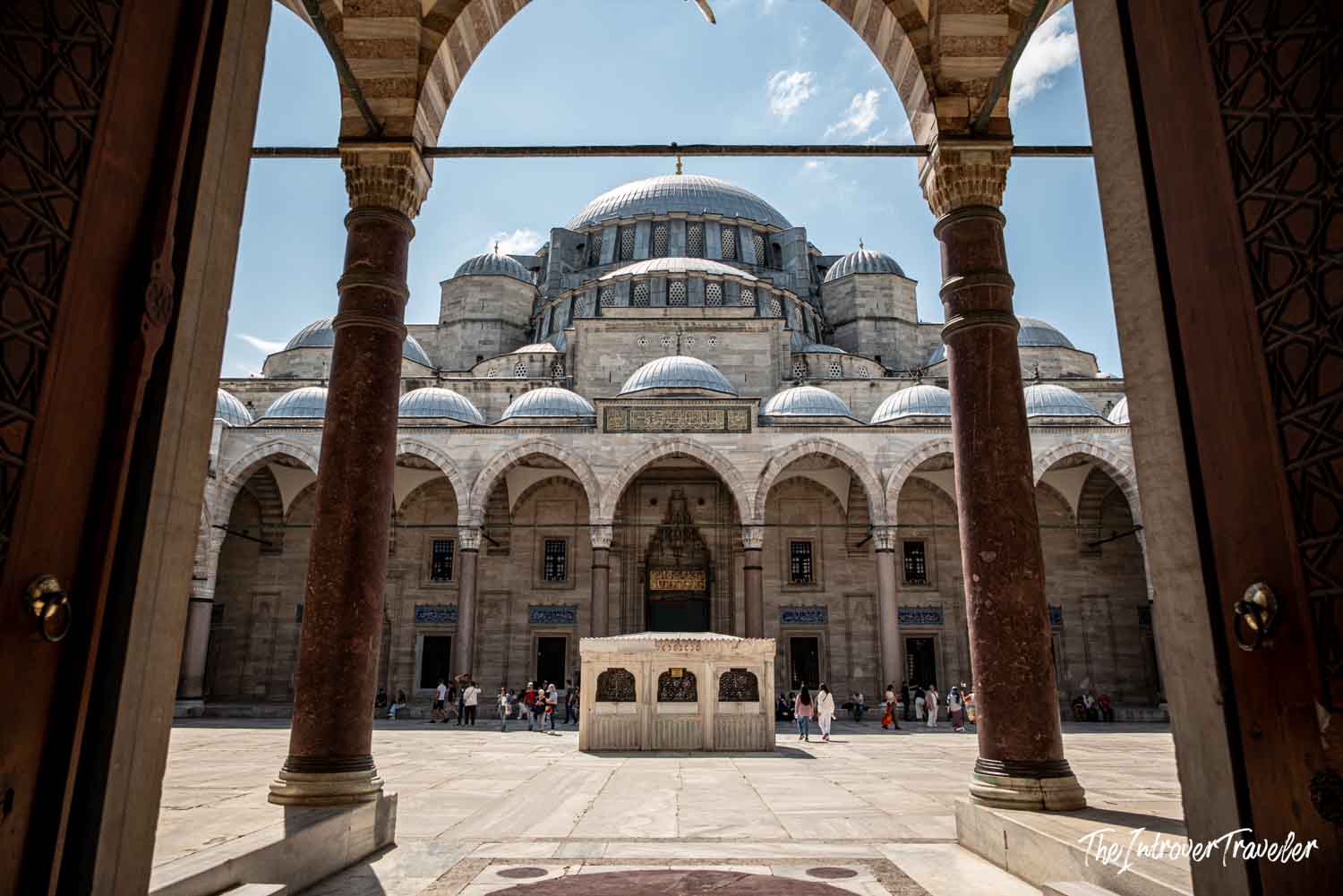
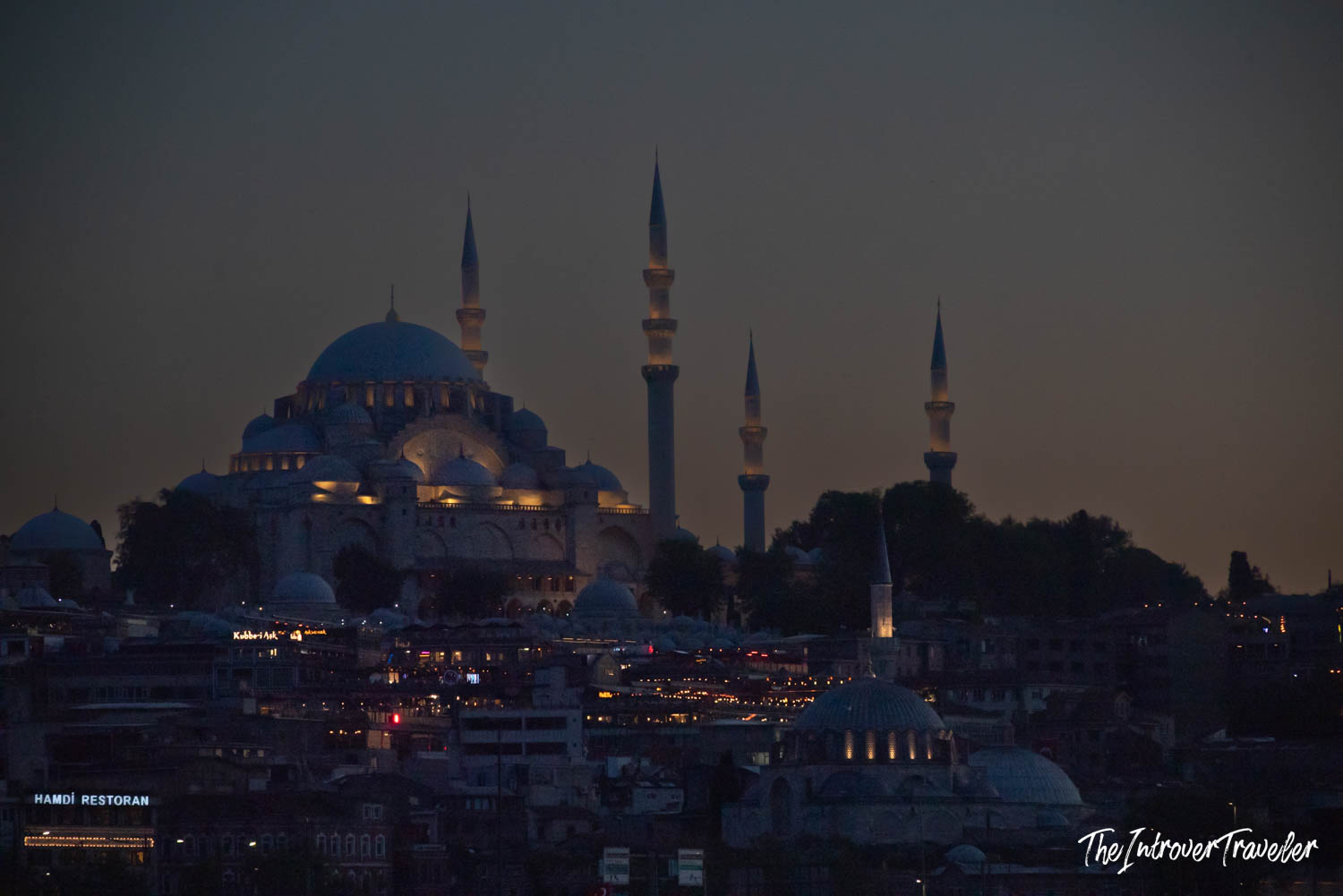
The Süleymaniye Mosque perhaps represents the pinnacle of classical Ottoman architecture. Commissioned by Suleiman the Magnificent and completed in 1557, it dominates the Golden Horn from a strategic position that transforms the building into a structuring element of the urban landscape itself. Here, Mimar Sinan achieved a geometric perfection that goes beyond mere Byzantine imitation. The central dome does not overwhelm the space but appears almost suspended, supported by a system of semi-domes that distributes visual weight with extraordinary lightness. The prevailing impression is not one of splendor, but of calm. Light enters softly filtered and diffused, creating an almost meditative atmosphere. The mausoleums of Suleiman and Hürrem Sultan in the rear garden likewise suggest an idea of power tempered by spirituality rather than celebrated through theatrical magnificence.
In my view, both for the majesty of its inner courtyard and for its commanding panoramic position, this is probably the most spectacular mosque in Istanbul (with the exception of Hagia Sophia, which, despite its later conversion into a mosque, cannot entirely be considered one in the full sense due to its origins and historical trajectory).
Before or after your visit, indulge your senses and treat yourself to a traditional Turkish bath at the Süleymaniye Hamam.
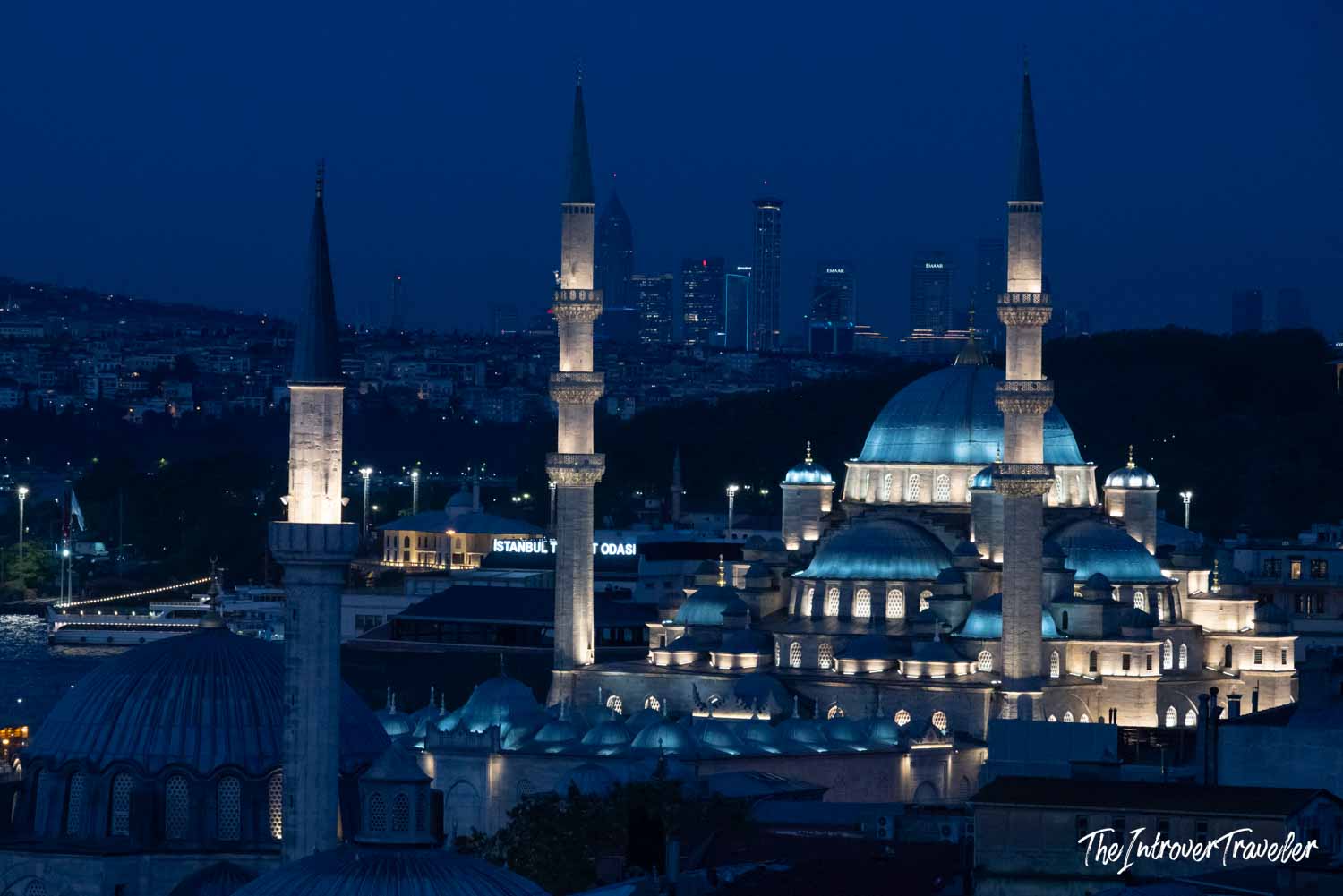
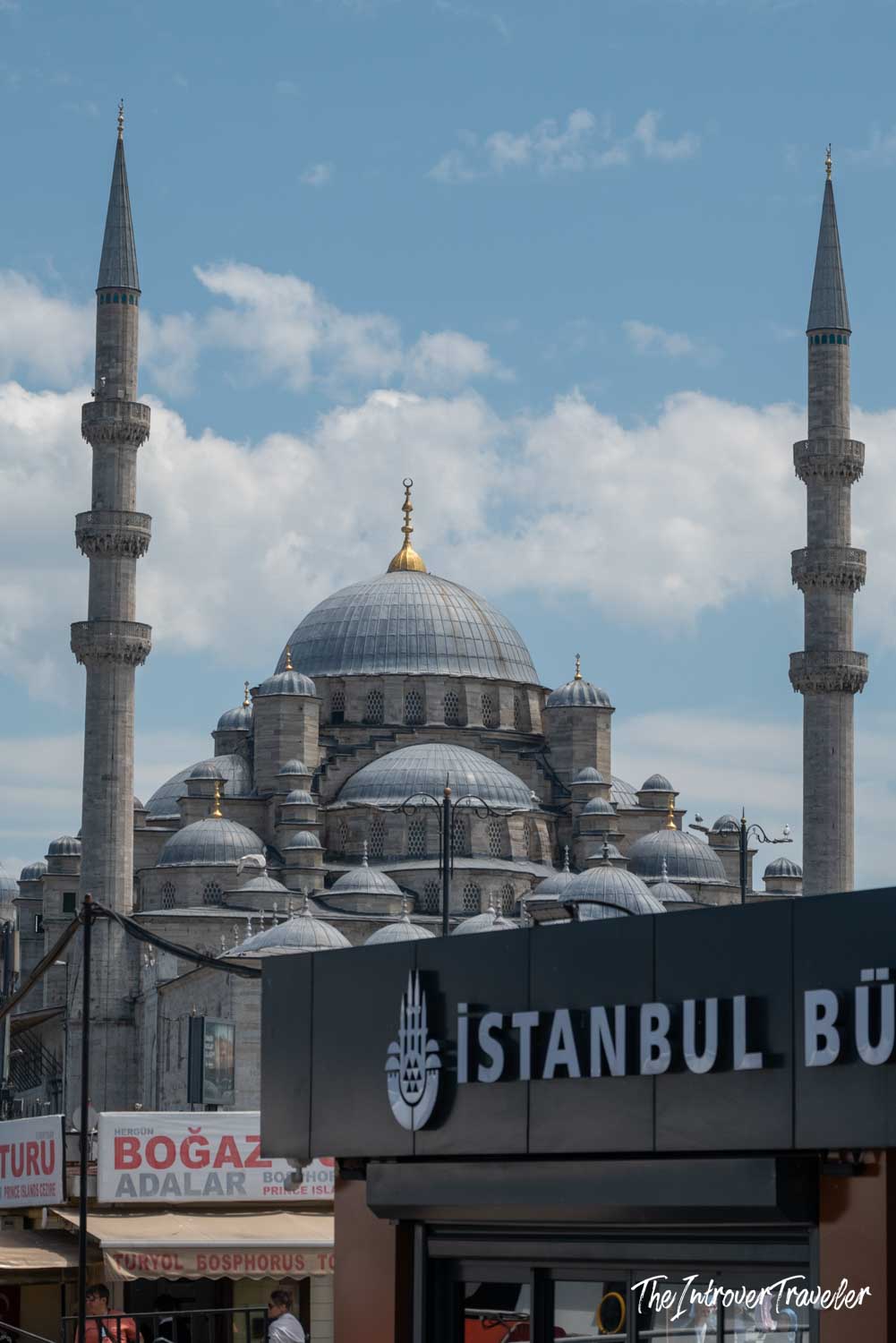
In the commercial heart of the city, beside the Galata Bridge, stands the Yeni Cami, the New Mosque. The name is misleading, as construction began in the sixteenth century and was completed only in 1665 after decades of political and financial interruptions. Its location near the harbor immediately made it a monumental gateway for those arriving by sea. Here, the mosque assumes an almost theatrical role within the urban space, engaging in constant dialogue with bustling markets and crowded docks.
The interior features denser decorative schemes compared to the Süleymaniye Mosque, yet it remains faithful to the Islamic logic of ornamental repetition. A Western visitor may perceive a certain visual uniformity, but it is precisely this continuity that constitutes the aesthetic principle of Ottoman art, where rhythm prevails over individuality.
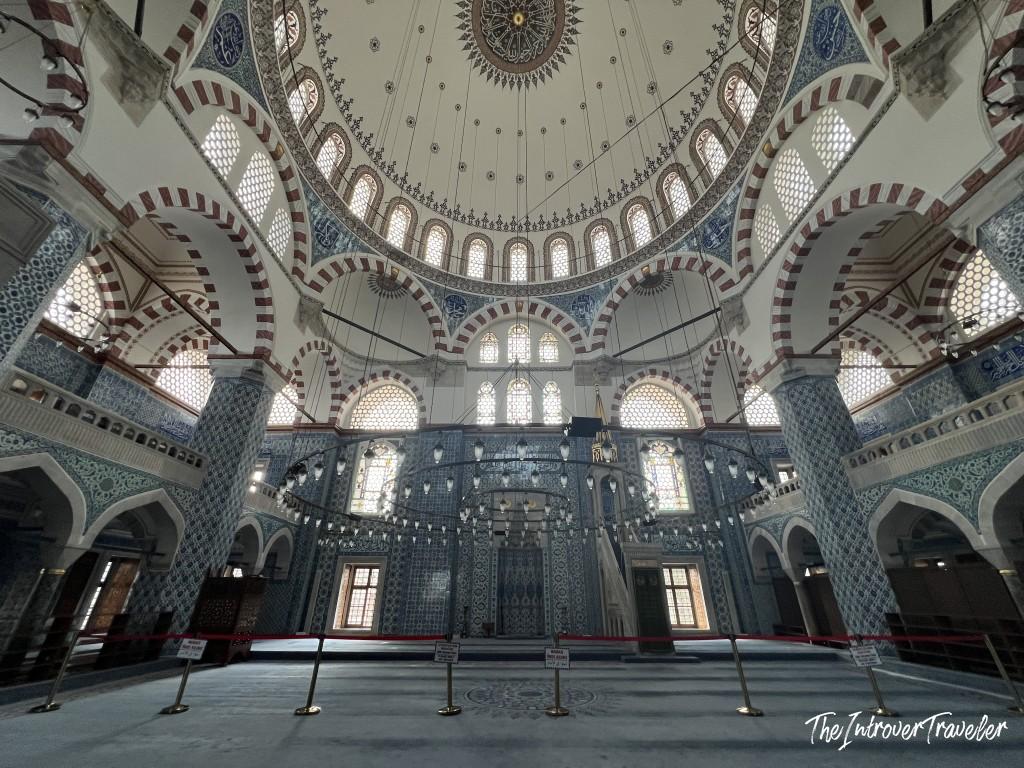
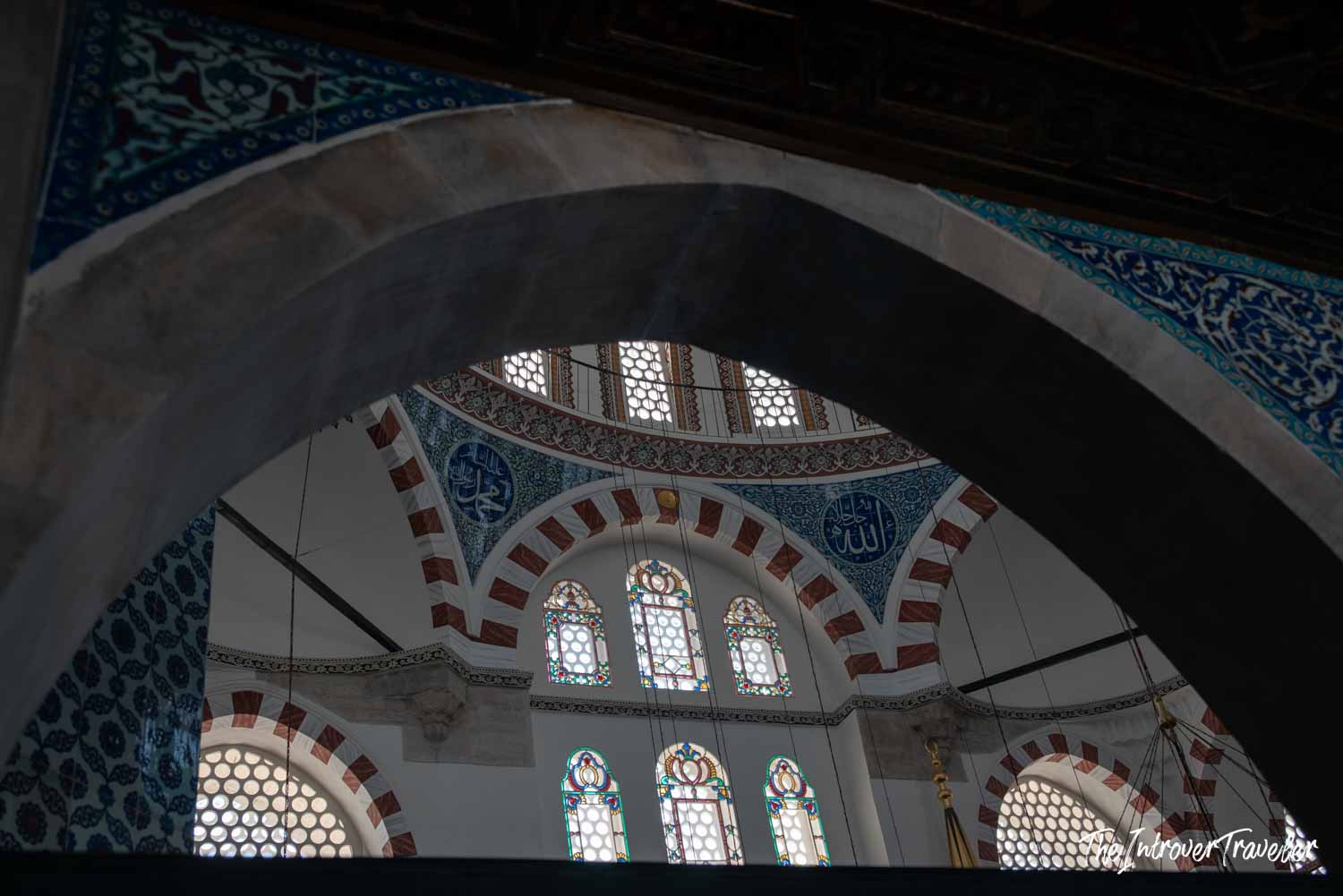
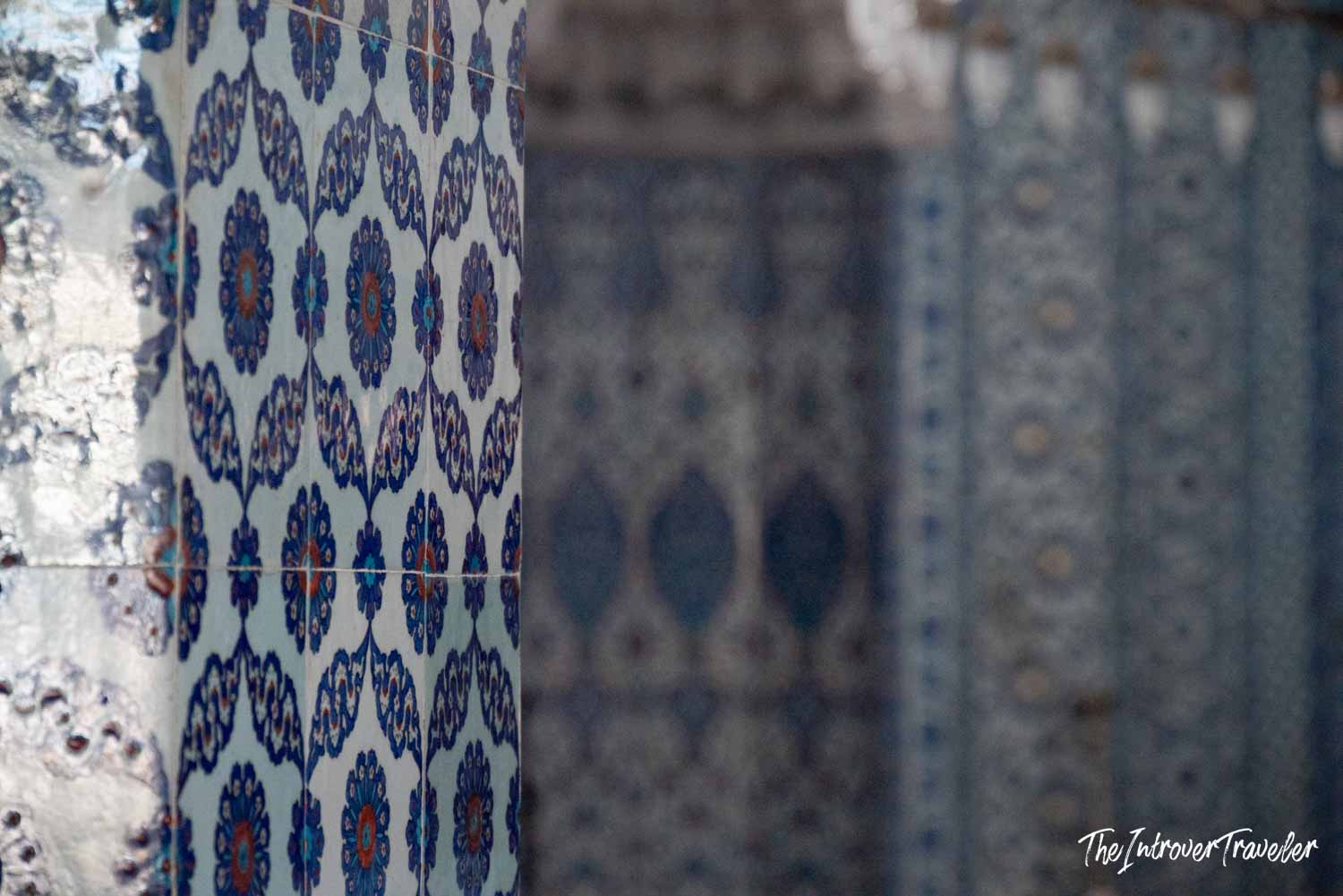
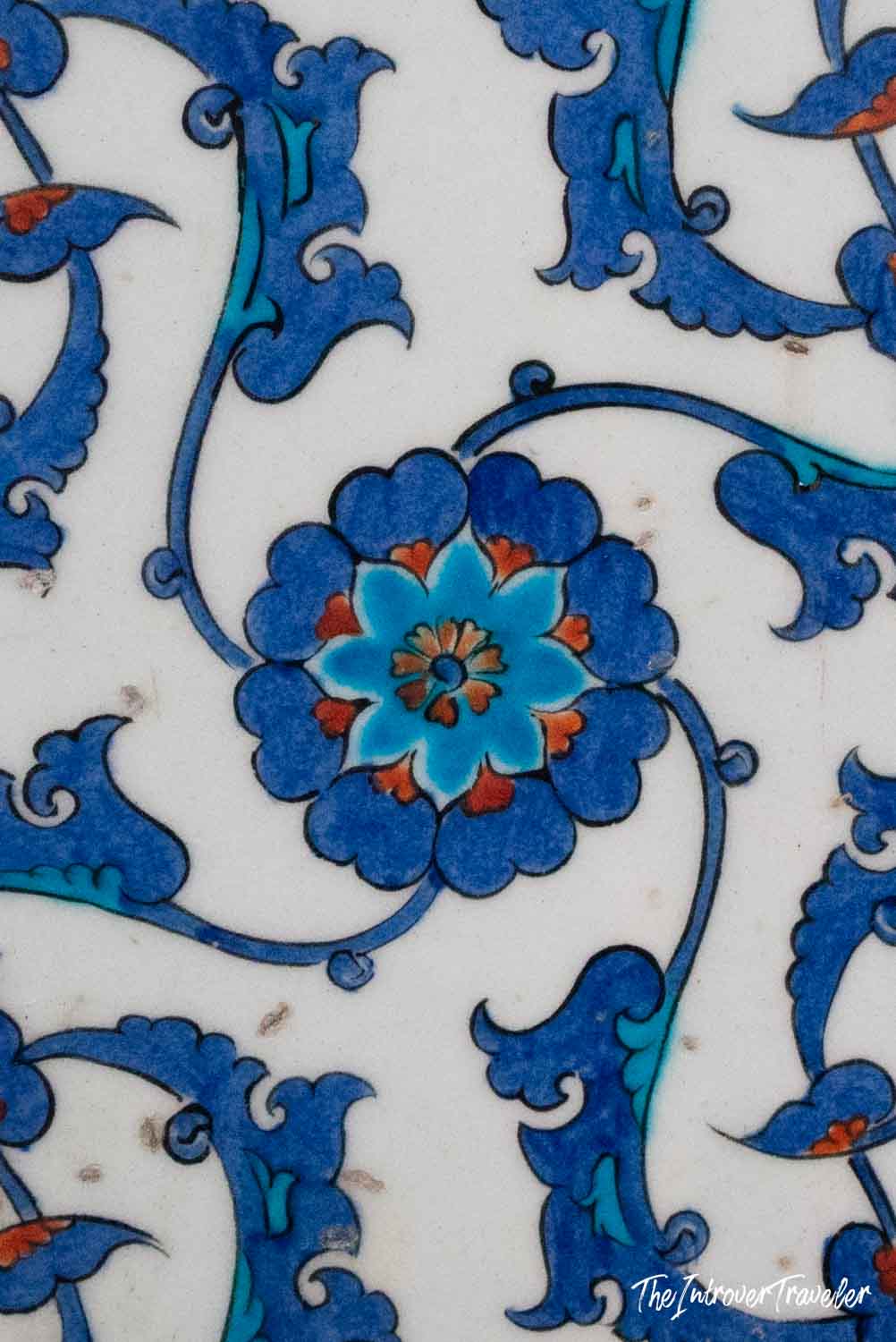
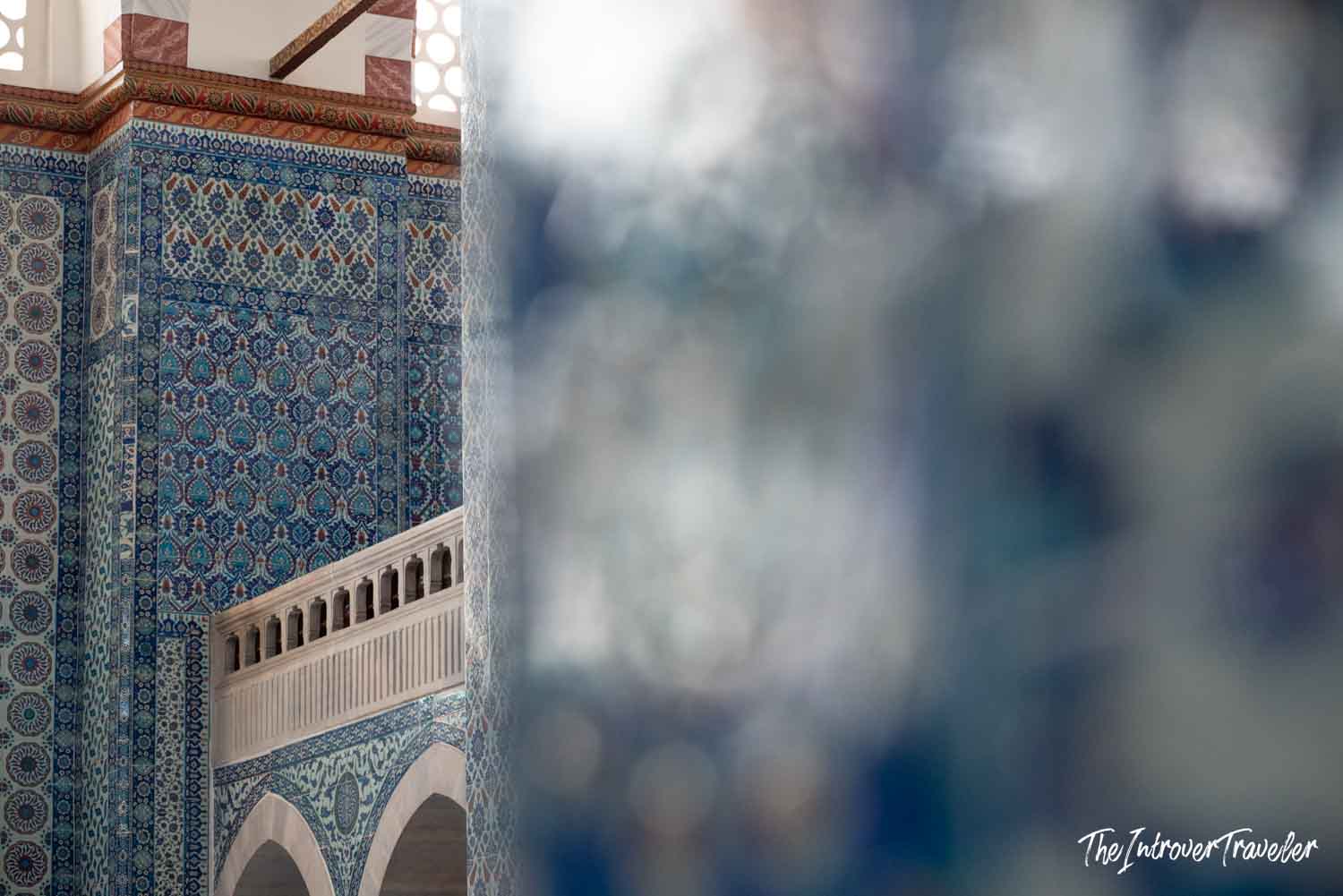
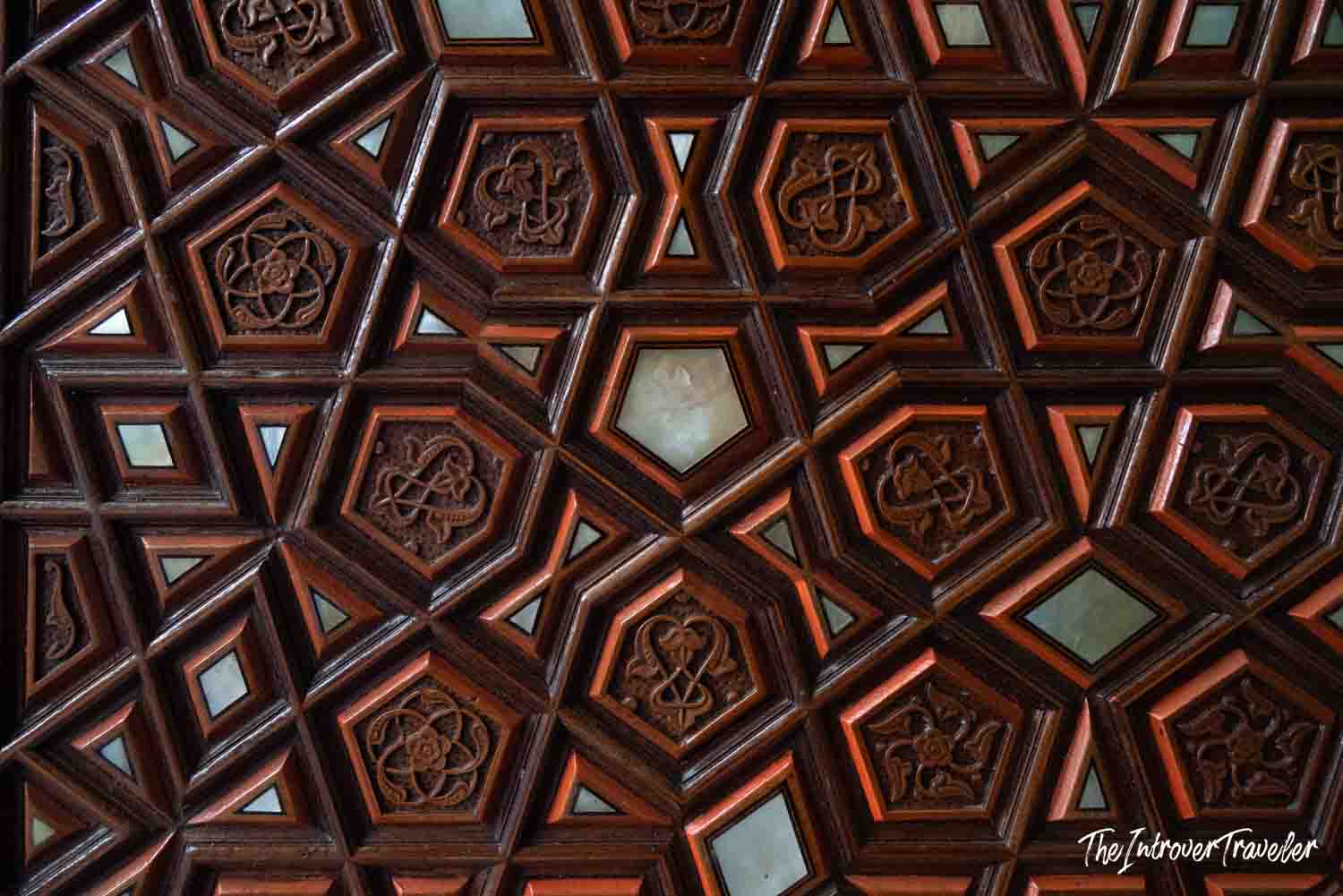
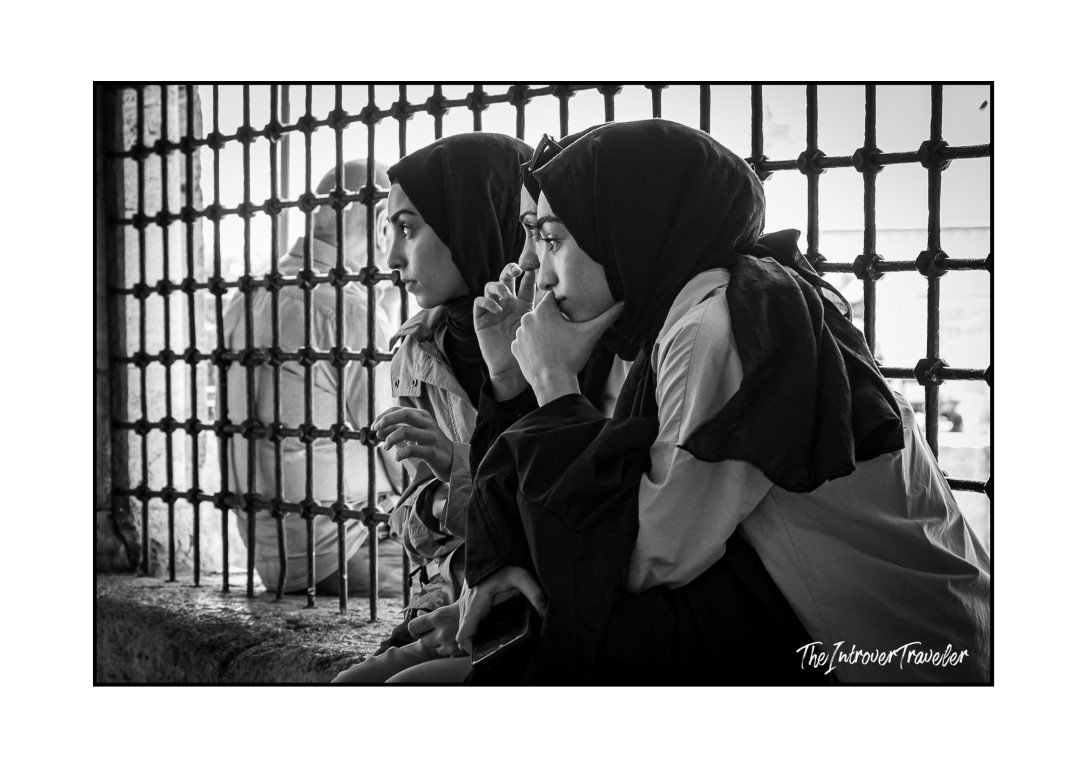
A very different experience is offered by the Rüstem Pasha Mosque.
Hidden above the shops of the Spice Bazaar, it almost requires deliberate effort to be found. Built by Mimar Sinan for Grand Vizier Rüstem Pasha, son-in-law of Suleiman the Magnificent, it represents one of the most refined examples of Ottoman ceramic decoration. Here, the Iznik tiles reach exceptional chromatic quality, with deep reds and intricate floral motifs. Yet even in this case, decoration never becomes an autonomous spectacle. There is no Islamic equivalent of a Baroque chapel designed to astonish the faithful. Ornament accompanies prayer without dominating it; nevertheless, the Rüstem Pasha Mosque is probably the structure that comes closest to the Western ideal of an artistically distinguished place of worship. The fact that it remains partially outside the main flows of mass tourism further enhances its appeal.
The mosques dedicated to Mihrimah Sultan introduce an additional dimension to the urban history of Istanbul.
Daughter of Suleiman and a politically influential figure, Mihrimah was one of the few imperial women to commission monumental complexes on such a scale. The two mosques bearing her name, one in Üsküdar and the other near the walls of Edirnekapı, demonstrate Sinan’s ability to modulate light as a primary architectural element.
Finally, the Sokollu Mehmet Pasha Mosque represents one of the most sophisticated and least visited monuments in the city.
Located in the Kadırga district, far from the main tourist routes, it masterfully synthesizes structure and decoration. Its Iznik tiles are among the best preserved in Istanbul, and the incorporation of relics associated with the Kaaba grants the site particular religious significance. Visiting this mosque allows one to perceive more clearly what often escapes notice in the great imperial monuments — namely, the continuity between sacred space and the everyday life of the surrounding neighborhood.
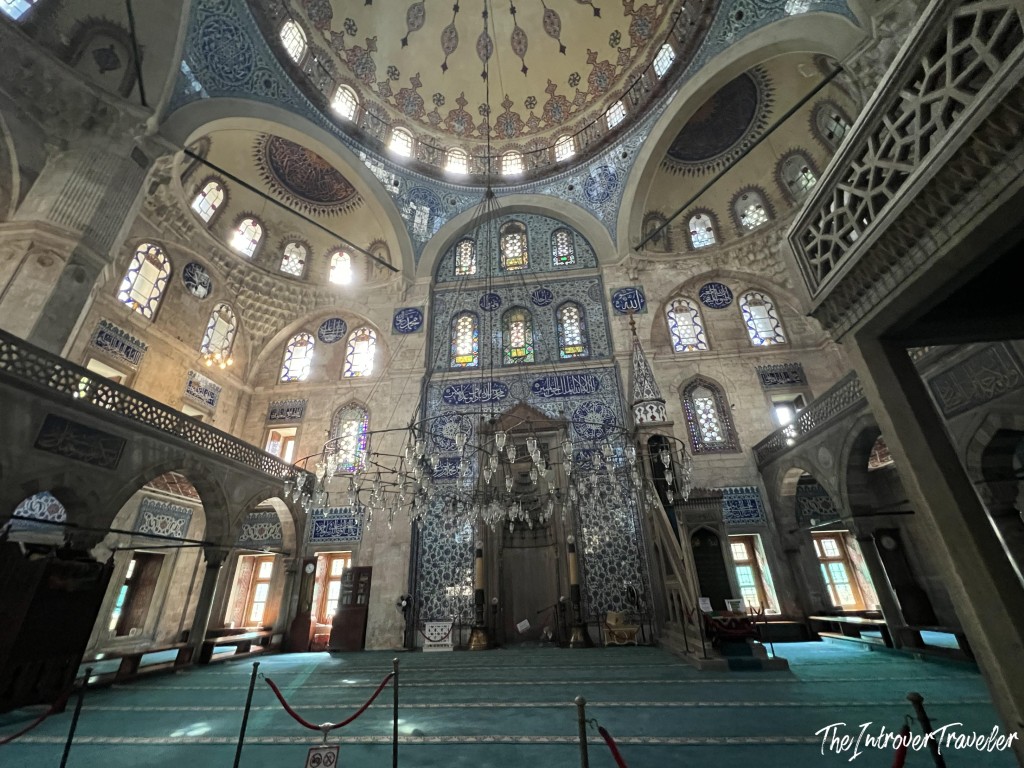
A Western traveler may leave these visits with an ambivalent impression. On the one hand, there is the awareness of having crossed buildings essential to understanding the history of Istanbul. On the other, there may remain the perception that the artistic experience is less narrative and less emotionally spectacular than that offered by the great Christian churches. This impression does not arise from a deficiency, but from a different conception of the relationship between art and religion. Ottoman Islam does not seek to impress through miraculous imagery or dramatic scenography. The mosque is, first and foremost, a space functional to communal prayer and to the individual submission to God.
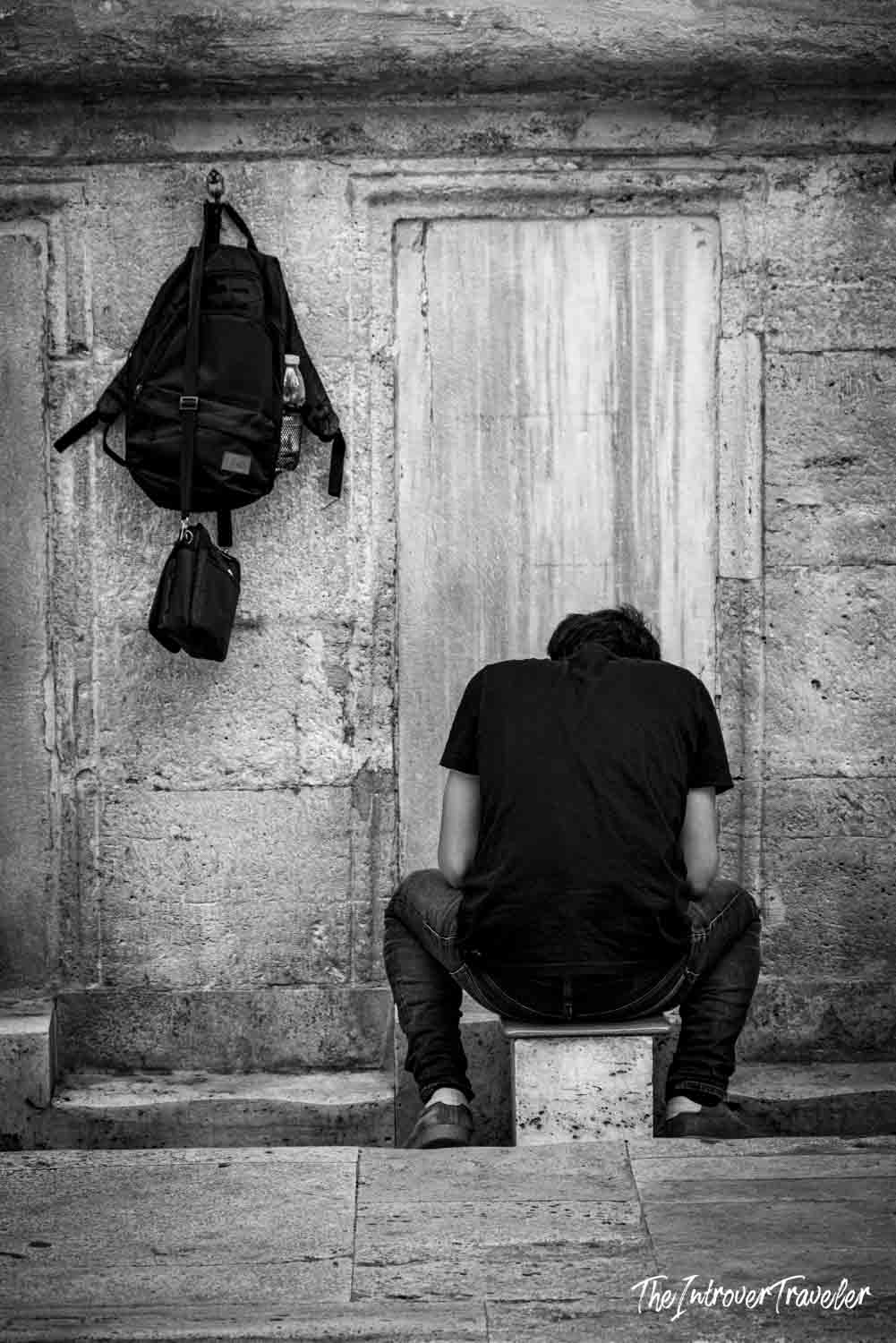
For this reason, visiting the mosques of Istanbul acquires a value that goes beyond aesthetics. Entering them means temporarily adapting to a different rhythm: removing one’s shoes, lowering one’s voice, and sharing space with worshippers who are genuinely praying rather than visitors observing a museum-like monument. It is one of the rare moments in which travel ceases to be cultural consumption and becomes participation — even if silent — in local religious life.
Ultimately, Istanbul would not be Istanbul without its mosques, because they constitute the architectural translation of the city’s second historical birth. After more than five centuries, they continue to define the urban skyline, mark the hours through the call to prayer, and remind visitors that the city is not merely an archive of past civilizations but a still-living religious organism. The visitor who accepts this perspective will understand that their importance lies not so much in decorative richness as in their capacity to render visible a spiritual continuity extending from Ottoman history into contemporary Istanbul. Visiting the mosques does not mean searching for masterpieces comparable to those of European basilicas; it means understanding the city from within, through the everyday gesture of faith that continues to shape it.