Last visit: June 2025
My rating: 6/10
Visit duration: 3 hours
Visitors to Istanbul inevitably tend to focus on the European side: Hagia Sophia, the Blue Mosque, Topkapı Palace, and the Bosphorus as a permanent historical backdrop. Yet to understand the city in its present, rather than through its Ottoman or Byzantine past, one must cross the water and reach Kadıköy, on the Asian shore.
Here, Istanbul completely changes its language. And it does so on its walls.
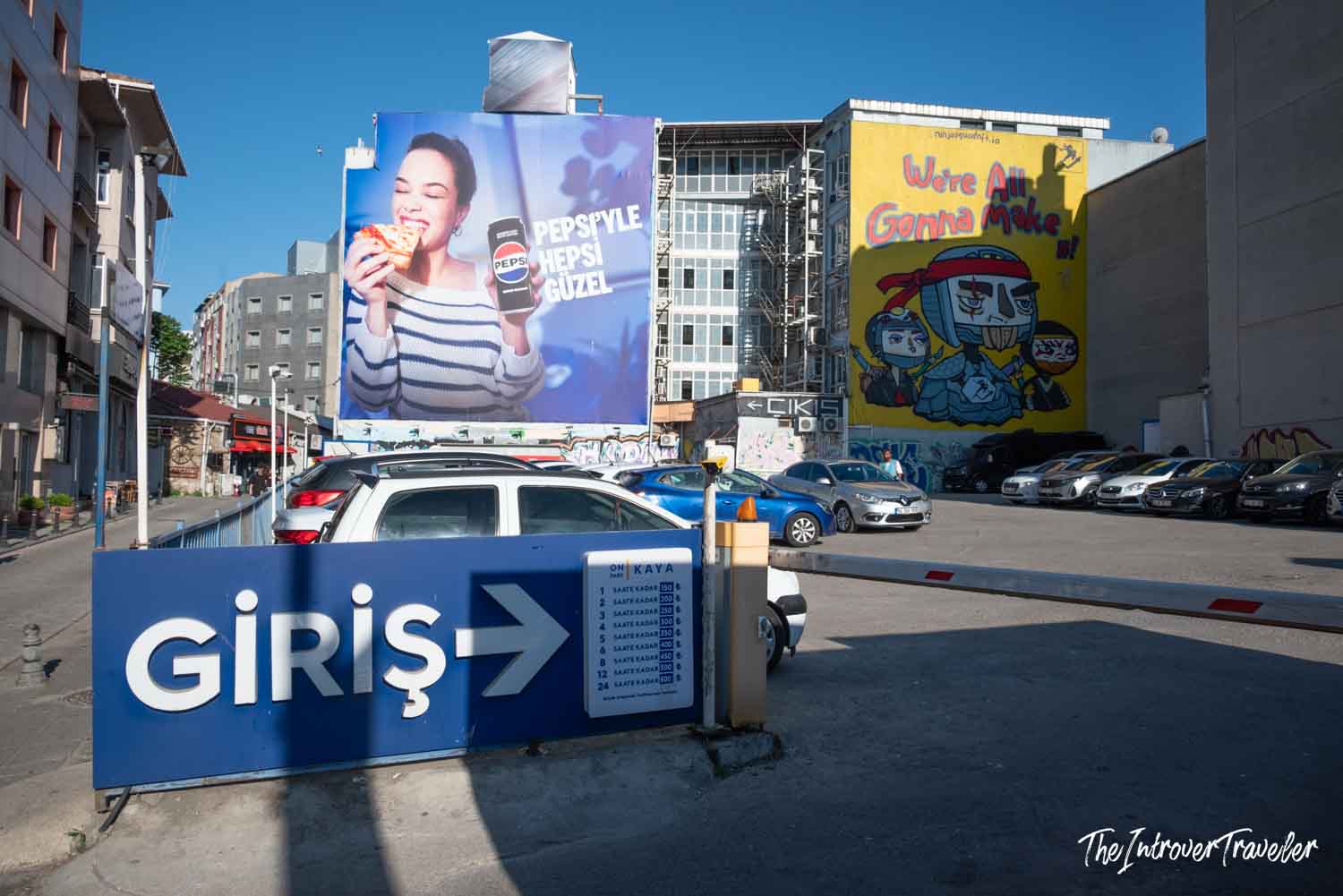
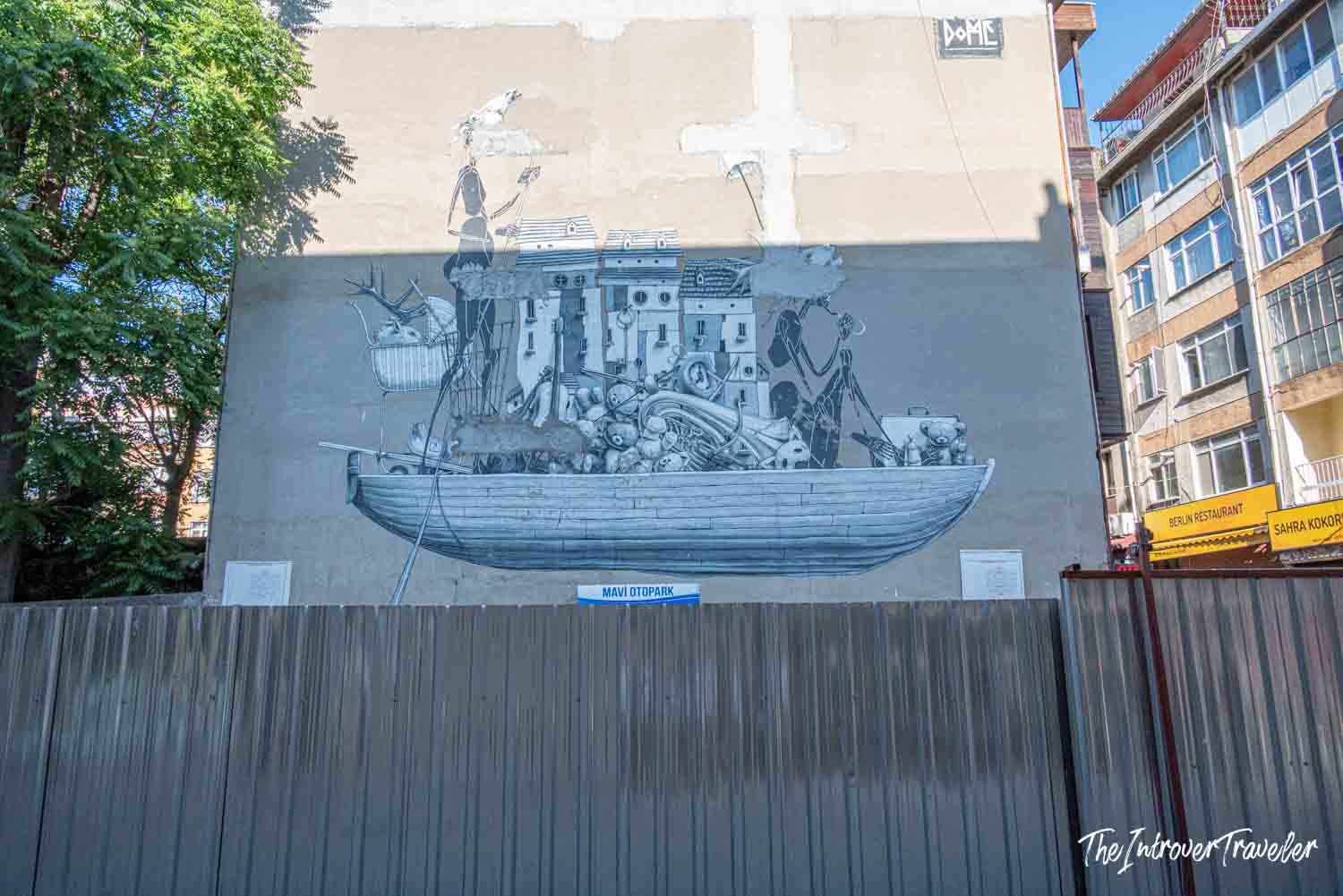
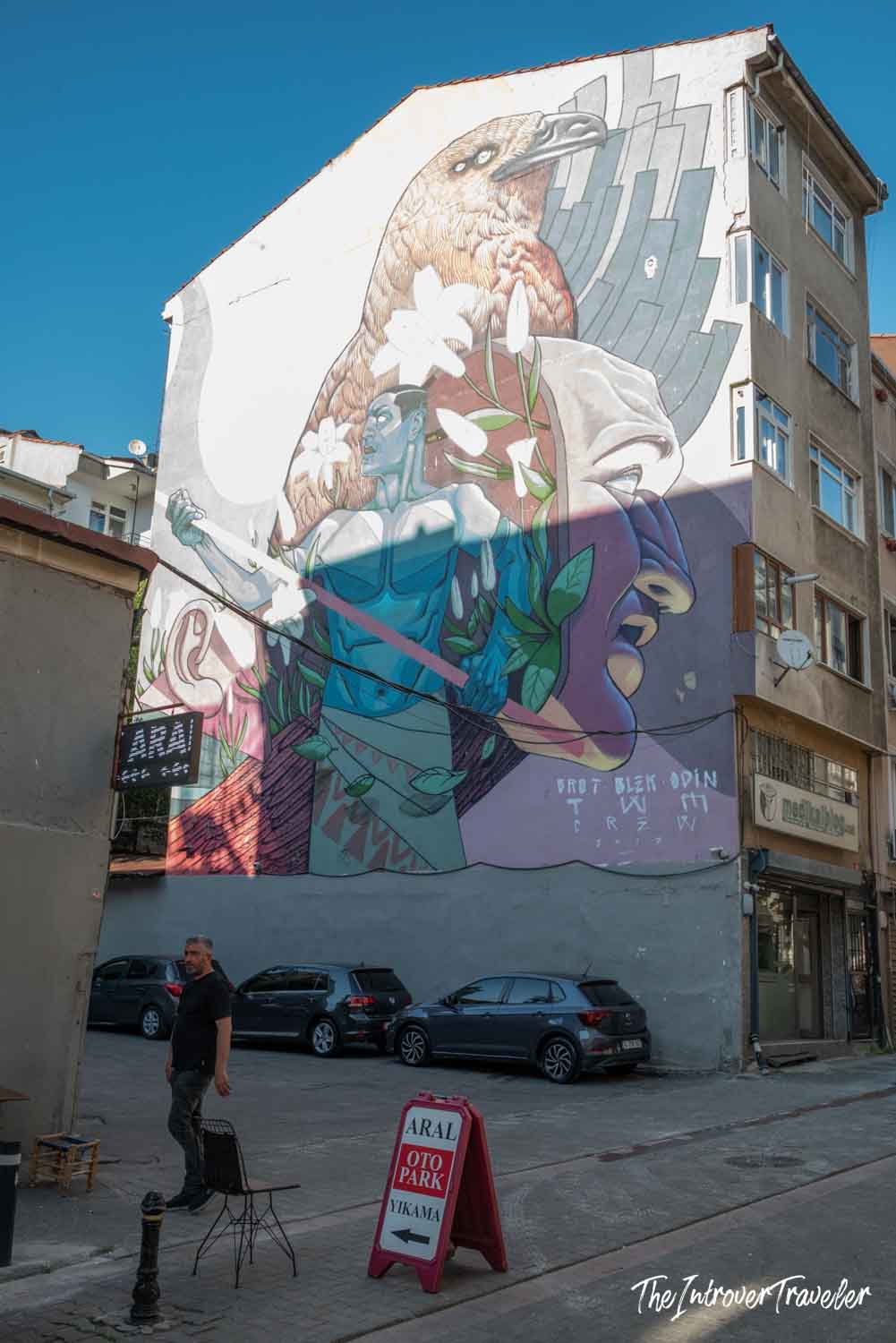
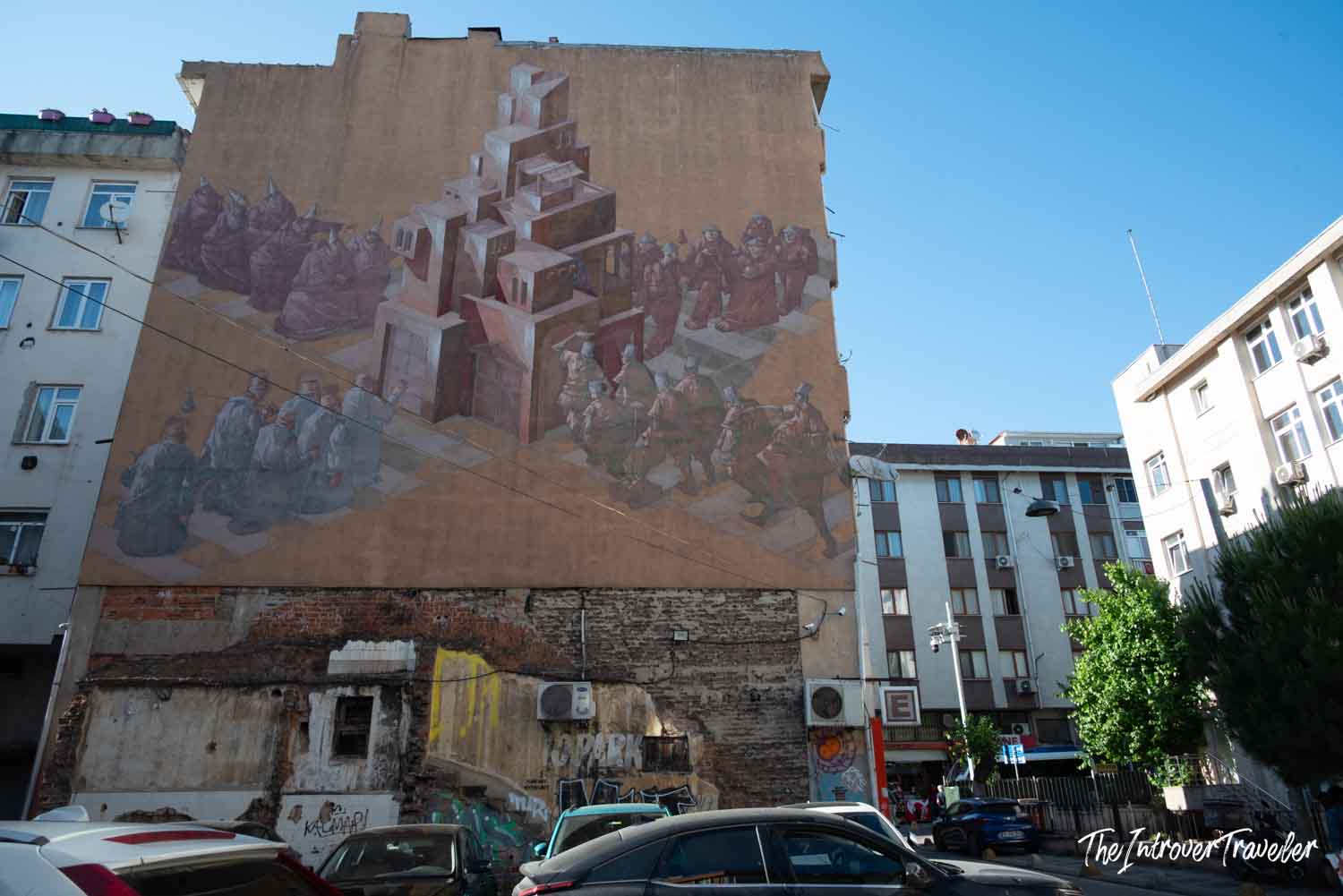
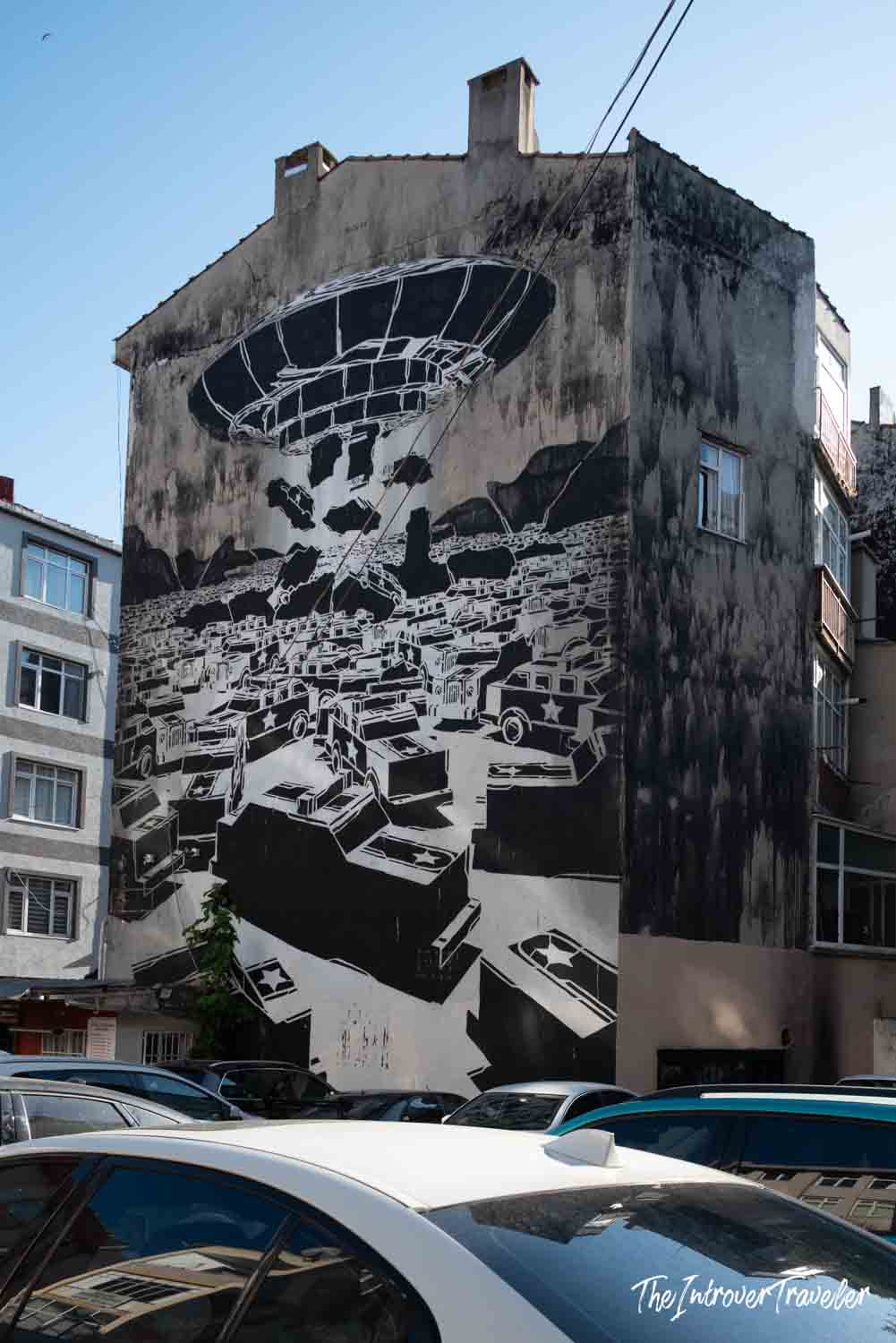
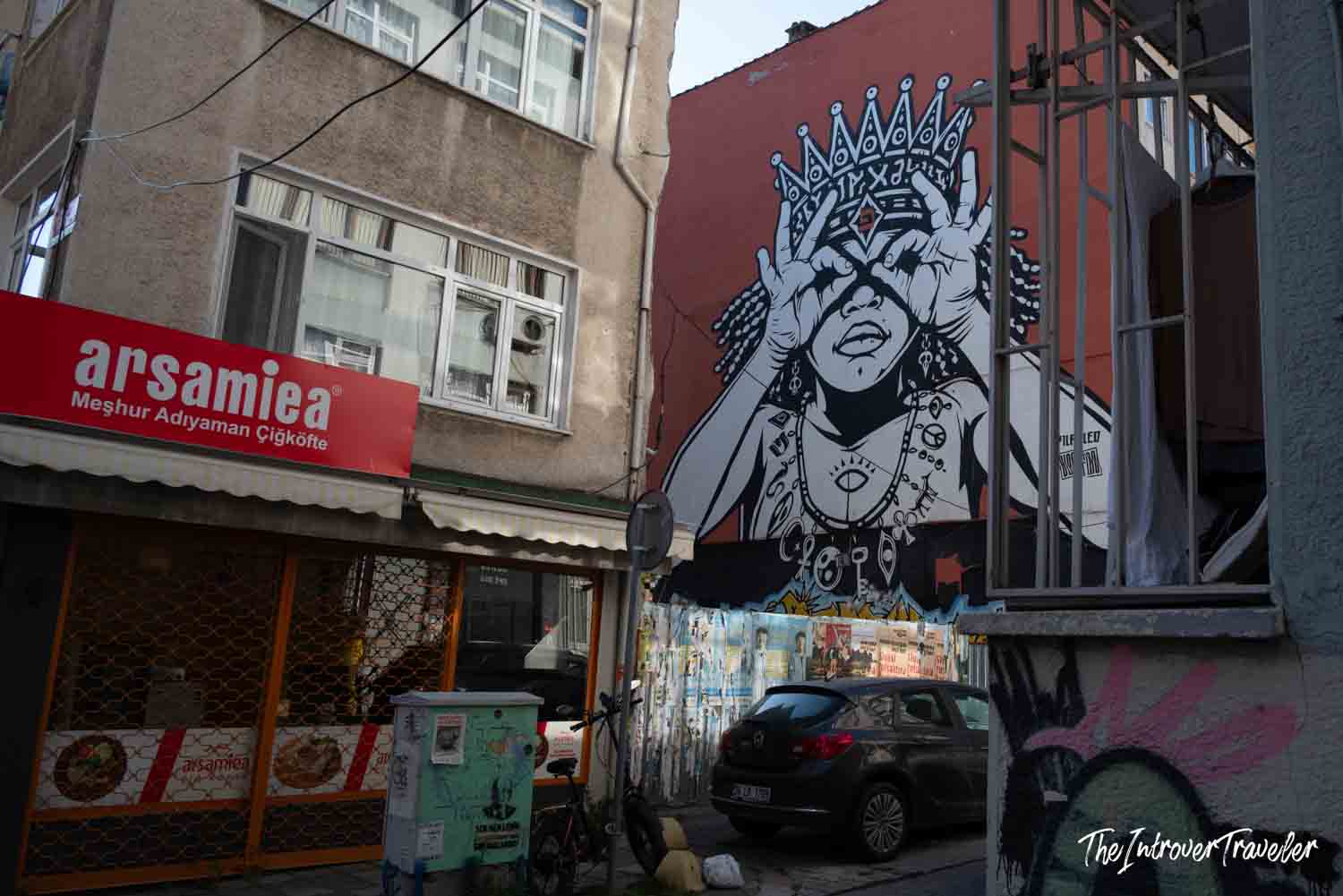
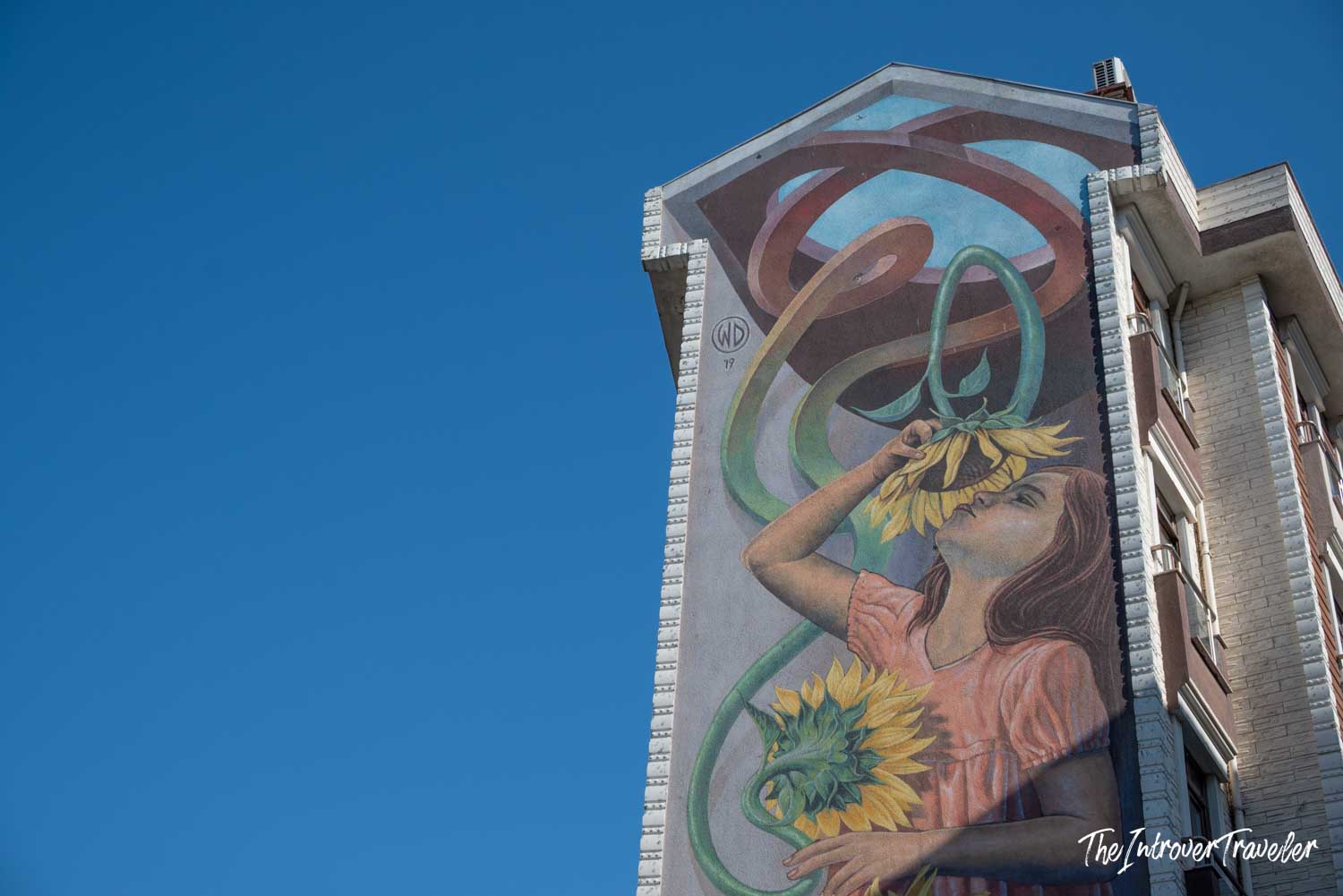
Kadıköy, particularly the neighborhoods of Yeldegirmeni, Rasimpasa, and Moda, today represents the primary laboratory of street art in Istanbul: an open-air museum that did not emerge spontaneously, but rather through a deliberate cultural and urban transformation that began in the second decade of the twenty-first century.
If you are planning a trip to Istanbul you may be interested in these posts or these pictures.
For a complete guide to Istanbul, see my full Istanbul travel guide.
From Residential Periphery to Creative District
Yeldegirmeni was not born as an artistic neighborhood. Historically, it was a multicultural residential area inhabited by Greek, Armenian, and Jewish communities, characterized by some of Istanbul’s earliest nineteenth-century apartment buildings. Only in the 2010s did the district undergo rapid social and cultural transformation, accompanied by processes of gentrification and the opening of studios, independent cafés, and creative spaces.
The turning point came in 2012, when the Kadıköy municipality launched Mural Istanbul, the first major street art festival in Turkey. The concept was simple yet radical: transforming anonymous residential façades into monumental canvases entrusted to international artists. From that moment onward, entire city blocks became narrative surfaces.
Mural Istanbul: The Birth of an Urban Gallery
Unlike the clandestine graffiti culture typical of cities such as New York or Berlin, Kadıköy’s street art developed through institutional collaboration. Buildings were selected, permits granted, and residents directly witnessed the creation of the artworks, gradually developing a sense of ownership toward the murals.
The result is a relatively rare phenomenon:street art not as an antagonistic act, but as a form of shared urban regeneration.
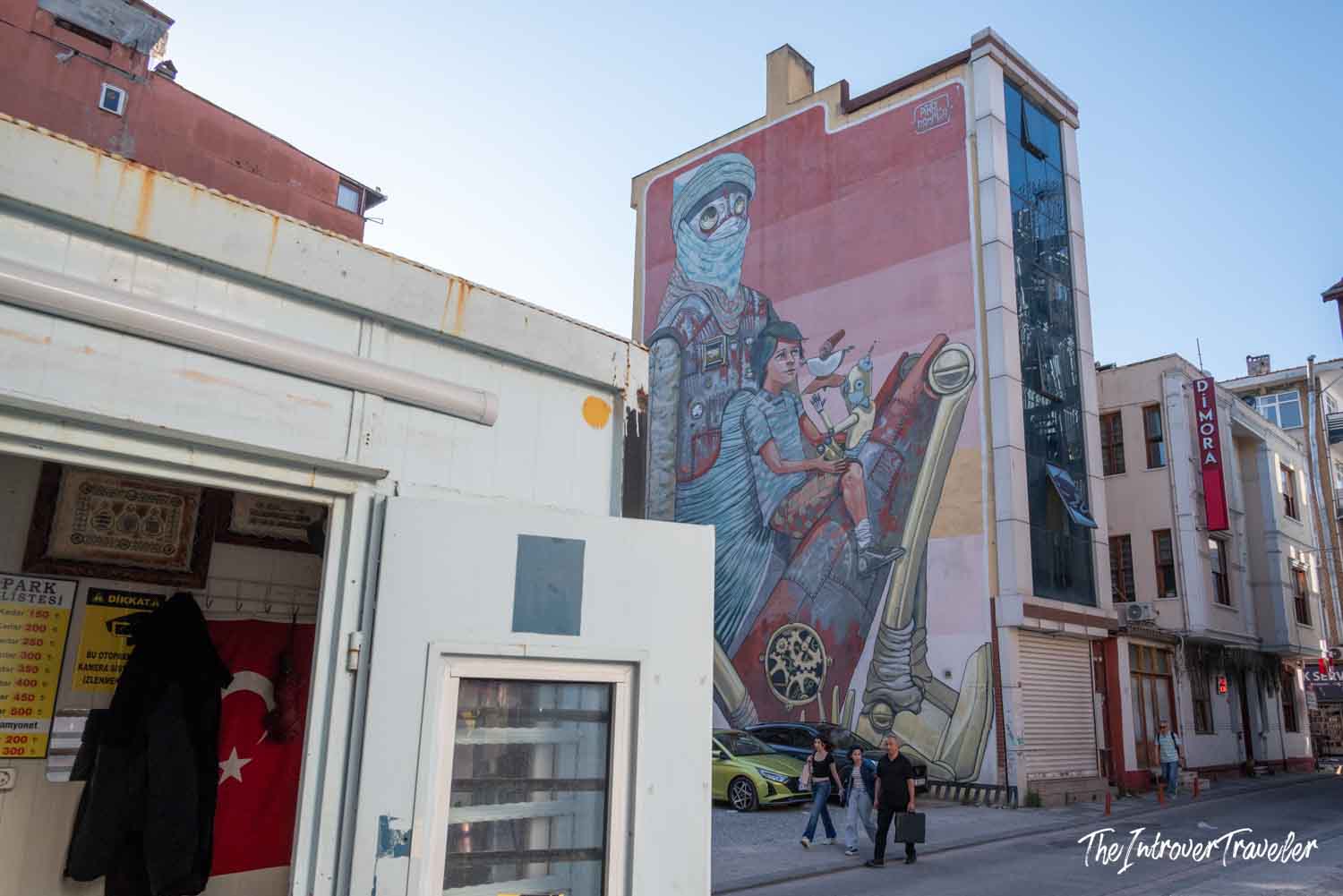
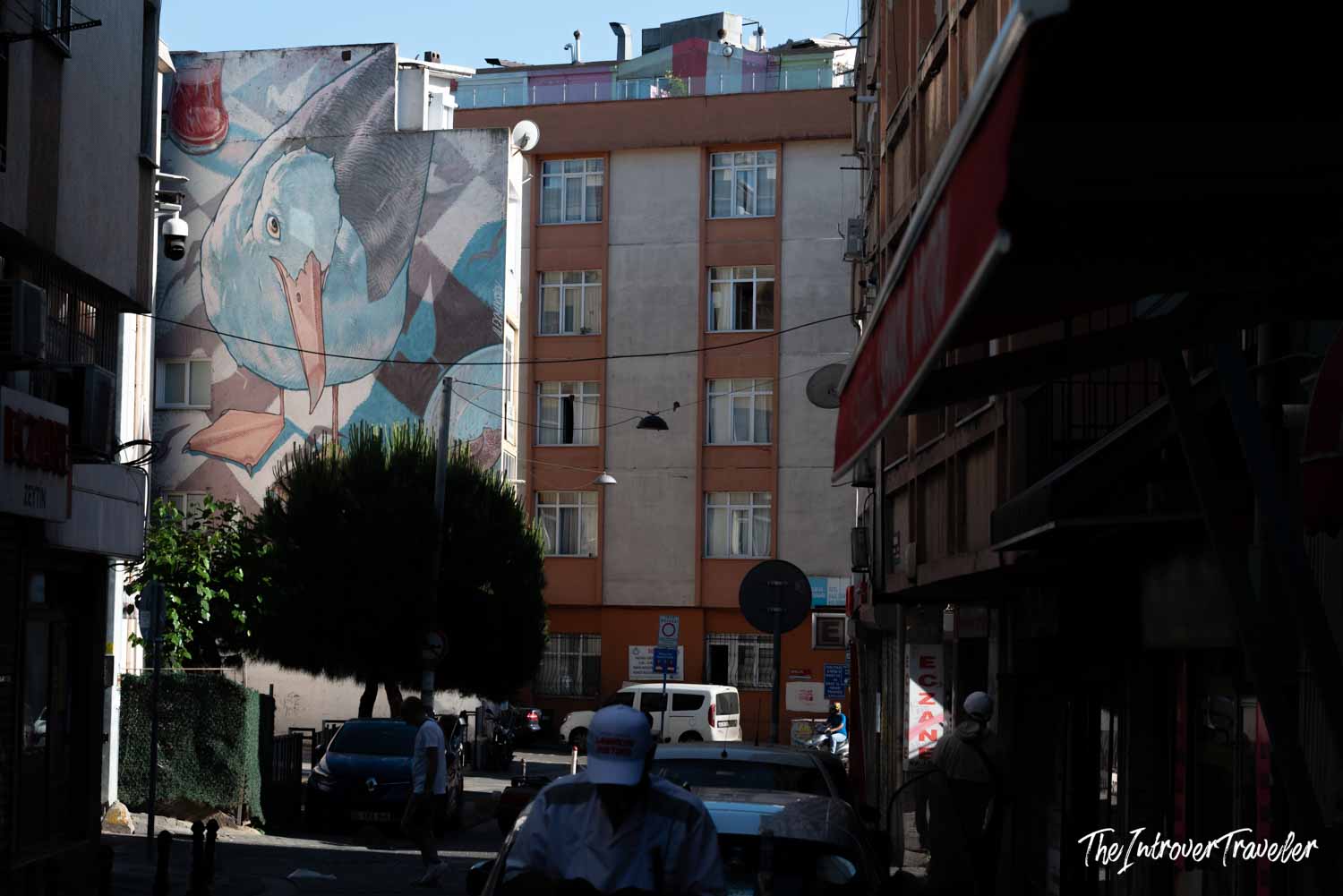
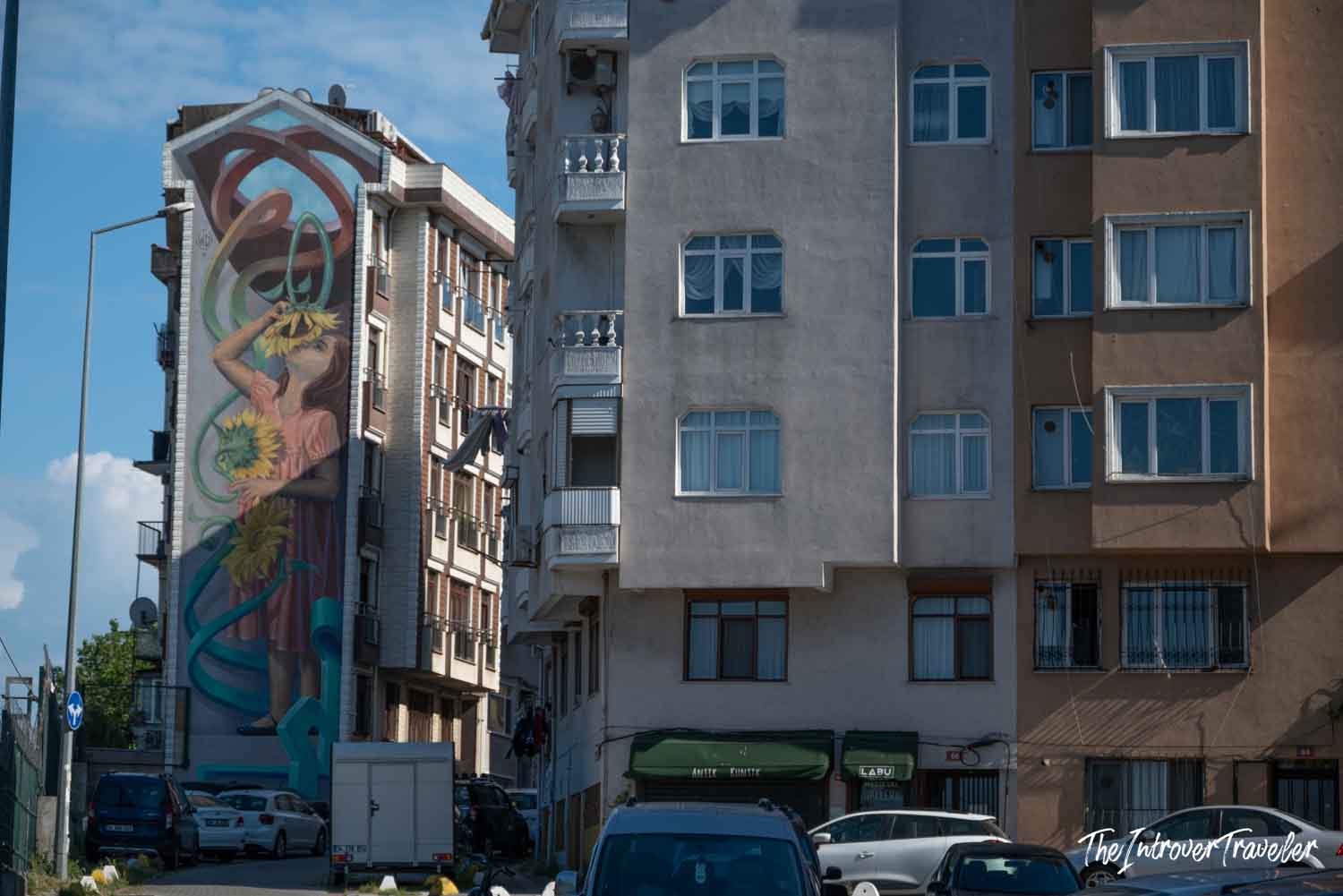
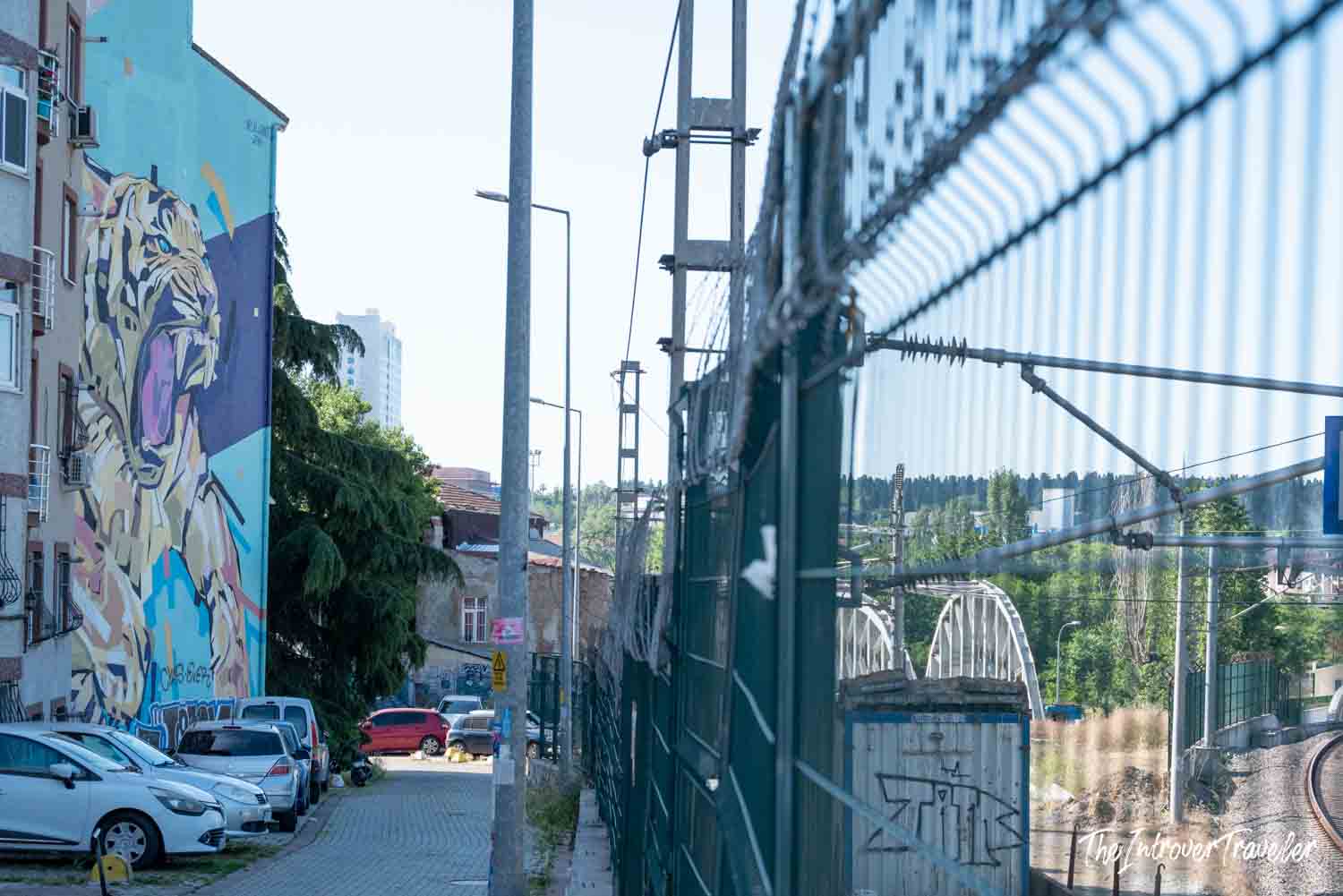
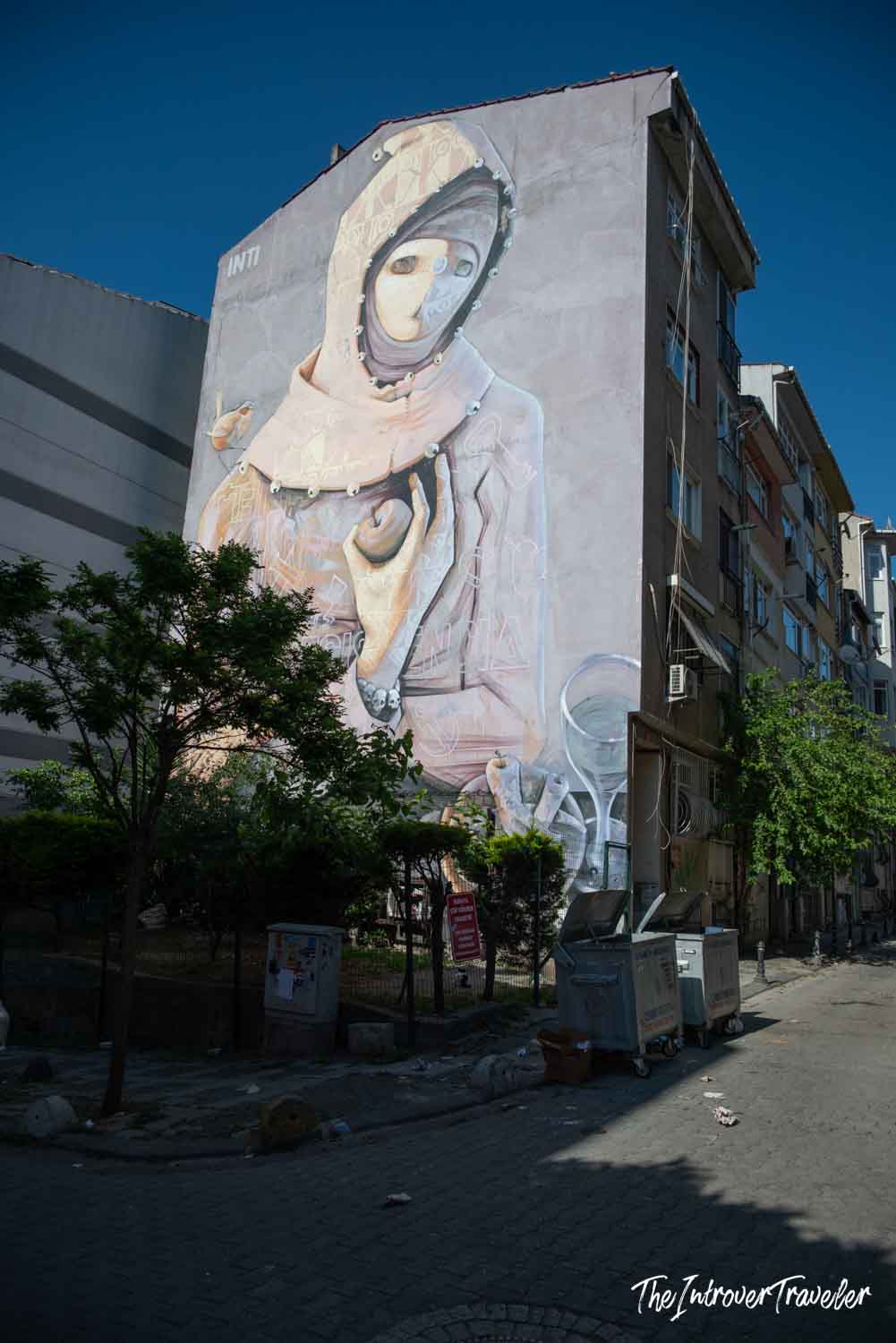
Artists from across Europe and Latin America, including Pixel Pancho, INTI, Jaz, and Claudio Ethos, have helped redefine the visual landscape of the neighborhood, producing works rising up to ten stories high that dominate the narrow streets of Rasimpasa.
Walking here quite literally means moving through a catalogue of contemporary urban art.
Themes: Politics, Identity, and Everyday Life
Street art in Kadıköy is not merely decorative.
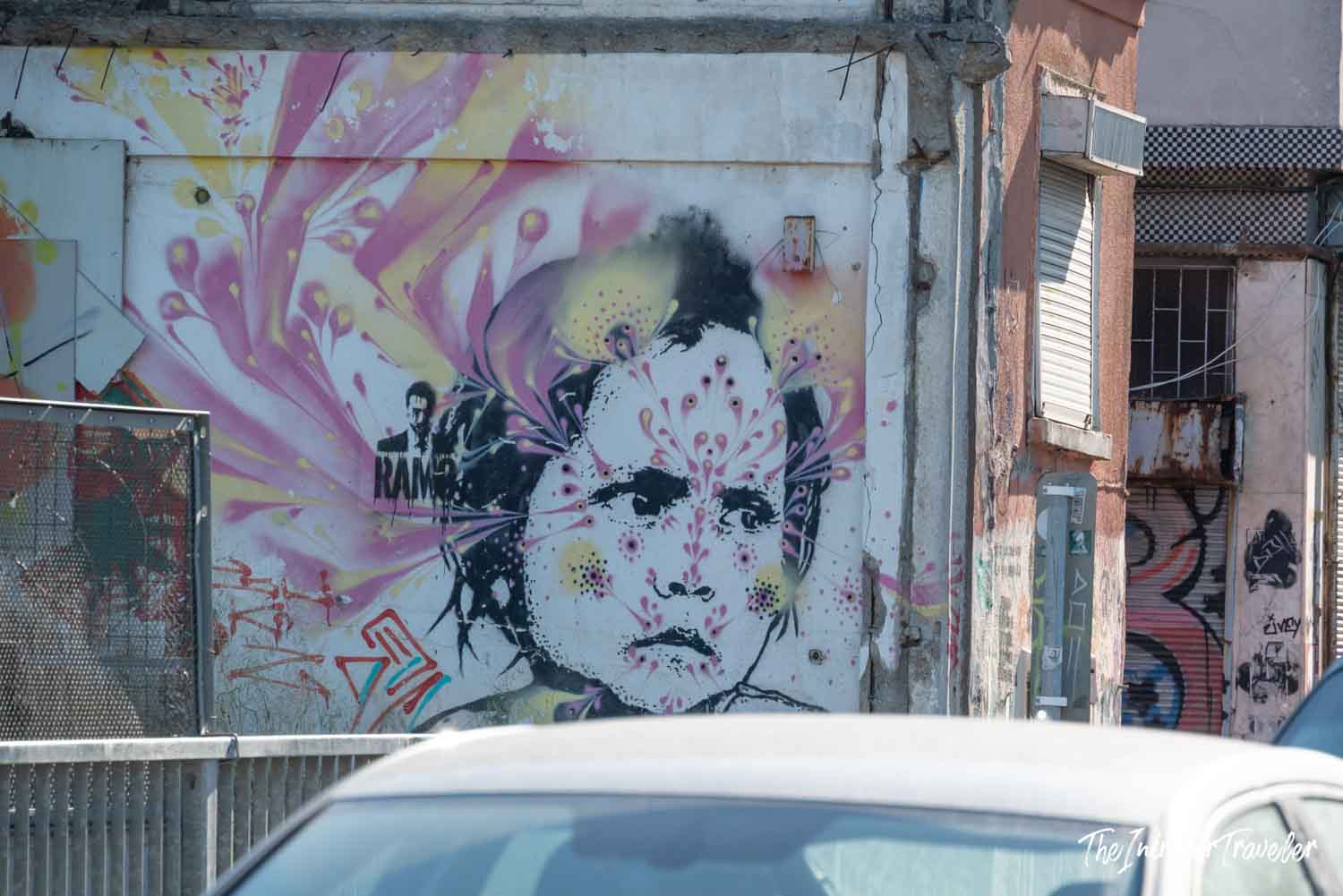
Many murals address explicitly social themes: civil rights, environmental concerns, collective memory, individual freedom, and the relationship between citizens and power. These works reflect the culturally progressive character of the district, historically more secular and politically open than other areas of the city.
It is no coincidence that several works created during the early editions of the festival contain indirect references to the 2013 Gezi Park protests, a defining moment in recent Turkish civic history.
Here, the wall becomes the emotional archive of the city.
Urban Aesthetics: Monumental Scale and Photography
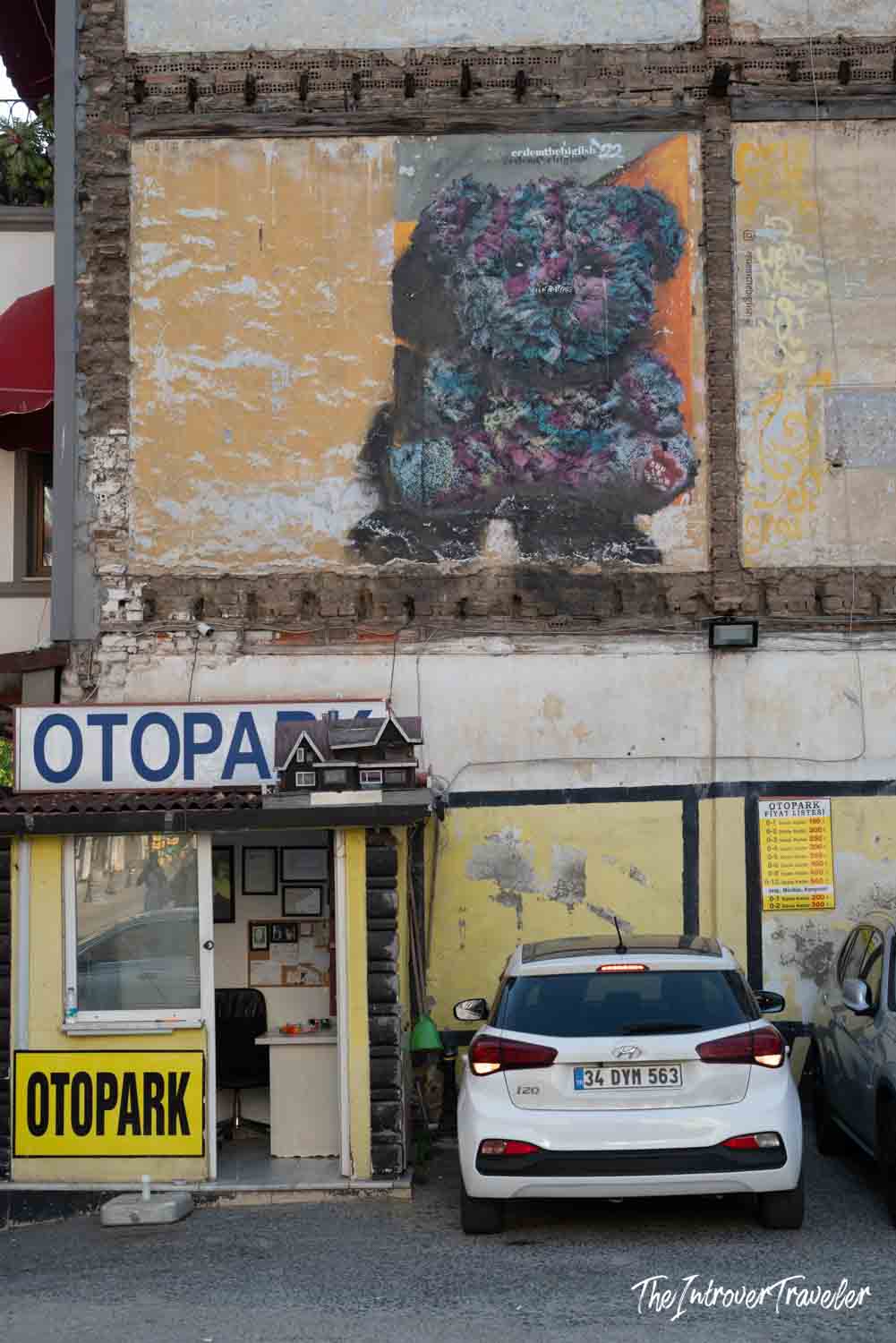
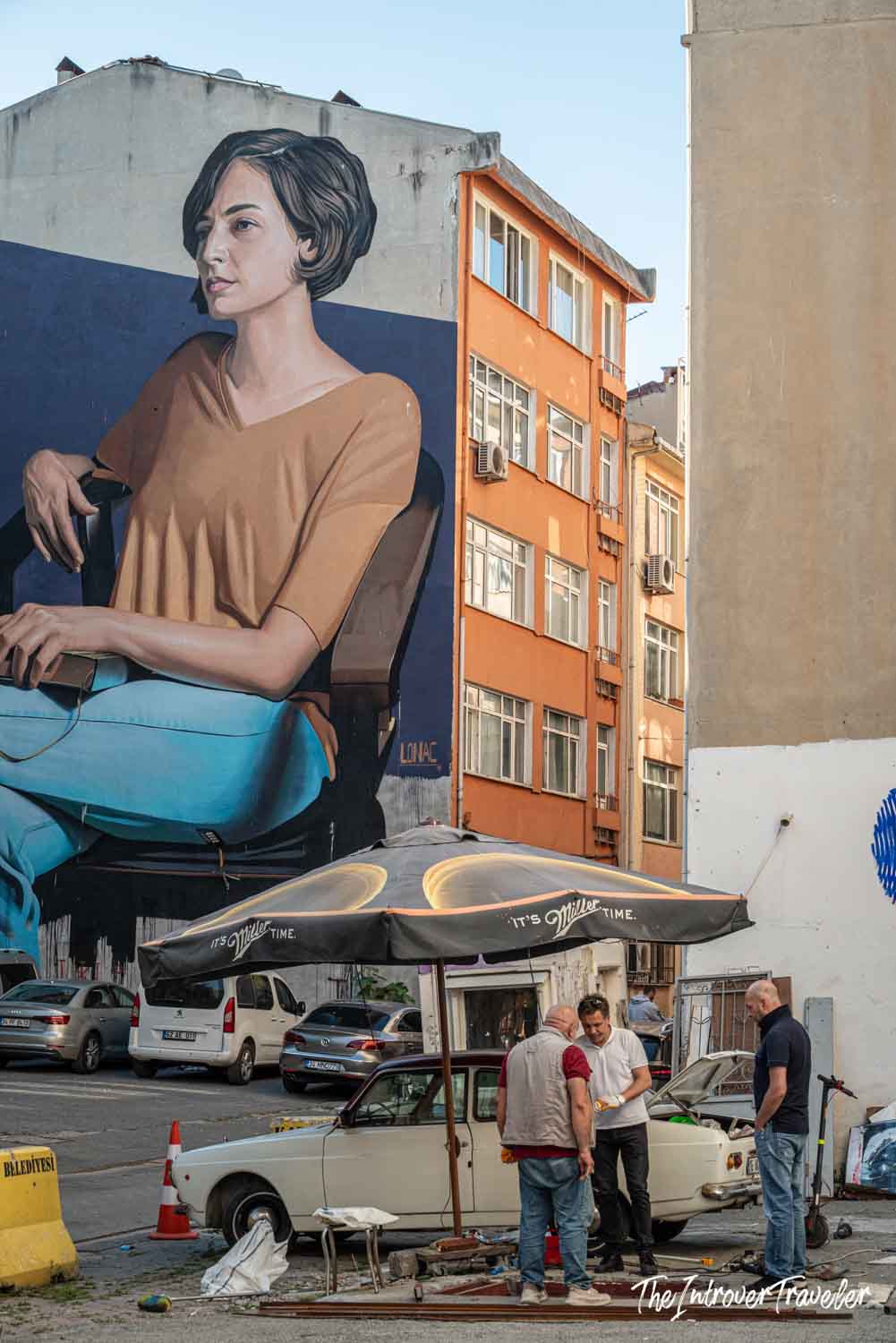
From a visual standpoint, Kadıköy offers something that few European capitals manage to replicate: monumental murals embedded within an urban fabric that remains genuinely residential.
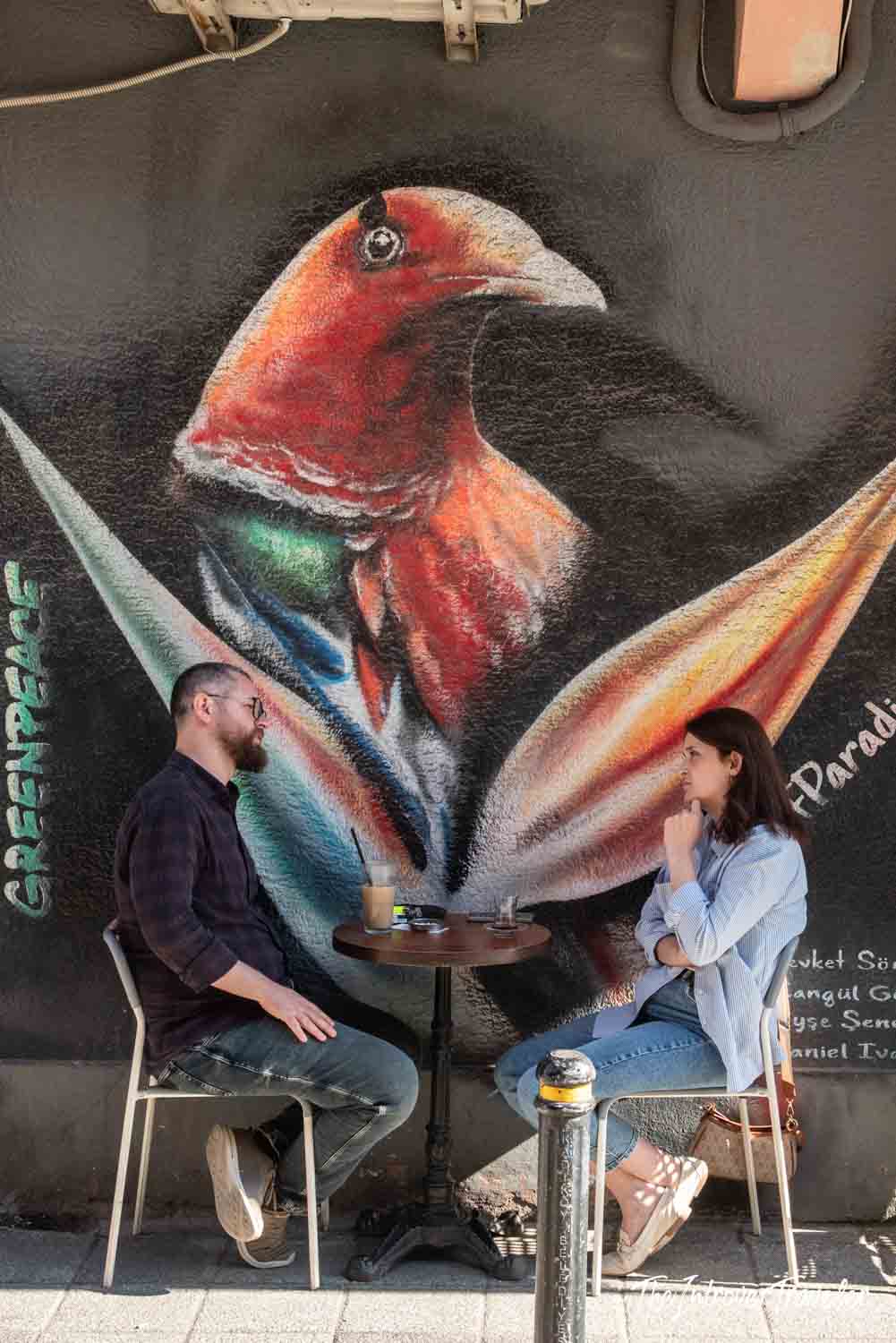
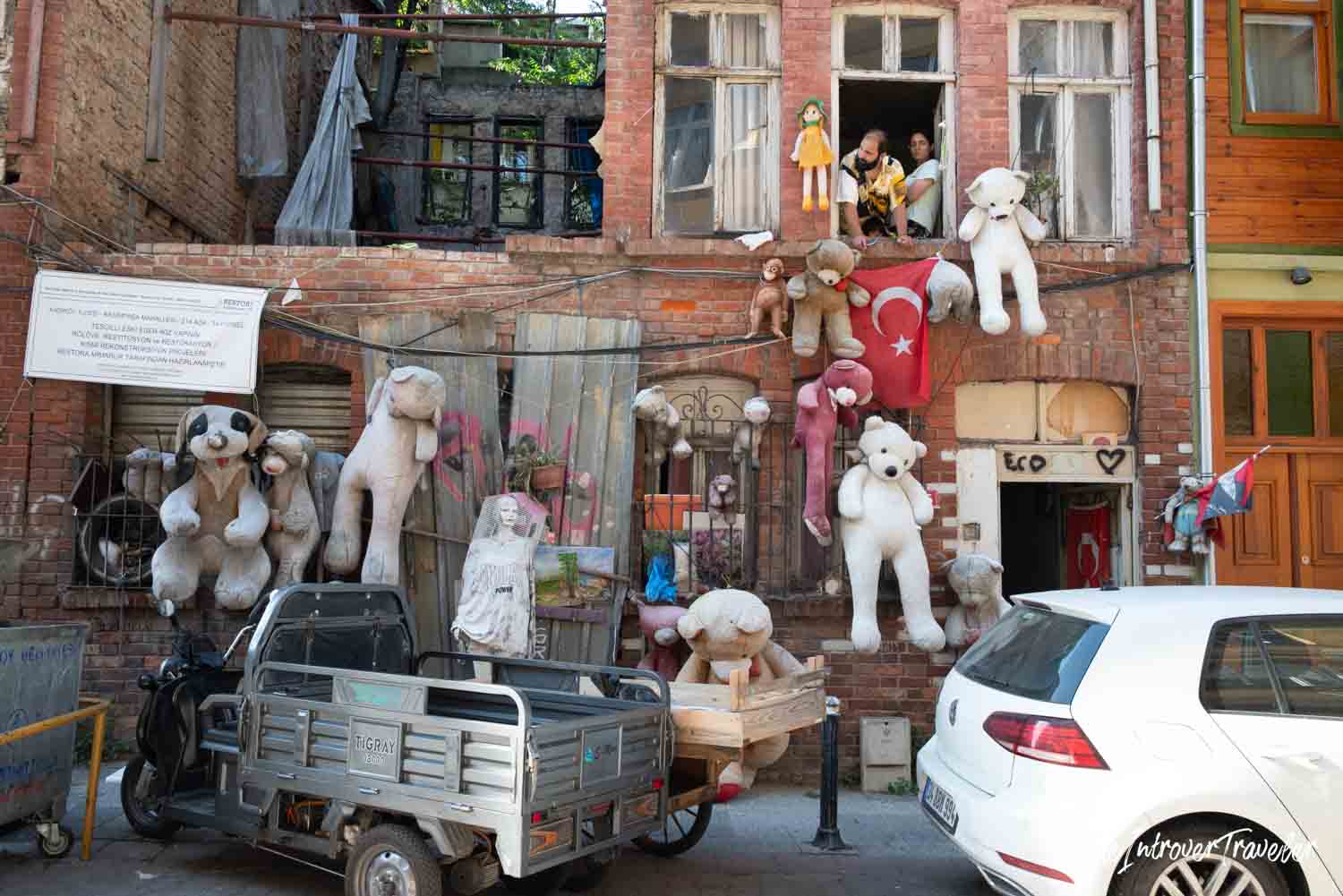
These are not museum-like districts designed for tourists. The artworks coexist with bakeries, laundries, neighborhood shops, and balconies filled with hanging laundry.
For this reason, Yeldegirmeni has become one of Istanbul’s most compelling photographic areas: the interaction between everyday architecture and contemporary art produces constantly shifting visual compositions, particularly effective in the early morning or at sunset.
Here, street art does not interrupt the city, it amplifies it.
Turkish Graffiti Culture and Local Identity
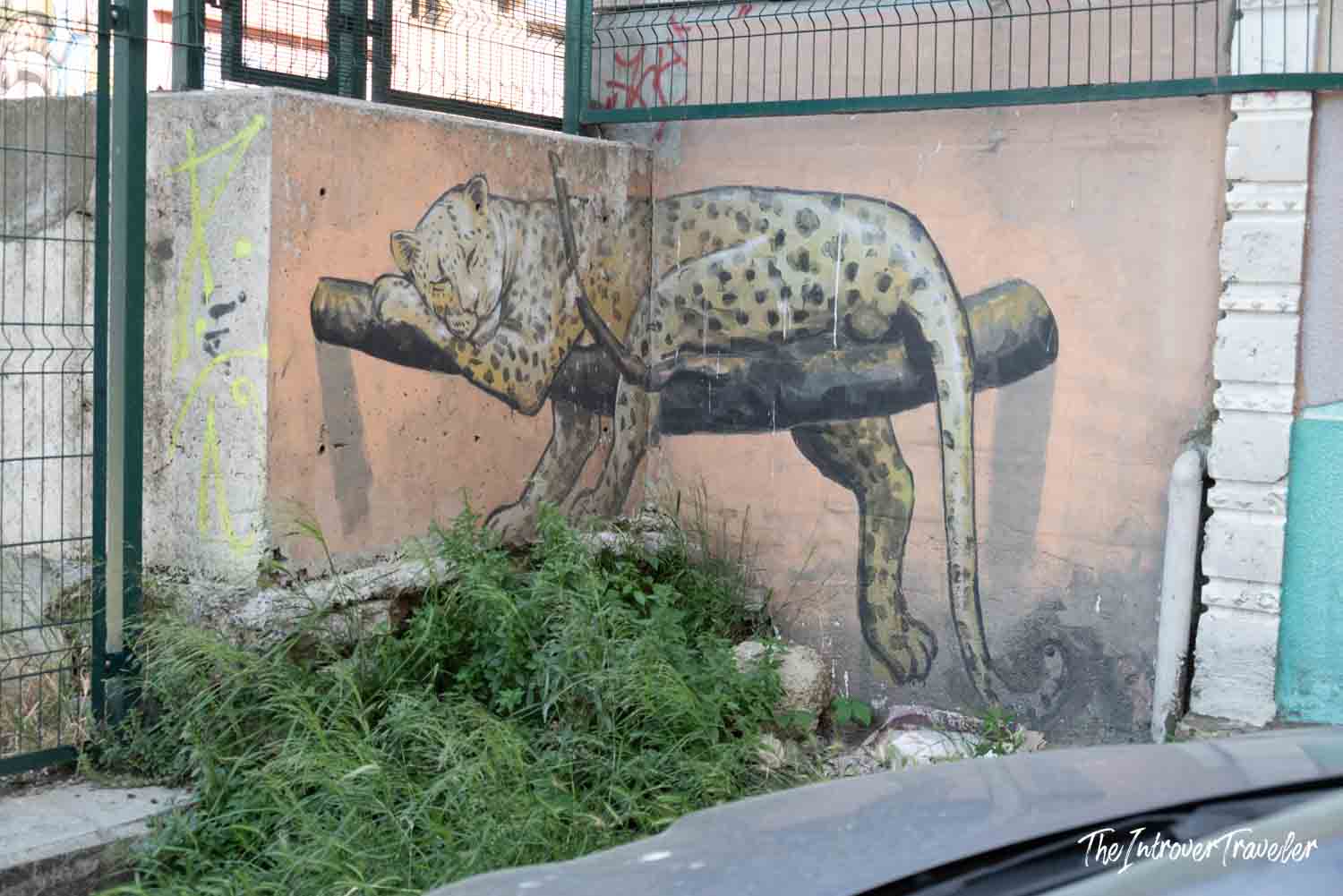
Alongside the large festival-sponsored murals, a more traditional graffiti scene also survives, connected to figures such as Dunc Dindas (“Turbo”), widely regarded as one of the pioneers of Turkish graffiti, who introduced elements of American subway art into Istanbul’s urban context.
This dual layer, institutionalized art alongside spontaneous intervention, makes Kadıköy culturally distinctive: not a street art theme park, but a living ecosystem.
How to Explore Kadıköy Today
The best way to discover the neighborhood’s street art is simply to walk without a rigid itinerary.
An ideal route may begin at the Kadıköy ferry terminal, continue uphill toward Yeldegirmeni along Karakolhane Caddesi, and then proceed through secondary streets where murals suddenly emerge among residential buildings.
There is no mandatory sequence: the logic is that of accidental discovery.
And perhaps that is precisely the point.
The Other Istanbul: Street Art in Kadıköy
Personally, I am not, in general, a great admirer of murals or street art (with some exceptions, such as the works of Blu in Bologna, many of which have now sadly been deleted). I often find it to be a somewhat naïve artistic form and, quite frequently, one marked by a strongly ideological undertone. Nevertheless, if one dedicates to Istanbul the time the city truly deserves, moving beyond the predictable checklist of Hagia Sophia and Topkapı, a visit to Kadıköy becomes essential to understanding the city in its historical, political, and social complexity.
In fact, when I think back to Istanbul, images of Kadıköy often return to mind, even though there is no single mural among the many present in the district that particularly impressed me from a strictly artistic standpoint.
Kadıköy stands as perhaps the clearest demonstration that Istanbul is not merely a historical city frozen in its imperial past. It is a young, contradictory, and creatively restless metropolis, capable of using urban space as a medium of contemporary expression. This appears especially significant when one considers that Istanbul is the principal city of an Islamic autocracy, where such visible freedom of expression might seem, to some observers, unexpected.
If Sultanahmet tells the story of what Istanbul has been, Kadıköy tells the story of what it is becoming.
If you are passionate about murals, you might also be interested in my post about the town of Orgosolo in Sardinia.