
The Istanbul Archaeological Museum
- The Introvert Traveler
- Mar 11
- 5 min read


Last visit: June 2025
My rating: 6.5/10
Estimated visiting time: 2 hours
Within the European museum landscape, the Istanbul Archaeological Museum occupies a rather singular position. It did not emerge as a mere antiquarian collection, nor as a national museum in the nineteenth-century Western sense of the term, but rather as the direct product of an empire still in existence, attempting to redefine its relationship with the ancient past while entering modernity. Visiting the complex today therefore means observing not only extraordinary archaeological artefacts, but also the way in which the Ottoman Empire sought to claim a scientific and cultural ownership of the civilizations that had previously inhabited its territories.
The museum complex lies within the Gülhane area, immediately below Topkapı Palace, in a highly symbolic location. Here, Ottoman imperial power physically overlooked the remains of Greek, Roman, and Ancient Near Eastern civilizations.
The foundation of the museum is inseparable from the figure of Osman Hamdi Bey, arguably the most important Ottoman archaeologist and intellectual of the nineteenth century. A painter trained in Paris, a state official, and a cultural reformer, Hamdi Bey understood that archaeology was becoming not only a scientific discipline but also a political instrument.
Throughout the nineteenth century, European powers conducted excavation campaigns across the Ottoman Middle East, systematically exporting artefacts to London, Berlin, and Paris. The British Museum, the Louvre, and the Berlin Museums were rapidly filling with antiquities originating from territories formally under Ottoman sovereignty.
The Ottoman response was twofold. On the one hand, increasingly restrictive legislation on the export of antiquities was introduced, culminating in the 1884 law establishing state ownership of archaeological finds. On the other, the decision was made to create an imperial museum capable of preserving and exhibiting these works in Istanbul itself. The main building, inaugurated in 1891, deliberately adopted a neoclassical architectural language: its façade evokes a Greek temple — a far from accidental choice. The Ottoman Empire thus presented itself as the heir and guardian of the ancient civilizations of Anatolia and the Levant, rather than merely their political ruler.
The museum’s collection consists predominantly of works from Greek and Roman antiquity.
If you are planning a trip to Istanbul you may be interested in these posts or these pictures.
For a complete guide to Istanbul, see the full Istanbul travel guide.
The Sarcophagi of Sidon
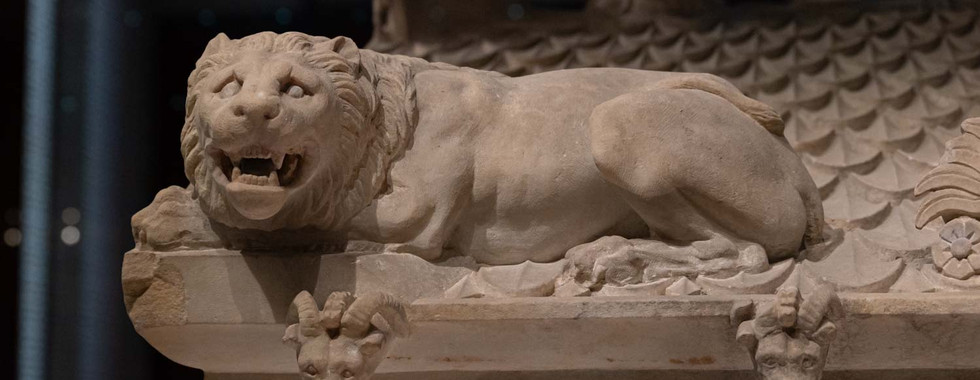
The museum’s most celebrated section is undoubtedly the gallery displaying the sarcophagi from the royal necropolis of Sidon, discovered in 1887 during excavations directed by Osman Hamdi Bey in present-day Lebanon.
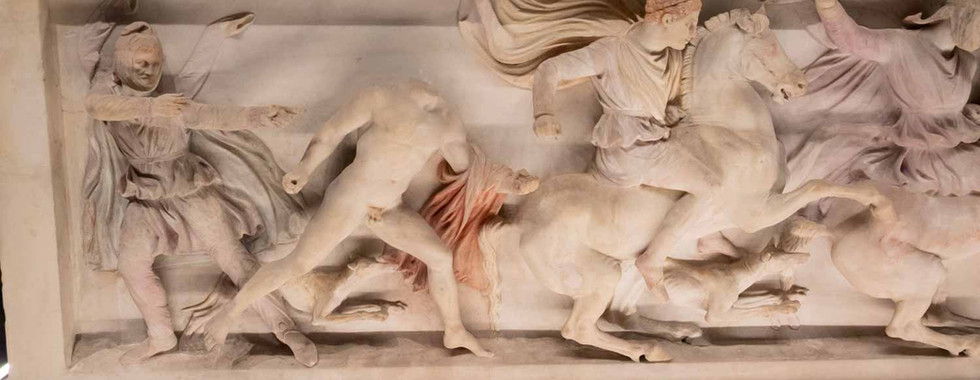
The so-called Alexander Sarcophagus is probably the most important masterpiece in the entire collection. It certainly did not belong to Alexander the Great — whose burial place remains disputed — but rather to a local ruler aligned with Macedonian power. The sculpted scenes depict battles between Greeks and Persians with extraordinary plastic refinement. The figures still preserve significant traces of their original polychromy.
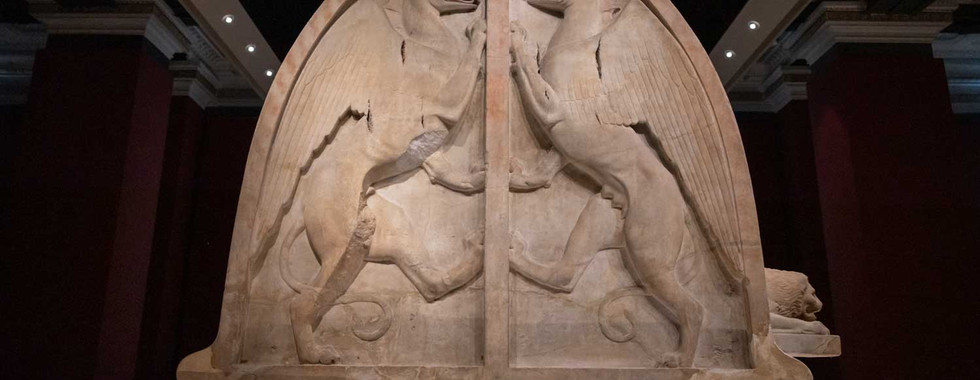
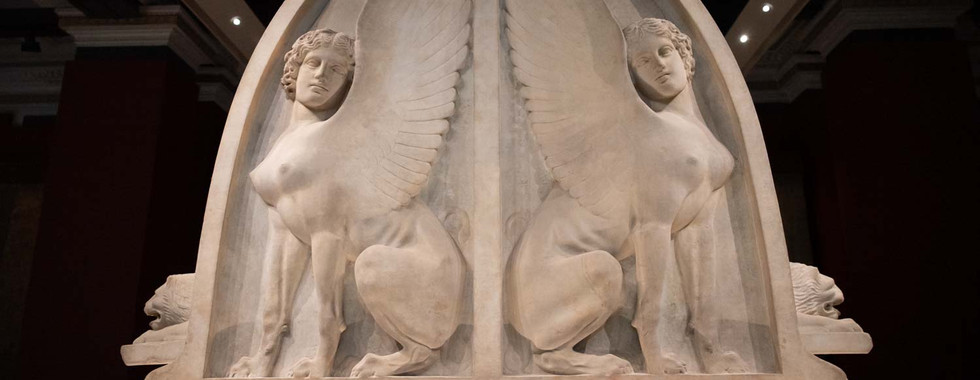
Alongside it stand the Sarcophagus of the Mourning Women and the Lycian Sarcophagus, both bearing witness to the cultural fusion between Anatolian, Persian, and Greek traditions. This gallery represents one of the rare museum contexts in which the artistic transition from Greek Classicism to Hellenistic sensibilities can be observed without the geographical dispersal of the artefacts.
From a scientific perspective, the discovery had enormous international resonance. For the first time, a major Eastern funerary complex remained entirely in its country of origin rather than being transferred to Western Europe.













Greek and Roman Sculpture
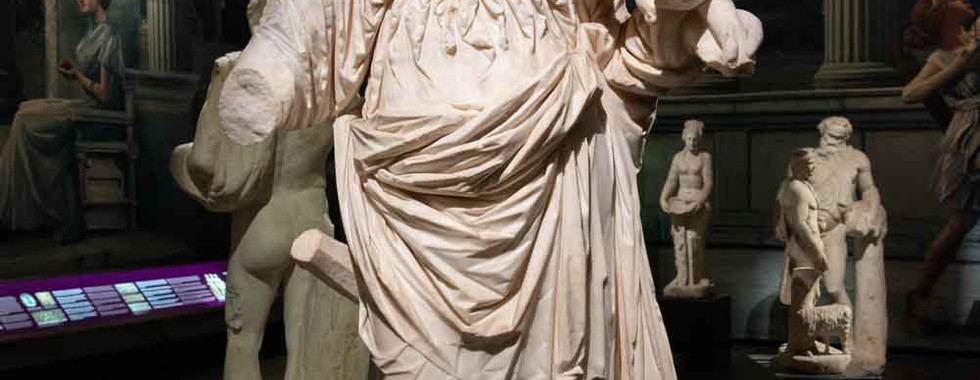
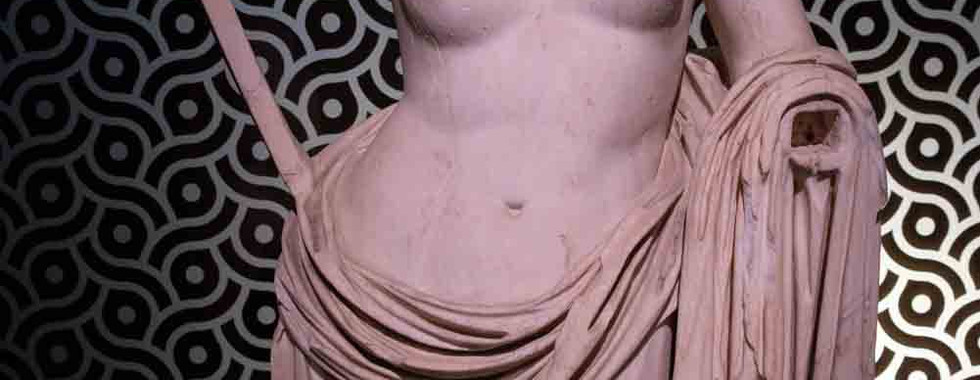
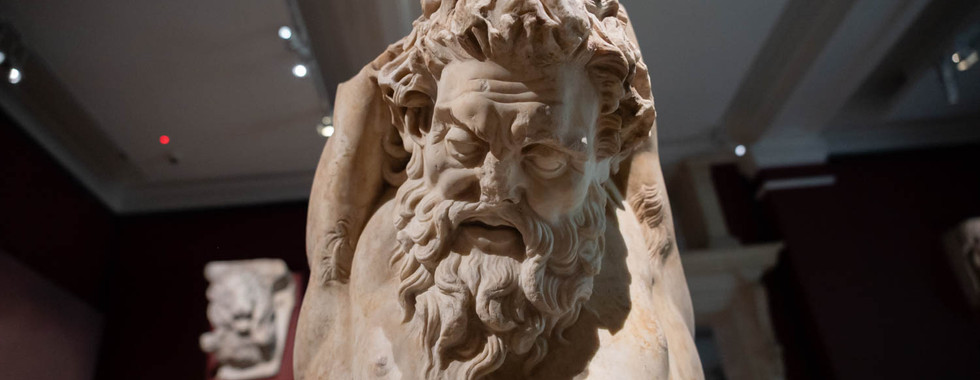
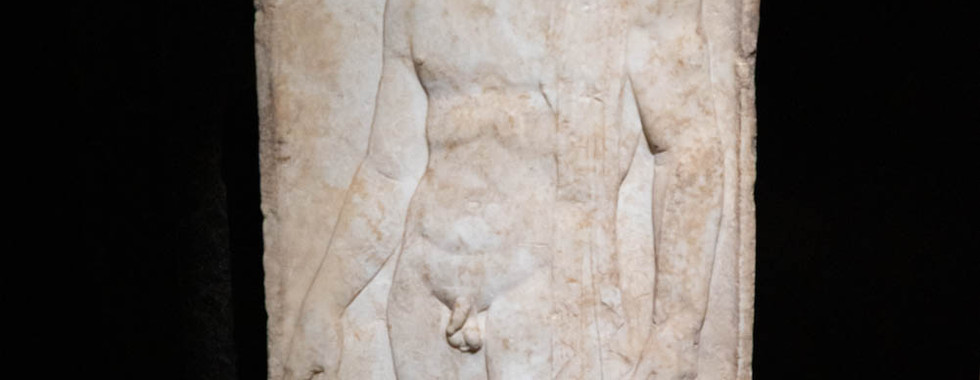
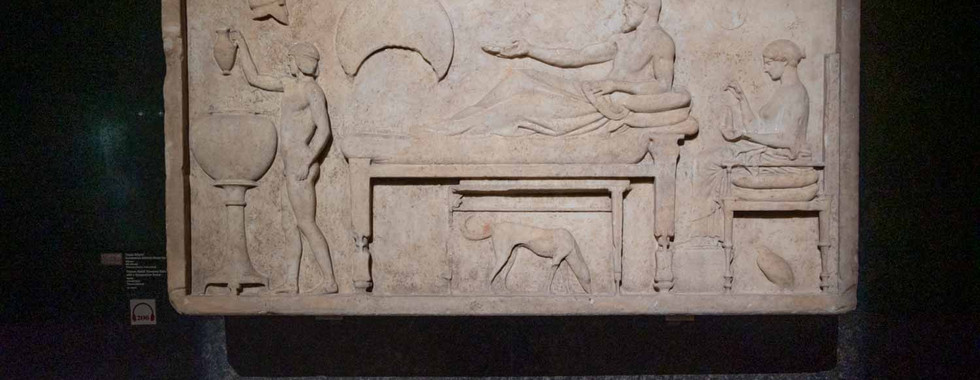
The galleries dedicated to Greek and Roman sculpture cover a remarkably wide chronological span, ranging from the Archaic period to the Late Empire.
Many of the works originate from cities of western Anatolia such as Ephesus, Miletus, and Aphrodisias — major centres of Greco-Roman culture. The subjects represented, including statues of deities, imperial portraits, and funerary reliefs, document the widespread diffusion of Roman artistic models throughout the eastern provinces of the empire.
Particularly noteworthy is the extensive presence of provincial Roman portraiture. Unlike major Western museums, where copies of celebrated Greek masterpieces tend to dominate, here the more quotidian dimension of the empire clearly emerges. Local magistrates, priests, and anonymous citizens bear witness to the cultural integration of Anatolian elites within the Roman system.
A frequently overlooked section concerns artefacts discovered within the city of Istanbul itself, during its Greek and Roman phases, when it was known first as Byzantium and later as Constantinople.
Architectural fragments, inscriptions, and sculptures reveal how limited the surviving material traces are when compared to the historical magnitude of the Byzantine capital. Ottoman and modern urban transformations systematically reused ancient building materials, often incorporating them into later constructions.
This part of the visit allows one to grasp a fundamental aspect: Istanbul is not a city built upon antiquity in a visibly stratified manner like Rome. Rather, it is a city that has continuously absorbed and transformed its own past.














Final Considerations on the Istanbul Archaeological Museum
From a practical standpoint, the museum offers a surprisingly calm visiting experience compared to other major sites in the city — particularly the adjacent Topkapı Palace. Mass tourism seems largely absent here, which represents a significant advantage.
Contrary to many reviews I had previously read on Tripadvisor, the museum is by no means neglected; on the contrary, it is well maintained. That said, the exhibition layout still partly reflects a traditional museographic approach. The emphasis is placed on the object rather than on interpretative context. While this may appear somewhat dated when measured against contemporary museum standards, it also presents a clear advantage: it allows for a direct encounter with the artefacts, largely free from excessive narrative mediation.
A complete visit realistically requires no more than two hours, even at an unhurried pace.
In terms of the overall quality of its collection, the Istanbul Archaeological Museum does not rival major archaeological institutions such as the British Museum, the Louvre, or the Metropolitan Museum of Art, nor even those of Athens or Naples. Nevertheless, it deserves attention as one of the earliest examples of a museum institution created by a non-European state specifically to preserve its archaeological heritage against colonial exportation. Many of the masterpieces displayed here would, in all likelihood, now be dispersed across Western collections had late nineteenth-century Ottoman legislation not intervened.
For the contemporary visitor, the museum’s principal value lies in the opportunity to observe, within a single location, the cultural continuity of the Eastern Mediterranean and the Near East. From Mesopotamia to Hellenistic Greece and the Roman Empire, the museum makes clear that these civilizations do not constitute isolated historical compartments, but successive phases within the extraordinary historical space that Istanbul has represented across the centuries. It documents the longue durée of the societies that inhabited these regions and the ways in which each era reinterpreted the ruins of the one that preceded it.
Given the absence of universally famous “must-see” masterpieces, I would not necessarily recommend it to the casual tourist. For visitors with a genuine interest in Greco-Roman art or archaeology, however, it is undoubtedly a worthwhile stop, deserving the investment of a couple of hours while in Istanbul.


Comments