Last visit: december 2024
Duration of visit: 1 hour
My rating: 7/10
Premise: for two years of my life I worked as a librarian; libraries are places that hold a special meaning for me. Normally, when visiting a city that hosts an important library, I try to plan the visit in advance. That was not the case with the New York Public Library: there are too many things to see in New York and far too little time available. On this occasion, therefore, my visit was improvised (shame on me), squeezed into a short window of time just before closing. It is therefore possible that I missed something and that my post does not fully reflect the potential of the place.
Located on Fifth Avenue between 40th and 42nd Street, just behind Bryant Park, the library is one of the most recognizable civic buildings in the city. Its monumental Beaux-Arts façade, inaugurated in 1911, appears almost deliberately anachronistic amid the glass and steel towers of Midtown Manhattan.
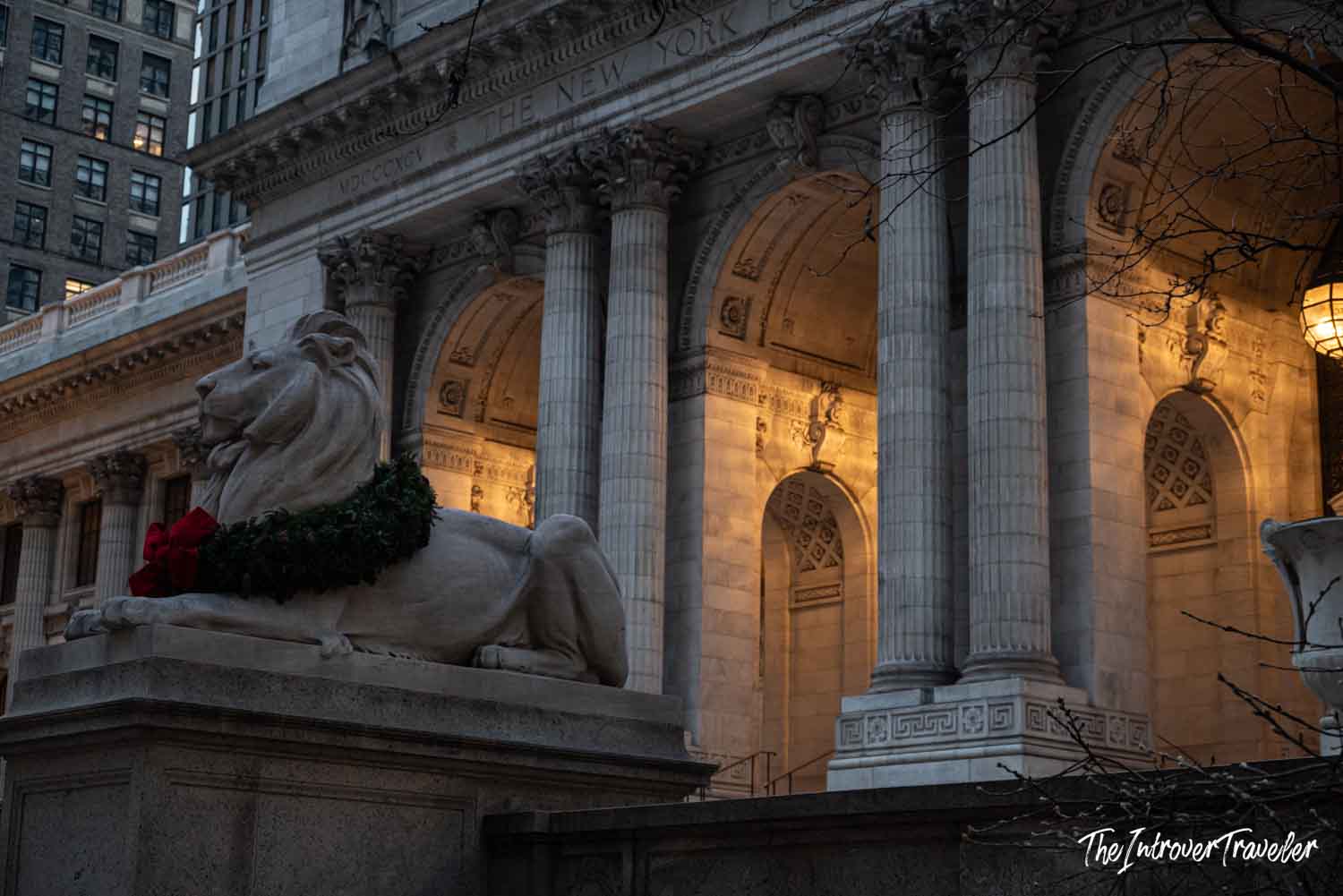
Guarding the entrance are the two famous stone lions, known as Patience and Fortitude, which have become minor celebrities in the urban iconography of New York. The names were assigned in the 1930s by Mayor Fiorello La Guardia, who suggested that patience and fortitude were the virtues New Yorkers needed during the Great Depression.
Passing between these two granite guardians and climbing the wide marble staircase already creates the impression of entering a civic temple rather than a conventional library.
The first aspect that struck me is that the space between the lion statues and the façade of the library is much more compressed than it appears in photographs; whereas in photographs, or in the many films in which the library appears, the façade looks monumental and seems to overlook a large square, the in-person experience is almost minimalist.
This review is part of my New York series. If you are planning a visit, you may also want to read my complete New York travel guide.
The New York Public Library: A Monument to Public Knowledge
The building was designed by the architectural firm Carrère and Hastings, winners of an international competition organized at the end of the nineteenth century. Their design reflects the classical ideals of the Beaux-Arts tradition, which emphasized symmetry, monumental scale, and elaborate decorative programs inspired by ancient Roman architecture.
At the time of its opening, the New York Public Library was the largest marble structure ever built in the United States. More importantly, it represented an ambitious cultural project: a massive public repository of knowledge accessible to anyone.
This idea still feels quietly radical today. In a city where nearly everything has a price, the library remains one of the few spaces where access is entirely free.
The democratic ambition behind the New York Public Library did not emerge by accident but from a specific moment in the civic imagination of the city. When the institution was formally established in 1895 through the consolidation of the Astor Library, the Lenox Library and the Tilden Trust, the founders envisioned something more ambitious than a conventional scholarly repository. Samuel J. Tilden, former governor of New York and the principal benefactor whose bequest made the project financially viable, had explicitly called for the creation of a free public library and reading room open to the entire population. His will directed that his fortune be used to establish an institution devoted to the diffusion of knowledge among the people of New York, reflecting a nineteenth century liberal conviction that access to information was not merely a cultural benefit but a civic necessity. The legal charter of the New York Public Library therefore defined the institution as a private, nonprofit corporation organized exclusively for educational purposes and dedicated to maintaining a free library and reading room in the city. Although technically private, the library was conceived from the outset as a public trust. This hybrid institutional structure remains one of the most distinctive aspects of the NYPL. It is governed by a board of trustees but operates in close partnership with the municipal government, which provides a substantial portion of its funding and considers the system an essential component of the city’s educational infrastructure.
This unusual arrangement emerged from a series of political negotiations at the end of the nineteenth century. New York already possessed several important libraries, yet most of them functioned as membership institutions accessible primarily to scholars and social elites. Reformers and philanthropists sought to replace this fragmented system with a unified public network capable of serving a rapidly expanding urban population that was being transformed by mass immigration. Industrialization had drawn millions of newcomers to the city and civic leaders increasingly understood that literacy and education were indispensable tools for social integration. The creation of the library system therefore aligned with a broader Progressive Era project aimed at strengthening democratic institutions through public education. Andrew Carnegie’s subsequent funding of dozens of neighborhood branch libraries reinforced this vision by physically embedding access to books and reading rooms in working class districts across Manhattan, the Bronx and Staten Island. The architectural language of these branches, solid and dignified yet intentionally welcoming, expressed the belief that intellectual life should not be confined to universities or private clubs but should become part of everyday urban experience.
Over time the New York Public Library came to occupy a symbolic role within the civic identity of the city. The monumental building on Fifth Avenue functions not only as a research library but also as a powerful architectural statement about the value that New York attaches to knowledge. Its vast reading rooms and open stacks communicate a sense of intellectual abundance that contrasts with the commercial logic governing most urban spaces. For generations of residents the library has served as a place of self education, a refuge for students and immigrants seeking language skills, and a practical resource for job seekers, writers and researchers. In surveys of public institutions it consistently ranks among the most trusted and widely used services in the city. The affection that many New Yorkers feel for the library is therefore not simply cultural but civic. It embodies a lingering belief that certain forms of knowledge should remain outside the marketplace and that a democratic metropolis must preserve spaces where learning is available to anyone willing to sit down at a desk and begin reading.
A Treasury of Books, Manuscripts and Cultural Memory
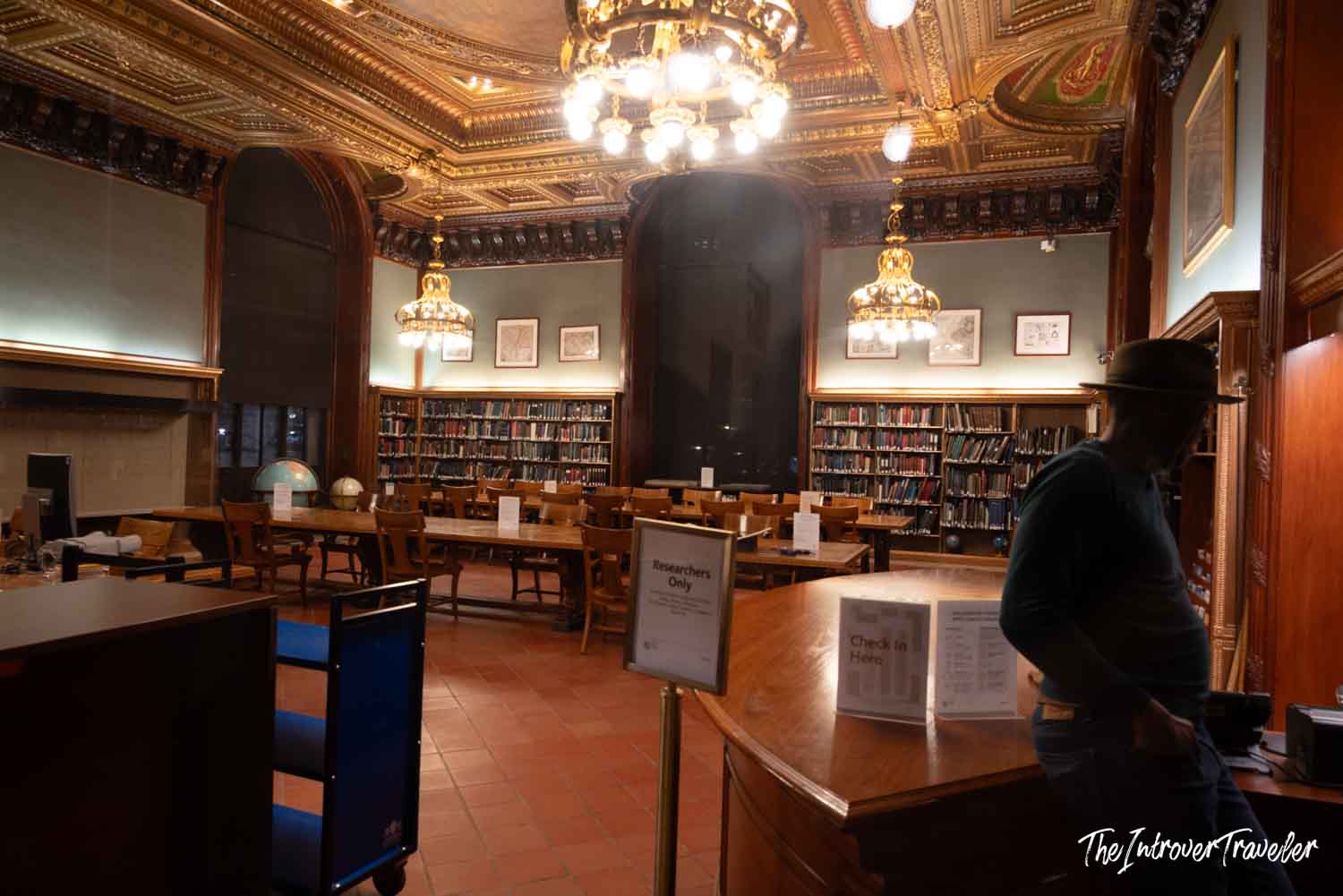
Beyond its symbolic role as a civic institution, the New York Public Library is also one of the most important bibliographic repositories in the world. The system as a whole holds more than 55 million items, making it one of the largest public library collections ever assembled. These materials extend far beyond printed books and include manuscripts, maps, photographs, prints, music scores, newspapers, and extensive archival collections. The research divisions housed in the Stephen A. Schwarzman Building on Fifth Avenue form the intellectual core of the system. Scholars, historians, writers and journalists rely on these holdings because many items are unique or extremely rare, preserved in controlled archival conditions and accessible through the library’s renowned reading rooms.
Among the most celebrated treasures of the collection are manuscripts that mark turning points in intellectual and literary history. The library preserves an early draft of the United States Declaration of Independence written by Thomas Jefferson, as well as important documents connected to the American founding period. The literary collections are equally remarkable. The Berg Collection of English and American Literature includes manuscripts and personal papers from writers such as Charles Dickens, Virginia Woolf, Walt Whitman and Jack Kerouac, offering an extraordinary window into the creative process behind some of the most influential works in modern literature. Equally significant is the library’s Gutenberg Bible, one of the very few surviving copies of the first major book printed in Europe using movable type in the fifteenth century. The Map Division contains more than 430,000 maps and atlases, including rare early cartographic representations of the Americas that document the evolving geographical imagination of the early modern period.
The library does not treat these materials as dormant archival relics. Through the Polonsky Exhibition of The New York Public Library’s Treasures, a permanent exhibition installed in the main building, visitors can view a rotating selection of rare items drawn from across the collections. The exhibition includes early prints, historical manuscripts and scientific documents. In addition to this permanent display the library regularly organizes temporary exhibitions that explore specific themes in literature, art, science and urban history. In this way the institution fulfills a dual function, operating simultaneously as a research library for scholars and as a public museum of the written word where the intellectual heritage preserved in its archives becomes visible to the wider public.
The Rose Main Reading Room
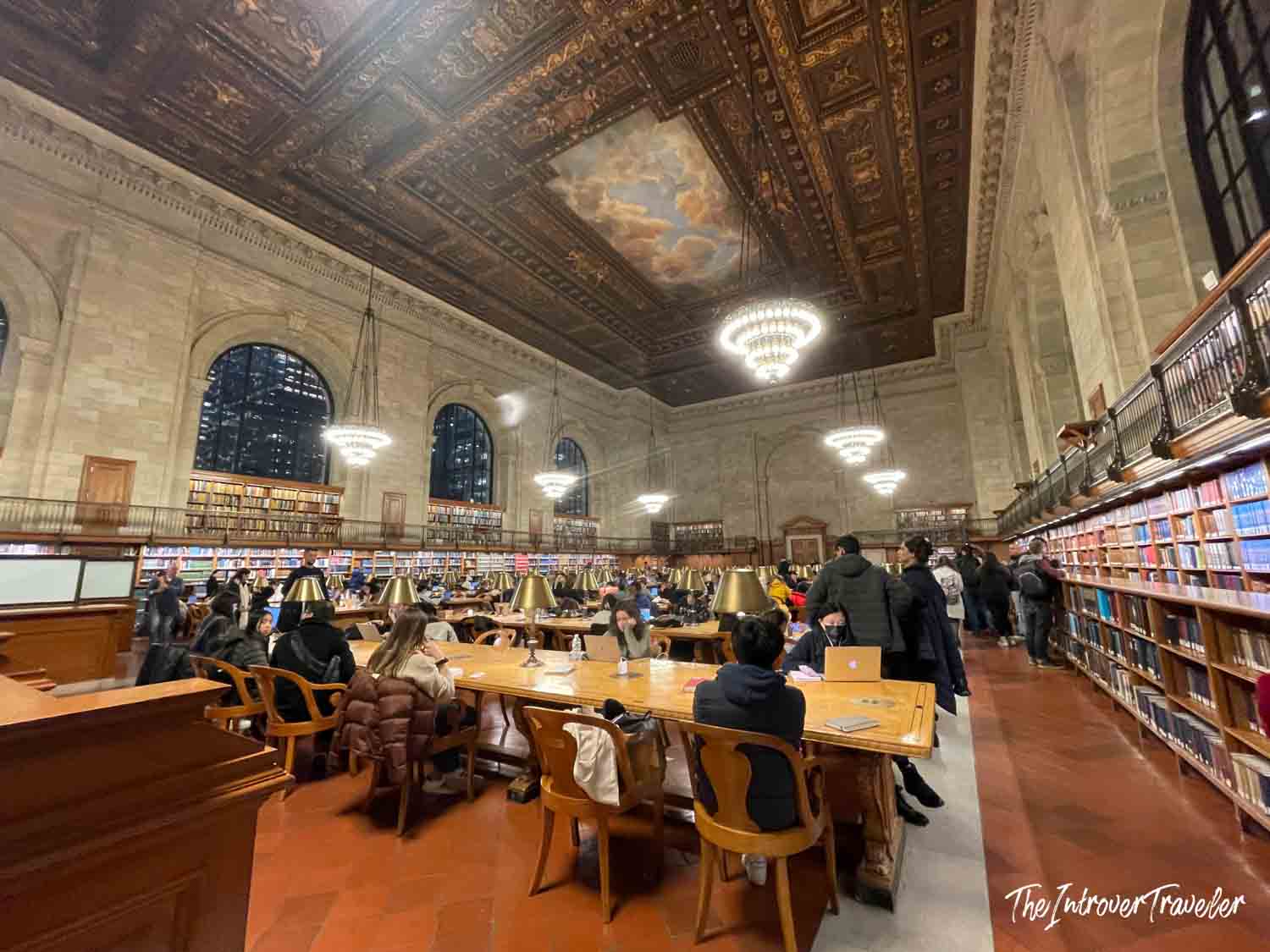
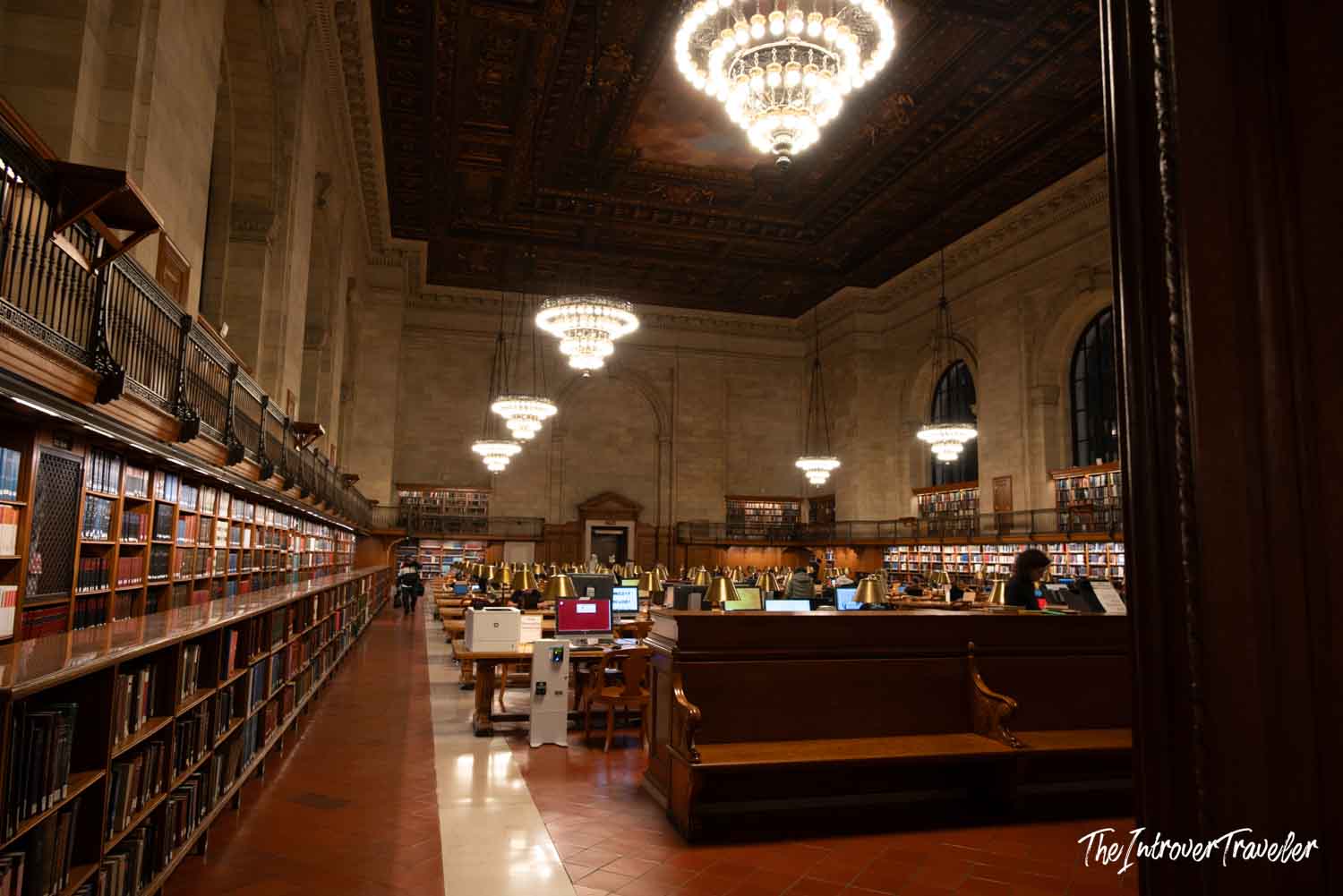
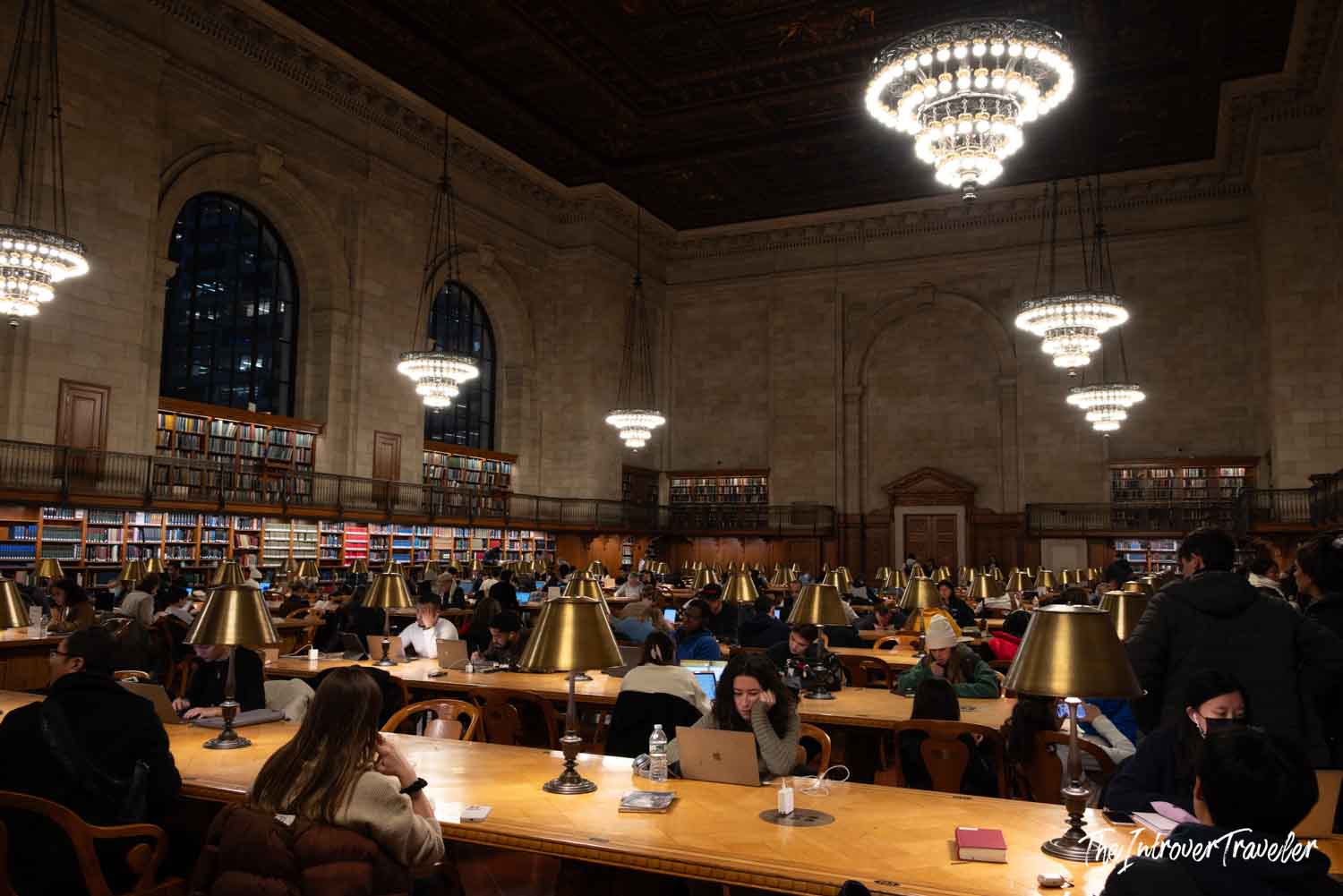
The highlight of the visit is undoubtedly the Rose Main Reading Room, one of the most impressive library spaces in the world.
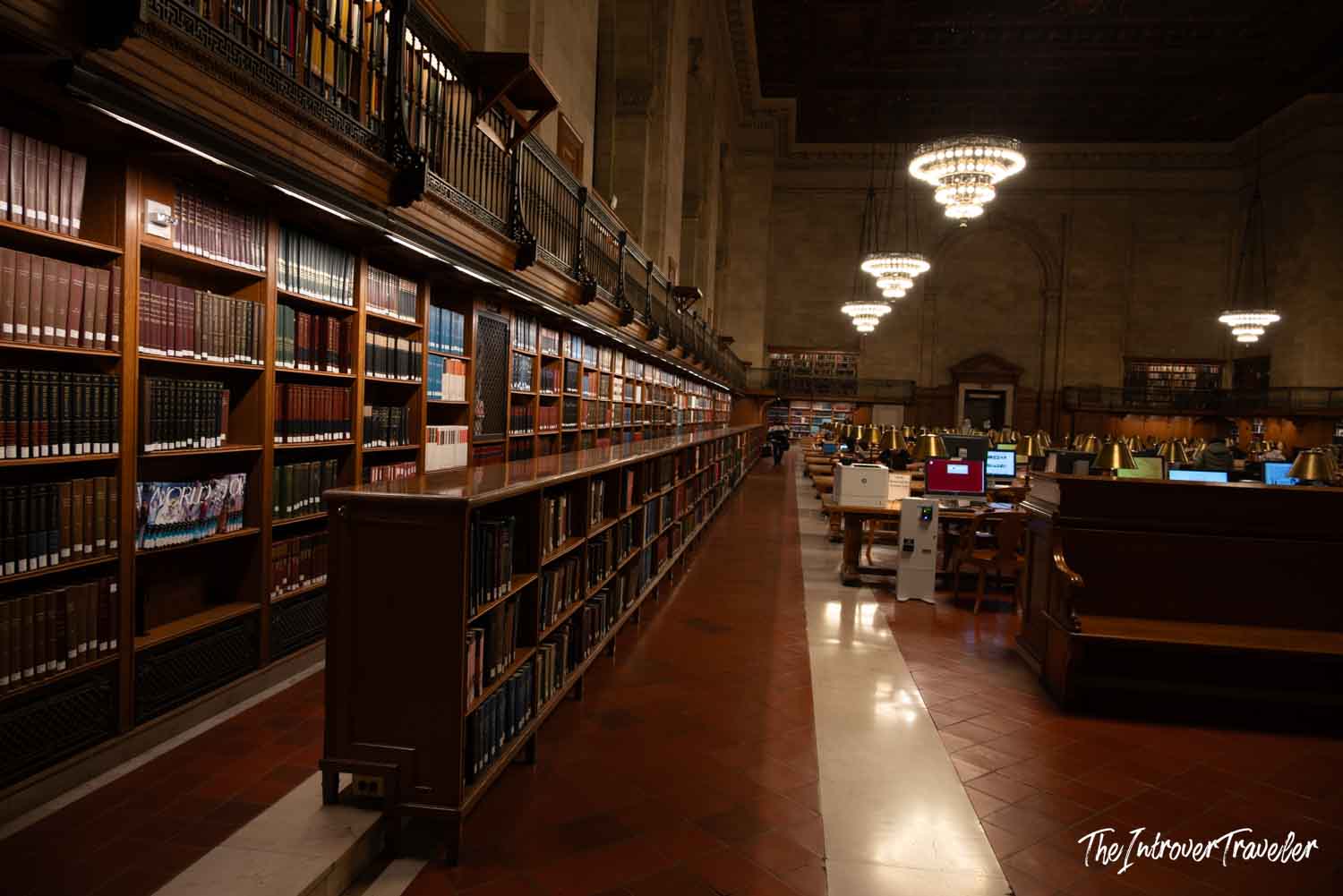
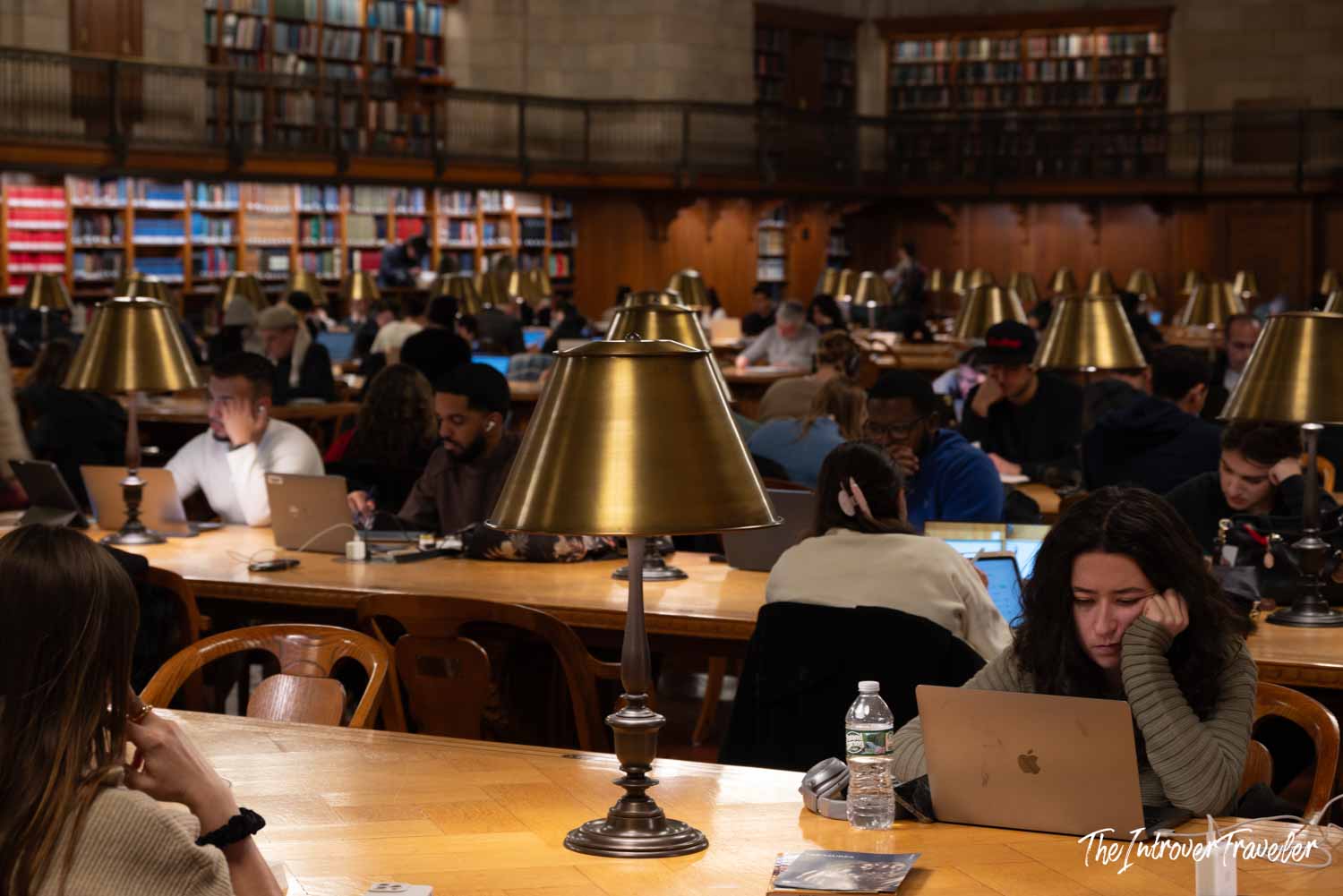
Stretching nearly one hundred meters in length, the room resembles a vast academic hall suspended above the city. Massive arched windows allow natural light to flood the space, while long wooden tables equipped with green-shaded lamps create the familiar atmosphere associated with great libraries.
The ceiling is decorated with large painted panels depicting clouds drifting across a pale sky, an effect that gives the room an almost theatrical dimension. Looking upward, one briefly forgets that outside the walls taxis are honking and crowds are rushing along Fifth Avenue.
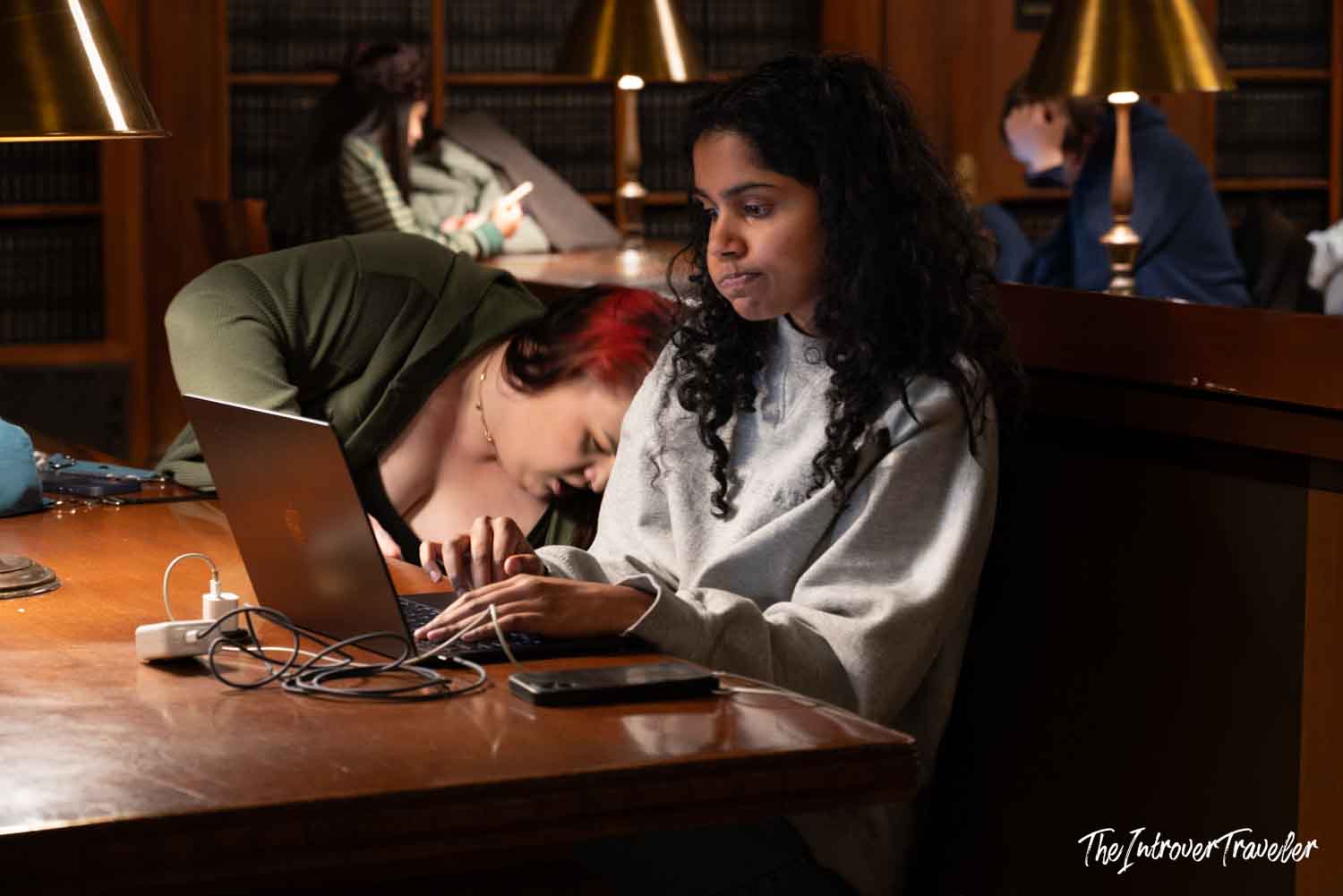
The reading room is not merely a scenic attraction. Scholars, students, and researchers continue to use it daily, requesting books from the library’s enormous underground stacks. Watching them work at the long tables reinforces the sense that this is a living institution rather than a historical monument.
Although it contributes to its visual grandeur, the elevated position of the main reading room is not necessarily an advantage but rather the consequence of structural constraints typical of the building and of the period in which it was constructed. In older libraries, placing the book stacks on the upper floors created significant structural load problems, whereas today library design generally favors locating reading rooms at ground level in order to make them more easily accessible to users.
The Visitor Experience
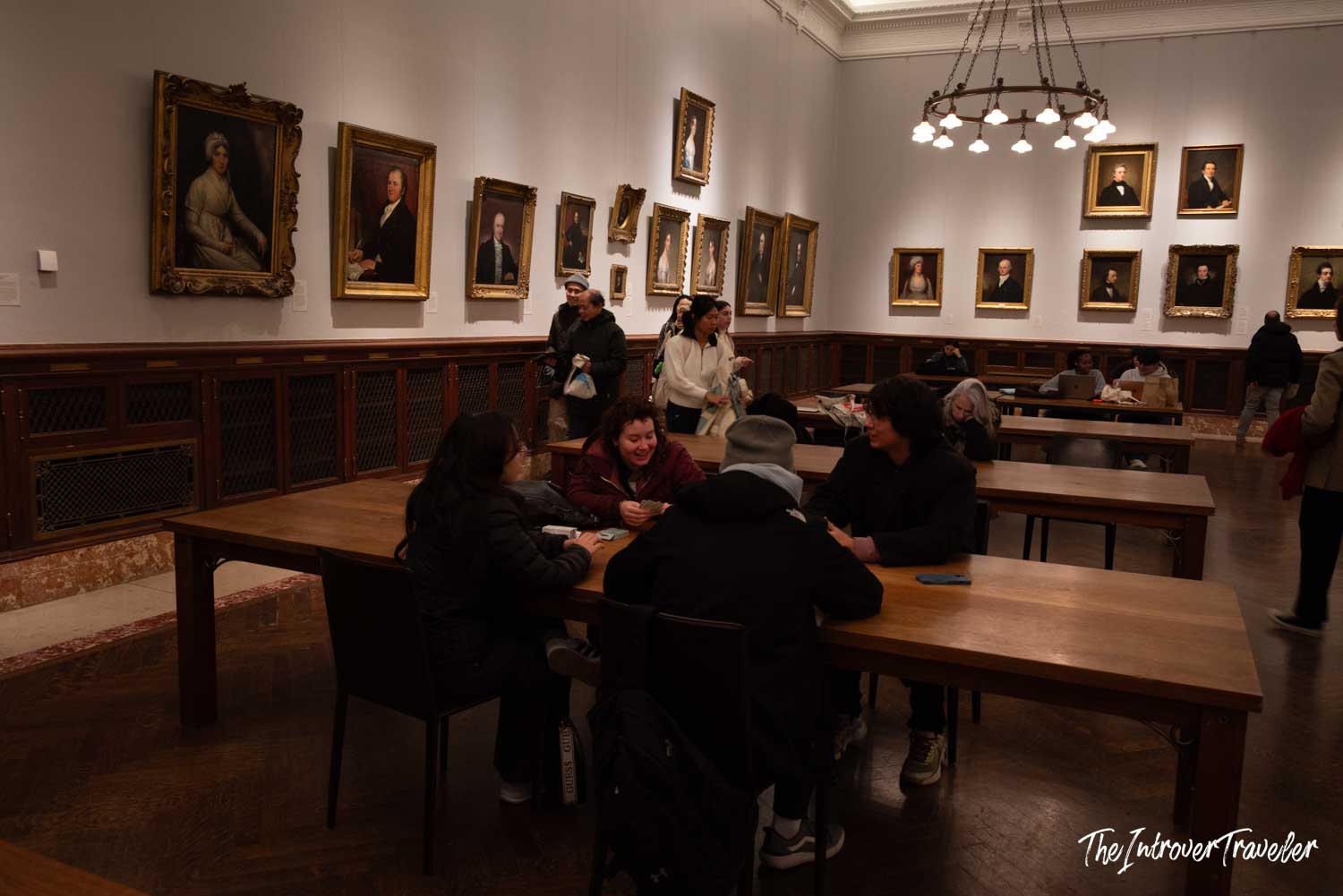
From a visitor’s perspective, the experience can feel somewhat ambivalent. There is, of course, a certain thrill in stepping inside one of the most famous library institutions in the world, yet the building itself is not designed as a tourist attraction and quite rightly so. At the time of my visit, no exhibitions of particular interest to a book enthusiast were on display, and beyond briefly entering the building and looking down into the great reading room there is not much for a casual visitor to do. Curiously, the library is prominently listed in many travel guides, which means that the space was literally crowded with tourists who were probably less interested in the institution itself than in ticking another landmark off a checklist. Overtourism is irritating almost everywhere, but it feels particularly misplaced here, where many readers were trying to concentrate and study in an environment that should remain quiet and contemplative. The result is a somewhat contradictory impression. The New York Public Library is unquestionably an institution worthy of admiration, yet a quick tourist visit offers only a superficial encounter. The experience would likely make far more sense if one had a few days to use the library as an actual reader, perhaps requesting a book on the history or architecture of New York and spending time working in the reading room. Passing through for a few minutes as a tourist adds little to the experience and merely contributes to the noise and congestion of a place that was never meant to function as a sightseeing stop.
Planning your visit
There is nothing worse for a (former) librarian than failing to do proper research, but in my defense I am the only (former) librarian in the family, and after already forcing my wife to visit the Morgan Library I could hardly demand another half day to devote to the NYPL as well. In any case, if you would like to prepare your visit to the library more thoroughly than I did, the official NYPL website has a dedicated section.
https://www.nypl.org/spotlight/schwarzman-plan-your-visit
Film location
It is impossible not to mention the film Ghostbusters, which features the library as the true protagonist of the opening scene. Beyond that, quite inevitably, the library’s official website has a dedicated section listing the films that have been set in the building, to which I refer the curious reader:
https://www.nypl.org/press/popular-movies-filmed-new-york-public-library
Books
I will simply recommend a beautiful book which, besides exploring the history of the great libraries of the world, also devotes a few pages to the New York Public Library:
The Library: A World History, by James W. P. Campbell (Author) and Will Pryce (Photographer)
If you are planning a trip to New York, you may be interested in these posts and this portfolio.
As an Amazon Associate, I may earn a small commission from qualifying purchases made through the links in this article, at no additional cost to the reader.