Country: Italy
Region: Sicily
TIme of visit: June 2021
Duration of visit: 2 hours for dinner
My rating: 7/10
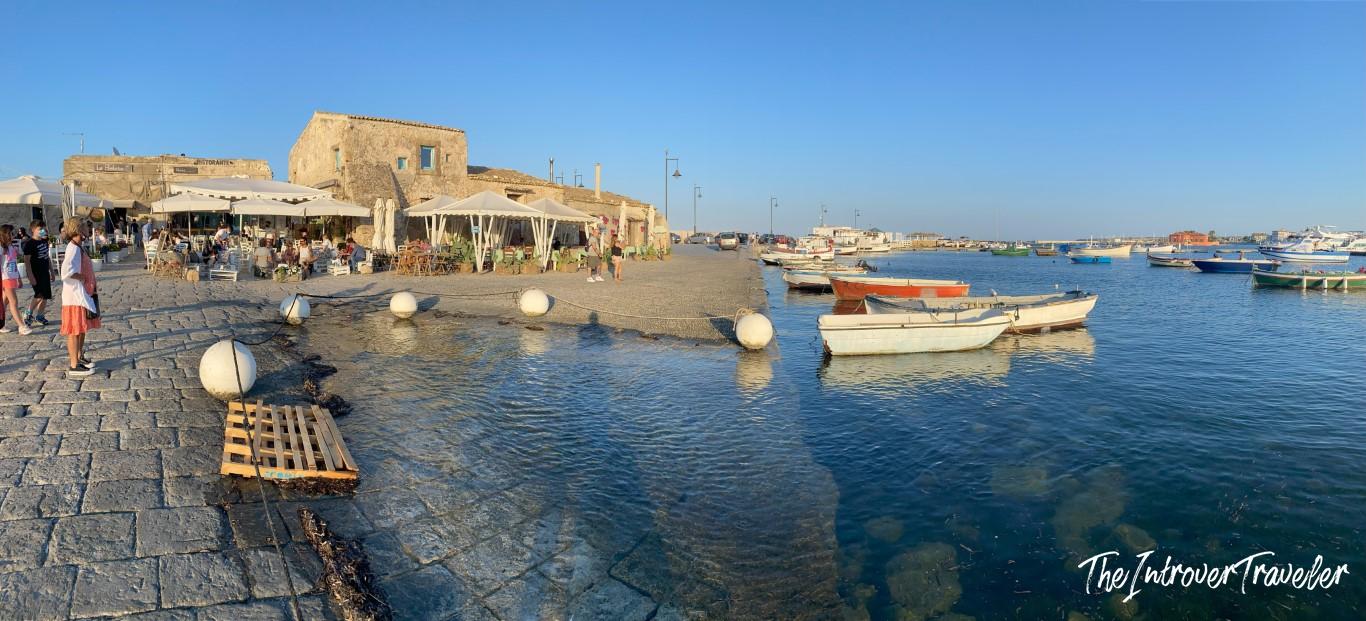
Another short stop on our trip to south-eastern Sicily was Marzamemi; lovely and enchanting, but definitely very touristy!
Are you planning a tirp to Sicily? You might want to check the available flights here.
What is Marzamemi?
Marzamemi (another exotic typically Sicilian toponym, like Scicli, over which toponymy experts have been struggling for some time) is a small town in the south-east of Sicily, where the main activity has always been fishing, in particular fishing of tuna, a few kilometers from the town of Pachino in the province of Syracuse. Today it is known for its picturesque harbor and the elegant Piazza Regina Margherita, but historically the village developed around one of the most important tuna fisheries of eastern Sicily.
Unlike the monumental Baroque towns of the Val di Noto, Marzamemi has a more modest and functional architecture. Its identity is tied to the sea: warehouses for fish processing, fishermen’s houses, and the large structures of the tonnara that once dominated the local economy.
Despite its small size, Marzamemi occupies a strategic position within southeastern Sicily. It lies close to the Vendicari Nature Reserve, the Baroque city of Noto, and the extreme southern point of the island at Portopalo di Capo Passero. This geographic position has historically connected the village to maritime routes linking Sicily with North Africa and the eastern Mediterranean.
The Origins of the Name Marzamemi
The name Marzamemi most likely derives from Arabic, reflecting the period of Muslim rule in Sicily between the ninth and eleventh centuries. Many scholars connect the name to the Arabic expression marsā al-hamām, usually interpreted as “bay of the doves” or “harbor of the pigeons”.
The presence of Arabic toponyms is common throughout Sicily and often indicates ancient ports, agricultural settlements, or strategic coastal points used for trade and navigation. In this case, the name suggests that the site already functioned as a natural harbor long before the development of the later tuna fishery.
Although the village as it appears today largely dates from the eighteenth century, the coastline around Marzamemi had been used for fishing and maritime activity for many centuries before the construction of the tonnara.
The Tonnara of Marzamemi
The true historical foundation of Marzamemi is the tonnara, the complex system used for catching and processing bluefin tuna.
The tuna fishery was developed during the seventeenth century and became one of the most important economic activities along the southeastern coast of Sicily. Tuna fishing in the Mediterranean followed an ancient system based on fixed nets placed along the migration routes of the fish as they moved through the Strait of Sicily.
The tonnara of Marzamemi was not simply a fishing site but an entire economic structure. It included warehouses, storage rooms, workers’ quarters, docks, and facilities where tuna was processed and preserved using salt.
For centuries, tuna represented a valuable commodity that was exported across the Mediterranean. The activity shaped the life of the village, creating seasonal work cycles and a maritime culture deeply rooted in the local population.
The Villadorata Palace and the Eighteenth-Century Village
Much of the architecture that defines Marzamemi today dates from the eighteenth century, when the Princes of Villadorata reorganized and expanded the tuna fishery.
In 1752 the noble family commissioned the construction of several buildings that still form the architectural core of the village. These included the Palazzo del Principe di Villadorata, the church of San Francesco di Paola, and a series of warehouses used for storing and processing tuna.
The palace served both as a residence and as the administrative center of the tonnara. Although relatively simple in design, the building symbolized the economic and social control exercised by the aristocracy over the fishing industry.
The development of this complex gave Marzamemi its recognizable urban structure: a central square facing the sea, surrounded by low buildings constructed in local limestone.
Piazza Regina Margherita
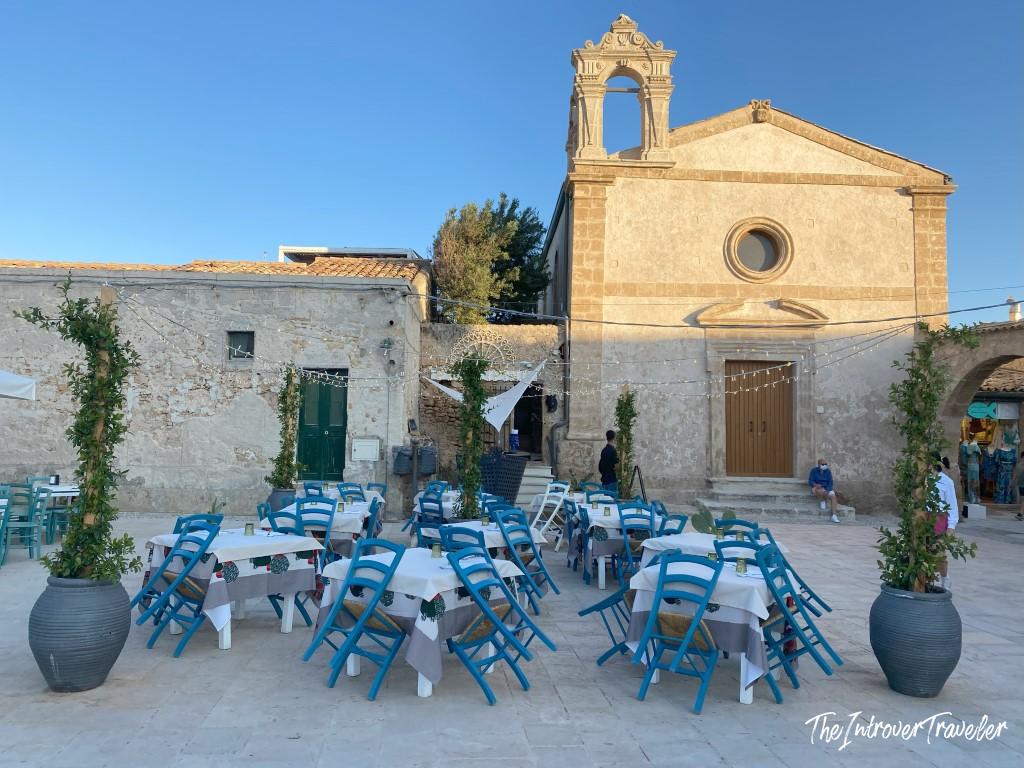
The heart of the village is Piazza Regina Margherita, one of the most recognizable squares in coastal Sicily.
Unlike the grand Baroque piazzas of nearby cities such as Noto or Modica, this square is small and intimate. It is framed by low buildings painted in warm tones of yellow and ochre, which reflect the intense Mediterranean light.
Historically, the square functioned as the social and logistical center of the tonnara. Fishermen gathered here after returning from the sea, merchants negotiated the sale of tuna, and the warehouses surrounding the piazza stored equipment and processed fish.
Today the square has become the visual symbol of Marzamemi and one of the most photographed places in southeastern Sicily.
The Architecture of the Old Tonnara
Next to the harbor stands the Tonnara of Marzamemi, a group of large stone buildings that once housed the industrial operations of the tuna fishery.
The architecture is purely functional. Thick walls, wide entrances, and large internal spaces were designed to facilitate the processing and storage of fish. Inside these buildings tuna was cut, salted, and prepared for transport to markets across Sicily and beyond.
Although many of the original structures are no longer used for their historical purpose, they remain a powerful reminder of the economic system that shaped the village for centuries.
Today the complex hosts cultural events and exhibitions, transforming an industrial space into a site of historical memory.
When to Visit Marzamemi
Marzamemi has become increasingly popular in recent years, especially during the summer months.
In July and August the small square and the harbor area can become crowded, particularly in the evening when visitors arrive from nearby towns such as Noto and Syracuse.
For those who prefer a quieter atmosphere, the best periods to visit are May, June, September, and October (with May and October probably being the best). During these months the village, although still crowded, retains its charm without the heavy tourist traffic typical of the high season.
The mild climate of southeastern Sicily also makes it possible to visit Marzamemi comfortably outside the summer months.
Marzamemi now. Is it worth the visit?
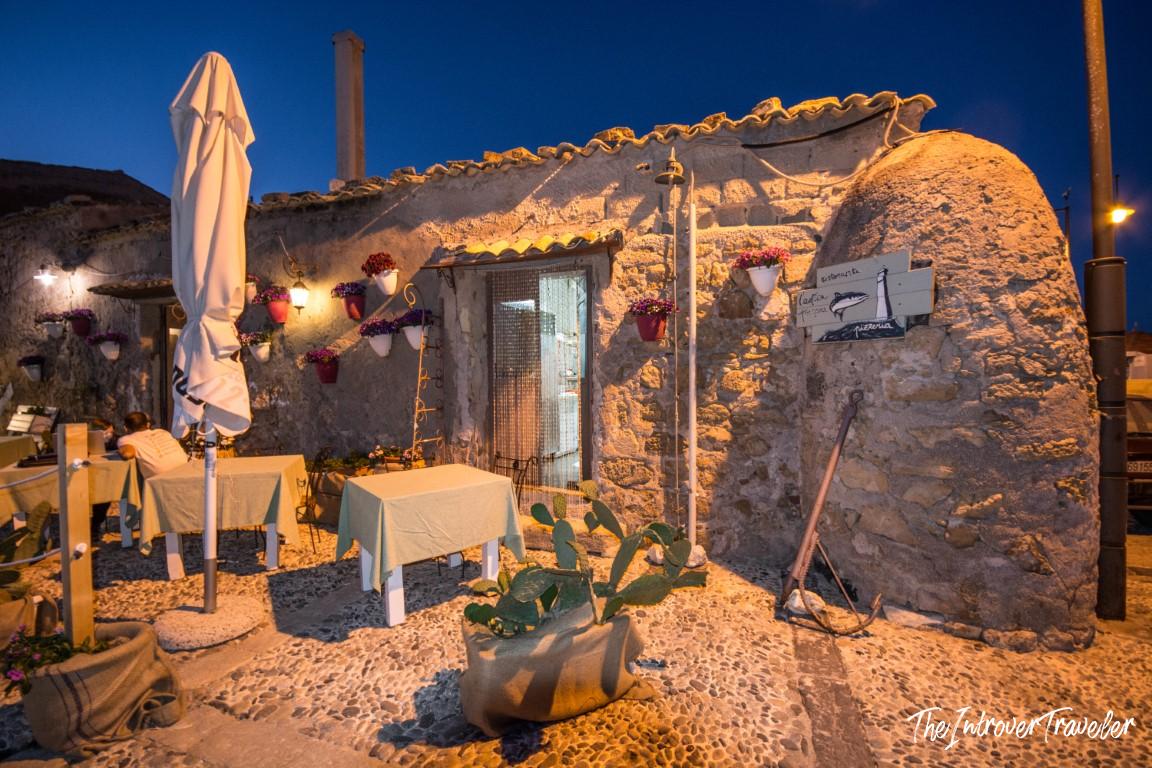
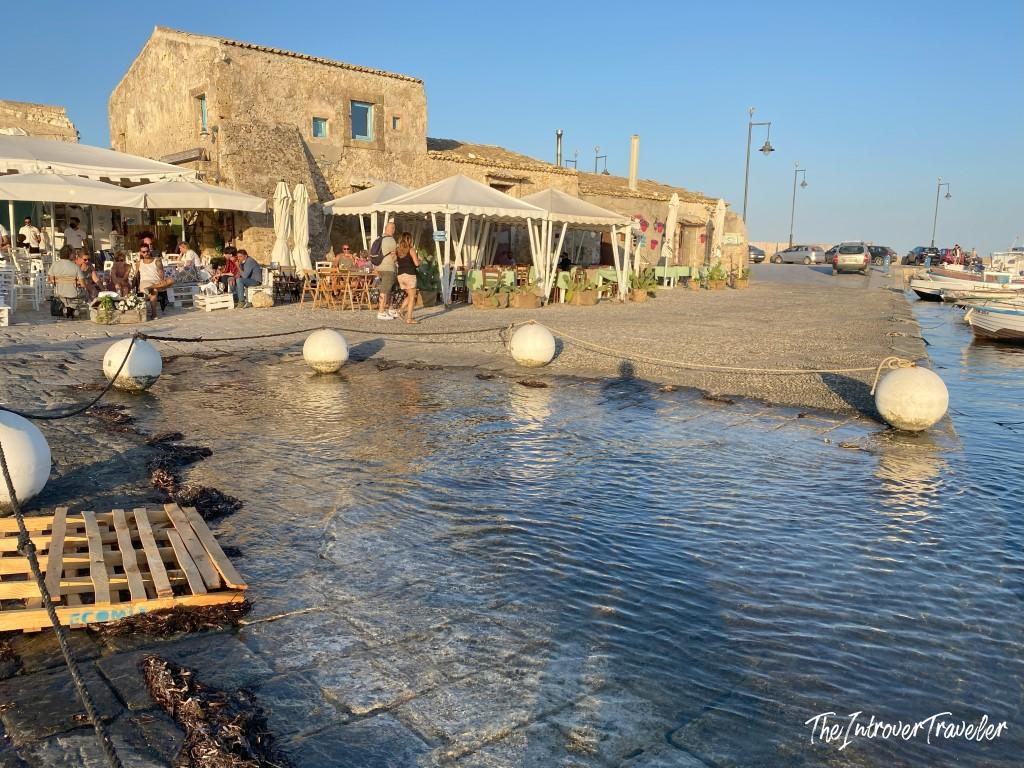
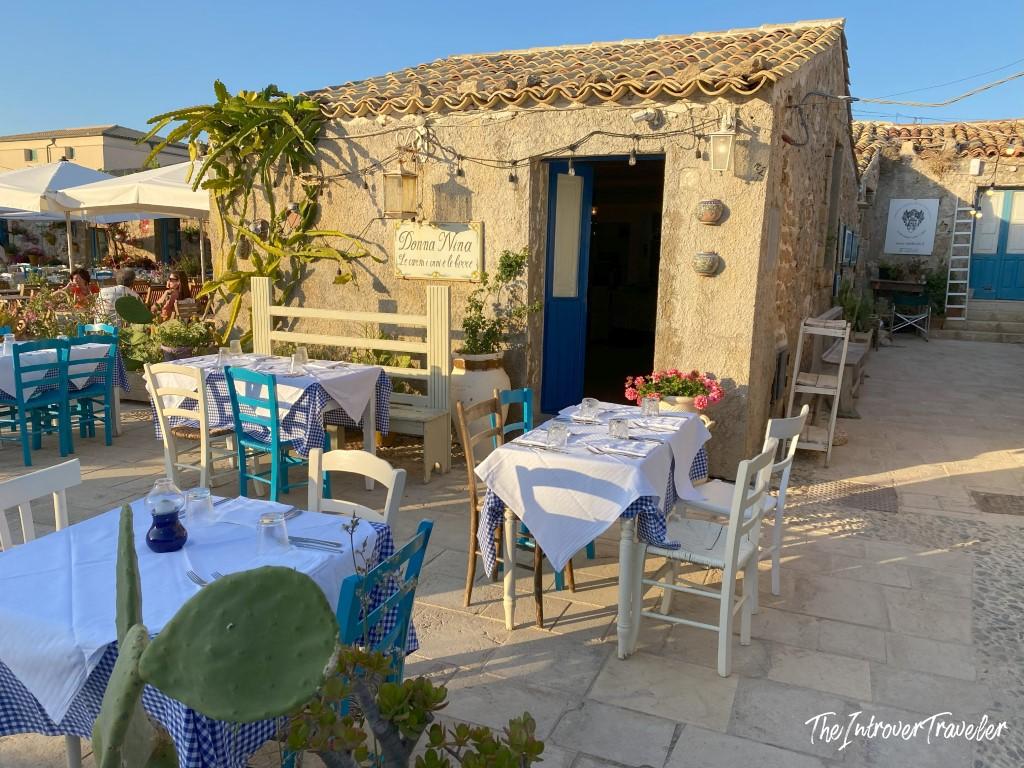
In recent times Marzamemi has become a tourist attraction because the ancient area, made up of low and picturesque stone buildings, has been redeveloped to become a small Disneyland for catering. The place is truly enchanting and arriving at sunset, among the floral decorations, the ancient alleys, the colorful wooden tables, it really seems to be in an old film with Sophia Loren or in some scene from Lady and the Tramp. Arriving at the last moment on our Southern Sicily tour, me and my family randomly chose a place that turned out to be a pleasant discovery: Sicily Take Away. In spite of the name, which would suggest a junk food place of dubious quality, the cuisine is instead of very high quality (among the dishes we tasted, an amazing “fried sushi” and a delicious mussel soup).
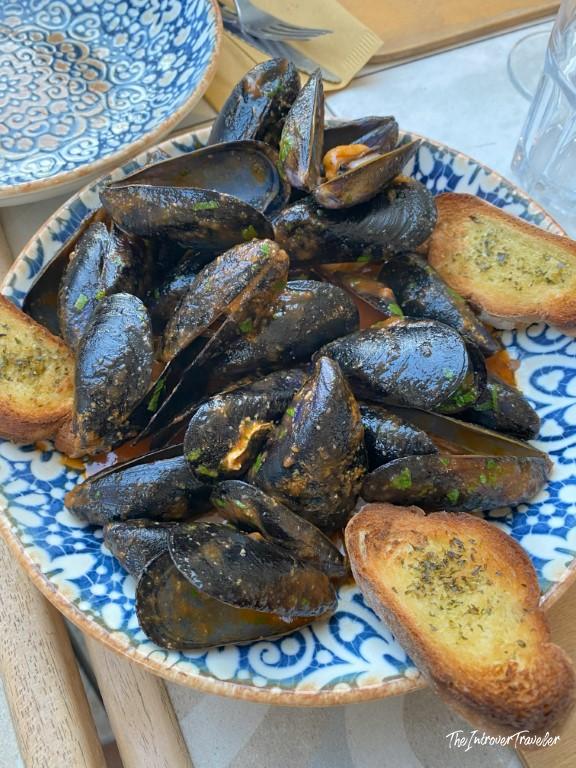
I highly recommend a visit to Marzamemi, for an aperitif or dinner, in order to enjoy a Sicily “straight out of a postcard” meeting the expectations (perhaps a little stereotyped) that any tourist has before landing at the foot of Etna.
Having made this necessary premise (I repeat: Marzamemi is enchanting), however, I feel obliged to also express a doubt: Marzamemi is the result of a clever redevelopment work, but also a missed opportunity; if instead of a consumerist paradise where every evening thousands of tourists are seated at tables and fed in a bulimic ritual that is always renewed the same, night after night, this small charming village had been destined, why not, partly for catering and partly for the cultural offer (I am thinking of concerts, exhibitions, theatrical performances), what a splendid combination that would have been! Maybe I am too fussy but, despite the satisfaction for an enchanting evening and a delicious dinner, walking through the alleys of Marzamemi I seemed to glimpse the ghosts of Marco Ferreri’s Grande Bouffe among the tables… and I’m not one to back down from good food…
Marzamemi in the Context of South-Eastern Sicily
Marzamemi works best as part of a wider itinerary. Its value increases considerably when combined with:
Noto (30 km): the most scenographic of the Baroque cities of the Val di Noto
Organising the trip? Search for flights to Sicily here.
Practical Information
Map


