Last visit: February 2022
Where: Piscinas, municipality of Arbus, Costa Verde, south-western Sardinia
What: coastal dune system
Duration of visit: 2/3 hours
My rating: 7/10
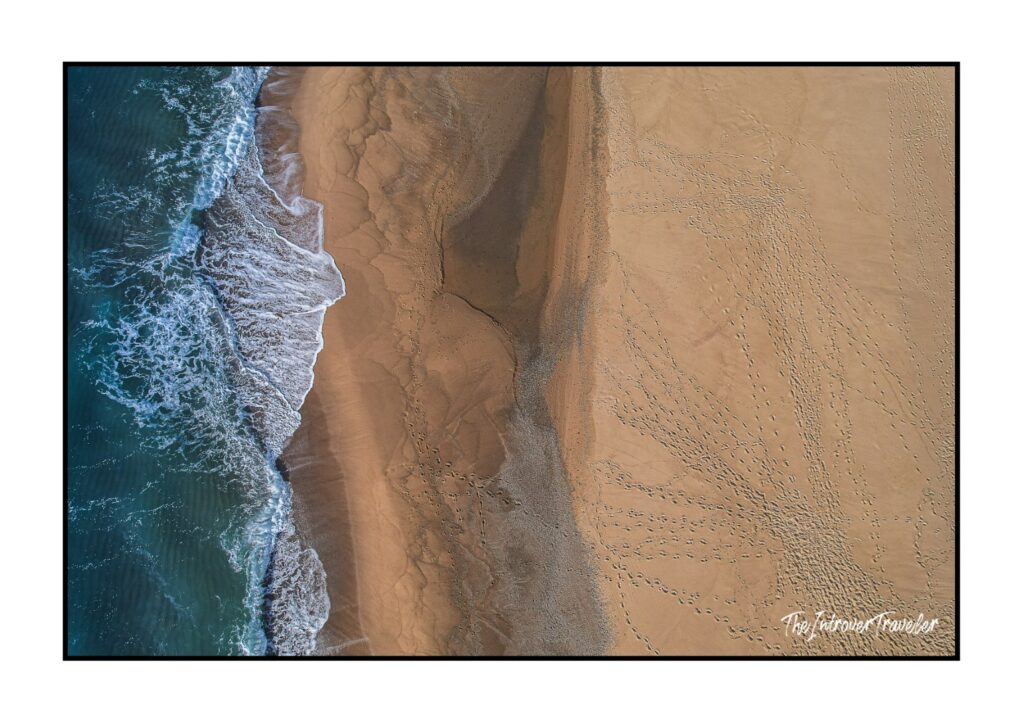
The dunes of Piscinas are one of those places regularly called “the little Italian Sahara”, a label that, like all stock phrases, says one true thing and hides several others. True, because a field of sand dunes on this scale is rare in Italy. Misleading, because Piscinas is not a miniature Sahara, it is something geologically different and, in its own way, more interesting: a coastal dune system that is still active, alive, changing shape from season to season.
They lie on the Costa Verde, in the municipality of Arbus, in south-western Sardinia, at the end of a dirt road some ten kilometres long that begins after the old mining settlements. It is precisely this isolation, combined with the near-total absence of buildings, that makes the place what it is.
What they are, and how they formed
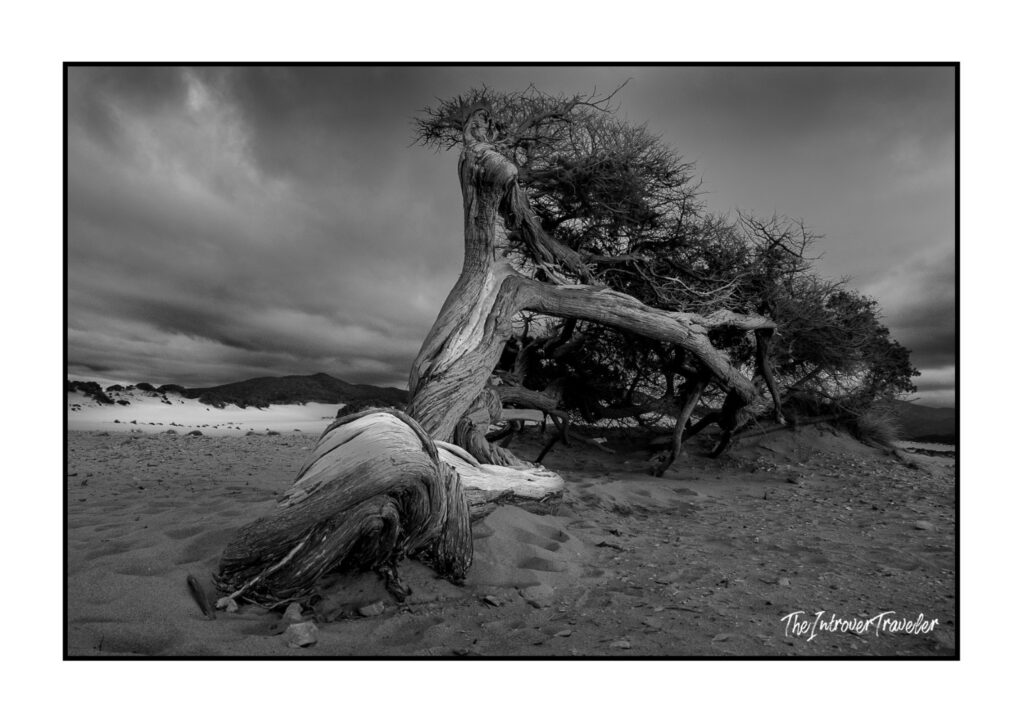
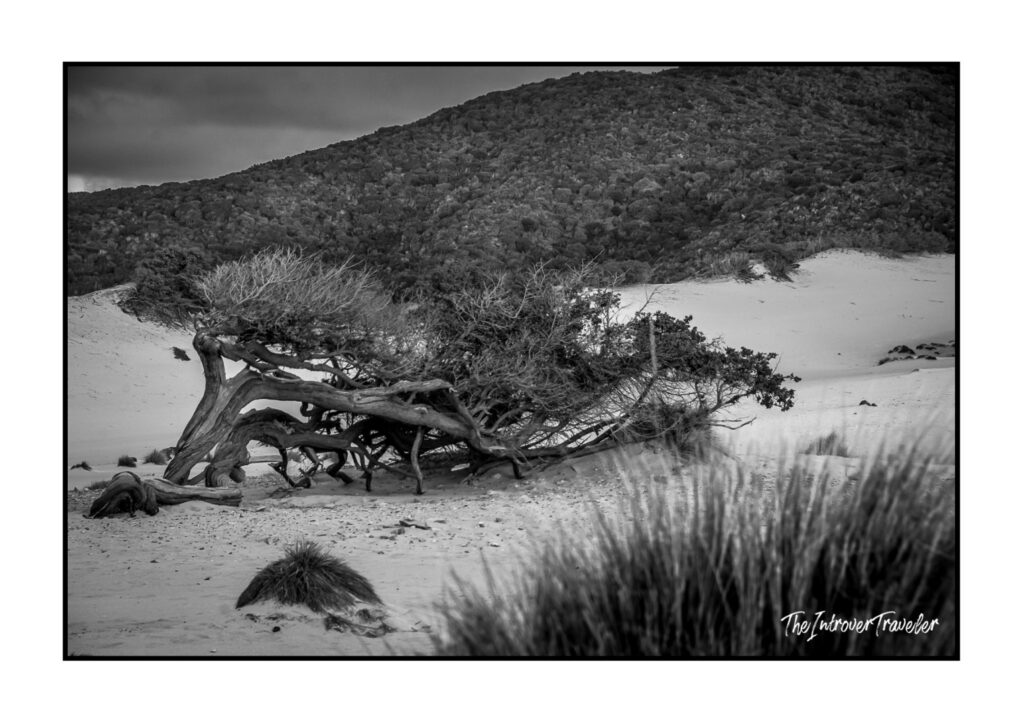
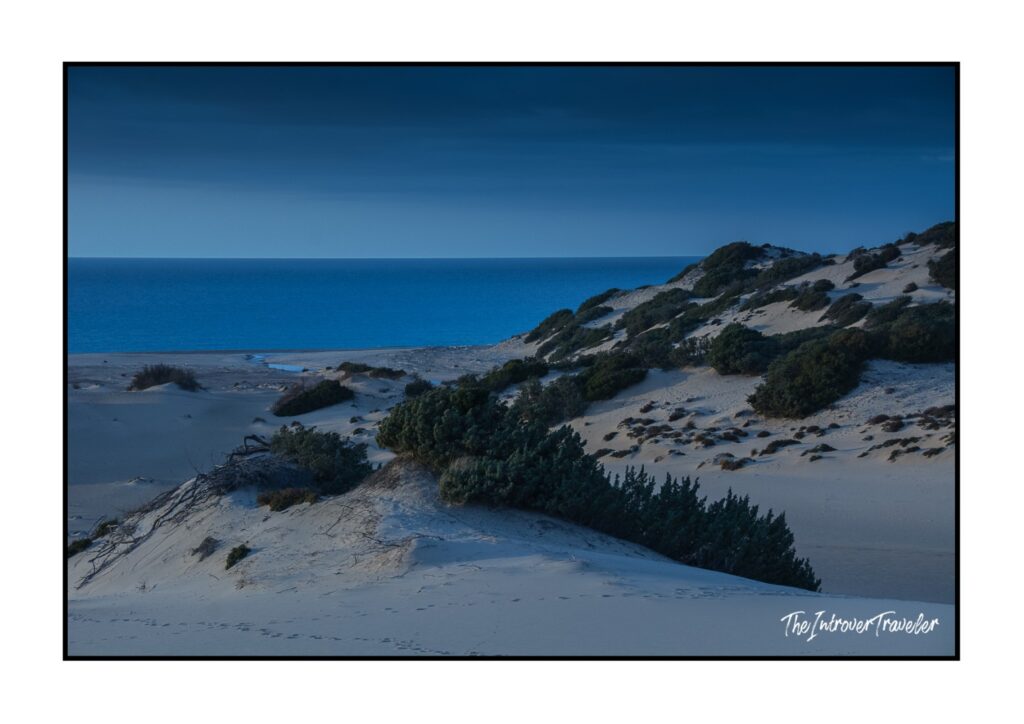
A coastal dune like those of Piscinas is born from the meeting of three elements: sand, wind, and vegetation. The sand comes from the sea and from the debris carried downstream by the area’s watercourses. The wind, here the mistral that blows constantly from the north-west, lifts it and pushes it inland. The vegetation, finally, acts as a brake: the roots of junipers, mastic shrubs, spiny esparto, and sea lilies hold the sand and consolidate it, allowing the mounds to grow rather than disperse.
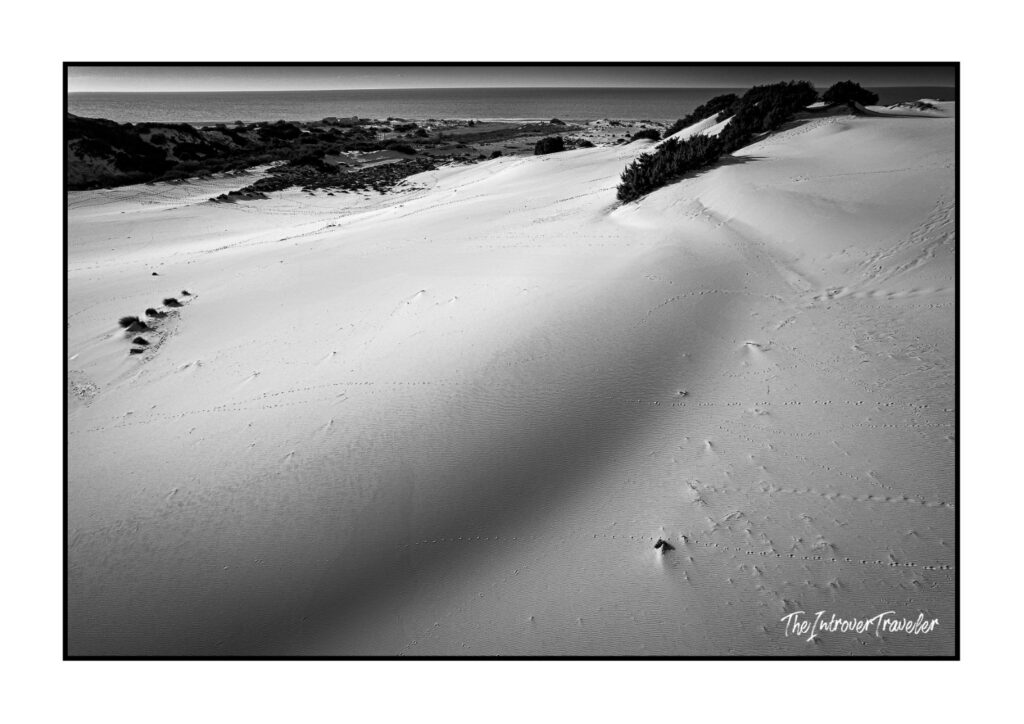
The result is a dune field that covers a wide area, designated a site of note, and that penetrates inland for about two kilometres before giving way to Mediterranean scrub. On the height it is worth being precise, because the numbers circulate inflated here: many sources speak of dunes “up to 100 metres” high, but that figure refers more correctly to the maximum elevation above sea level reached by the system, hill included, not to the height of the individual sand dune. The dunes proper realistically reach around 50 to 60 metres at their highest points, which is still considerable and places them among the tallest in Europe.
The feature that gives this landscape its technical name is that these are “living” dunes, that is, in motion. The mistral reshapes them continuously, shifts them, changes their profile. You are not looking at a fixed formation, but at a process under way: the same dune, seen months apart, may have a different shape.
The UNESCO question, which is worth clearing up
You will find it written everywhere, on almost every tourist site, that the dunes of Piscinas are a “UNESCO World Heritage Site”. It is worth pausing here, because there is no evidence that this is true. There is no site inscribed on the UNESCO World Heritage list called the dunes of Piscinas. What is documented, and is already a serious recognition, is that they are the only geosite of national value listed by ISPRA (the Italian environmental research institute) for Sardinia. The “UNESCO heritage” label is one of those tags that get copied from one blog to the next until they become truth by repetition. The dunes do not need a non-existent stamp to justify the visit: they hold up perfectly well on their own.
The mining legacy around them
One thing that makes Piscinas more layered than a simple seaside destination is the context. To reach it you cross the landscape of the disused mines of Montevecchio and Ingurtosu, among the most important in Europe for lead and zinc until the mid-twentieth century. Buildings remain, ore-washing plants, neo-Gothic structures isolated in the landscape, and the only construction amid the dunes is an old ore depot, where the railway that carried the mineral down to the loading point on the beach used to arrive, now converted into a hotel.
There is also a less romantic environmental legacy: the mining work released heavy metals into the area’s watercourses, and some of them take on reddish colourings because of the residues. It is a detail worth knowing, because it completes the picture: this is not a desert untouched since time began, but a landscape where nature and industrial exploitation coexist, as often happens in this part of Sardinia.
Is it worth it?
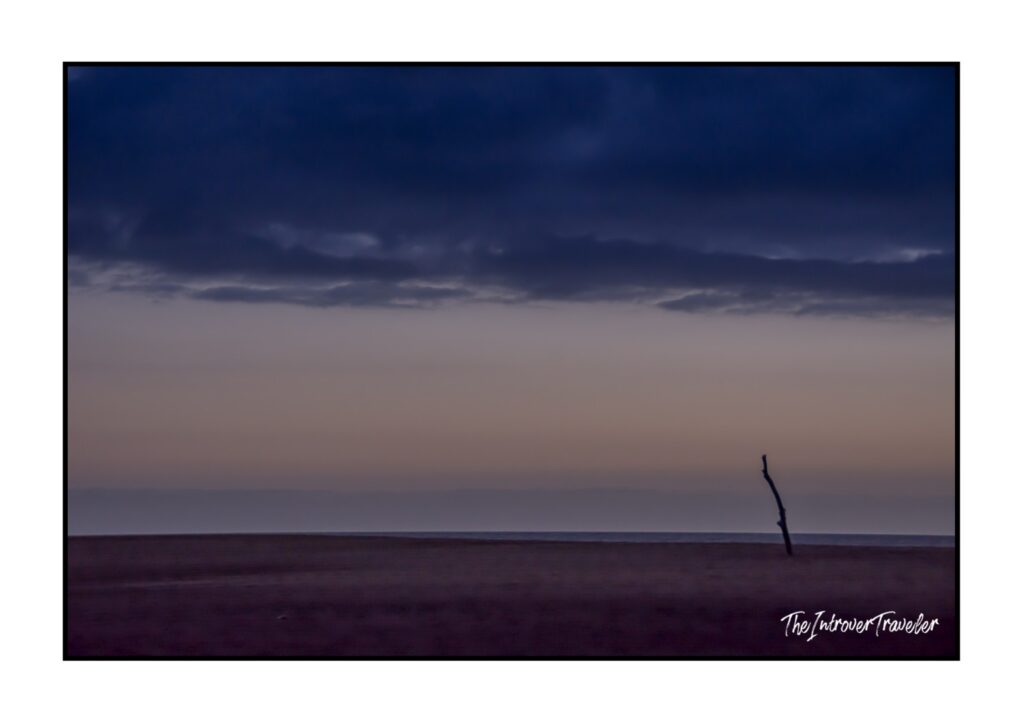
Yes. Piscinas is one of the most distinctive landscapes in Sardinia, and outside high season, when the car park is free and the seven-kilometre beach is almost empty, the experience is remarkable. The best moment is dawn or sunset, both for the raking light that draws out the crests of the dunes, and because that is when you might catch the Sardinian deer venturing down toward the sea.
A few practical recommendations. The final road is unpaved but passable with any car, save the occasional ford. Walking on the dunes is tiring, more than it looks, so budget your time and energy. And treat them with respect: they are a fragile environment, and the vegetation that holds them together is exactly what stops the sand from dispersing, so it is best to keep to the paths and not trample the shrubs. Seen for what it is, a natural system still in motion rather than an exotic postcard, Piscinas is one of the stops that best repays a detour along the Costa Verde.