Last visit: November 2026
My rating: 7/10
For darkroom veterans: 6/10
Price: €16 full, €14 reduced, plus €1 booking fee online (November 2026)
Date: 1 October 2026 to 28 February 2027
Address: Museo Civico Archeologico, Via dell’Archiginnasio 2, Bologna
Opening hours: Monday, Wednesday to Friday 10am to 6pm; weekends and holidays 10am to 7pm; closed Tuesday
Visit duration: 45 minutes
There is an unwritten rule in the art world: if a photograph makes you smile, it is decoration; if it makes you want to open a vein, it is art. Misery is depth, joy is a greeting card. Pain has become an aesthetic code, easy to recognise and even easier to sell, while a happy picture is suspected of having nothing to say. So does photography have a problem with happiness, or is the problem us? It’s us. And there is no better test case than Elliott Erwitt, the man who spent seventy years photographing dogs, kisses and absurdities, and who is now on show at the Museo Civico Archeologico in Bologna, a few rooms away from the Etruscans.
I went. I liked it. I also have complaints, because liking something has never stopped me before.
Who was Elliott Erwitt, in one paragraph
Born in Paris in 1928 to Russian Jewish émigrés, Erwitt spent his childhood in Milan until Mussolini’s racial laws pushed the family out of Italy. He ended up in the United States, where he summed up his biography better than any curator could: “Thanks to Benito Mussolini, I’m an American.” He became one of the pillars of Magnum, the photographers’ cooperative founded by Henri Cartier-Bresson and Robert Capa, shot presidents, film stars and an implausible number of dogs, and died in 2023 at 95. His defining trick was to find the joke the world was telling and press the shutter exactly on the punchline.
The exhibition: all the hits, plus the family album
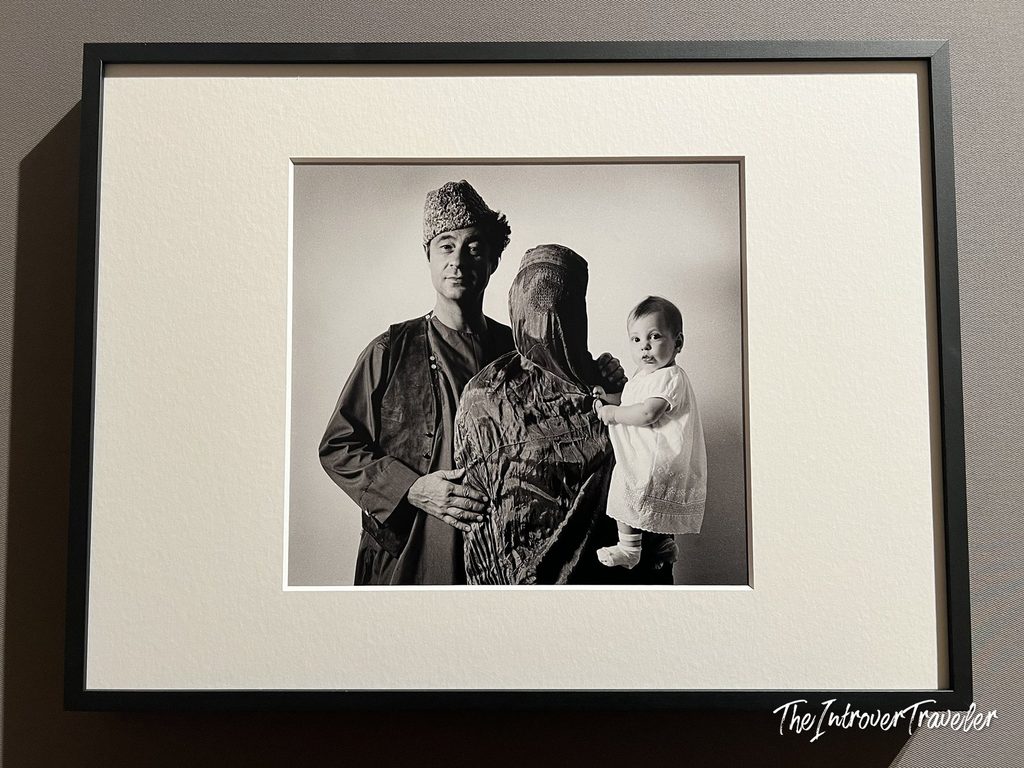
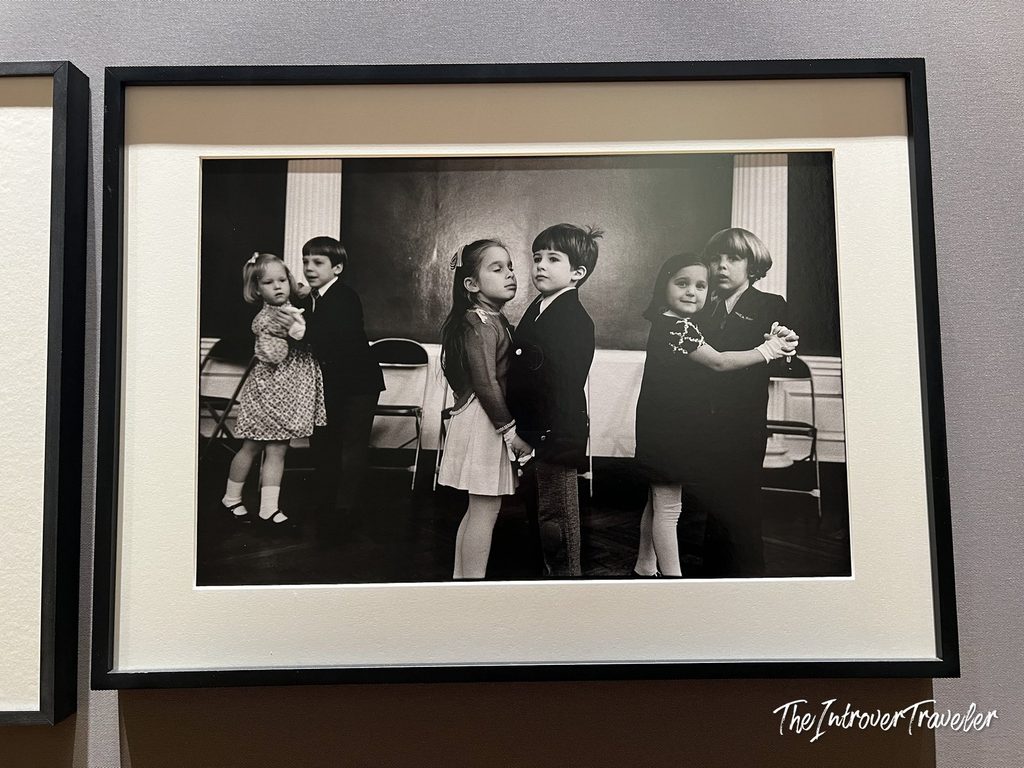
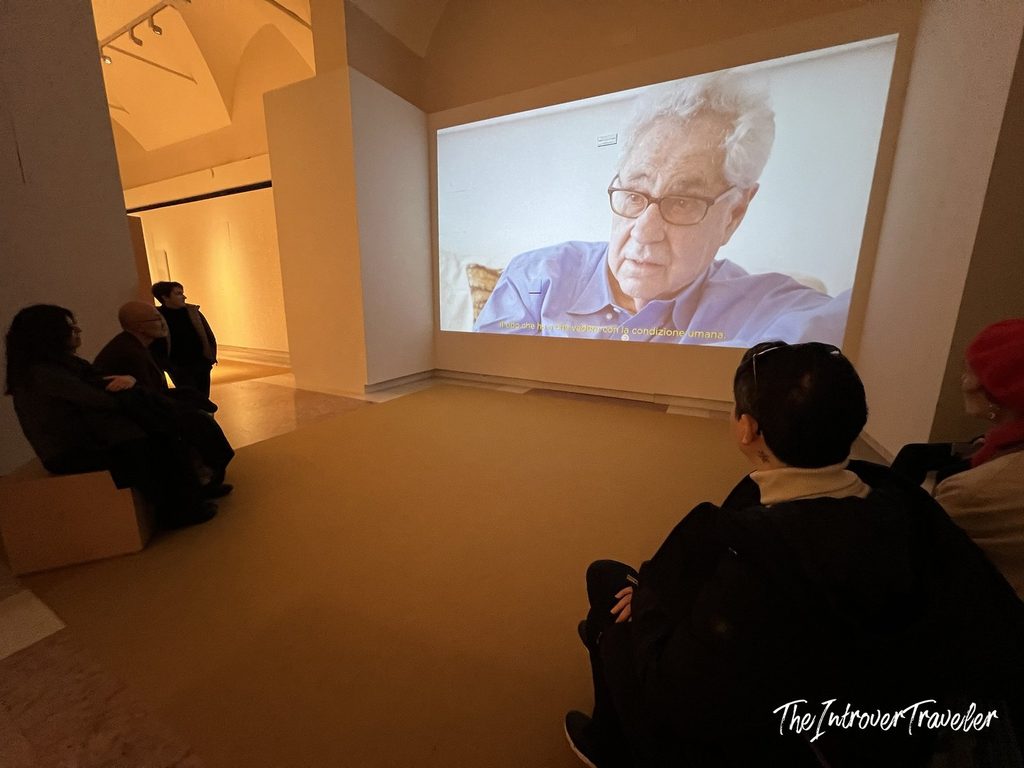
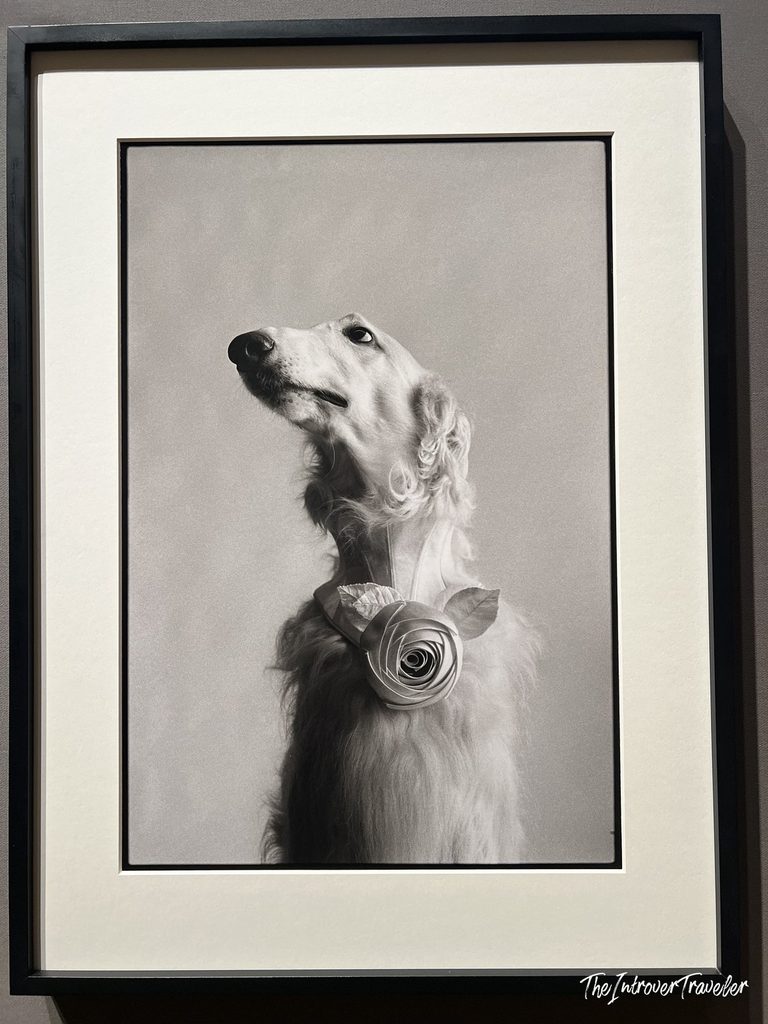
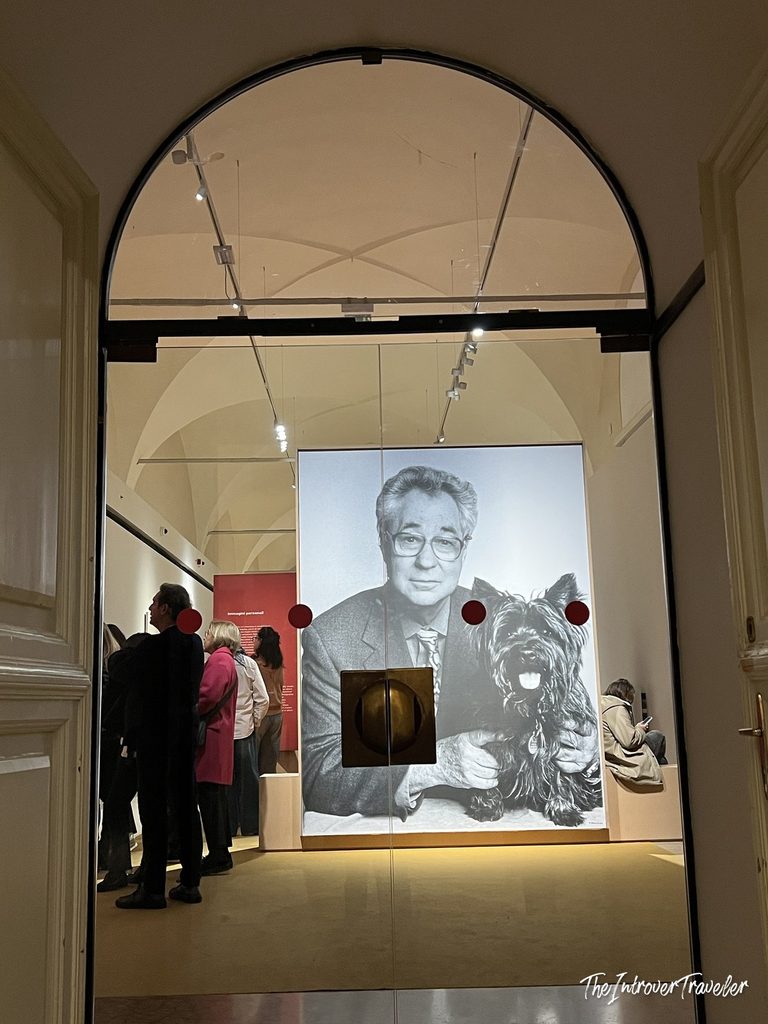
“The Art of Observing” gathers about a hundred photographs in five sections, curated by Biba Giacchetti, who worked alongside Erwitt for more than thirty years and has curated half the Erwitt shows in Italy. The pitch is “the man behind the lens”: next to the icons there is a room of private images, many of them with his daughter Ellen, a video interview with the old man himself, and wall texts that tell the story behind each shot.
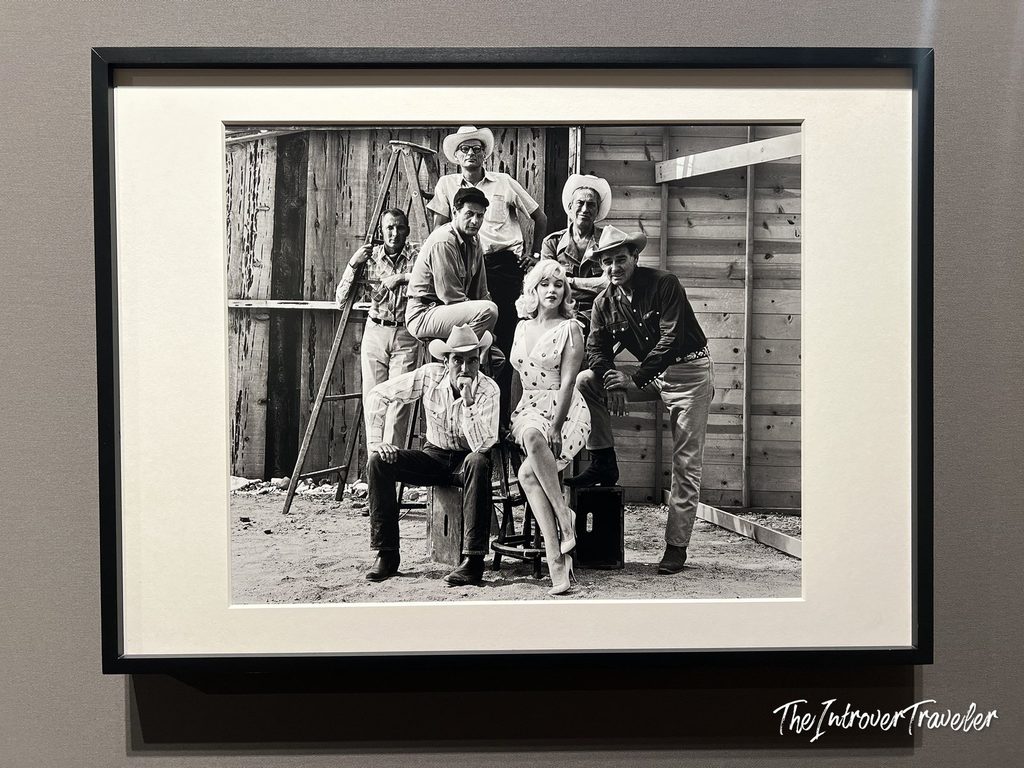
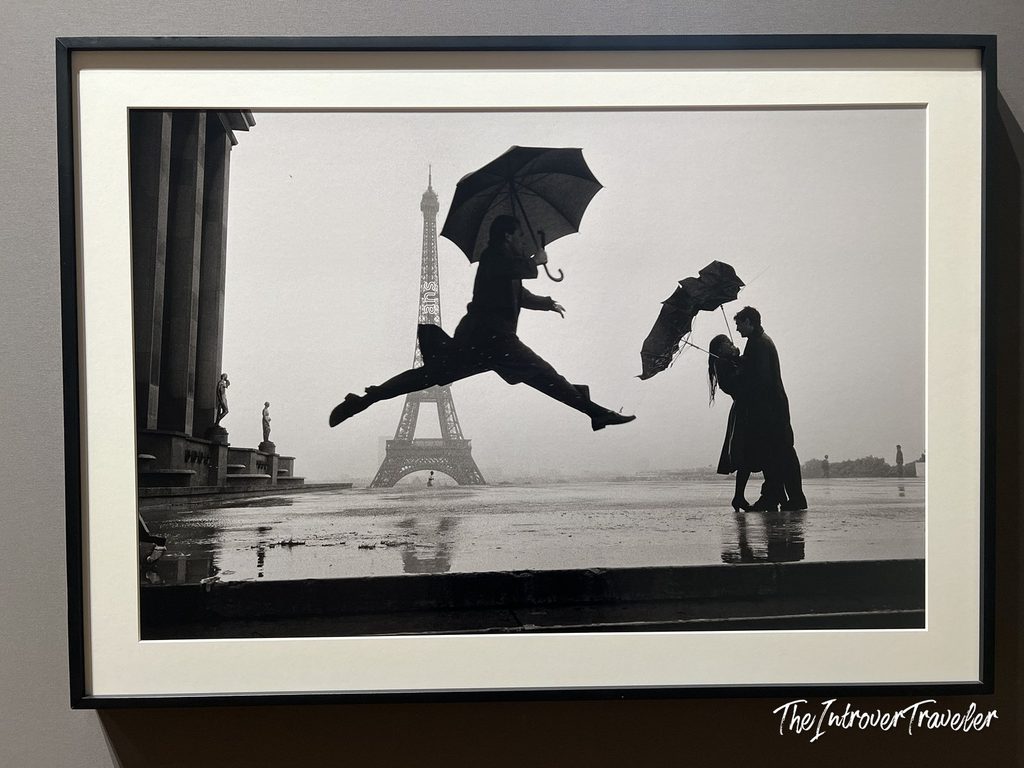
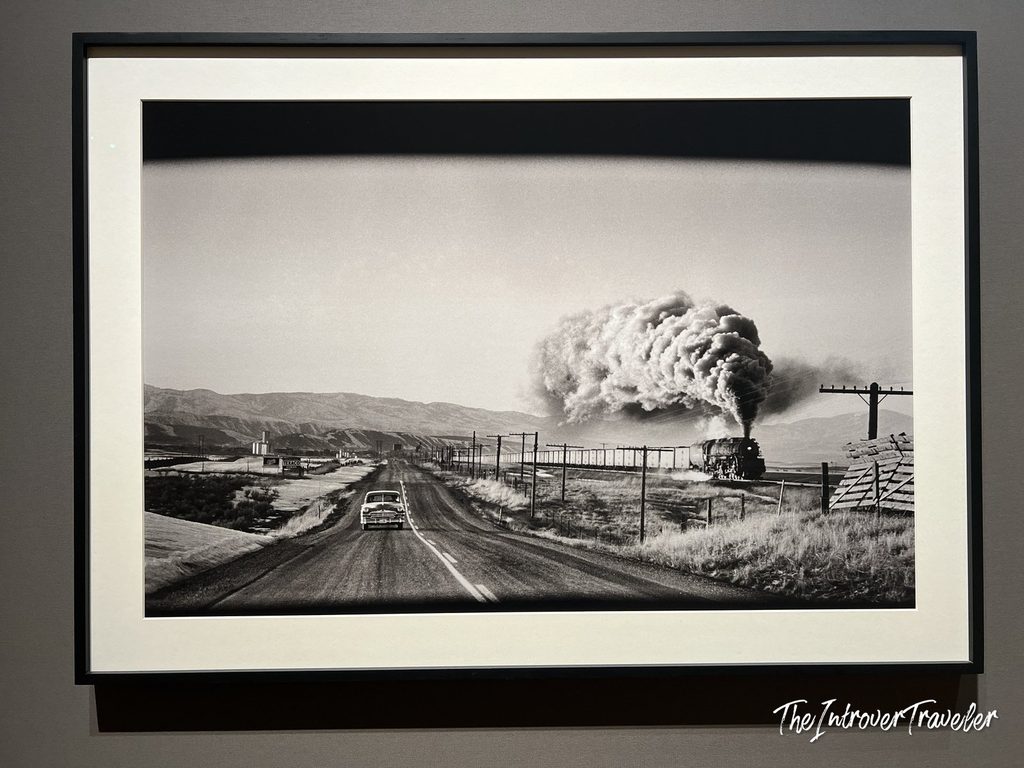
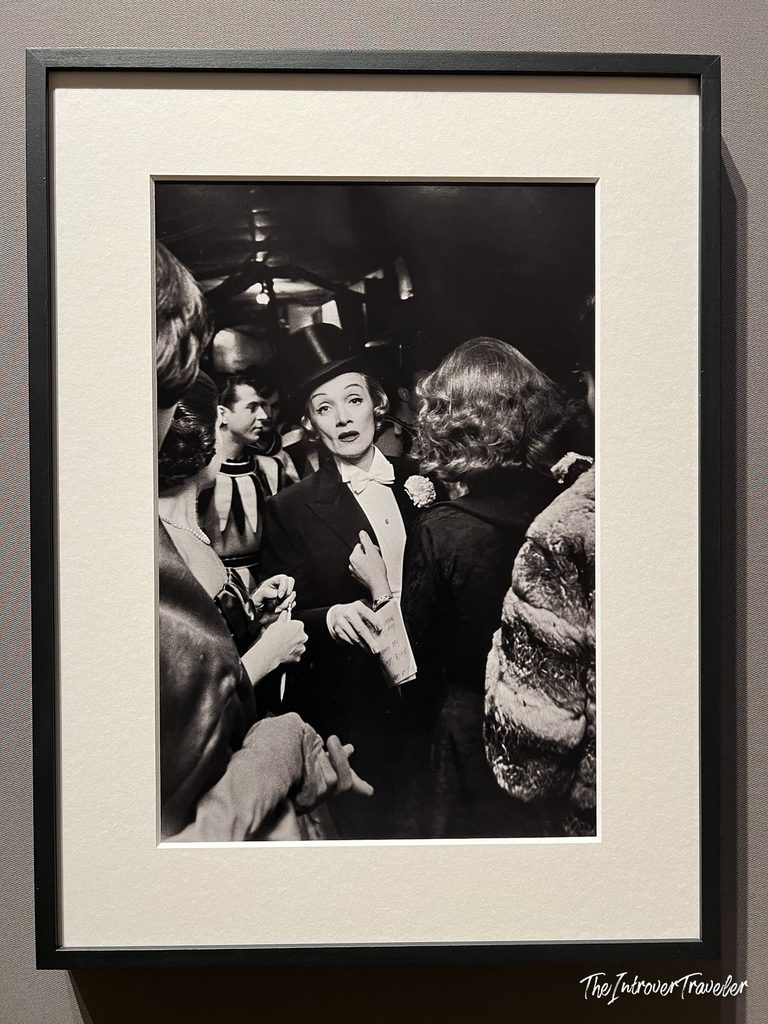
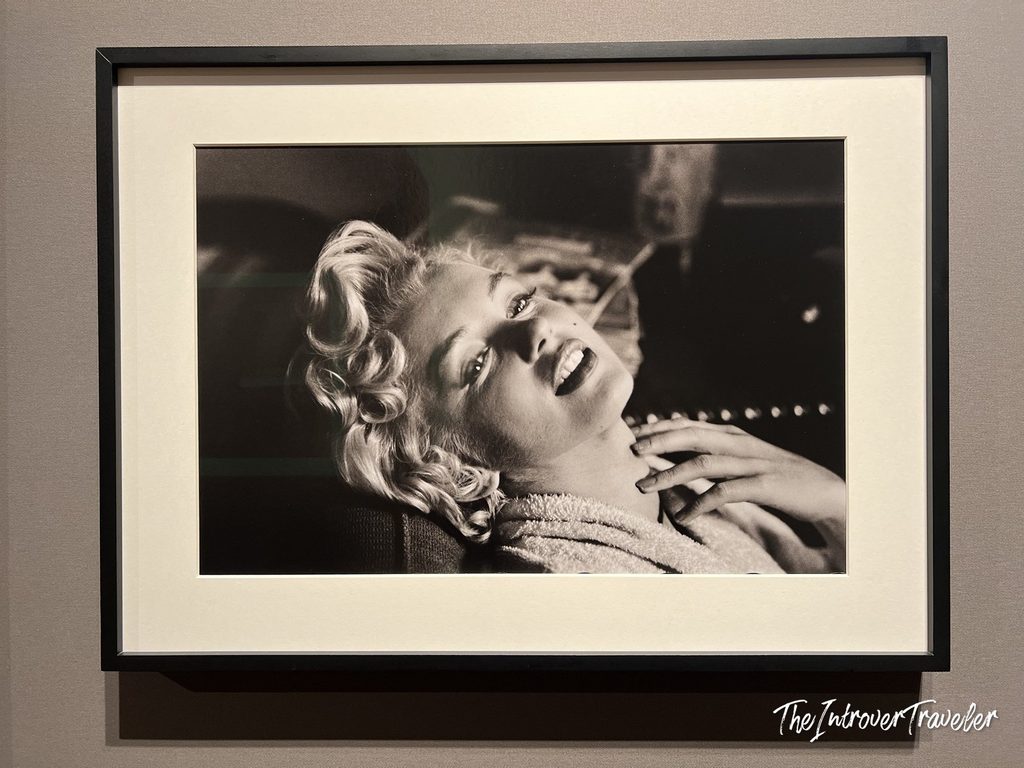
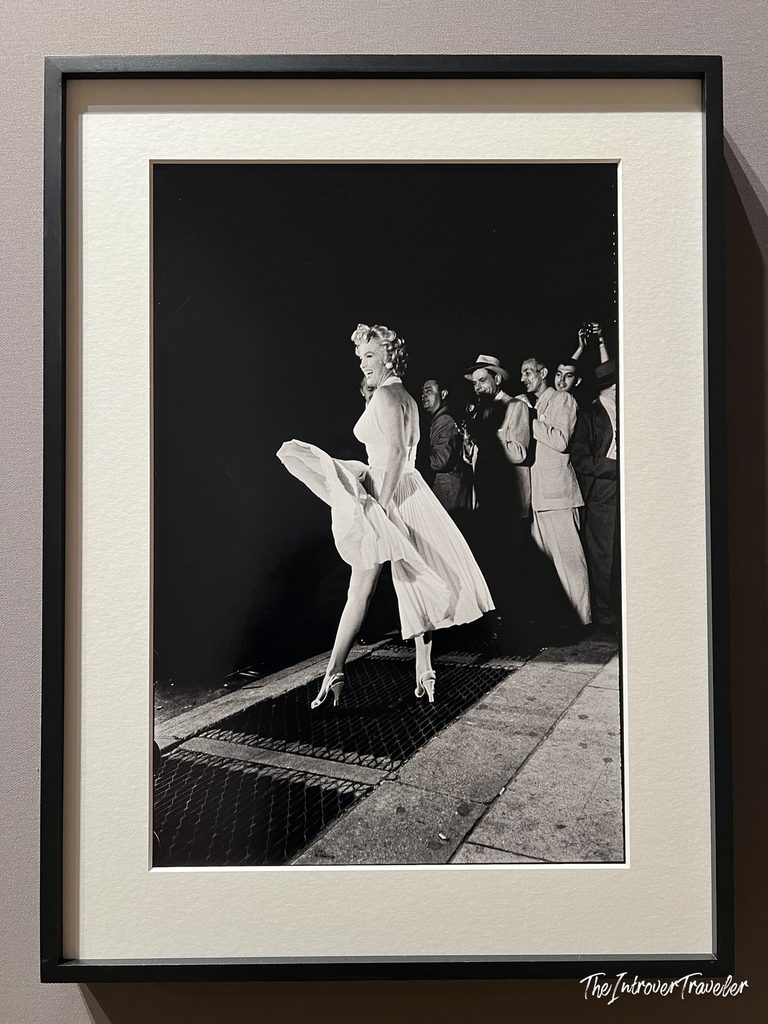
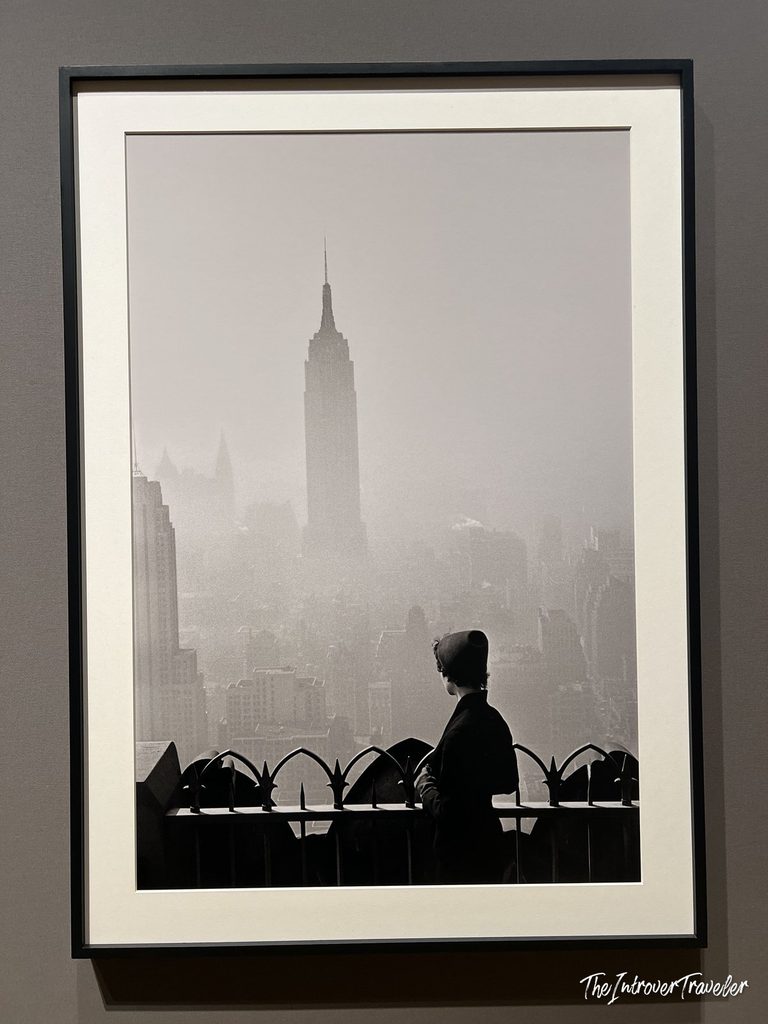
And the icons are all there. The woman gazing at the Empire State Building drowning in fog, New York 1955. The Wyoming highway of 1954, where a steam locomotive exhales a cloud the size of a small Alp while a lonely car drives on as if nothing were happening. The umbrella jumper at the Trocadéro, Paris 1989. Marilyn over the subway grate during the shooting of The Seven Year Itch, and Marilyn again in 1956, in a close portrait so intimate it feels like trespassing. The cast of The Misfits posing in Nevada in 1960, with Monroe, Clark Gable and Montgomery Clift surrounded by cowboy hats, one of them on the head of Arthur Miller, who wrote the film and was about to stop being her husband. Marlene Dietrich in white tie, the only person in a crowded room who seems to know where the camera is.
If you have never seen an Erwitt exhibition, this is an excellent greatest-hits album. If you have, you will play the game of “I know this one” for about an hour, which is not the worst way to spend a November afternoon in Bologna.
The prints: a darkroom confession
Here is where my rating drops. I spent a few years of my youth breathing fixer fumes in a darkroom, which qualifies me for nothing professionally but leaves you with an annoying sensitivity. Standing in front of these prints, I had the distinct impression they were digital. The blacks had a certain pasty quality, the tones lacked the depth and the slightly metallic bite of a silver gelatin print. Most visitors will not notice, and I may be wrong. But I could not find the print medium stated anywhere, and press coverage quotes the curator saying the family allowed them to print photographs that had never been seen before, which at least tells us some of the prints are new.
Now, Erwitt was never a priest of technique. He was a man of the moment, not of the zone system, and he would probably have shrugged. But when a city like Bologna hosts a monographic show of a twentieth-century master, I expect originals, or at least a clear label telling me what I am looking at. Other Italian exhibitions of his work have listed their gelatin silver prints from private collections, so it can be done.
So I did what any irritating visitor (as irritating as I can be) would do: I asked. I asked a steward whether the prints were originals or digital reproductions. Then I asked another. What followed was a small masterpiece of Italian improvisation: shrugs, contradictory guesses, an “I think they’re originals, they’re framed” that deserves to be framed itself. Nobody knew, and nobody knew who might know. You can sell me a €16 ticket to look at photographs, but you cannot tell me what kind of photographs they are. Charming.
Staged, and so what?
The second thing that bothers me about Erwitt is that many of his most famous pictures were arranged. The curator herself has said it about the Paris umbrella jump: a constructed photograph, with every element requested by the photographer. My heart belongs to the brutal immediacy of street photography, the picture stolen from a world that did not know it was being watched.
Then again, how many of the great street photographers were really spontaneous? Robert Doisneau’s famous kiss in front of the Hôtel de Ville was posed by a pair of young actors, as he eventually admitted when strangers started claiming to be the couple and asking for money. The history of “candid” photography is full of directors who pretended to be witnesses. Erwitt at least did not pretend very hard. His staging is part of the joke, and the joke is often on the viewer who believes in the purity of the decisive moment.
The weight of lightness
What makes Erwitt worth a ticket, and worth defending, is his lightness. Not the lightness of Italo Calvino’s Six Memos for the Next Millennium, that crystalline, intellectual levity which subtracts weight from the world like a mathematician subtracting a variable. Erwitt’s lightness is the opposite. It is the lightness of someone who knows he is constantly brushing against bad taste, who happily photographs a dog’s legs next to a woman’s legs and lets you decide whether that is sociology or a pun. It is the deliberate refusal to treat Big Themes, and the freedom from the supposed moral obligation that every serious photograph should be about war, poverty or the death of God.
That refusal is exactly why a certain kind of critic files him under “pleasant”. Melancholy sells as depth; a smile looks like a lack of ambition. But making something look effortless, without being trivial, is far harder than making something look tragic. Any teenager with a black and white filter can do tragic.
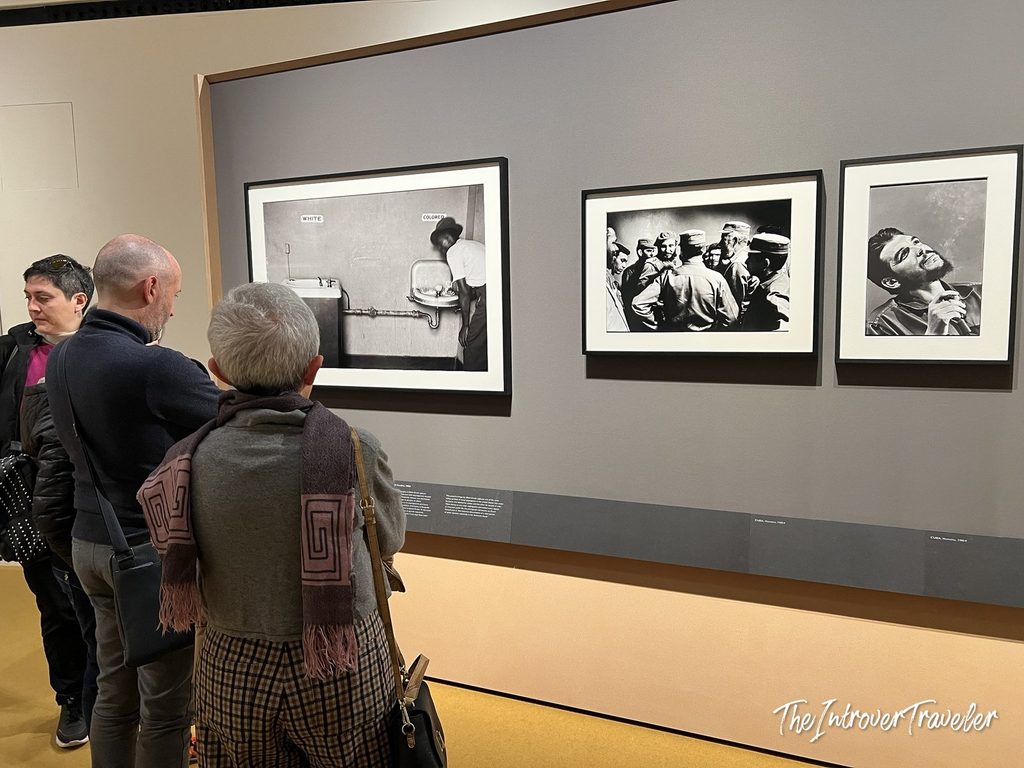
Watching the audience was the best part of the visit. Bologna could easily be the world capital of apodictic intellectualism, the city where people quote Gramsci in the queue at the bakery. And sure enough, the largest knots of visitors formed in front of the portrait of Che Guevara, Havana 1964, cigar in mouth and eyes on the horizon, a photograph that in this city works like a relic. Meanwhile, the same crowd had paid to see the work of a man I would struggle to call political. Erwitt photographed Che the way he photographed Marilyn: as a celebrity with excellent lighting.
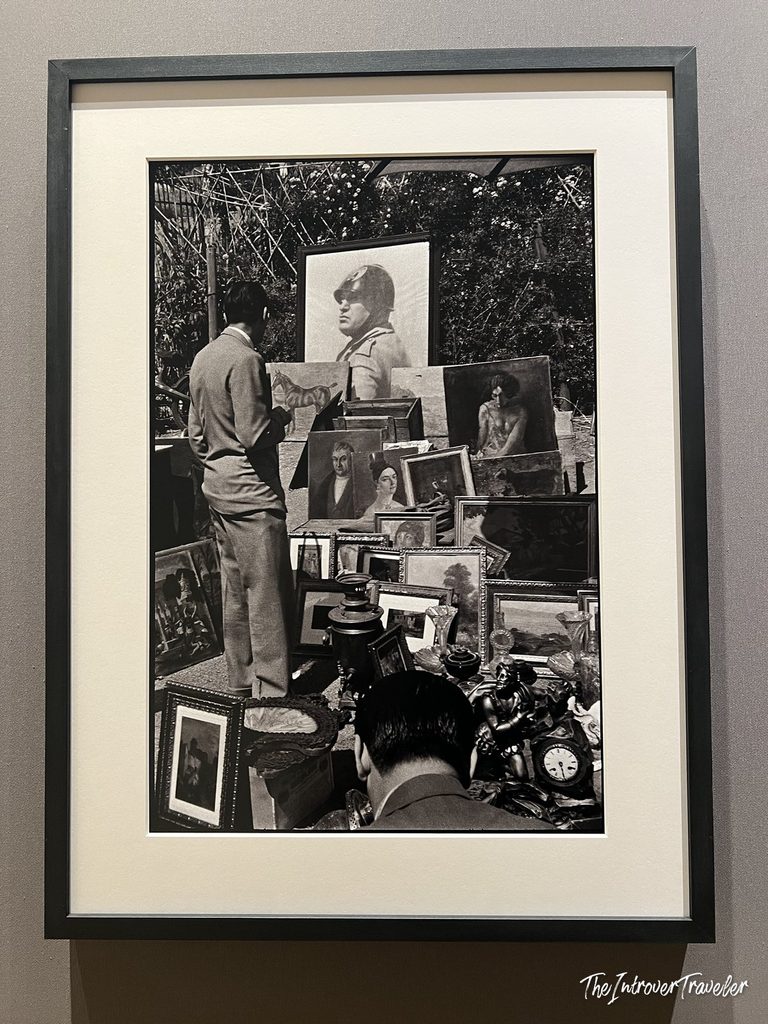
Which is not to say he had no teeth. The segregated drinking fountains of North Carolina, 1950, one marked “White”, one marked “Colored”, with a Black man bending over the shabbier of the two, are more devastating than a hundred indignant essays, precisely because the picture does not shout. And there is a small gem that I suspect most visitors walk past: a portrait of Mussolini in uniform, for sale on a junk stall in Rome in the mid-1950s, propped among ugly paintings, old clocks and kitsch statuettes. For the boy who had been chased out of Italy by that man, the revenge is perfect. No speech, no outrage: just Il Duce reduced to flea market stock, price negotiable.
The clichés he invented
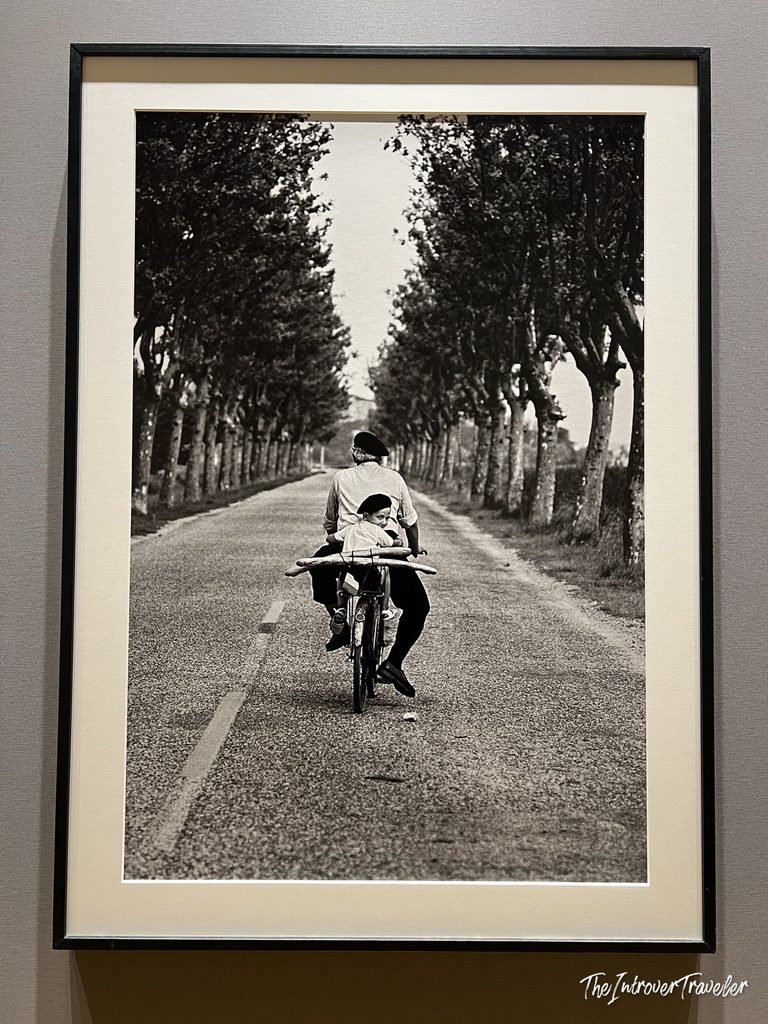
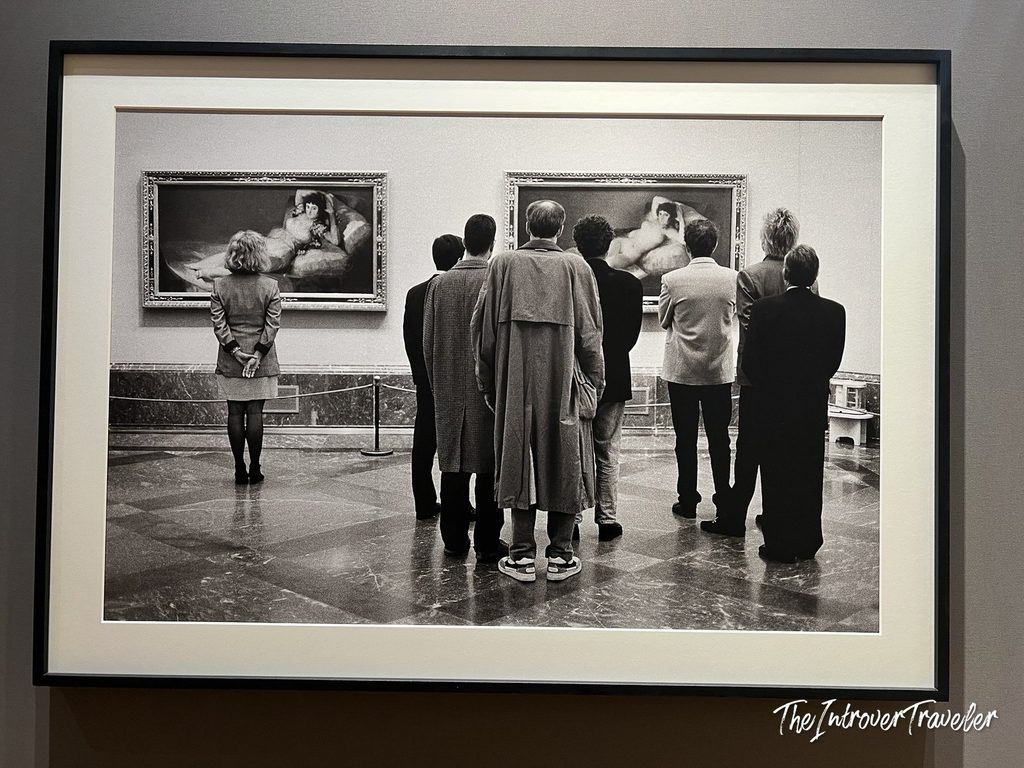
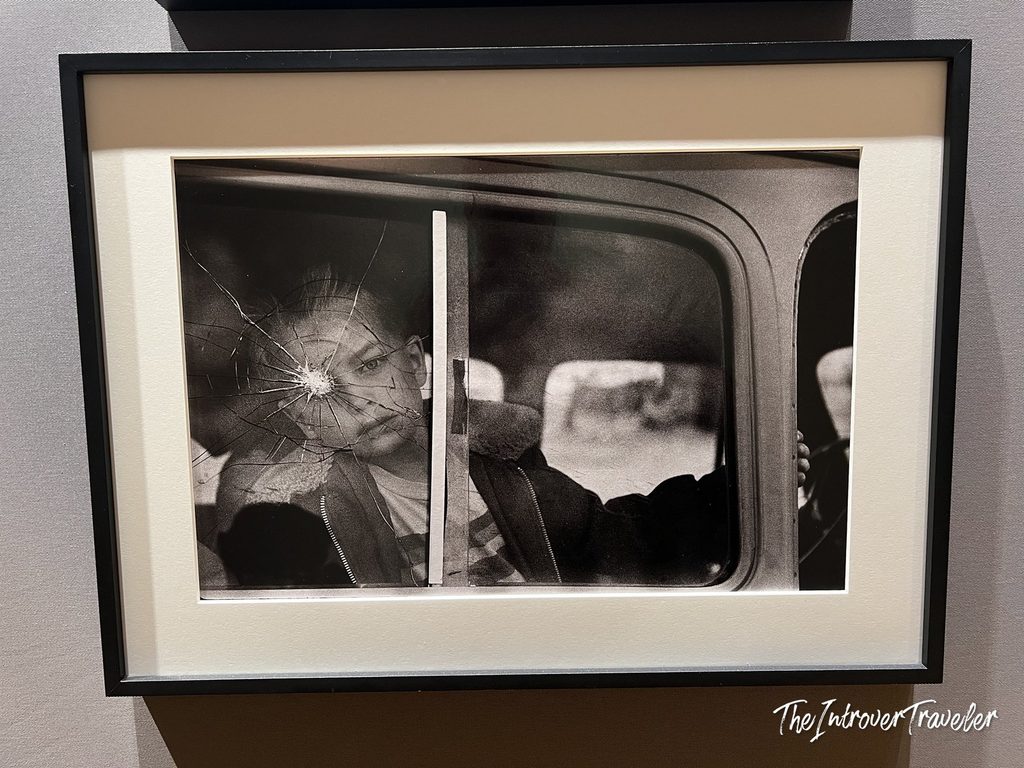
Let me be honest: many of these pictures now look obvious, even stereotyped. The men crowding in front of Goya’s Naked Maja at the Prado in 1995, while a single woman contemplates the dressed one. The French boy in a beret riding on the back of a bicycle with baguettes strapped behind, Provence 1955. The child in a car in Pittsburgh, 1950, his eye perfectly aligned with the starburst crack in the window. You have seen them on postcards, calendars and the walls of every pizzeria with artistic ambitions.
But complaining that these images are clichés is like complaining that Hamlet is full of famous quotations. They became clichés because Erwitt’s way of seeing entered the global visual vocabulary so deeply that we now mistake it for the default setting of reality. The beret and the baguette were not a stereotype of France before someone framed them this well. Erwitt did not copy the cliché; the cliché copied Erwitt.
Verdict
A rich, enjoyable, well-paced exhibition of a photographer who deserves more respect than the serious crowd usually grants him. It loses points on what should have been the easiest part: telling visitors honestly what they are looking at, and having staff who can answer a basic question. Go for the photographs, go for the Prado and the Mussolini stall, go to watch Bologna’s intelligentsia queue in front of Che. Then walk two rooms over and look at the Etruscans, who also knew a thing or two about smiling at death.
FAQ
Is the Elliott Erwitt exhibition in Bologna worth it?
Yes, if you want to a lighthearted afternoon.
How long does the visit take?
About an hour.
How much is the ticket?
€16 full price and €14 reduced, plus €1 booking fee if you buy online (November 2026).
Until when is the exhibition open?
Until 28 February 2027, at the Museo Civico Archeologico in Via dell’Archiginnasio 2.