Type of cuisine: traditional Roman
Last visit: March 2026
Region: Latium, Italy
My rating: 6/10
Address: Piazza della Cancelleria 80, 00186, Rome
Price: €€/€€€€€
Web: https://hosteriagrappolodoro.it/
Osteria Grappolo d’Oro sits on Piazza della Cancelleria, a few steps from Campo de’ Fiori, in a part of Rome that has every reason to be a tourist trap. It isn’t. The place is run with genuine intention, the menu is rooted in Roman tradition, the wine list is respectable, and the clientele on my visit was mostly local. For a restaurant at this address, that alone is worth noting.
And yet, walking out, I couldn’t help feeling that the kitchen is living comfortably in the past, not in the good, timeless sense, but in the slightly dusty sense of a place that hasn’t asked itself any hard questions in a while.
The Setting
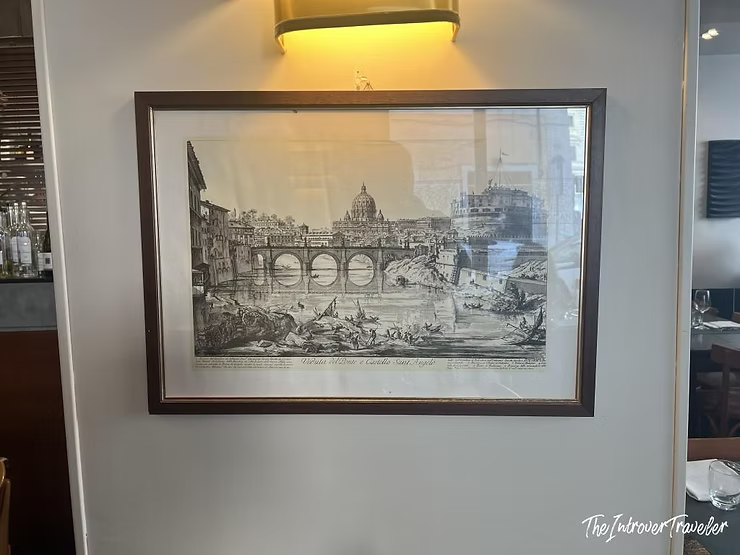
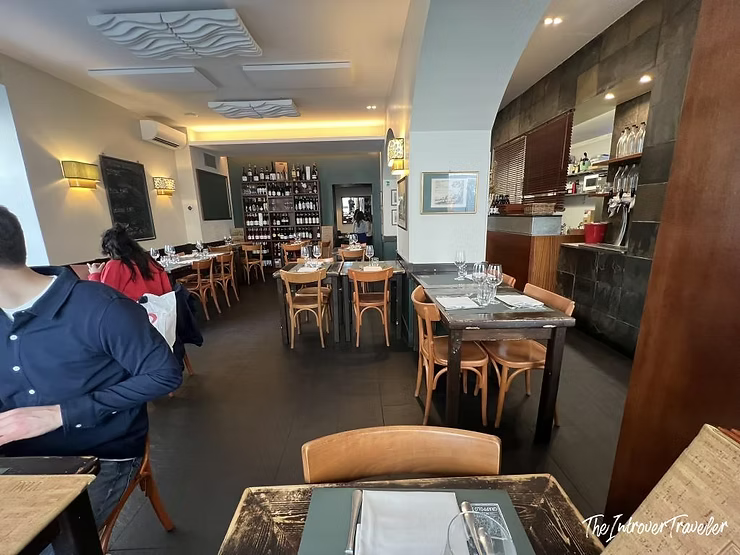
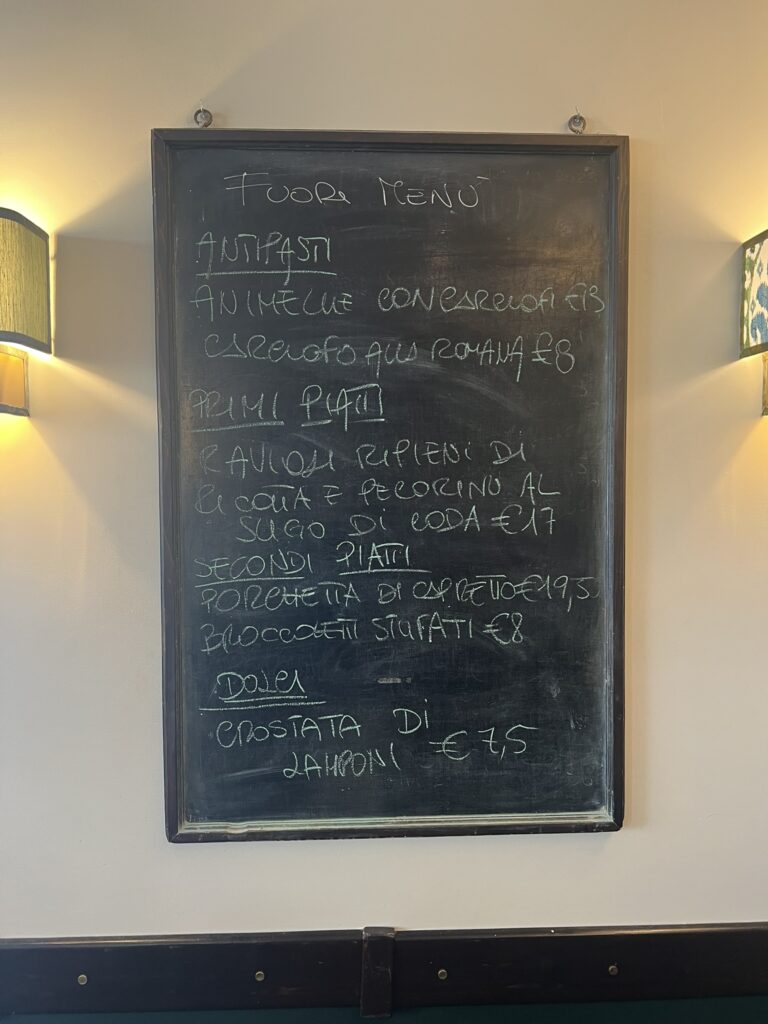
The interior is simple and pleasant: wooden bistro chairs, dark tile floors, framed Piranesi-esque prints of Rome on the walls; a veduta of Castel Sant’Angelo hangs near the bar and sets the tone well. There is a small blackboard with daily specials near the entrance. The staff is courteous, efficient, and leaves you alone when you want to be left alone, which I appreciated. No upselling, no rush.
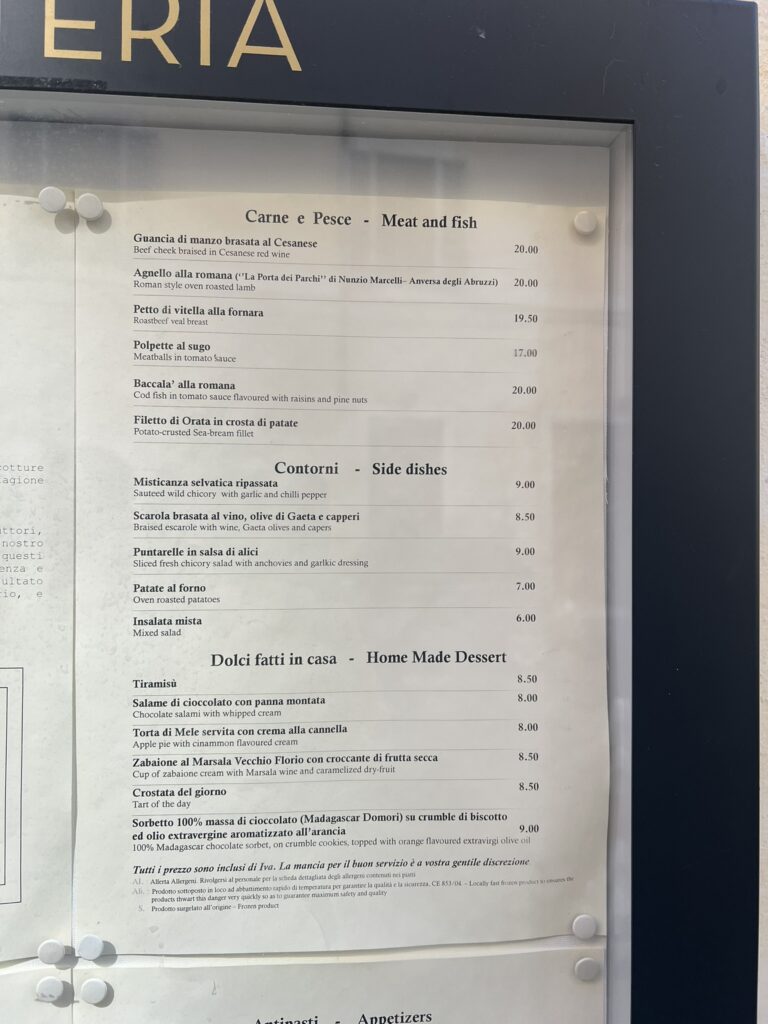
The Food
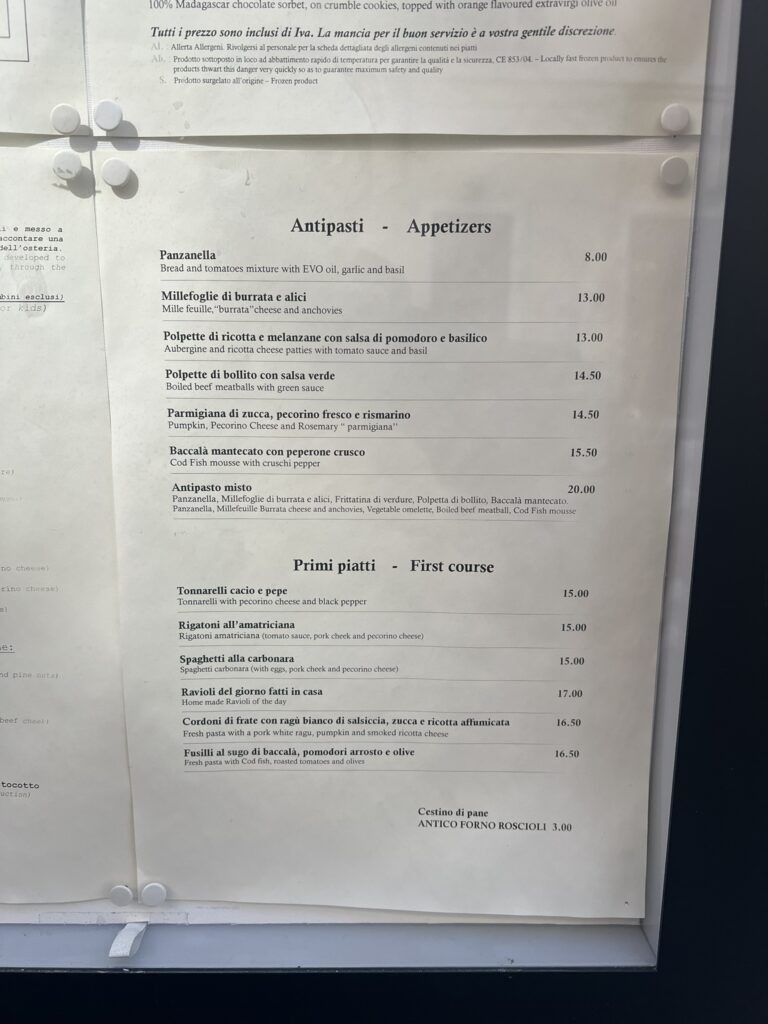
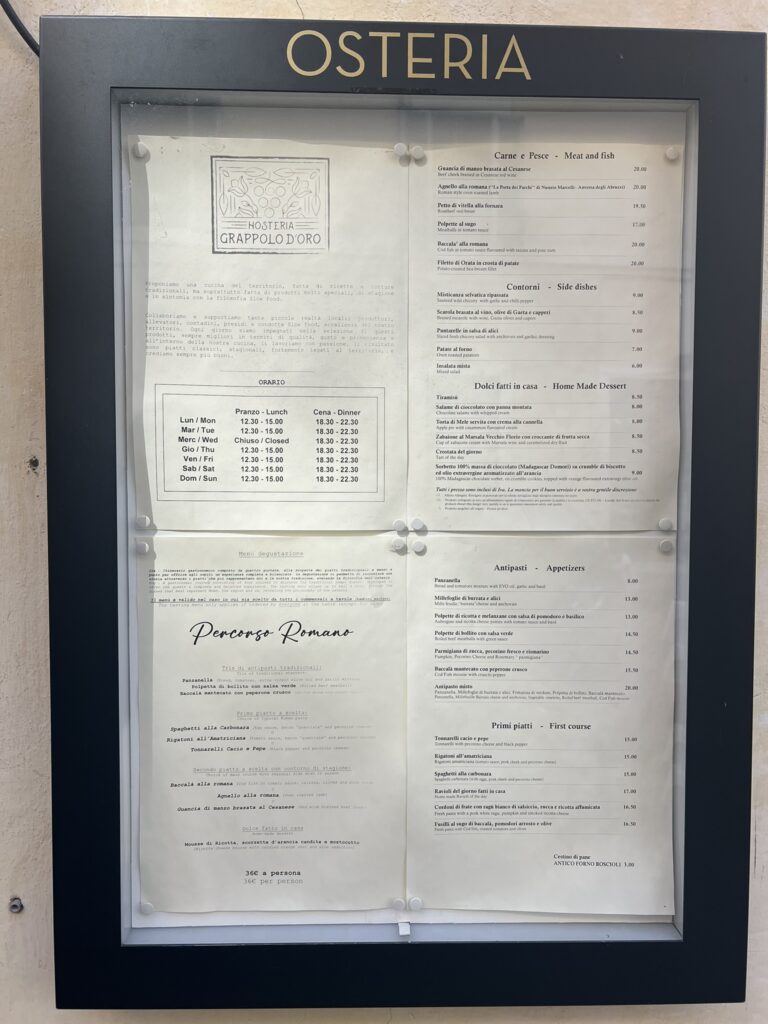
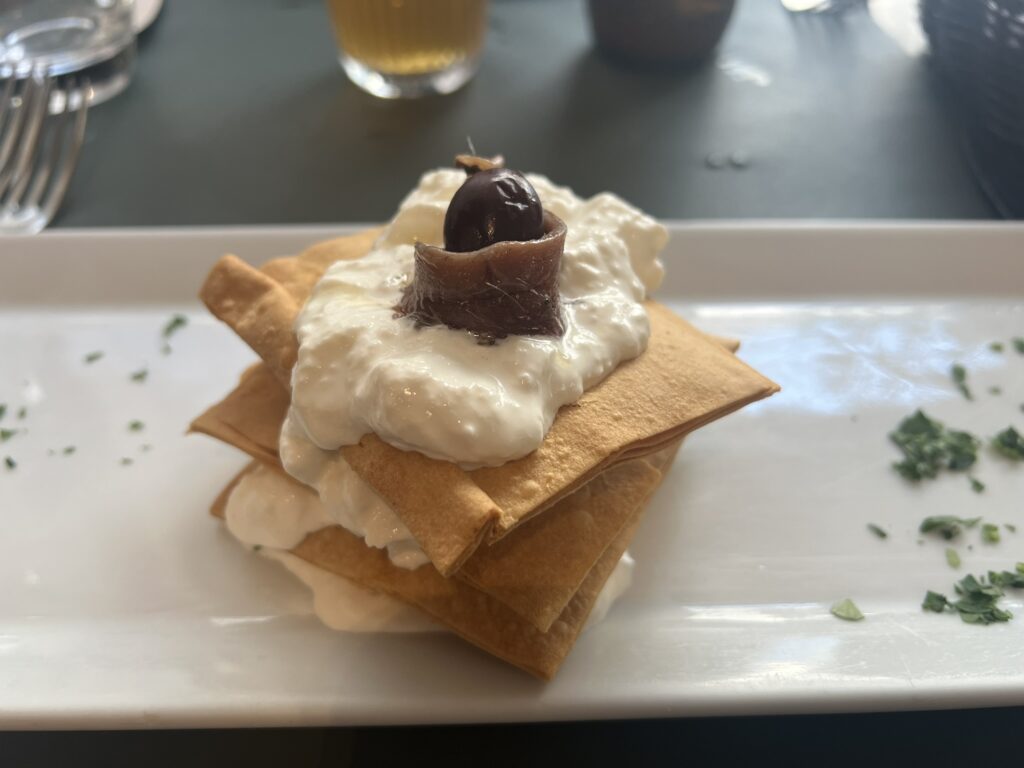
We started with the millefoglie di burrata e alici (mille-feuille of burrata and anchovies), which arrived as a small, carefully stacked construction: layers of thin crispy pastry, a generous mound of burrata, topped with a rolled anchovy and a Taggiasca olive. It looked better than it tasted. The burrata was fine but not exceptional, and the anchovy, which should have cut through the richness, was too timid to make an impression. A pleasant enough opening, but nothing you’d find yourself thinking about later.
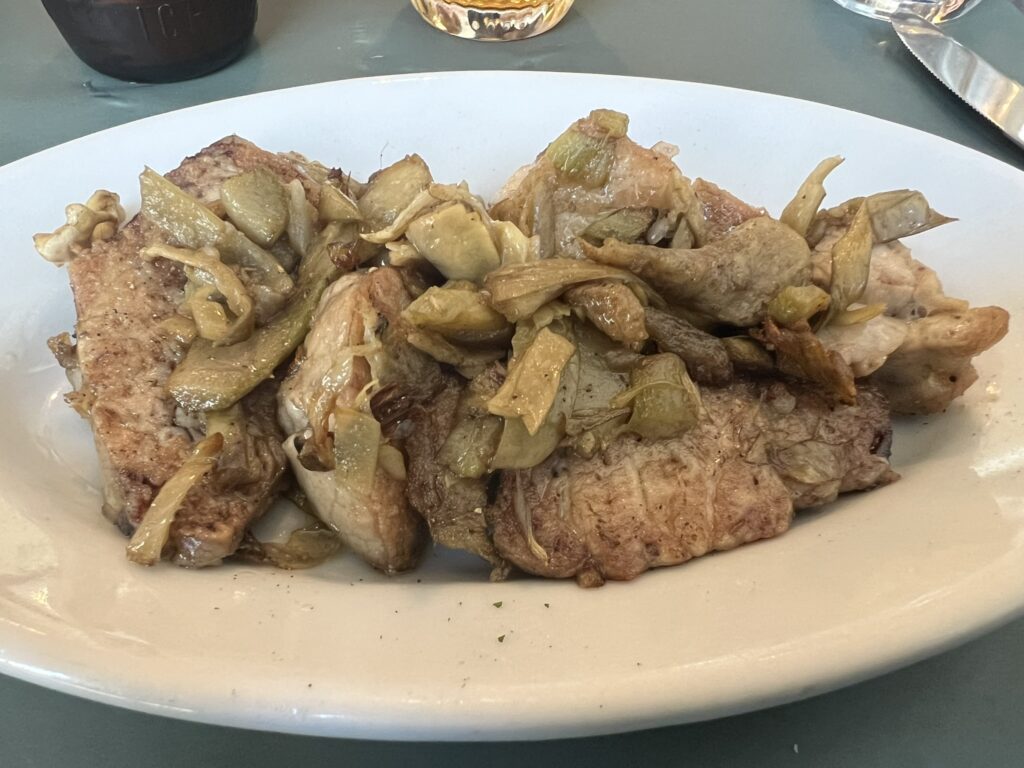
The animelle con carciofi (sweetbreads with artichokes) was the most interesting dish of the meal, and also the most uneven. The sweetbreads were flavourful and the artichokes — no small thing — actually tasted of artichokes. Not the best offal dish I’ve ever had in Rome, but comfortably above average. Still the best plate of the day.
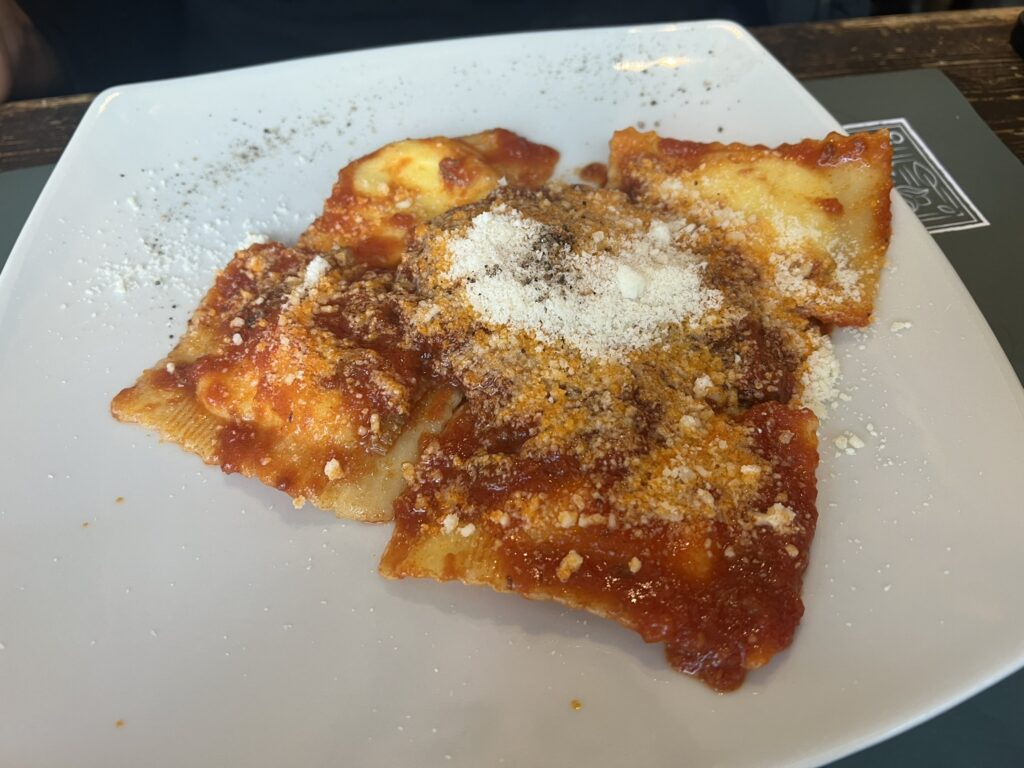
For pasta, we tried two classics. The ravioli ripieni di ricotta e pecorino al sugo di coda (ricotta and pecorino ravioli in oxtail sauce) had a filling that was well-seasoned and a pasta that was correctly thin, but the sugo di coda, which should be the star, tasted one-dimensional, lacking the depth of reduction and the slow-cooked complexity that this sauce demands. It read more like a tomato ragù with a hint of oxtail than the real thing.
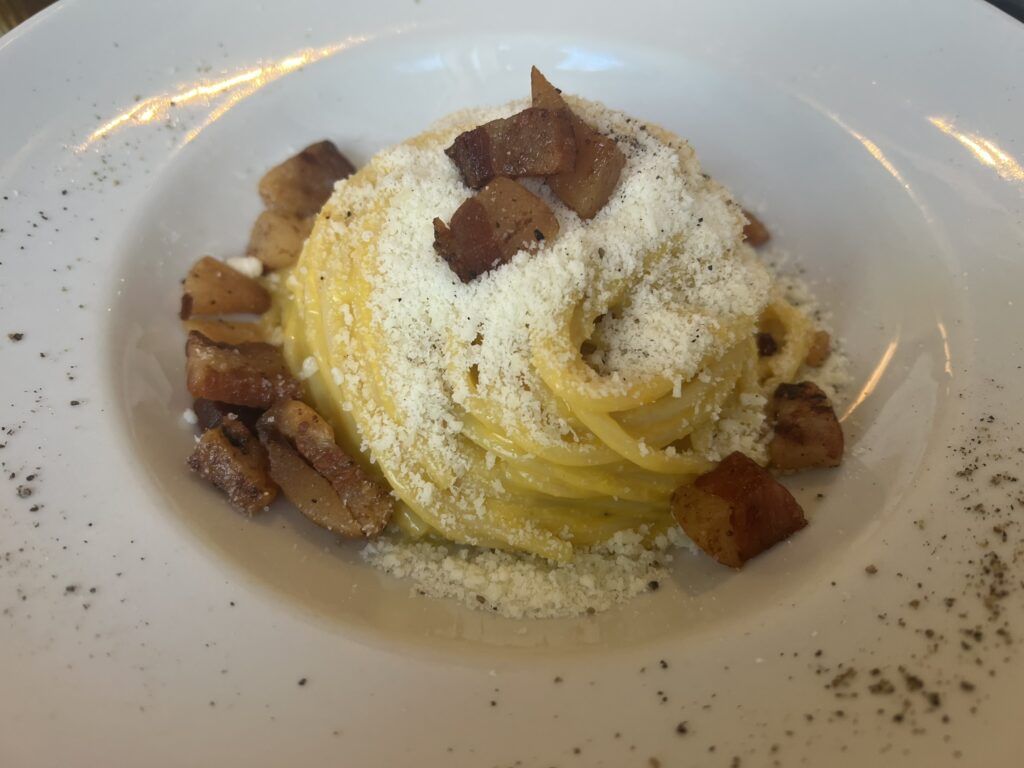
The spaghetti alla carbonara was competently made: real guanciale (cut generously, fried to the point of slight crispiness on the outside and still yielding inside), proper pecorino, egg treated correctly to a silky consistency. All the formal requirements were met. And yet, and this is the frustrating part, it was a carbonara that ticked every box without leaving any mark. It lacked that last degree of intensity that separates a good carbonara from a memorable one.
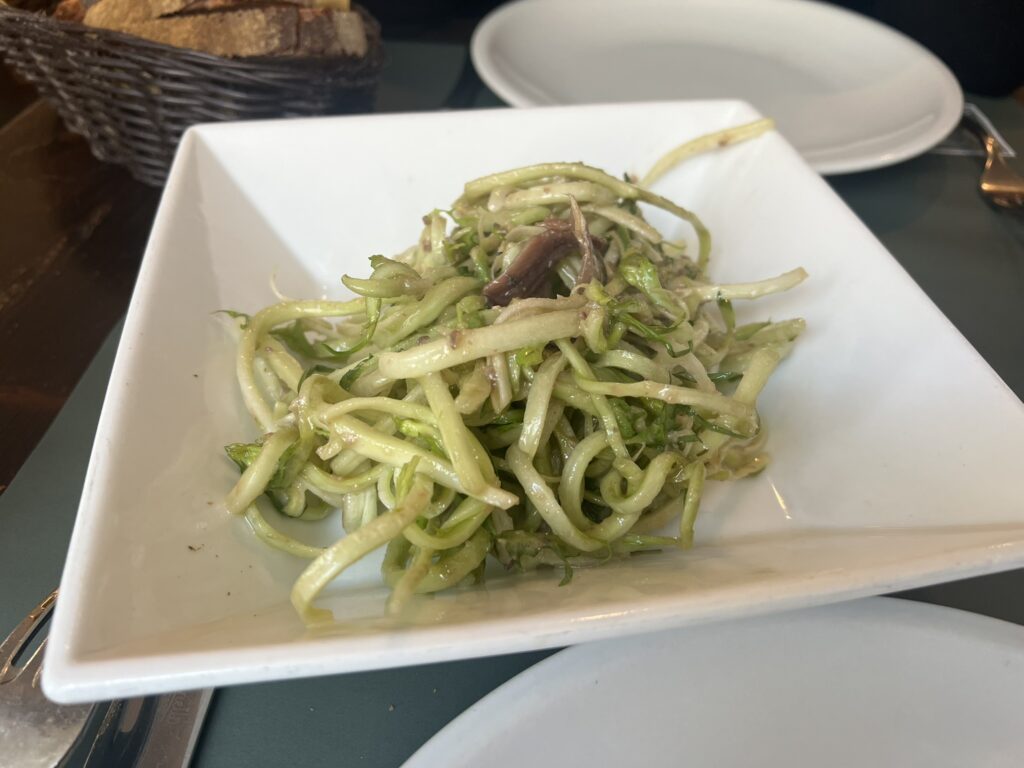
The puntarelle in salsa di alici arrived as a side, dressed with the classic anchovy-garlic vinaigrette. Here too I find myself repeating the verdict I already gave for the carbonara. A correctly executed dish that lacked, in every respect, that extra gear. The puntarelle were rather anonymous, the dressing timid on the garlic — I refer back to what I said about the puntarelle at Osteria della Quercia on the subject of garlic-shyness, but in this case I believe the difference came down to the raw ingredient itself, which at Osteria della Quercia was superior, making the difference between a decent but forgettable dish and an excellent one.
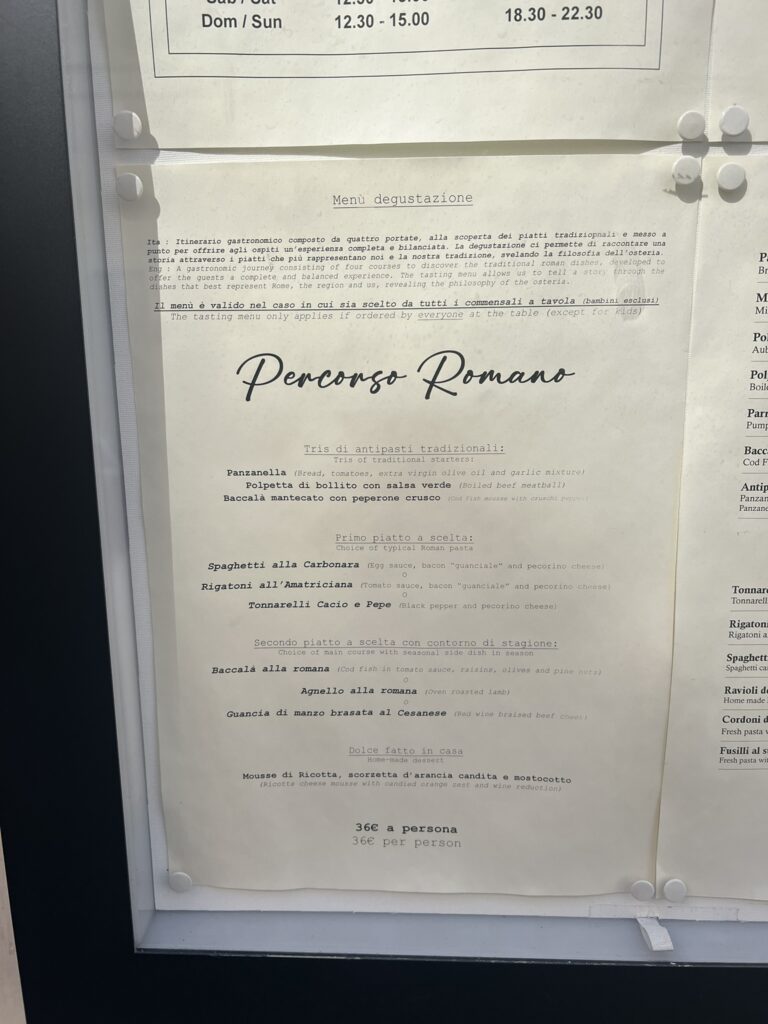
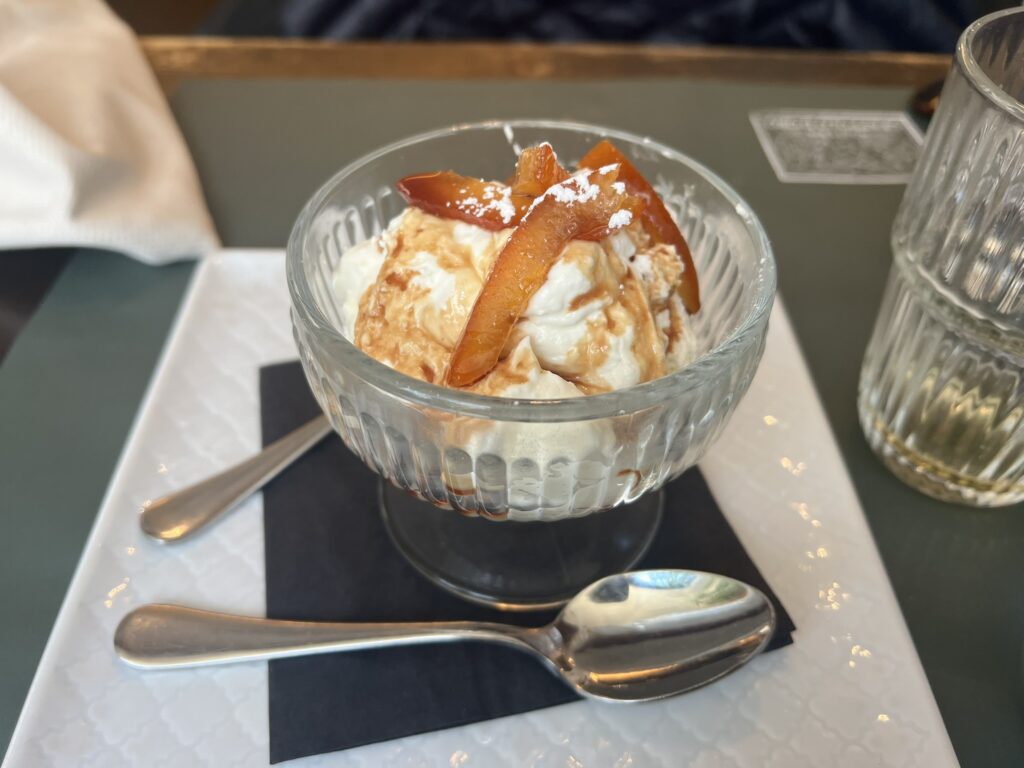
We finished with the mousse di ricotta con scorzetta d’arancia candita e mosto cotto (ricotta mousse with candied orange peel and grape must syrup). This was probably the weakest dish of the meal. Perhaps it is a bias of mine, but when I order a ricotta dessert I expect a riot of richness in the Sicilian tradition — which was entirely absent here. The ricotta had a slightly too liquid consistency and did not marry well with the candied peel and the grape must, which rather than adding a distinctive flavour note produced an incoherent muddle. Roman cuisine is not famous for its desserts and I had no great expectations of this dish, but it was nonetheless the most disappointing.
The Experience
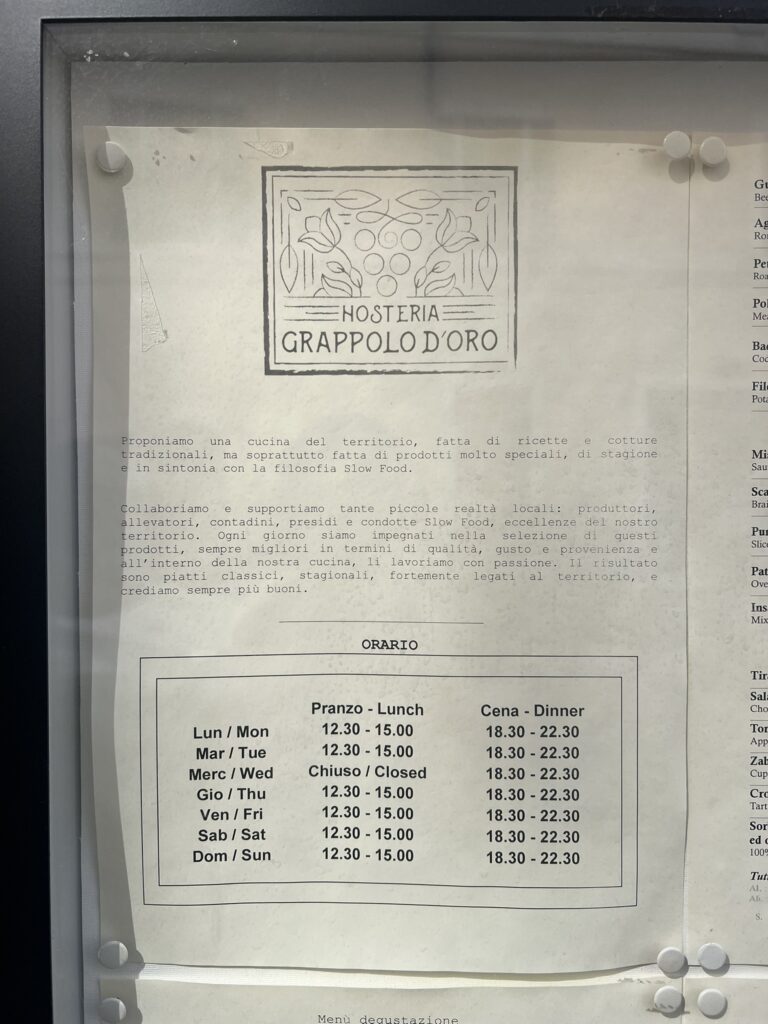
Grappolo d’Oro is a place where you will eat adequately, not be overcharged for the location, and leave without complaint. That is, genuinely, more than can be said for most of its neighbours. The Slow Food ethos declared on the menu (local producers, seasonal produce, tradition) is not mere decoration; you can taste it in the quality of the raw ingredients. The kitchen, however, doesn’t always do those ingredients justice.
The sense is of a restaurant that reached a certain standard some years ago and has since maintained it without pushing further. Roman cuisine in the city’s best kitchens has evolved considerably over the past decade; Grappolo d’Oro feels like it is still operating on the assumptions of fifteen years ago.
Final Thoughts
I would not discourage anyone from eating here. If you are staying near Campo de’ Fiori and want a genuine Roman meal without the anxiety of wondering whether you’ve fallen into a tourist trap, Grappolo d’Oro is a safe and honest choice. Just don’t go expecting a revelation.
Book ahead for dinner. Closed on Wednesdays.
If you are planning a trip to Rome you may be interested in these posts and these offers from Tiqets.