Last visit: february 2025
Duration of visit: 1 hour (30 minutes max inside the Chapel)
My rating: 10/10
Tickets and reservation: https://getyourguide.tp.st/VqZSPmvD
The Brancacci Chapel: Where Painting Changes Forever
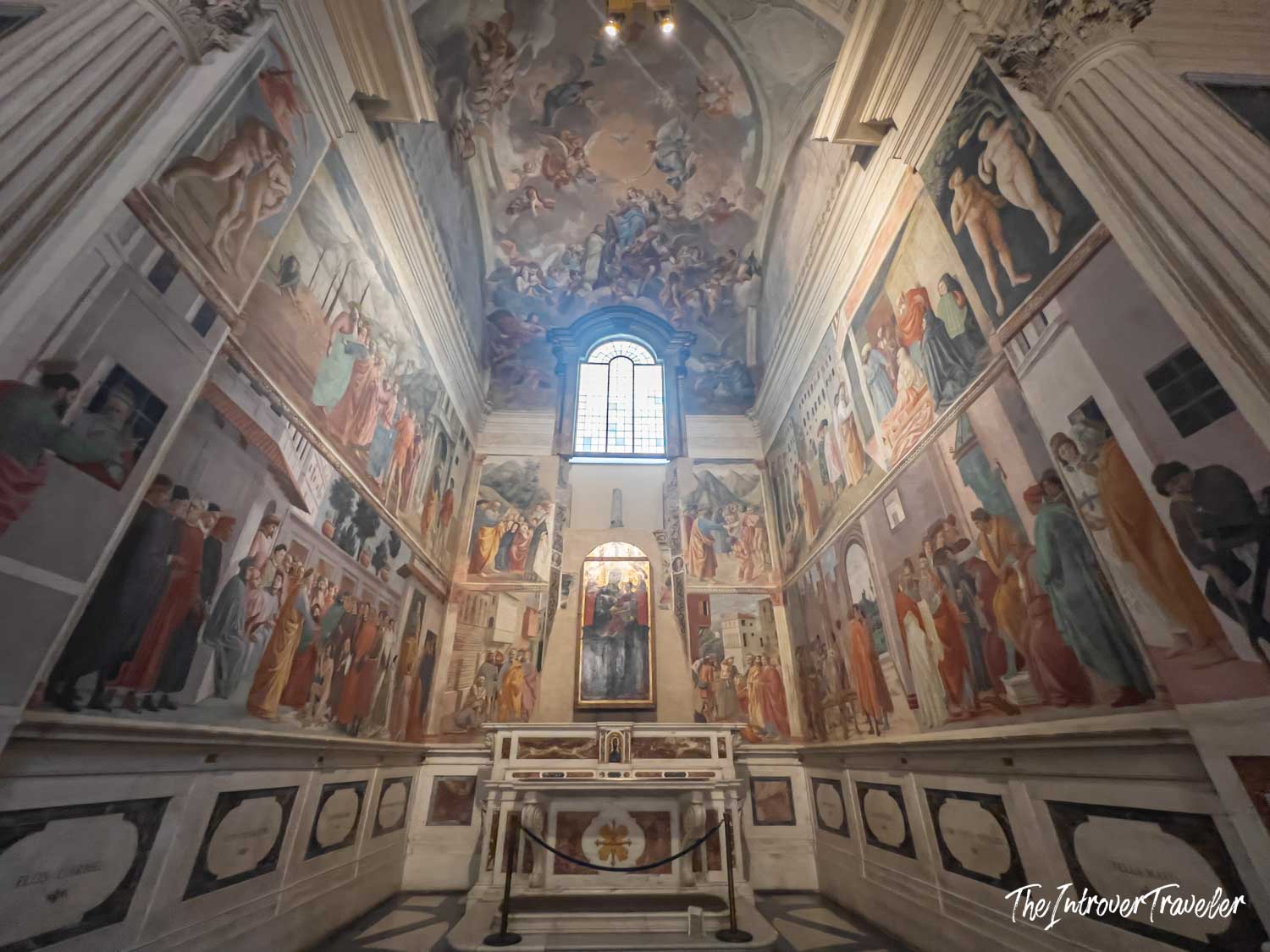
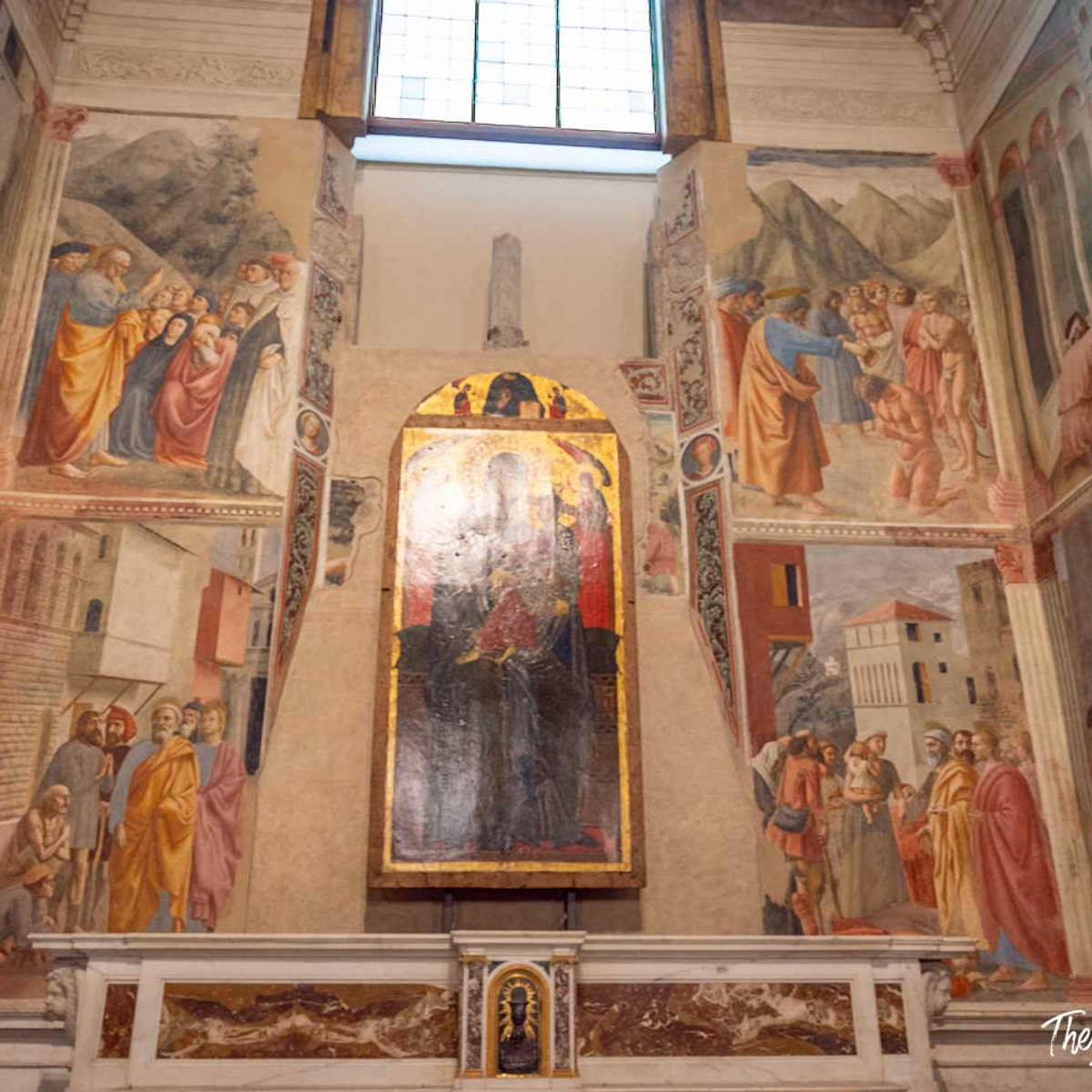
If you want to understand when European painting stopped being medieval and became truly modern, you don’t have to look far: just enter the Brancacci Chapel in the church of Santa Maria del Carmine in Florence. It’s not a monumental chapel, nor a space striking for its spectacular dimensions. On the contrary, it’s a relatively intimate, almost discreet space. Precisely for this reason, the impact of the images covering the walls is even more striking. In the space of just a few square meters, one witnesses a radical transformation in figurative language.
Those who look at these frescoes for the first time often struggle to explain what makes them so different from the medieval paintings that preceded them. It’s not just the perspective (which Masaccio would evolve within a few years, even more dramatically in the Trinity in Santa Maria Novella), nor simply the greater anatomical precision of the figures. It’s something deeper: the sense that the space of the scene is real, that the figures have weight, that light strikes the bodies as it does in the physical world. The men and women painted on the walls don’t seem like symbols or idealized figures. They look like people.
When the young Masaccio began working here, around 1424, he was in his early twenties. Florence was then one of the most dynamic centers of European culture. Architects like Filippo Brunelleschi were experimenting with new ways of representing space, sculptors like Donatello were restoring to the human body a plastic presence that had been largely lost during the Middle Ages, and the humanists were rediscovering the culture of classical antiquity. In this context, Masaccio achieved something decisive: transforming this research into painting.
The Brancacci Chapel is not the work of a single artist. The cycle was begun by Masolino da Panicale, an older and already established painter, and completed many decades later by Filippino Lippi. However, the scenes painted by Masaccio are those that determine the character of the entire figurative program. In them, painting acquires a new solidity. The figures no longer float on the surface of the image, but occupy a coherent space, constructed with logic and illuminated by believable light.
This change may seem subtle at first glance, but for Renaissance artists it was a revelation. Throughout the 15th and 16th centuries, the Brancacci Chapel was considered a kind of school of painting. Generations of artists came here to study Masaccio‘s figures, copying them, analyzing them, and trying to understand how such a convincing sense of reality could be achieved.
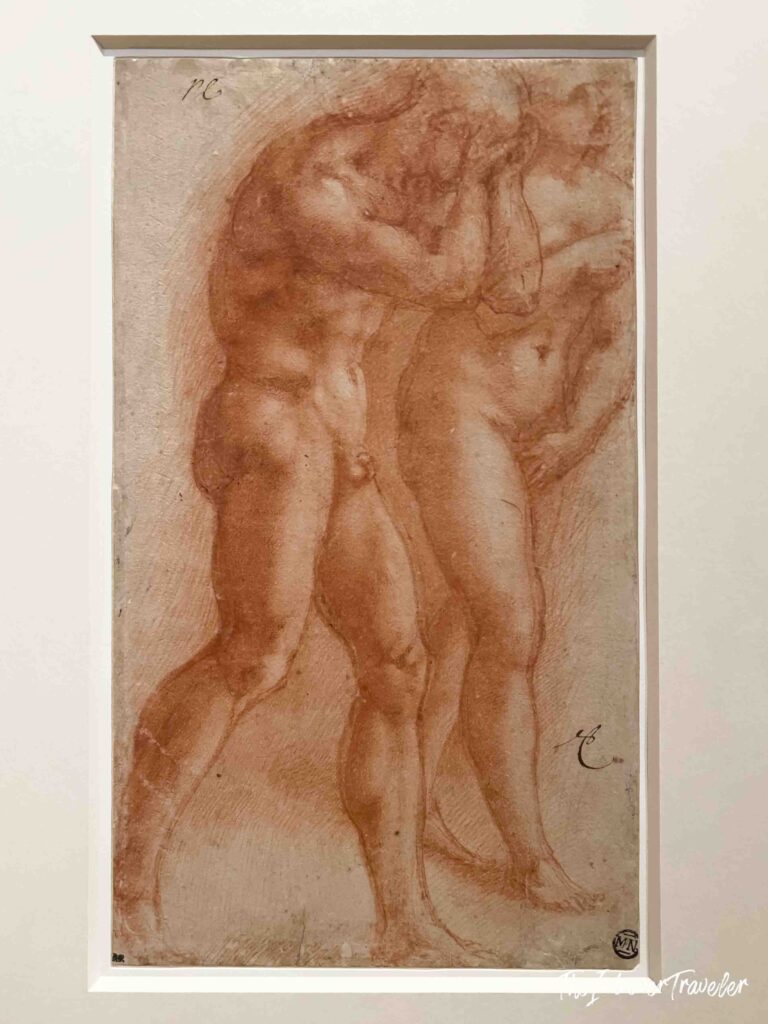
Among these visitors was the young Michelangelo, who is said to have spent hours with a notebook in hand in the Brancacci Chapel studying the work of Masaccio, as in the drawing preserved at the Staatliche Graphische Sammlung in Munich.
Even today, observing the chapel’s frescoes, the reason for this attraction is clearly apparent. These walls not only house one of the most important pictorial cycles of the early Renaissance, but also one of the moments when Western painting discovered a new way of looking at the world.
Those who enter the Brancacci Chapel in the church of Santa Maria del Carmine in Florence for the first time often have the impression of being confronted by something surprisingly modern. Not in the superficial sense of the term, but in the way the figures occupy the space, breathe the air of the scene, and seem to share the same physical dimension with the viewer. After a few minutes of observation, it becomes clear that this pictorial cycle, created in the early decades of the 15th century, is not just a masterpiece of the Renaissance. It is one of the moments in which Western painting changed direction.
The chapel’s walls depict episodes from the life of Saint Peter, drawn primarily from the Acts of the Apostles. The narrative unfolds like a sequence of theatrical scenes arranged across the walls. However, what makes these images so important isn’t just their iconographic program. It’s the way these stories are told.
When Masaccio began work on the Brancacci Chapel, around 1424, Italian painting was undergoing a profound transformation. Some of the most decisive innovations had already been formulated, but they had not yet been fully translated into the language of painting. The linear perspective developed by Filippo Brunelleschi, the new plastic conception of the human body developed by Donatello, and the growing interest in the direct observation of nature were elements circulating in the Florentine artistic milieu, but no one had yet fully demonstrated what painting could become if these principles were consistently applied.
Masaccio was the first to do so.
Masaccio: a short and decisive life
Masaccio was born in 1401 in San Giovanni Valdarno, bearing the name Tommaso di ser Giovanni. The nickname by which he has become known appears in fifteenth-century sources and likely derives from a familiar form of his name. According to contemporary accounts, including that of Giorgio Vasari, Masaccio was a man disinclined to social conventions and worldly concerns. He appears to have been distracted by practical matters and completely absorbed in his work.
Information about his education is limited. He likely received his initial artistic education in Tuscany, but the defining moment in his career was his move to Florence in the early 1420s. At that time, the city was one of the most dynamic centers of European art. The cultural environment was pervaded by an intense exchange of ideas involving architects, sculptors, painters, and humanists.
By 1422, Masaccio was already registered with the Arte dei Medici e Speziali, the guild to which painters also belonged. This registration indicates that he was recognized as an independent master. His early works reveal an artist already experimenting with a new conception of space and the human figure.
Among the paintings attributed to this early phase is the San Giovenale Triptych, now housed in the Masaccio Museum in Cascia di Reggello. Despite its relatively modest size, this work already displays some characteristics that would become central to his painting: the solidity of the bodies, the consistent use of light, and a more stable compositional structure than in the late Gothic tradition.
Masaccio’s career was extraordinarily short. He probably died in Rome in 1428, at the age of just twenty-seven. Despite the limited duration of his career, his contribution to European painting was enormous. The frescoes in the Brancacci Chapel represent the culmination of this revolution.
Painting before Masaccio
To truly understand the scope of the innovation introduced by Masaccio in the Brancacci Chapel, it is necessary to place oneself at the crossroads of two traditions: on the one hand, the late Gothic culture still dominant in the first decades of the fifteenth century, on the other, the far from exhausted legacy of the Giotto revolution.
The late Gothic tradition, represented in Florence by masters such as Lorenzo Monaco and, on a larger scale, by Gentile da Fabriano, favored surface painting: elegant lines, enameled colors, abundant gold, and a still largely intuitive spatial construction. The figures are arranged according to decorative rhythms rather than physical necessity; the bodies seem to skim the ground rather than weigh it down. It is an art that seduces through its preciousness, but tends to elude the question of tangible reality.
Yet, a century earlier, Giotto di Bondone had decisively undermined this system. In the Scrovegni Chapel, Giotto introduced massive figures, constructed through chiaroscuro and inserted into a space that, while not yet governed by a mathematical perspective, was conceived as a coherent environment. His architecture possesses a logic, his figures occupy the ground with believable weight, and above all, they participate in narrative events with a new emotional intensity. Painting, with Giotto, once again becomes a language of reality and human experience, not merely a symbolic or ornamental code.
After Giotto, however, this trend did not proceed in a linear fashion. The late fourteenth and early fifteenth centuries witnessed a sort of reflux toward more decorative and courtly models, partly linked to the international culture of the courts. Giotto’s influence did not disappear, but was absorbed and attenuated, losing the constructive tension that constituted its most radical core.
It is precisely in this context that Masaccio intervenes. His innovation does not arise in a vacuum, nor does it constitute an absolute break: rather, it consists in a reactivation and systematization of elements already present in Giotto, brought to a new level of coherence and awareness. Masaccio’s figures not only have weight, but are constructed according to a rigorous volumetric logic; space is no longer simply suggested, but organized according to perspective principles that make it measurable; light is not limited to illuminating, but becomes a unifying principle that shapes bodies and architecture, making each element part of a single physical system.
In this sense, the Brancacci Chapel represents not only an “innovation,” but the point at which Giotto’s lesson, after a long latency period, was recovered, deepened, and transformed into the foundation of Renaissance painting.
The Brancacci Chapel Commission
The Brancacci Chapel belonged to one of the most active merchant families of early fifteenth-century Florence, engaged in the lucrative silk trade, a sector that was a cornerstone of the city’s economy. The initiator of the venture was Felice Brancacci, an emblematic figure of that elite that combined economic activity, political ambition, and strategies of public self-representation. The family chapel in the Church of Santa Maria del Carmine was not merely a place of worship, but a prestigious device, designed to inscribe the Brancacci name into the symbolic fabric of the city.
In 1423, Felice Brancacci was sent as ambassador to the court of the Mamluk sultan in Egypt. This seemingly marginal detail is actually crucial: the chapel’s commission occurred precisely at a time when the patron was projected onto an international stage and needed to consolidate, even visually, his status in Florence. The chapel’s pictorial decoration thus responded to a dual logic, both devotional and political, typical of Florentine patronage of the time.
The iconographic choice of the cycle, centered on the life of Saint Peter, the chapel’s patron saint, is not accidental. Saint Peter is not only the first of the apostles, but also the figure upon whom the authority of the Church rests. In republican Florence, where the relationship between civil and religious power was constantly negotiated, the figure of Peter took on a strongly political connotation. Some scholars have also suggested a possible connection between the figure of the apostle and the name of the Brancacci family itself, following a practice of onomastic allusion not uncommon among patrons of the period. More specifically, episodes such as the Tribute or the distribution of alms depict themes of taxation, justice, and social order that directly resonated with the structures of communal Florence.
The first painter commissioned was Masolino da Panicale, an already established artist, abreast of the latest developments but still deeply rooted in late Gothic culture. His figures retain a linear grace and formal smoothness derived from the international tradition, while demonstrating, in his later works, a growing interest in the construction of space and a more natural rendering of bodies.
Masaccio’s entry into the project remains one of the most debated issues in historiography. It’s plausible that he initially worked as Masolino’s collaborator, following established workshop practice. However, within a few years, the situation reversed: the most innovative and structurally decisive scenes of the cycle were painted by Masaccio, whose pictorial vision asserted itself with such force that it redefined the entire decorative program. In any case, the division of labor between the two artists remains controversial, although critics now tend to believe that the two worked on the work simultaneously.
Further complicating the situation were the political events of the Brancacci family. In 1436, Felice was exiled for political reasons, likely related to the shifts in power following the rise of the Medici. The chapel was then left unfinished and remained so for decades, until Filippino Lippi arrived in the 1480s to complete the missing sections. This long span of time makes the Brancacci Chapel a veritable palimpsest, encompassing three key periods in Florentine painting: Masolino’s late Gothic phase, Masaccio’s revolution, and Filippino’s now fully Renaissance synthesis.
The result is a cycle in which it is possible to observe, almost firsthand, the transformation of pictorial language between the fourteenth century and the high Renaissance.
The itinerary, built and verified
An art lover planning a trip to Florence?
Flâneur builds a personalized Florence art itinerary around you. Tell it how deep your interest in art runs and what your days should look like, and it maps a route through the art that matters: the landmarks like the Uffizi Gallery and Michelangelo’s David at the Accademia, and the quieter Renaissance stops even locals miss. Each day comes with real opening hours, transfer times, meal breaks, directions and booking links, so your time goes to Botticelli and Caravaggio, not to logistics.
Pick the Expert profile and you compose the day yourself, choosing from all the art indexed in the city. A general-purpose AI guesses a plausible art itinerary from patterns; Flâneur knows which works are actually in Florence, in which room, open when, and reachable in which order, a level of depth, flexibility and precision no chatbot can match.
Masolino and Masaccio: two ways of seeing painting
One of the most fascinating features of the Brancacci Chapel is the rare and almost didactic opportunity to observe side by side two profoundly different conceptions of painting, embodied by Masolino da Panicale and Masaccio. These are not simply stylistic differences, but two alternative ways of understanding the relationship between image and reality.
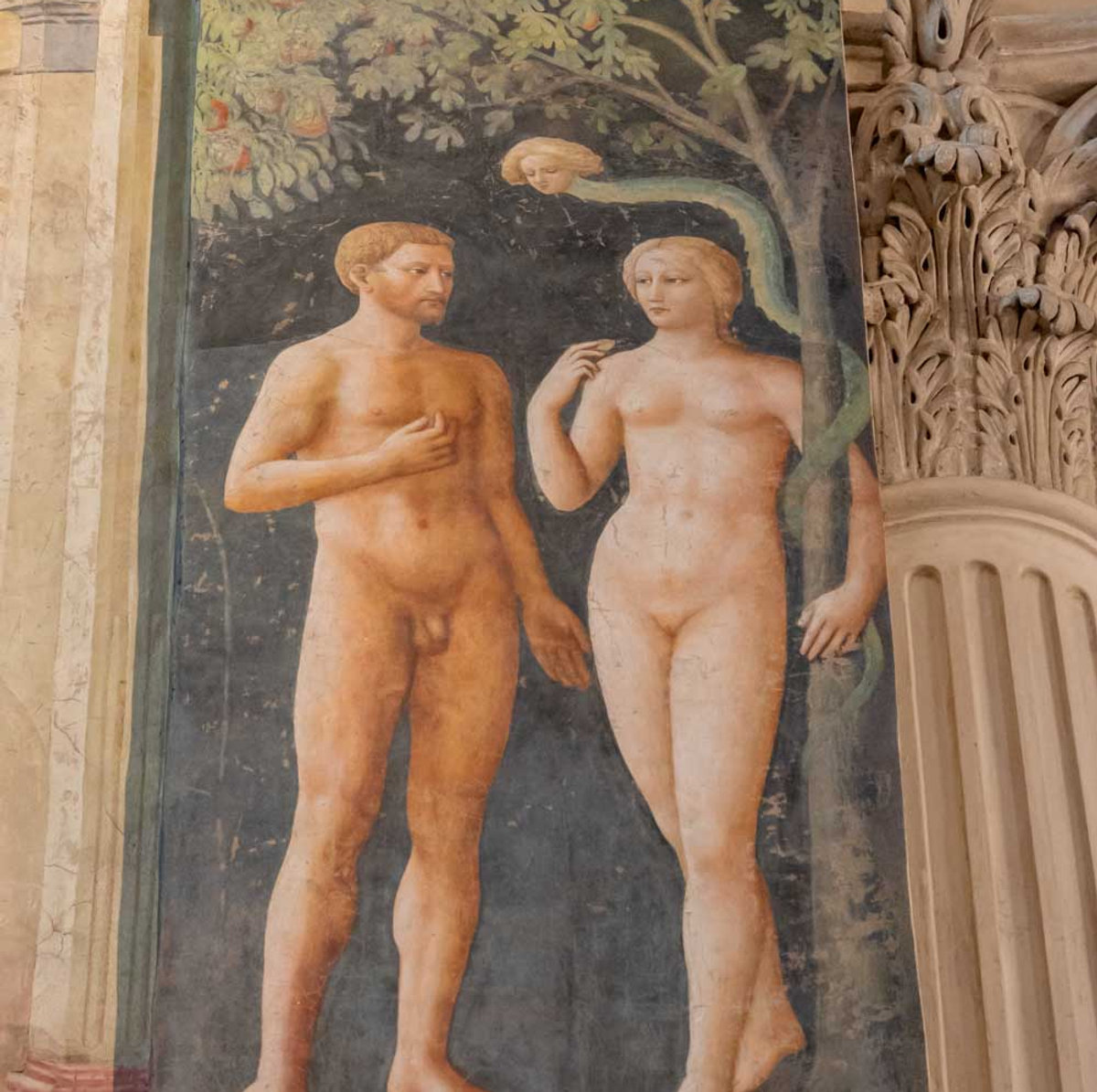
Masolino still places himself, albeit with significant shifts, within the context of late Gothic culture. His figures are defined by a fluid, continuous design that prioritizes line as the image’s organizing principle. The bodies appear smooth, almost dematerialized, and move with a controlled, frictionless grace. The overall effect is that of an idealized reality, filtered through a code of formal elegance. Even when he introduces architectural or landscape elements, these do not constitute a rigorous spatial system, but function as stage sets, useful for suggesting depth without actually constraining the figures to a measurable space.
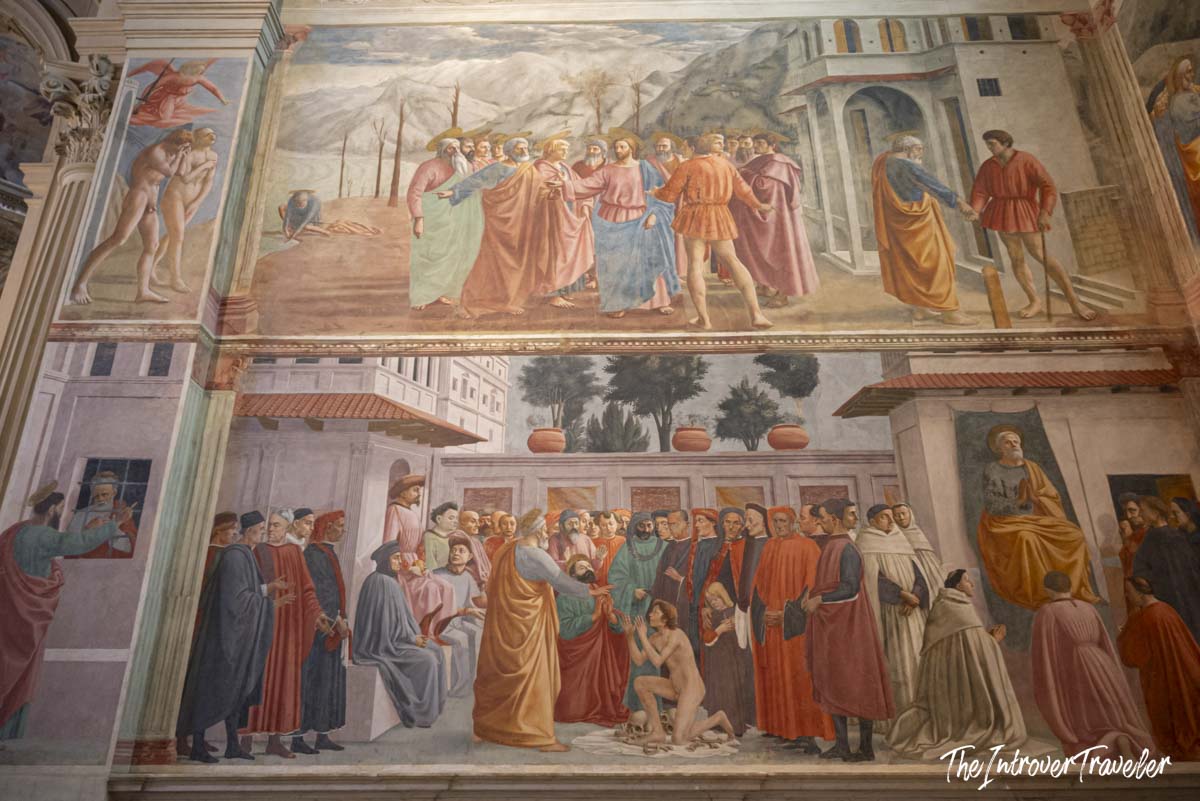
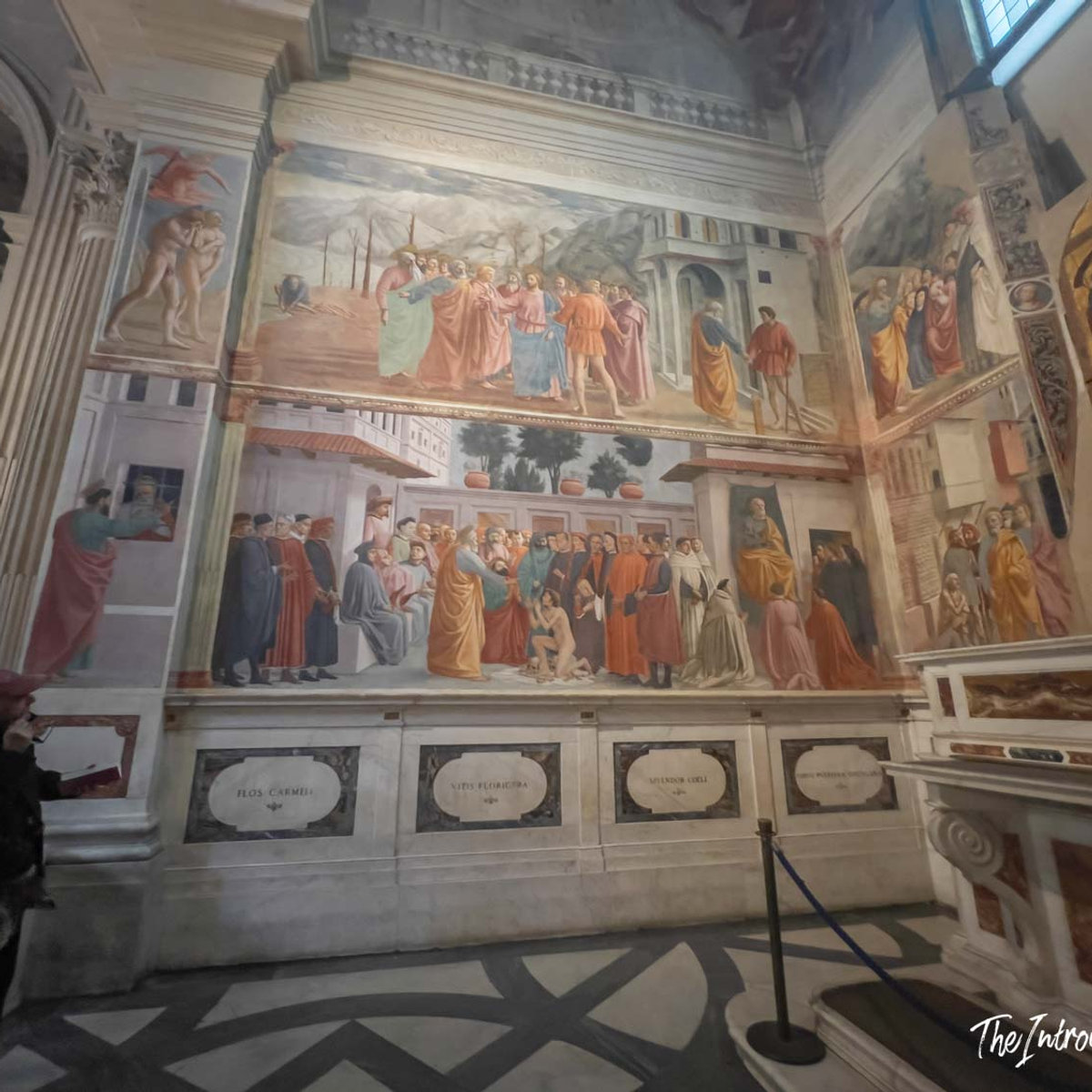
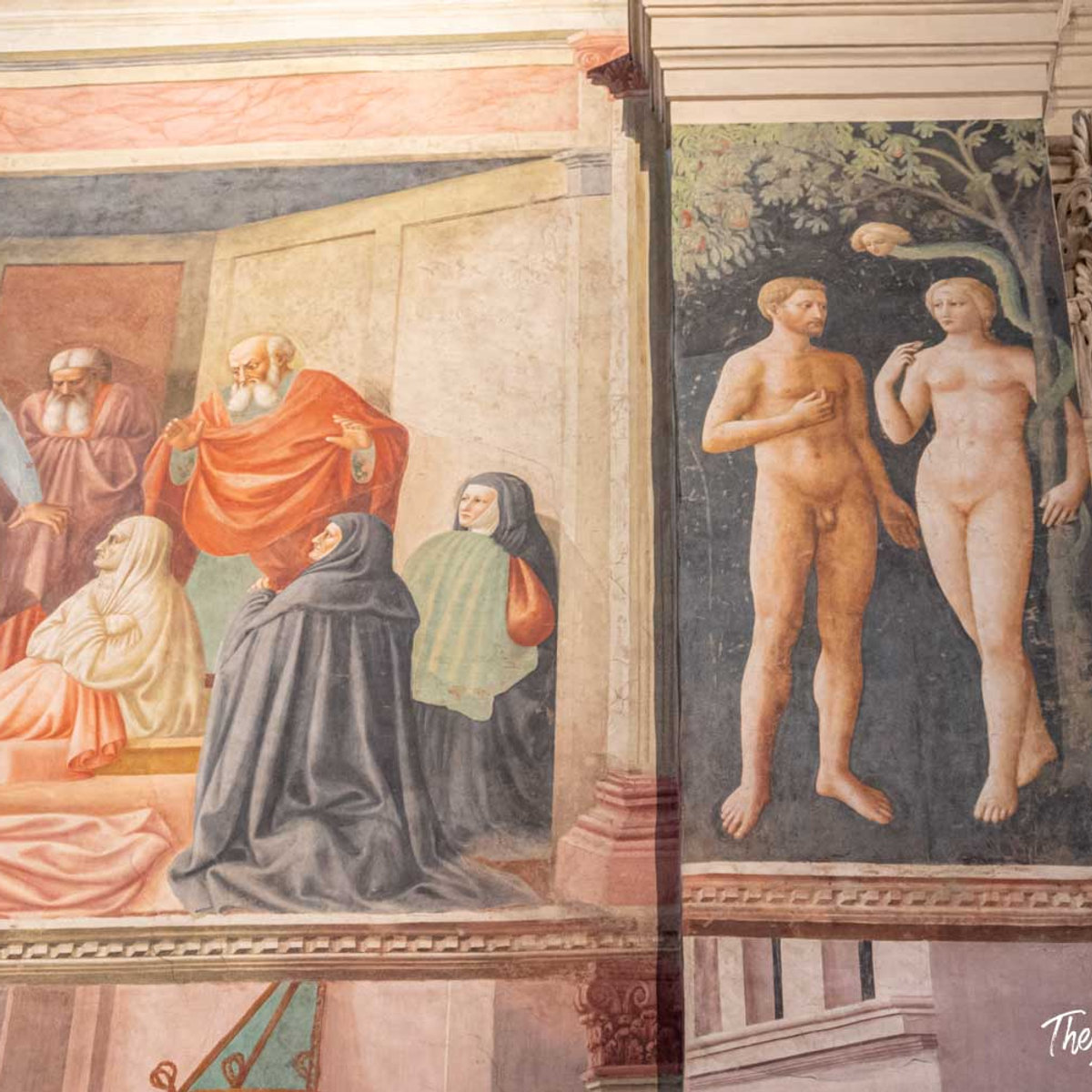
A paradigmatic example is the Temptation of Adam and Eve: the bodies are perfect, weightless, inserted into a space that offers no resistance. Original sin, in Masolino, is still an almost abstract event, devoid of any real physical drama.
With Masaccio, the paradigm shifts radically. Line loses its primacy in favor of volumetric construction: the figures are modeled through chiaroscuro, as if emerging from a single, coherent beam of light. They are no longer elegant silhouettes, but bodies that occupy space, endowed with mass and subject to physical laws. The light is not diffused uniformly, but comes from a precise, identifiable direction, and becomes the principle that unifies the entire scene. The narrative becomes dramatic, almost expressionistic.
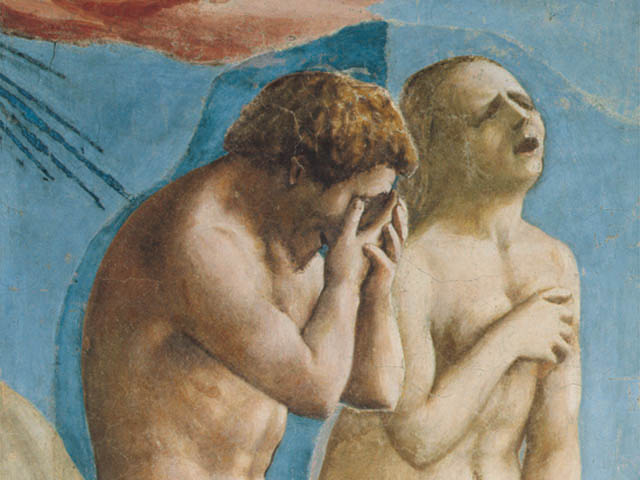
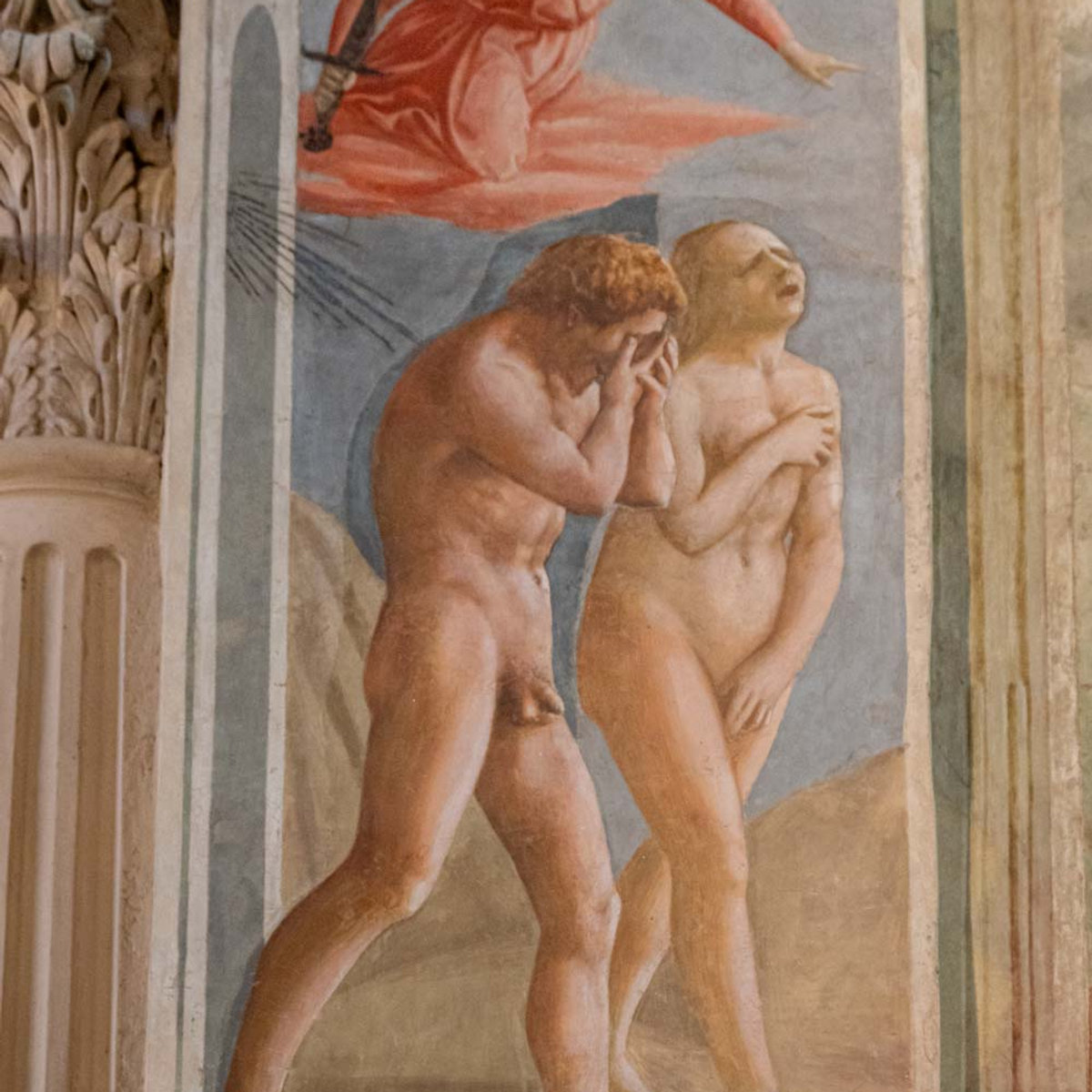
The Expulsion of the First Parents is, in this sense, a programmatic statement. Adam and Eve are no longer ideal figures, but bodies marked by shame and pain, burdened by the gravity of their condition. Adam’s gesture of covering his face and Eve’s gesture of hiding her body are not simply decorative gestures, but translate a concrete emotional experience, inscribed in the very physicality of the characters.
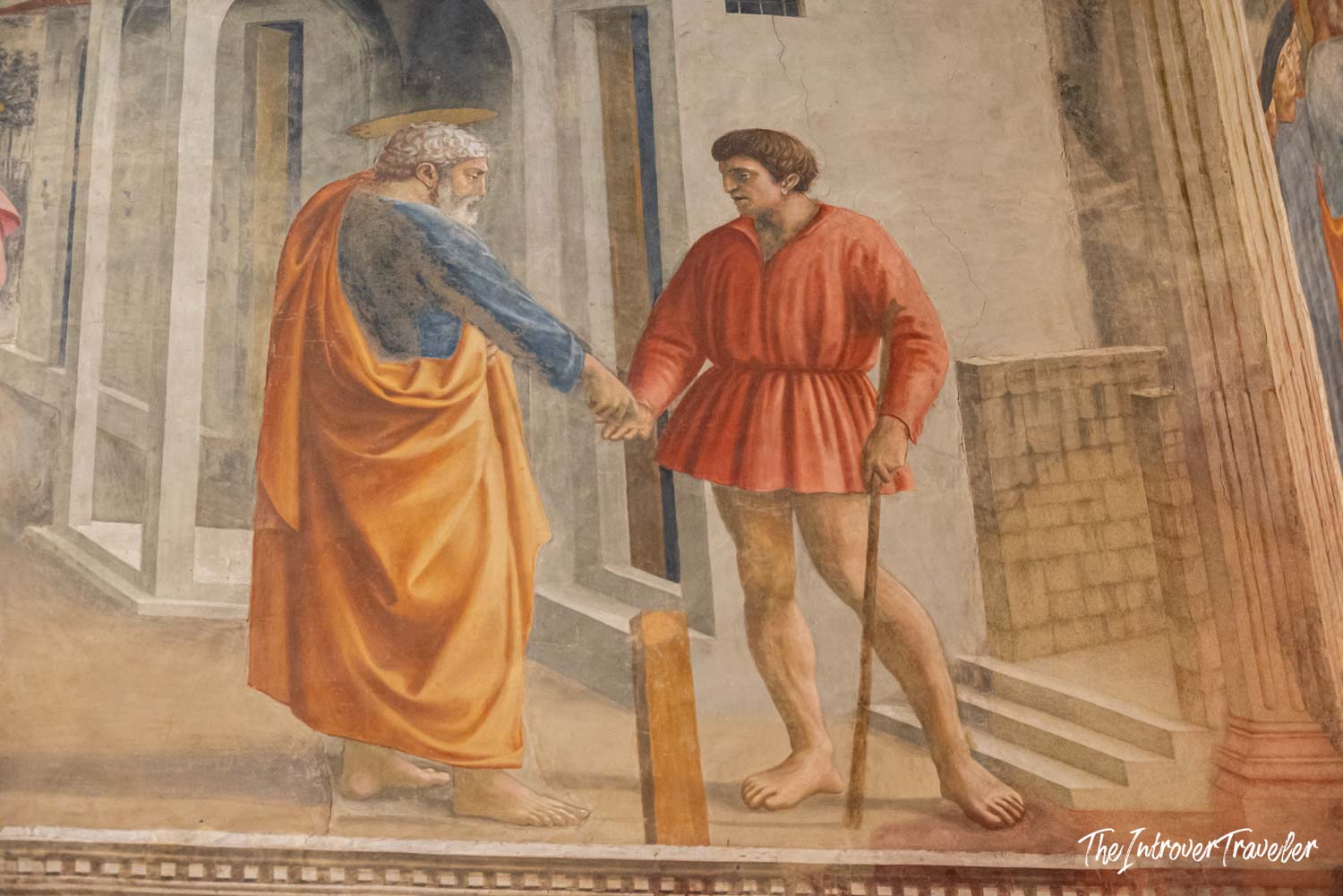
Even more evident is the spatial construction in the Tribute to Christ , the most famous scene along with the Expulsion from Paradise, where Masaccio organizes the scene according to a unitary, almost cinematic, perspective logic. Three episodes are represented: the central one shows Christ who, at the demand for the toll, makes a commanding gesture to Peter, who in turn repeats it towards the scene on the left, which constitutes the second episode, namely Peter taking the coin from the mouth of a fish; on the right, the scene concludes with the payment of the toll.
The architecture, landscape, and figures are part of a single system, governed by coherent proportions. Space is no longer a backdrop, but an environment in which events unfold according to an almost mathematical necessity. In this context, the narrative also changes: episodes are not simply juxtaposed, but articulated in a sequence that presupposes a rational and orderly vision of the world.
I report here a passage by Matteo Marangoni (Come si guarda un quadro, Florence, Vallecchi, 1975) in which the historian depicted the scene with his usual polemical verve , partly as a striking example of an in-depth study of Masaccio’s work, partly as an invitation to read his work with an analytical eye:
One of Masaccio’s most admirable qualities is his naturalness and spontaneity, where others would betray intention and stylistic research. In this episode of the Tribute, it is clear that Masaccio saw the potential he could derive from the compositional rhythm of the two figures. Their symmetrical positioning on two parallel planes, the two angled arms that unite them, the vertical areas of the background that contrastingly enhance their positioning, the “Publican’s” staff that accompanies their rhythm: all these formal factors would in other cases betray too much intentionality or even stylistic ostentation. Here, more than just seeing them, we sense them as inextricably fused with the artist’s action and soul. The figure of the “Publican” also betrays the subtle rhythmic sense of this great inventor of the new language of modern painting, yet most people see him only—like Giotto—as a great “poet” of human values. Now look at the cuneiform head of the “Publican” with that impossible ear, yet so appropriate for accentuating its rhythm (try hiding it); look at his left leg: with the other two of the same publican, in the other “Story” nearby, in the Carmine, they are the first legs to “turn”; and then tell me if Masaccio, without appearing to do so, didn’t also love the problems of form and… “deformations”!
The comparison between Masolino and Masaccio, therefore, should not be read as a simple chronological succession or as the transition from an “ancient” to a “modern” style. Rather, it is the coexistence, in the same space, of two epistemologies of the image: on the one hand, a painting that conceives reality as a surface to be adorned and harmonized; on the other, a painting that interprets it as a system to be understood and reconstructed.
It is precisely this coexistence, made visible in the Brancacci Chapel, that transforms the cycle into an exceptional document: not only a masterpiece, but a historical threshold where Western painting redefines its tools and, with them, its way of looking at the world.
The Expulsion from Paradise: A New Way of Representing Man
Among the chapel’s most famous scenes is the Expulsion from Paradise, painted by Masaccio. The fresco occupies a relatively marginal position on the wall, almost out of the way compared to other, more complex compositions, but its visual and emotional impact is such that it stands out as one of the absolute pinnacles of Western painting.
Adam and Eve advance toward the viewer, violently expelled from the Edenic space by a sword-wielding angel. The scene is reduced to the essentials: there is no naturalistic description of the garden, no superfluous detail. The background is neutral, almost abstract. This subtraction is not a lack of means, but a conscious choice: by eliminating every accessory element, Masaccio focuses attention exclusively on the human condition of the protagonists, transforming the biblical episode into a universal experience.
The construction of the figures is the true fulcrum of the scene. Adam covers his face with both hands, in a gesture that is not only one of shame, but of annihilation. His body, heavy and leaning forward, seems to yield under the weight of guilt, his mouth tense in a sneer of suffering. Eve, in turn, advances with an uncertain step, covering her body in a gesture that explicitly recalls the classical tradition of the Venus pudica , but which here is radically transformed: there is no longer any idealization, only the tragic awareness of nakedness and loss.
Light plays a decisive role. Coming from a direction consistent with the actual direction of the chapel, it shapes the bodies with a clear chiaroscuro, defining their volume and anchoring them to the space. These are no longer drawn and then colored figures, but bodies constructed through light, following a logic that directly recalls the study of ancient sculpture. The musculature, proportions, and tension of the limbs suggest a firsthand knowledge of the nude, likely also mediated by contact with artists like Donatello, with whom Masaccio shared a similar interest in anatomical truth.
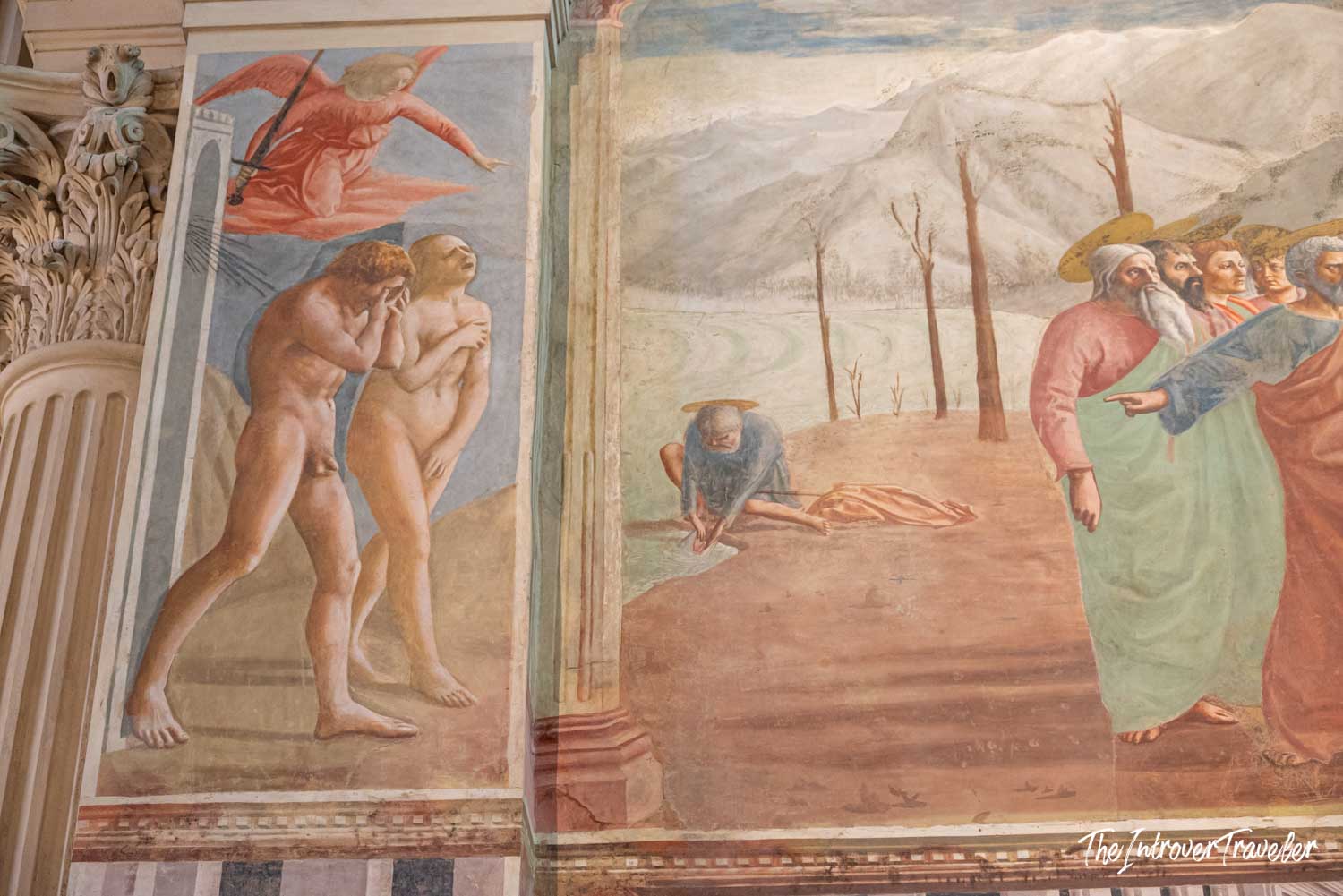
But what makes the fresco revolutionary is not only the solidity of the bodies, but the quality of the emotion depicted. For the first time, pain is not a conventional attribute, expressed through codified gestures, but an internal reality manifested through the body. Adam’s desperation, Eve’s shame, are not symbols: they are lived experiences, rendered visible with an immediacy that eliminates the distance between viewer and image.
It’s no coincidence that Giorgio Vasari, in the 16th century, emphasized how no painter before Masaccio had managed to portray human pain with such truth. His observation captures a crucial point: with this scene, painting is no longer limited to illustrating a sacred tale, but becomes a tool for exploring the human condition in its most radical dimension.
In this sense, the Expulsion from Paradise marks a clear break with previous tradition.
If Masolino da Panicale’s Temptation still presents elegant and almost immaterial bodies, immersed in a tension-free space, Masaccio introduces a dramatic and concrete vision, in which sin has physical, psychological and spatial consequences.
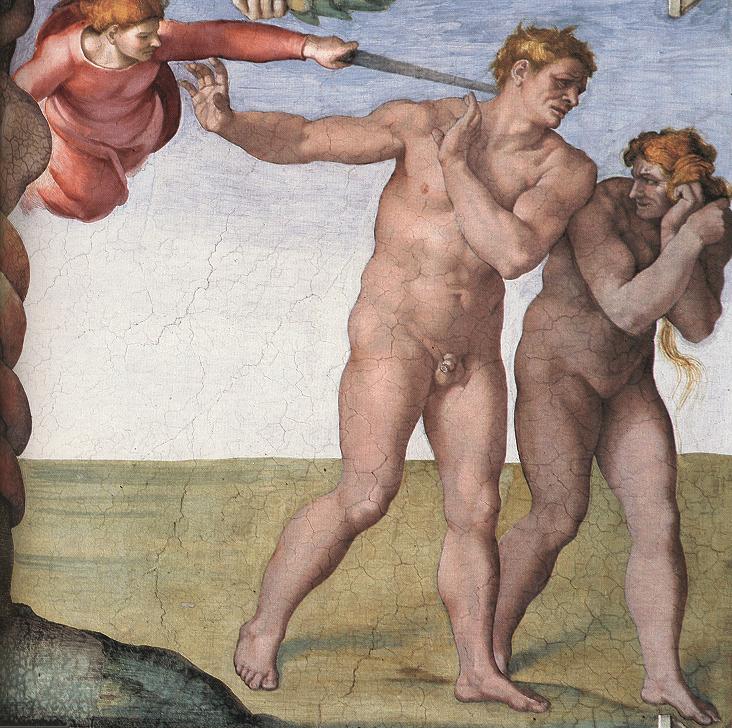
Many, also considering that it is well known that Michelangelo spent entire days studying the frescoes of the Brancacci Chapel, have seen in this episode a decisive influence on the similar scene depicted by Michelangelo, who evidently had not taken inspiration only from Luca Signorelli, in the Sistine vault.
Man, expelled from Eden, enters history definitively. And painting, with him, enters modernity.
The Baptism of Neophytes: The Human Body and the Truth of Experience
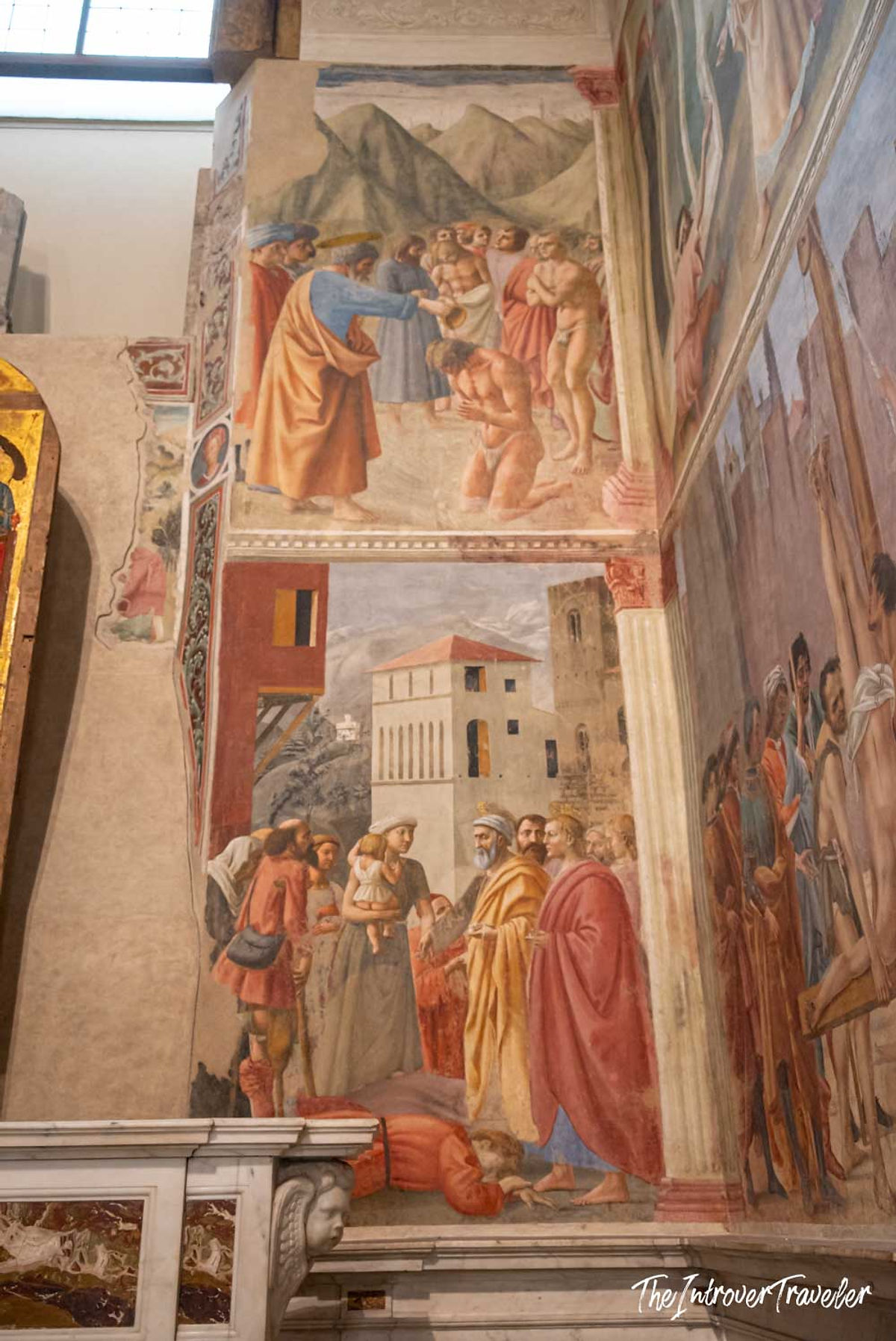
Among the most striking scenes in the Brancacci Chapel is the Baptism of the Neophytes , one of the frescoes in which Masaccio most clearly demonstrates his attention to the physical reality of man. The episode depicts Saint Peter administering baptism to a group of converts. The setting is extremely simple: a few landscape elements, a patch of clear sky, a bare field. As often happens in Masaccio’s compositions, the space is not designed to impress with rich detail, but to focus attention on the figures and their mutual relationship.
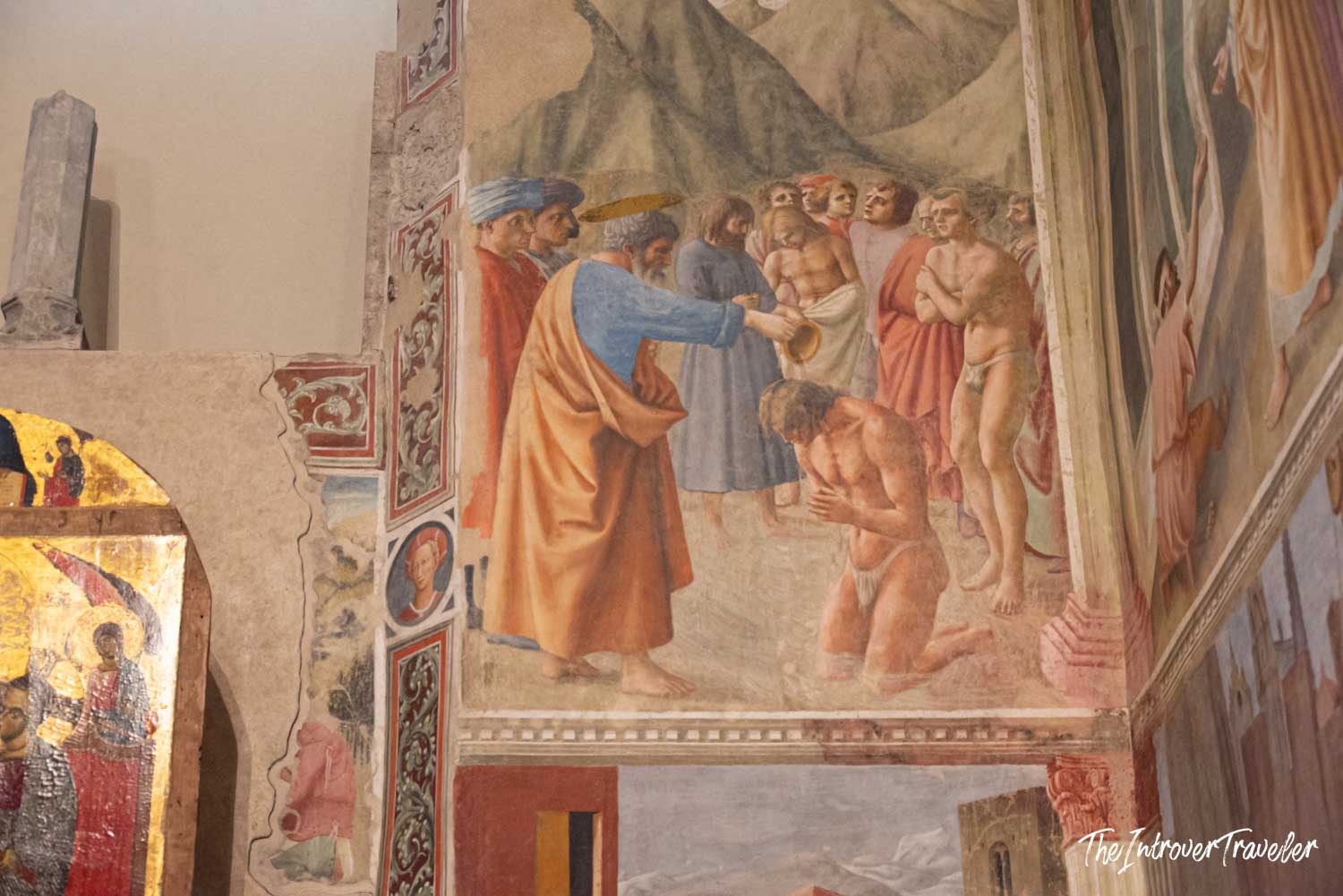
The visual protagonist of the scene is not Peter, but one of the catechumens awaiting baptism. The young man is depicted almost completely naked, his arms wrapped around his body in an instinctive gesture of protection. The reason for this posture is immediately understandable: the figure is cold. The baptismal water has just been poured on another convert, and the temperature of the room seems to be perceptible through his body language.
This seemingly minor detail represents one of the earliest examples of psychological naturalism in Renaissance painting. Masaccio doesn’t simply depict a human body with anatomical precision. He seeks to suggest a concrete physical sensation, something the viewer can recognize through direct experience. The result is a scene with an almost documentary quality, as if the artist had observed real people in a similar situation.
Formally, the young man’s body displays a surprisingly advanced understanding of anatomy. The volumes are constructed through clear chiaroscuro effects, shaping the chest, shoulders, and arms with an almost sculptural solidity. The figure does not appear to rest on the painted surface, but rather seems to occupy a real space.
This way of representing the human body marks a break with the late Gothic tradition, in which the figure was often defined primarily by linear drawing. In Masaccio, the body becomes a three-dimensional structure constructed through light.
The Healing of the Cripple and the Raising of Tabitha
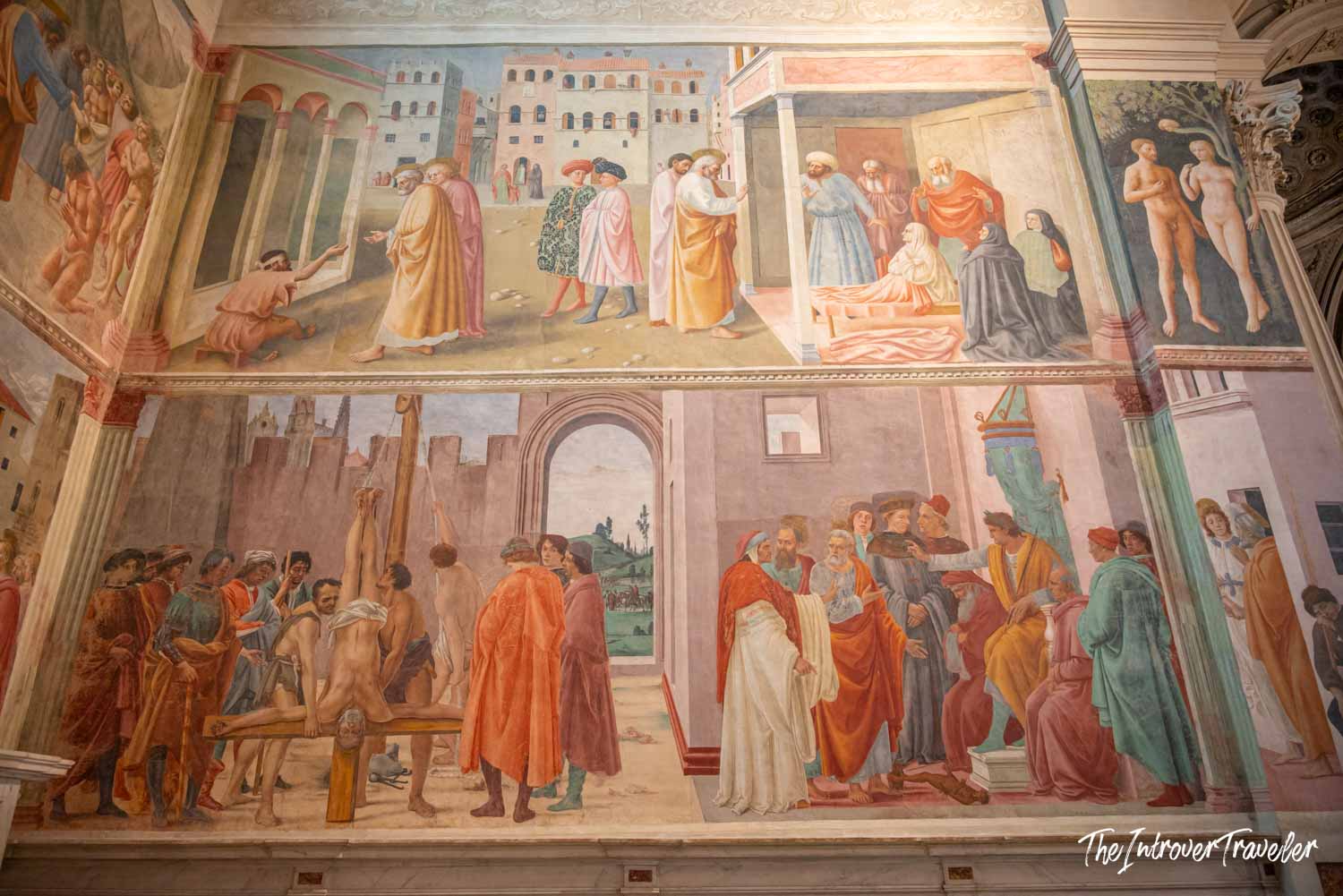
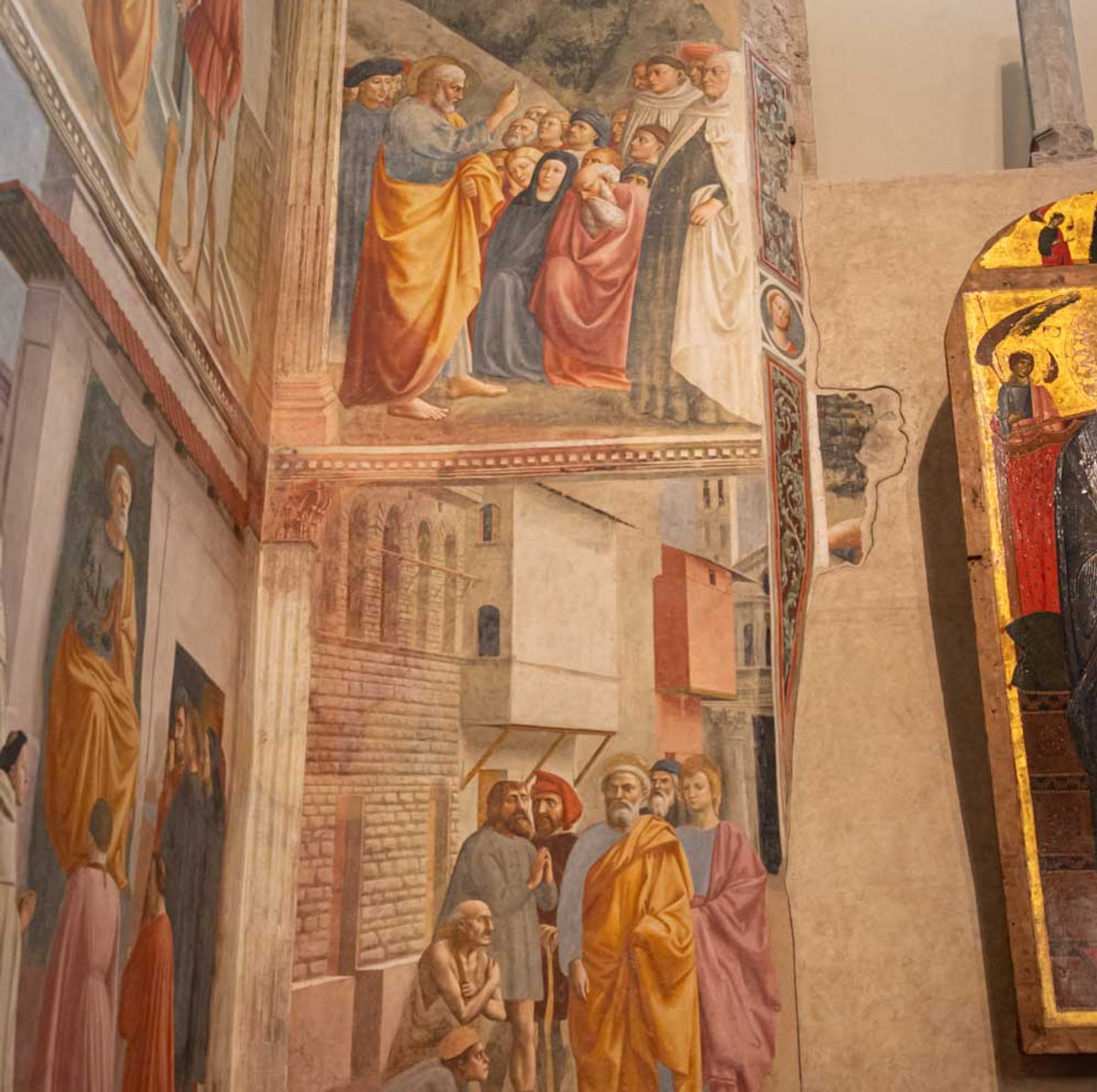
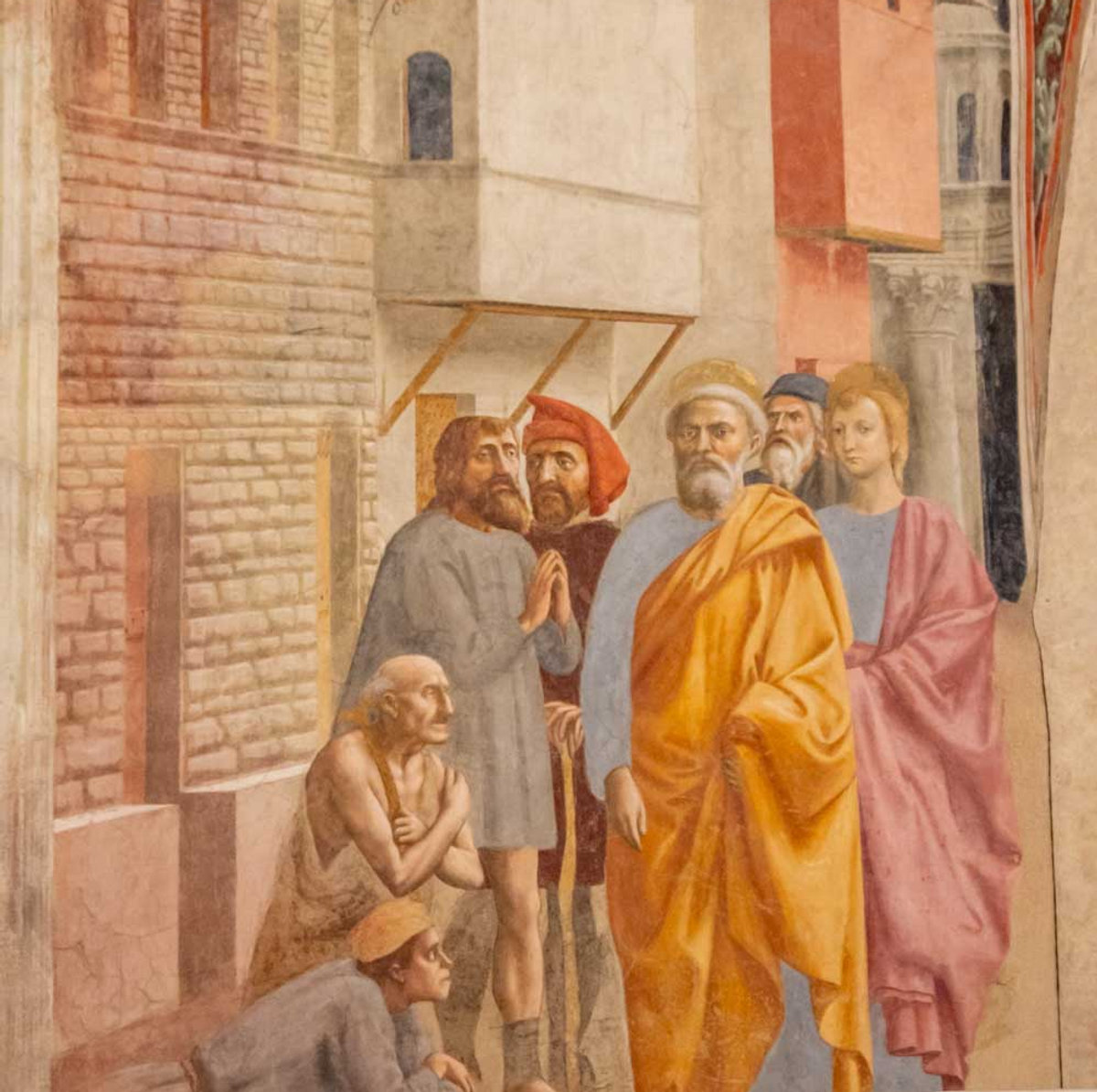
Another fresco of great interest is the one depicting the healing of the cripple and the raising of Tabitha, a complex episode that combines two distinct narrative moments. The scene is set in an urban space defined by architecture suggesting an orderly and rational city. The lines of the buildings help organize the depth of the space and guide the viewer’s gaze toward the center of the action.
In the first episode, Peter heals a cripple, restoring his ability to walk. In the second episode, the apostle resurrects Tabitha, a devout woman remembered in the Acts of the Apostles for her charity toward the poor.
As with the payment of the Tribute, Masaccio (or more likely Masolino) manages to integrate these two narrative moments within a unified composition. The figures are distributed in such a way that the eye can move naturally from one episode to the next, following the movement of the action.
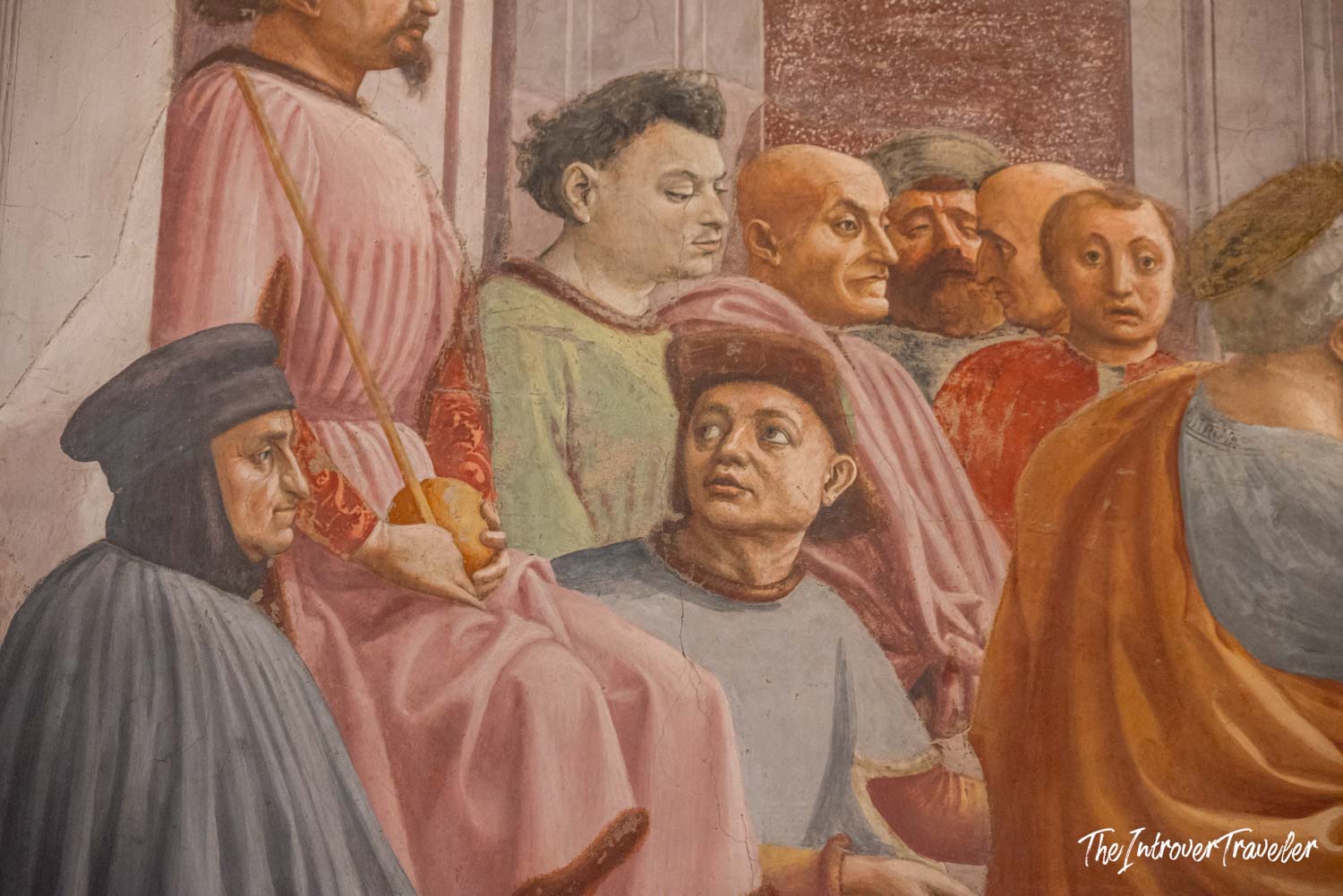
One of the most notable aspects of the scene is the presence of numerous spectators. Some are attentively observing the miracle, others appear to be conversing among themselves. This group of characters introduces a social dimension to the scene that enriches the narrative. The miracle is not presented as an isolated event, but as something that occurs before a community.
The variety of faces and postures suggests that Masaccio was interested in studying human behavior in different situations. Here, too, direct observation of reality seems to play a fundamental role.
The Distribution of Alms and the Death of Ananias
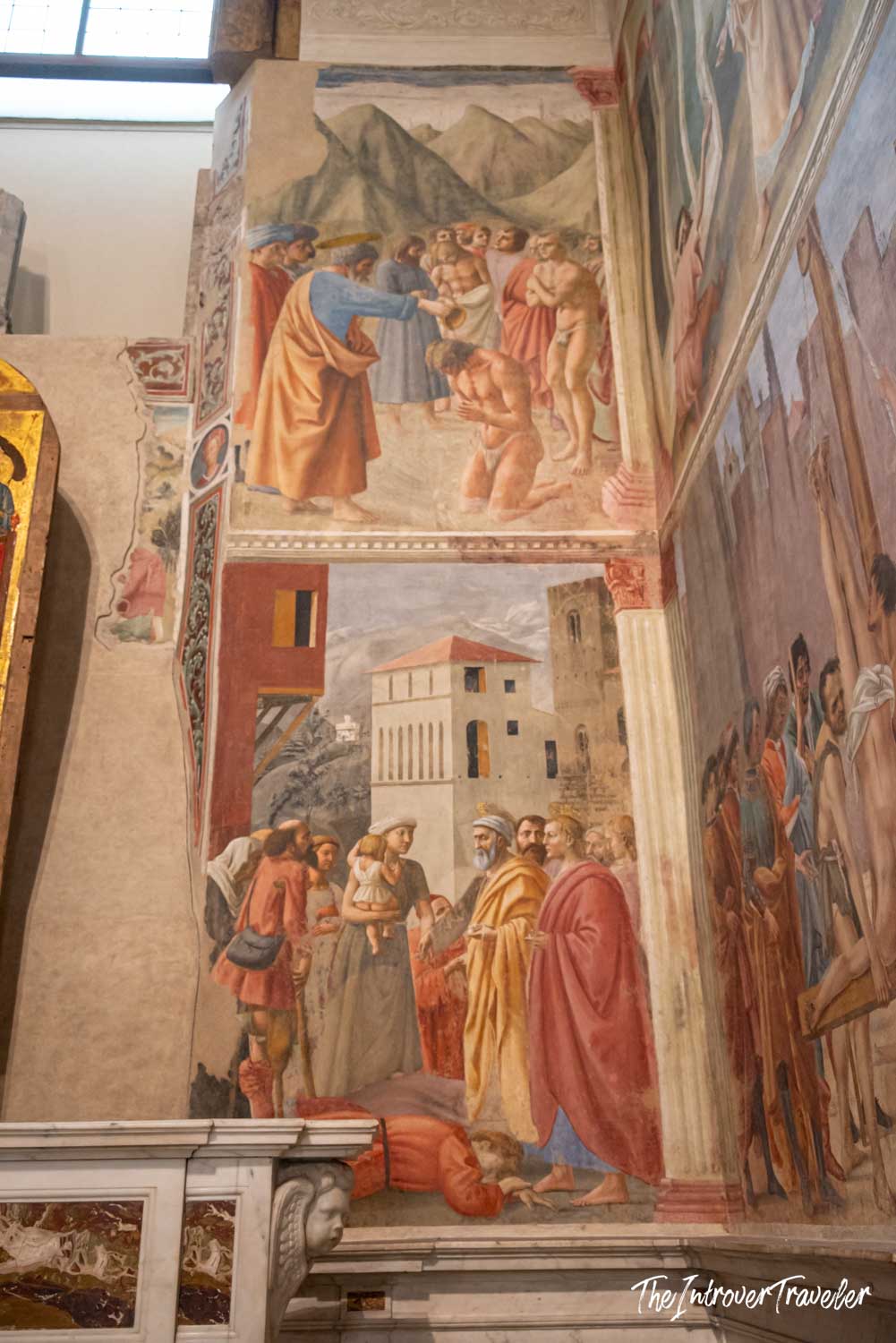
The scene of the Distribution of Alms depicts an episode from the Acts of the Apostles that concerns the life of the early Christian community. Peter distributes the goods he has collected among the neediest believers, but one of the community members, Ananias, has withheld part of the proceeds from the sale of his possessions. When Peter discovers the deception, Ananias falls dead.
Masaccio depicts the moment immediately following the punishment. Ananias’s body lies on the ground while the surrounding figures react with surprise and disquiet. Some bend down to observe the corpse, others turn away in fear.
The composition is constructed with great attention to the distribution of the groups of figures. Peter appears in a dominant position, while Ananias’s body becomes the dramatic fulcrum of the scene.
Here too, the artist manages to combine the moral dimension of the story with a convincing depiction of human reactions. The scene isn’t constructed as a simple didactic illustration. It’s a narrative episode in which the characters react plausibly to an unexpected event.
The figure of the cripple, his weight unbalanced on his crutch, and the woman at his side in the center of the painting, depicted in the act of supporting her infant son in her arm, her buttocks pressed loosely against his mother’s forearm, are two masterful examples of naturalistic representation. The second, in particular, is apt to evoke other famous depictions, such as Donatello’s Pazzi Madonna or Michelangelo‘s Madonna della Scala, and to wonder, once again, how much influence Masaccio had on these works.
The fresco technique
To fully understand Masaccio‘s work in the Brancacci Chapel, it is useful to briefly consider the fresco technique , which requires a combination of planning and speed of execution.
Fresco painting involves applying pigments to still-wet plaster. As it dries, the lime fixes the color through a chemical process that permanently incorporates it into the wall surface. It is precisely this reaction that ensures the extraordinary durability of frescoes, but at the same time, it requires the artist to work under extremely tight deadlines. It is not possible to freely return to the image: each intervention must be decisive.
This is where the practice of giornate (days) comes from, sections of plaster laid out and painted within a limited time frame, before the surface loses its ability to absorb the paint. The division into days is not a secondary technical detail, but directly impacts the construction of the image: it requires meticulous planning of the design and a clear hierarchy of forms.
Investigations conducted during modern restorations have allowed us to reconstruct Masaccio’s working method with some precision. Preparatory sinopias, incisions traced on fresh plaster to establish the main lines, and in some cases traces of dusting, indicating the use of preparatory cartoons, have been identified. These tools testify to a meticulous planning phase, far from improvised.
And yet, what is most striking is the confident execution. Masaccio works with a surprising synthesis: the chiaroscuro transitions are achieved through essential, unhesitating interventions, which immediately define the figures’ volume. There is no complacency in the details or visible second thoughts; each brushstroke seems to respond to a structural necessity.
In this economy of means, supported by solid planning, one of the highest qualities of his painting is manifested: the ability to transform a rigidly constrained technical process into an instrument of extraordinary expressive freedom.
Light as a structural element
One of the most radical aspects of Masaccio‘s painting concerns the role assigned to light, which in his frescoes ceases to be a simple atmospheric or decorative factor and becomes the very principle of image construction. Light does not simply illuminate the figures, but generates them, defines them, and establishes their weight and presence in space.
In the Brancacci Chapel, this principle achieves a surprising coherence: the direction of the painted light coincides with that of the real light entering from the chapel window. The result is a remarkably modern effect of integration, whereby the pictorial space does not appear separate from the architectural space, but seems to extend and complete it. Masaccio’s figures, illuminated by a plausible and unified light source, share the same space as the viewer.
Even the shadows, carefully oriented, contribute to this construction: they are not accessory details, but elements that anchor the bodies to the ground and reinforce their three-dimensionality. This systematic and coherent use of light captures one of the decisive achievements of Renaissance painting: the transformation of the image from a decorated surface to a space constructed according to intelligible physical laws.
The interruption of the works and the completion of Filippino Lippi
The pictorial cycle of the Brancacci Chapel was not completed when Masaccio and Masolino worked there. Work was interrupted in the late 1420s and remained unfinished for over half a century.
The reasons for this interruption are not precisely documented, but it is highly likely that the main cause was the political downfall of the Brancacci family. In 1436, Felice Brancacci was accused of supporting a conspiracy against the Florentine government and sentenced to exile. The family chapel, located in the Church of the Carmine, was thus left without a patron capable of financing the completion of its decoration.
For decades, the chapel’s walls preserved unfinished portions of the iconographic program. Some scenes had been started but not finished, while others had not yet been painted; some scholars have speculated that the portions of the fresco depicting members of the Brancacci family were destroyed when the Brancacci family were exiled from Florence.
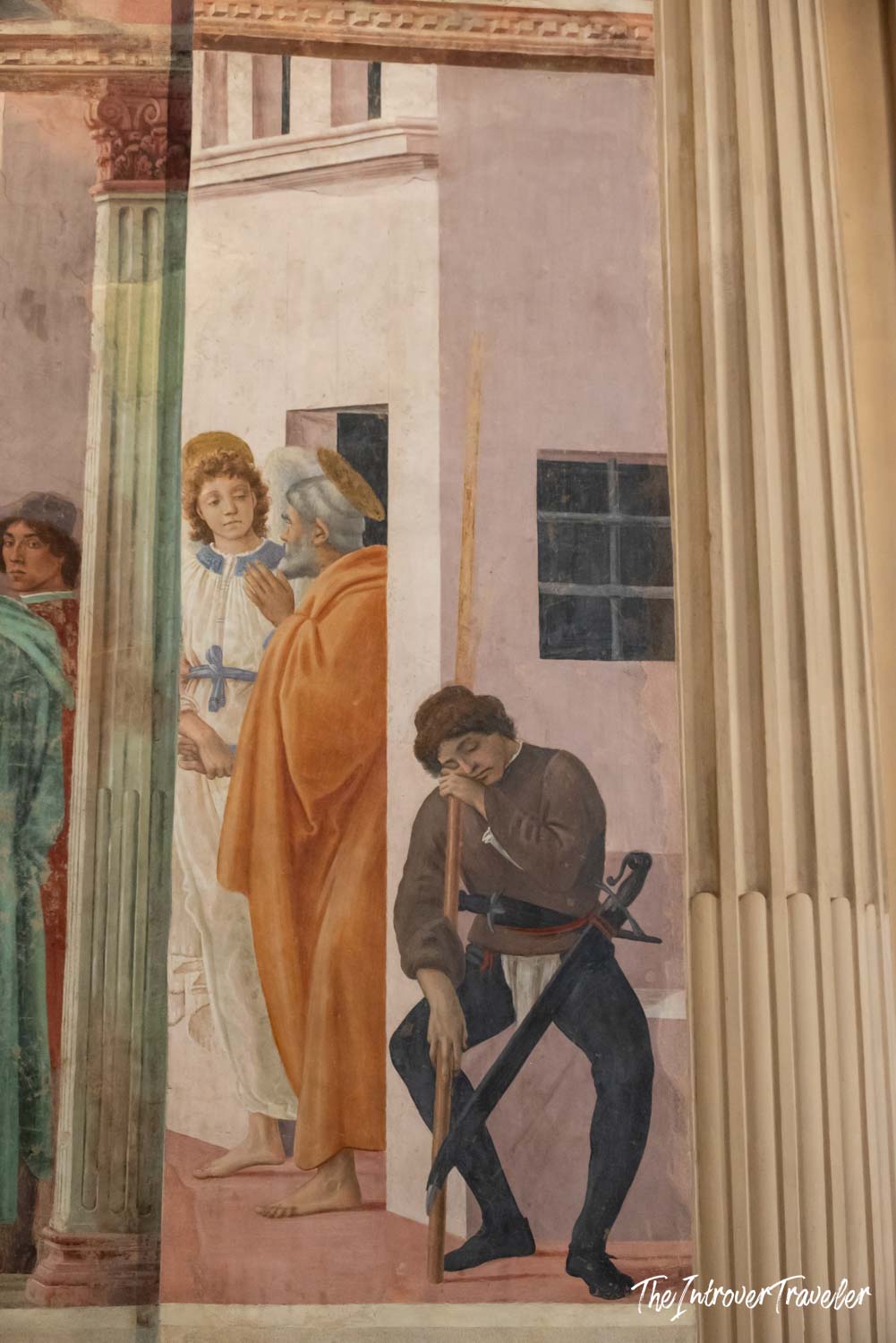
The cycle was finally completed only in 1481. The work was entrusted to Filippino Lippi. He was aware of the delicate task entrusted to him: he had to intervene on an already famous pictorial cycle and integrate it with the style of artists who had lived over half a century earlier. However, in my very humble opinion, the result was not up to par; Filippino’s intervention is too often evident in its stylistic divergence, and while the Gothic legacy is still clearly discernible in the work of Masaccio and Masolino, the sections completed by Filippino already appear fully Renaissance (I’m thinking, for example, of the Sleeping Youth on the right). I find the evident Botticellian influence in Lippi’s style particularly jarring, which could not be more at odds with Masaccio’s manner.
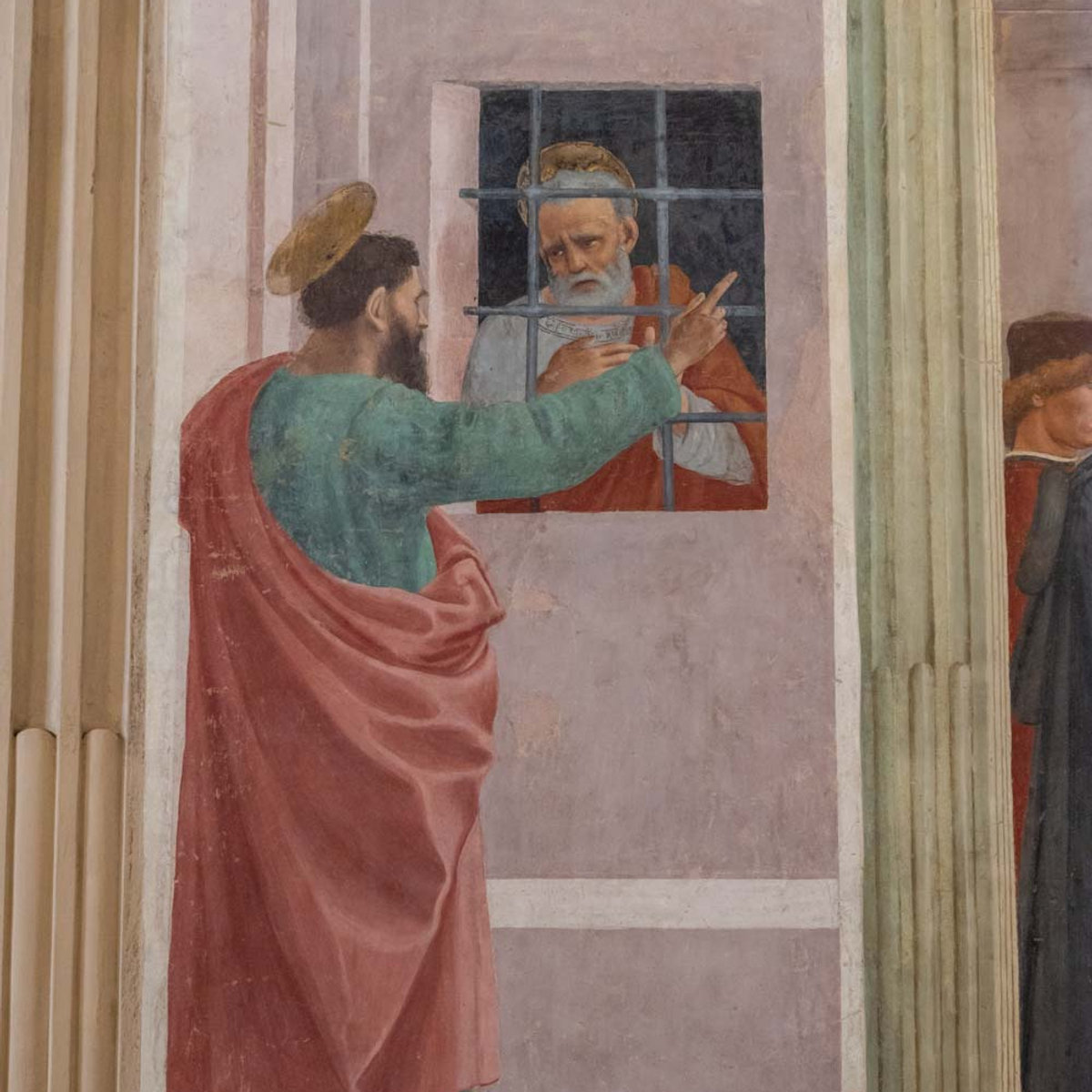
Among the scenes painted by Filippino are the Disputation with Simon Magus and the Crucifixion of Saint Peter. In the first scene, the apostle confronts the magician Simon before the Emperor Nero, while the second depicts the martyrdom of Peter, crucified upside down according to tradition.
The Brancacci Chapel as a school of painting
Already during the 15th century, the Brancacci Chapel established itself as a privileged place of study for Florentine painters, a sort of open laboratory where they could directly engage with one of the most advanced experiences in contemporary painting. It was not an academy in the formal sense, but a space where the practice of observation and copying took on an essential formative value: Masaccio‘s figures offered a concrete repertoire of anatomical, lighting, and compositional solutions that could only be assimilated through direct and repeated practice.
Contemporary and later sources insistently confirm this role. Giorgio Vasari, in his Lives , describes the chapel as an almost obligatory passage for generations of artists, emphasizing that nearly all Florentine painters had trained there. Rhetorical emphasis aside, the data is essentially reliable: the Brancacci Chapel became a shared point of reference, a place where a new figurative lexicon was defined, destined to spread far beyond the local context.
The cycle’s influence lies not only in the excellence of the individual scenes, but also in its structural coherence. The frescoes demonstrate, with unprecedented clarity, how narrative can be organized within a unified space, governed by principles of perspective and illuminated by a constant luminous logic. The figures are not isolated episodes, but elements of a system, and it is precisely this integration of narrative, space, and the human body that constitutes the chapel’s most enduring lesson.
The critical success of the chapel
Over the centuries, the Brancacci Chapel’s reputation has continued to grow. Renaissance art historians recognized the importance of Masaccio’s frescoes early on.
Giorgio Vasari, in his famous Lives of the Most Excellent Painters, Sculptors and Architects , described Masaccio as the first painter who had truly understood how to represent nature through painting.
According to Vasari, Masaccio had taught later artists how to render figures alive and believable in space. This assessment, though formulated in the language of the sixteenth century, captures a fundamental element: Masaccio’s ability to transform painting into a tool for observing reality.
Throughout the twentieth century, studies on the Brancacci Chapel have multiplied. Art historians such as Roberto Longhi , John T. Spike , Andrew Ladis , and Paul Joannides have analyzed in detail the pictorial technique, iconographic structure, and historical context of the cycle.
One of the most important results of this research has been the recognition of the complexity of the relationship between Masolino and Masaccio. In the past, critics tended to sharply contrast the two artists, attributing everything that seemed innovative to Masaccio and relegating Masolino to a secondary role. More recent studies have shown that the collaboration between the two painters was likely more complex and that some innovations arose precisely from the dialogue between their artistic languages.
Modern restorations
Over the centuries, the frescoes in the Brancacci Chapel underwent a series of interventions that profoundly altered their legibility. The progressive accumulation of soot from candles, humidity, and, above all, repainting carried out at different times had ultimately flattened the chromatic range and attenuated the luminous construction that constitutes one of the most innovative elements of Masaccio’s painting. In some cases, 19th-century interventions had even “corrected” the figures in a more academic style, dulling the original power of the images.
The extensive restoration conducted between 1981 and 1990 represents a crucial step not only for the chapel, but for the very history of pictorial conservation. The intervention was undertaken according to rigorous methodological criteria, based on a clear distinction between the original material and subsequent additions, and on an approach that was as reversible as possible. It was not simply a matter of “cleaning” the frescoes, but of restoring legibility to a complex pictorial system, freeing it from layers that altered its perception.
Diagnostic investigations played a crucial role. Through stratigraphic analysis, infrared reflectography, and close-up observations of the days , it was possible to reconstruct the artists’ executive process with greater precision. Significant details emerged: the sureness of the line, the speed of execution, the minimal but decisive variations in the application of color. In some cases, these analyses also allowed us to more clearly distinguish the hands of Masolino da Panicale from those of Filippino Lippi.
The outcome of the restoration was, for many observers, almost surprising. The removal of overpaint and surface deposits revealed a much brighter and more complex palette than previously seen. The colors appeared lighter, more transparent, and above all, the structural role of light in defining the volumes was fully perceptible.
As often happens with interventions of this kind, there were some concerns: some critics felt that the cleaning had made the colors excessively bright compared to the historically accurate image to which they were accustomed. However, overall, the restoration is now considered an exemplary case, as it not only allowed the frescoes to be restored to their original appearance, but also significantly deepened our technical and stylistic understanding of one of the founding moments of Renaissance painting.
During the restoration, the branches that had been placed over the nakedness of Adam and Eve in the 17th century, similar to the infamous “braghettoni” by Daniele da Volterra in the Sistine Chapel, were also meritoriously removed, freeing their genitals from centuries of oppression.
Visit the Brancacci Chapel today
Today, the Brancacci Chapel is a key site for anyone who wishes to understand the birth of Renaissance painting. It is located in the church of Santa Maria del Carmine, in Florence‘s Oltrarno neighborhood, a part of the city that still retains a quieter feel than the more touristy areas of the historic center.
Access to the chapel is regulated by a system of limited visits, which allows for the preservation of the frescoes by limiting the number of visitors present at a time; unlike what happens with Leonardo’s Last Supper or the Scrovegni Chapel, however, the time allowed for the visit (currently half an hour) is more than sufficient to adequately observe the work. Precisely because of limited entry slots, even though this is a place still miraculously untouched by overtourism, it is strongly recommended to book tickets in advance.
Upon entering the chapel’s relatively intimate space, one immediately perceives the coherence of the pictorial cycle. The scenes are distributed across the walls according to a narrative structure that guides the visitor’s gaze.
The best way to observe the frescoes is to take the time to follow the sequence of the stories. Many visitors focus primarily on the Expulsion from Paradise and the Tribute, but the lesser-known scenes are also worth examining carefully.
The Baptism of the Neophytes, for example, reveals Masaccio’s sensitivity to human physical experience. The Distribution of Alms, on the other hand, demonstrates his ability to depict the dynamics of a community.
Looking closely at the figures, one can perceive the artist’s confident construction of volume through a few subtle passages of light and shadow. There’s nothing superfluous. Every gesture, every posture contributes to the construction of the scene.
After a few minutes of observation, it becomes clear why the Brancacci Chapel has had such a lasting influence. The images possess a surprisingly direct quality, as if the events depicted were unfolding before the viewer.
Why Masaccio’s Brancacci Chapel is Still Important
In fact, the Brancacci Chapel isn’t important: it’s fundamental. Nearly six centuries after its construction, the Brancacci Chapel continues to be one of the most important places for understanding the evolution of Western painting.
In these walls we can observe the moment in which painting definitively abandoned the medieval language and acquired a new awareness of space, the human body and figurative narration.
Masaccio didn’t simply perfect existing techniques. He introduced a different way of conceiving painting as a credible representation of reality. His figures breathe in space and participate in a world that seems surprisingly close to our experience.
For this reason, the Brancacci Chapel is not only a must-see for art historians. It’s one of the places where one can clearly observe the birth of modern painting.
The dome of the Brancacci Chapel was frescoed in 1700 by Vincenzo Meucci, and every time I look at it, I wonder “why?”.
If you are planning a visit to Florence you might be interested in these posts .
If you want to explore other works by Masaccio you can find their location on ArtAtlas .
This post is part of my guide to the major Italian fresco cycles .
Books
Ornella Casazza, Masaccio and the Brancacci Chapel (The Library of Great Masters)
As an Amazon Associate, I may earn a small commission from qualifying purchases made through the links in this article, at no additional cost to the reader.