Choosing when to visit Tanzania is one of the most important decisions when planning a safari. Unlike many other travel destinations, where seasonality is mainly determined by temperature or tourist crowds, in East Africa the decisive factor is the rhythm of the rains. Rainfall determines grass growth, water availability and, consequently, the movements of wildlife. In other words, the entire savanna ecosystem functions as a biological system regulated by climate.
Seasonality therefore has obvious consequences for the way climate, vegetation and wildlife interact with one another.
This post is part of my complete guide to traveling in Tanzania.
The Climate of Tanzania
Tanzania lies just south of the equator and has a tropical climate characterized by relatively stable temperatures throughout the year and a strong alternation between dry seasons and rainy seasons.
Temperatures in the safari regions, located on the northern highlands between 1,200 and 1,800 meters above sea level, are generally mild compared with other equatorial areas. During the day they often range between 20 and 30 °C, while at night they can drop below 10–12 °C, especially in elevated areas such as Ngorongoro.
The most important climatic factor is therefore not temperature but the distribution of rainfall, which follows a relatively regular cycle divided into four main periods:
- long dry season
- short rains
- short dry season
- long rains
This pattern determines the ecological rhythm of the entire Serengeti–Ngorongoro ecosystem.
The Long Dry Season (June – October)
For many travelers this is considered the best time to visit Tanzania, especially for those who want to observe wildlife during a safari. I visited Tanzania in August, and I tend to agree that, despite some drawbacks, this is generally the most favorable period. For more details I refer to what I have already written in my Serengeti guide.
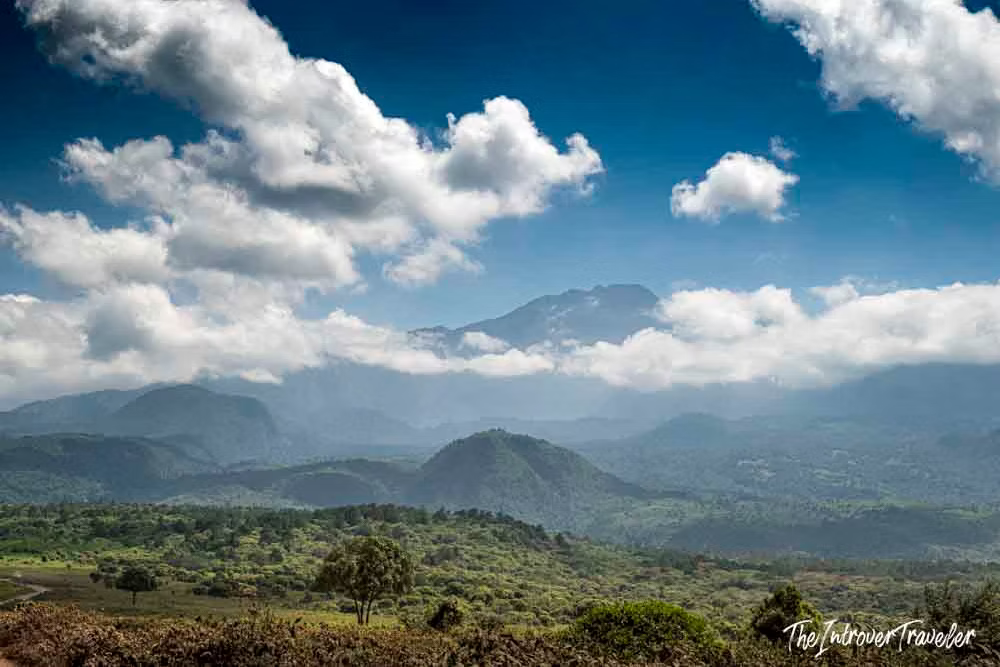
During these months rainfall is very rare and vegetation gradually becomes thinner. The grasslands turn yellow and permanent water sources become focal points where large numbers of animals gather. This dynamic makes it much easier to spot mammals even from considerable distances.
The dry season also coincides with the period when many animal populations move toward the northern regions of the Serengeti–Mara ecosystem. Between July and September, the famous crossings of the Mara River often occur, one of the most spectacular episodes of the Great Migration.
From a photographic point of view this period offers very favorable conditions. Clear skies, strong light and less dense vegetation greatly facilitate wildlife observation and photography.
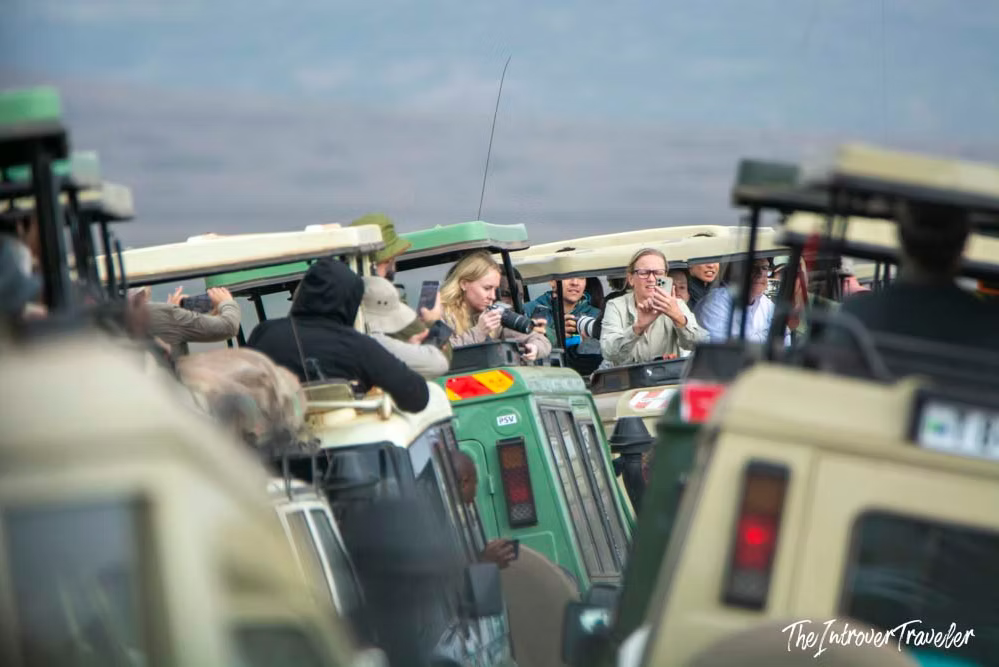
The only real drawback of the dry season is that it coincides with the high tourist season, especially between July and August, when many European and North American travelers visit during their summer holidays.
The Short Rains (November – December)
With the arrival of November the climate gradually changes. The first rains, locally known as the short rains, begin to fall intermittently.
These are not continuous precipitations but relatively brief showers that often occur in the afternoon or during the night. The landscape changes quickly: the plains turn green again and the grass begins to grow.
This period is often considered a transitional season, with fewer tourists compared with the dry season. Many animals start moving toward the southern plains of the Serengeti, where fresh grass provides nutrient-rich grazing.
From a landscape perspective the short rains transform the savanna into a very different scene from the dry season: the ground becomes covered with fresh vegetation while the sky alternates between dramatic clouds and moments of intense light.
The Short Dry Season (January – February)
The months of January and February represent one of the most interesting moments of the year from a naturalistic point of view.
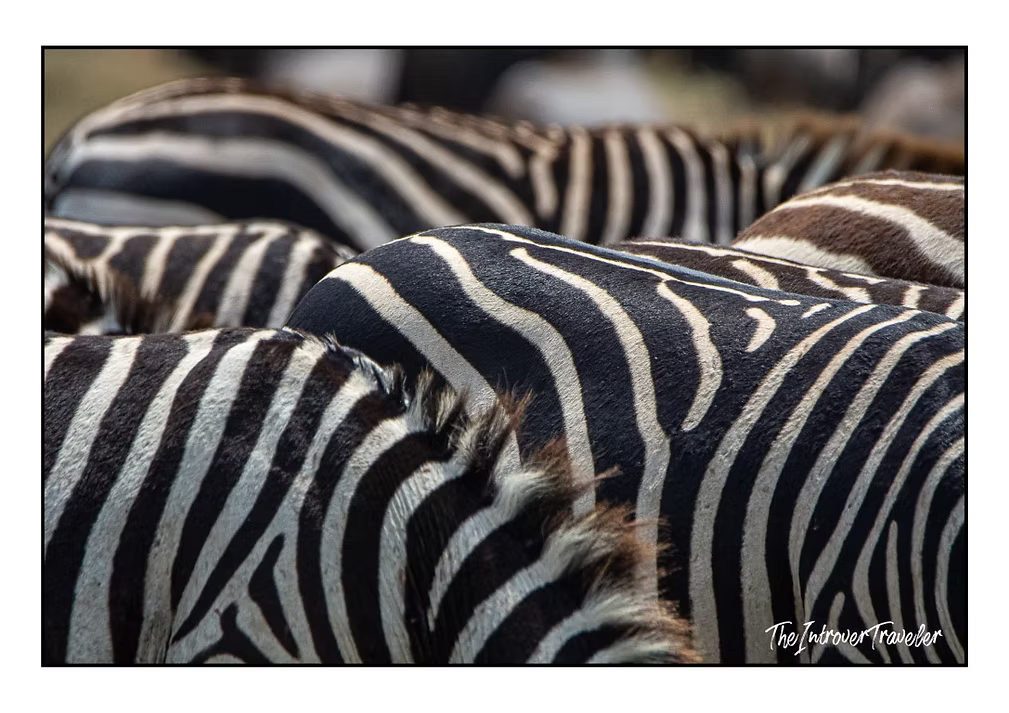
During this period the southern plains of the Serengeti host enormous concentrations of wildebeest and zebras. This is where the calving season takes place, one of the most important biological events of the entire ecosystem.
Within just a few weeks hundreds of thousands of wildebeest calves are born, often more than half a million. This phenomenon has enormous ecological implications. The newborns provide an abundant food source for predators, and it is not uncommon to observe lions, cheetahs and hyenas engaged in frequent hunting episodes.
From a photographic point of view this period offers extraordinary scenes: vast herds of herbivores extend across the green plains as far as the eye can see, while predators take advantage of the presence of numerous young animals.
Climatic conditions are generally good, with warm days but without excessive humidity.
The Long Rains (March – May)
Between March and May the season of the long rains arrives, the wettest period of the year.
Rainfall can be intense and prolonged, sometimes turning some park tracks into difficult routes to cross. For this reason many lodges and mobile camps reduce their activities during these months.
From a tourism perspective this is considered the low season, with fewer visitors and often lower prices. However the landscape should not be imagined as less interesting. On the contrary, the rains transform the savanna into an extremely lush and vibrant environment.
Cloud formations and diffused light create atmospheres very different from those of the dry season. Some photographers actually prefer this period because of the rich colors of the landscape and the lower number of vehicles in the parks.
Seasonality and Animal Behavior
The seasonal cycle of Tanzania is closely linked to wildlife behavior.
Migratory herbivores such as wildebeest and zebras move continuously in search of fresh grass. These seasonal movements generate a series of chain reactions throughout the ecosystem.
Predators follow the herds, adapting their territories to changes in prey availability. Hyenas and lions, for example, may modify their hunting areas depending on the movements of the large migratory herds.
Migratory birds also respond to seasonal changes. During the rainy season many lakes and wetlands attract numerous species arriving from Europe and Asia.
The Great Migration: When Is the Best Time to Visit Tanzania?
One of the most common questions asked by travelers planning a safari in Tanzania is: when can I see the Great Migration in the Serengeti? The honest answer is that it cannot be predicted with precision.
Broadly speaking, the migration cycle follows this pattern:
With the short rains (January and February) the large herds move toward the southeastern area of Seronera.
In February the wildebeest calves are born.
Between March and April the herds move across the southeastern Serengeti in search of food, although their position remains quite unpredictable.
Between April and June the herds begin moving northward. The initial stages of the migration fall within this time window, but predicting exactly where the animals will be in the Serengeti is impossible. This is a natural event involving millions of animals. During this period the herds move westward and cross the Grumeti River.
After crossing the Grumeti, between July and August, the spectacular crossing of the Mara River takes place.
Between August and September most of the animals involved in the Great Migration are located in Kenya, which means that although this period is otherwise excellent for visiting Tanzania, it is also the worst time to see the migration within the Serengeti.
Around October the migration reverses direction, crossing the Mara River again and beginning its journey back toward the south.
In simplified terms, the migration follows an elliptical path, starting from the southern plains in January, moving west and north in a clockwise direction, reaching the far northern edge near the Kenyan border around August, and then returning south.
This seasonality, however, should be considered only indicative. In 2014, for example, the northward migration began only in July, demonstrating how strongly these movements depend on rainfall patterns.
When to Visit Tanzania: A Summary
There is no single perfect time to visit Tanzania. Each season offers different conditions and allows visitors to observe different aspects of the ecosystem.
The dry season (June–October) is ideal for travelers who want to observe wildlife easily and experience the classic African safari. Although this is not the best period to witness the famous Great Migration within the Serengeti, and despite the higher number of tourists, it remains in my opinion the best time to visit, particularly for those traveling to Africa for the first time and looking for the quintessential safari experience.
The calving season in the southern Serengeti (January–February) is especially interesting for those who want to witness a crucial phase in the biological cycle of the savanna. During this period, however, taller vegetation makes wildlife sightings significantly more difficult.
The rainy seasons (November–December and March–May) offer greener landscapes and fewer crowds, creating an atmosphere very different from that of the drier months.
In reality, the true peculiarity of Tanzania lies precisely in this: there is no season in which nature stops. The ecosystem continues to transform month after month following the rhythm of rainfall and migration, producing a landscape that is slightly different each time.
Visiting Tanzania therefore means entering this natural cycle and observing how the life of the savanna constantly adapts to climatic variations. And it is precisely this dynamic, even more than the simple presence of wildlife, that makes the safari one of the most fascinating experiences one can have in Africa.