There comes a moment in the life of every visitor to Italian churches when spirituality ends and numismatics and theoclastic invective begin.
It is the moment when you find yourself before a side chapel, as dark as the conscience of a Renaissance cardinal, trying to make out something in the total gloom. Is it Caravaggio’s Conversion of Saint Paul? A fresco by Pinturicchio? A damp stain vaguely shaped like the Madonna? You will never know, because the artwork lies submerged in punitive darkness, a darkness seemingly designed to remind you that in the House of the Lord, as in the Kingdom of God, light is not free. For light, you need a coin. A one-euro coin. Inserted into a token machine that looks as though it was stolen from the laundry room of a youth hostel in Bratislava in 1987.
Pause for a moment and admire the scene in its entirety. It is the Year of Our Lord 2026. We live in an age in which you can buy an apartment with an instant transfer on your phone, pay for coffee with your watch, send money to New Zealand through an app while sitting on the toilet, and trade cryptocurrencies that do not even exist. But if you want to see a Pontormo in Santa Felicita in Florence, you need a one-euro coin. In your pocket. Physical. Metallic. As though it were 1974.
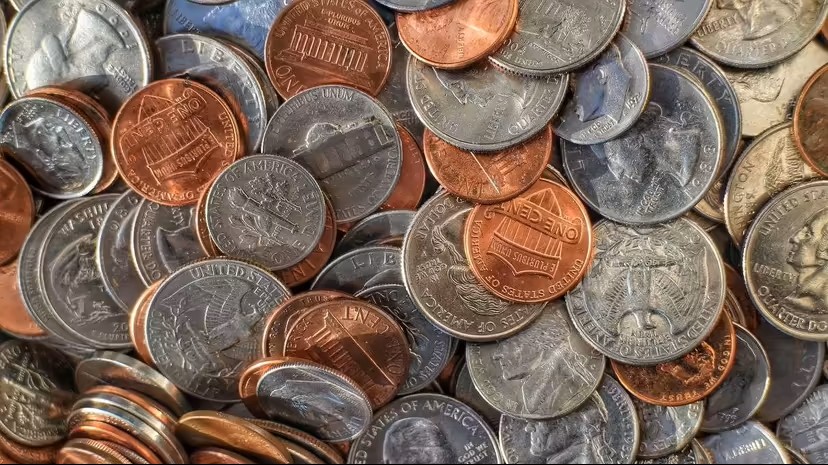
And here arises the first colossal problem: nobody has coins anymore. Nobody. This is 2026, not a neighborhood market in Torpignattara in 1993. People do not walk around with pockets full of loose change. The last human being who used cash to pay for something other than a parking meter was a retiree from Frosinone who, in 2019, bought a tin of tuna at Conad with a fifty-euro note and caused the cashier to summon the manager. Cash is an archaeological artifact. A fossil from pre-Stripe civilization. If today you ask a twenty-year-old to show you a one-euro coin, he will look at you as if you had asked him to produce a gold florin or a cowrie shell.
And so there you are, standing before the machine, doing what no adult human being possessed of dignity should ever have to do: begging for change. You turn to the Japanese tourists behind you and, with the smile of someone about to ask for alms, mime the universal scene of “Excuse me, would you happen to have a coin?”, while they stare at you with that mixture of courtesy and terror that Japanese people reserve for lunatics, beggars, and gesticulating Italians, three categories that in that moment coincide perfectly in your person.
Or, in an even more degrading variation, you run to the church desk, if one exists, where a lady with chain glasses and a green fleece vest declares herself willing to exchange your one-hundred-euro note for a one-euro coin, provided you also purchase the Japanese paperback edition of the letters of Padre Pio.
But let us move to the real issue, the issue of all ages whenever the Catholic Church and money are discussed: where does that money go?
Because I, naive romantic that I am, might even imagine it is used for the maintenance of the artwork upon which I am desperately trying to cast a brief moment of artificial light. Restoration. Lighting. Paying the electricity bill. But then I look at the state of the chapel, with cracks in the ceiling, cobwebs on the capitals, and an electrical system that appears to have been designed by Thomas Edison after a sleepless night, and a dreadful suspicion arises: that the money disappears into the same accounting black hole from which the Church has never truly emerged. I would rather not name names, but the initials are I, O, and R.
The IOR, for those unfamiliar with it, is the Institute for the Works of Religion, that is, the Vatican bank, that is, the only bank in the world where the prelate-president played golf and drank champagne while signing patronage letters for a billion dollars no one would ever see again, that is, the institution that made the phrase “God’s banker” the most sinister in the Italian language. Monsignor Paul Marcinkus, Roberto Calvi hanging beneath Blackfriars Bridge, Michele Sindona poisoned with cyanide in his coffee, P2, offshore companies in Panama: material so absurd that not even a Netflix screenwriter would dare pitch it, because he would be told, “Yes, brilliant, but not realistic enough.” Yet the Church is like this: it asks you for one euro to illuminate a Caravaggio, then loses 1.2 billion dollars in shell companies in the Bahamas. It is a matter of scale.
Besides, the Church has always had a complicated relationship with financial technology, in the sense that the Church hates technology. All of it. Always. When Gutenberg invented movable type printing, the Church needed roughly twenty minutes to conclude that the invention was dangerously subversive and produce the Index Librorum Prohibitorum, a list of forbidden books which, upon its debut in 1559, included Dante, Boccaccio, Machiavelli, and Erasmus of Rotterdam, essentially the whole of Western civilization minus cookbooks. When Galileo politely suggested that perhaps it was the Earth that revolved around the Sun, the Church responded with a trial and lifelong house arrest, which is roughly the equivalent of replying to a WhatsApp message with a telegram. When science developed reliable contraceptive methods, the Church said no thank you, we prefer the Ogino-Knaus method, which has roughly the same statistical reliability as tossing a coin, speaking of coins.
And so, given this centuries-old tradition of hostility to progress, should I really be surprised that there is a coin-operated machine? Should I be surprised that in the age of contactless payment, tap-to-pay, Apple Pay, and Google Pay, the Church asks you to insert a physical coin into a slot as though you were standing before an arcade cabinet in 1982? Of course. For the Church, technological progress halted somewhere between the Council of Trent and the oil lamp. NFC sensor? Heresy. QR code? Work of the Devil. Bluetooth? Witchcraft.
There is also one further detail worth reflecting upon, and it concerns the relationship between cash and taxation. In a country where tax evasion is said to be the national sport, UNESCO heritage of human ingenuity, an Olympic discipline in which Italy would win gold by such a margin as to make the competition pointless, the coin timer is perfect: no receipt, no traceability, no cash register. A coin enters the slot and vanishes into the same parallel dimension where artisans’ pension contributions and dentists’ invoices disappear. The Church, which ought to be the supreme moral institution, manages the lighting of its chapels absit iniuria verbis with the same accounting system by which the bar downstairs manages its foosball table.
Now, I do not demand revolution. I do not demand that Saint Peter’s Basilica install a card terminal accepting Amex Platinum with 2% cashback. I do not demand an app called LightUpTheChurch with push notifications: “You have illuminated 3 Caravaggios this month! Unlock the Patron of the Arts badge!” I do not demand ecclesiastical digital identity credentials.
I demand a contactless sensor. A sensor. An object costing less than a dinner in Trastevere, which has functioned for fifteen years in every metro, bus, and vending machine on the planet, and which would allow any human being possessing a debit card to pay one euro to see a fresco without first converting his assets into the currency of the Holy Roman Empire.
But no. The coin machine remains. Immutable as the dogma of the Immaculate Conception, immovable as temporal power, eternal as infernal damnation. And the Caravaggio remains in darkness, to the great irony of his luminous aesthetics.
The Rant, in pure Italian vernacular: Maremma numismatica contraffatta e riciclata, ma ci vuole così tanto a installare un cazzo di POS???
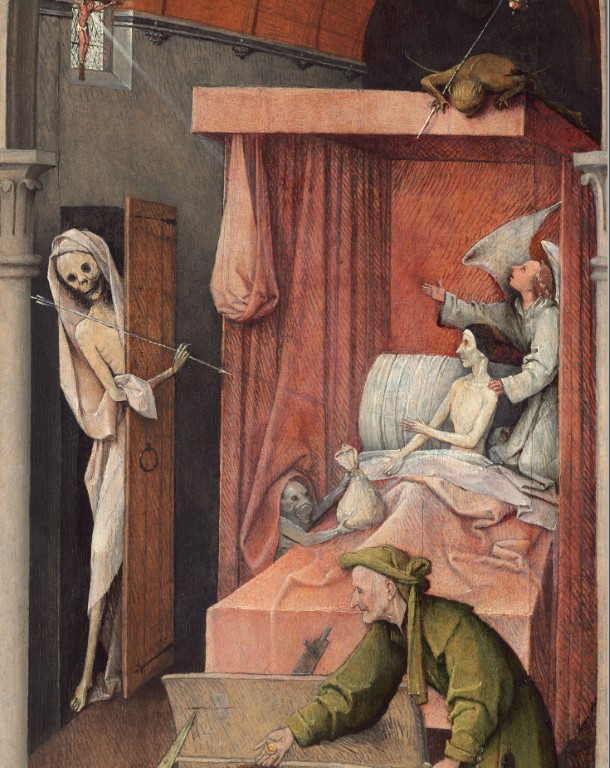
And so I leave, as usual, to the divine Hieronymus Bosch the task of devising a fitting punishment for those responsible for this situation: may you be able to lay hands on your cursed little coins only at the moment death comes knocking at your door, while the fruit of your miserliness is offered to you by a fish-man under the gaze of a demon perched upon your bed.
The Rant is a column in which the author vents universal frustrations with surgical nastiness and zero remorse, distilling antipathy, rancour, misanthropy, and quality hatred. If you feel offended, you’re probably the coin.