Type of cuisine: sushi, omakase
Last visit: August 2026
My rating: 8/10
Price: about 60 euros per person, sake included
Phone: +81 6 4393 8930
Website: sushiamato.jp
Reservations: Tabelog
The last time I was in Osaka I had found my go-to address: Kame Sushi Sohonten, honest Edo-style sushi, full of Japanese salarymen in suits after work, human prices. I wrote about it with real enthusiasm, rating 7.5. Then, a few months ago, I checked before planning a return visit and found out it has shut down for good. It is not an enormous surprise; in Osaka, restaurants open and close at a pace that would make even Rome’s restaurant scene blush; but it left me with a practical problem: back to square one, looking for somewhere that served good quality sushi at an accessible price, frequented mainly by locals rather than turned into a carousel for tourists with their cameras permanently switched on.
A Necessary Digression: Orthodoxy Is Not Always a Gift
The more time I spend in Japan, the more I find myself convinced of something that some might find uncomfortable to hear: the country’s most celebrated high-end cuisine chases orthodoxy and restrained flavour above almost everything else, not the immediate gratification of the palate. I said as much in black and white when I wrote about dinner at Nishi Azabu Kamikura in Tokyo: a sensorially and aesthetically superlative experience, minimalist to the bone, where the chef insisted more on texture (crunchy, or melting in the mouth) than on the flavour of the preparation, and where the sushi arrived almost bare of condiments, letting the fish do the talking. The bill, sake included, came in just under 200 euros a head, and it was worth it as a cultural experience, but in the end I found myself wondering whether what was in front of me was really the sushi I wanted to eat that evening, or rather an exercise in style that I, coming from the West with a palate less schooled in subtle umami, was not entirely equipped to appreciate to the full.
The risk, when you chase the most refined and orthodox restaurant available, is spending serious money on food that is exquisitely made but not necessarily satisfying. That is perfectly fine once in a while, as a cultural experience. But if what you actually want is an indulgent sushi dinner, the kind that leaves you full, happy, and already wanting to come back the following week, orthodox high-end cuisine is often not the right answer. What you need is a different kind of place: skilled, but with no pretensions of being a temple.
Sushi Amato Ura Nanba: The Best Compromise I Have Found So Far
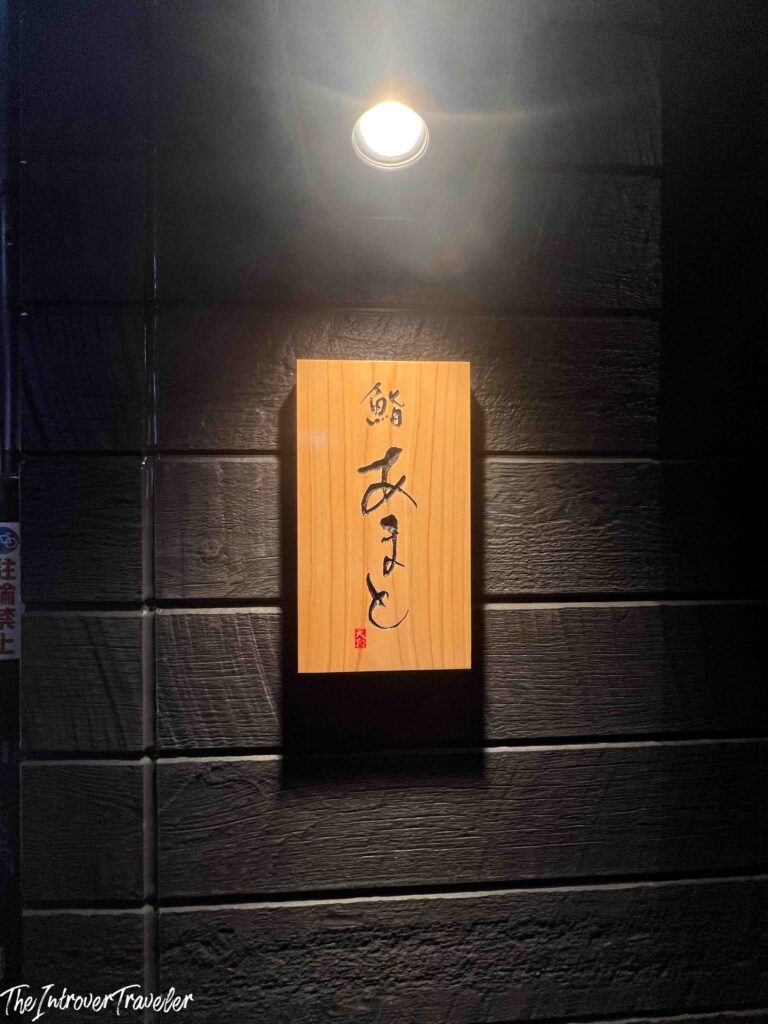
Sushi Amato Ura Nanba (鮨あまと 裏難波) is, right now, the best compromise I have found in Osaka between these two extremes. Good technical level, informal atmosphere, the classic omakase experience seated at the counter, an affordable bill (about 60 euros a head, sake included), indulgent dishes that do not chase virtuosity or excessive conceptual finesse, good quality ingredients. It is not the most refined sushi I have ever eaten in Japan. It is probably the meal that left me most satisfied.
It is not a one-off: this is the second branch of a small chain on the rise, born in the Toyosaki district of Umeda and grown enough to open, in July 2025, this outpost in Ura Nanba, right next to Kuromon Market, alongside two further branches (Kitashinchi and Shinsaibashi). The fact that a single brand is replicating the same format across several points in the city, without losing quality as far as the reviews suggest, is in itself an interesting signal of how well the idea is working.
The Restaurant
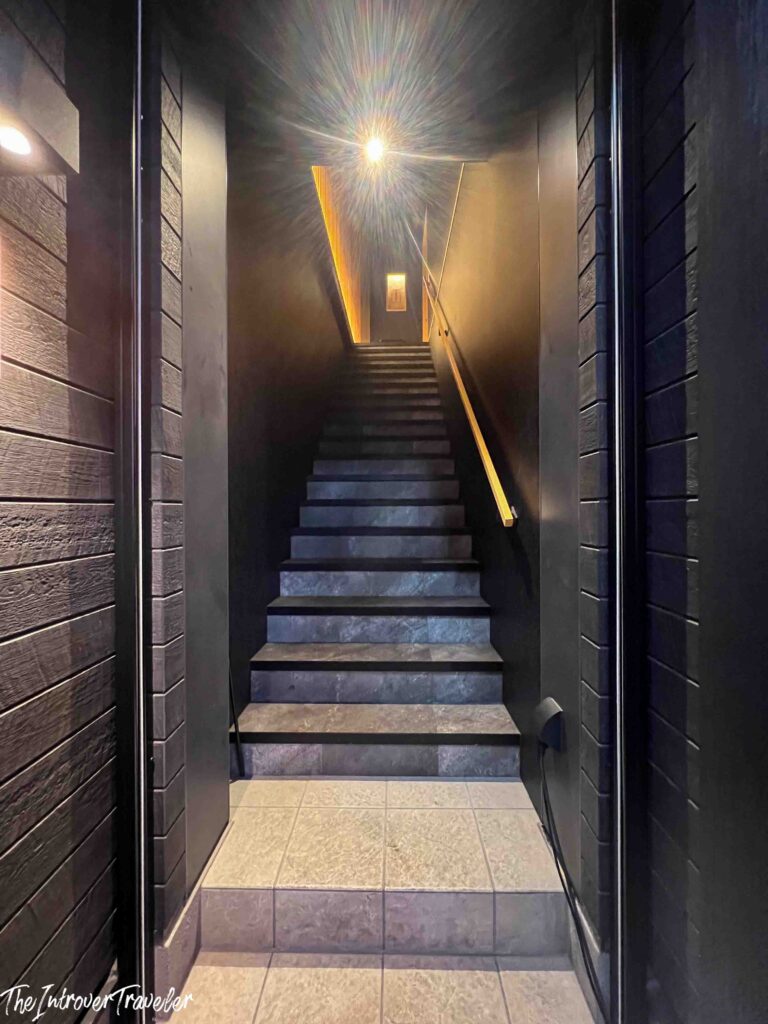
You come in through an anonymous street door and climb a narrow, dark staircase, lit only by warm light coming from the far end: an almost theatrical entrance for a restaurant that, once inside, is anything but pretentious.
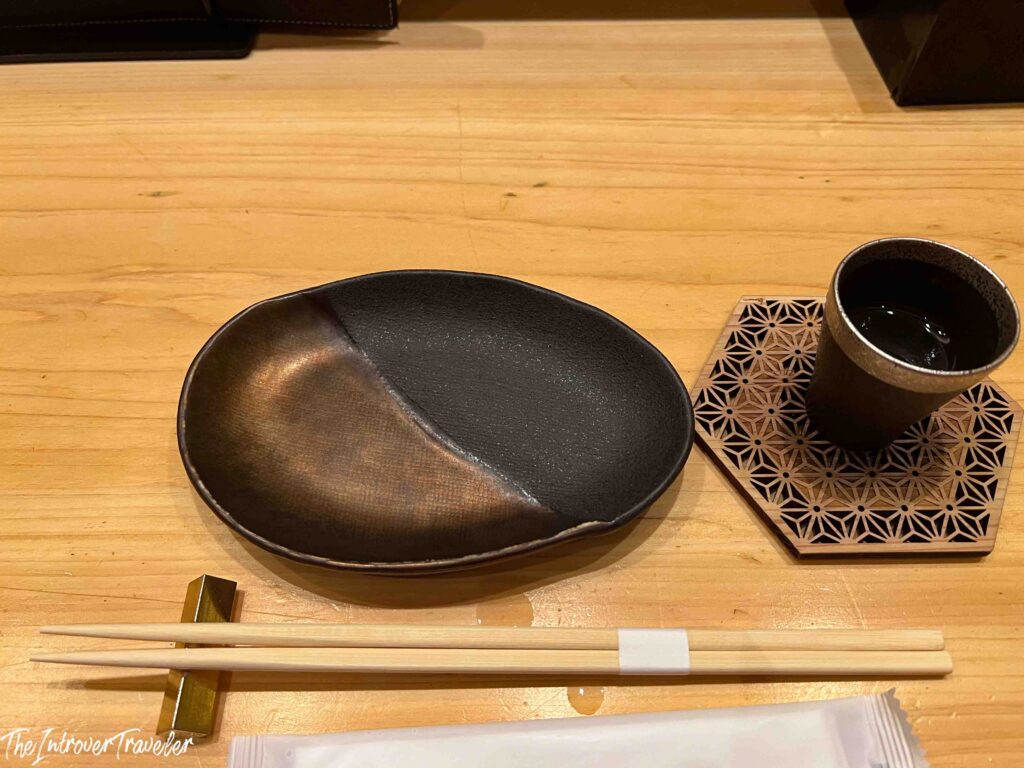
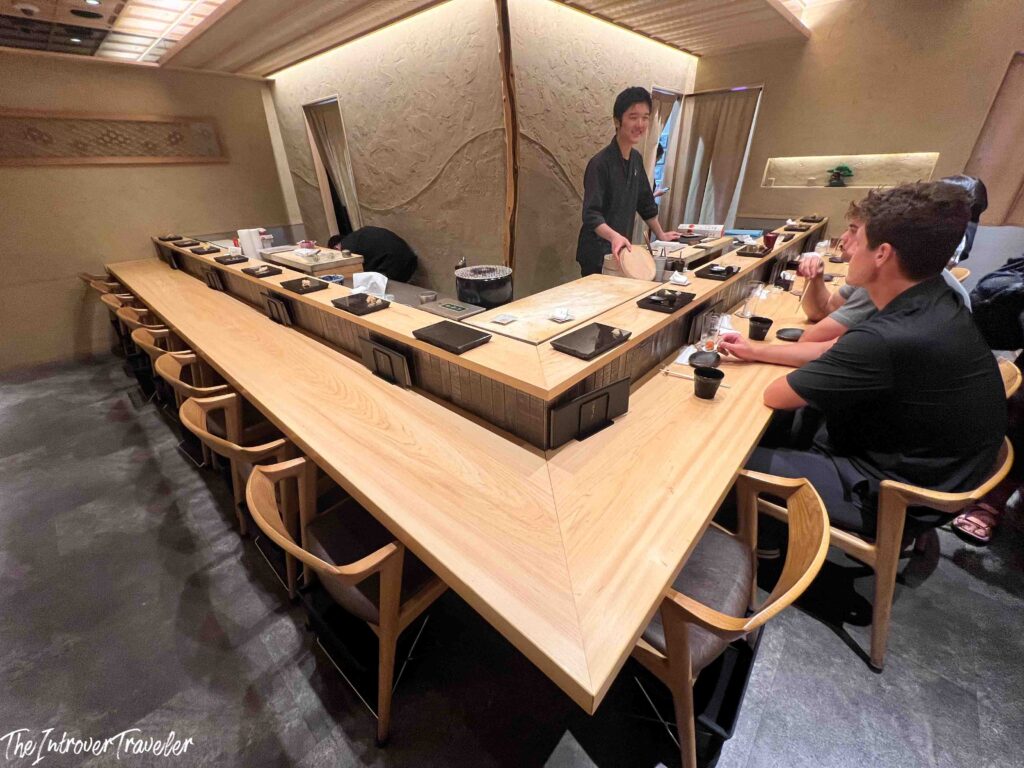
The counter, the only kind of seating on offer (fifteen seats in total, no tables, no private rooms), is cut from a single plank of hinoki, Japanese cypress. The interior design is by a designer who regularly works on well-established restaurants in Osaka: pale wood, walls in raw sand-coloured plaster, low lighting aimed at the work surface. It is a space designed to feel more exclusive than it actually costs, and it succeeds: with the chef working inches from the guests, it feels like a considerably more expensive restaurant.
Dinner: The Fifteen-Piece Tensho Kiwami Menu
We chose the restaurant’s most popular menu, the Tensho Kiwami omakase jugokan nigiri (天翔【極】おまかせ十五貫握り), 8,300 yen a head, about 45 euros, nineteen courses in total counting soups, palate cleansers, and dessert.
It opens with a shijimi clam soup, explicitly designed to prepare the stomach before the meal: it does exactly its job, kicking off the appetite with a wave of sea flavour.
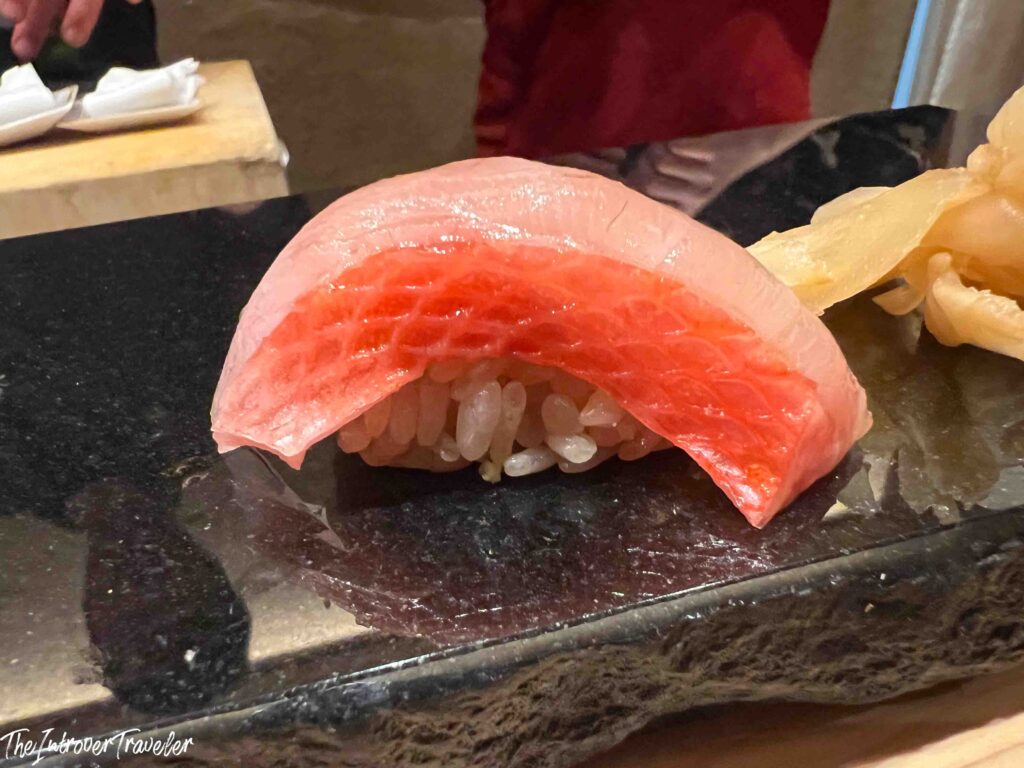
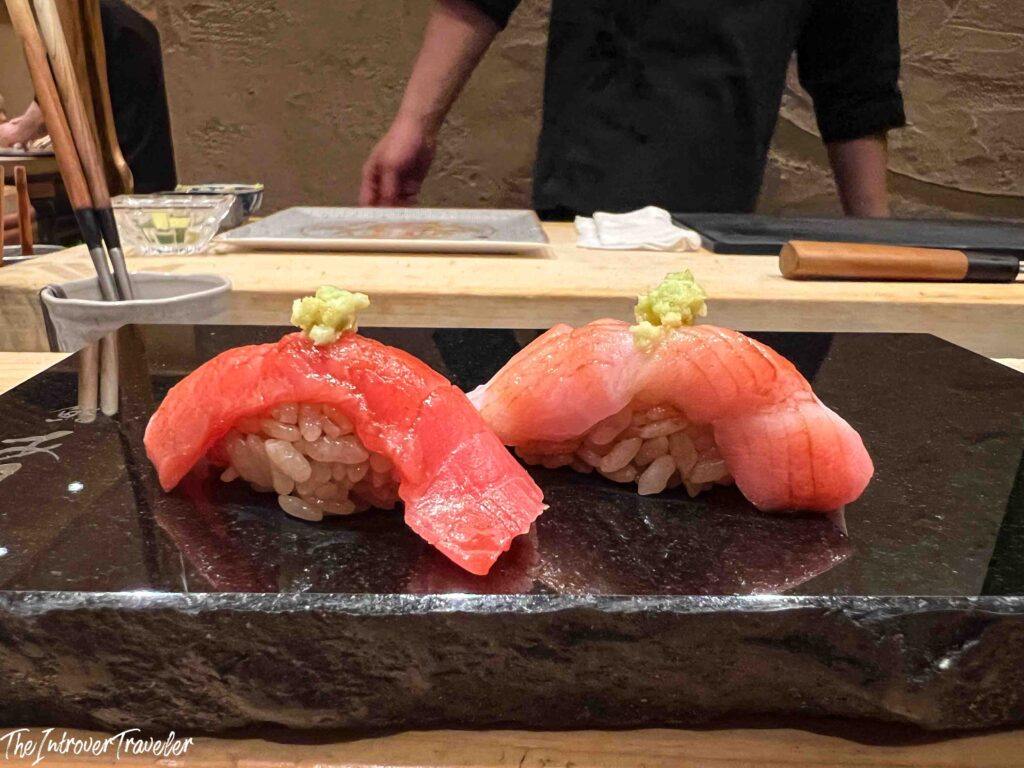
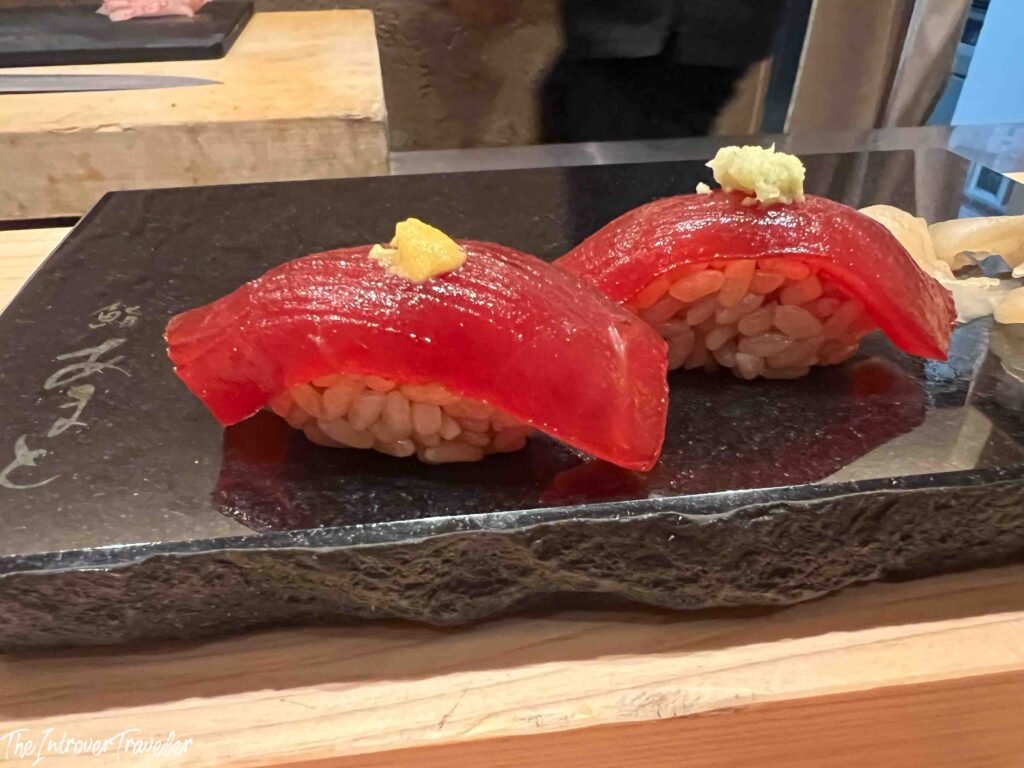
The otoro and chutoro comparison (otoro to chutoro no nigiri tabekurabe)
A strong start: two pieces of bluefin tuna nigiri, one fatty belly and one medium belly, served side by side for a direct comparison, with a knob of fresh wasabi left clearly visible on top of the fish rather than hidden between rice and fish, I imagine to let each diner decide how much heat they want. The fatty belly melts before you have even started chewing; the medium belly has more structure and a firmer, more assertive tuna flavour. Rating: 9.
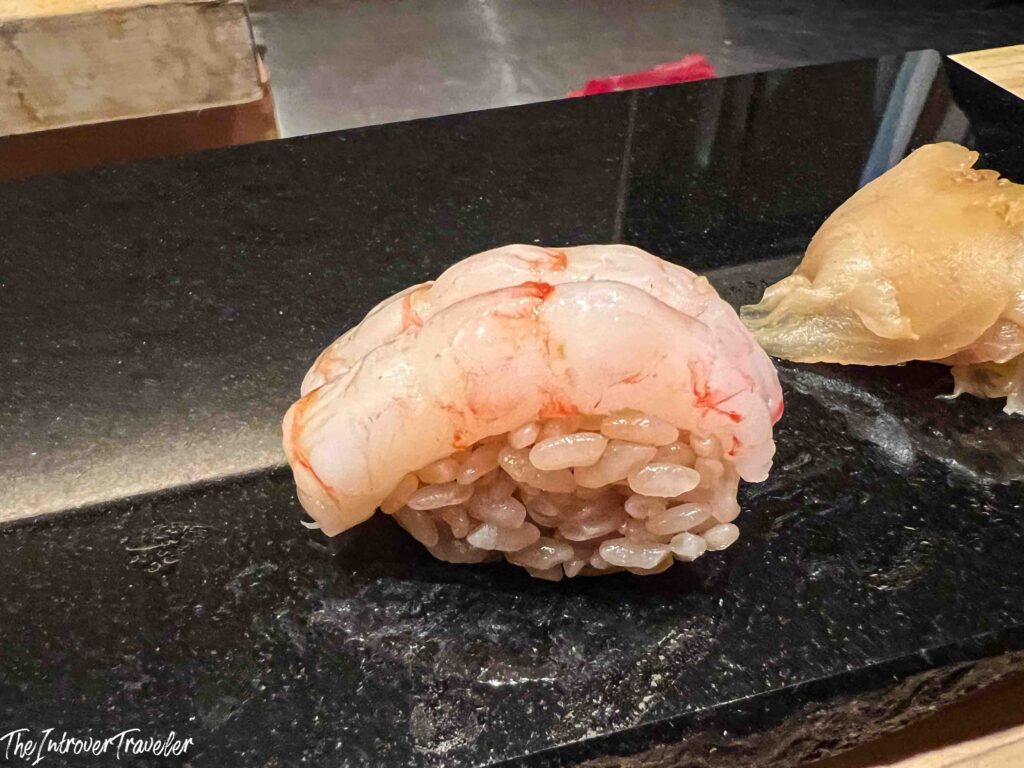
The sweet shrimp cured with kelp (ama ebi no konbujime nigiri)
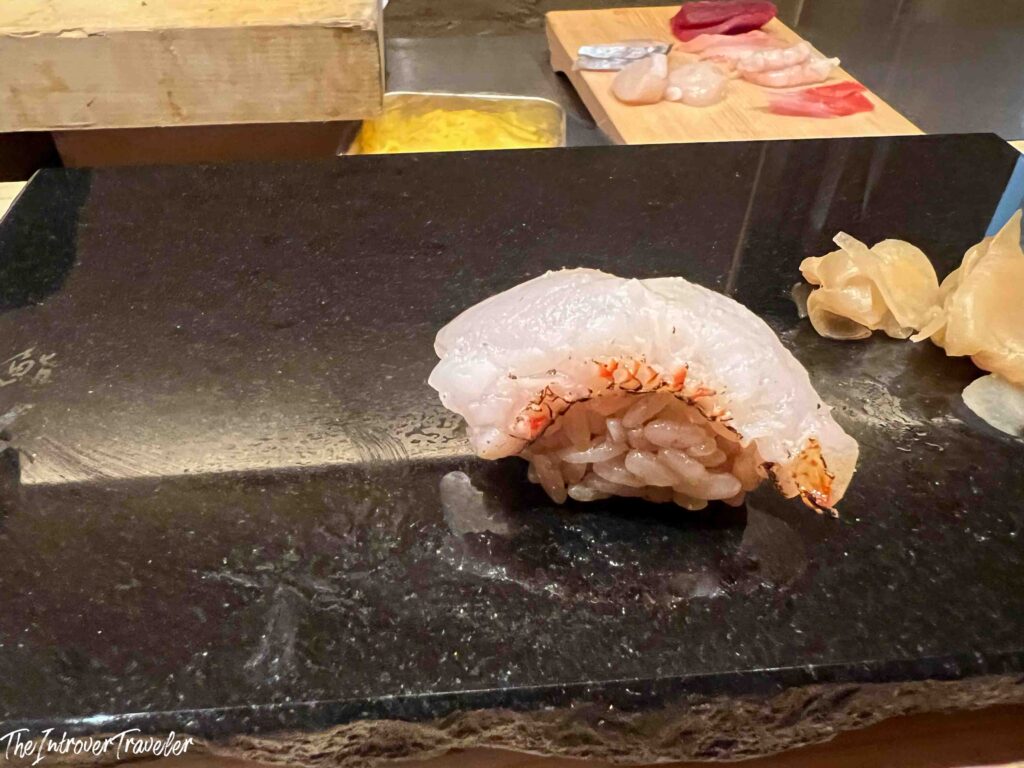
A sweet shrimp briefly cured with kombu seaweed, which concentrates its natural sweetness without weighing it down. Almost creamy in texture. A simple dish, well executed, that does not try to be anything other than what it is. Rating: 8.
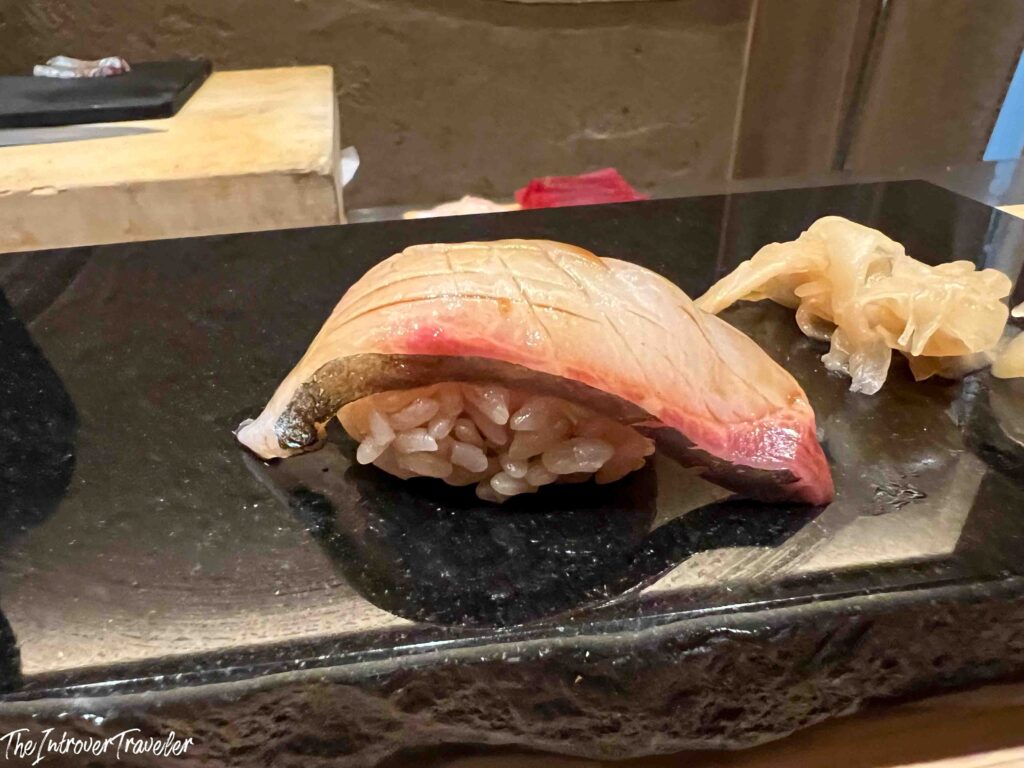
The aged blue-back fish (jukusei aomono nigiri)
This is where the restaurant’s real theme comes in: ageing the fish before it is served, a technique increasingly common in contemporary Edo-style sushi, aimed at developing more umami than fish served only at peak freshness. The piece we were given already had a slightly softer texture than freshly caught blue-back fish, and a deeper aftertaste. I did not manage to note down the exact species with total certainty: dishes are explained quickly, as at Kamikura, but here there simply is not the time to write everything down, which is part of the restaurant’s informal charm, if a little less convenient for anyone trying to write an accurate review.
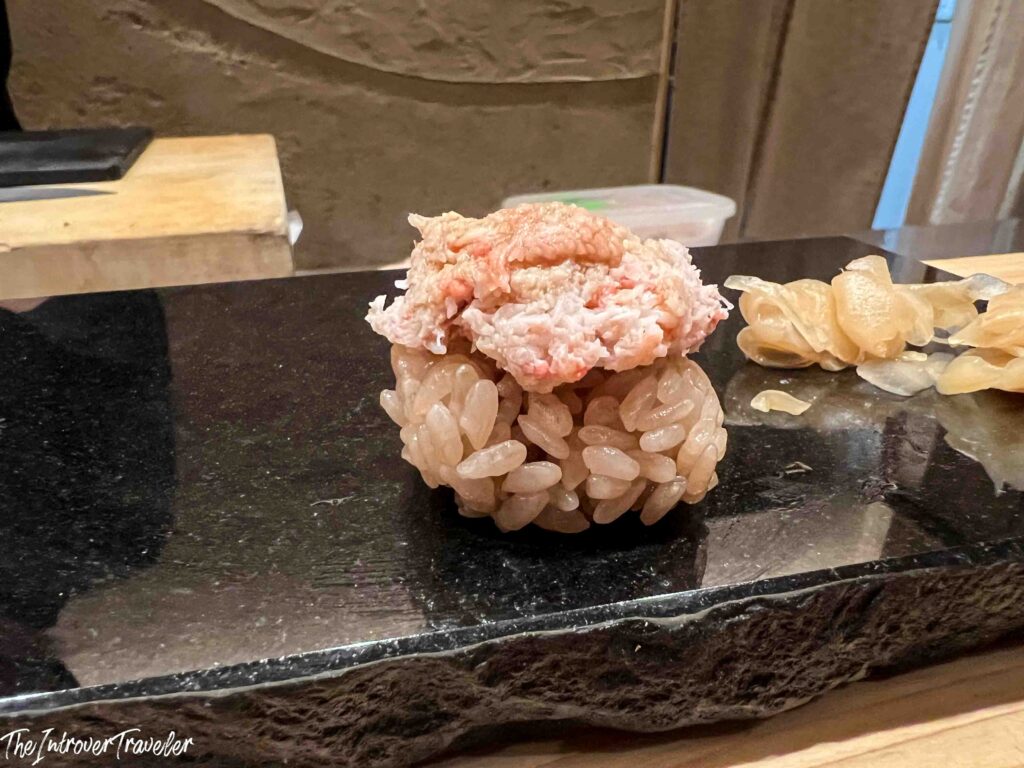
The picked snow crab (hogushi zuwaigani nigiri)
Hand-picked snow crab meat, piled generously on the rice: sweet, delicate, comfort food in its purest form, with a genuine gastronomic elegance for an ingredient that common perception does not rank as luxurious as tuna or sea urchin. Rating: 8.
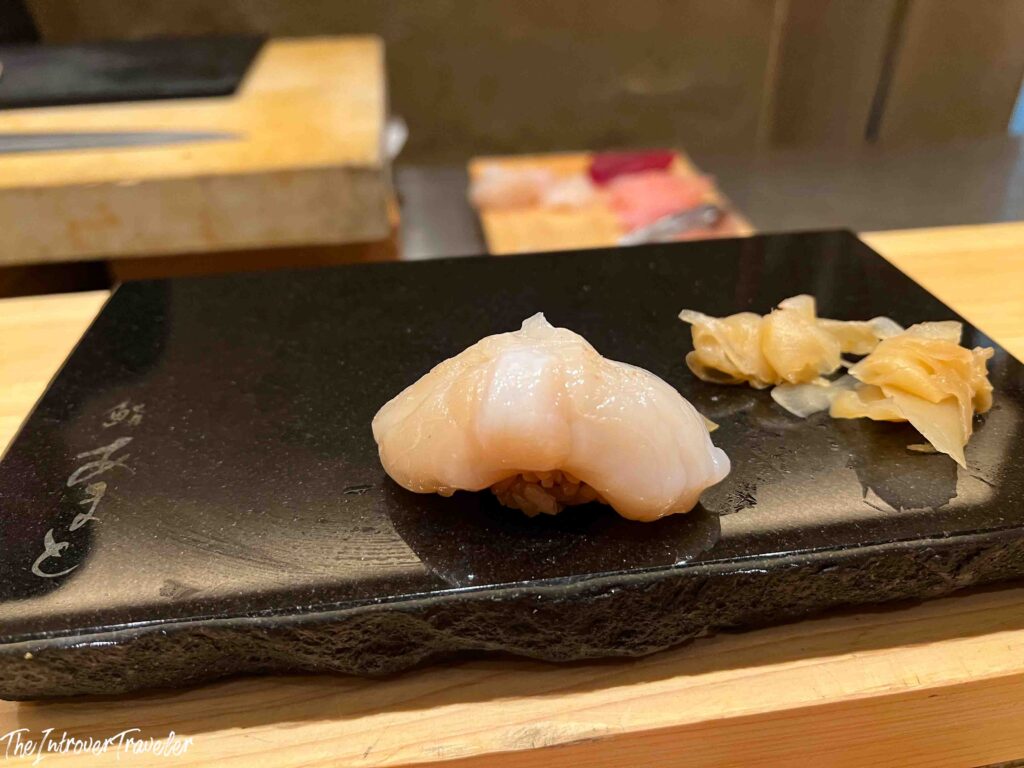
The scallop (kai no nigiri)
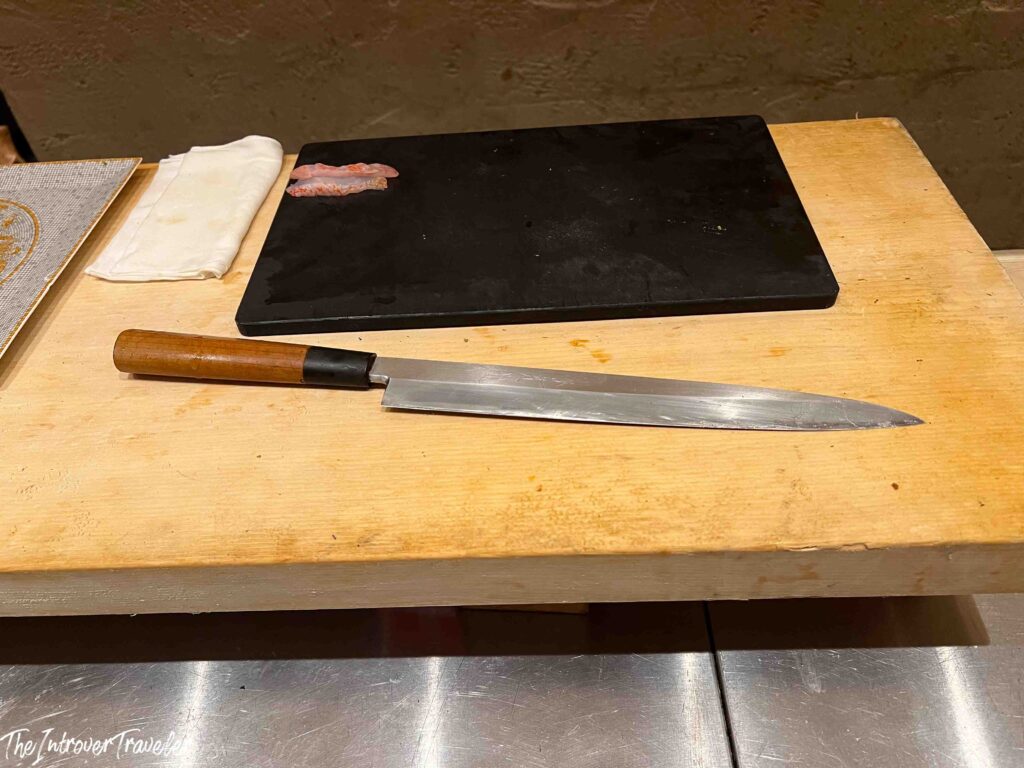
Sliced at the counter in front of guests with an impossibly long knife, served still faintly chilled at the core: outstanding, like butter. Clean sweetness, no unpleasant iodine note. Rating: 9.
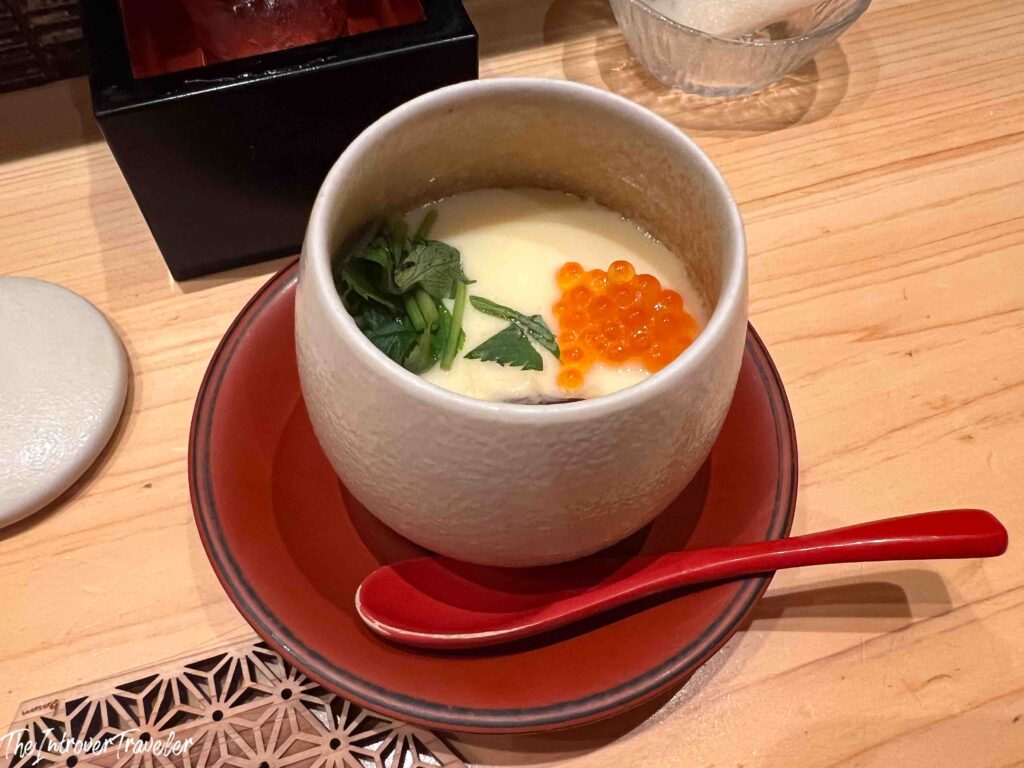
The chawanmushi with ikura (wanmono)
The classic steamed egg custard, here enriched with salmon roe and mountain herb sprouts. This was only the second time I had eaten it, and at first I was sceptical: I worried the custard’s heat would cook the salmon roe and ruin it. Instead the mix of flavours turned out to be pleasant, silky texture, delicate but not flat flavour. Rating: 8.
The double tasting of marinated tuna (akami zuke nomikurabe)
Two variations of the same lean bluefin cut, marinated in soy sauce and dipped in front of guests with chopsticks before being served: one gentler, one bolder. A small theatrical moment, the only one of the evening, and the right kind: brief, not overdone. Rating: 9.
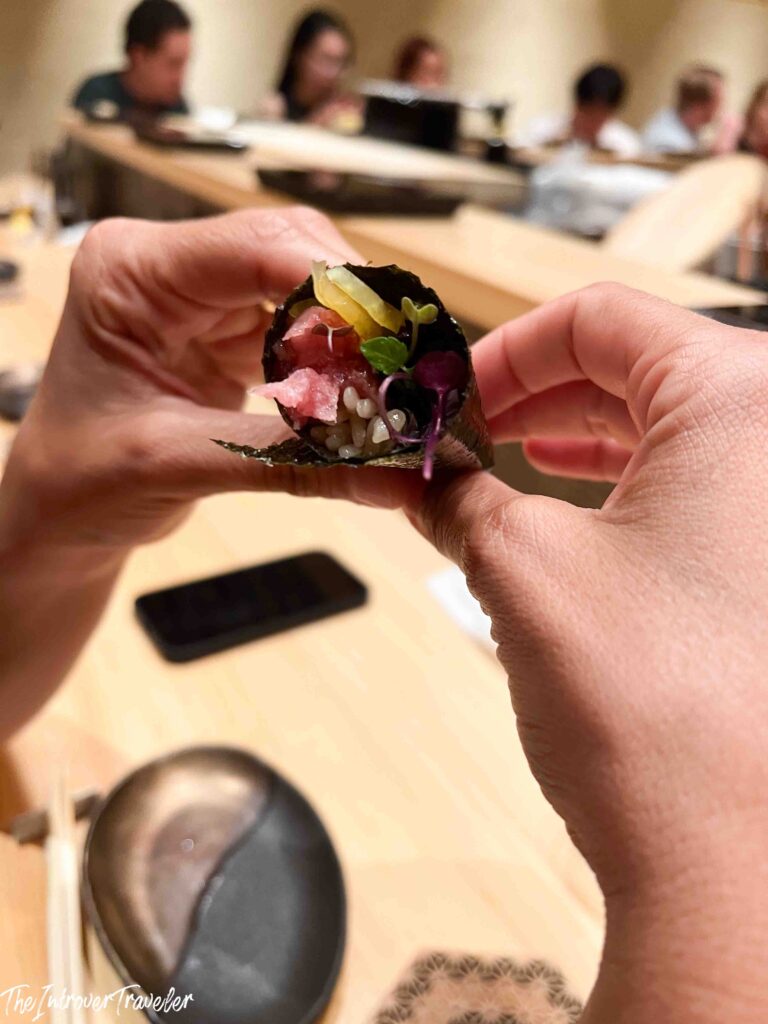
The fatty tuna, pickled daikon and herb hand roll (torotaku haabu maki)
A crisp cone of nori filled with chopped fatty tuna, takuan (pickled daikon), and fresh herbs, to be eaten immediately because the nori starts losing its crunch within minutes. The contrast between the sweetness of the tuna, the acidity of the takuan, and the vegetal note of the herbs is the most “Western” dish of the evening in the best sense of the word: so moreish that the chef made himself an extra one and slipped away for a moment to eat it on the side. Rating: 9.
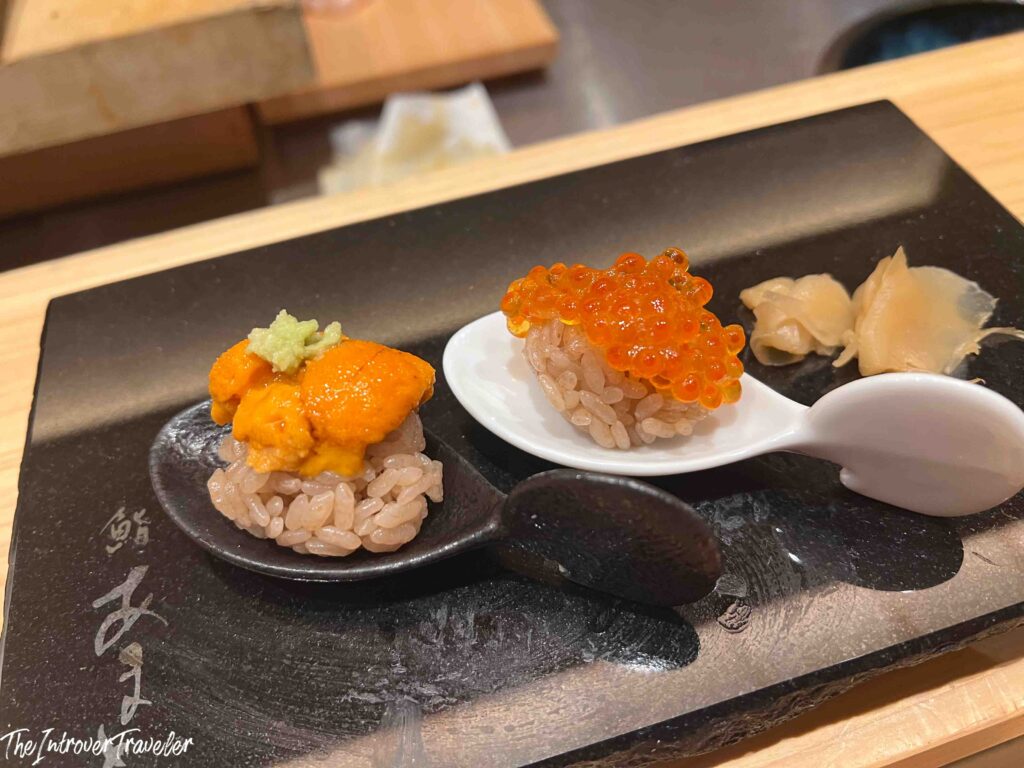
The two luxury nigiri of the day: sea urchin and salmon roe (uni to ikura)
The high point of the dinner, and it is no accident that this is the moment the menu stops giving the pieces a generic name, “today’s luxury nigiri,” and simply lets the ingredient speak: creamy, sweet sea urchin, without the bitter note that betrays lower quality uni, and salmon roe that bursts in the mouth releasing all its brininess. Rating: 9.
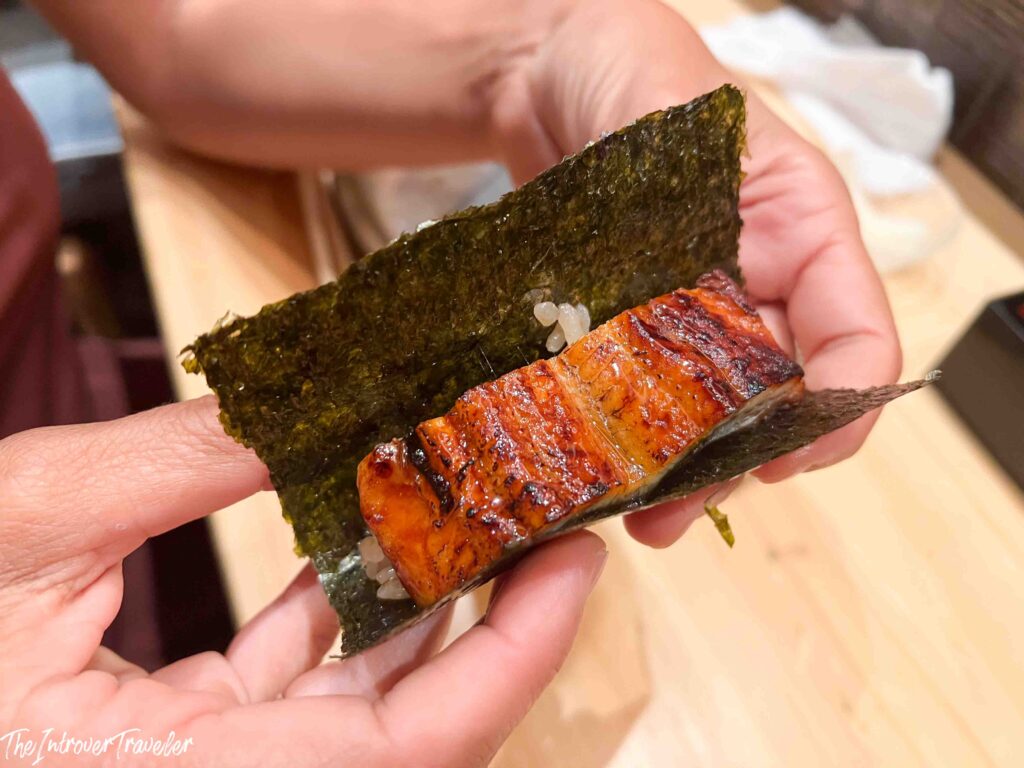
The eel (unagi maki)
A sweet, smoky close: grilled eel, glazed, served as a hand roll wrapped in nori that is still warm. A classic that rarely disappoints, and does not disappoint here either.
It closes with a red akadashi miso soup and a pineapple based dessert, the final touch of freshness after nineteen courses.
The Bill
8,300 yen for the menu, plus one compulsory drink per person (the restaurant asks for this explicitly), plus the 10 percent service charge the restaurant introduced from July 2026 to cover rising ingredient and staff costs, stated with disarming honesty right there on the menu. With a couple of sakes each, the bill climbs to about 60 euros a head, sake included: exactly the figure I had mentally budgeted for before even looking at the receipt, which is always a good sign.
The Verdict
Sushi Amato Ura Nanba is not the most technically sophisticated sushi I have eaten in Japan; that record still belongs to places like Kamikura, unmatched on conceptual refinement, and on the bill. But it is the restaurant that, better than anywhere else I have tried so far, solves the problem that Kame Sushi Sohonten used to solve for me last time, and that its closure threw straight back in my lap: finding good quality sushi, in an informal, no-frills setting, at a price that lets you go back without any guilt, with dishes designed to please you straight away rather than to be decoded.
If you are after the meal that changes your life, go to Kamikura, or to a three-star restaurant in Ginza, and bring the right budget. If you are after a dinner of good, indulgent, honest sushi, in a restaurant that treats both Japanese diners on their evening off and tourists who know what they are looking for equally well, Sushi Amato Ura Nanba is, for now, the right address in Osaka. Until the next sudden closure, of course: it is still Osaka.