My rating: 8/10
Visit Duration: 2-3 hours (the walk from the parking lot to the Giant’s Causeway takes about half an hour)

The Giant’s Causeway is one of Ireland’s most famous natural wonders and a UNESCO World Heritage site located on the northeastern coast of the island, in County Antrim. This unique rock formation, composed of thousands of hexagonal basalt columns, draws thousands of visitors from around the world each year, captivated by its extraordinary beauty and geological history. In this article, we will explore the geological features of the Giant’s Causeway in detail, what to expect during a visit, and offer some practical tips for an unforgettable experience.
Geological Features of the Giant’s Causeway
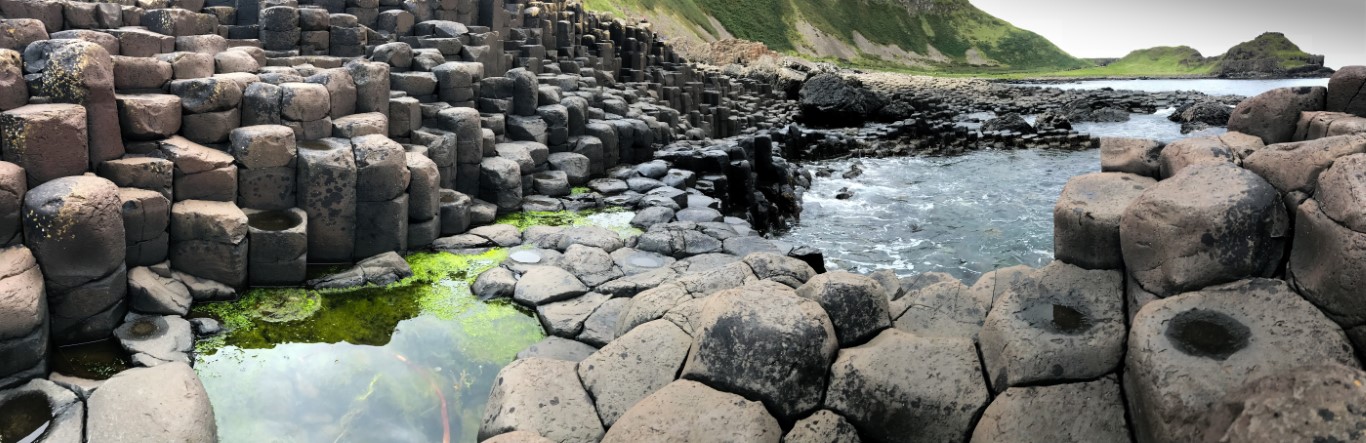
The Giant’s Causeway was formed approximately 60 million years ago, during the Paleogene period, as a result of intense volcanic activity that affected what is now Northern Ireland. When magma rose to the surface and cooled rapidly, it created a vast area of solidified lava. The quick cooling of the lava caused it to contract and crack in a pattern that aligned into polygonal structures. The result was a field of about 40,000 basalt columns, many of which have a hexagonal shape, though they can vary, having anywhere from four to eight sides.
These columns, averaging around 12 meters in height but reaching up to 25 meters in some areas, are arranged like a natural staircase leading towards the ocean. The shape and arrangement of the columns create an almost surreal landscape, which has given rise to numerous local legends and myths, including the story of the Irish giant Finn McCool.
In Italy, although less spectacular and widespread, similar formations can be seen in Aci Trezza.
The Legend of the Giant’s Causeway
According to legend, Finn McCool, an Irish giant, built the causeway to reach Scotland and challenge his rival, the Scottish giant Benandonner. However, when Finn saw Benandonner’s enormous size, he realized he couldn’t defeat him in a direct fight. So, Finn’s wife, Oonagh, disguised him as a baby. When Benandonner saw the “baby,” he was so terrified at the thought of facing the child’s father, assuming he must be much larger, that he fled back to Scotland, destroying the causeway behind him to prevent Finn from following him.
This story adds to the charm of the Giant’s Causeway, making it not only a natural wonder but also a place rich in folklore and tradition.

The Visiting Experience
Visiting the Giant’s Causeway is a unique experience that blends nature, geology, history, and culture. Upon arrival, the visitor center provides a comprehensive overview of the geological formation and the legends associated with the site, featuring interactive exhibits and multimedia information. From here, visitors can embark on one of several paths that lead to the causeway.
Available Paths
Blue Path (Easy): This is the most accessible route, suitable for families with children or individuals with limited mobility. It follows a paved road that descends to the sea, offering an easy view of the basalt columns.
The Allure of Geological Formations and Stunning Colors
The Giant’s Causeway is particularly captivating not only for the uniqueness of its columns but also for the vastness of the landscape and the colors that shift with the changing light. On a sunny day, the black basalt columns stand out against the blue ocean and the lush green hills, creating a striking visual contrast. At sunset, the golden rays of the sun bathe the rocks in warm hues, making the scenery even more enchanting.
The rock formations have intriguing names, such as “The Wishing Chair,” “The Giant’s Boot,” and “The Organ,” each with its own story and legend. These names add a touch of magic to the visit, encouraging tourists to explore and photograph every corner of the site.
A Highly Touristic Spot: How to Handle the Crowd
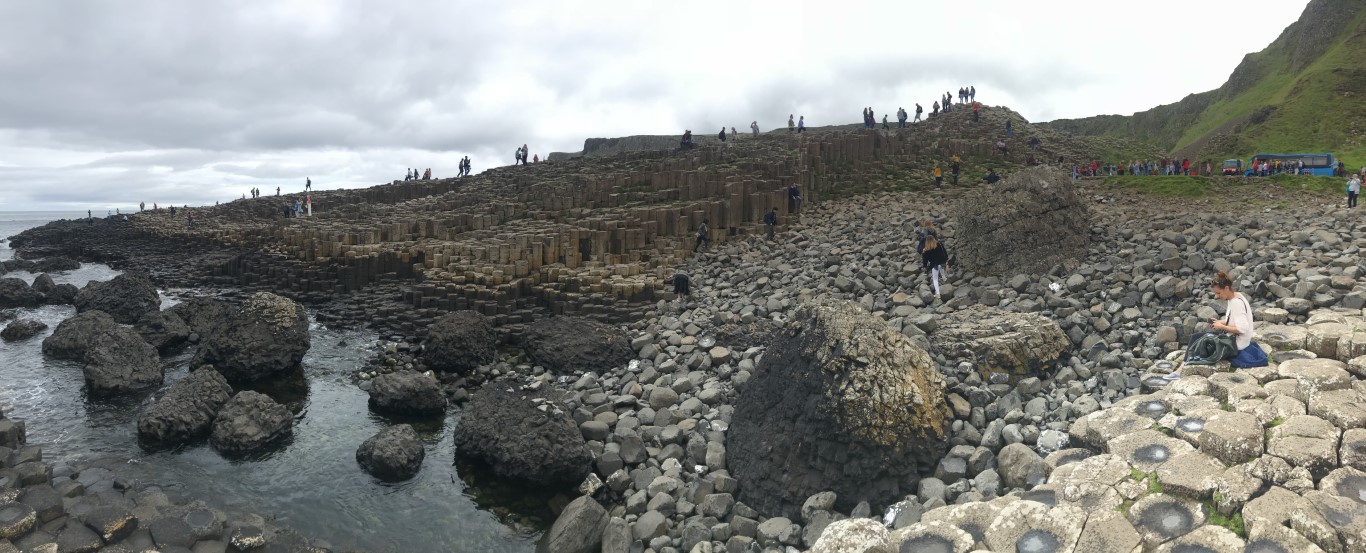
As one of Ireland’s most famous attractions, the Giant’s Causeway can become quite crowded, especially during the summer months and on weekends. Large numbers of visitors may make it challenging to find a peaceful moment to fully appreciate the site’s beauty. However, with some careful planning, you can enjoy a more authentic experience.
Tips for Avoiding the Crowd
Visit early in the morning or at sunset: These are the least crowded times of the day, allowing you to enjoy perfect lighting for photography and a more peaceful atmosphere.
You may want to buy a “skip the line” ticket here from Tiqets.
Practical Tips for Your Visit
Exploring the Surroundings of the Giant’s Causeway
Beyond the Giant’s Causeway, Northern Ireland’s coastline offers other remarkable attractions that can enhance your itinerary:
Dunluce Castle: Located just a few kilometers from the causeway, this medieval ruined castle sits dramatically perched over the Atlantic Ocean, offering stunning views. Its fascinating history and breathtaking position make it a must-visit spot.


Conclusion
The Giant’s Causeway is a natural wonder that captivates with its geological history, wild beauty, and surrounding legends. Despite its popularity with tourists, with the right planning, it’s possible to enjoy an authentic and unforgettable experience. Among the basalt columns and the sound of the ocean, one can truly feel the power of nature and the magic of a place that, for millions of years, has enchanted visitors and inspired stories.


