Last visit: June 2026
When: late May / early June, every year
Where: Carloforte, Isola di San Pietro, Sardinia
My rating: 4/10
Girotonno is the food festival that, every year, around the turn from late May into early June, takes over the Carloforte seafront (Sardinia, but some may say it’s in Liguria) for four or five days. It began in the early 2000s as a celebration of bluefin tuna and the culture of the tonnara, the traditional tuna trap, and over time it has grown into an event with national reach: an international cooking competition (the World Tuna Competition), guest chefs, cooking shows, evening concerts, and a certain number of television celebrities. On paper it is a good idea: take an identity-defining product wrapped in centuries of history, and build an event around it that brings in visitors, tells the story of the territory, and keeps the local economy turning. On paper.
What Carloforte is
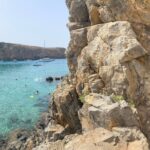
Carloforte is the only town on the Isola di San Pietro, a scrap of land in the Sulcis archipelago, off the south-west coast of Sardinia. It is not a place you end up in by accident: you can only reach it by ferry, from Portovesme or from Calasetta, and the crossing itself has a decompressing effect, the Sardinian mainland receding while the island grows on the horizon. When you land, the first thing you see is the seafront, an orderly row of pastel-coloured houses facing the quay, with café tables, moored boats, and that slow coming and going of real port towns, the ones where the sea is not a postcard but a trade. Life in Carloforte has always revolved around fish, and tuna in particular: you can read it in the names of the bars, in the dishes on the menus, in the way the town seems drawn around its relationship with the water. It is beautiful in a non-obvious way, and it deserves far more space than I can give it here: sooner or later it will get a post of its own. For now it is enough to know that, even setting aside all the criticism I am about to level at the event, the island alone is worth the trip. If anything, the suspicion that will follow me through the rest of this post is precisely that Girotonno is not worthy of the place that hosts it.
The Genoese enclave in Sardinia
The most fascinating thing about Carloforte is that it is not Sardinian, at least not culturally. It is a Ligurian enclave planted in the middle of the Mediterranean, on the margin of Sardinia, and its history is one of those migration stories that sound invented. In the sixteenth century a group of fishing families from Pegli, near Genoa, crossed the sea in the service of the Lomellini, a powerful Genoese house, and settled on the Tunisian island of Tabarka to fish for coral. They stayed for nearly two centuries. Then, between the depletion of the coral beds and the mounting pressure from the Tunisian beys, in 1738 they accepted the offer of Charles Emmanuel III of Savoy, who was looking to repopulate the then uninhabited Isola di San Pietro. So they founded Carloforte, which bears the sovereign’s name. The result of this double leap, from Pegli to Tabarka to Sardinia, is that to this day Carloforte speaks Tabarchino, a conservative variant of Genoese that has crossed the centuries almost intact; the cooking is different from the rest of the island, with dishes like cashcà that even betray the North African parenthesis; and the local identity remains something unique in the Sardinian landscape, perceptible in the surnames, in the language, in the way of being in the world. Listening to locals chatting in a bar, it is not unusual to hear someone burst out “I’m not Sardinian, I’m Genoese”, and to an outsider the effect is curious, not to say disorienting, because it is a little as if New York had a neighbourhood populated entirely by Texans, riding around on horseback and talking like Matthew McConaughey.
This too, it goes without saying, would deserve a piece of its own, and sooner or later it will have one.
Tuna fishing and the tonnara
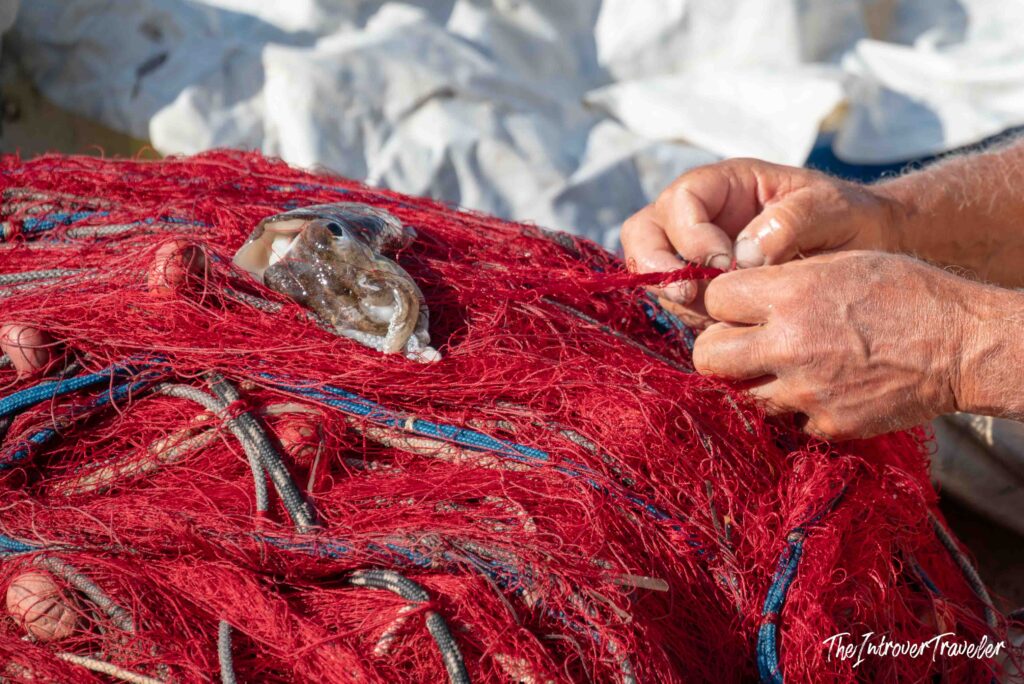
The tonnara is the heart of everything, the reason both Carloforte and, by extension, the event I am about to criticise exist at all. It is a system of fixed nets, anchored to the seabed and arranged in a sequence of chambers, that intercepts bluefin tuna during their spring migration and funnels them progressively toward the last chamber, the one that, with a certain macabre flair, is called the chamber of death, where the mattanza takes place. It is an ancient practice, probably Phoenician in origin, made of slow rhythms, physical labour, knowledge of the sea, and gestures handed down from one generation to the next, with its own vocabulary, its own hierarchy of roles, and a figure in command, the rais, whose very name betrays the Arab heritage of this whole story. In Carloforte the tonnara is still active, one of the very few left in the Mediterranean, and it is the historical reason the island has such a visceral relationship with this fish: here tuna is not a recent culinary fashion but an identity component dating back to the founding of the town itself, and earlier still to antiquity. I will return to this with a dedicated post too, because the subject is enormous and touches on questions of tradition, economics, and sustainability that cannot be settled in a single paragraph.
Having said all this, namely that every ingredient for a great event is genuinely there, a legendary raw material, a unique history, a magnificent setting, we come to the sore point: Girotonno is a wasted opportunity.
Everything costs money, and everything happens under the stage
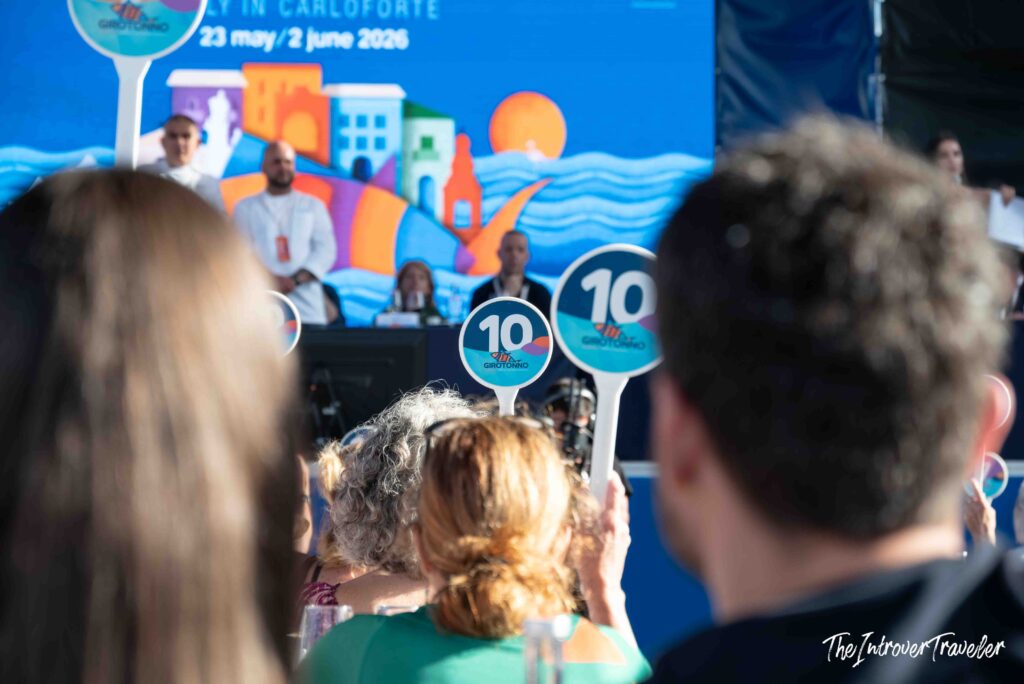
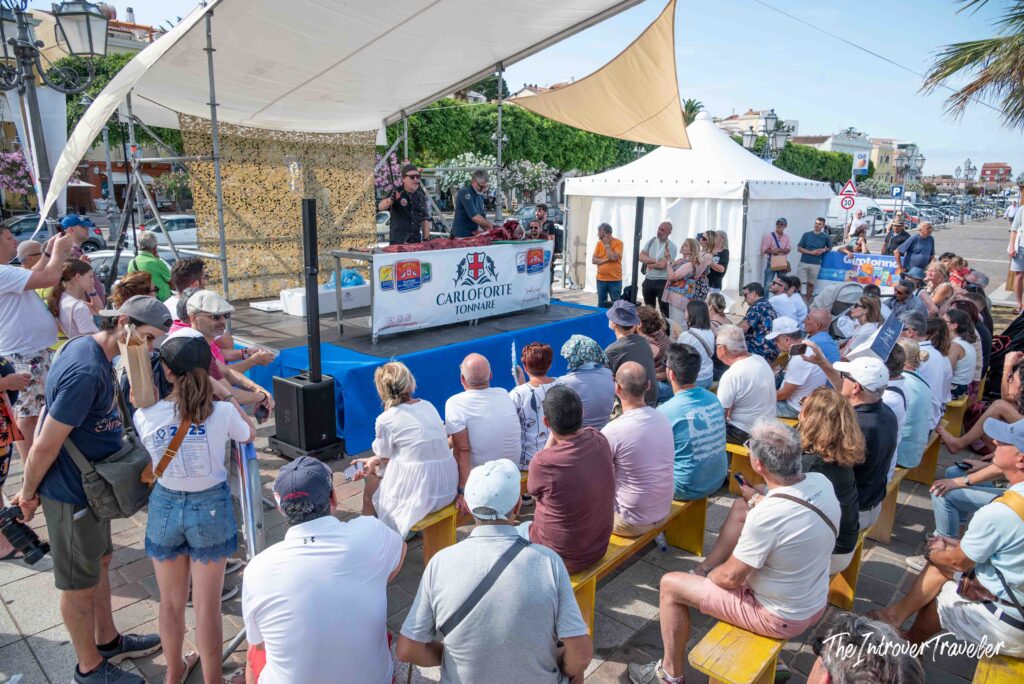
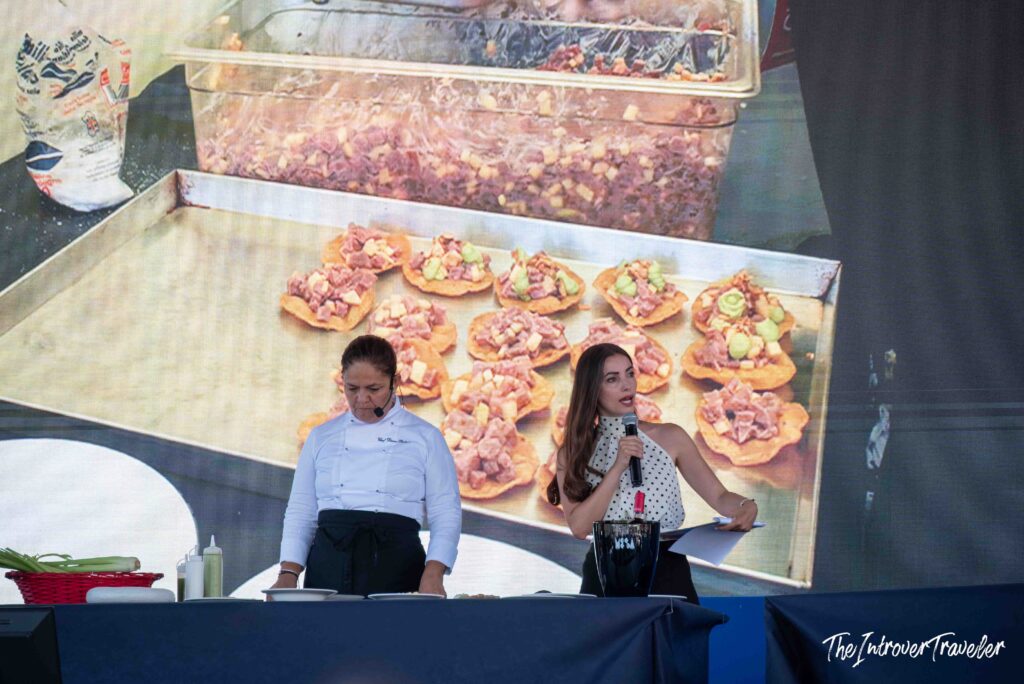
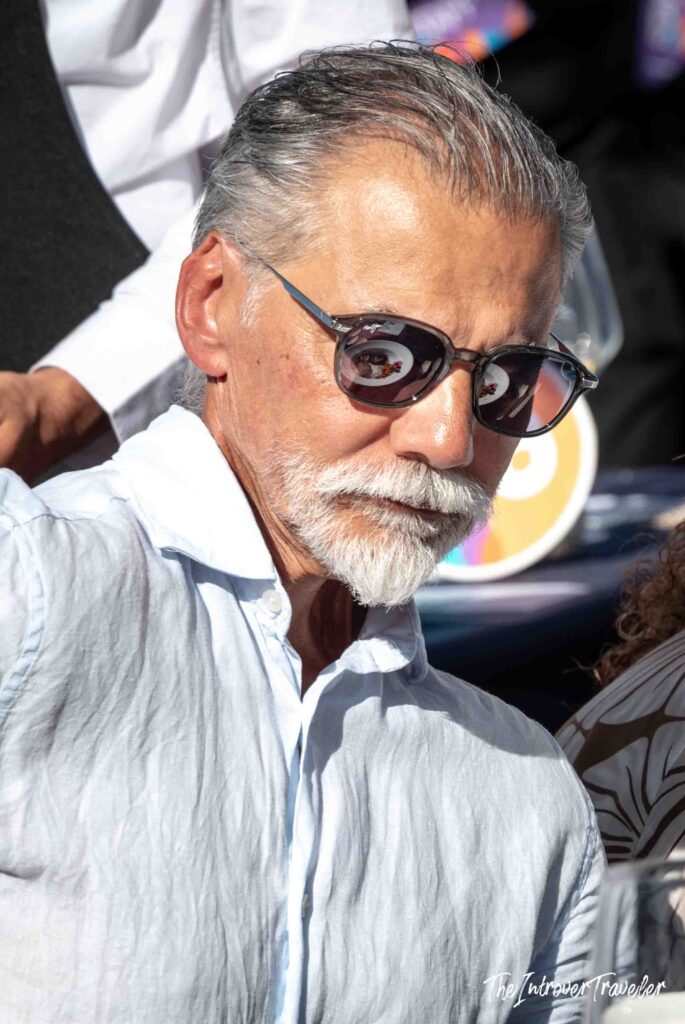
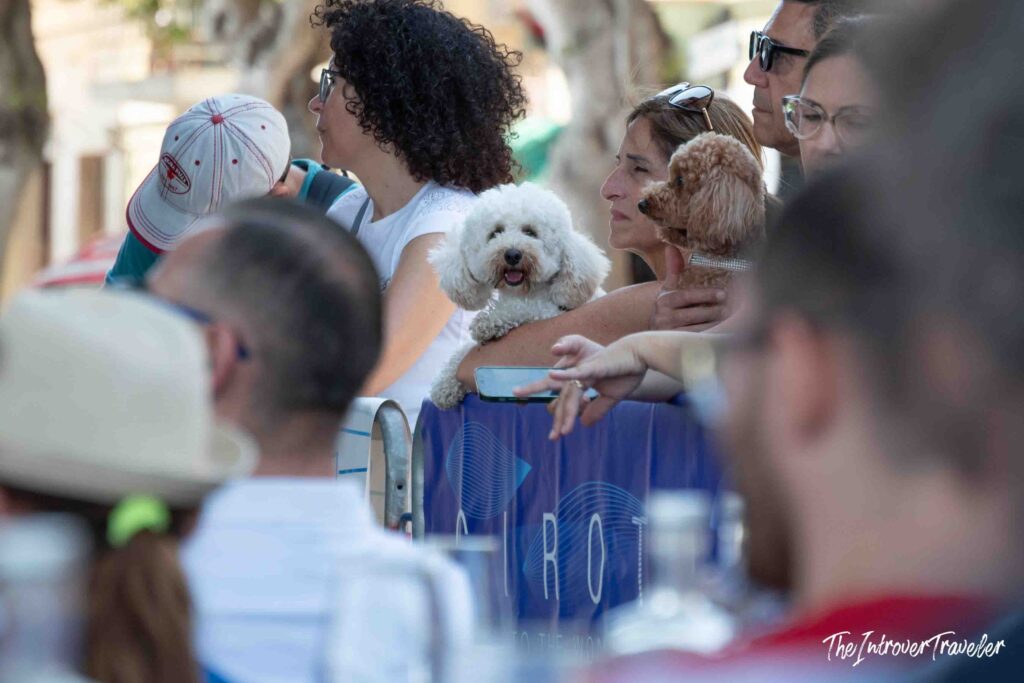
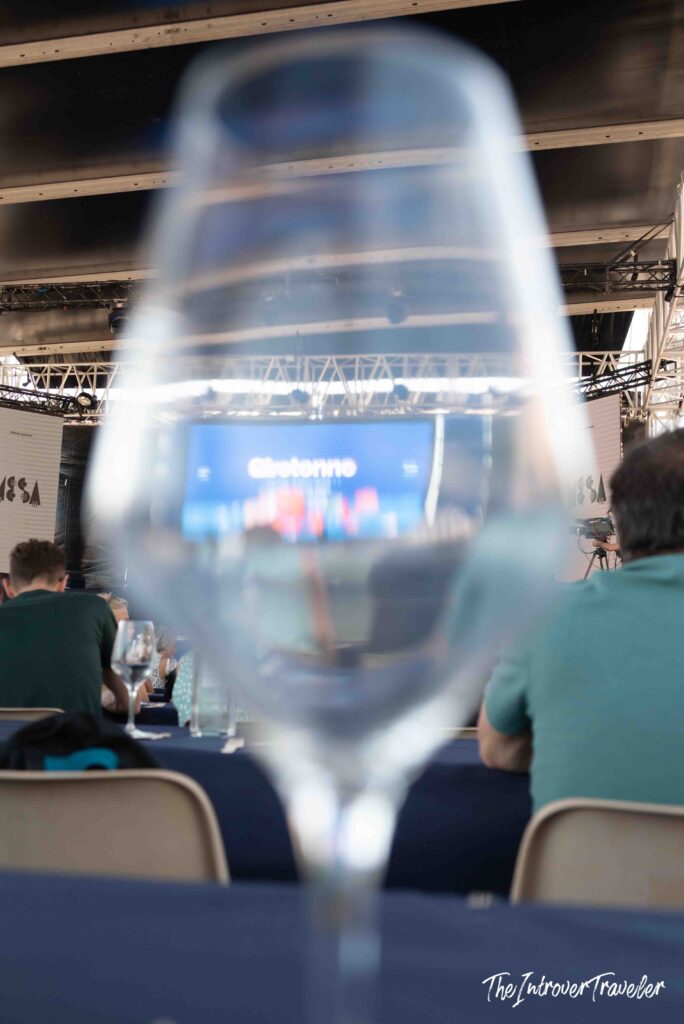
The structural problem is that practically everything of value takes place in the closed space under the stage, and every single point of access has to be paid for separately. On the stage are the tastings, which can be cooking shows or competition dishes. On the stage, beneath the big screen, sits the technical jury; in the audience, at the tables, sits the paying popular jury. The dishes presented by the chefs do not always shine for imagination, with due exceptions. And every tasting is presented and filmed with the techniques typical of television programmes: spectacle a bit for its own sake, commercial emphasis shouted with enthusiasm through loudspeakers that spit out decibels at an intensity that at Guantánamo would have drawn condemnation from human rights NGOs, and a generous helping of stock phrases about “local excellence”, “short supply chains”, “teamwork”, “sense of territory”, and the like. Fair enough, I am not saying it is easy to talk about tuna for a week without lapsing into the banal, but even when an opening for some historical, cultural, or gastronomic depth presents itself, it is not taken.
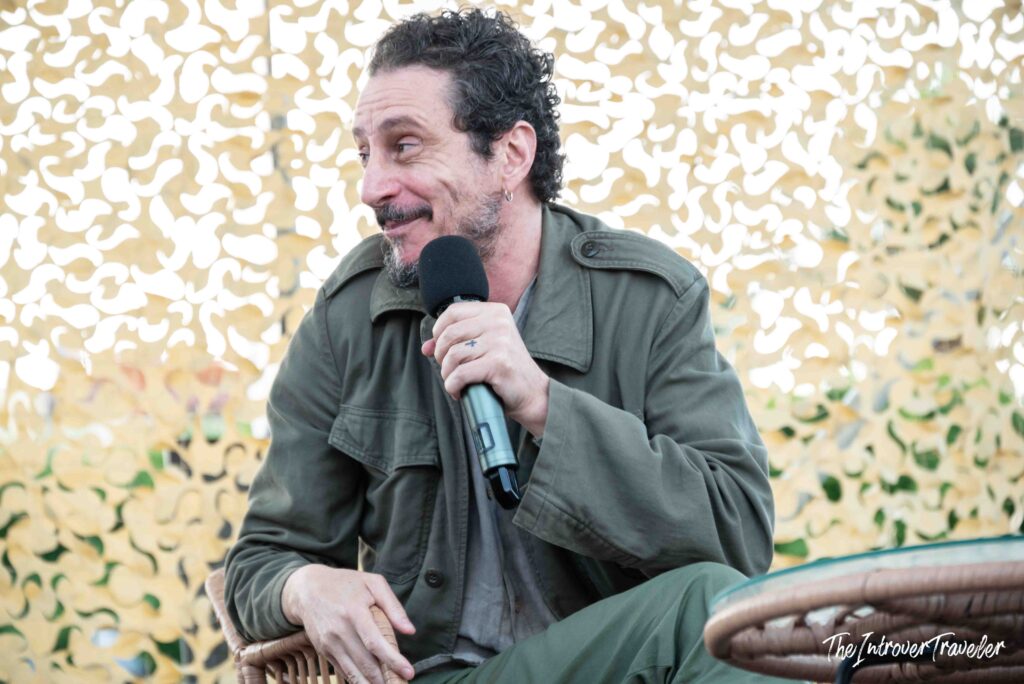

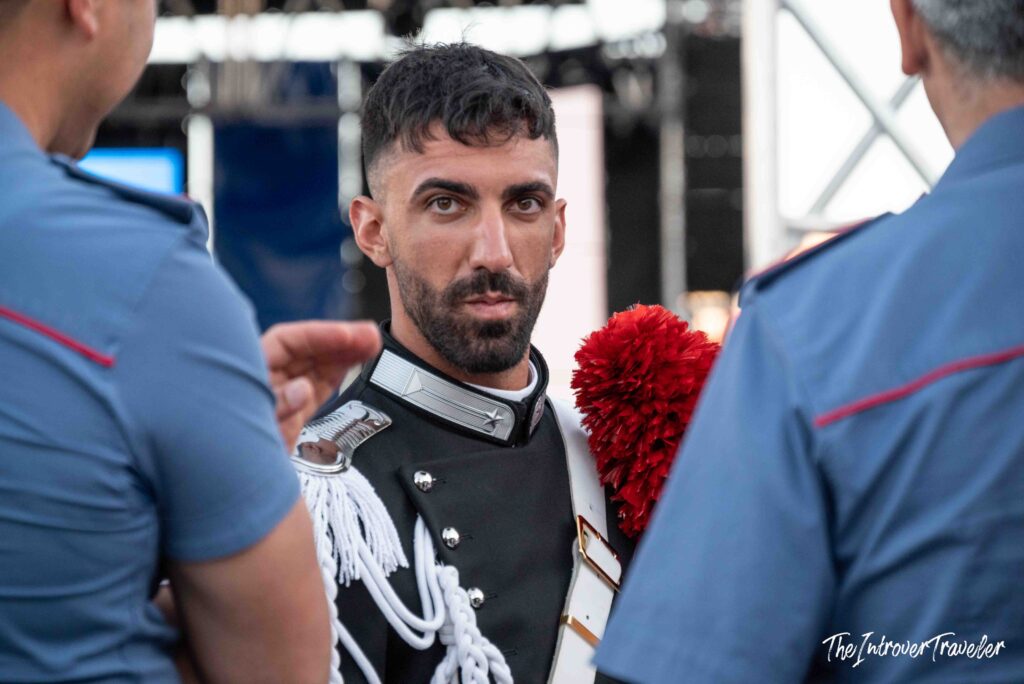
The presenters come from national television and radio, and there is an evident investment in technology and professional skill to keep an event with a markedly televisual stamp running: cameramen, equipment, technology, technical staff. Federico Quaranta (a radio presenter with some experience on public television, I gather from Wikipedia, having long since disconnected from traditional media) is sufficiently prepared, professional, and charismatic. Peppe Calabrese (another television personality, again according to Wikipedia) adds a trashy note I did not feel the need for, and keeps trying to involve the audience with the techniques of a holiday resort entertainer; and yet, when he stops playing the clown, he would appear to have real competence, but evidently someone decided the public preferred a rowdier register. Valentina Caruso is there mostly as a presence. It feels, often and too much, like being at the Sanremo Festival or on MasterChef.
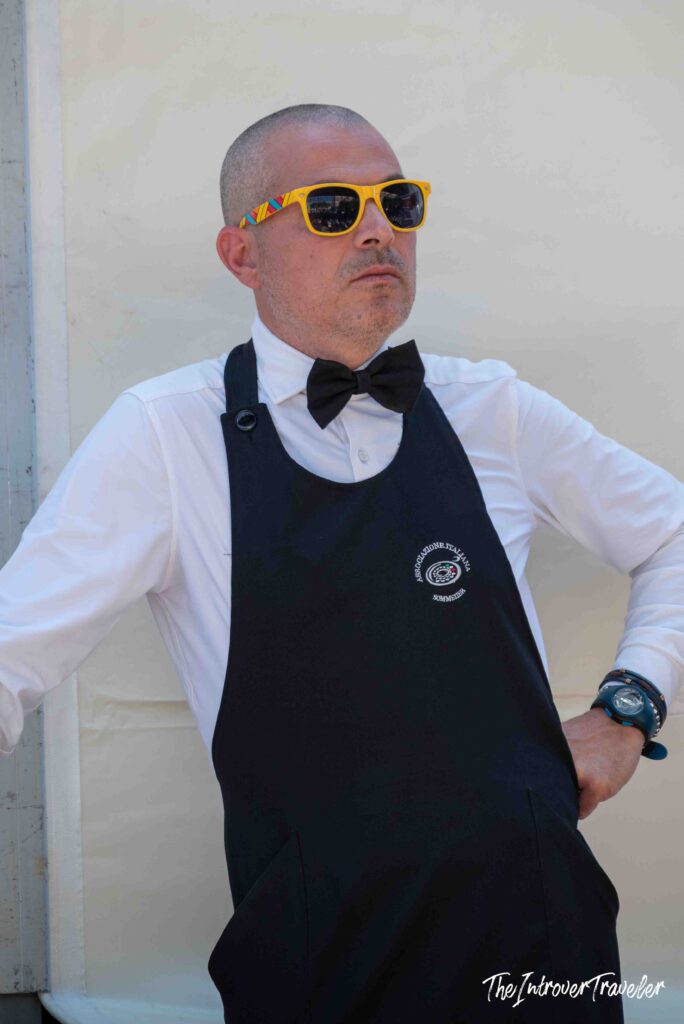
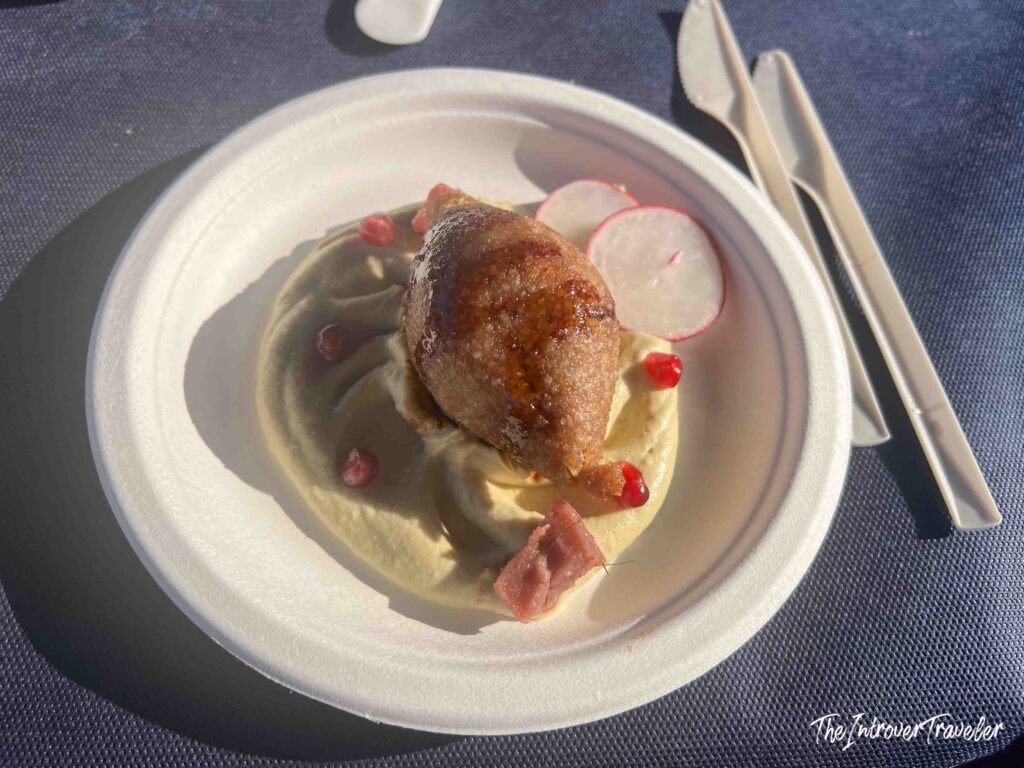
What you spend to sit at the tables of the cooking shows or the competition does not justify the tiny tastes that are served, accompanied by a glass of wine whose selection is amply explained by a sommelier, but is just as evidently sponsored.
The commercial slant, and everything that is missing
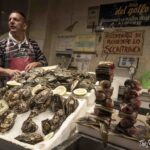
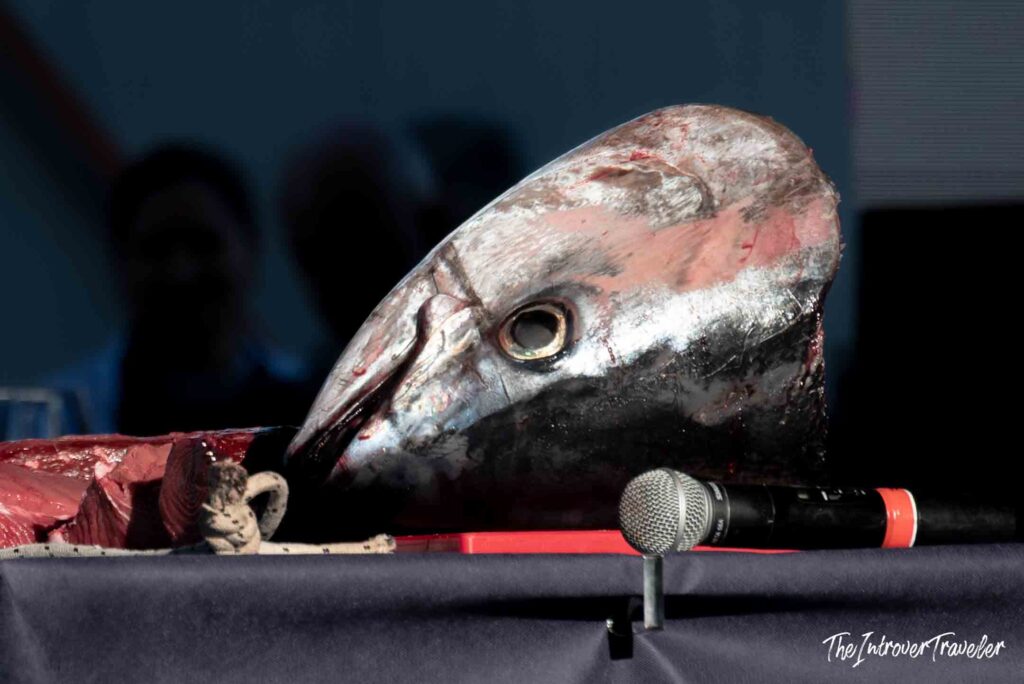
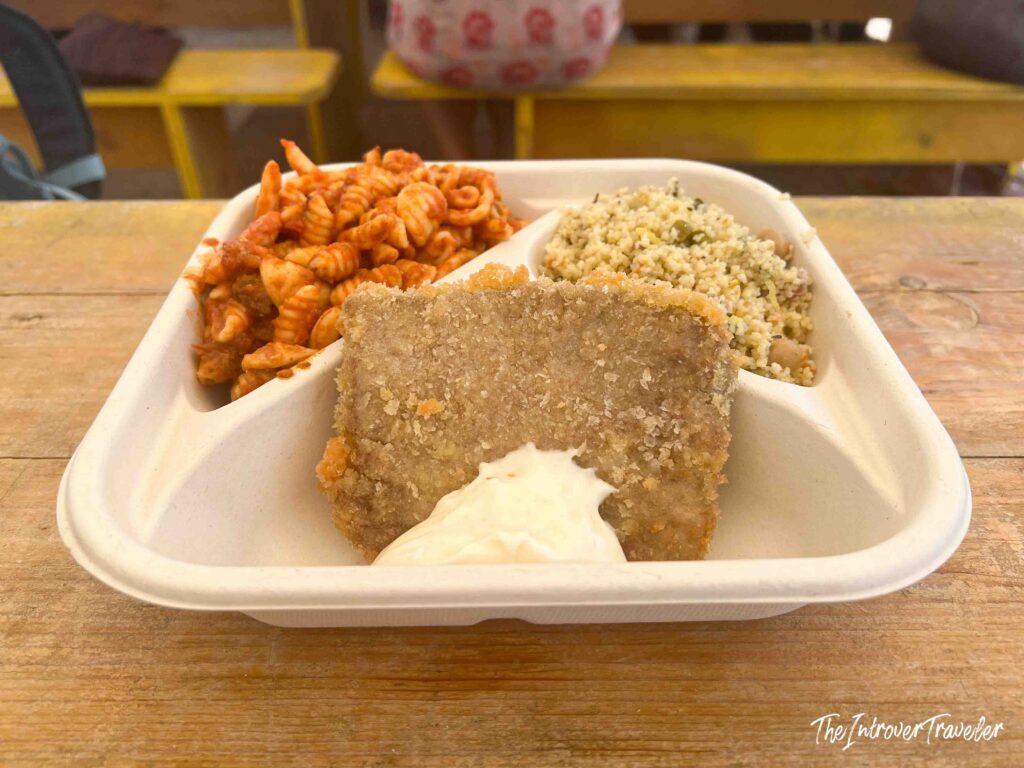
The most disappointing thing is the openly commercial slant of the event. Outside what happens, for a fee, at the foot of the stage, there is little else. There are a few stalls with a fixed, low-quality food offering: overcooked tuna-ragù pie, mediocre couscous, a dry tuna cutlet with industrial mayonnaise; the offering of a village fair in the negative sense of the term. There is the cutting of the tuna, explained by expert cooks and tonnarotti, which is probably the only genuinely interesting thing in the whole event. And then, essentially, nothing else, save for the odd stall selling liquorice sweets like the ones they sell at the cinema, mediocre Apulian street food, and the like: decidedly more of a funfair than an event promoting tuna culture.
There are moments called Tuna Talks, in which a few television celebrities take advantage of the space granted to praise themselves and, despite the name of the events, the tuna is never once mentioned.
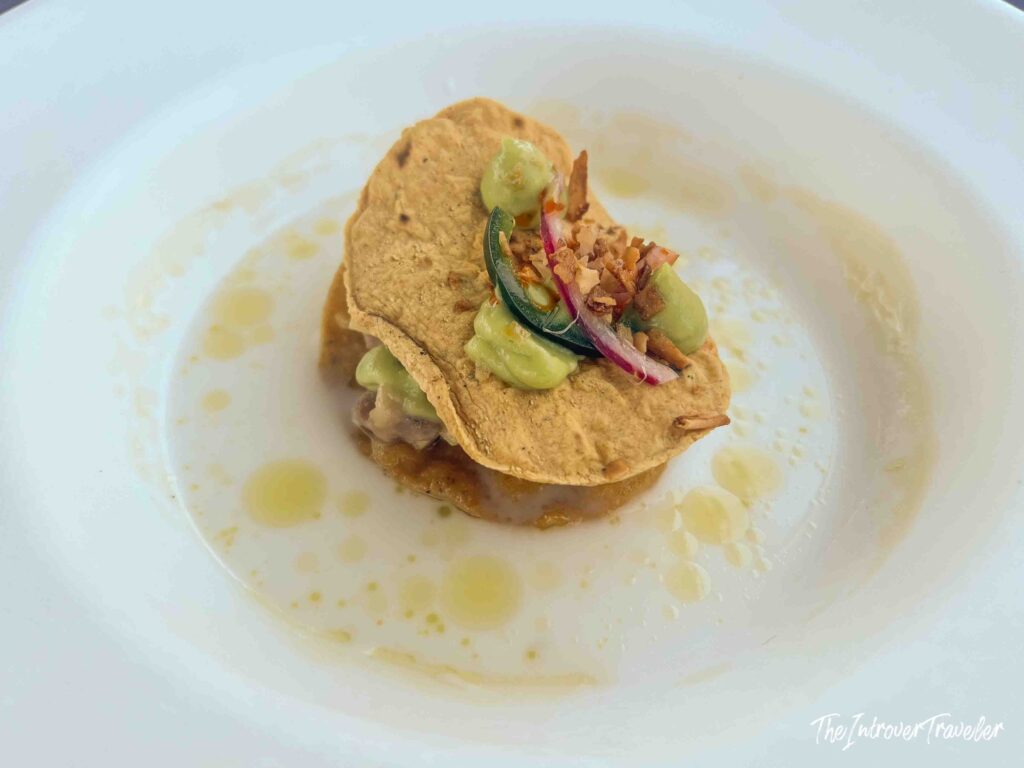
I would have expected dozens of stalls with products tied to the sea and to local craft, and Sardinia would have a great deal to offer in both fields. I would have expected talks on the state of the sea, on the sustainability of tuna fishing, on the history of the tonnara. I would have expected a stall from the local dive centre to promote diving. Instead, nothing.
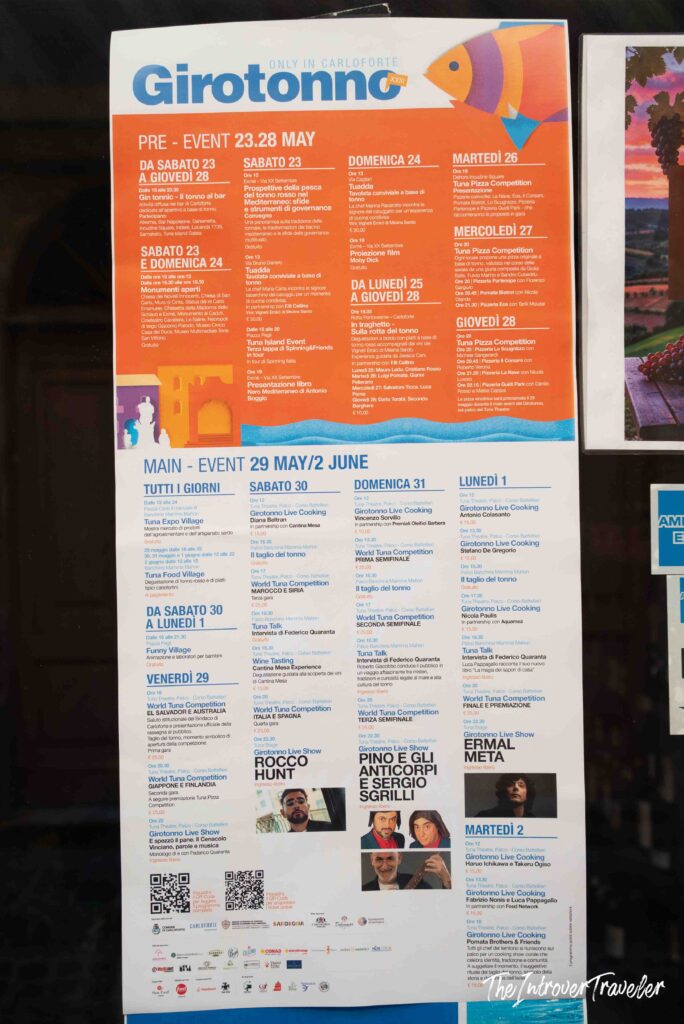
The presence of these few fragmented events means that, if you decide to dedicate a whole day to Girotonno, on top of having to set aside a significant budget, because each time you enter the “Tuna Theatre” (sic) you have to fork out fifteen euros or so, you end up with a great deal of dead time, during which, however, you do not have enough margin to tour the island or even just go to the beach. The event then rapidly loses authority, because essentially, beyond selling you a small taste of tuna at a steep price roughly every three hours, the organisers do not offer you much else.
The logistics
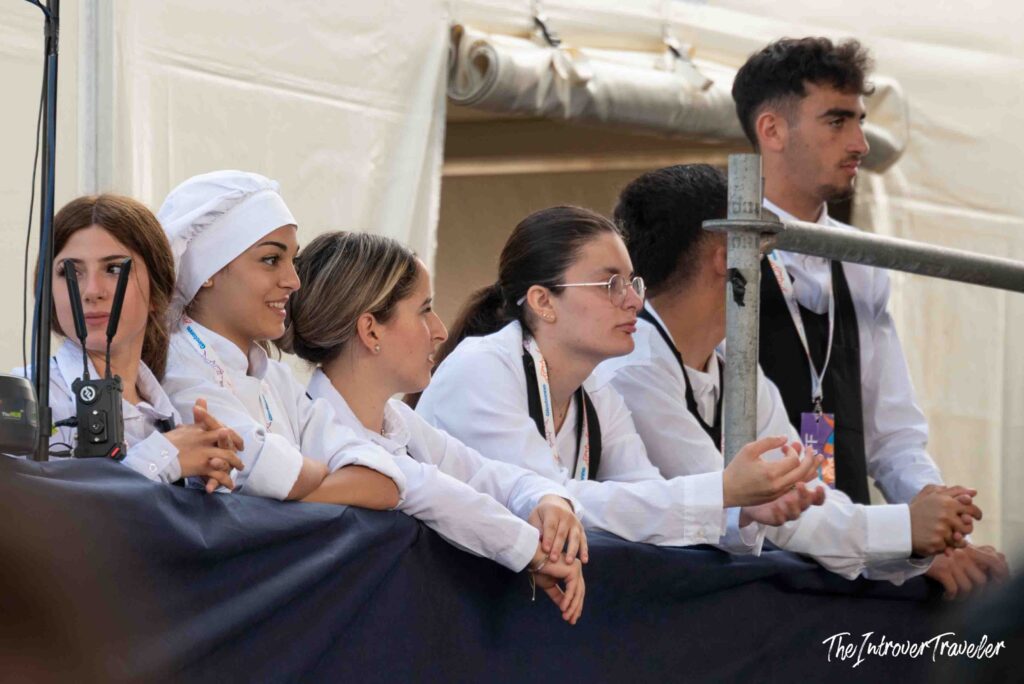
On the organisational front there is plenty to complain about. There are no toilets, and you have to make use of the bars facing the quay. The staff circulating with badges around their necks are entirely unprepared to answer even the most elementary questions, which would not require a three-year course.
And yet considerable capital is spent on the event. According to the budget figures I was able to consult on the website of the Comune di Carloforte, in 2025 the figure is around 500,000 euros, much of it earmarked for setting up the television stage and bringing in celebrities who lend a presumed prestige and have nothing to do with tuna. Still for 2025, I read that 135,000 euros went to the concert by The Kolors, a negligible Italian band that appeals, perhaps, to the odd teenager. The funds come from the Regione Sardegna, and I can think of at least a couple of better ways the same sum could have been spent, on aims more pertinent to the institutional mandate of a local authority.
To entertain part of the audience, on the Saturday evening, a performance by Pino e gli Anticorpi was laid on. This blog’s tagline speaks of “the sublime and the hideous”: I will limit myself to observing that the performance of a comic duo trying, unsuccessfully, to raise a laugh with obscene material sits rather close to the second end of that ethical and aesthetic spectrum; and yet, when the duo delivered jokes that my primary-school classmates would have been embarrassed to formulate, no small amount of laughter rose from the crowd, so I suppose this is fine.
A note on the organisational hostility, which appears endemic
An intolerance of efficient organisation must in any case be a local trait. For months I tried to make arrangements with the local dive centre which, replying each time with weeks of delay, gave me systematically contradictory answers right up until the evening before the event, when I was finally informed that there would be no dive at all.
For the visit to the tonnara, where the freshly caught fish is processed, you can only reach out, exclusively via WhatsApp, to a local guide who, with the same timeliness, punctuality, and efficiency as the dive centre, will confirm different times each occasion from the ones communicated the time before, and then, finally, cancel the visit at the last minute.
Conclusion
In the end, you spend a lot to consume microscopic tastes of tuna, not always prepared in particularly creative ways, and you leave without being much enriched culturally or gastronomically, and a little poorer economically. There is a potentially wonderful event here, sitting on an extraordinary raw material and on a history that would deserve to be told seriously. For now it remains a wasted opportunity: half a million euros of public money spent to turn one of the most fascinating stories in the Mediterranean into a Sanremo with the smell of frying. I would like to come back in a few years and have to rewrite this post from scratch. In fact, I hope so: because the tuna, the island, and the Tabarchini would deserve an event that tells their story properly, and not a funfair that uses them as a backdrop.