Last visit: May 2026
My rating: 10/10
Price range: €€€
Phone: +39 351 857 0961
Address: Viale Trieste 130, Cagliari
Web: https://aureaosteria.superbexperience.com/
On this blog I regularly give free rein to my sarcasm when reviewing places that overuse fashionable concepts like inclusivity, sustainability, and local sourcing, concepts that, taken on their own, express perfectly admirable principles, but are far too often degraded into ideological window dressing, marketing tools, and unearned virtue. I have used that half-conciliatory, half-ironic register on more than one restaurant that offered genuinely excellent food but could not resist lecturing the customer who, for the most part, just wanted to have a good meal without sitting through an unsolicited sermon (the Bologna gelato post, Forno Brisa in Bologna, Luna by Faro in Rome come to mind).
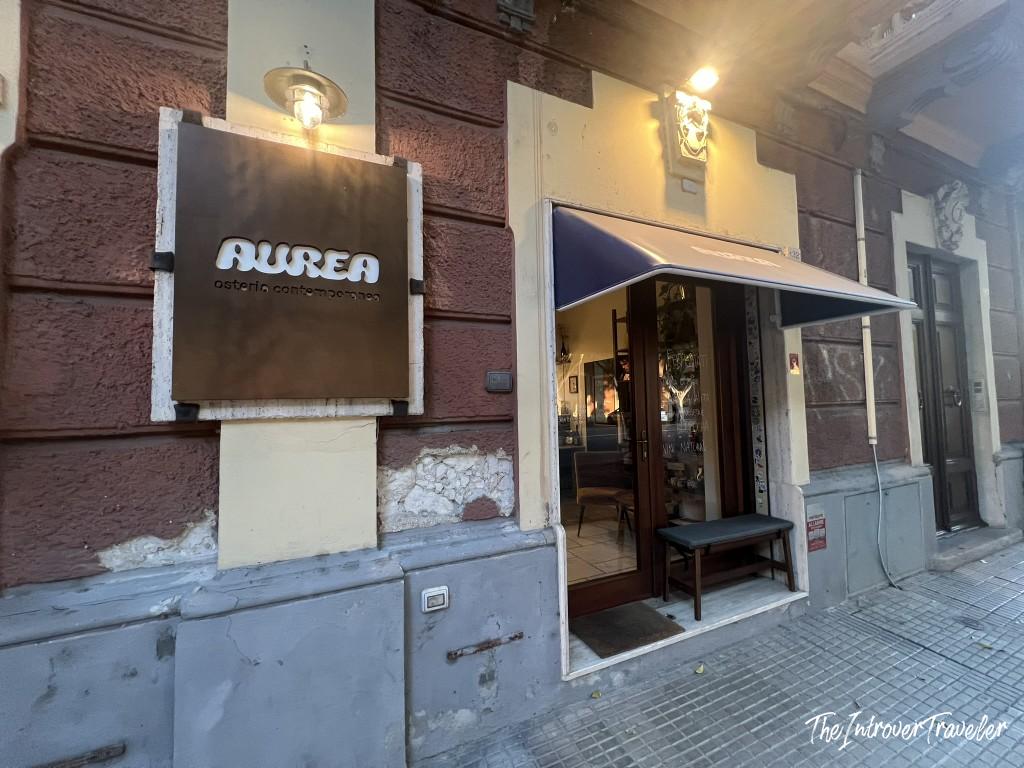
With Aurea Osteria (Cagliari) there is absolutely nothing to joke about. The moment you walk in, you get the faint feeling of having ended up in precisely one of those à-la-page places. Then the machine starts up, and you understand immediately that these people are not messing around, not even slightly, and that the local ingredients are used here for every legitimate reason a restaurant should use local ingredients: knowledge of the product, respect for tradition, honest sourcing. The narrative is all there, but it is told correctly, for the right reasons, without a single concession to cliché, stereotype, or ideology. So for Aurea I make an exception. I silence my sarcasm. This place deserves every ounce of respect I can offer, and it deserves to be taken entirely seriously, or at least as seriously as I am capable of being.
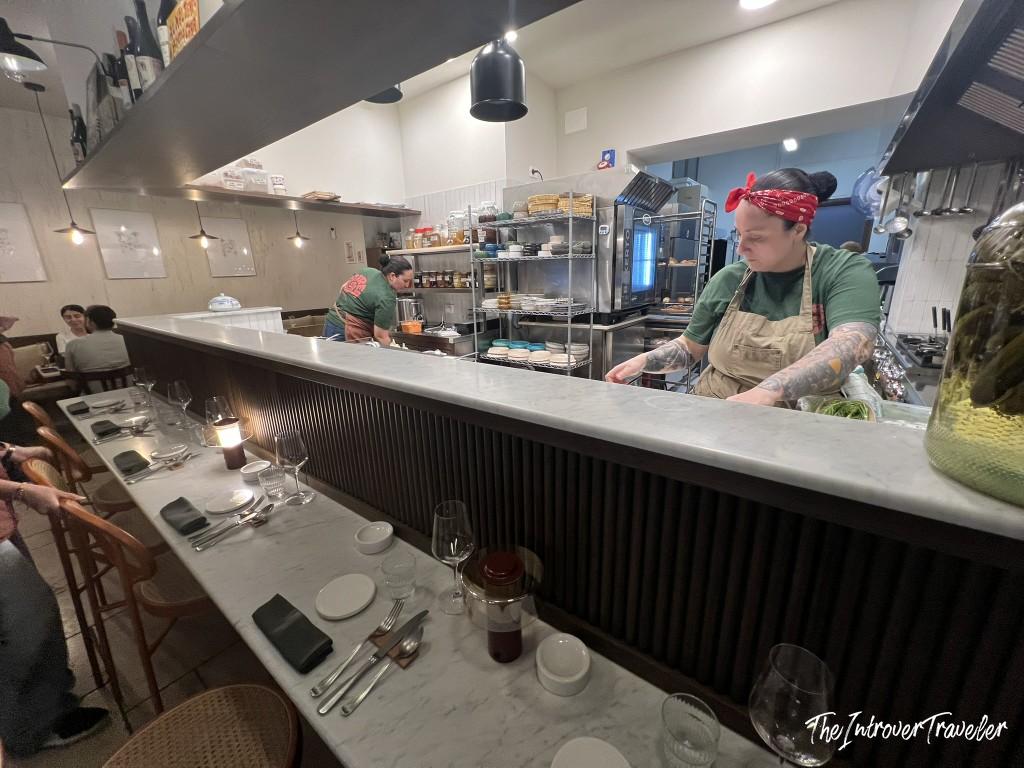
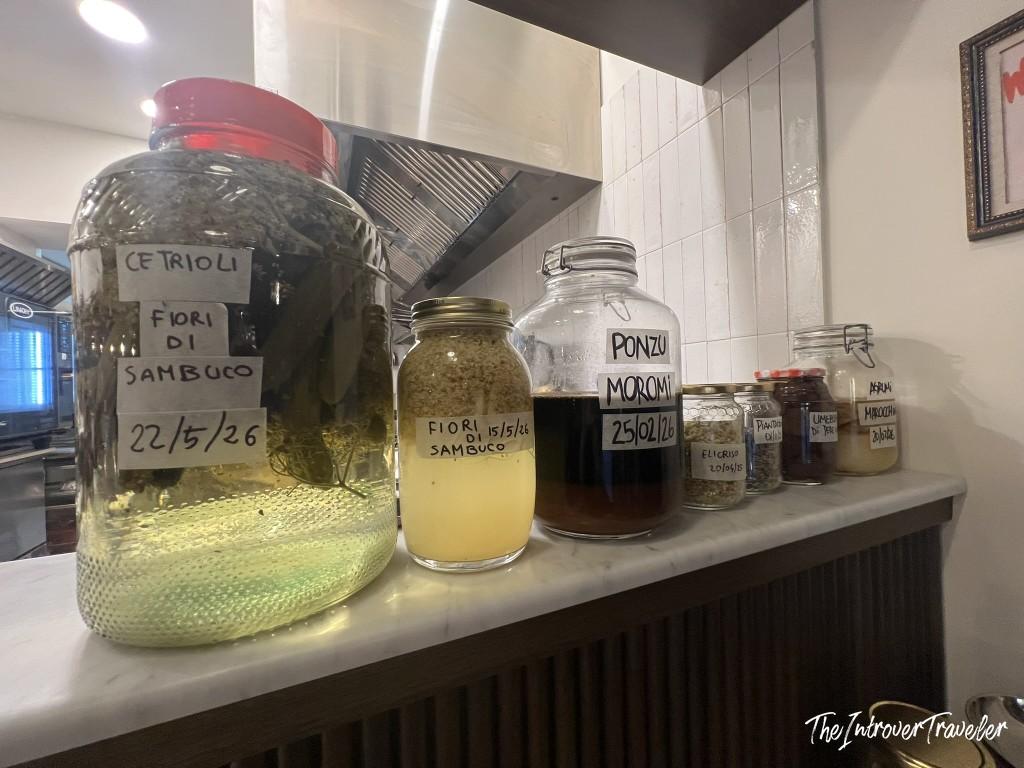
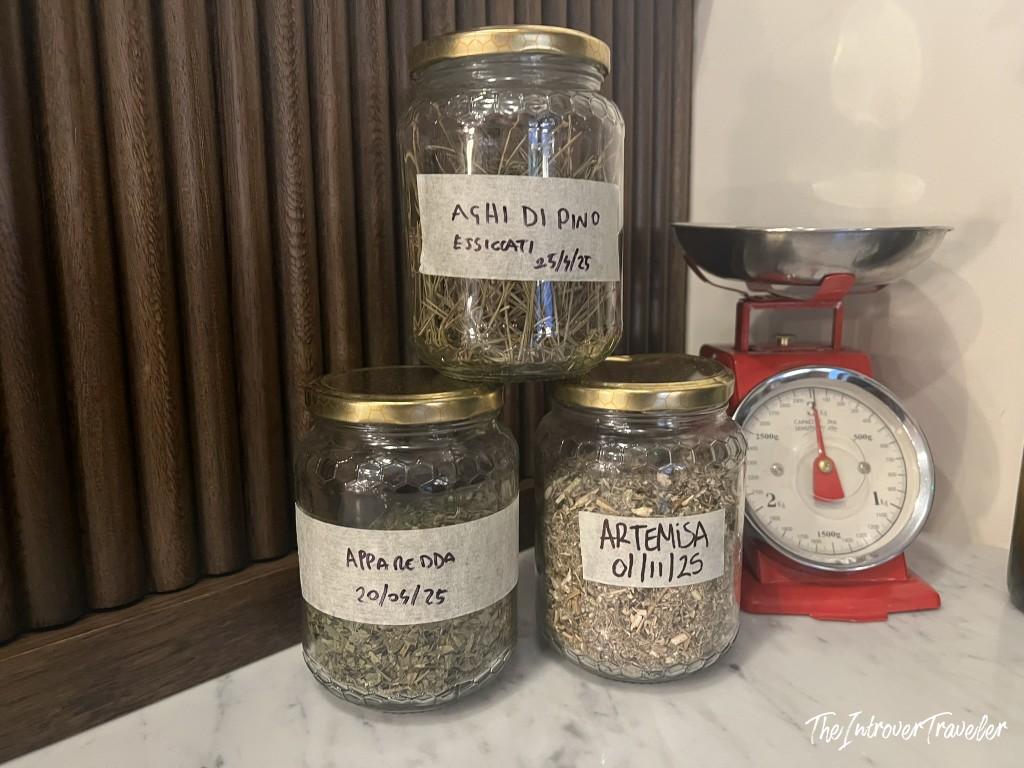
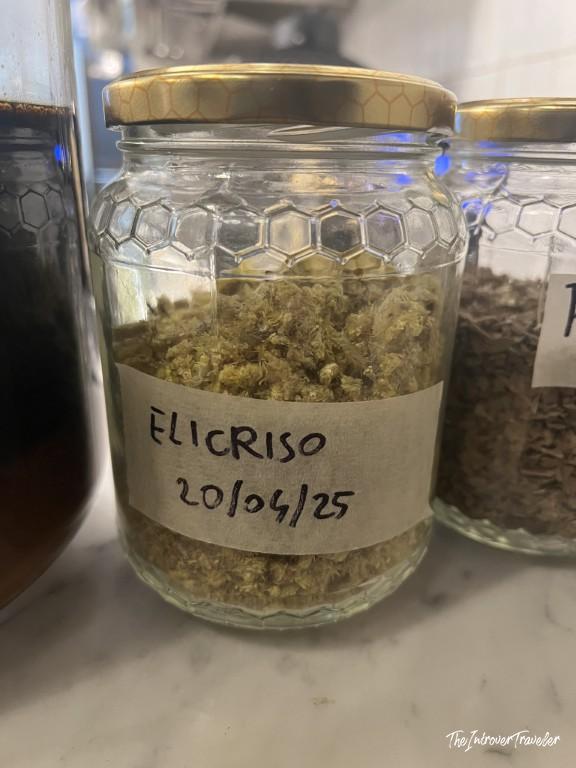
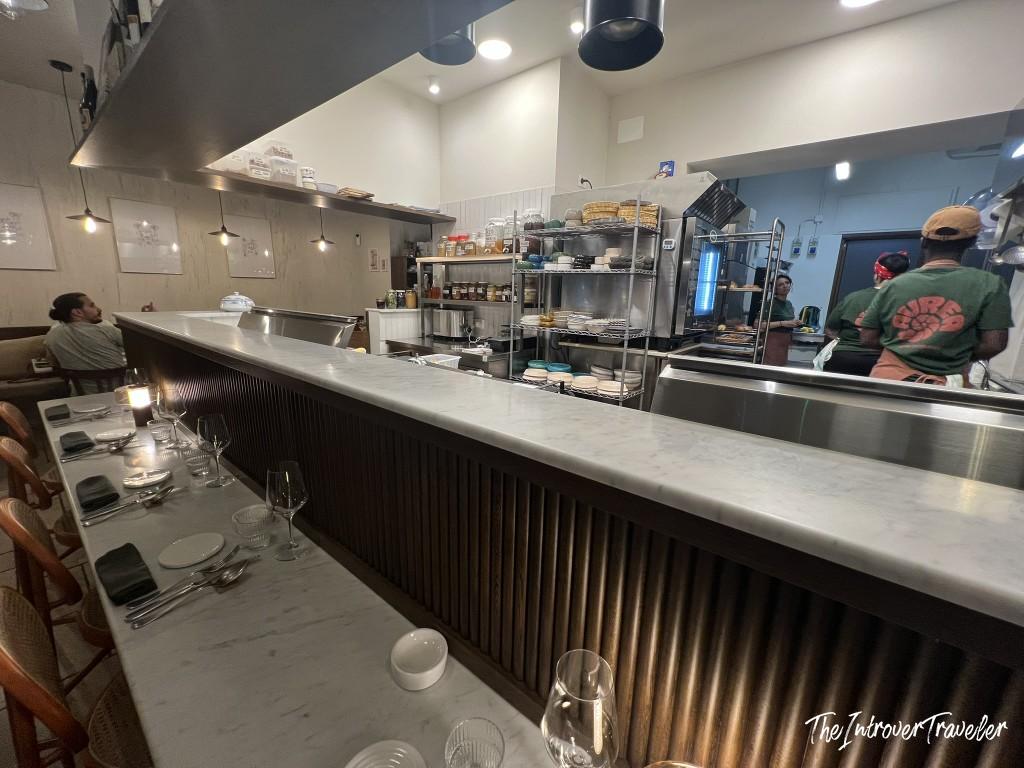
Inside: a white marble counter, an open kitchen, and handwritten-label jars everywhere. Cucumber and elderflower, macerating since May 22. Elderflower syrup from May 15. Ponzu moromi, resting since February 25. Pompia kosho, February 20. Dried helichrysum. Artemisia. Dried pine needles. This is not a set dressing. These are working ingredients. The difference is immediately visible.
The tasting menu is served at the counter, omakase-style. Head chef Teresa Galanti presents each dish with a volley of names, techniques, and anecdotes that fires off like a train and never slows down, because she also has a restaurant to run and has no time for theatrical pauses. More importantly, she has no need for them: when someone’s eyes light up like that, the communication travels through other channels entirely. It is the semantics of body language. The moment Teresa starts talking you understand all the passion that went into thinking, studying, and building that dish, and before you have even tasted it you already know you will not be disappointed.
Two service notes.
First: since Teresa speaks at full speed and gives you no time to take notes, and since recording her without asking did not seem appropriate, I lost a significant portion of the ingredients. Each dish is introduced with far more components than I managed to write down, and representing them only by what I memorized does not do them justice. Since listing only some of the ingredients would end up diminishing the dishes, replacing the missing ingredients with “bleeps” would look like a form of censorship to protect minors, and inventing them would be a fairly orthodox operation but contrary to my principles of accurate information, I will replace the ingredients I did not manage to jot down in time with the names of 1940s movie stars and artists dear to me, just because, for no particular reason.
Second: I am normally suspicious of restaurants that use too many ingredients (I recently and painfully burned over 200 euros at a Cagliari place that runs very well on Instagram; the pricing appeared to operate at roughly one euro per ingredient listed, and of the approximately two hundred I consumed not one left an impression). Here, not a single ingredient is there by accident. Every one is necessary, every one is right. It is only my own cognitive decline that prevents me from remembering them all. I will therefore take this opportunity to launch a small appeal: since inclusivity is fashionable, and alongside the LGBTQ community, victims of violence, the disabled, and endangered species there also exists the category of the cognitively compromised, it would be genuinely appreciated if restaurants that change the menu daily provided a little chalkboard to photograph, for future reference. I too have rights.
In addition to forgetting some ingredients I may also have got a few wrong, which falls under what I already said about belonging to a protected and discriminated-against category.
Enough digressions. Back to Aurea.
Teresa Galanti comes from Castelsardo and from a family of fishermen. This is not a biographical footnote for a Wikipedia entry: it is the explanation for everything that arrives on the plate. She knows the sea from the inside, not through a window. The sea is her biography; she has lived it, and it is part of her formation. The restaurant serves, day by day, whatever the sea has produced, and the menu shifts accordingly. The raw material is essentially what is commonly called “poor fish”, but in Teresa’s hands it becomes rich. Very rich. Loaded. Beside her, on desserts, is Luna Püz Olivares, a Chilean pastry chef who has been in Sardinia for ten years. The two worlds meet without friction and without compromise. Trying to determine which of them is more talented is an exercise that invariably ends in a very satisfying draw. And this too is rare: in my experience, the ability to maintain consistent quality from the first course through to dessert is the exclusive province of only the best restaurants.
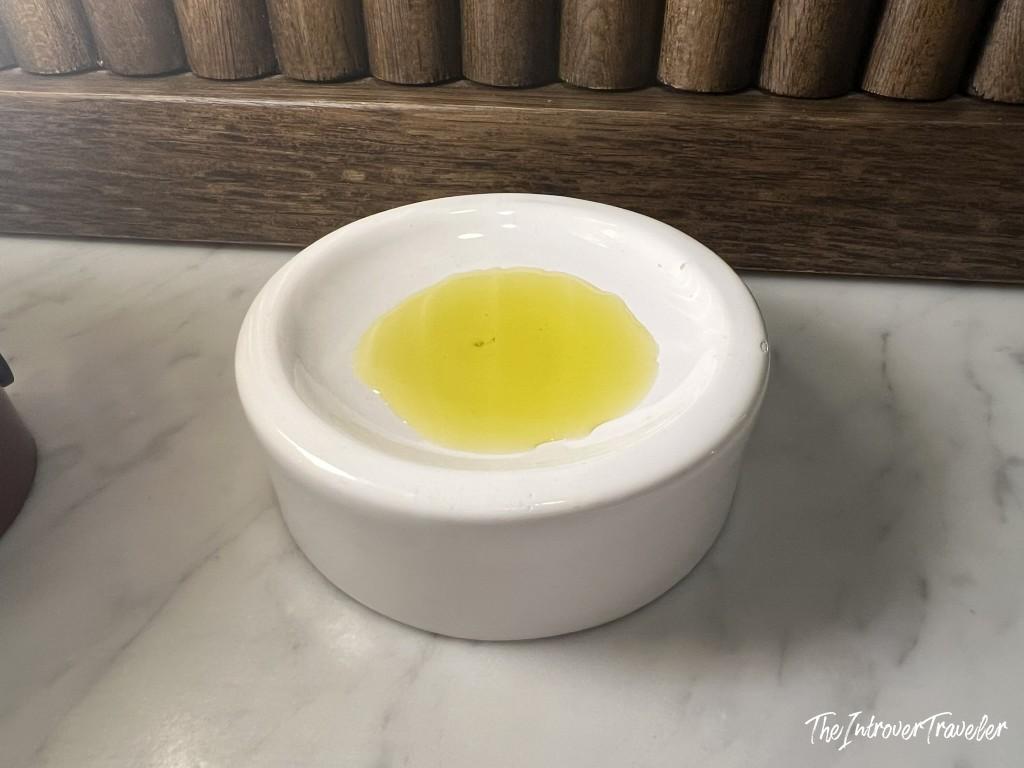
The olive oil, the croquette, the loquat ketchup
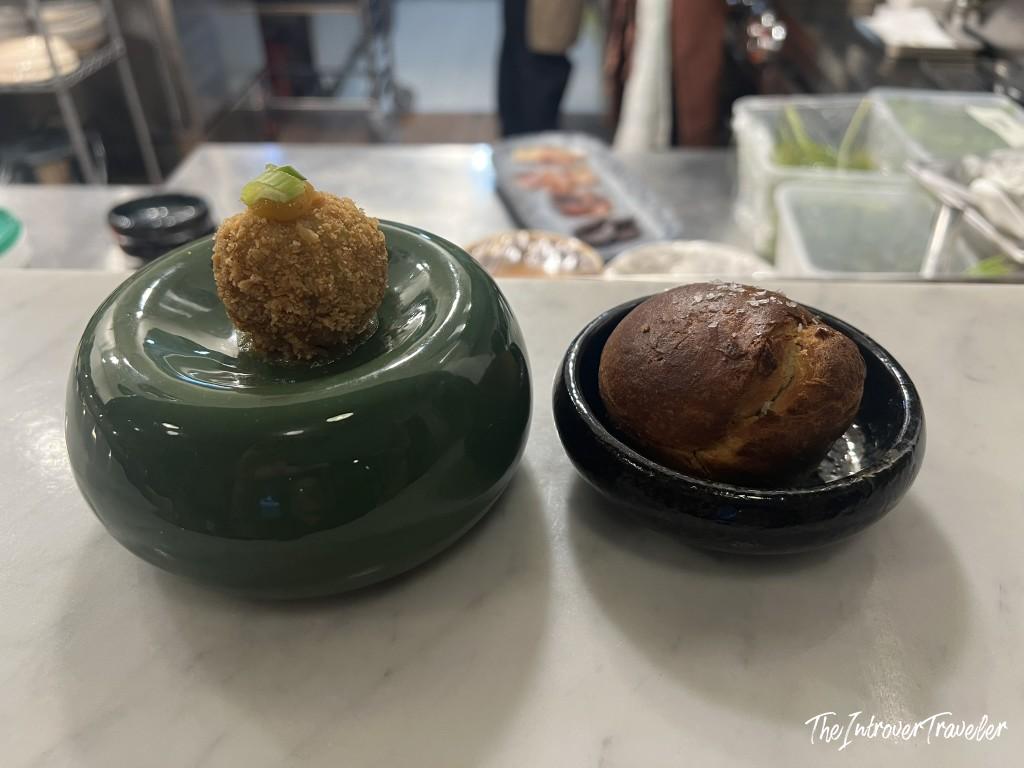
Before the bread: an amuse-bouche. A small fish croquette, with spices I did not manage to transcribe, but which moved somewhere in the space where Hiroshige meets Giulio Romano against a backdrop of loquat ketchup and apparedda, and a pool of 019 extra-virgin olive oil in that yellow-green of an olive that has barely left the branch. Three bites. No margin for error. Rating: 8.
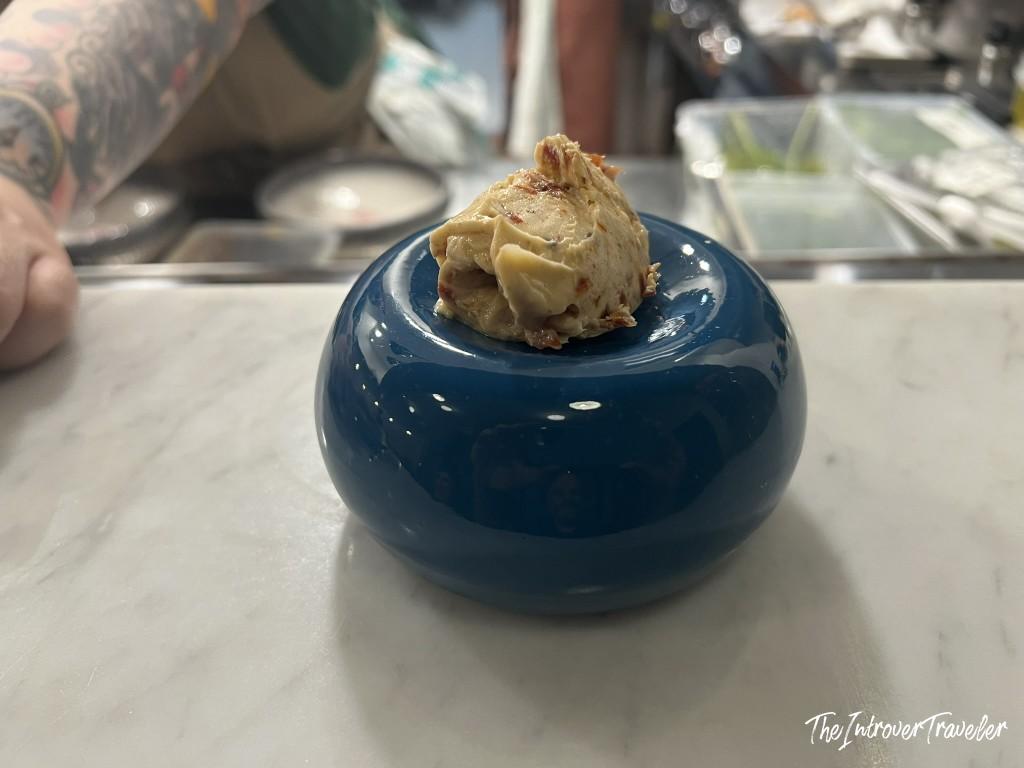
The Andrews Sisters bread and the Rita Hayworth butter
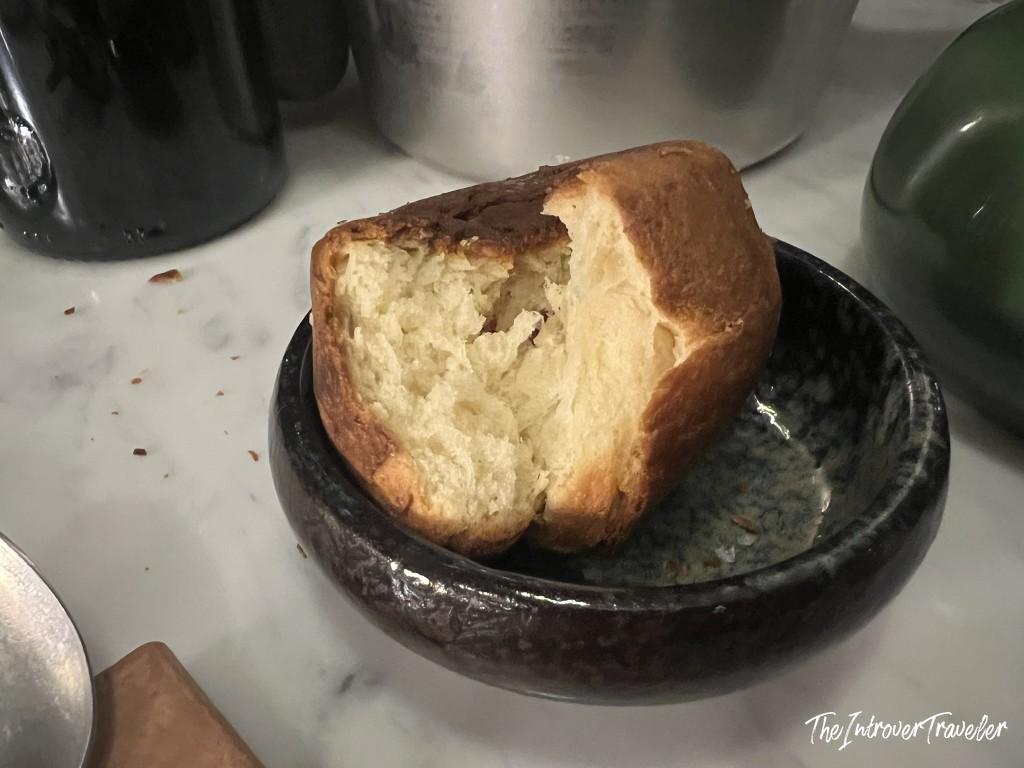
I noted down neither the type of bread nor the particulars of the butter. I will be honest: the moment I saw them arrive, every higher cognitive function shut down. I stopped hearing what Teresa was saying. I began to salivate. I felt like a pig confronted with an entire oak grove in full acorn. This is a phenomenon that occurs reliably in the small number of restaurants where bread and butter are served as they should be (anyone who goes to Aalto in Milan will know exactly what I mean). The bread was fragrant and obscenely good, with a crust that broke cleanly; the butter was deliciously aromatic, fatty and light like a Catullus ode, but the specific detail evaporated because at that point I was already somewhere else entirely.
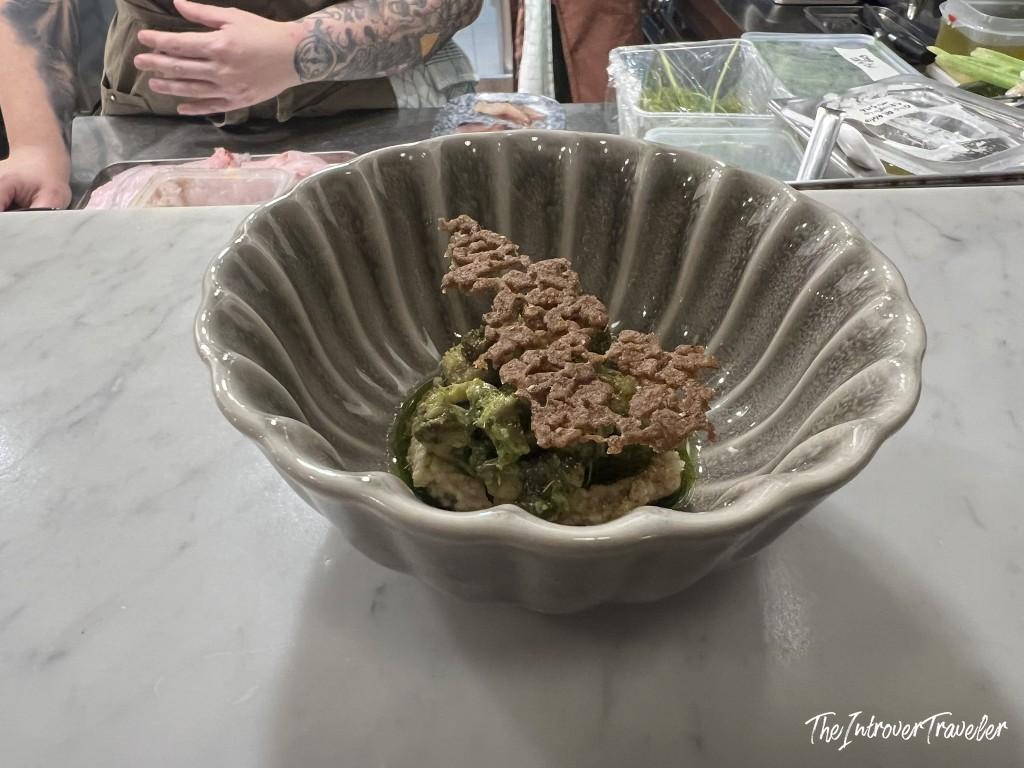
The murex
Murex with anchovies, salsa verde, wild fennel, and “bread that never reaches the table” (the scraps from cutting the loaves, toasted and used as a textural element), Gene Kelly and Fred Astaire. In a kitchen that does not know what it is doing, murex are rubbery and flavourless, and the anchovies have to do practically all the work. Not here. The murex is tender and carries a clean, full sea flavour, without that ferric edge that makes them unpleasant when not handled correctly. The anchovies balance without dominating. The fennel aromatises without covering. The bread scraps add a crunch that holds the whole thing together. Andrés Segovia. Sesshu Toyo. Rating: 10.
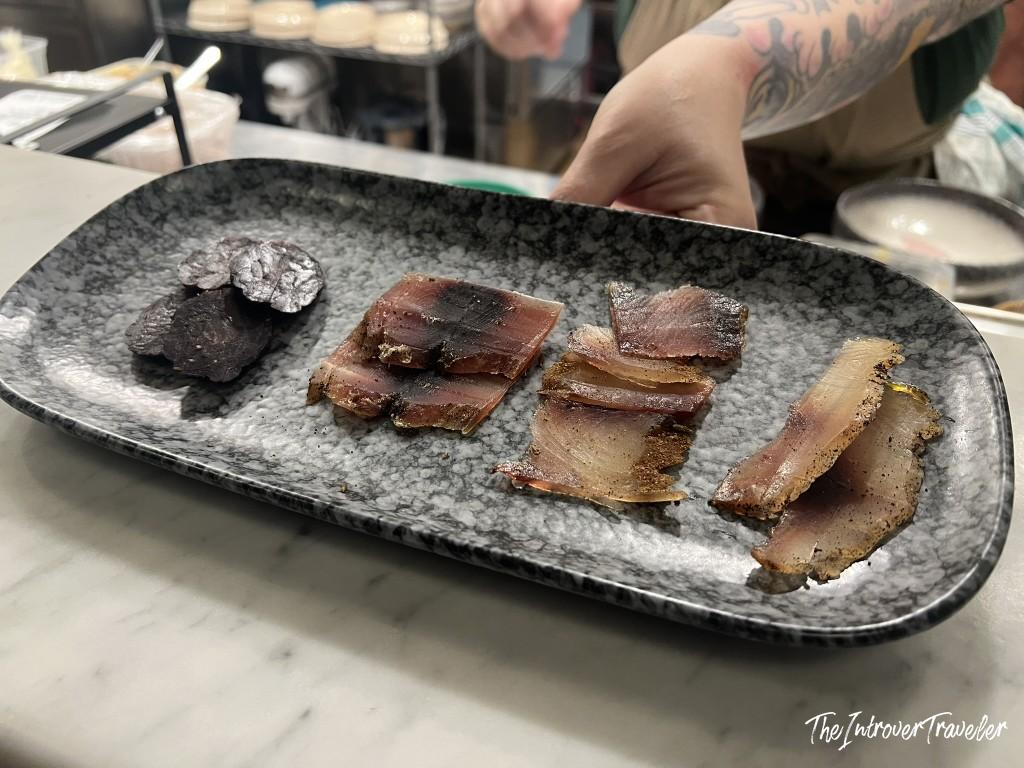
The fish charcuterie
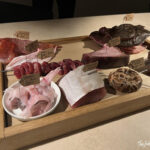
This is the dish you do not expect. A board with four elements in sequence: tuna sausage, amberjack, greater amberjack, grey mullet. The curing is extraordinary. The use of spice is precise with a rigour that would make Luca della Robbia proud. The grey mullet in particular, which is normally the most unassuming of the four, has an aromatic complexity that makes it impossible to go back to its original version. Anyone who still uses the phrase “poor fish” as a synonym for “less flavourful fish” should eat this dish and then go back to school.
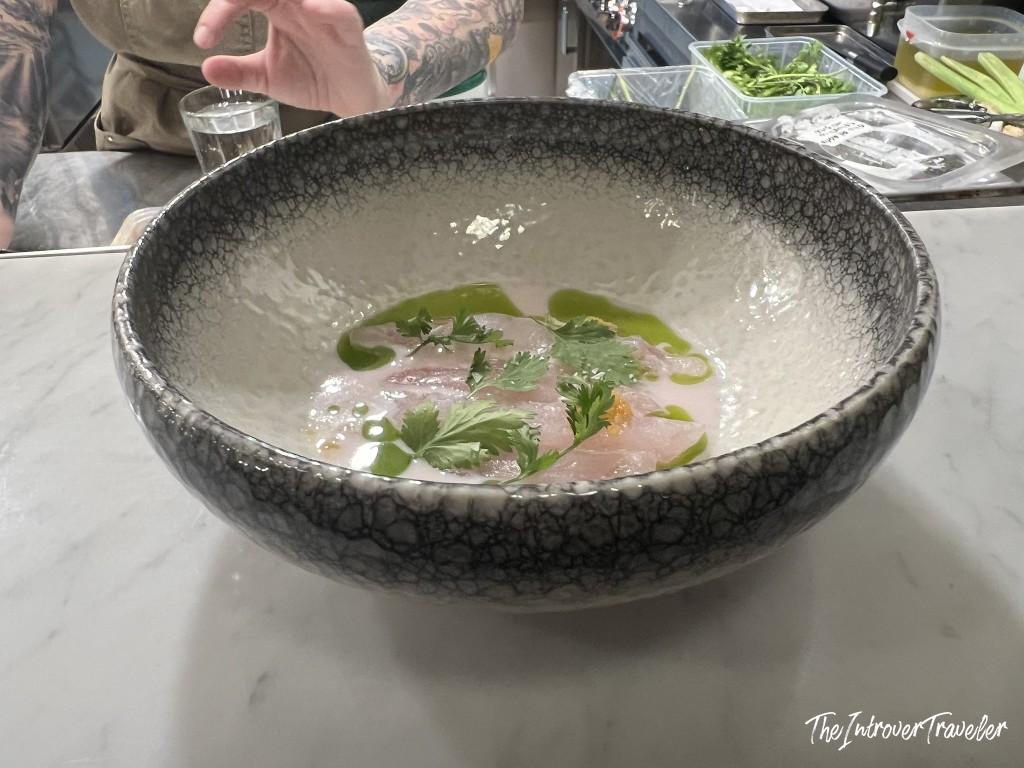
The yuzu kosho of San Pietro fish with pompia, coriander, Utamaro, and Tamara de Lempicka
Technically bold and narratively coherent. Yuzu kosho is normally a Japanese paste of yuzu and green chilli, fermented with salt. Here it is reinterpreted using pompia, a nearly extinct Sardinian citrus, sharp, aromatic, found almost nowhere else. The result is spiced in a perfectly calibrated way: present without overpowering, and then the coriander and the pompia work together to produce flavour combinations I had never encountered before. This is the kind of dish that asks you to slow down, because each bite is slightly different from the last. Rating: 9.
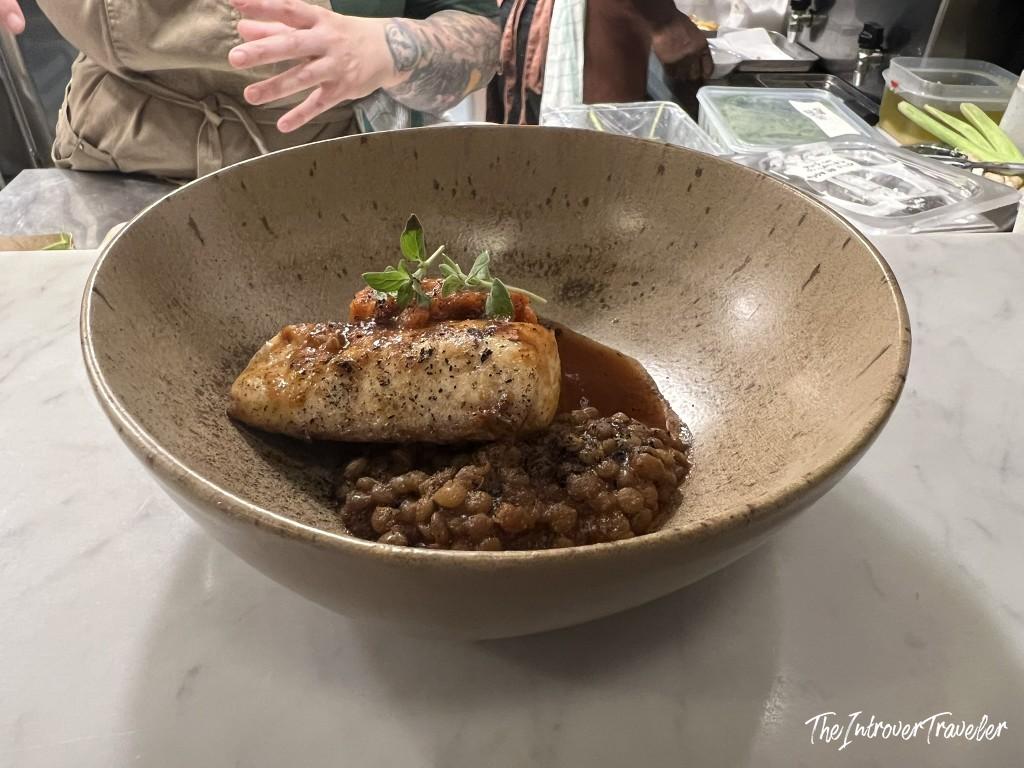
The grey mullet with lentils, fish-bone stock, and a splash of Ugo Tognazzi
The mullet flesh is very fresh: firm but yielding in the mouth with no unnecessary resistance. The lentils are cooked to a texture I would have wanted to demonstrate in a cooking class. The lentil base has been enriched with the cooking stock from the fish bones, which transforms an already excellent dish into something with a marine depth that keeps returning between bites. Rating: 9.
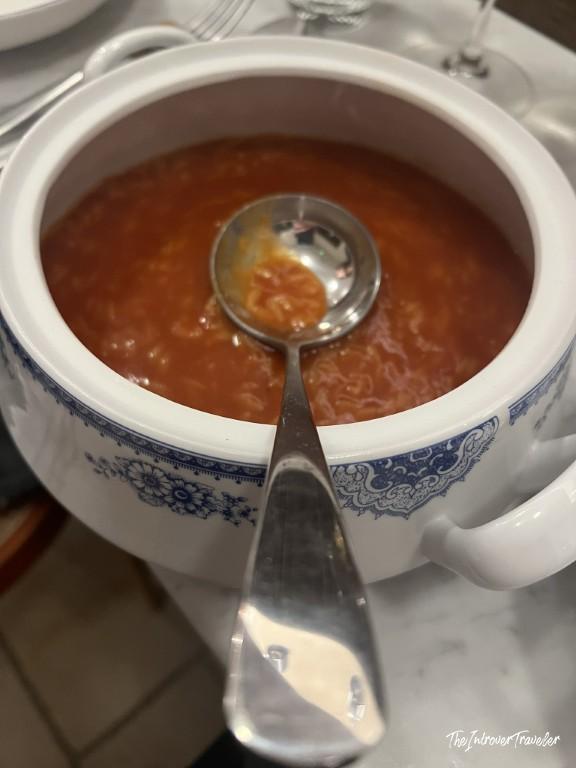
The conger eel broth with risoni, wild fennel, and chilli
This dish has a story before it even arrives. Teresa introduces it by recounting the soups her grandmother (or was it her grandfather?) made in Castelsardo, the sea outside the window, how certain flavours are not learned in a kitchen but received. In another context this would sound like the kind of talk restaurants use to justify simplicity. It is not.
The broth arrives in a tureen (the kind you find in those unstarred restaurants where the food is better than in many starred ones) with a silver ladle and that faintly swaggering air that belongs only to dishes that know their own worth. The conger eel has a deep, sea flavour, fatty in the good sense, and the fennel and chilli keep it in line without letting it weigh. The risoni are cooked exactly right. It is a broth. It is perfect. Very rarely have I eaten anything that tasted so unambiguously of the sea. Rating: 8.
A marginal note: when this course ended I was expecting more to come. It was, in fact, the last savoury dish. I was disappointed for approximately thirty seconds, at which point I realised I was full and the desserts were still ahead.
Desserts
Luna Püz Olivares executes two desserts and neither is decorative.
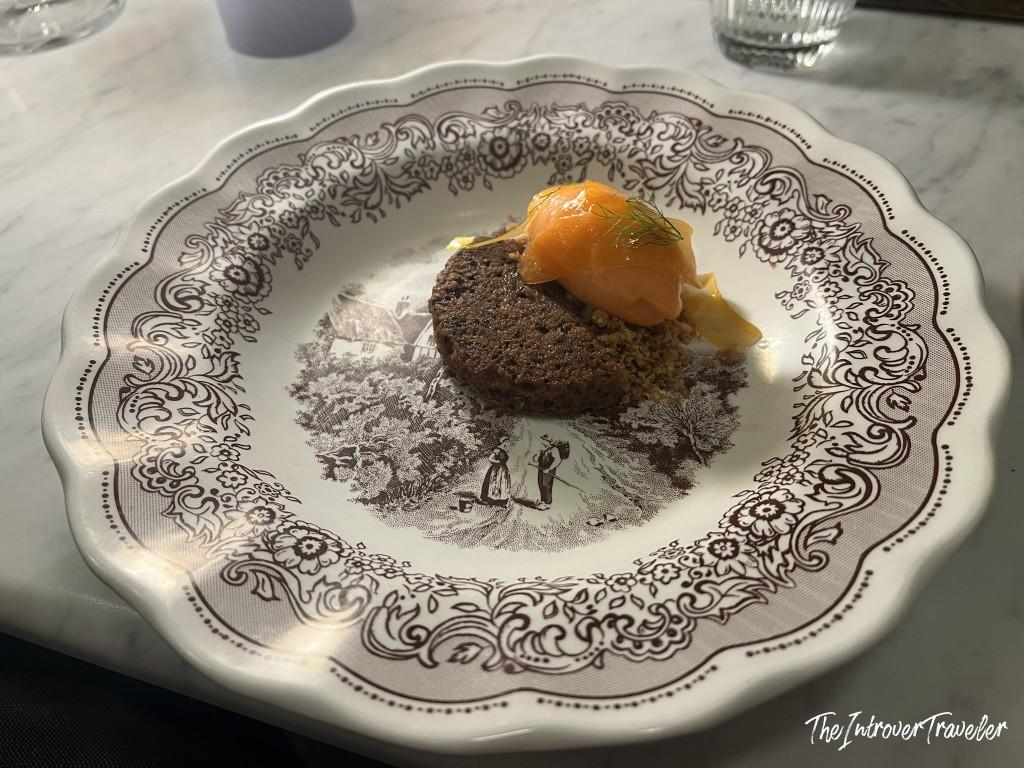
The first is a dandelion and miso crumble with carrot sorbet. On paper this sounds like something you order with a degree of scepticism. In the mouth it is surprising: the cold, sweet carrot; the miso bringing umami and depth; the dandelion introducing a herbaceous, faintly bitter note. Nothing is there by chance. Nothing is there to look interesting. Everything has a precise gustatory purpose. Rating: 9.
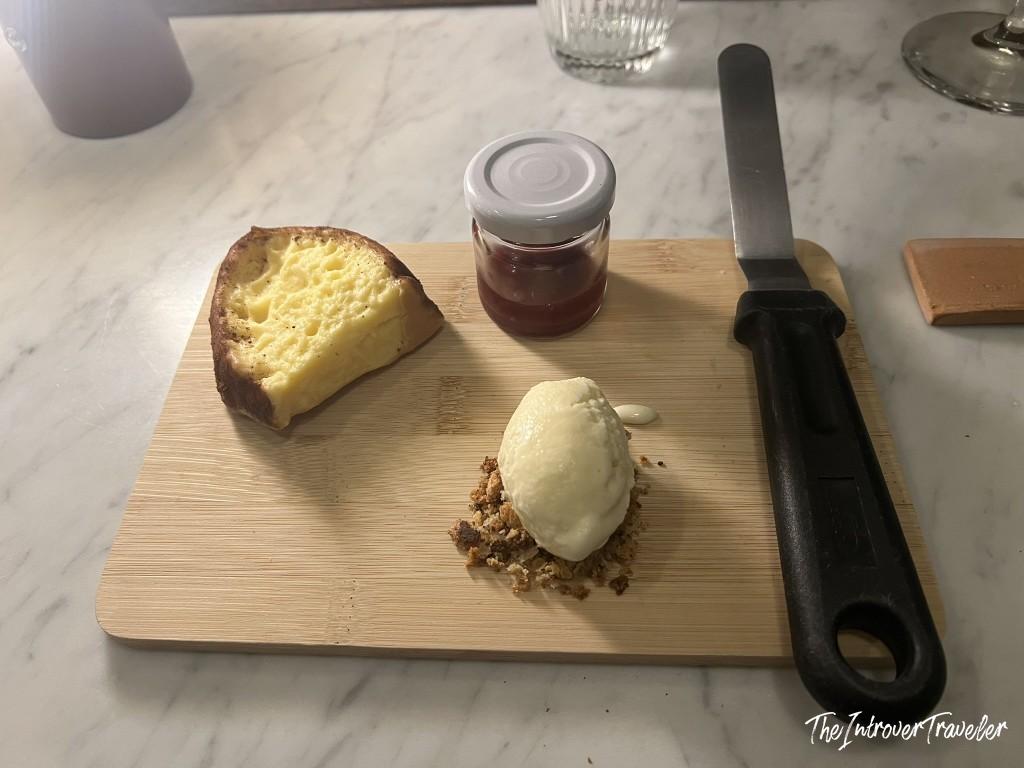
The second dessert is the moment in which bread, which had already played its part at the beginning of the evening, undergoes a metamorphosis. A bread crust is worked and transformed into a structure that still looks like toasted bread but, when you bite into it, breaks with that dry, fragile resistance of an ice cream on a stick, and then immediately becomes creamy in the mouth, with an underlying hazelnut butter that spreads and closes everything on the note of Rosalind Russell in the final act. The closing of a dessert that is also a comment on where the meal began. Not a perfect 10 only because it was slightly cloying, and I am not convinced the red fruit compote improved matters. Rating: 9.
Atmosphere
A particular feature of Aurea, rare enough to deserve mention: every person working there gives the impression of being happy to be there. Anyone who has ever worked in a restaurant knows this is nearly impossible, because the work in a kitchen and on the floor is among the most exhausting there is, and however hard you try to welcome the guest, that deep tiredness eventually shows through. Not here. Whether it is Teresa’s energy radiating outward, whether it is a young project still carrying its initial charge, whether it is simply people who chose to be there, the good cheer circulating through the room is contagious without being forced.
Aurea Osteria, Cagliari. Conclusion
Aurea is a seafood restaurant (there is also a vegan menu, reportedly excellent) where, in terms of ingredient quality, attention to detail, and creativity, you eat at the level of a starred restaurant at half the price. In certain respects it reminded me of Lucio in Rimini, which may be the superior of the two, but to exceed what Aurea is doing probably costs ten times as much.
An unsolicited note on business economics
I keep trying to become a full-time travel-slash-food-slash-art-slash-diver-slash photographer blogger, but for now my work is still, regrettably, in business consulting, and by occupational deformation I cannot help making an uninvited, and hopefully entirely wrong, summary assessment of this restaurant’s economic sustainability.
What I see at Aurea worries me in an affectionate way. The space is immaculate and has clearly required substantial investment. There appear to be at least five people working full time. The covers cannot be more than twenty. A fish tasting menu of this quality at sixty euros per person plus wine is an equation that works only if those twenty seats turn every evening against a waiting list several weeks long and even at one hundred percent occupancy I would have some reservations about whether that pricing is sustainable over time.
So: please. I beg you. On my knees. Go. Go more than once. Take friends, partners, parents, managers, enemies with whom you want to make peace. Book in advance, then book again. A place like this cannot afford to join the painfully long list of excellent restaurants that have had to close because costs eventually overtook quality. Make it prosper. Make it multiply.