Last visit: march 2026
My rating: 8/10
Price: €€€€/€€€€€
If Forno Brisa in Bologna represents the Emilian version of conscious, sustainable, militant baking, LUNA by Faro is its Roman counterpart: same ideological grammar, same undeniable product quality, same subtle unease upon realizing that having breakfast requires a spiritual commitment to a worldview.
The place
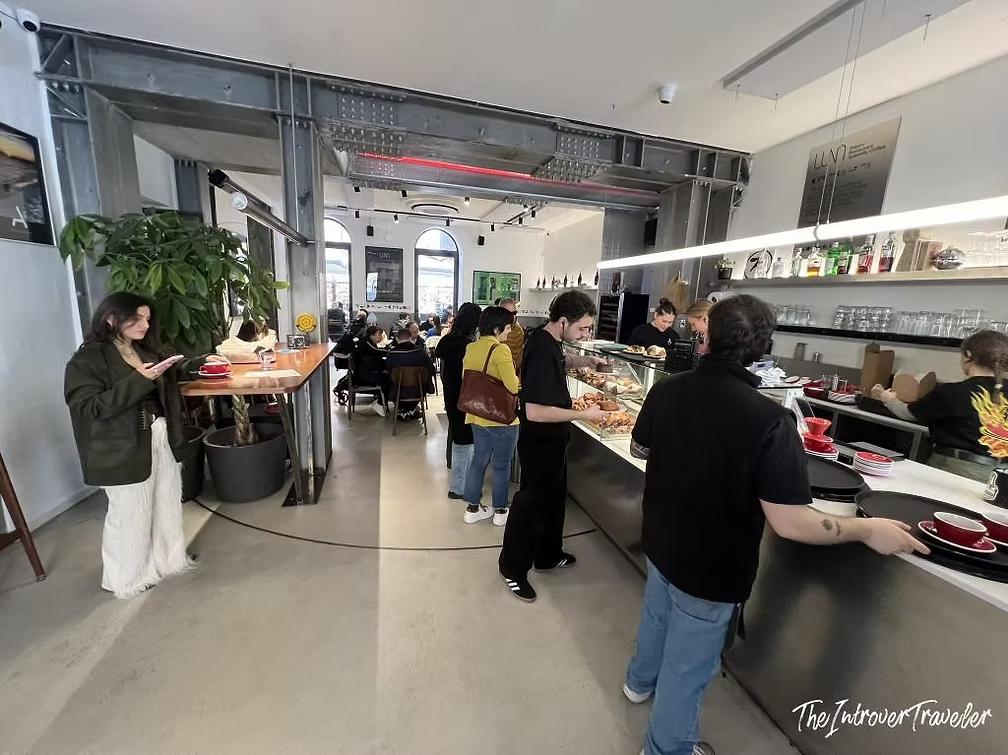
LUNA is located at via delle Quattro Fontane 175, a few steps from Piazza Barberini, in that part of Rome where via Veneto exhales the last fumes of la dolce vita and the Teatro Sistina advertises musicals at prices that would make even a specialty coffee menu blush. The venue opened in April 2025 and is the latest addition to the galaxy created by Dario Fociani together with his partners Arturo Felicetta and Dafne Natale Spadavecchia, who in 2016 had founded Faro, Rome’s first specialty coffee shop, near Piazza Fiume. In 2021 came Aliena, the group’s artisanal roastery. And now LUNA, which in the founders’ intentions is “a restaurant that looks at coffee,” or perhaps a coffee shop that looks at the restaurant world, or perhaps a hybrid place where every definition falls short, because here traditional categories are overcome, transcended, deconstructed, like a charcoal-grilled Sicilian broccoli with mimolette and citrus vinaigrette.
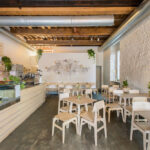
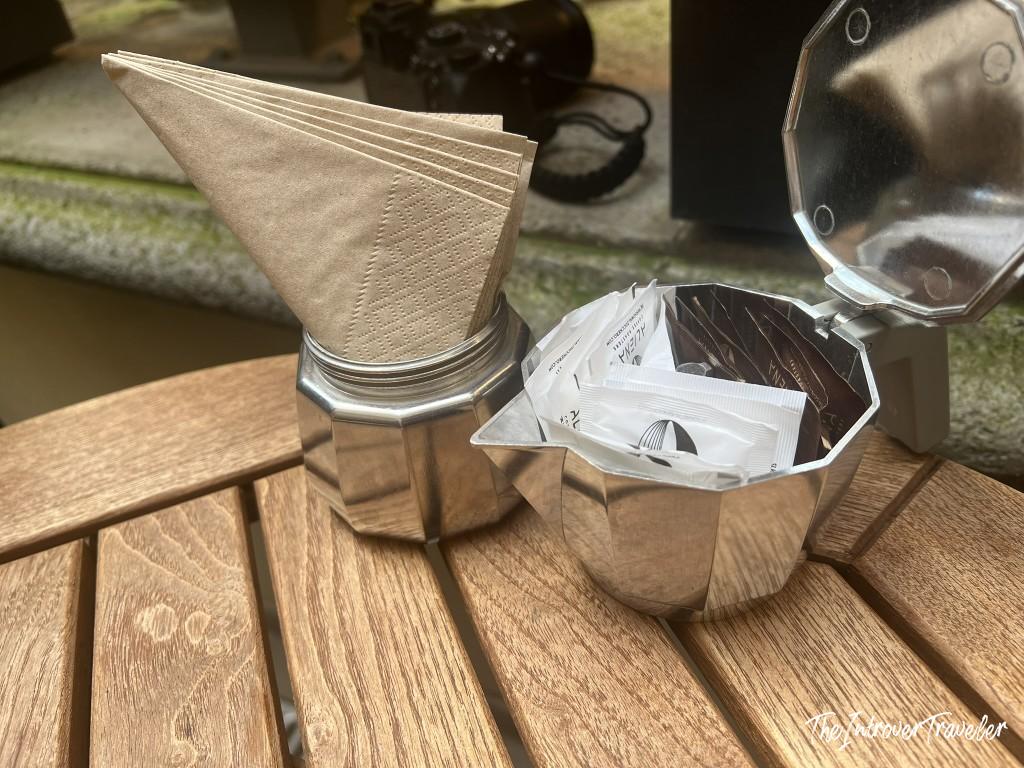
The interior design is what you’d expect: steel, concrete, colorful wall paintings, soft lines that, according to the press releases, “evoke the imagery of a lunar colony.” And indeed there is something lunar about finding yourself at nine in the morning in a Roman establishment surrounded by walls that look like they came off a Kubrick set, ordering a batch brew while outside the car horns on via del Tritone remind you that you’re still on planet Earth, in the most chaotic neighborhood of the Eternal City, and not in a Scandinavian orbital station.
The products: the bright side of the moon
As with Forno Brisa, here too criticism must stop before the evidence: the products are very good. And not the Roman kind of “good,” which sometimes simply means “it’s not bad and the barista didn’t insult me.”
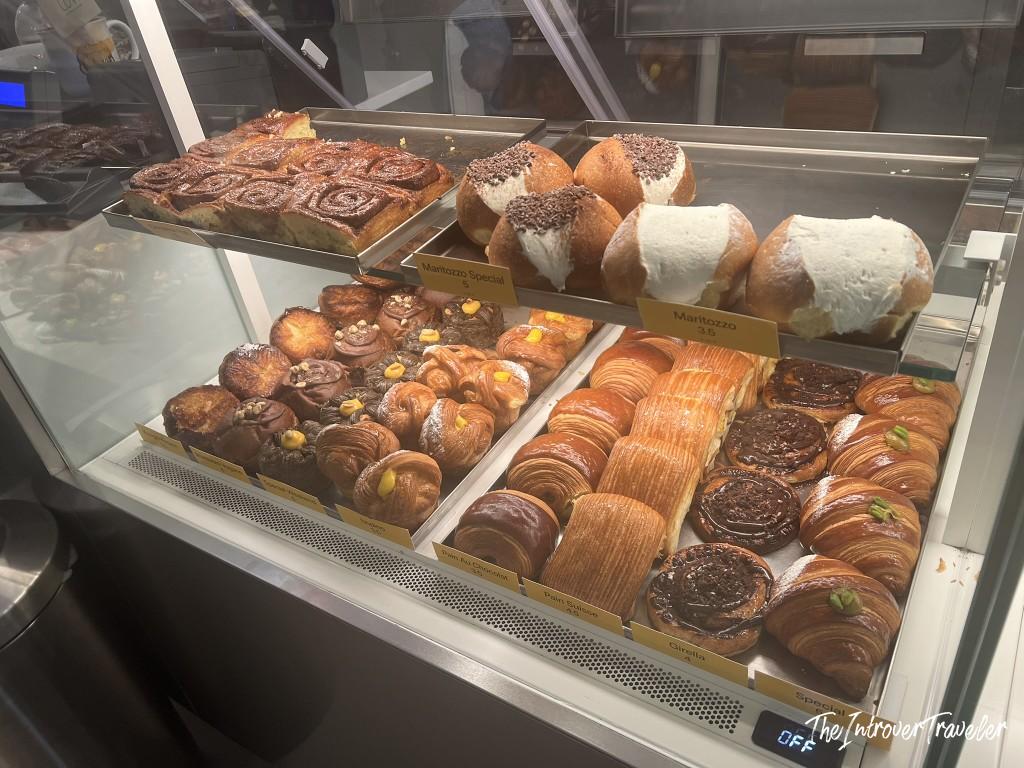
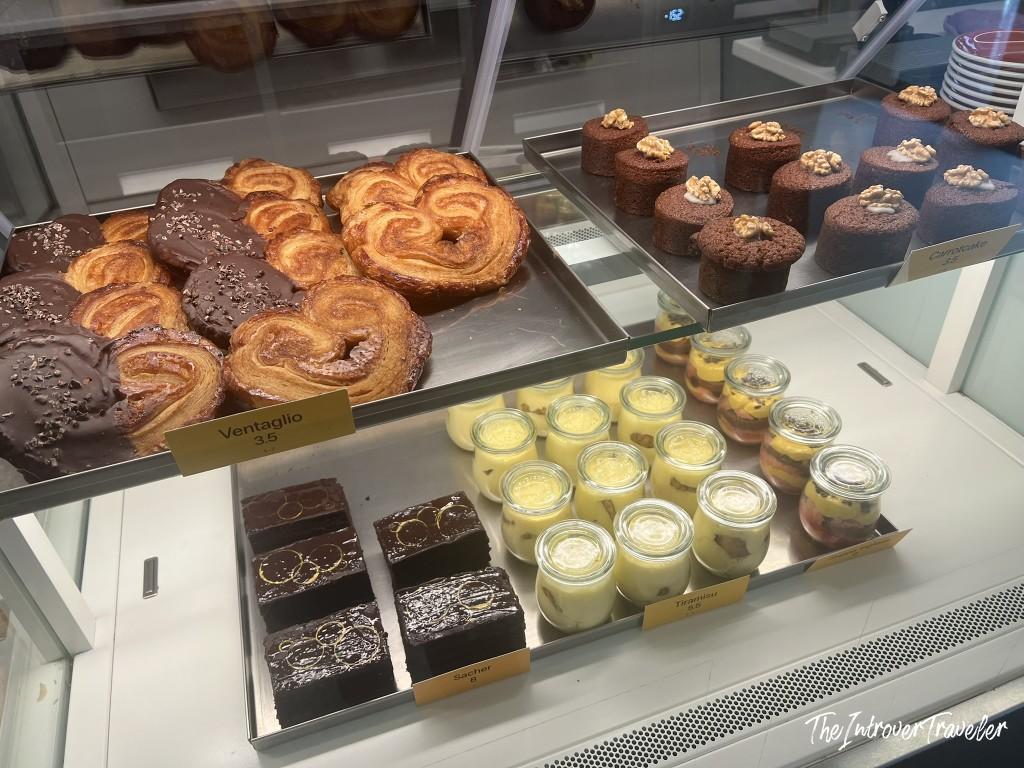
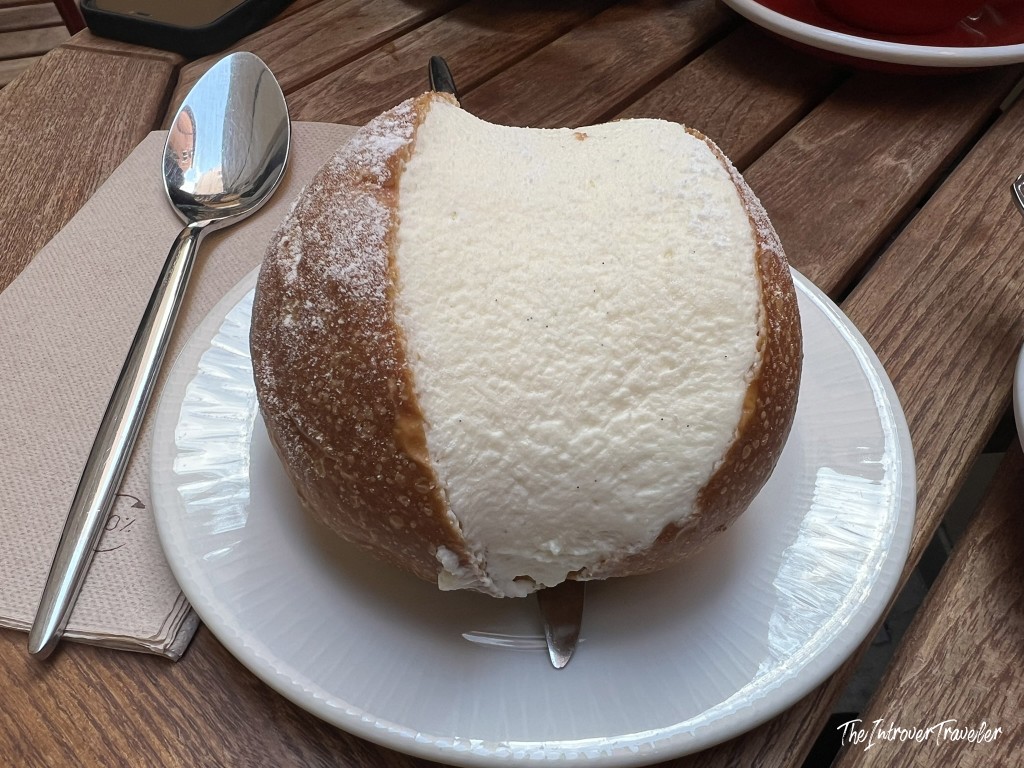
The croissants are excellent. Made with organic flour from Mulino Sobrino and Italian alpine butter (not Isigny butter, they’re keen to point out, because that one, however good, is industrial, and here butter must have an ethical CV), they have a crispy lamination and a soft interior that justify the pilgrimage. The maritozzo, a tribute to Roman tradition, is treated with the respect it deserves. The focaccia and pan brioche, produced daily with rye sourdough starter, have that texture and aroma that tell you someone in the lab spent hours on a dough rather than defrosting a pre-made product at five in the morning.
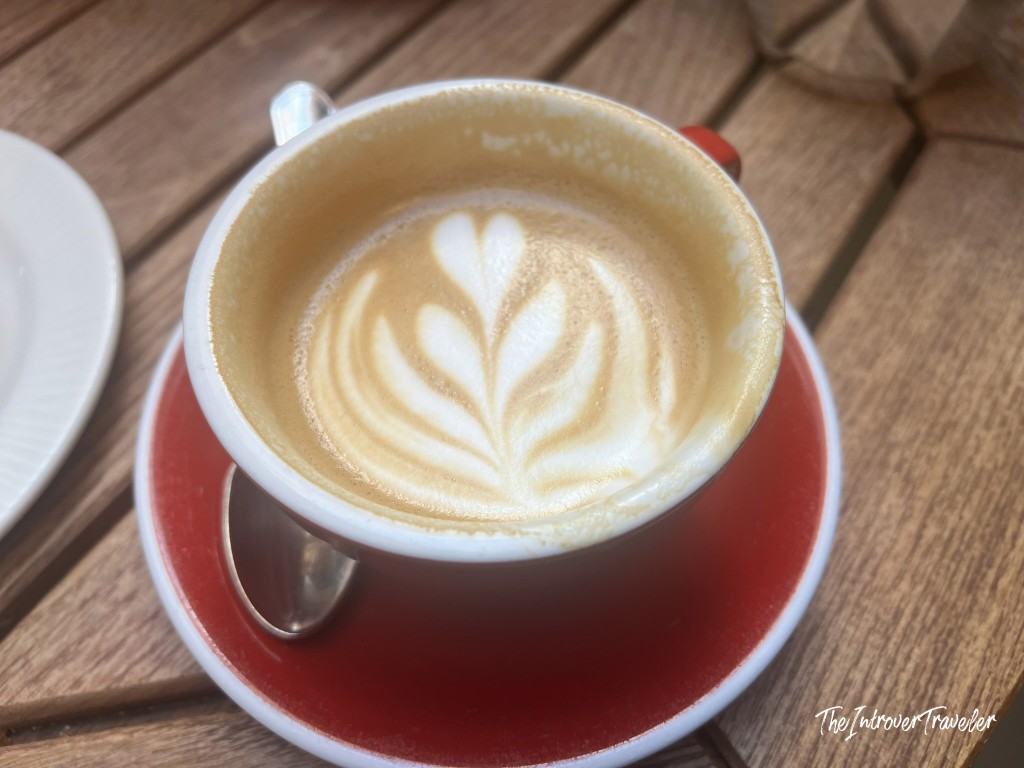
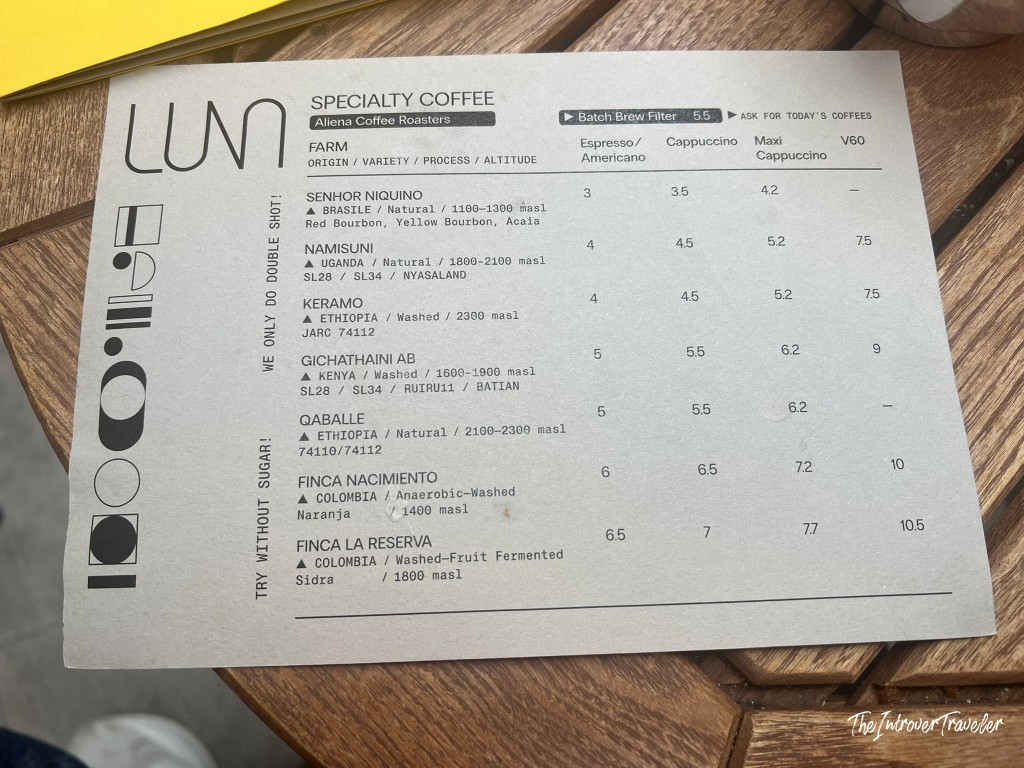
The coffee, roasted by the in-house roastery Aliena, is specialty in the fullest sense of the term: selected single origins, traceability down to the plantation, roast profiles calibrated for different extraction methods. You can choose between espresso, V60, batch brew, and cold brew. The coffee is good, no doubt about it. Whether it’s worth the asking price (around 3 euros for an espresso, considerably more for filter extractions) depends on how much you’re willing to pay to know the name of the farmer who hand-picked your beans on a Nicaraguan plantation.
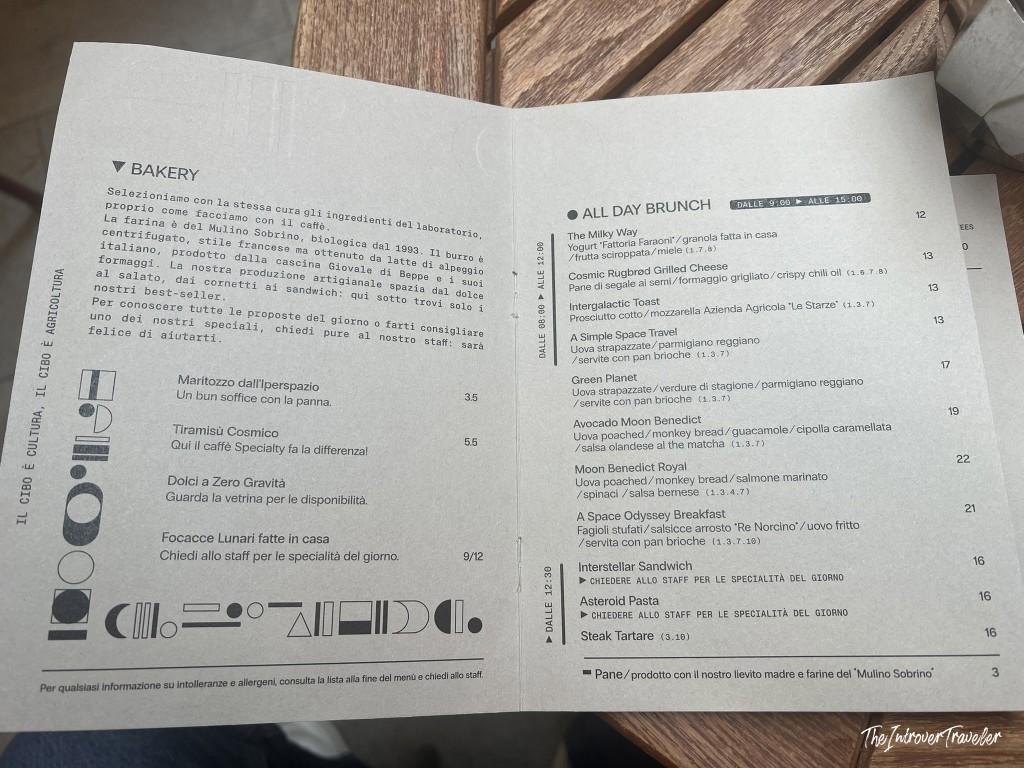
Then there’s the brunch, which is LUNA’s real strong suit: eggs Benedict, Full English Breakfast, Intergalactic Toast (yes, that’s what it’s called) with prosciutto and mozzarella from Azienda Agricola Le Starze at 13 euros, ceviche of local catch, flatbread with toppings that change according to the day’s market haul. The kitchen is led by Leonardo Santucci, who comes from the Faro experience, and works with a network of small local producers listed with the same devotion a sommelier would use to recite the crus of Burgundy: Poggi Agricultura, Le Vergarette, Fattoria Faraoni, the Cobracor cooperative. Everything very good, everything very serious, everything very expensive.
The dark side of the moon: ideology at breakfast
But it’s in the language, the communication, the rhetorical apparatus surrounding LUNA (and more broadly the entire Faro/Aliena project) that you encounter the phenomenon I had already observed with Forno Brisa: the transformation of a legitimate attention to quality into a secular catechism applied to breakfast.
LUNA’s website reads: “We started from coffee, but we kept going, learning to recognize those who cultivate with respect, those who transform with intelligence, those who serve with love.” The roastery is called Aliena because, we are told, the name is “a manifesto: stepping out of the homogenization of industrial coffee to propose a different, transparent and sustainable model.” A gesture defined as “cultural and political.” Political. Roasting coffee is a political gesture. At this point I expect that frothing milk is also an act of civil resistance.
Speaking of milk: Faro, the flagship venue, is known for promoting alternatives to cow’s milk “by virtue of a different approach.” It’s a classic tell. The plant milk question is an infallible indicator of a venue’s degree of ideological commitment: the longer and more detailed the list of cow’s milk alternatives, the closer you get to the danger zone where the barista might give you a disapproving look if you order a traditional cappuccino. At LUNA, for the time being, cow’s milk is still available without requiring you to fill out a justification form, but the trend is clear.
Fociani himself, in an interview with Gambero Rosso, explained that the high prices don’t depend on the cost of raw materials but on overheads: 50,000 euros a month in staff costs, 2,000 in utility bills. And he added, with admirable frankness: “I shouldn’t look at the markup but at the price, because the costs are so high that it barely matters if I sell a 20-cent coffee for 3 euros.” Now, this is the kind of honesty I appreciate: specialty coffee is expensive not because the beans arrive from Nicaragua on the back of a mule, but because running a venue with 17 employees in central Rome costs a fortune. The problem is not the price itself, which can be justified, but dressing it up in a redemptive narrative where paying 13 euros for a toast becomes an act of agricultural salvation.
The cosmic mantra
“FARO is ALIENA, ALIENA is FARO, FARO is LUNA.” No, it’s not a Zen koan, nor a Pink Floyd lyric. It’s the group’s motto, repeated solemnly in interviews and press releases. The name Faro (Lighthouse) because “at night it guides you to a safe harbor.” Luna (Moon) because it is “a light that can help you find your way.” Aliena (Alien) because it “challenges earthly dietary habits, proposing more conscious and radical alternatives.” Think about it: we started with coffee and arrived at science fiction as existential metaphor. A croissant with custard and an espresso at LUNA are not breakfast: they’re an interstellar journey toward dietary consciousness.
And here we return to the point I was making about Forno Brisa. This rhetoric is not exclusive to LUNA or Faro: it’s the language of an entire generation of restaurant entrepreneurs who have realized, with remarkable business instinct, that food is no longer sold as food but as experience, mission, manifesto. The result is that venues doing genuinely good work feel compelled to wrap every croissant in three layers of meaning, every cup in a statement of intent, every focaccia in a supply-chain narrative that starts with the seed and arrives at the meaning of life.
The verdict: the best breakfast in Rome?
LUNA by Faro is an excellent venue for a great breakfast (or brunch) in Rome. Product quality is high, in some cases outstanding. The coffee is among the best you can drink in Rome. The brunch is thoughtful, creative, and prepared with ingredients that genuinely have a provenance and a story. Service is attentive and knowledgeable. Prices are high, but consistent with what’s being offered and with the area.
Go, order a croissant and a V60, sit in the courtyard and enjoy your breakfast. You don’t need to believe in the cosmic manifesto to appreciate a good pastry. And if you’re offered oat milk instead of cow’s milk, don’t panic: it’s just the future knocking at the door. Or, as they’d say at LUNA, it’s just the Alien inviting you to transcend your earthly habits. Smile, drink your cappuccino, and leave a tip.
If you go on weekends (I can’t speak for weekdays), factor in a twenty-minute queue to get a seat, and consider whether you might be better off eating a mediocre maritozzo at an ordinary Roman bar, where the time saved could be devoted to paying your respects to Antonio Gramsci, who, spinning in his grave at the capitalistic and consumerist turn taken by the young revolutionaries of the 21st century, will by now have generated enough energy to guarantee the economic independence of a small South American country whose GDP is based on coffee production.
Rating: 8.5/10 for the products, 3/10 for the cosmic rhetoric, Luna/10 for the naming.