Last visit: February 2025
Year: 1525-1530 ca.
Material: Carrara marble
Number of figures: 4 (plus the David, which sits in dialogue with them at the end of the same gallery)
My rating: 8/10
Duration of visit: 2 hours for the whole Accademia
Skip the line ticket: https://tiqets.tp.st/SkSs4hr4
Guided tour ticket: https://tiqets.tp.st/gEKZdvU8
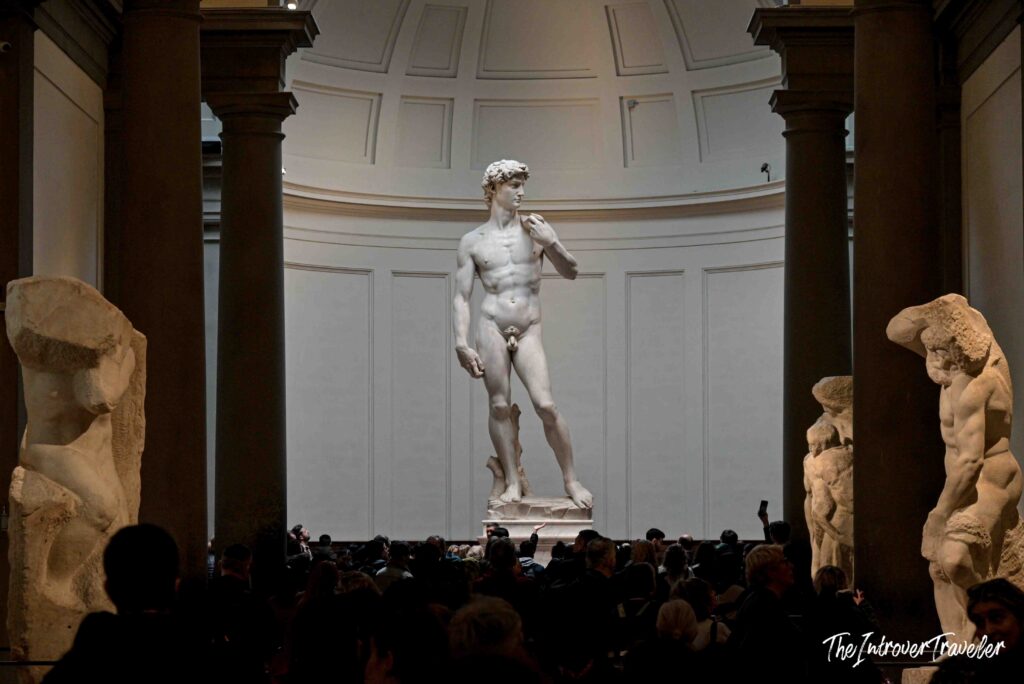
You walk into the Galleria dell’Accademia in Florence, you follow the tunnel of plaster casts and minor works, you turn the corner, and you find yourself at the entrance of the Tribuna designed by Emilio De Fabris in 1882: a long perspectival corridor that culminates, twenty meters ahead, in the David. Ninety-five percent of the visitors execute the same identical choreography. They lift the phone, accelerate toward the colossus, take the photo, post it, and leave. The four giants distributed along the corridor on the way to the David, half-emerging from blocks of Carrara marble that look as if they had just been quarried, are treated as a sort of figurative wallpaper, an opening act, the appetizer before the main course. This is one of the most spectacular cases of curatorial misperception in any museum in Europe, and yet it has its rationale: in the visual hierarchy that the museum itself imposes (perspective, lighting, the magnificent dome above the David), the Prigioni appear as accessory works, while the David is treated as the destination.
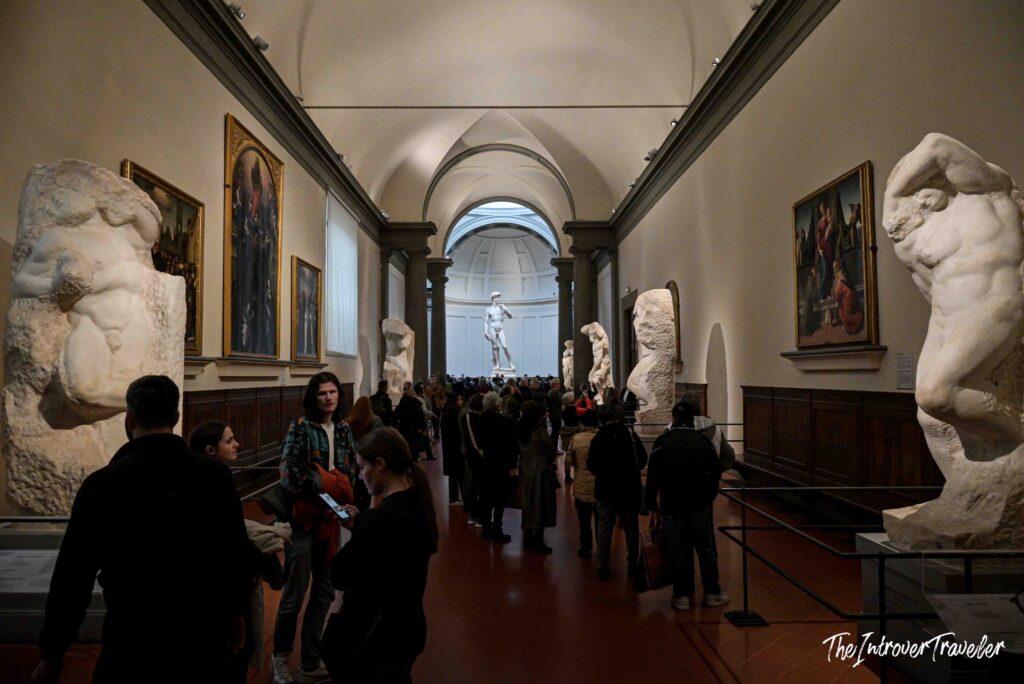
The truth, as is often the case with Michelangelo, is the exact opposite. The four prisoners that flank the corridor are among the most theoretically dense, philosophically charged, and technically revealing sculptures Michelangelo Buonarroti ever produced. They are also, not coincidentally, the visible relics of the most painful, most expensive, and most ruinously prolonged failure of his life. They were carved for a tomb that would be built six different times in six different reductions and that, in its final mutilated form, the one you can visit today in San Pietro in Vincoli around the Moses, bears almost no resemblance to anything Michelangelo had originally imagined. They are the survivors of a four-decade artistic shipwreck, and the fact that they are unfinished is not a quaint accident of art history. It is the wound itself.
This post is dedicated to those four blocks of marble, to their two cousins now in the Louvre, and to one of the most stratified misunderstandings that have accumulated around them, like the overused social-media quote “I saw the work inside the stone and I set it free”. The reality is messier, more interesting, and considerably more philosophically serious than the inspirational poster that has been built on top of it.
If you have not yet read it, the indispensable companion to this piece is the post on Michelangelo’s Moses, which sits at the other end of the same project: that Moses and these Prigioni are pieces of a single shattered vessel.
The tomb that ate a man’s life
To understand the Prigioni, you cannot start from the Prigioni. You have to start from the tomb of Pope Julius II, the most catastrophically badly managed commission in the history of Western art, and the obsession that, more than any other single project, conditioned Michelangelo’s existence between 1505 and 1545.
The story is, in outline, almost too neat to be true. In March 1505 the freshly elected and immediately hyperactive Julius II summons the thirty-year-old Michelangelo, who has just finished the David in Florence and is at the peak of his early reputation, and commissions from him a personal funerary monument of unprecedented scale. The first project, drafted between Michelangelo and the pontiff over the course of 1505, envisages a free-standing structure roughly seven meters by ten at the base, three superimposed levels, and around forty over-life-size statues. The intended location is the new Saint Peter’s Basilica, then in the very early phases of reconstruction under Donato Bramante. The intention, evident from the sources, is for Julius to leave the most magnificent papal tomb of all time, and for Michelangelo to leave behind the most ambitious sculptural ensemble of all time. Two megalomaniacs collaborating on a project scaled to their respective egos. Nothing could go wrong (more about that in my post about the Sistine Chapel).
Michelangelo spends the spring of 1505 in Carrara, where for eight months, in conditions of substantial isolation, he selects personally, block by block, the marble for the entire tomb. This is a detail that should not be glossed over: he is not commissioning a supplier, he is choosing each individual piece, evaluating its grain, its veins, its internal flaws. By the time he returns to Rome in early 1506, blocks worth a small fortune are being shipped down the coast and up the Tiber. The piazza in front of Saint Peter’s is occupied with marble for which Michelangelo has personally signed the receipts.
And here the project begins its descent into hell. Around April 1506 funds for the tomb dry up. Bramante, whom Michelangelo has already begun to consider a personal enemy, manages to convince Julius II that building a tomb for a still-living pope brings bad luck (a magnificently Roman superstition that, conveniently, frees up the budget for Saint Peter’s). Michelangelo, who has personally advanced money for the marble and now finds himself unable to obtain a meeting with the pope to clarify the situation, snaps. He leaves Rome without authorization in the night between the 17th and 18th of April 1506, the day before the foundation stone of the new Saint Peter’s is laid by Bramante. He flees to Florence. He refuses to return. The pope writes to the Florentine government demanding extradition. The diplomatic incident lasts months. It is in the course of this conflict that, according to Vasari, Bramante suggests to the pope a perfectly Machiavellian solution: bring Michelangelo back to Rome and assign him to fresco the ceiling of the Sistine Chapel, a discipline in which the sculptor has no monumental experience and where, in theory, he should publicly fail.
You know how that turned out.
The crucial point, however, is that the Sistine Chapel ceiling is born as a sabotage of the tomb of Julius II, and that Michelangelo accepts it under duress, with the explicit understanding (entirely verbal, never put in writing, naturally) that once the frescoes are finished he will be allowed to return to the tomb. He paints the Sistine between 1508 and 1512. Julius II dies in February 1513, twelve months after the unveiling of the ceiling, without ever having approved a final design for his own tomb.
It is at this point that the heirs of the Della Rovere family, the late pope’s nephews, redraft the contract with Michelangelo. The 1513 contract, the second of six, reduces the scale of the monument and modifies its structure: from a free-standing mausoleum it becomes a wall tomb, but still extremely ambitious, with around twenty-eight statues. It is in the course of this 1513-1516 phase that Michelangelo begins to carve the two prisoners now in the Louvre, the so-called Dying Slave and Rebellious Slave. They are conceived as figures for the lower register of the tomb, almost certainly to be associated, in the original program, with allegorical herms representing the liberal arts mourning the death of the patron, or alternatively (in the most plausible Neoplatonic reading) with the bound passions of the soul. We will return to this.
In 1516 the contract is rewritten again, downsizing further. In 1526 it is rewritten yet again. By 1532 the heirs have grown impatient, the project has been reduced to a fraction of the original, and Michelangelo, who has meanwhile worked on the Medici Tombs in San Lorenzo, the Laurentian Library, has fled Florence twice, and has lived through the 1527 Sack of Rome, signs a new contract that scales down the program to a wall tomb with six statues. It is for this 1532 redaction, or possibly for the closely related preparatory work that bridges the late 1520s and early 1530s, that he begins to carve the four prisoners that today stand in the Tribuna in Florence.
These four prisoners are never finished. The 1542 contract, the sixth and final one, eliminates them entirely from the project. The tomb that ends up being assembled in San Pietro in Vincoli in 1545, forty years after the original commission, contains exactly one Michelangelo masterpiece (the Moses) and a series of figures partly executed by assistants. The four Florentine Prigioni, by then technically obsolete, remain in Michelangelo’s studio in Via Mozza in Florence. They are still there at his death in 1564. His nephew Leonardo Buonarroti inherits them, and in 1564 itself donates them to Cosimo I de’ Medici, who places them, in the 1580s, inside the artificial grotto designed by Bernardo Buontalenti in the Boboli Gardens, where they perform the role of mythological figures struggling out of the rocky concretions of the cave. They will remain there, exposed to the elements and to the eyes of any tourist who could reach Boboli, until 1909, when finally someone in the Florentine museum administration realizes that this is perhaps not the most appropriate location for four irreplaceable masterpieces of Western sculpture, and they are moved into the Galleria dell’Accademia, replaced in the grotto with copies that are still there today.
This is what the four Prigioni are, in cold biographical terms: the orphans of a project that nobody wanted to bring to completion, parked in a private studio for thirty years, then displayed for three centuries inside a Mannerist garden grotto as elements of decorative theater, and only by historical accident installed at the end of the corridor that leads to the David in the very same year, 1909, in which Picasso was painting Les Demoiselles d’Avignon. The Tribuna del David was never designed with them in mind. The juxtaposition that today seems to all visitors as if it had been designed by Michelangelo himself is, in reality, a fortuitous outcome of the second decade of the twentieth century. Which is also the period, perhaps not coincidentally, in which the cult of the unfinished Michelangelo, the Romantic-modernist Michelangelo, is being constructed.
Which Prigioni belong to which tomb, and why this matters
Before going any further, it is necessary to clarify a point that even some respectable guidebooks manage to get muddled. There are not “the Prigioni.” There are several distinct groups of Prigioni, made for different redactions of the tomb of Julius II, in different phases of Michelangelo’s life, with different formal vocabularies and different states of completion. Confusing them is a category error that compromises any serious reading of the works.
The first group consists of the two Louvre slaves, the so-called Dying Slave (also known, almost certainly inaccurately, as the Sleeping Slave) and the Rebellious Slave. They are carved between 1513 and around 1515-1516, in the wake of Julius II’s death and the second contract of the tomb. They are essentially complete, polished, finished. Their stylistic vocabulary belongs unmistakably to the early Roman Michelangelo of the post-Sistine period: anatomical precision derived from the dissection of the body and from the recent discovery of the Laocoön (1506), an elegant contrapposto tracing back to Hellenistic models, careful attention to the modeling of skin, hair, drapery. They are works of an artist still under forty.
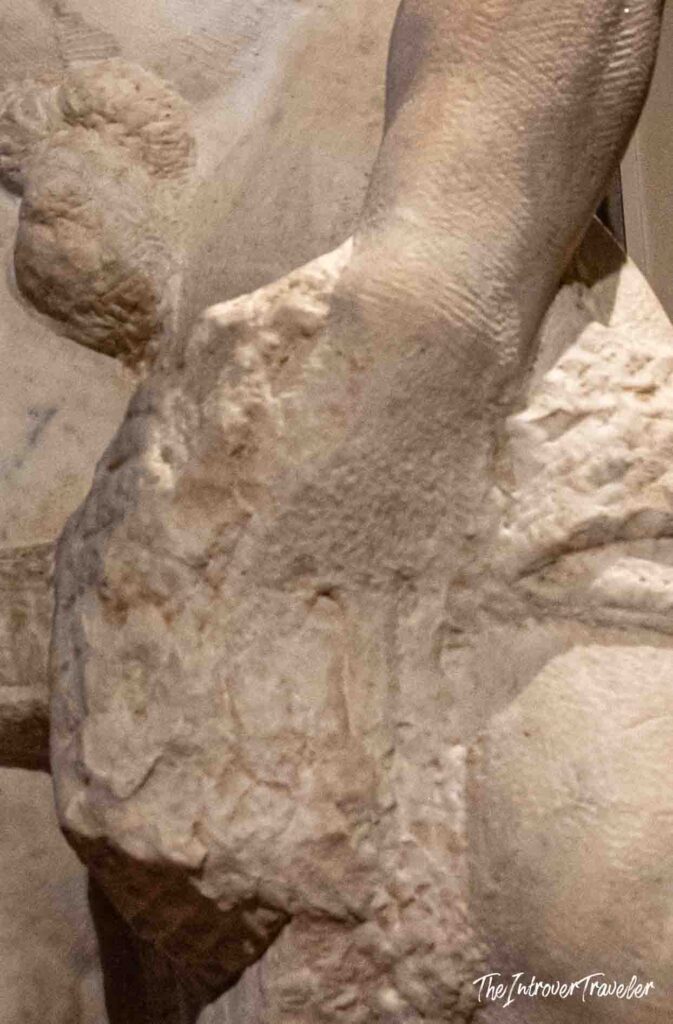
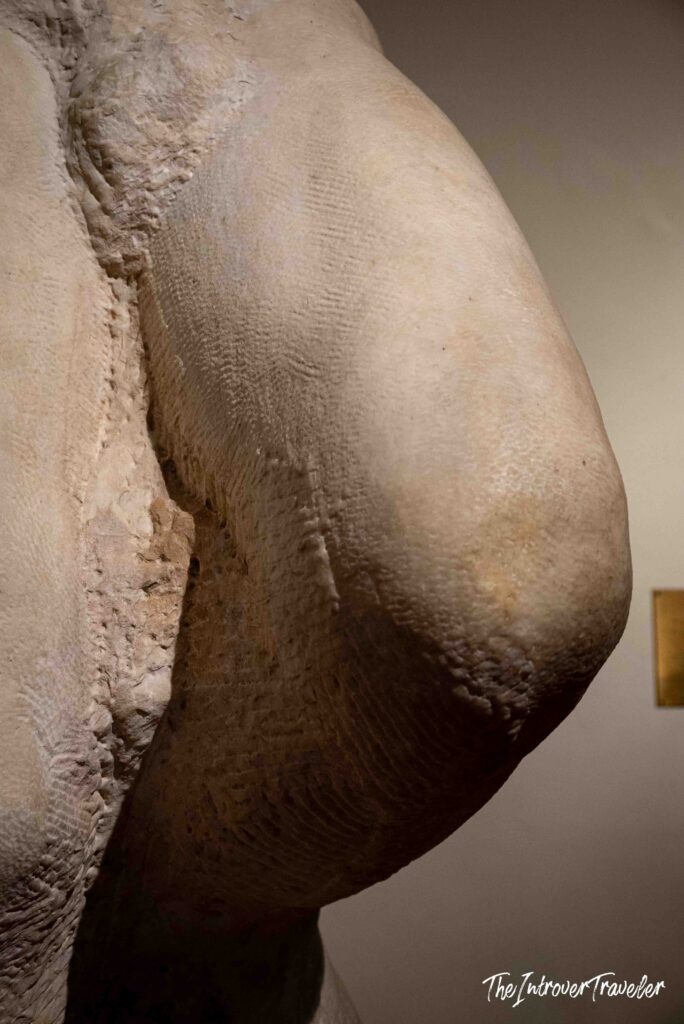
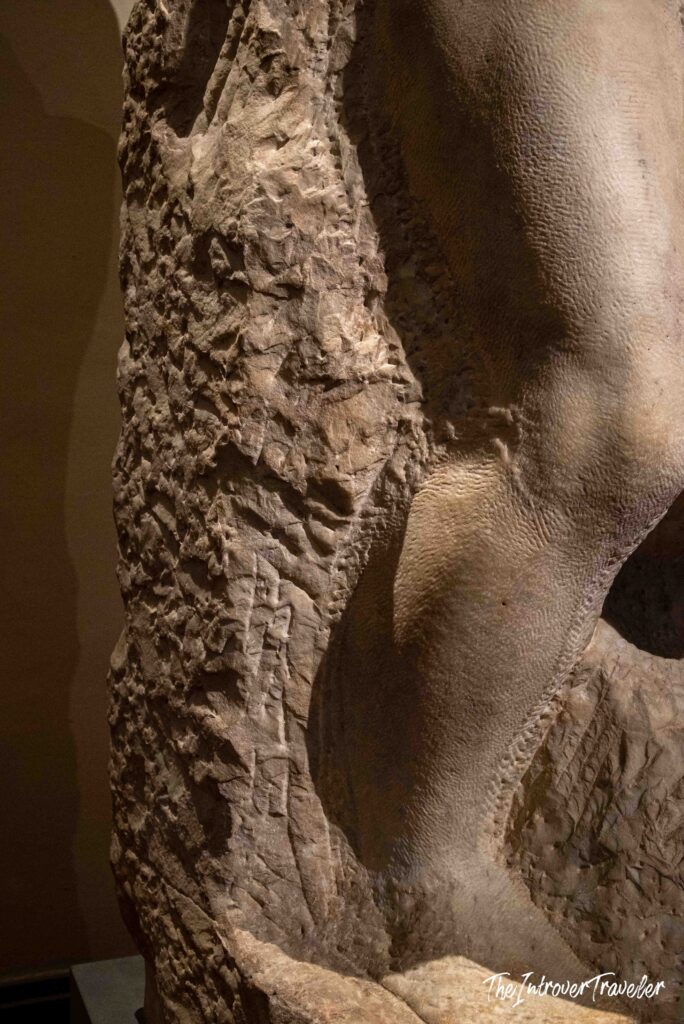
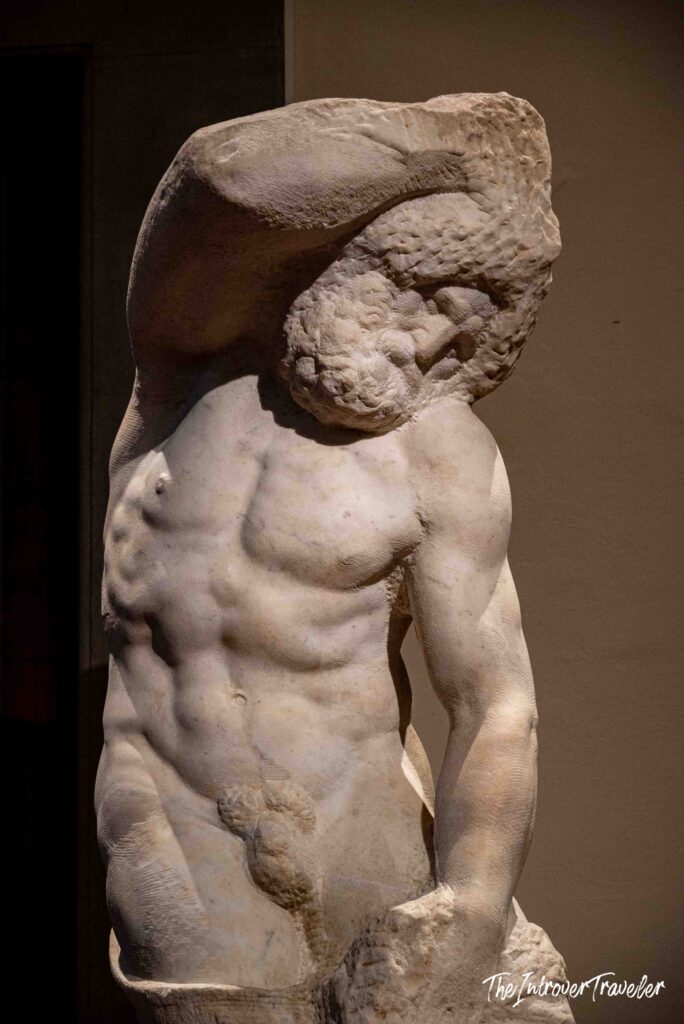
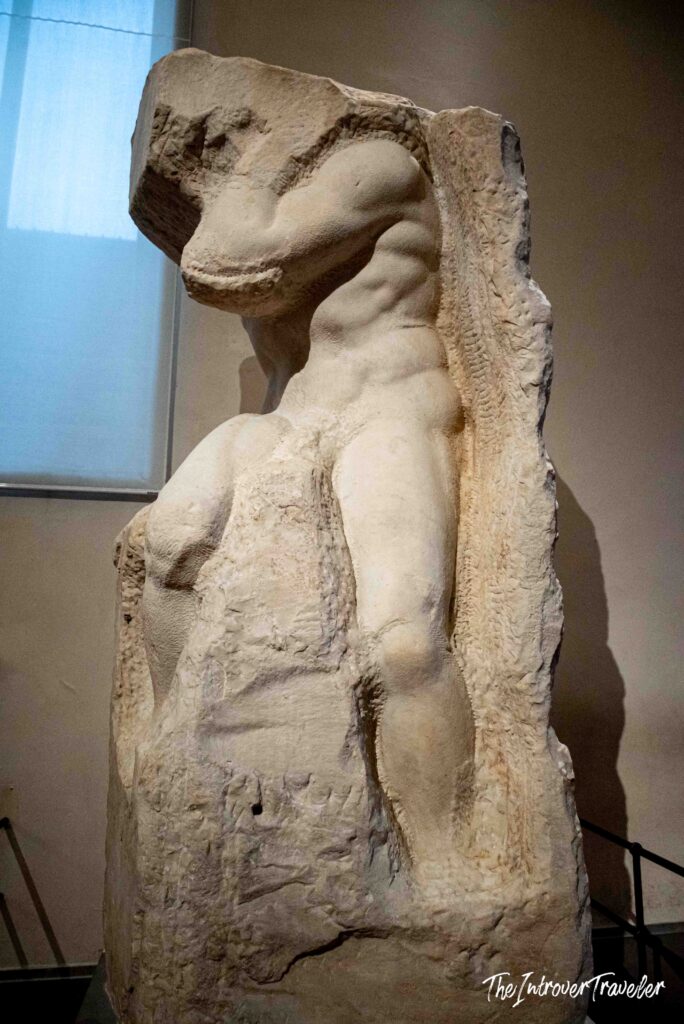
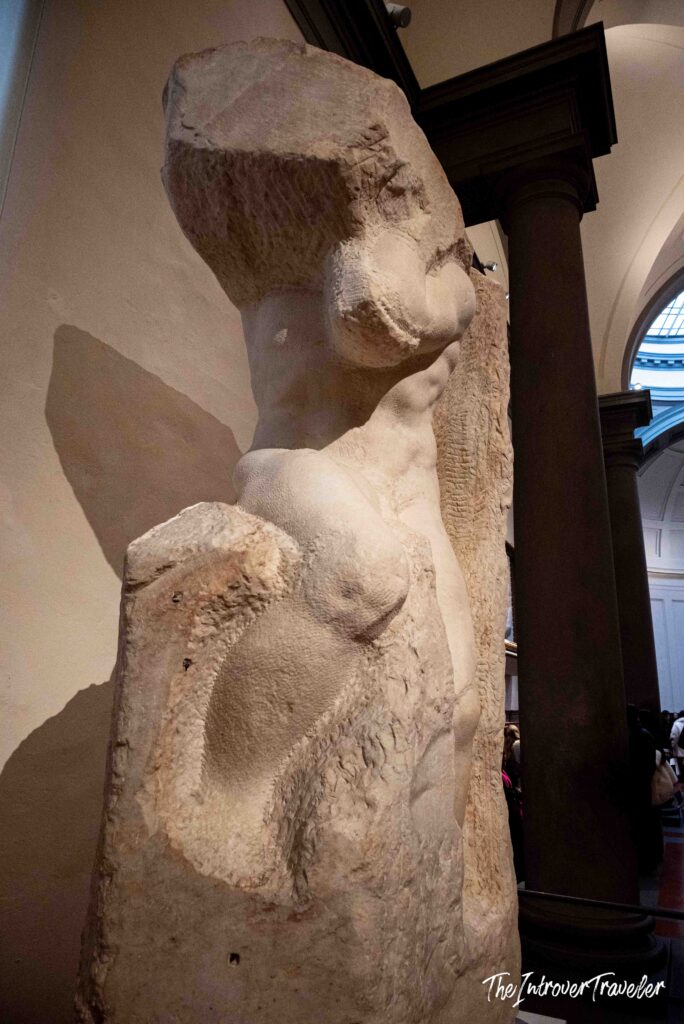
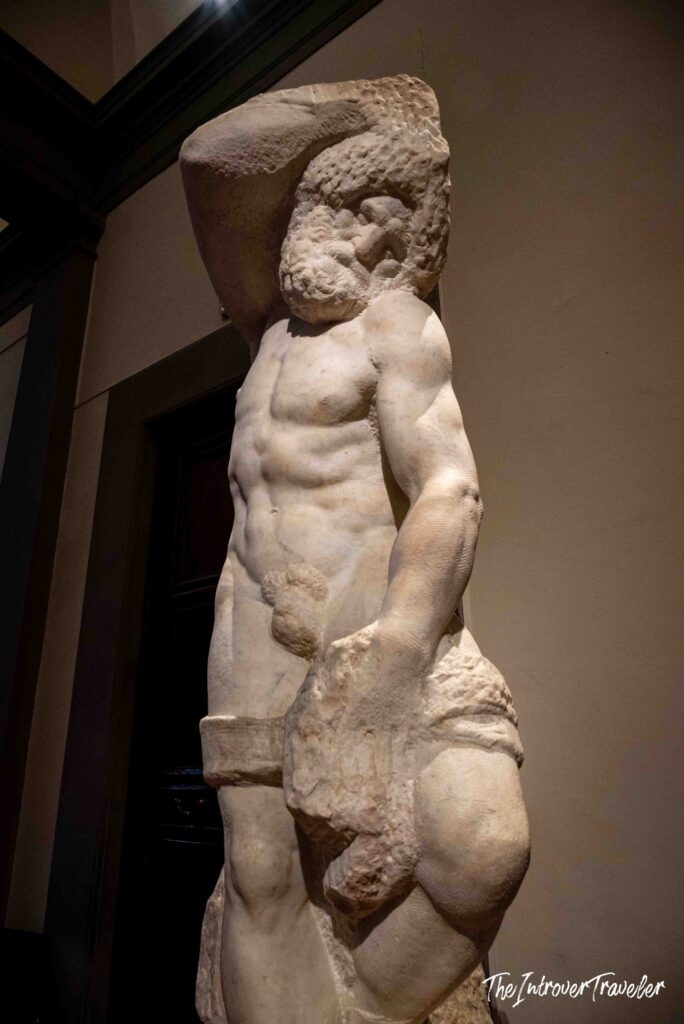
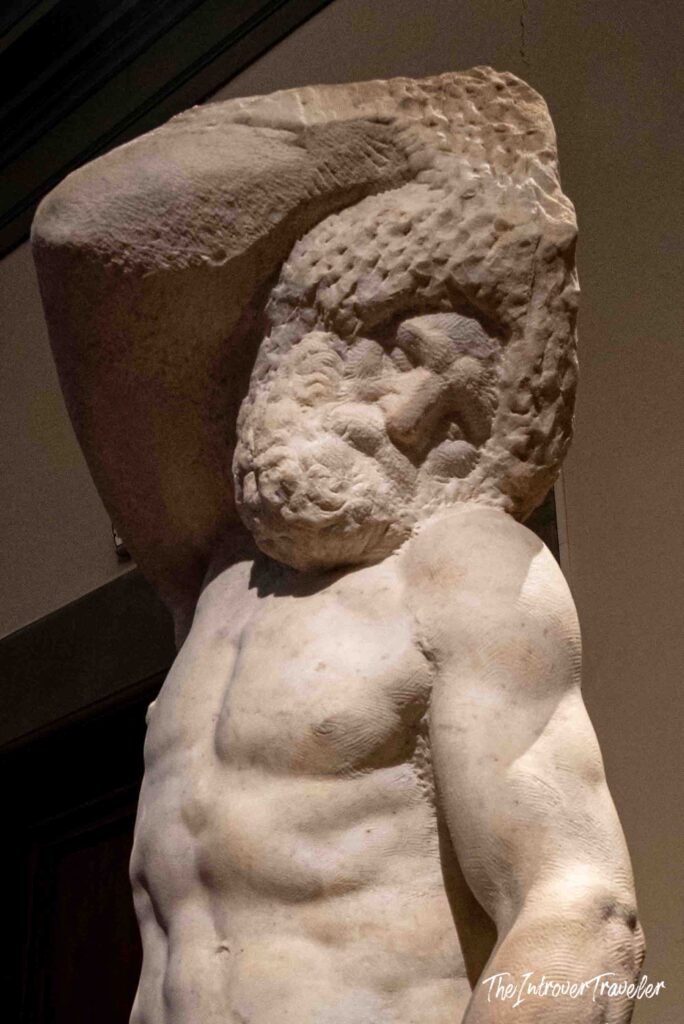
The second group consists of the four Florentine Prigioni now at the Accademia: the Awakening Slave (Schiavo che si desta), the Young Slave (Giovane Schiavo), the Bearded Slave (Schiavo Barbuto), and the Atlas Slave (Schiavo Atlante, also known simply as Atlante). They are carved roughly between 1525 and 1530, perhaps with later interventions in the early 1530s. They are at very different stages of completion: the Atlas is the least advanced, with the head still entirely embedded in the rough block; the Young Slave is the most advanced, with the figure essentially defined though not polished. They are the work of Michelangelo in his fifties, after the Medici Tombs, in a period of intense political turbulence (he is at this point alternately working for the Medici and for the anti-Medicean Florentine republic that briefly returns to power in 1527-1530, a circumstance that very nearly costs him his life when the Medici return).
To these two groups one should add a third, often forgotten figure: the so-called Genius of Victory, today in the Salone dei Cinquecento of Palazzo Vecchio, almost certainly carved in the same years as the Florentine Prigioni and conceived for the same tomb redaction. The Genius is a slightly more finished work, but it shares the same compositional logic of the Florentine group, with a young triumphant figure standing over an old bearded captive. The fact that it is now displayed in Palazzo Vecchio as a free-standing piece is the umpteenth example of how the dispersion of the elements of the Julius tomb has obscured the structural unity of what was originally conceived as a single articulated machine.
The reason this taxonomy matters is that the formal language of the two Louvre slaves and that of the four Florentine slaves are genuinely different. The Louvre slaves still belong to a Renaissance ideal of beauty in which the body, however dramatically posed, retains its integrity, its proportional canons, its surface polish. The Florentine slaves no longer do. The bodies have become heavier, more compressed, the proportions more compact, and above all the figures appear to be in a fundamentally different relationship with the matter that surrounds them: not posed against an architectural background, but emerging from a stone that does not want to release them. Whether this is an effect of the unfinished state alone, or whether it reflects a deeper stylistic shift, is a question we will need to come back to. For now, simply note that the two groups are not interchangeable, and that any analysis of “the Prigioni” that treats them as a uniform corpus is, by that fact alone, suspect.
The itinerary, built and verified
An art lover planning a trip to Florence?
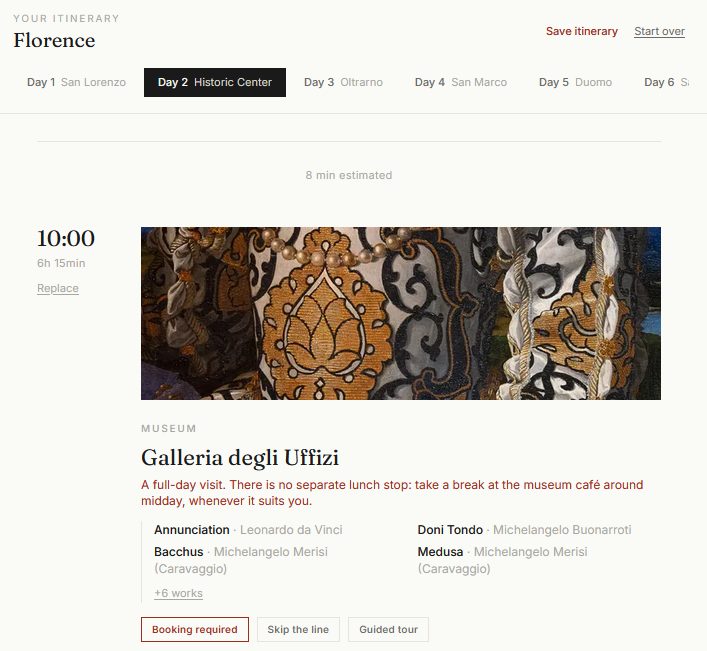
Flâneur builds a personalized Florence art itinerary around you. Tell it how deep your interest in art runs and what your days should look like, and it maps a route through the art that matters: the landmarks like the Uffizi Gallery and Michelangelo’s David at the Accademia, and the quieter Renaissance stops even locals miss. Each day comes with real opening hours, transfer times, meal breaks, directions and booking links, so your time goes to Botticelli and Caravaggio, not to logistics.
Pick the Expert profile and you compose the day yourself, choosing from all the art indexed in the city. A general-purpose AI guesses a plausible art itinerary from patterns; Flâneur knows which works are actually in Florence, in which room, open when, and reachable in which order, a level of depth, flexibility and precision no chatbot can match.
Reading the marble: tools, gestures, and what stops where
One of the most extraordinary things about the four Florentine Prigioni, and the reason they are an unrepeatable document for the history of sculptural technique, is that they show with extreme clarity the entire process by which Michelangelo carved a figure. They are, in a sense, four frozen moments of the same operation, captured at different stages of advancement. If you walk past them slowly, in any order, you can reconstruct the sequence of gestures and of tools that he used. There is no other place in the world where this can be done with this degree of precision on works of this importance, because finished sculptures, by definition, erase the traces of the process that produced them.
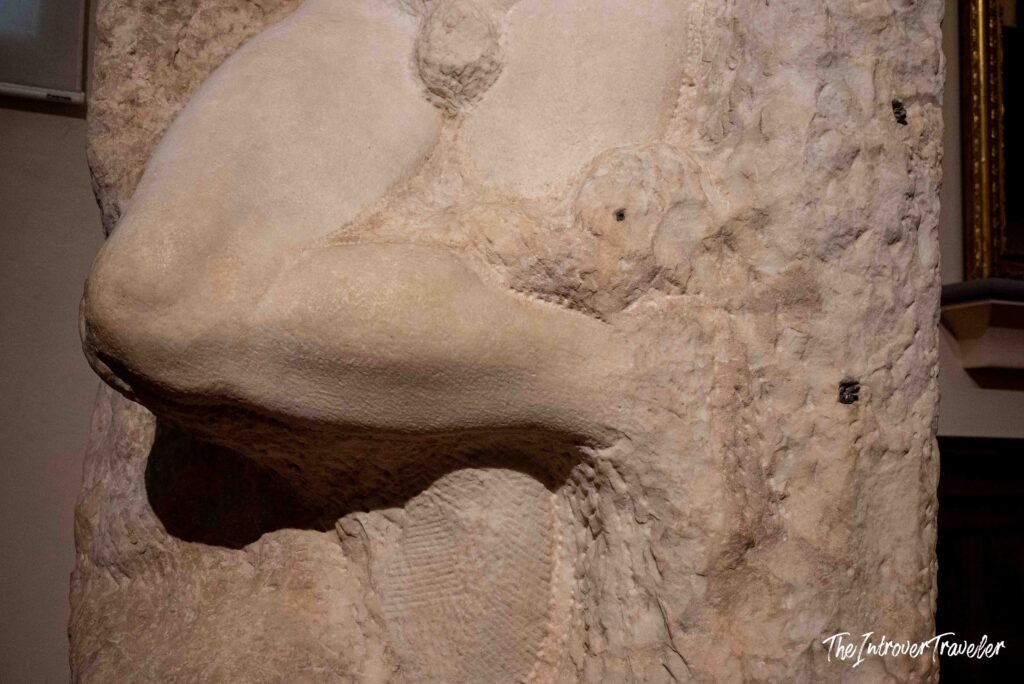
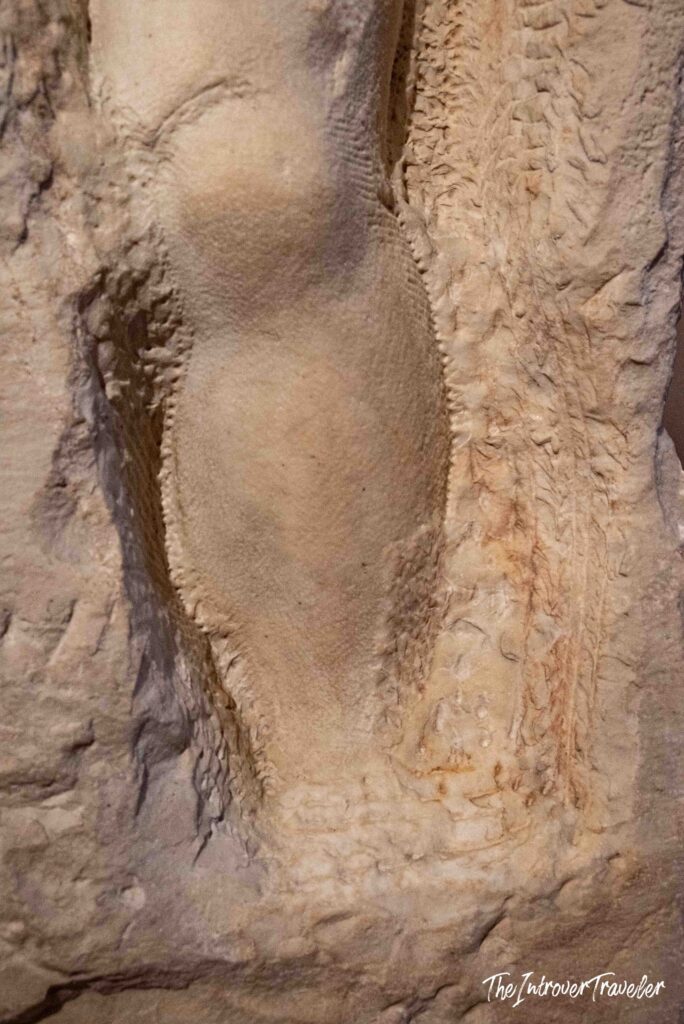
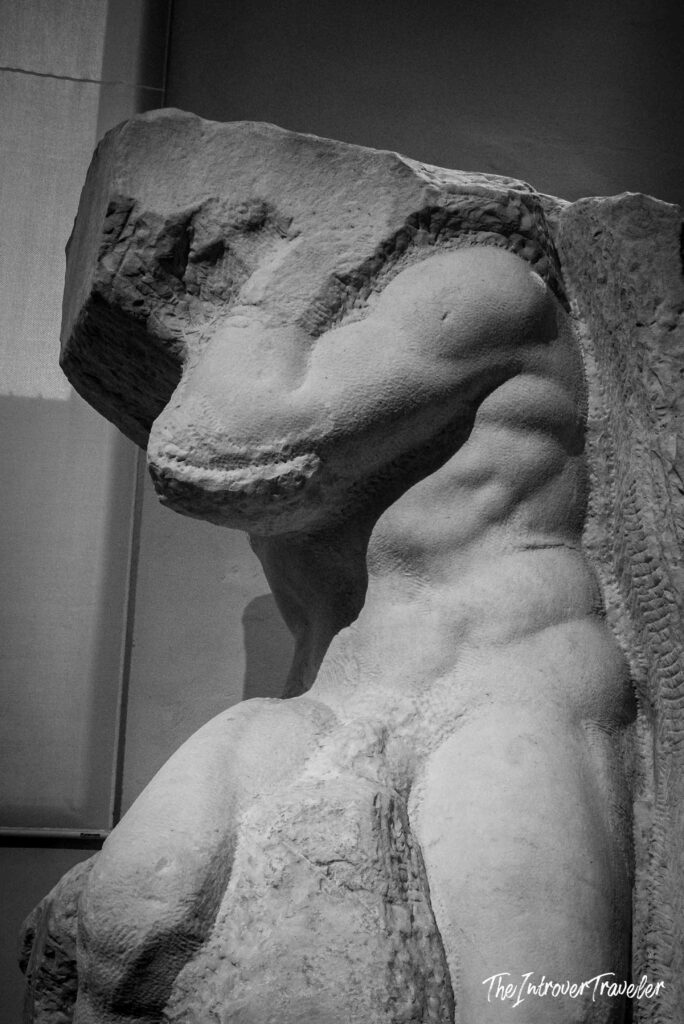
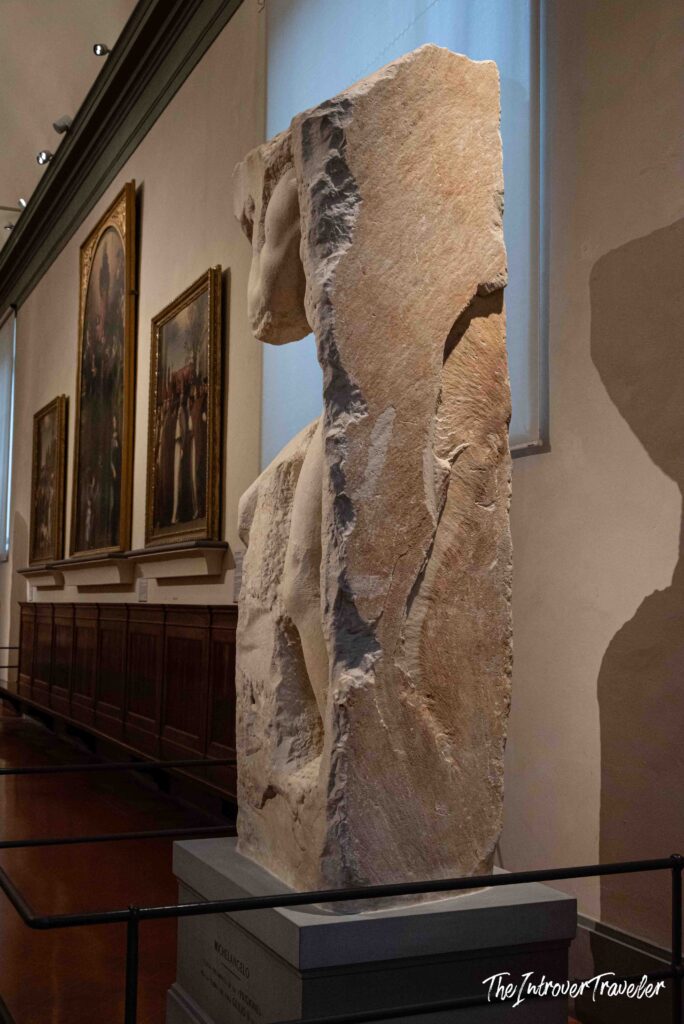
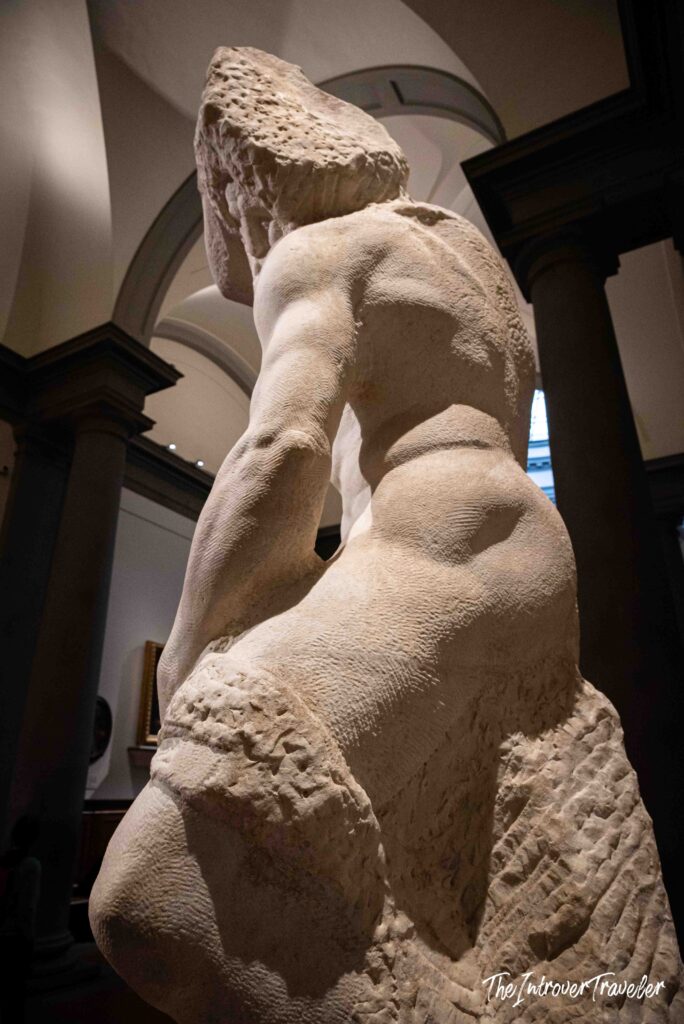
Michelangelo worked, by his own declarations and by the documentation of his shop practice, with the so-called paragone method, that is, with a single privileged frontal view from which the figure is gradually liberated, advancing into the block from the front toward the back. This is the method he attributes, in his correspondence, to Donatello and to the great Florentine tradition of the fifteenth century, and it is the method that the four Prigioni illustrate in textbook fashion. He did not turn the block as he worked. He chose his face, and from that face he excavated. The consequence, visible in the Atlas slave with brutal evidence, is that the back of the figure remains rough until the very last phases. In several places the Atlas’s posterior is still part of the original quarried block, complete with the diagonal striations of the saw and the irregular fractures of the splitting wedges that detached it from the Carrara mountainside.
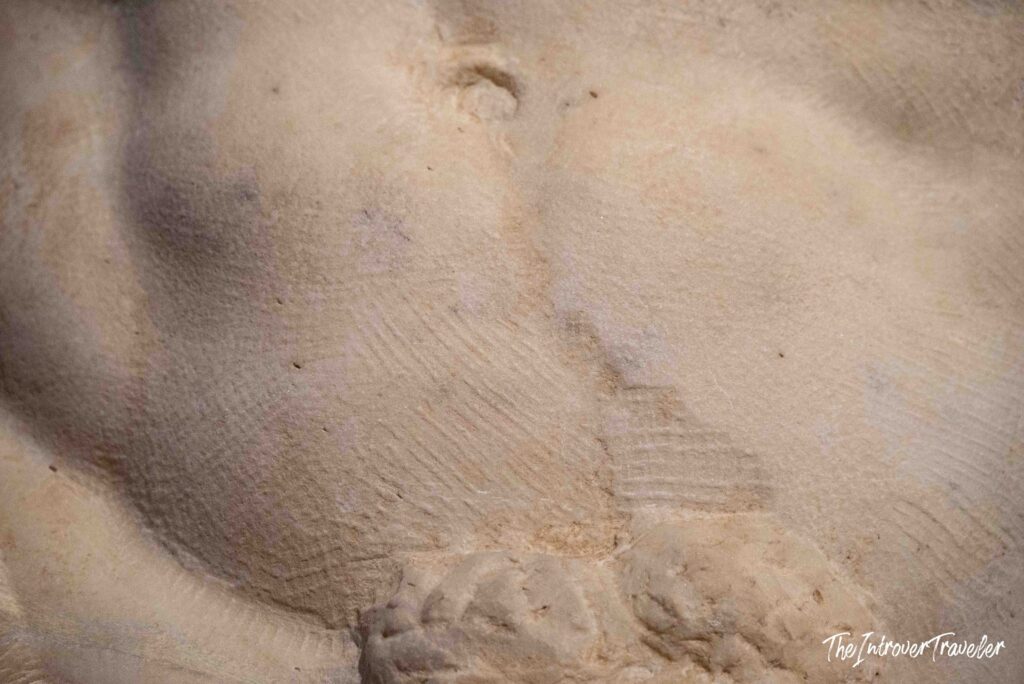
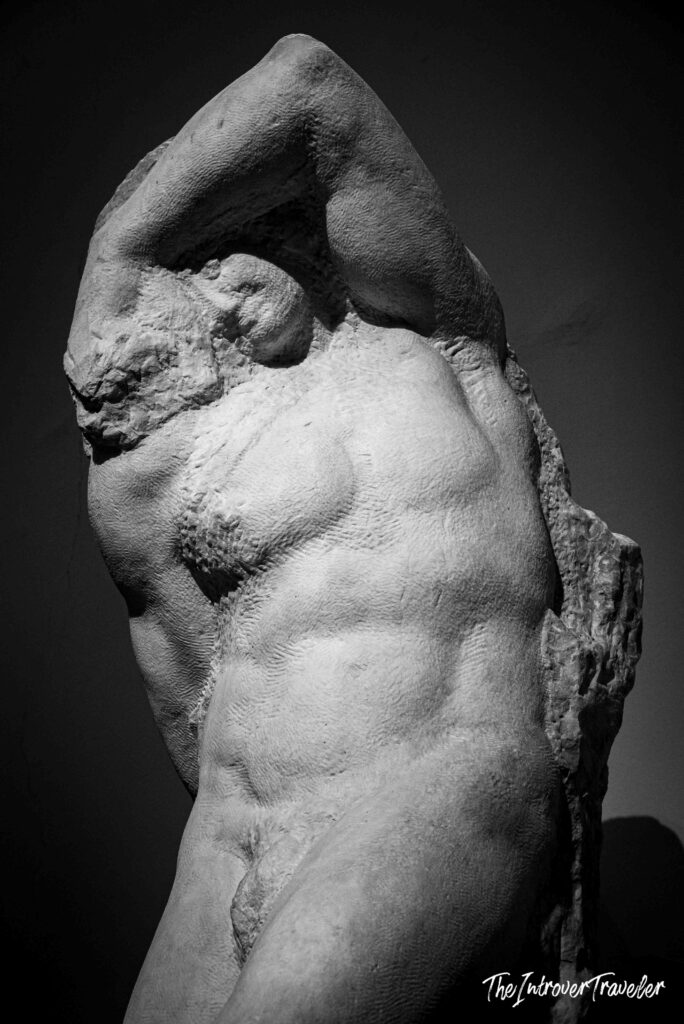
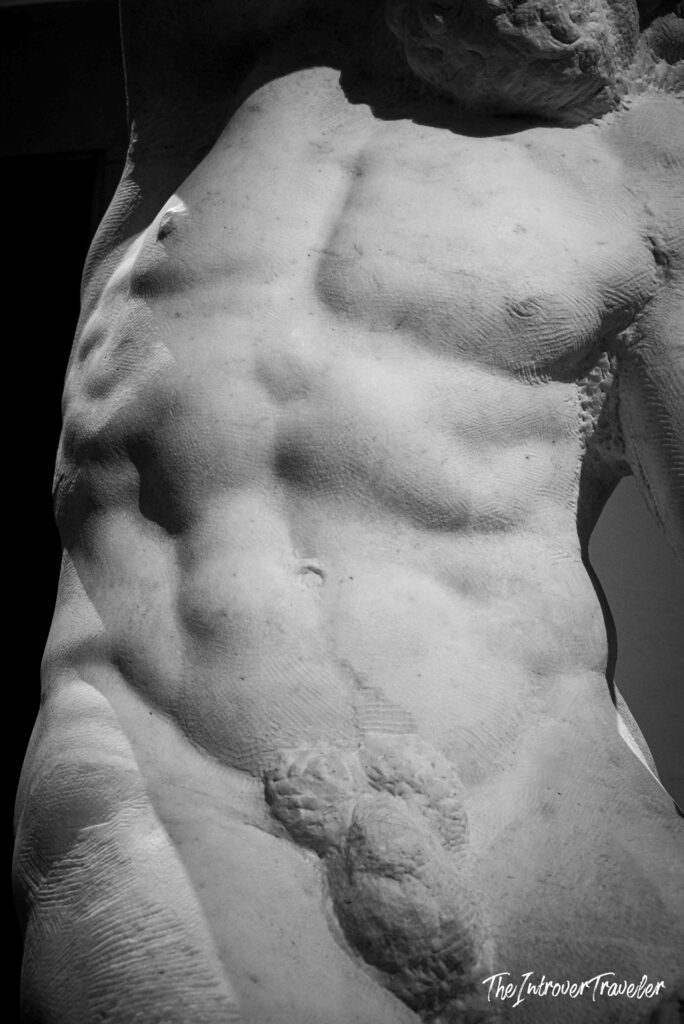
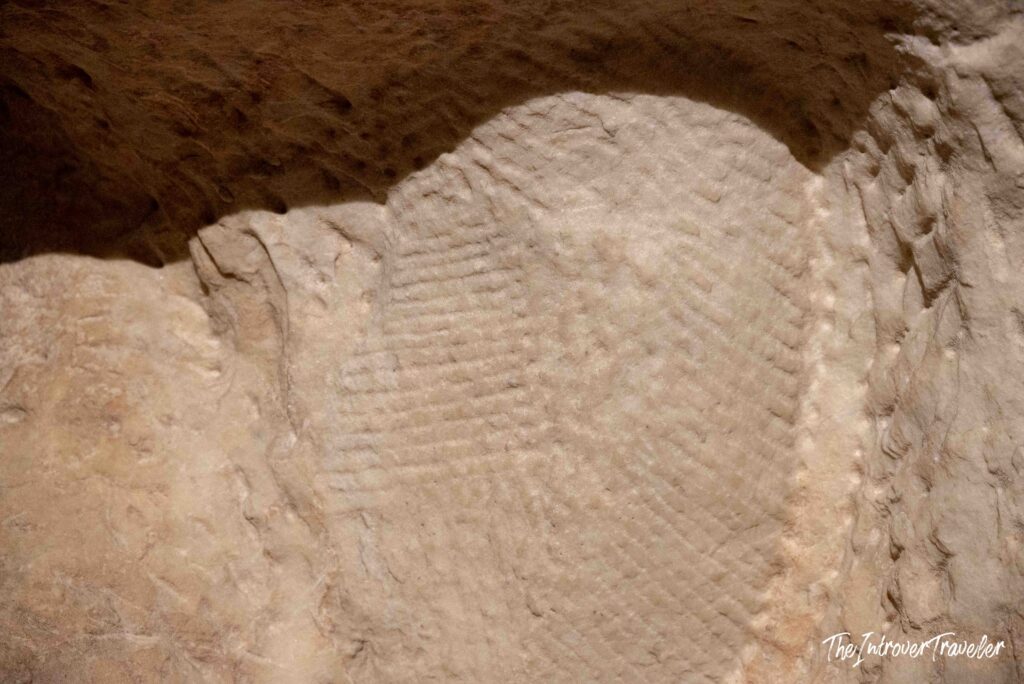
The principal tools whose marks are visible on the four Prigioni are, in order of progressive refinement: the subbia (a heavy point chisel used for the initial roughing-out of the block, leaving deep parallel furrows of approximately five to ten millimeters), the scalpello dentato or gradina (a toothed claw chisel used for the intermediate phase, which leaves the characteristic parallel striations made of small rectangular incisions that anyone who has ever looked closely at a Michelangelo sculpture has seen), the scalpello piano (a flat chisel used for the more refined modeling), and finally various raspe (rasps, files) for the smoothing prior to the final polish with abrasive stones. The polish itself, where present, is obtained with progressively finer pumices and ultimately with leather and straw.
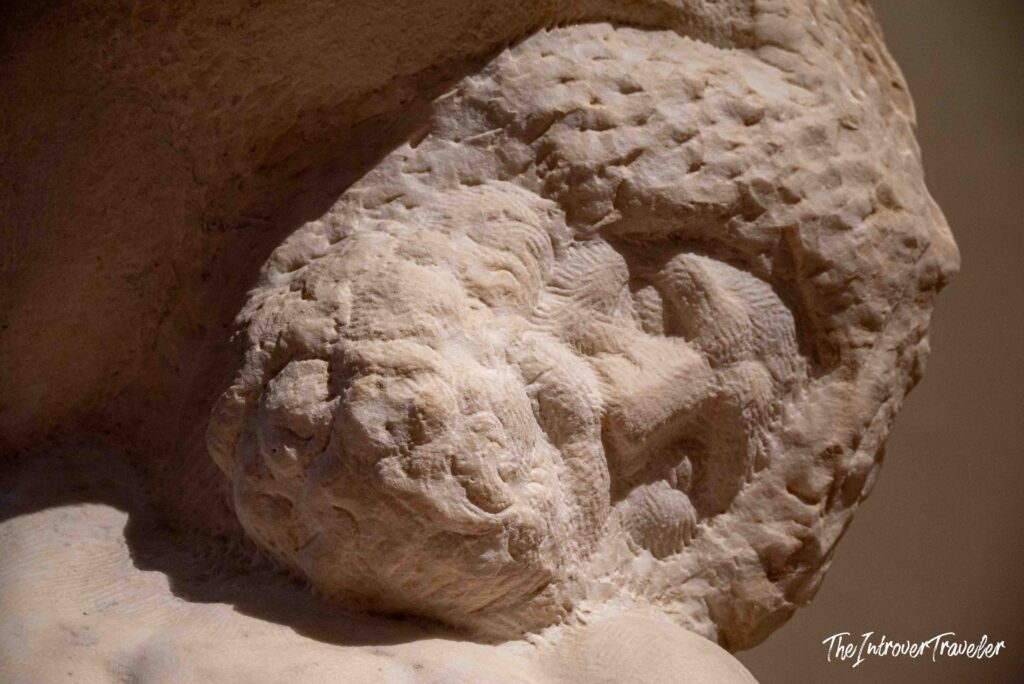
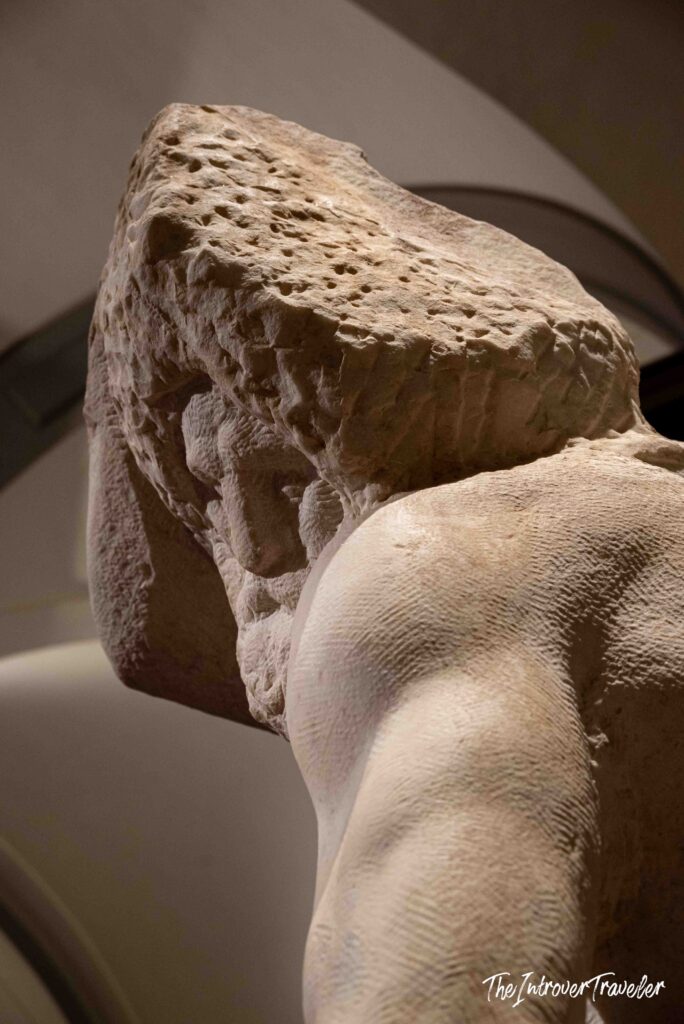
Now look at the Atlas. The torso is shaped roughly with the subbia, the diagonal furrows of the point chisel still visible everywhere on the lateral surfaces. The lower legs are emerging in primary volume but have not yet been touched by the gradina. The head is, as already noted, still entirely embedded in the original block: there is no head to speak of, only an enormous rectangular parallelepiped of unworked marble pressed down onto the shoulders, as if the figure were carrying the residual weight of the unfreed stone on top of his neck. This is the source of the modern nickname Atlante, but the iconography of Atlas the titan was almost certainly never the original intention. The cubic mass on top of the figure is simply the part of the block that Michelangelo never had time to remove. The fact that this accidental shape resonates so powerfully with the mythological image of Atlas bearing the world on his shoulders is one of those happy coincidences that posterity has gratefully appropriated.
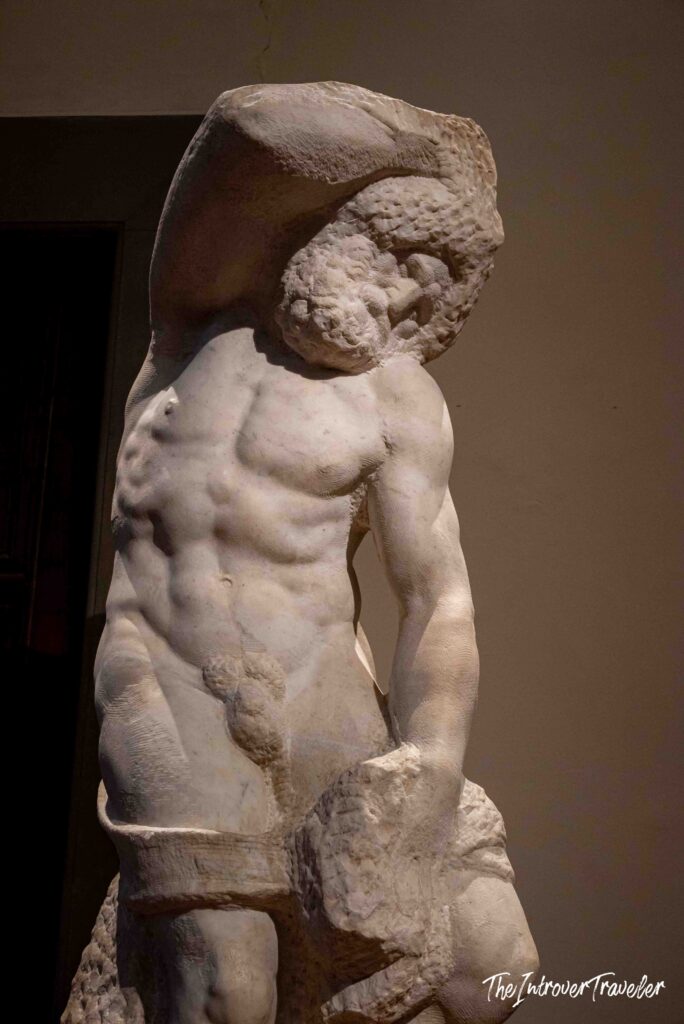
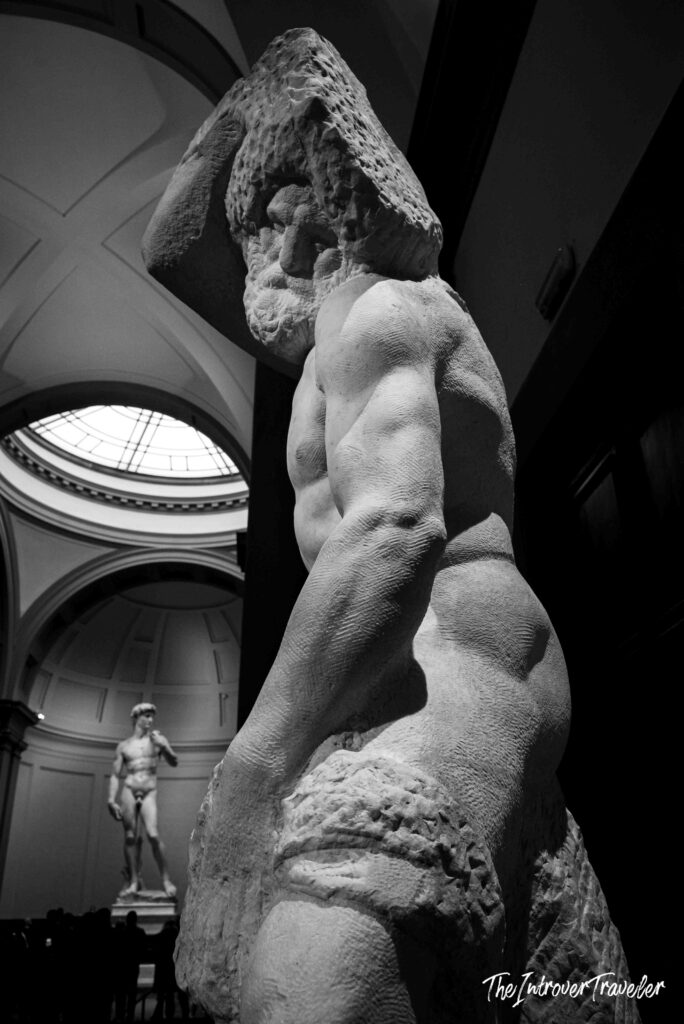
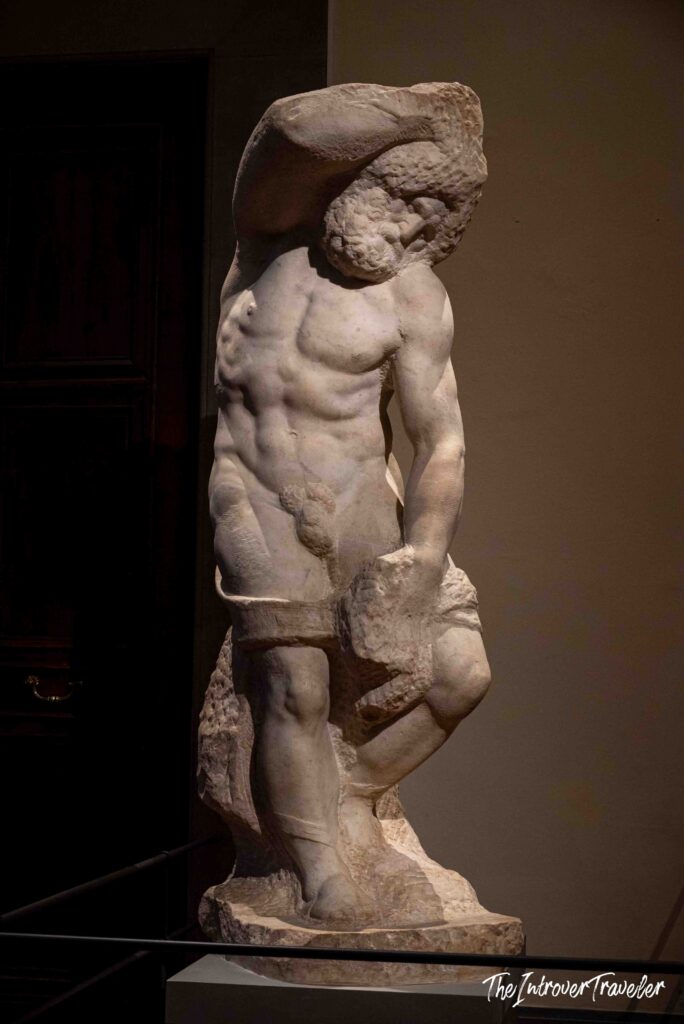
Move now to the Bearded Slave. The roughing-out phase is largely complete. The torso has been worked over with the gradina, whose parallel toothed striations are visible on the abdomen, the chest, the legs. The face, the beard, the hair are at a more advanced stage, with the gradina striations giving way in the most prominent zones to the smoother passes of the flat chisel. But the rear of the figure and the lateral planes remain rough. Crucially, certain areas of the face show evidence that Michelangelo was still defining the underlying volumes, not yet refining the surface. He had decided, but he had not yet finished deciding.
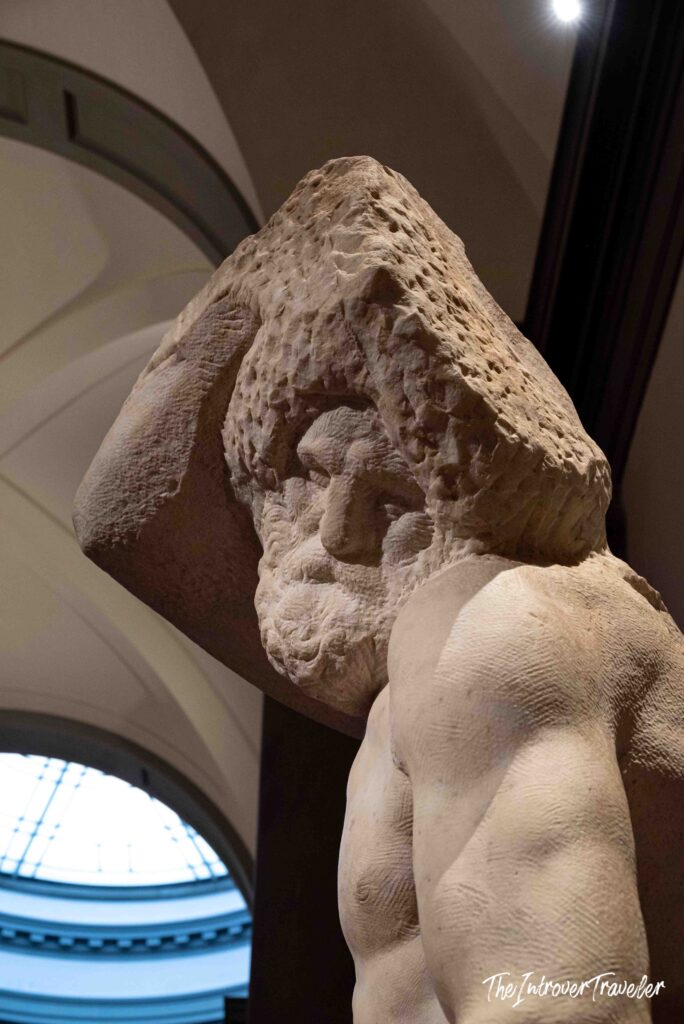
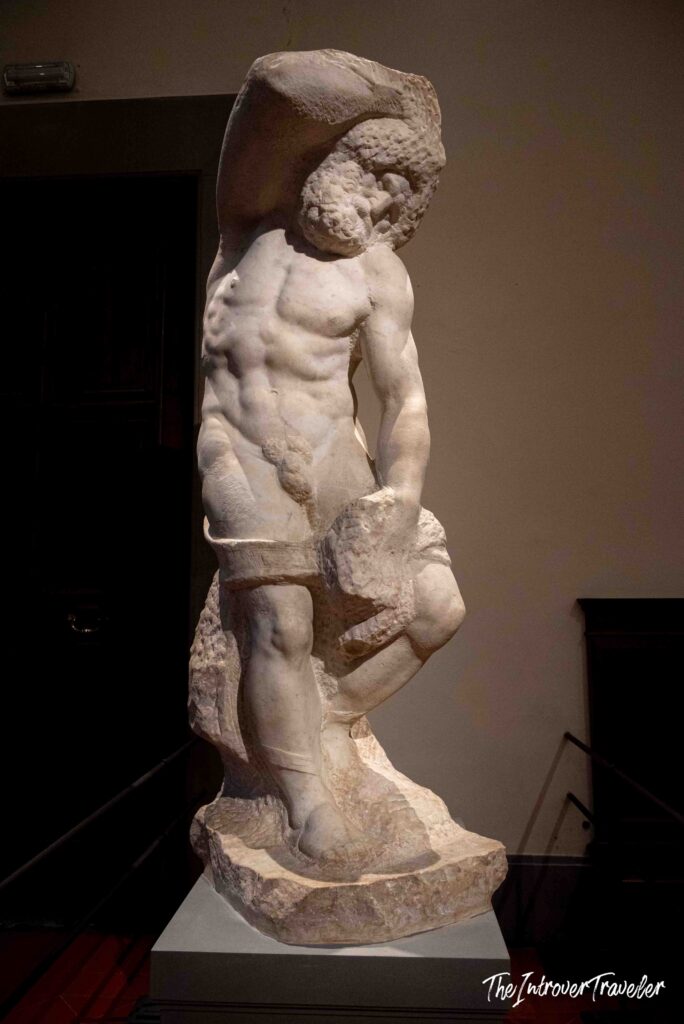
The Young Slave is the most advanced. The body is essentially modeled. The head is bent forward, as if the figure had given up resisting. The skin shows in many places the smooth passes of the rasp, and one can imagine that another month of work, perhaps less, would have brought him to the level of completion of the Louvre slaves. Yet the rear is still rough, and certain areas of the lower torso retain the gradina striations.
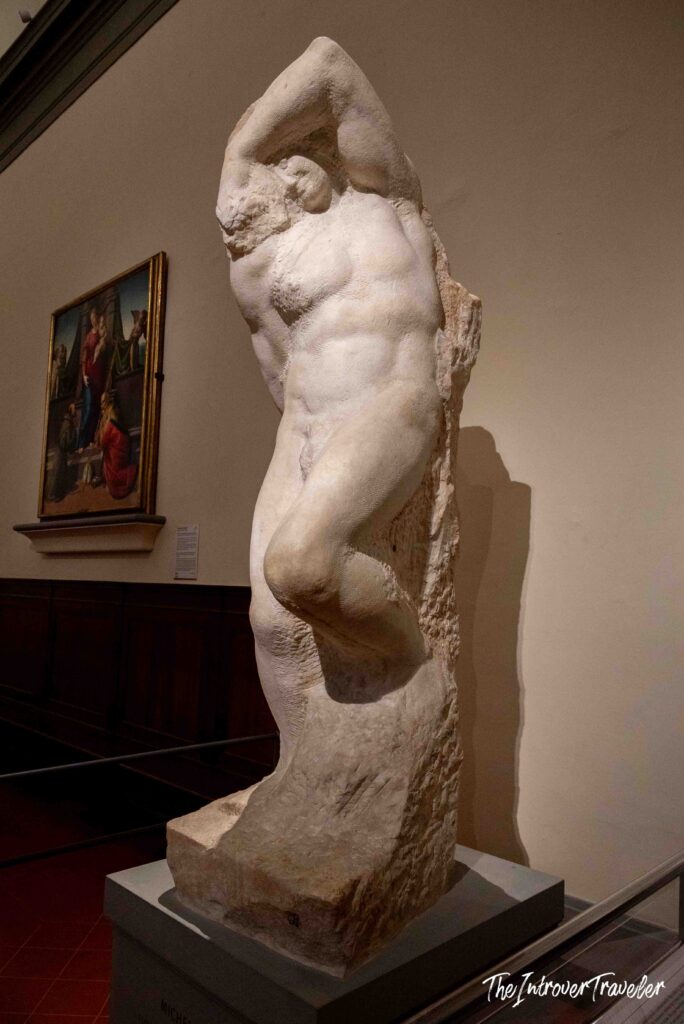
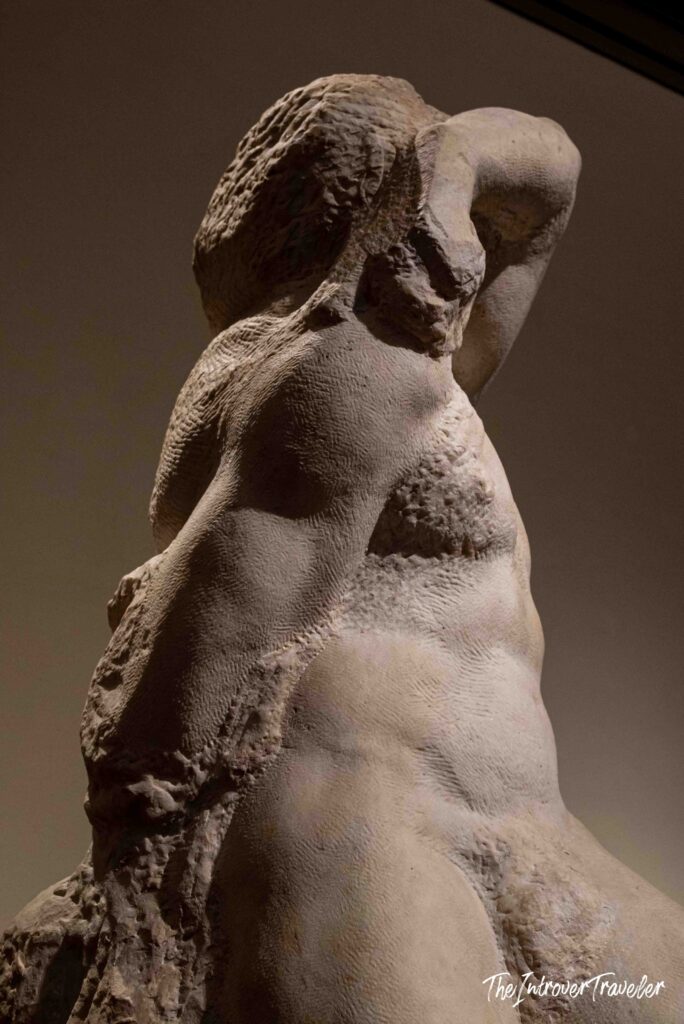
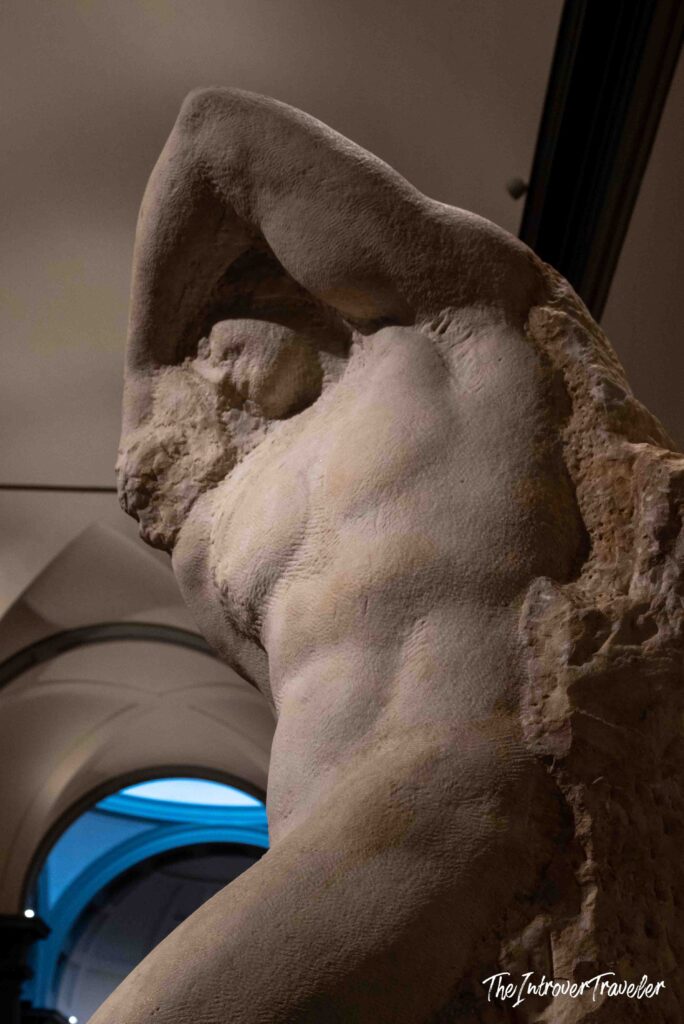
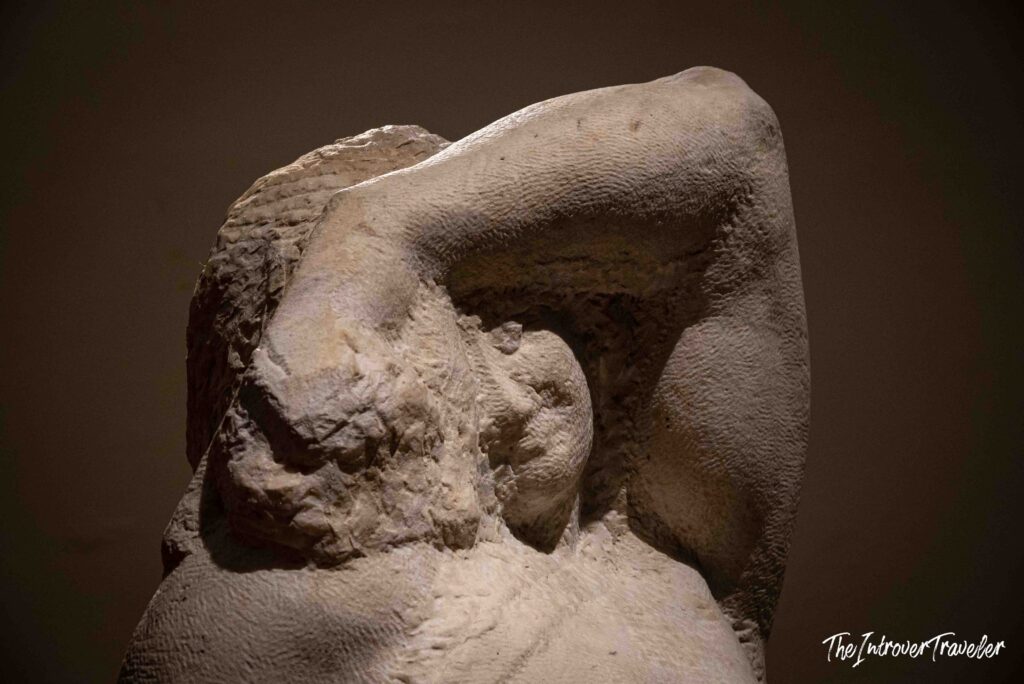
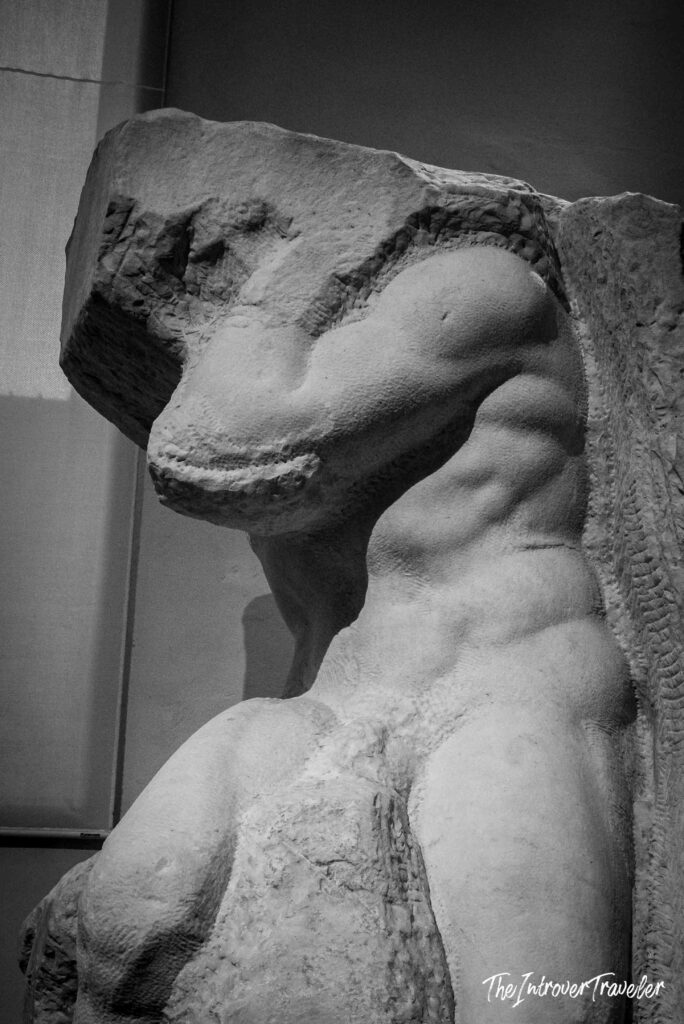
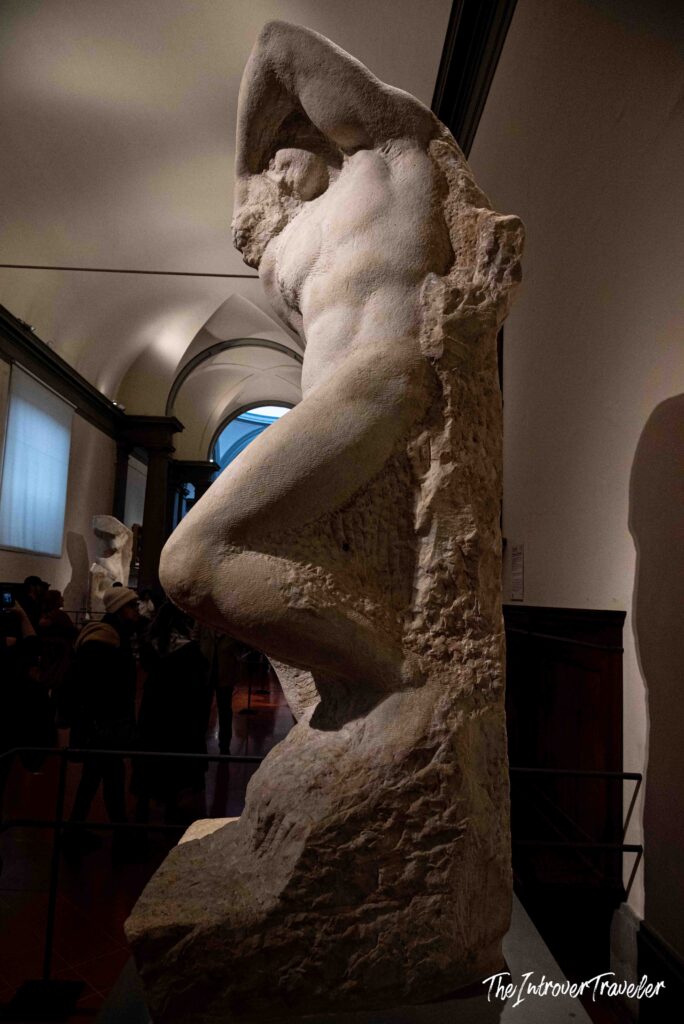
The Awakening Slave is at an intermediate stage. The hands and feet are still partly fused into the block. The face is just barely emerging. The figure is twisting backward, an enormously complex pose that requires an extreme degree of three-dimensional control, and one can see the artist working out the spatial logic of the torsion as he proceeds. The most striking feature of this figure is the head, which is half-immersed in the rough mass of marble, as if the sleeper were still attached to his stone pillow.
The reason these tool marks matter is not merely technical. Together they answer one of the most insistent questions raised about Michelangelo: was he working, in old age, with the same physical violence with which he had worked at thirty? The answer that the Prigioni offer is unambiguous: yes. The depth of the subbia furrows is consistent with extremely powerful blows.
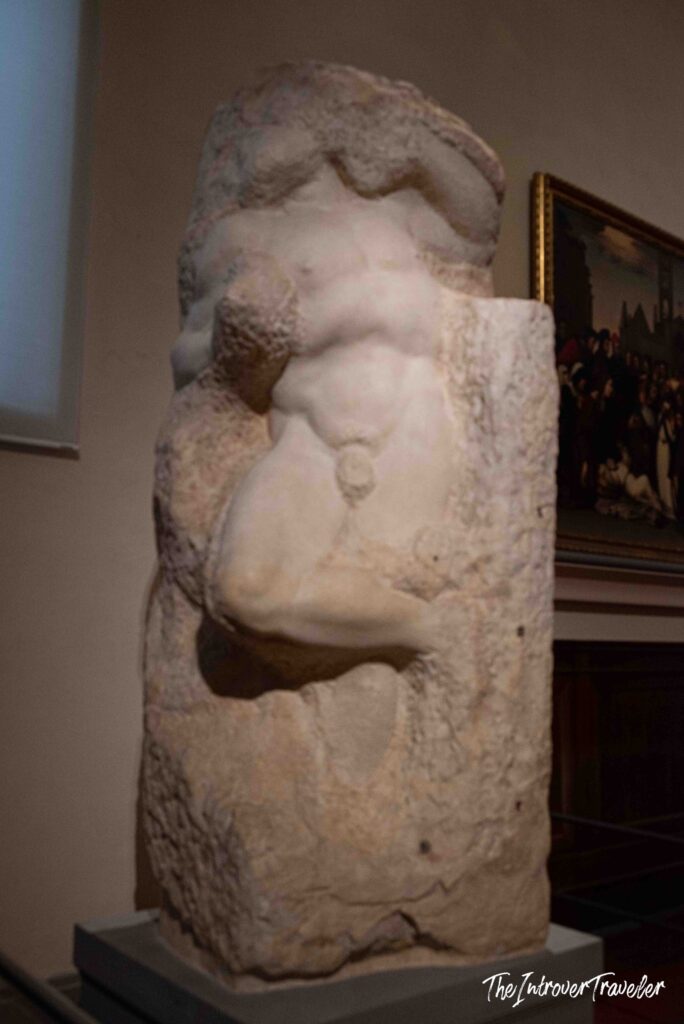
The fragments of marble that came off in some of the more aggressive zones are large. He was carving as he had always carved: standing in front of the block, hammer in his right hand, chisel in his left, attacking the matter directly, frontally, without the temporizing prudence of a sculptor who measures and re-measures. As Vasari noted with a hint of awe, he carved with a violence that other sculptors of the period considered reckless. He produced more chips per minute than was wise. He worked, as is almost universally agreed by those who have studied his shop practice, faster than anyone else and with a greater willingness to lose material.
This is also the reason why, when he abandoned the Prigioni around 1530-1532, the works were left precisely in the state they are in today. He did not pause to “finish” the unfinished surface, did not ennoble the abandoned state, did not retouch them to render them aesthetically self-sufficient. He simply set down the hammer and the chisel and walked away. What we see is the morphology of an interruption.
The non-finito: deliberate aesthetic, or the residue of an interruption?
We arrive at the central theoretical question, the one on which any number of art-historical careers have been built, demolished, rebuilt, and demolished again over the past century and a half. The four Florentine Prigioni are unfinished. Was this state intended by Michelangelo, or is it the accidental result of the abandonment of the project for which they were carved?
The case for unintentional incompleteness is, in pure documentary terms, almost overwhelming. There is no single passage in Michelangelo’s enormous epistolary corpus, the most extensive correspondence ever produced by an Italian artist before the modern era, in which he claims that he intended to leave a sculpture unfinished. There is no contractual stipulation, in any of the six successive contracts of the tomb of Julius II, that envisages an unfinished outcome. There is no discussion in the writings of his closest interlocutors (Vittoria Colonna, Tommaso de’ Cavalieri, Donato Giannotti, Vasari himself in his first edition of the Lives) that suggests the non finito was a deliberate choice. The four Prigioni were left in his Florentine studio for thirty years, until his death, alongside other unfinished blocks that include the so-called Saint Matthew now also at the Accademia, originally commissioned in 1503 for the Duomo and abandoned with even greater rapidity. Michelangelo did not display them. He did not present them to patrons. He did not declare them complete. They were kept, like the inventory of a workshop, as residual material whose final destination had not yet been determined.
The most economical historical reconstruction is therefore this. Around 1525-1530 Michelangelo carves the four blocks for what he believes will be a relatively imminent installation in the tomb of Julius II. The 1532 contract significantly downsizes the project, and the 1542 contract eliminates the figures entirely. The Prigioni become, in operational terms, an inventory of unused marbles. Michelangelo has at this point already moved on to other commissions (the Last Judgment, the Pauline Chapel frescoes, the Capitoline Hill, the dome of Saint Peter’s). He has no reason to finish them. He has no obligation to finish them. They remain in his studio as objects with which he has, at best, an ambivalent relationship: on the one hand they are the evidence of decades of unfulfilled work, on the other they are simply unsold stock.
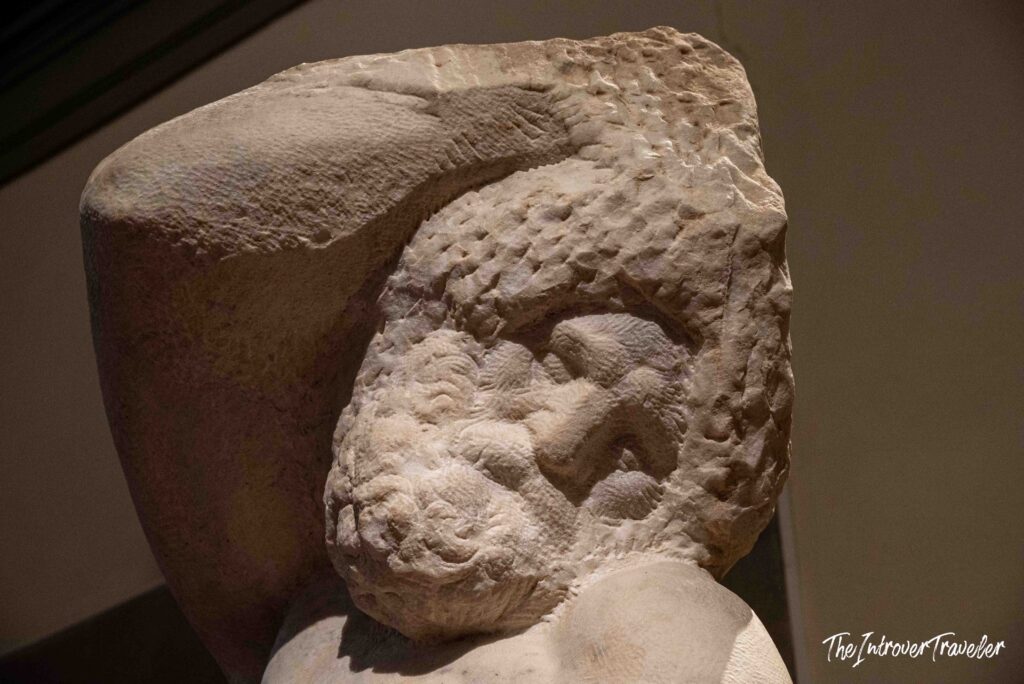
If this were the whole story, the non finito would be merely a contingent fact, no more aesthetically interesting than the contractual disputes that produced it. But it is not the whole story, and the reason is twofold.
The first reason is that Michelangelo, in the same period, develops in his sonnets a poetics of the figure-trapped-in-stone that lends itself to being read, retrospectively, as a theoretical justification of the unfinished. The most famous of these sonnets, number 151 of the standard edition, opens with these four lines:
Non ha l’ottimo artista alcun concetto c’un marmo solo in sé non circonscriva col suo soverchio, e solo a quello arriva la man che ubbidisce all’intelletto.
In English: the supreme artist has no concept that a single block of marble does not already contain within itself, with its surplus, and only the hand that obeys the intellect can reach it. The sonnet articulates a philosophical position with deep Neoplatonic roots, which we will examine in the next section, and which posterity has used to argue that Michelangelo conceived of the act of sculpting as the liberation of an idea pre-existing in the matter. Read together with the Prigioni, the sonnet appears to offer a perfect theoretical key. The figures are emerging from the block precisely because the block already contained them, and because the artist’s task is simply to remove the “soverchio,” the surplus, that imprisons them.
The second reason is that Vasari, in the second edition of the Lives (1568), explicitly thematizes the non finito as a specifically Michelangelesque procedure, glossing the Prigioni and the Saint Matthew as evidence of a method by which the artist begins to release the figure as if it were rising out of a tub of water, allowing the highest parts to emerge first and proceeding gradually inward. Vasari is well aware that the works are technically incomplete, but he reads them as the visible record of the sculptor’s process, and he attributes a certain interpretive value to them. He does not, however, claim that Michelangelo intended them to remain in that state.
What we have, then, is a stratified phenomenon. At the level of the documentary record and of the immediate biographical context, the non finito of the Prigioni is the residue of an interruption, full stop. And yet this is too neat. The question of whether Michelangelo conceived the non finito as a deliberate expressive choice is one of the genuinely unresolved problems of modern art-historical scholarship, and the more carefully one looks the less the binary opposition between accident and intention survives. The Prigioni do not exist in isolation. They sit inside an entire late oeuvre in which the unfinished surface is a recurrent and increasingly assertive presence, and the cumulative weight of that oeuvre tells a story that the strict accident-only reading cannot accommodate.
Consider the Day (Giorno) in the New Sacristy of San Lorenzo, the so-called Medici Chapel. The face of the figure is barely sketched out: eyes, nose, and mouth indicated rather than carved, the surface still bearing the parallel furrows of the gradina. And yet the figure sits, today as five hundred years ago, on top of the tomb of Giuliano de’ Medici Duke of Nemours, in an architectural ensemble that Michelangelo himself designed and that is universally considered one of the apexes of Renaissance funerary sculpture. Michelangelo abandoned the chapel in 1534 when he left Florence definitively for Rome. He lived another thirty years. He never returned to “finish” the face of the Day, even though he had ample opportunity, ample skill, and a continuing relationship with the Medici through Cosimo I. The figures were installed in their final positions by Vasari and Ammannati in 1545, and the Day (below) has been received from then onward not as a flawed sculpture but as a deliberately suspended one.
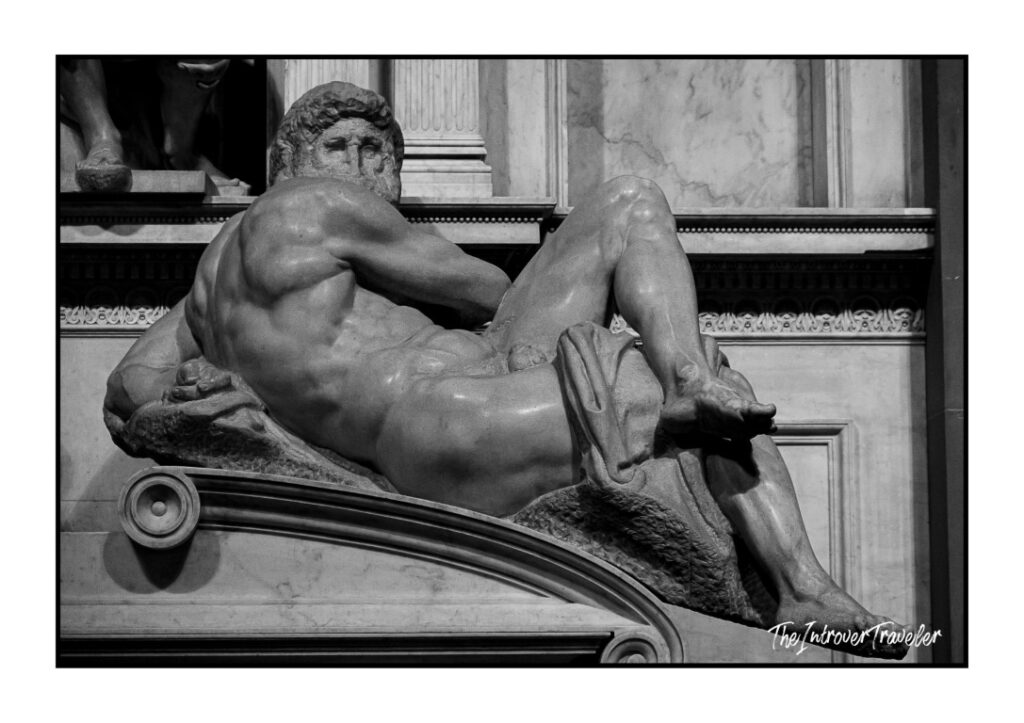
The same is true of the Brutus in the Bargello, dated around 1539 to 1540, where the head is essentially complete while the bust and shoulder are left at an evidently earlier stage of working: a delivered work, commissioned by Donato Giannotti for Cardinal Niccolò Ridolfi, in which the contrast between finished face and rough surround is constitutive of the visual effect. And the Rondanini Pietà, on which Michelangelo was working in the days immediately preceding his death in February 1564, has been read since Charles de Tolnay’s 1934 study as a deliberate stripping-away of form in old age, an expression of late-life religious interiority that the artist refused to polish because polishing would have falsified it.
The cumulative weight of these examples suggests something specific about the man. Michelangelo had, across his entire career, an unusual tolerance for unfinished surfaces, and was willing to stop work at points where any other sixteenth-century sculptor would have polished. Whether this counts as “intention” in the modern programmatic sense is doubtful: he did not write a treatise declaring the aesthetic value of incompleteness, and you will not find in his correspondence the declaration that the rough block is a higher mode of being than the finished marble. But he behaved, work after work, decade after decade, as though the rough surface could carry expressive weight that the polished surface could not. And his contemporaries, beginning with Vasari, perceived this and tried to articulate it.
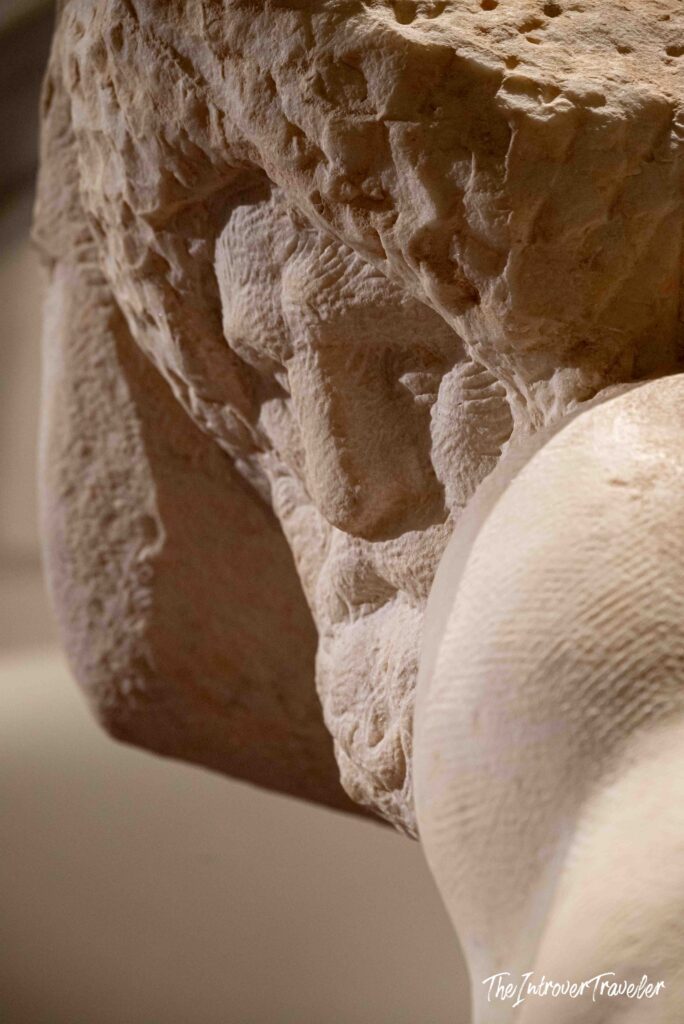
Recent scholarship has pushed the question considerably further than the cautious mid-twentieth-century synthesis of Tolnay and Hartt. Carolina Mangone, working at Princeton, has documented how Michelangelo’s followers between roughly 1550 and 1650, including Niccolò Tribolo, Vincenzo Danti, Pierino da Vinci, and even Gianlorenzo Bernini, propagated the non finito in their own work in ways that suggest they had already understood it as a deliberate sculptural language and not merely as a record of biographical accidents. Paul Barolsky has connected the non finito to the Ovidian poetics of metamorphosis, arguing that figures partially emerging from matter participate in a literary tradition of forms-in-transformation that Michelangelo would have known intimately from his immersion in Ovid since adolescence.
The 2016 Metropolitan Museum exhibition Unfinished: Thoughts Left Visible, with catalogue essays by Carmen Bambach and others, identified Michelangelo as the founding figure of a continuous lineage of intentional incompleteness that runs through Titian, Rodin, the Impressionists, and on to Pollock and Bourgeois. And the Louvre, in its current exhibition Michel-Ange Rodin. Living Bodies, places the non finito at the structural center of the curatorial argument, treating it as the principal thread linking the two greatest sculptors of the modern Western tradition. None of these projects claims that all of Michelangelo’s unfinished works were deliberately so. But they all reject, equally firmly, the opposite reduction.
I personally like to imagine, even though this is purely my own intuition and as far as I am aware is in no way supported by the abundant correspondence left to us by the genius of Caprese, that Michelangelo’s relationship with the matter of marble was one of such love and respect that, over the course of his career and of the decades he spent carving it, he developed a kind of reverence and hesitation about pushing his beloved expressive medium to a degree of mimesis with flesh that would have effectively altered its very nature.
If you want a single name to anchor the modern reception, it is Auguste Rodin. When Rodin made his pivotal trip to Italy in 1875 and 1876, in the wake of the Florentine quadricentennial celebrations of Michelangelo’s birth, he understood the unfinished sculptures in a way no nineteenth-century academician could. He saw the Florentine Prigioni in their Boboli grotto setting, the Louvre Slaves he already knew at home, the Saint Matthew in the Accademia, the figures of the Medici Chapel, and the casts of the entire Sistine production assembled for the celebration. The figure half-emerging from the block, the surface that records the artist’s process, the suspension of the work at a moment of formal becoming rather than completion: all of this entered Rodin’s own vocabulary directly, and from there into the entire post-impressionist sculptural tradition. “My liberation from academicism was via Michelangelo,” he later declared, and it is impossible to read his statement without sensing that the liberation was specifically a liberation from finish. The Brancusi of the Endless Column, the Henry Moore of the reclining figures, the Eduardo Chillida of the iron blocks all descend, by direct or indirect route, from the moment in early 1876 when a thirty-five-year-old Frenchman stood in the Boboli Gardens and grasped that the rough Florentine giants were not Renaissance failures but proto-modern manifestos. The fact that Michelangelo could not have intended that reading does not mean the reading is wrong. It means he produced, three or four centuries ahead of schedule, an aesthetic that European sculpture would catch up to only in the late nineteenth century.
The contemporary critical reaction in his own time was, predictably, divided. The Mannerist generation (Pontormo, Bronzino, the early Vasari) reads the unfinished as a positive value, an extension of the master’s terribilità into the very structure of his works. The post-Tridentine generation, beginning around 1560, treats it with embarrassment, as evidence of the great man’s old-age decline. The seventeenth century, which prefers Bernini’s polished theatricality to the Florentine block, marginalizes the Prigioni almost entirely. The eighteenth century rediscovers them as picturesque ruins. The nineteenth century, in the wake of Romanticism, transforms them into manifestos of the modern artistic personality: the unfinished work as expression of artistic interiority, the sculptor’s struggle with matter as a metaphor for the creative agon. By the early twentieth century, when Rodin, Brancusi, and the modernists construct their genealogies, the Prigioni have become foundational documents of a specifically modern aesthetic of incompleteness. The Boboli grotto installation no longer fits the cultural temperature. The Prigioni need to be in a museum, on plinths, surrounded by the silence of art-historical reverence. In 1909 they get exactly that.
So: choice or accident? The most honest answer available today, after a century of debate that has produced more nuance and less certainty than the question initially seemed to deserve, is that the binary itself is the wrong instrument. The Prigioni were left unfinished partly because of the contractual collapse of the tomb of Julius II, and partly because Michelangelo, by the late 1520s, had become the kind of artist who could leave a work in a suspended state without feeling that he had failed. The two factors are not in opposition; they are entangled. He stopped working on them because the project was eliminated, but he did not return to finish them in the thirty years that followed because he had developed, over decades, a sensibility according to which a sculpture could be expressively complete without being technically finished. The same sensibility produces the face of the Day, the bust of the Brutus, the entire stratified surface of the Rondanini Pietà. To claim the Prigioni are pure accident is to ignore the rest of his oeuvre. To claim they are pure program is to ignore the contractual record. They are works in which the contingent and the intentional have become so deeply entangled that no biographer, at this distance, can separate them with confidence. And it is precisely this entanglement, rather than any of its possible resolutions, that makes them readable today as the proto-modern works that posterity, beginning with Rodin and continuing through the Met Breuer and the Louvre, has discovered them to be.
On the angel in the marble, and why nobody seems to have actually said it
There is a quote, attributed to Michelangelo, that you will find on the wall of every yoga studio, in the closing slide of every TED talk on creativity, and in the marketing copy of every art book about him: “I saw the angel in the marble and carved until I set him free.” It is one of the most quoted artistic aphorisms in the world. He never said anything like that.
There is no occurrence of this phrase, in this form or in any close paraphrase, in the documented writings of Michelangelo. It does not appear in his correspondence, in his sonnets, in the records of his conversations transmitted by Donato Giannotti, in Ascanio Condivi’s Vita (1553), or in either of Vasari’s editions of the Lives (1550 and 1568). It does not appear in the early biographies, in the seventeenth-century compilations of artists’ sayings, or in the documentary anthologies of the eighteenth century. The earliest occurrences in the form most familiar to English-speaking readers seem to date from late nineteenth- and early twentieth-century inspirational literature, and the phrasing has become viral over the past fifty years through the combined ministrations of self-help books, business motivational seminars, and the early internet.
What Michelangelo actually said, as far as we can document, is something at once less catchy and considerably more philosophically interesting. The locus classicus is the sonnet 151 already cited, which speaks of il concetto, the concept or form, that is already inscribed in the block and that the hand of the artist, obeying the intellect, “extracts” by removing the surplus. The Italian word concetto in this context does not mean “concept” in the modern English sense of an abstract idea. It means, more technically, the specific form that the artist envisages in the matter, the determinate three-dimensional shape that the block is capable of producing. This is a precise technical term, used by sixteenth-century artistic theorists in a sense that derives from the Aristotelian distinction between potency and act, but reinterpreted through the Neoplatonic vocabulary that Michelangelo had absorbed in his youth, when he was a frequent presence in the household of Lorenzo de’ Medici and a participant, at least as a listener, in the conversations of the Platonic Academy founded by Marsilio Ficino.
The misunderstanding, when the sonnet is paraphrased as “I saw the angel in the marble,” is twofold. First, it transposes the technical philosophical vocabulary of concetto into a quasi-mystical vocabulary of vision, as if the artist saw a pre-existent image in the stone and merely revealed it. Second, it introduces a specifically Christian-iconographic content (the angel) that has no warrant in the original. The actual Michelangelesque position is closer to a Platonist theory of forms than to a pious fable of liberation. The form is in the marble in the sense that the marble has the capacity to take that shape; the artist’s hand is guided by the intellect, which contemplates the form; the act of carving consists in removing the matter that does not belong to the form. This is a sophisticated philosophical position, and it has consequences that the angel-quote completely obliterates.
The Neoplatonic background is crucial. Marsilio Ficino, whose translations of Plato and Plotinus had been completed in the 1480s while Michelangelo was a teenager in the Medici household, articulates a metaphysics in which the soul descends from a state of unity with the divine into the matter of the body, and aspires to return through stages of progressive refinement. Pico della Mirandola, in the Oration on the Dignity of Man, presents the human being as suspended between matter and spirit, with the freedom to ascend or descend. The body, in this scheme, is both the vehicle and the prison of the soul. The well-known topos of the soul as imprisoned in the body, which Plato had already articulated in the Phaedo, is intensified in the Florentine Neoplatonists into a vivid imagery of struggle, of the spirit attempting to liberate itself from the burden of matter while remaining, paradoxically, dependent on matter for its very existence and expression.
It is impossible to read the four Florentine Prigioni without, at the very least, suspecting that this intellectual background plays a role in their visual logic. The figures are bodies that struggle to emerge from a dense, viscous, uncooperative matter; bodies that twist, lean, push against the rough block from which they are partially carved; bodies that simultaneously exist as figures and as remnants of an undifferentiated material continuum. In the Awakening Slave, the head still partly fused with the stone seems literally to encode the iconography of the soul awakening from its material slumber. In the Atlas, the unworked block on the shoulders functions as the visible weight of the matter that prevents the spirit from rising. The reading is so iconographically apt that it has become the standard interpretation, codified in the great twentieth-century studies (Tolnay above all).
But here we have to be careful, because the apparent perfection of the Neoplatonic reading is partly the product of the fact that the works are unfinished. If they had been completed, with smooth backs, polished surfaces, articulated bases, and integrated into the architectural frame of the tomb of Julius II, the Neoplatonic reading would still be available, but it would be considerably weaker. The visual poetics of the soul-trapped-in-matter that the Prigioni so powerfully embody depends, to a significant degree, on the fact that the figures are literally trapped in the rough block. And the figures are trapped in the rough block because Michelangelo abandoned them before completion.
This is, in a sense, the most genuinely Michelangelesque thing about the four sculptures. The accidental coincidence between an interruption of work and a Neoplatonic theory of the soul produces an effect that goes beyond the conscious intention of the artist and inscribes itself in the deeper logic of the works. It is precisely the kind of resonance between matter and meaning that the Florentine Neoplatonists themselves would have considered evidence of a higher correspondence between the world of forms and the world of accidents. Michelangelo did not deliberately leave the Prigioni unfinished as an illustration of a philosophical thesis. But the philosophical thesis was so deeply embedded in his intellectual world that the unfinished works ended up illustrating it anyway.
This is also why the angel quote, however apocryphal, will not die. It is not faithful to what Michelangelo wrote, but it has captured, in its sentimental imprecision, something that the Prigioni do in fact perform. Posterity has needed a phrase capable of making the visual experience of the four sculptures verbal, and since Michelangelo’s own theoretical statements are too dry and technical for popular consumption, an apocryphal phrase has been built. The angel does the work that the concetto of sonnet 151 cannot do, because concetto is a sixteenth-century philosophical term that nobody outside an art-history seminar can pronounce without faltering.
The dramatic effect, intended or not
Stand for a moment in front of the Awakening Slave. The figure is twisting backward in a violent torsion, the chest pushed upward against an invisible ceiling, the head still half-buried in the marble pillow, the right arm raised behind the head, the left leg flexed and bent backward. The pose, considered in the abstract, is anatomically extreme, almost beyond the capacities of a real human body. It is also profoundly unstable: there is no equilibrium, no resting moment, no point at which the figure can be imagined as remaining still.
This visual effect is the single most powerful feature of the four Prigioni, and it is the source of their entire emotional and theatrical impact on the viewer. The figures are not in repose. They are not in idealized motion, like the David a few meters away. They are caught in the moment of struggle: a struggle to extract themselves from a material that grips and immobilizes them, a struggle to take shape against a resistance that is at once physical and metaphysical. The viewer who walks past them along the Tribuna corridor receives an impression of compressed kinetic energy, of bodies that are about to do something but have not yet finished doing it, of forms that are coming into being under the eye of the observer.
How much of this effect is intended? This is, perhaps, the most legitimately interesting question one can ask about the Prigioni, and it does not have a single answer. The pose of each figure was chosen by Michelangelo with full awareness; the violence of the torsions, the foreshortenings, the contraposti is something he could have moderated and chose not to. The Prigioni are not “naturalistic” figures: they are figures designed to maximize the impression of dynamic tension, in line with the post-Sistine evolution of his style toward what we would today call Mannerist deformation. So at this level the dramatic effect is unquestionably intended.
But at another level, the dramatic effect is amplified by the unfinished state in ways that cannot have been entirely planned. The fact that the Awakening Slave’s head is still buried in the block transforms the figure from “a man twisting backward” into “a man twisting backward who has not yet succeeded in lifting his head out of the matter.” The fact that the Atlas has no head at all transforms the figure into “a man bearing a literal weight where his head should be.” The fact that the rear of each figure remains rough and undifferentiated transforms the bodies from autonomous statues into half-emerged forms. None of these effects, individually, is the product of a deliberate compositional decision; collectively, they generate a poetics of incompletion that is one of the most influential visual languages in the history of Western art.
The most honest formulation, I think, is the following: the kinetic and theatrical drama of the figures is intentional; the metaphysical drama of the unfinished state is the result of a happy accident which posterity has read into the works and which, retroactively, is now inseparable from them. To attempt to disentangle the two layers, in any individual sculpture, is probably impossible at this point.
The dialogue with the David, twenty meters away
The David, completed in 1504, and the Prigioni, abandoned around 1530, are separated by approximately a quarter of a century, which corresponds to the distance between two distinct stylistic worlds and, in Michelangelo’s own biography, between two distinct men. The fact that they are now displayed at the two ends of the same gallery, with the Prigioni functioning as a sort of corridor of stone toward the apotheosis of the marble giant, produces one of the most pedagogically precious comparisons available anywhere in the world. If you have read the post on the David, you already know the technical history of the giant. Here I am interested in what changes between the David and the Prigioni, and what does not.
What does not change is the technical fundamentals. Michelangelo worked the David with the same tools, with the same frontal-attack method, with the same physical violence, with the same speed. He carved the David in two and a half years, an absurdly fast time for a colossus of more than five meters, and he carved the Prigioni in roughly the same proportional rhythm. The hand of the maker is the same hand. What changes is everything else.
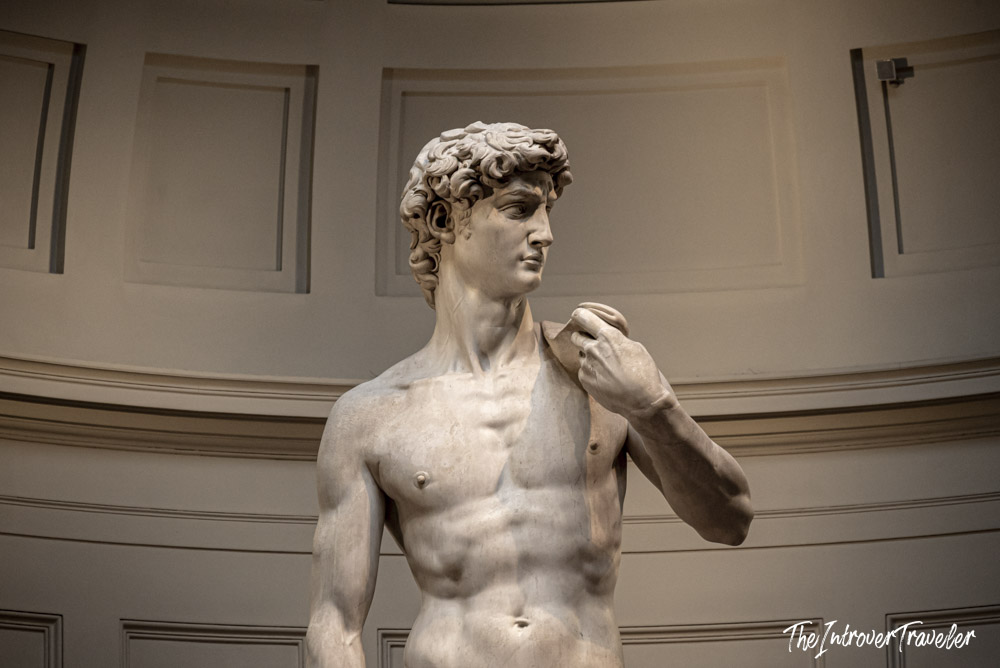
The David is a public commission, executed for the city of Florence, originally destined for the buttresses of the Cathedral and ultimately placed in front of the Palazzo Vecchio, with all the political and civic implications that this entailed. The Prigioni are a private commission for a tomb that is itself private, in the sense that it is the funerary monument of a single individual, and that, in any case, by the time they are carved the project has become a personal obsession of Michelangelo more than a public obligation. The David must communicate a determinate political content (the Republic that overcomes its enemies through moral and intellectual force), and it must do so with an immediate clarity legible by any citizen passing through the Piazza della Signoria. The Prigioni do not need to communicate anything to anyone outside Michelangelo’s studio for thirty years.
The David is finished. Polished. Shining. Every surface has been smoothed, every transition modeled, every detail of vein and tendon worked into the marble until the figure assumes that supernatural integrity that has made it, for five centuries, the icon of the human body in the Western imagination. The Prigioni are unfinished. Rough. Stained. Their surfaces are stratified records of the carving process. Where the David presents itself as an apparition that has descended into the material from the world of forms, the Prigioni present themselves as a process that is taking place, here and now, before the eyes of the viewer.
The David is a young Michelangelo. He is twenty-six years old when he begins to carve it, twenty-nine when he finishes it. He is at the apex of his physical strength, at the conclusion of a phase of his life in which he has produced the Vatican Pietà and a series of works that have established him as the foremost sculptor of his generation. He has not yet been damaged by the tomb of Julius II, by the Sistine Chapel, by the political turbulence of Florence, by the religious crises of the 1520s and 1530s. He still believes, more or less, in the Renaissance ideal of beauty as a finished, perfected, self-sufficient form.
The Prigioni are a Michelangelo in his late forties and early fifties, a man who has spent the previous twenty-five years in a state of more or less constant conflict with patrons, who has lived through the Sack of Rome and the fall of the Florentine Republic, who has witnessed the death of his brothers and the alienation of his closest friends, who has begun to read Savonarola and to interrogate his own relationship with the body and with sin. The conception of beauty has shifted. The body is no longer a transparent vehicle of meaning, but an opaque, heavy, suffering presence. Form is no longer a stable property that the artist confers on matter, but an outcome wrested from matter through a process that may or may not reach its conclusion.
To walk the corridor of the Tribuna del David in the wrong direction (that is, from the David back toward the entrance, looking backward at the Prigioni as one moves away from the colossus) is, in a sense, to walk through Michelangelo’s life in reverse. You leave behind the certitudes of 1504 and you re-enter the doubts of 1530. The David‘s polished surface gives way to the rough textures of the Atlas. The proportional canon gives way to compression and torsion. The unitary form gives way to the stratified process. This is the kind of curatorial accident that no museum director could have planned in 1909 and that, today, constitutes one of the most powerful aesthetic experiences any visitor to Florence can hope to have. Most visitors miss it entirely because they are walking in the other direction with the phone raised.
The Louvre cousins
A few words on the two Louvre slaves, which are essential to any complete understanding of the Florentine group and which complicate the picture considerably.
The Dying Slave and the Rebellious Slave were carved between 1513 and 1515 or 1516, in the wake of Julius II’s death and during the second contract of the tomb. They were intended to occupy positions in the lower register of the wall tomb, almost certainly representing (in the most credible of the iconographic readings) the captive provinces conquered by the late pope, or alternatively the bound passions of the soul, or possibly both at once. They are essentially complete works. The Dying Slave in particular has been polished to a luminous finish, and his surfaces present that impalpable luminosity that Michelangelo achieved through the systematic use of progressively finer abrasives.
The decisive point is that, when the third contract of 1516 reduced the scale of the tomb again, the two Louvre slaves became surplus to the project. Michelangelo kept them in his Roman studio for around thirty years, until in 1546, in his early seventies, he donated them to Roberto Strozzi, a Florentine exile who had been hosting him in Rome during a period of illness. Strozzi, in turn, donated the two figures to King Francis I of France, in the context of the diplomatic and cultural exchanges between the Florentine exile community and the French crown. The slaves left Italy, never to return. They were placed first at the Château d’Écouen, then passed through the collection of Cardinal Richelieu in his Poitou estate, and finally, after the French Revolution, entered the collections of the Louvre, where they are currently displayed in the Galerie Michel-Ange.
This story has two important implications. The first is that the Louvre slaves did not remain in Italy not because they were less important than the Florentine ones, but because Michelangelo, unable to use them for the tomb, treated them as a personal possession that he was free to give away. The Florentine Prigioni, by contrast, remained in his studio at his death and were donated by his nephew to Cosimo I, with the consequence that they entered the patrimony of the city of Florence and never left. Two essentially identical biographical situations (two groups of slaves rendered obsolete by successive contractions of the tomb), but two diametrically opposite physical destinies. The Louvre slaves end up in the most important museum in France, the Florentine slaves end up in the back of one of the two most important museums in Florence.
The second implication is stylistic. The Louvre slaves are works of an artist still operating within a fundamentally classicizing language, in which the body is conceived as a complete, integral, harmonious form. The Dying Slave in particular, with his sweet-faced pose of eyes closed and arm raised behind the head, derives directly from Hellenistic models such as the Sleeping Hermaphrodite and the Barberini Faun, and its eroticism (the slave’s languid pose has been read in homoerotic terms by every serious commentator from Vasari onward) is the eroticism of an idealized antiquity. The Rebellious Slave is more dynamic, more tense, but he too retains a proportional canon and a surface finish that situate him squarely within the Roman post-Sistine vocabulary of Michelangelo. They are, in short, Renaissance works.
The Florentine Prigioni are no longer Renaissance works in the same sense. The bodies are heavier, the proportions more compressed, the relationship with the matter that surrounds them more intimate and more violent. The vocabulary has shifted toward what we would now call early Mannerism, but a Mannerism that, instead of producing the elongated elegance of Parmigianino or the chromatic vertigo of Pontormo, produces a sculptural language of struggle, weight, and compression. This shift is partly the product of fifteen years of biographical and historical experience that have intervened between the two groups, and partly, perhaps, the deliberate response of an older Michelangelo who has begun to find the classicizing ideals of his youth aesthetically and morally insufficient.
If you have the chance to see both groups in your lifetime, the Louvre’s Dying Slave and Rebellious Slave on one trip and the Florentine four on another, you will have access to one of the most instructive comparisons available in the history of Western sculpture: the same artist, the same project, the same iconographic frame, executed in two different decades and in two different stylistic worlds. The fact that this comparison is geographically split between Paris and Florence is one of the small ironies of art-historical fortune, and one of the reasons why writing about the tomb of Julius II requires a willingness to alternate between cities, between contracts, and between periods.
A few practical observations for the visit
The Galleria dell’Accademia, despite everything, is not an enormous museum, and the Tribuna del David with the Prigioni occupies a relatively contained portion of the visit. A few suggestions, if you are planning to actually see what is in front of you instead of fighting your way to the colossus for the photograph.
First, walk the Tribuna in both directions. The standard visit path takes you toward the David with the Prigioni on either side; once you have seen the David, turn around and walk back through the corridor in the opposite direction. The reversed perspective is the one that lets you actually see the four Prigioni without the gravitational pull of the colossus distorting your gaze.
Second, for each of the four Prigioni, stand at the front, then walk slowly to the side, and try to glimpse the rear. Most of the time the rear is not directly accessible (the figures are placed against the wall or on plinths that limit the lateral view), but even an oblique glimpse of the unworked back is enough to give you a sense of the paragone method. If you only see them frontally, you miss half the point.
Third, look for the gradina striations. They are the small parallel toothed marks that appear in the intermediate phase of the carving, before the surfaces are smoothed. The Bearded Slave and the Atlas are the best places to see them. Once you have learned to recognize them, you will see them in every Michelangelo sculpture you visit thereafter, including those that are mostly finished, where they survive in concealed zones (under the chin, behind the ear, in the folds of drapery).
Fourth, before leaving the Accademia, take the time to look at the Saint Matthew, also unfinished, displayed at the end of the Tribuna corridor. He was begun in 1503 (before the David was complete) and abandoned almost immediately when the project for the apostles of the Duomo was reorganized. He is the earliest of Michelangelo’s non finito works, and he allows you to see that the unfinished state is not a feature of his old age but a recurrent constant of his entire career.
Fifth, if you have time, after the Accademia head to the Boboli Gardens and visit the Buontalenti Grotto where the Prigioni were originally installed in the 1580s. The copies that replaced them in 1909 are still there, in the original positions designed by Buontalenti, surrounded by the artificial concretions and stalactites that constituted the Mannerist garden setting. Seeing them in their original ambient (even in copy form) is an instructive corrective to the reverential white-walled atmosphere of the Accademia. The Mannerists did not see the Prigioni as sacred icons of the unfinished. They saw them as decorative figures struggling out of an artificial cave wall, and they used them accordingly. The history of taste is instructive precisely when it embarrasses us.
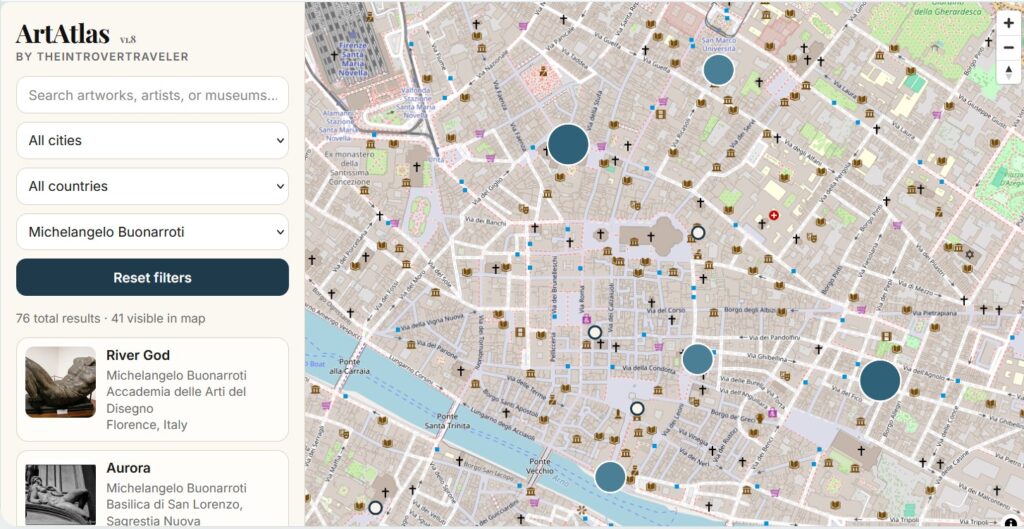
If you want to continue exploring Michelangelo’s works in Florence, ArtAtlas maps every single one of them with their physical locations and lets you build an itinerary that is not the standard tourist circuit.
For those who read all the way down, the long piece that pulls it all together is Michelangelo Buonarroti, the total artist (and his real torments).
Books and sources
The two indispensable works for anyone who wants to study the Prigioni and the tomb of Julius II beyond the level of the museum caption are:
- Charles de Tolnay, Michelangelo, in five volumes, published by Princeton University Press between 1943 and 1960. Volume IV, dedicated to the tomb of Julius II, is the foundational reconstruction of all six contracts, of the iconographic program, and of the chronology of the individual figures. It is dense, philological, and assumes a serious reader. It remains, after eighty years, unsurpassed.
- Frederick Hartt, Michelangelo: The Complete Sculpture, Abrams, 1968 (multiple later editions). The most accurate technical and stylistic analysis of every Michelangelo sculpture, with a chapter on the Prigioni that addresses the non finito question with rigor.
For a more accessible but still serious introduction, Antonio Forcellino’s Michelangelo: A Tormented Life (Polity, 2009) provides an excellent narrative reconstruction of the tomb of Julius II saga in the broader context of Michelangelo’s biography. Forcellino is a restorer as well as a scholar, and he writes about the works with a tactile awareness that few academics manage.
Frank Zollner, Michelangelo: The Complete Works. Paintings, Sculptures, Architecture, Taschen, is the best-illustrated single-volume reference for anyone who wants high-quality images of every work alongside a reliable commentary.
For the philosophical and Neoplatonic background, the classic reference remains Erwin Panofsky’s Studies in Iconology (Harper, 1939), in particular the chapter on Michelangelo’s Neoplatonism, which set the agenda for fifty years of subsequent scholarship and which, despite some inevitable updates, remains the most lucid synthesis available.
For the question of the non finito, the essay by Juergen Schulz, “Michelangelo’s Unfinished Works” (Art Bulletin, 1975), is still the best methodological treatment of the problem and the place where I would direct any reader who wants to go deeper than this post can go.
I have not read William E. Wallace’s Michelangelo: The Artist, the Man, and his Times (Cambridge University Press, 2010), but it is on my shelf and is regularly cited as one of the most reliable recent biographical syntheses.
FAQ
How many Prigioni are there in total, and where are they?
There are six surviving figures generally classified as Prigioni or Slaves, plus the closely related Genius of Victory. Four are at the Galleria dell’Accademia in Florence (Awakening Slave, Young Slave, Bearded Slave, Atlas Slave), two are at the Louvre in Paris (Dying Slave, Rebellious Slave), and the Genius of Victory is in the Salone dei Cinquecento of Palazzo Vecchio in Florence. All seven figures were carved for different successive redactions of the tomb of Pope Julius II.
Why are they unfinished?
Almost certainly because the tomb of Julius II was repeatedly redesigned in successive contracts (1505, 1513, 1516, 1526, 1532, 1542), each progressively smaller than the previous one, until the four Florentine Prigioni were eliminated entirely from the project in 1542. Michelangelo abandoned them in his Florentine studio around 1530-1532 and never returned to them. Posterity has read the non finito as an aesthetic choice, but the documentary evidence supports a much more prosaic explanation centered on the contractual collapse of the project.
Did Michelangelo really say “I saw the angel in the marble and carved until I set him free”?
No. The phrase does not appear in any of his documented writings or in the contemporary biographical literature. The closest authentic statement is sonnet 151 of his Rime, which articulates a Neoplatonic theory of the concetto (the form pre-existing in the marble) that is technically and philosophically distinct from the romantic-inspirational version of the angel quote.
What is the relationship between the Prigioni and the Moses?
They were all conceived for the same project: the tomb of Pope Julius II. The Moses, today in San Pietro in Vincoli in Rome, is the only major Michelangelesque figure that actually ended up in the final 1545 installation. The four Florentine Prigioni and the two Louvre Slaves were eliminated from successive redactions of the project. Reading the post on the Moses alongside this one will give you a complete picture of the tomb’s forty-year saga.
Is the Galleria dell’Accademia worth visiting only for the David?
It is worth visiting first and foremost for the David, but anyone who walks through the Tribuna without stopping in front of the four Prigioni and the Saint Matthew is missing some of the most important sculptures in the history of Western art. Beyond Michelangelo’s works, the Accademia also displays pieces by major artists such as Ghirlandaio, Pontormo, Botticelli, and Perugino… Plan two hours for a serious visit.
How do the Florentine Prigioni differ from the Louvre Slaves?
The Louvre Slaves were carved earlier (1513-1516), are essentially complete, and belong stylistically to the classicizing post-Sistine Michelangelo of his Roman thirties. The Florentine Prigioni were carved roughly fifteen years later (1525-1530), are unfinished, and belong stylistically to the more compressed, dramatic, proto-Mannerist vocabulary of his late forties and early fifties. The two groups are essentially two different formal worlds within the same biographical project.
Where can I find all of Michelangelo’s works in Florence?
ArtAtlas maps them all with their physical locations and lets you build a serious itinerary instead of relying on the usual fragmented lists. It is the most useful tool I know of for organizing a Michelangelo-focused visit to Florence.

Very happy to have found your site today. Great writing, and a beautiful love for art.
Thank you! Doing my best, I’m glad you like it!
I did like it, and I’ll definitely take a closer look at your posts (the ones regarding art and maybe food, not diving, though diving is cool) soon. I’m in tourist-attack mode, so I can’t really devote my attention to them right now.
I’ve been traveling in Italy for the past 7 weeks, and I’m in Rome at the moment. My trip started in Bologna, and now I’m kicking myself for having missed Niccolò dell’Arca’s work (but I’ll probably visit the city again next year for the Children’s Book Fair and correct this unfortunate oversight). I saw maaaany of the things you mentioned, including Giotto’s chapel in Padova. Gosh, that was wonderful.
I found your site through your review of the Bernini exhibition at Palazzo Barberini, which convinced me to visit it. I’ve been looking through your Roma-tagged posts, and I was wondering: what do you think is unmissable in Roma? I’m a tired tourist in need of help.
I already have tickets for the Borghese Gallery (I managed to get two on a free-entry day, because I don’t think two hours will be enough, since I also enjoy spending 30 minutes in front of one piece of art), as well as for the Galeria Nazionale d’Arte Moderna e Contemporanea.
I’m thinking of skipping the Capitoline Museums in favor of visiting more churches and basilicas instead. Need to visit the ones with Caravaggio’s paintings at least. Can you think of something else I must do?
Thanks.
Thank you very much, I am truly delighted.
In Rome, it is genuinely embarrassing to have to point out which works should not be missed. One would need a month. If you are interested in Caravaggio, this may be useful: https://artatlas.it/artists/caravaggio/caravaggio-in-rome.html
In fact, I am currently working on a project that answers precisely the question “what should I not miss in this place?”, but it will not be online for another two months.
If I try to make a ranking from memory, certainly forgetting many things: the Vatican Museums, Galleria Borghese, Galleria Doria Pamphilj, Palazzo Barberini, Palazzo Colonna…
As for ancient Rome, besides the Pantheon, Trajan’s Column and the National Roman Museum, certainly two of its three branches: the one next to Termini Station and Palazzo Altemps.
As for churches, it is genuinely difficult to answer: St Peter’s, San Giovanni in Laterano, Sant’Ignazio, Santa Maria Maggiore, Santa Maria in Ara Coeli, San Luigi dei Francesi… perhaps the best thing is to take a look around ArtAtlas.it.
As for the Capitoline Museums, it would be a pity to miss them, but everything depends on the time available. There is Bernini’s Medusa, the statue of Marcus Aurelius, the Dying Gaul…
I apologize for my belated reply. This is incredibly helpful, thank you.
I missed Caravaggio’s retrospective last year, but I’ll be leaving Rome having seen most of his paintings. Btw, got to see the portait Maffeo Barberini at the Senate.
I’ve already visited some of the places you mentioned, like the Pantheon, the Vatican M., Galleria Doria Pamphilj (just amazing, really). Will go to Palazzo Barberini the day after tomorrow. The Capitoline Museums and Palazzo Colonna will have to wait for my next trip.
Went to Galleria Borghese today and… heaven is a place of Earth. I spent almost five hours there. I entered twice and just lingered both times, waiting for someone to throw me out, but no one ever did, because that place is indeed heaven.
I’ve visited almost all of the churches you mentioned. I’m missing the one with the Caravaggios near Piazza del Popolo. I managed to see Michelangelo’s Moses at San Pietro in Vincoli, but I couldn’t see his Christ in Santa Maria sopra Minerva (the altar is under renovation and I believe they removed the statue). But how can one be sad with Bernini’s Elephant nearby?
I’m going to Vienna next, for a week at least. I plan to visit Belvedere, Kunsthistorisches, Albertina and Leopold. Any more recs?
Best wishes.
If you search “Vienna”on the blog you’re gonna find some more places: the Mak, the Secession building… I have’nt found the time yet to make a pillar page about Vienna so every single post lives on its own. One place that I didn’t see and surely deserves a visit is the museum of the city of Vienna
Me again. I also really like the name of your website, because I’ve been traveling across Europe for the past 3 months, and one of the things I see the least are individual, introverted travelers. Only groups, couples, gangs.
There I was at the Uffizi Gallery, in the Botticelli room. I arrived very early, and it was wonderful. But when I went back there around 12 pm, it was absolute chaos, only tour groups everywhere.
And then I noticed a man in his sixties, quietly reading a guidebook about the Uffizi (or Firenze) in the middle of all that noise. It was an old, German guidebook, in black and white!
And I found myself just watching him, thinking how much I wish tourists in Italy were more like him. Quiet, absorbed in their own little world. He still is my favorite person in the whole trip.
It is a truly delightful image, but it was not me. I do not speak German. Still, I am glad to know I am not alone.
Speaking of tourists, today, after watching the sunset at the Giardino degli Aranci, I was walking back home when I suddenly noticed a huge line of people. I checked Google Maps to see what it was, and it turned out to be a place called Buco della Serratura dell’Ordine di Malta, the keyhole where visitors line up to peek through, and obviously take pictures of, the dome of St. Peter’s Basilica perfectly framed.
There was an enormous queue, probably around 50 people, 9pm, all waiting just to take a photo through a keyhole.
Yes, I know that place, and I can confirm that it is insane. I dream of finding a way to get to the other side of the door, position myself on the line between the keyhole and the dome of St Peter’s, and stage a contemporary art performance by showing the tourists the part of me that never gets any sun.
haha 🙂
I wrote to you another reply, on my previous comment. I’m mentioning it, because I’m not sure if you’ve seen it. Best wishes.
By the way, the tool I was mentioning is now on line. It’s called Flaneur, it’s an itinerary engine for art enthusiasts; you fill out a short questionnaire about your level of interest in art, your destination, and your specific needs, and it creates a complete itinerary for you, including all the places to visit, from the most important to the lesser-known ones, opening hours, transfers, restaurants, booking links, and more.
https://www.flaneur.travel/