Last visit: april 2026
My rating: 7/10
Price: €€€€/€€€€€
Web: https://www.fornobrisa.it/it/
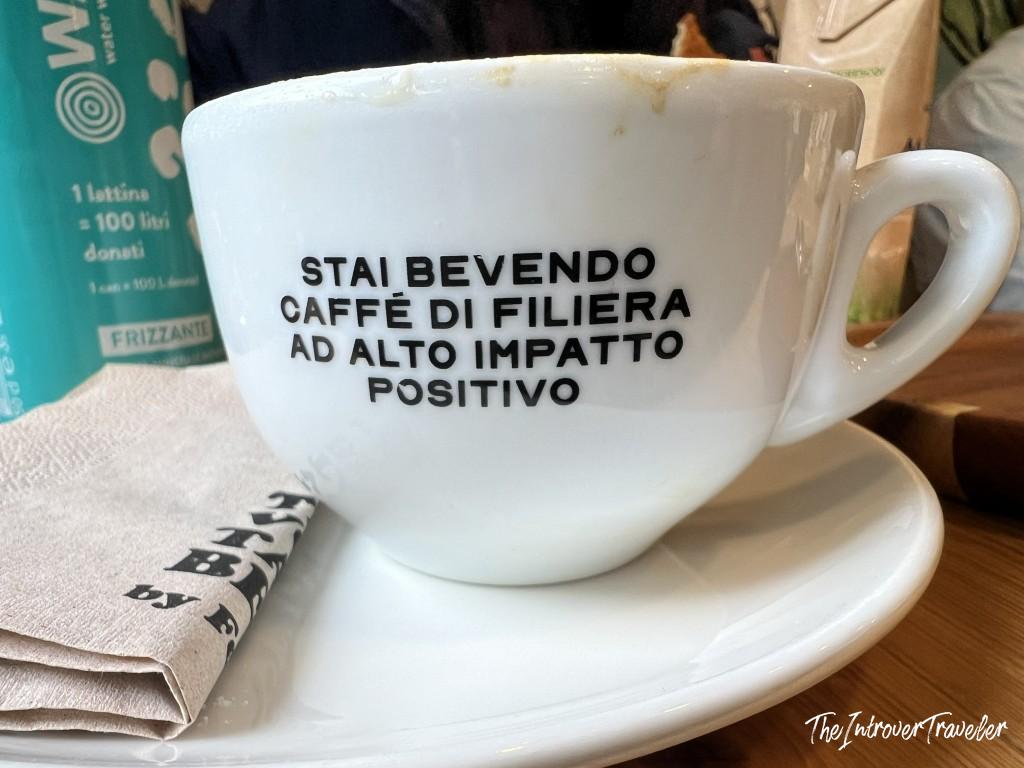
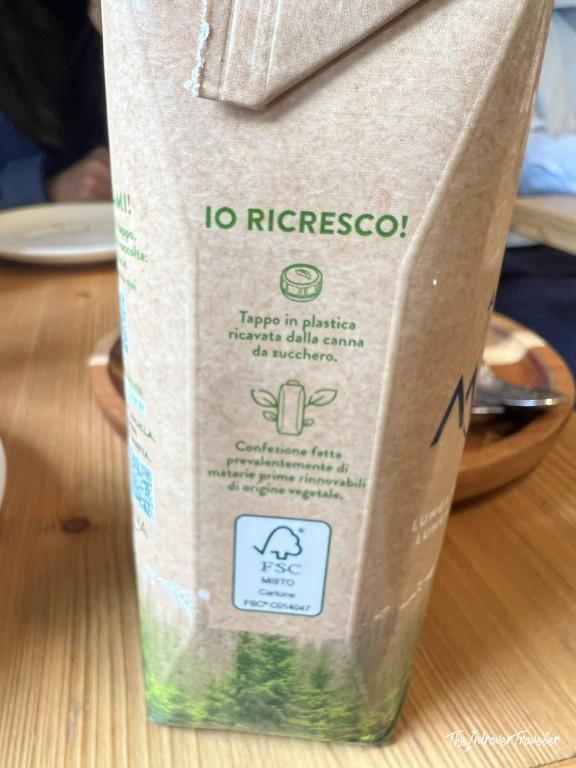
A spectre is haunting Bologna: the spectre of the conscious, organic, sustainable, supply-chain-certified, positive-impact, B Corp, Great Place to Work breakfast, probably also certified for the social reintegration of orphaned ladybugs. This spectre has a name: Forno Brisa.
The venue
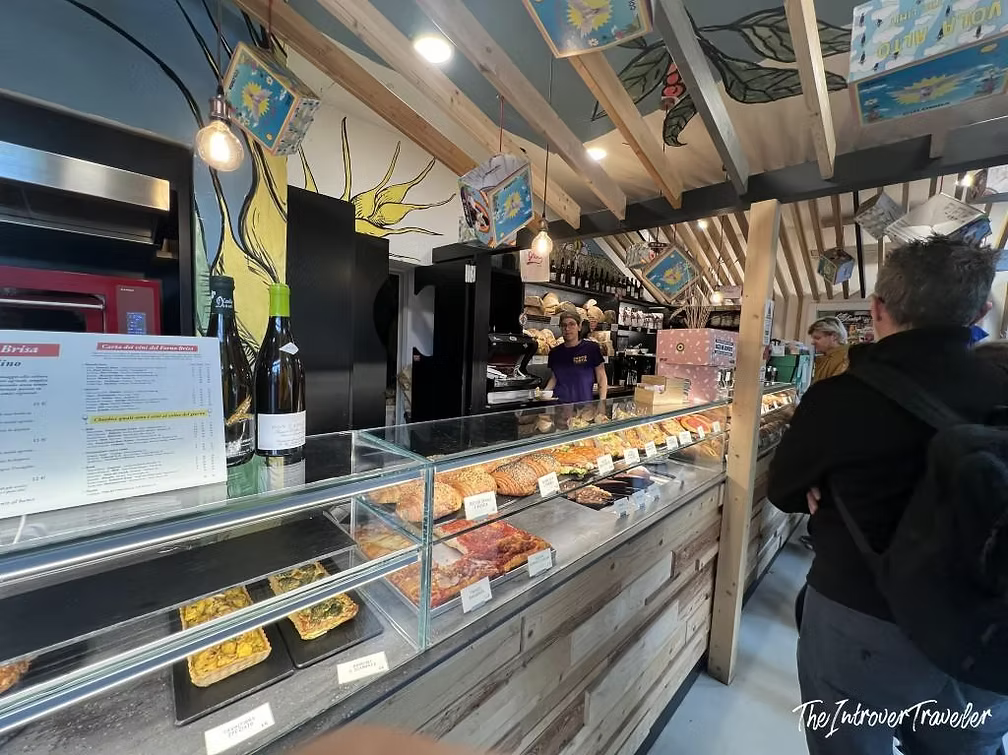
In Bolognina, on via Nicolò dall’Arca, two minutes on foot from Bologna’s central station (the rear entrance, the high-speed rail one), and a few steps from Yuzuya, there is Forno Brisa’s outlet and production lab, where you can watch the baking process and feel part of a collective project just by buying a croissant (there are other locations too, on Via Galliera and Via Castiglione, to which the same considerations apply as to the one near the station, which is the one I’m reviewing here for the benefit of travellers).
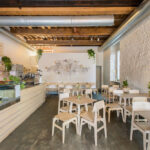
The atmosphere is exactly what you’d expect: tasteful decor, indie music in the background, young and smiling staff, that third-place-between-home-and-work vibe that has become the mantra of every self-respecting establishment. If you’re looking for the grumpy barista who slams your croissant on the counter without making eye contact, you’ll have to go elsewhere: here they will explain the origin of the coffee blend, the grain supply chain, and probably the first name of the cow that produced the milk for your cappuccino.
The quality: let’s talk seriously
That said, and setting irony aside, one must be honest: the quality of Forno Brisa’s viennoiserie is excellent. And I use the word “excellent” with the restraint it deserves, because in Italy the term gets thrown around indiscriminately at any croissant that isn’t obviously stale.
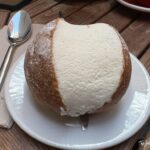
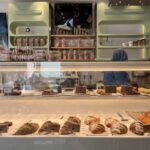
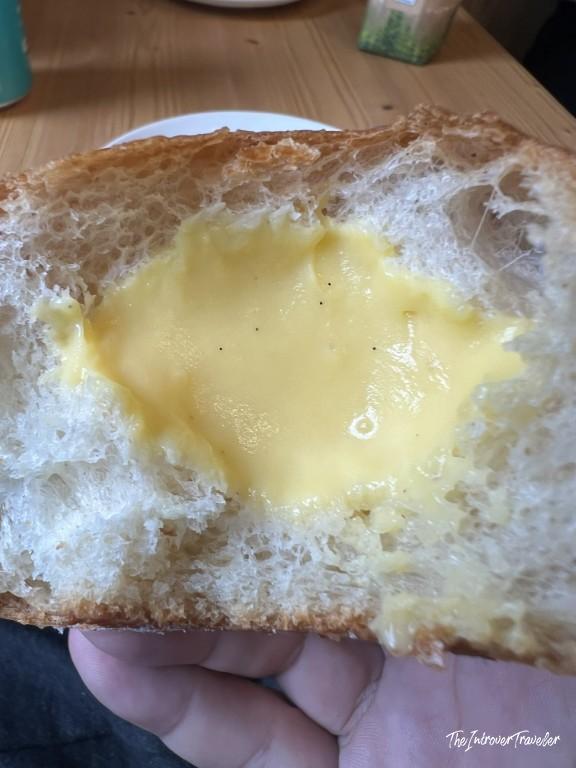
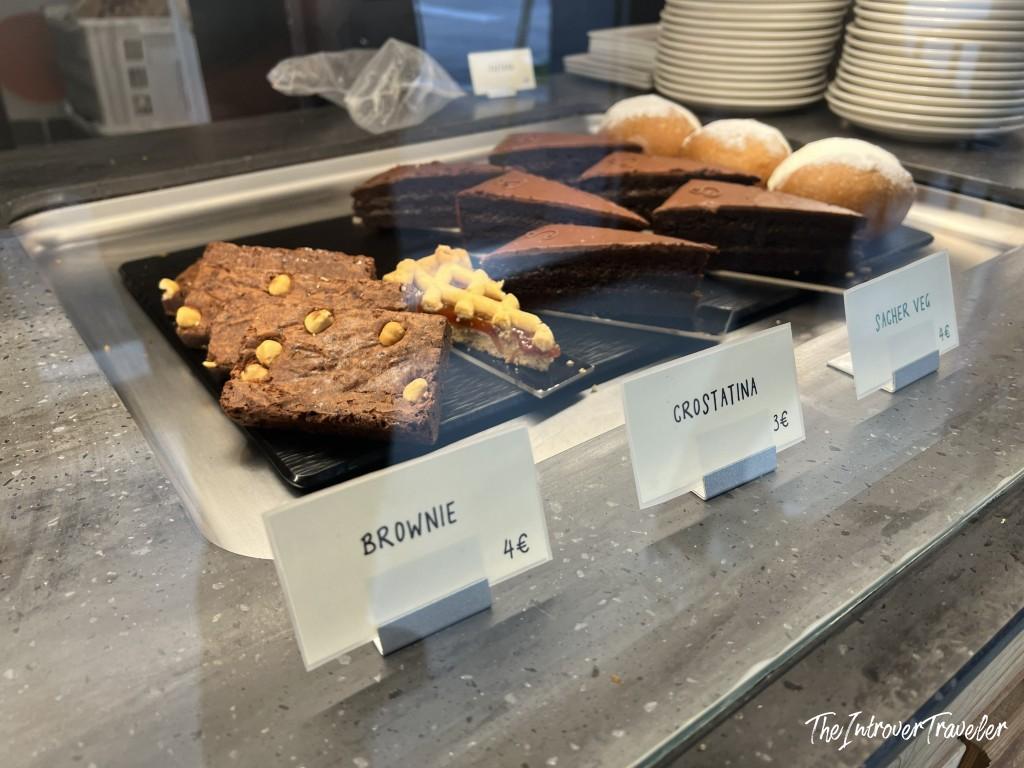
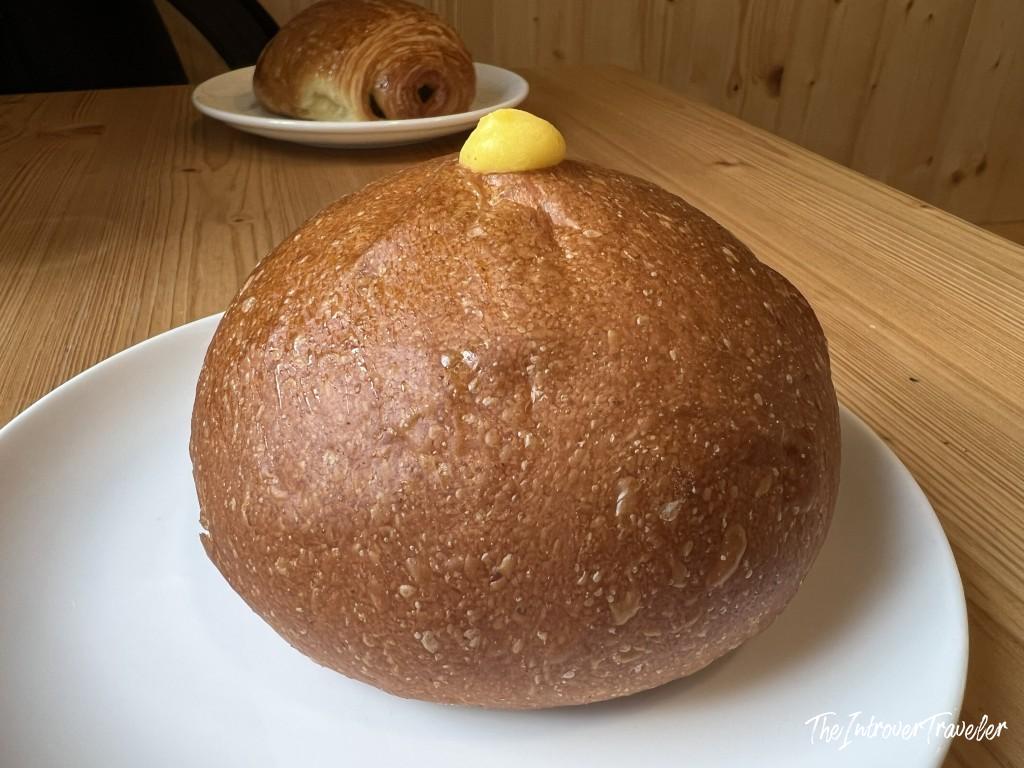
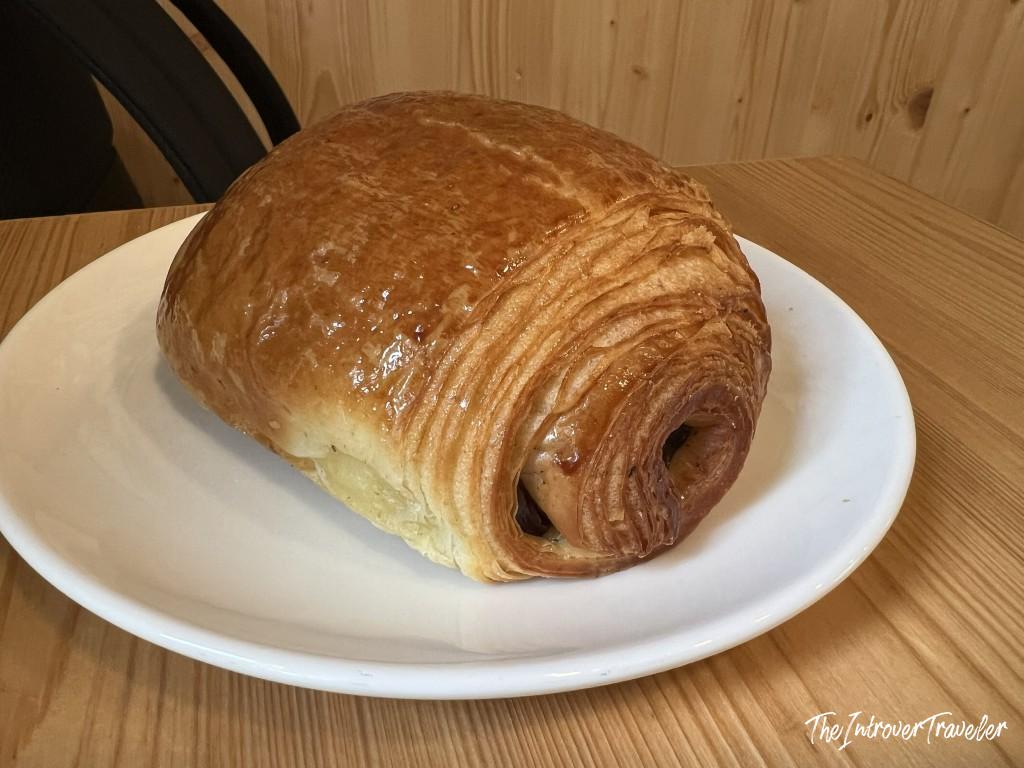
The veneziana with custard cream, for instance, is a small masterpiece; it’s not the best I’ve ever had, but you really have to try hard to find fault with it. The custard is impeccable: dense, velvety, with a full flavour of eggs and vanilla that has absolutely nothing to do with the yellowish, sugary sludge they foist on you at the average Italian bar. It’s a custard that has dignity, that has a story, that probably also has a CV and a letter of recommendation. The pastries in general are well executed, with long fermentation times you can taste in the texture of the dough, and a range that goes well beyond the classic empty-croissant/custard-croissant binary. Cinnamon rolls, filled pastries, focaccias: the counter is a permanent temptation.
The coffee, roasted in their own roastery (the first open-view roastery in Bologna, as they are keen to remind you), is specialty, and on this point one could argue at length about the difference between coffee that is genuinely good and coffee that is “specialty” mainly in price. But let’s give them the benefit of the doubt: the coffee is truly good.
The sparkling water and the can dilemma
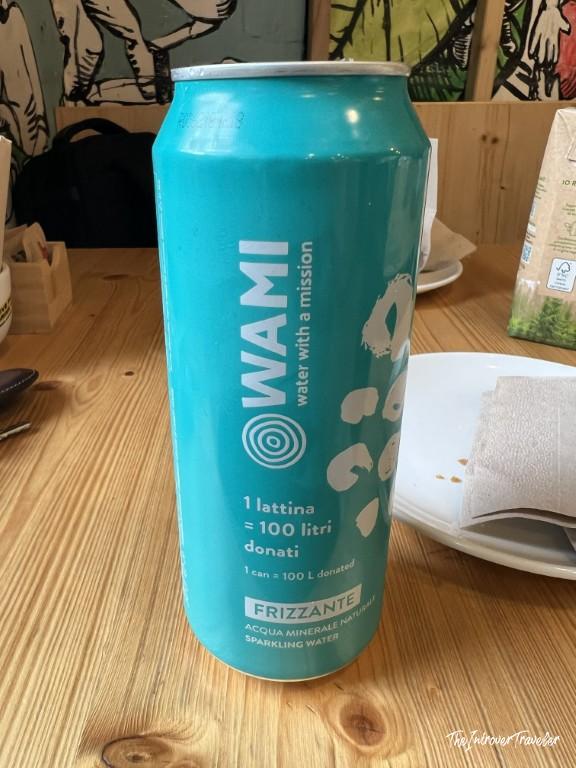
It was precisely while sipping my coffee that I made the fatal mistake: I ordered sparkling water. I was expecting a bottle, or a glass. What I received was an enormous aluminium can, the kind that seems designed to rehydrate a marathon runner after the full forty-two kilometres. No plastic, naturally. No single-use glass, heaven forbid. Aluminium, 100% recyclable, infinitely, forever, world without end, amen.
Now, I have nothing against aluminium recycling. It’s a noble cause. But what if I had the entirely reasonable need to take a couple of sips and carry the rest with me? With a water bottle (yes, even a plastic one, that horrible thing invented by the devil) I could have sealed it and slipped it into my backpack. With an open half-litre can, the options are two: drink it all in one sitting, like a camel that doesn’t know when it will find the next oasis, or carry around an open can that loses sparkling water and dignity with every step.
And this is where a broader problem emerges, one that goes well beyond Forno Brisa and its can. When a perfectly legitimate concern like ecology, meaning the concrete and pragmatic care for the environment we live in, veers into an ideological posture, meaning environmentalism as identity, as banner, as catechism, everyone suffers. Because ideology, by definition, stops questioning the practical consequences of its own choices and settles for signalling its own virtue and creating conflict between the good guys (those who want to save the planet) and the bad guys (those who use plastic bottles). The aluminium can is virtuous. That it might be inconvenient for the customer is beside the point: the customer is there to be re-educated, not to be served.
As I’ve already written in my post about the best gelato shops in Bologna, Bologna is a city where even artisanal gelato becomes a cultural battleground, complete with queer iconography, fair trade ingredients and inclusive vocabulary. Forno Brisa fits perfectly into this ecosystem: it is the outpost of conscious baking, the place where you buy a slice of pizza and feel you’re part of a cultural revolution. The problem is that sometimes you just want to buy a slice of pizza.
The marketing: or, how to become an institution in ten years
And here we come to perhaps the most interesting point. Forno Brisa makes good stuff, no question about it. But is the reputation it has built in Bologna in recent years really all down to the quality of its products? Or is there more to it?
There’s more to it. Forno Brisa is, first and foremost, a formidable marketing machine. Pasquale Polito and Davide Sarti, the founders, had the brilliant intuition to build not just a bakery, but a brand. A brand with a narrative: two young university students who drop everything to make bread, grain grown in Abruzzo, sourdough starter, short supply chain, the happy enterprise, the artisan model of Richard Sennett (a cultured reference that always makes an impression), benefit corporation status, B Corp certification. It’s a perfect story, packaged for Instagram, for food bloggers, for industry magazines, for university marketing master’s programmes (in which Forno Brisa regularly features as a case study, with a circularity that is either virtuous or vicious, depending on your point of view).
Then came the crowdfunding. Or rather, the crowdfundings: the first in 2019, raising 1.2 million euros with 357 shareholders. The second in 2022, on MamaCrowd, which exceeded 3.5 million and brought the shareholder base past one thousand. Professional investors included. Breaders Srl, the company that owns the Forno Brisa brand, has a pre-money valuation of 14 million euros. We’re talking about a bakery, not a Silicon Valley startup. Or are we?
Because when a company has nearly a thousand shareholders, institutional investors like Azimut’s Alicrowd fund, an aggregate turnover that reached 17 million euros in 2024 (counting the entire Breaders group), and an expansion plan that calls for 30 new bakeries across Europe by 2027, perhaps we’re no longer talking about an artisanal bakery. We’re talking about a financial operation that sells croissants. And it sells them brilliantly, let’s be clear. But the scent of sourdough, at a certain point, blends with the scent of venture capital, and it becomes hard to tell one from the other; and the aluminium can becomes a cliché, like the Hollywood star who makes a point of clarifying in every interview that his son has three pronouns and a sexuality that wasn’t imposed on him at birth (and since an entire generation of Hollywood stars’ children has the non-imposed sexuality, one wonders whether what we’re actually looking at is a generation with an imposed non-sexuality).
There is nothing wrong with any of this, mind you. In fact, there is much to admire in the ability of two young men to turn a bakery into a business case studied in universities. But when you read on their LinkedIn profile that Forno Brisa is “much more than a bakery” and that their mission is “to regenerate society through their business,” perhaps it’s fair to smile and remember that we’re talking about people who sell bread and croissants, however excellent. The rhetoric of changing the world, one loaf at a time, eventually loses touch with reality and becomes, precisely, fashionable marketing.
The verdict: is it the best breakfast in Bologna?
Is Forno Brisa worth a visit? Yes, absolutely. If you’re in Bologna, if you have a train departing from the central station and an hour to invest in a proper breakfast, walk over to via Galliera or pop into the outlet in Bolognina. Order a veneziana with custard cream, a specialty coffee, and enjoy the moment. Avoid the sparkling water, or at least brace yourself psychologically for the can.
But don’t be taken in by the narrative: Forno Brisa is not a movement, not a revolution, not the answer to the crisis of capitalism. It is a bakery that makes very good products, with extraordinarily effective marketing and a corporate structure that would be the envy of many publicly listed SMEs. And you know what? That’s perfectly fine. They’d just need to remind themselves of it every now and then.
Rating: 8/10 for the products, 11/10 for the marketing, 4/10 for the sparkling water, 2/10 for the ideology.