Type of cuisine: kappo, Japanese charcoal cooking (sumibi)
Last visit: August 2026
My rating: 8/10
Price: 20,000 yen per person for the menu (about 110 euros), drinks excluded
Phone: +81 80-4230-6161
Reservations: Tabelog
If Sushi Amato Ura Nanba solved the problem of good, informal, honestly priced sushi for me, Sumi Kappo Hirac answers a different question: finding a restaurant in Osaka that offers the kind of sophisticated ingredient pairings and creative cooking anyone used to Western fine dining expects, while still respecting kappo tradition. Our lunch at Sumi Kappo Hirac was Japan’s last taste on the way to the airport, and I would say it was Japan’s own way of inviting us back.
On this, our second trip, we made a few missteps booking restaurants; we had probably taken the whole thing a little too lightly, assuming that in Japan, wherever you end up eating, you somehow always land on your feet and it is simply impossible to eat truly badly. Well, Japan punished that recklessness with a few open-handed slaps, landed square on the cheekbone (one place in particular in Tsuruga that… never mind, I would rather not comment). But then, having shown us its fiercest face, Japan also showed us its most generous one, gifting us a lunch at Sumi Kappo Hirac a few hours before our flight. And it was a particularly affectionate treat, because at noon on an August day we had the whole restaurant to ourselves.
After that preamble, whose main purpose is really just to underline that a restaurant of Sumi’s quality is not easy to find, even in Japan, back to business.
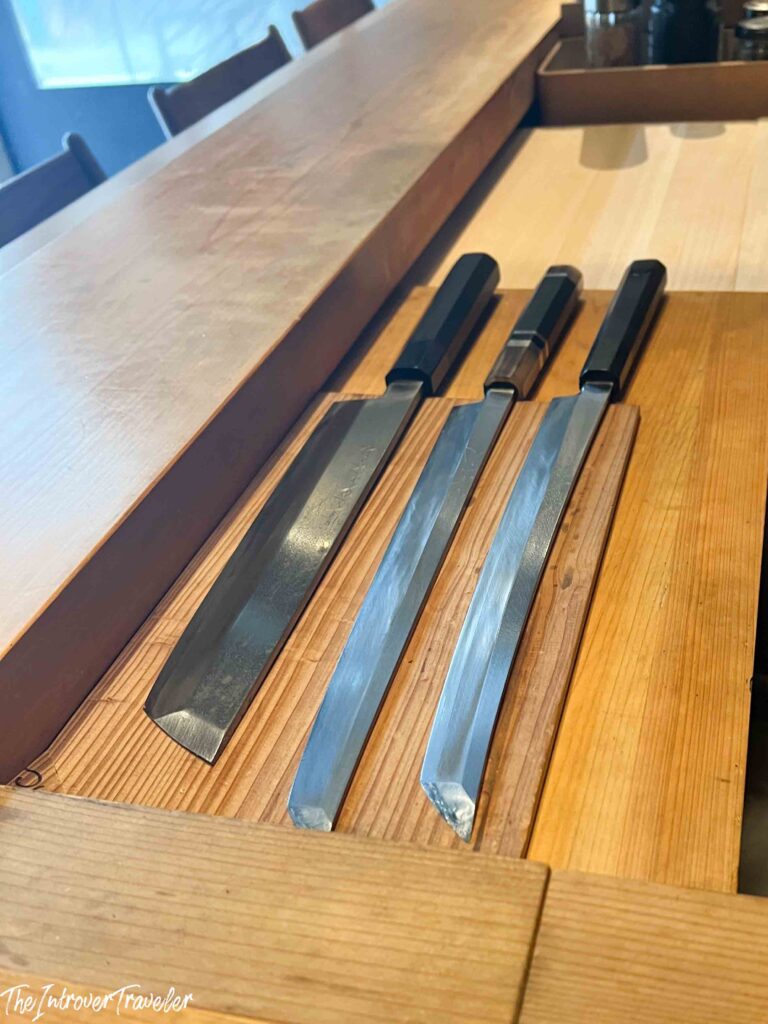
Kappo literally means “to cut and cook”: it is the style of Japanese dining in which the chef prepares dishes at the counter, in full view of the guest, with more room for improvisation than a formal kaiseki. Here charcoal (sumi) is not a side detail, it is the restaurant’s declared thread running through everything: the owner personally selects fish, seasonal vegetables and game, and works them over the coals with a carefully tended dashi stock behind them. No à la carte menu, omakase only.
The Setting
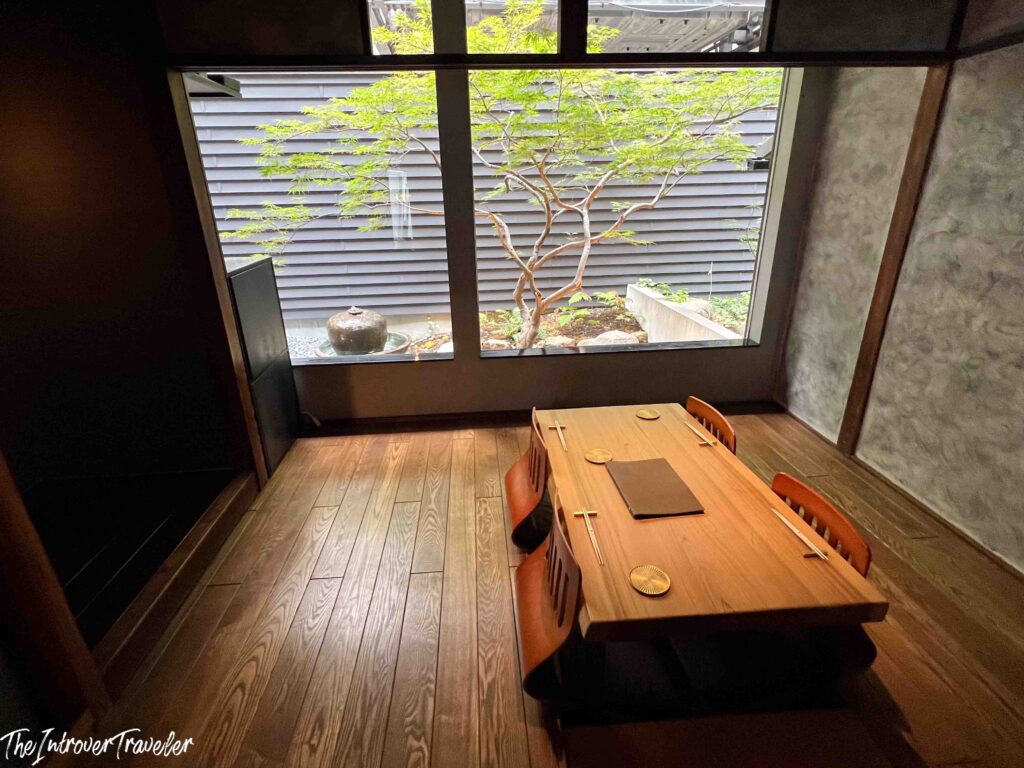
The restaurant occupies a renovated traditional house that is ninety eight years old, open since 2017: not a seasonal newcomer like so many places that open and close within two years, but an address that has had time to settle in. Sixteen seats in total, eight at the counter, two tables for four on the ground floor, private rooms upstairs for groups.
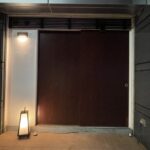
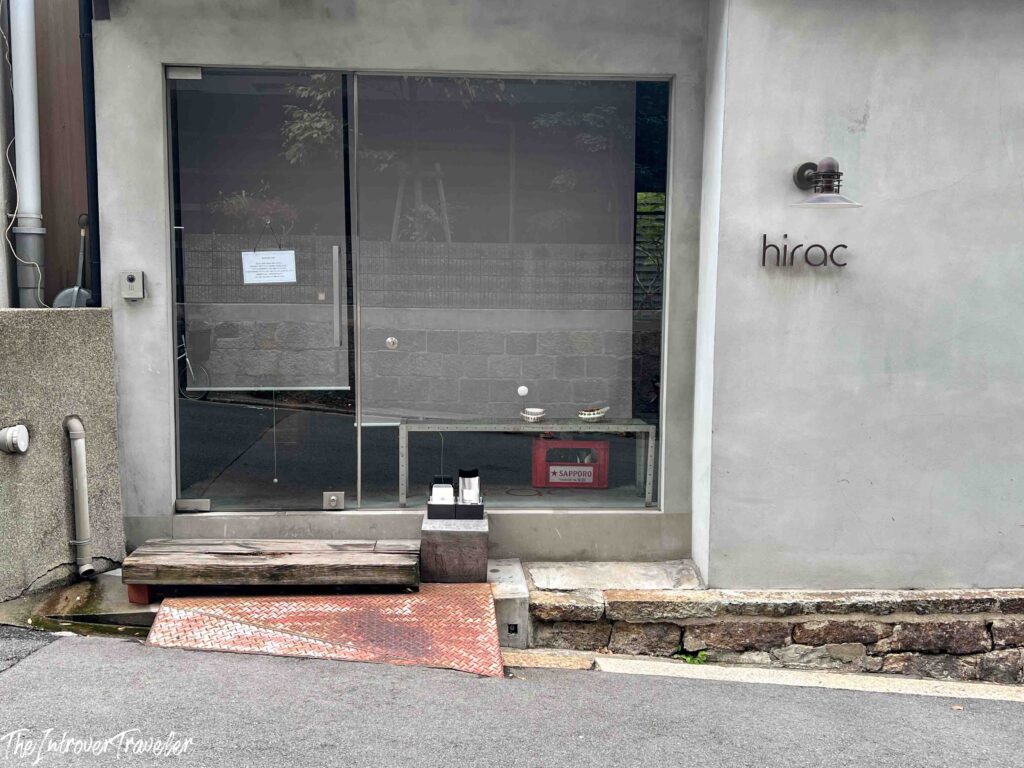
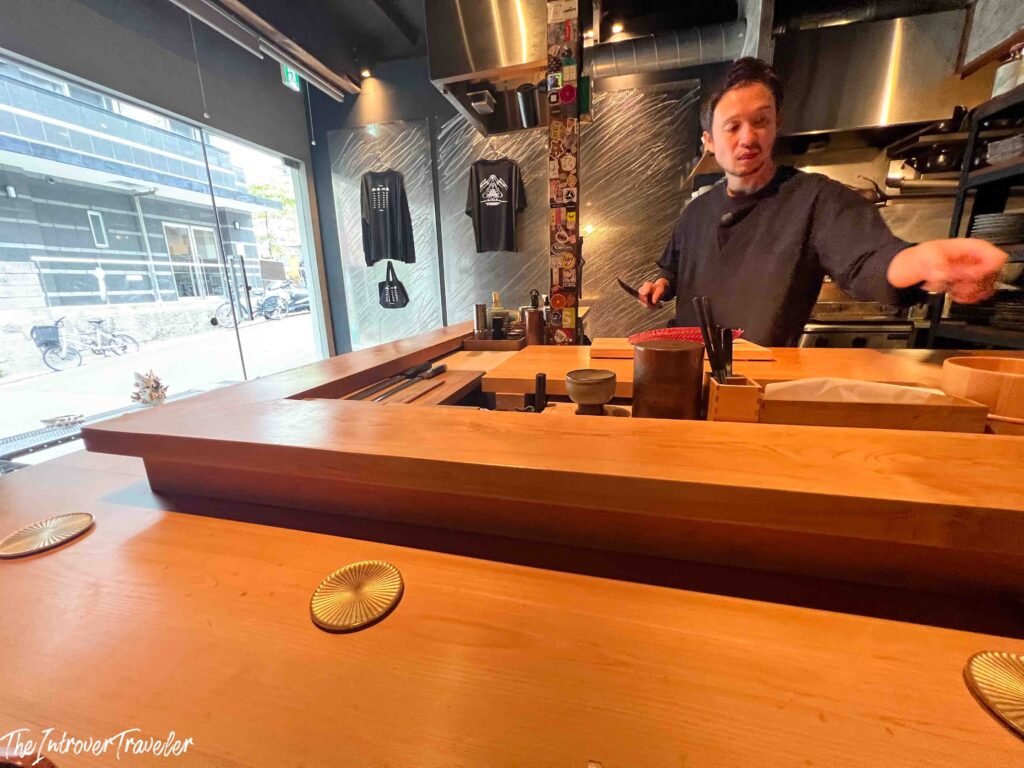
From outside the entrance is minimalist: a concrete and glass front, the “hirac” sign in low, understated lettering. No hint of the historic house hiding behind it. Inside, the pale wood counter and the large steel extractor hood give off a younger, less starchy energy than you would expect from a traditional kappo restaurant: the restaurant’s own t-shirts and tote bags hang on the wall, stickers cover the columns.
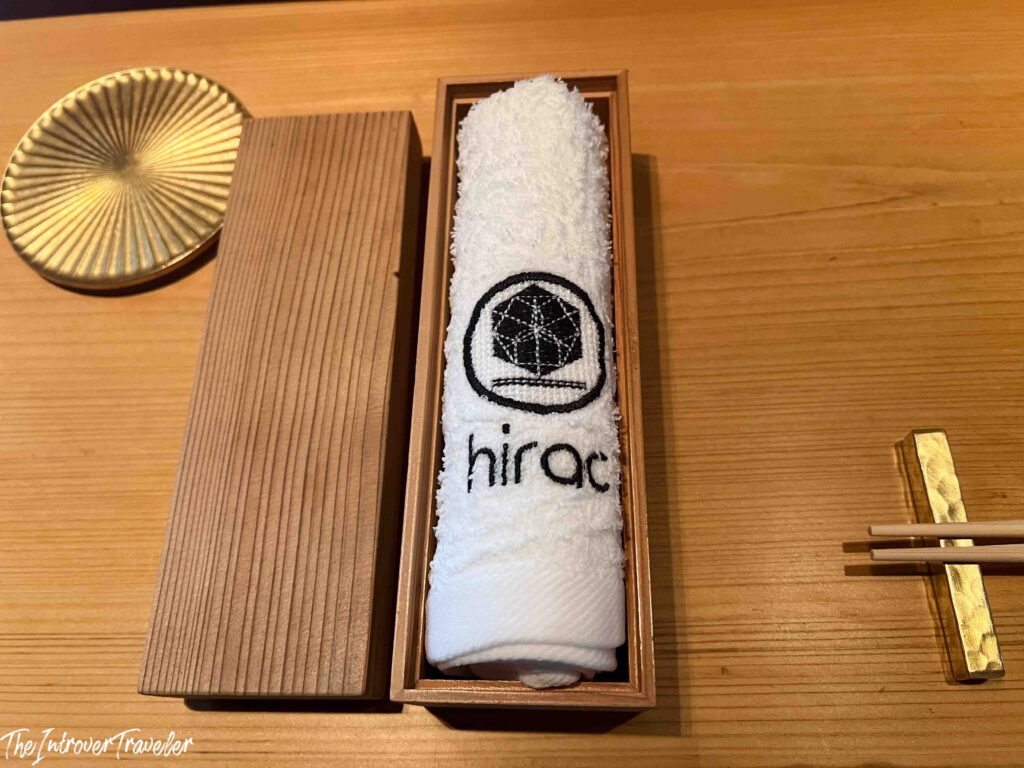
Service opens with a warm oshibori folded inside a wooden box, embroidered with the restaurant’s logo: a small hospitality touch, but a considered one, the kind you notice.
The Lunch
We booked the Kiwami Seasonal Menu (極 季節のおまかせ), 20,000 yen per person, thirteen courses: the top tier of the restaurant’s seasonal range, a step above the standard 14,000 and 18,000 yen omakase menus Tabelog lists for the same restaurant. The menu’s own description centres it on charcoal and dashi, with soft roe, game, seasonal fish and vegetables, with the stated aim of staying light and leaving a lingering flavour rather than weighing you down: an aim it decisively met.
A note: the chef talks you through the dishes, as is tradition in omakase dining, but in fairly shaky English, and I did not manage to note everything down: some of the identifications below are reconstructed from memory rather than absolute certainty. For more on my cognitive decline when it comes to remembering omakase ingredients, I refer you to my Aurea Osteria review.
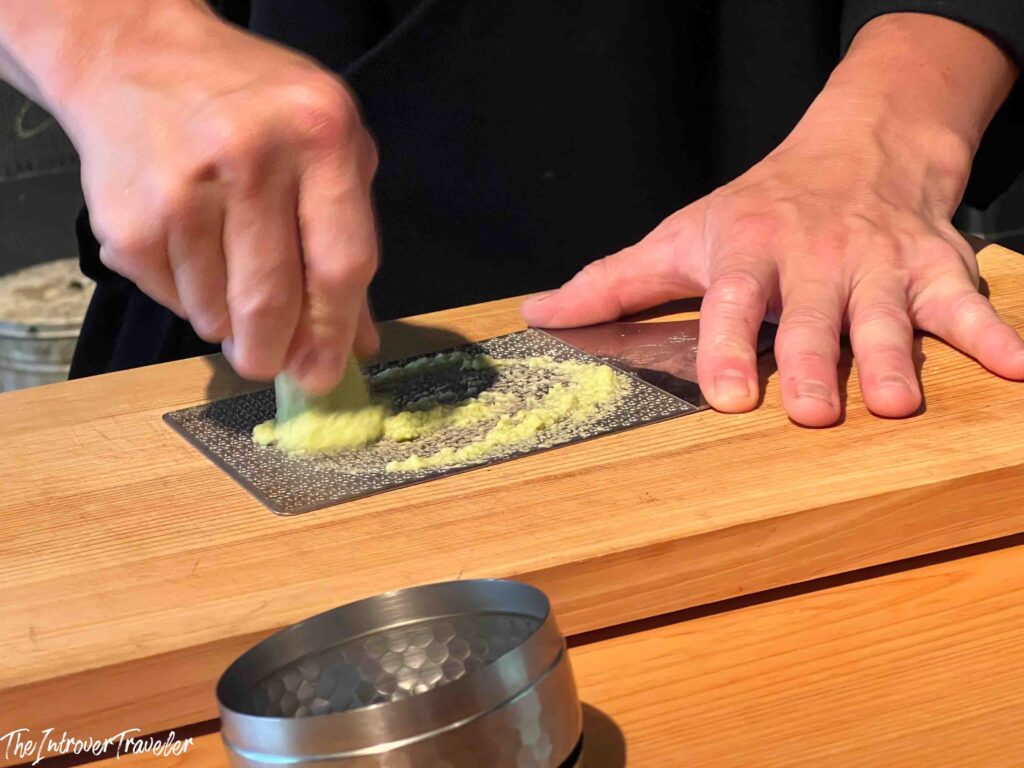
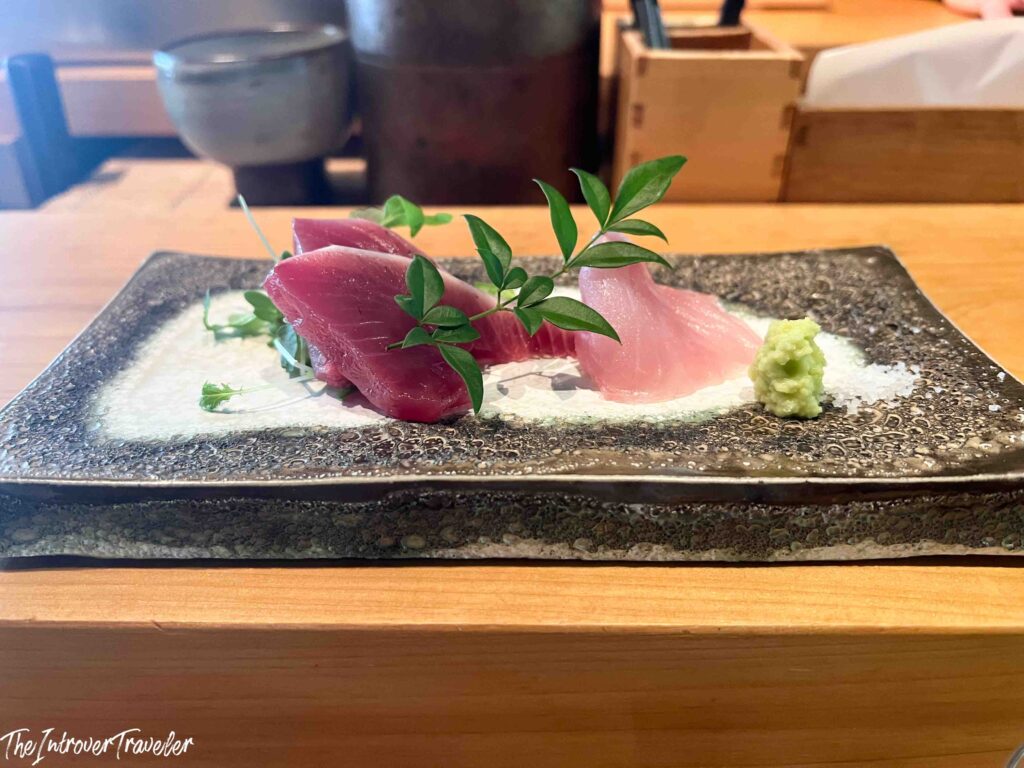
After an amuse bouche, it starts with bluefin tuna sashimi, two different cuts, one leaner and one fattier (though I would not rule out the leaner one actually being nodoguro), citrus leaves as garnish and freshly grated wasabi. An honest, clean opener that makes the very high quality of the ingredients clear straight away.
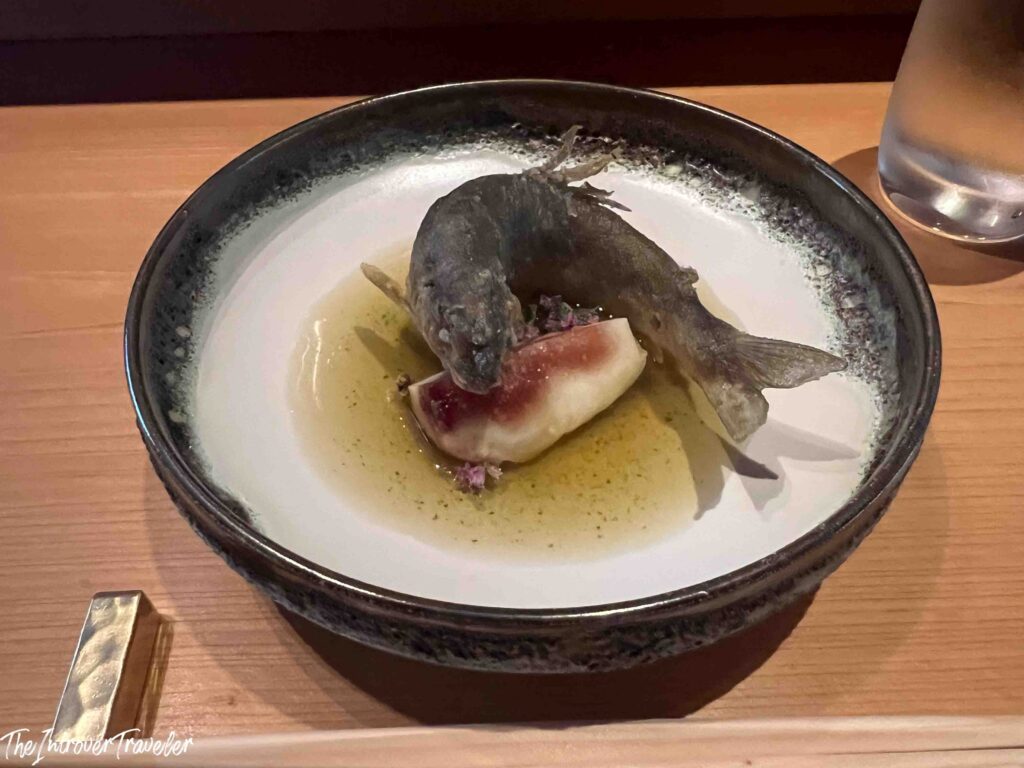
Then the ayu arrives, and here I have to be honest: it was probably the least convincing dish of the whole lunch. I had been wanting to try it for a while, having heard it described as one of the restaurant’s seasonal specialities, and instead it left me fairly unmoved. It is served whole, without being gutted, which leaves it with a faintly bitter undertone that one extra step in the kitchen could easily have avoided. I imagine tradition dictates it be prepared this way, but traditions can be updated too.
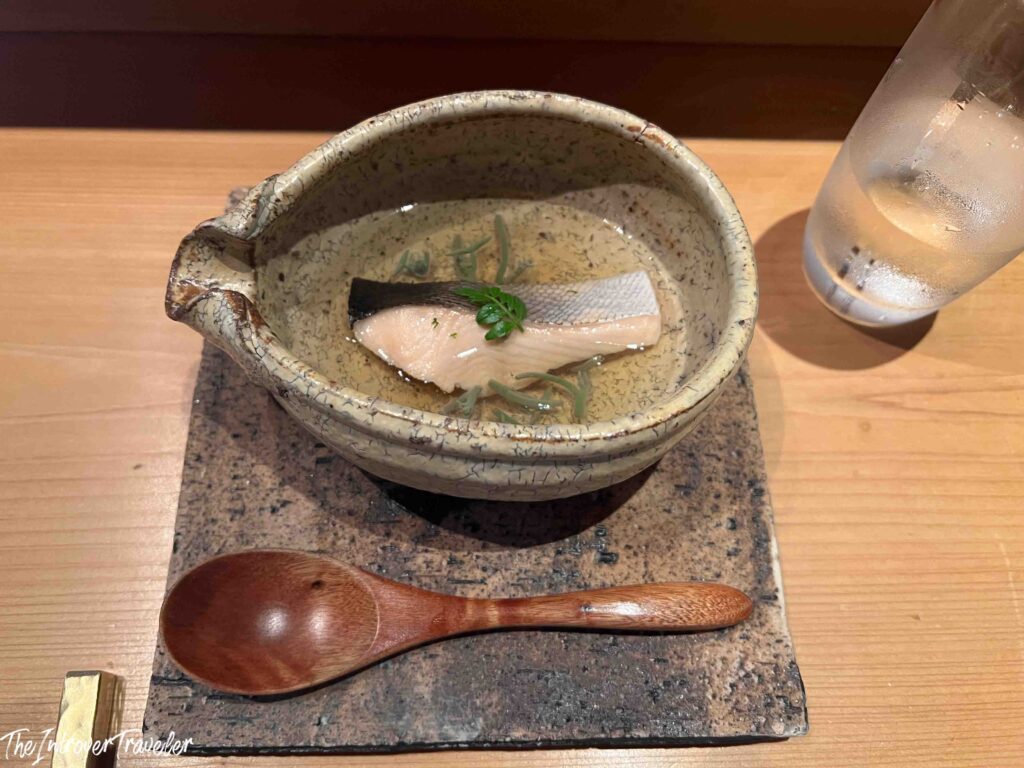
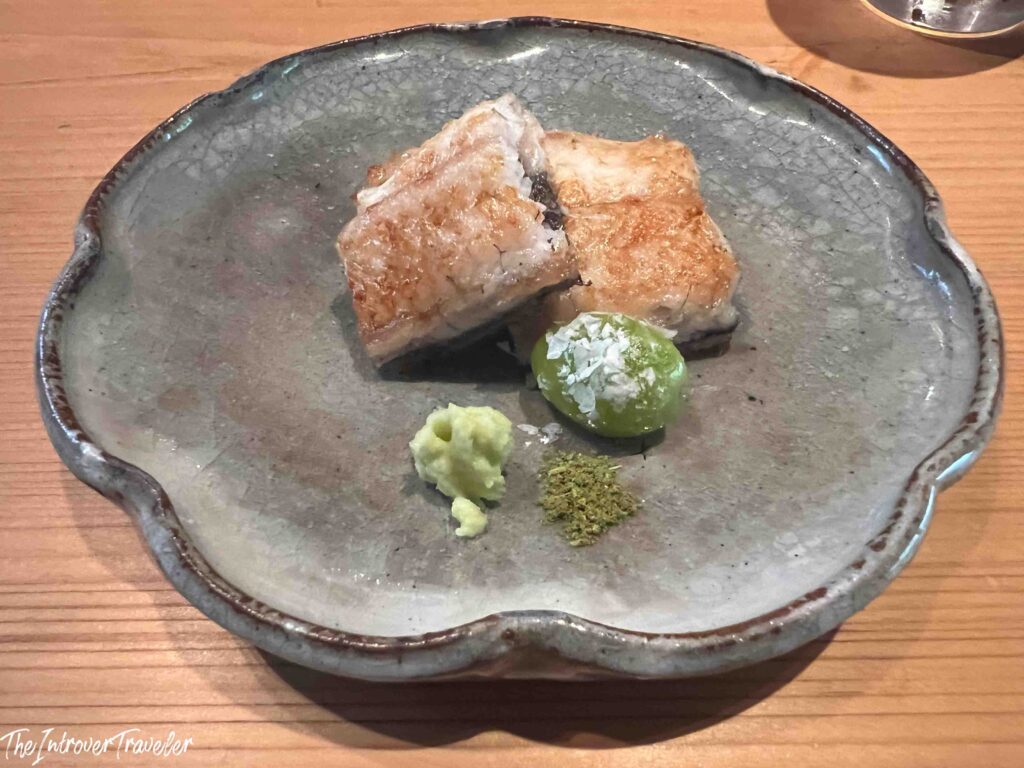
Things pick back up with a fillet of white fish, sea bream I would guess if memory serves, slow cooked in a clear broth with aromatic herbs: an extremely delicate, almost silky, cook. The next dish is grilled eel, served with a ginkgo nut and a dusting of sansho pepper, smoked just right, with that contrast between the eel’s rich fattiness and sansho’s faintly resinous note that always works.
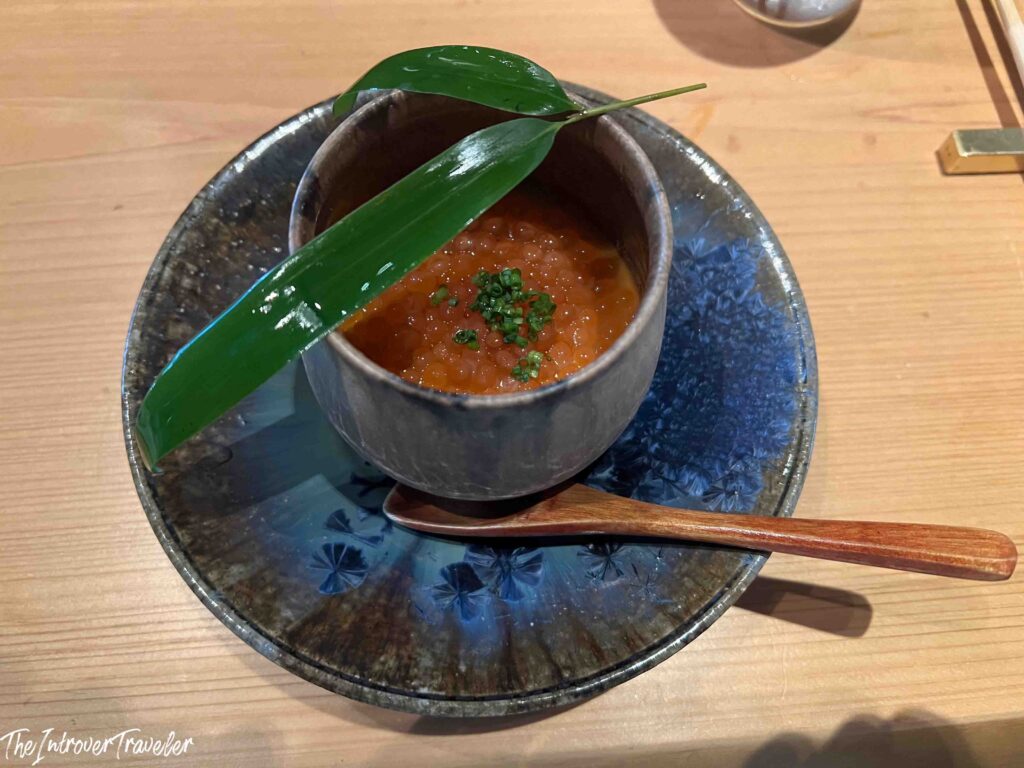
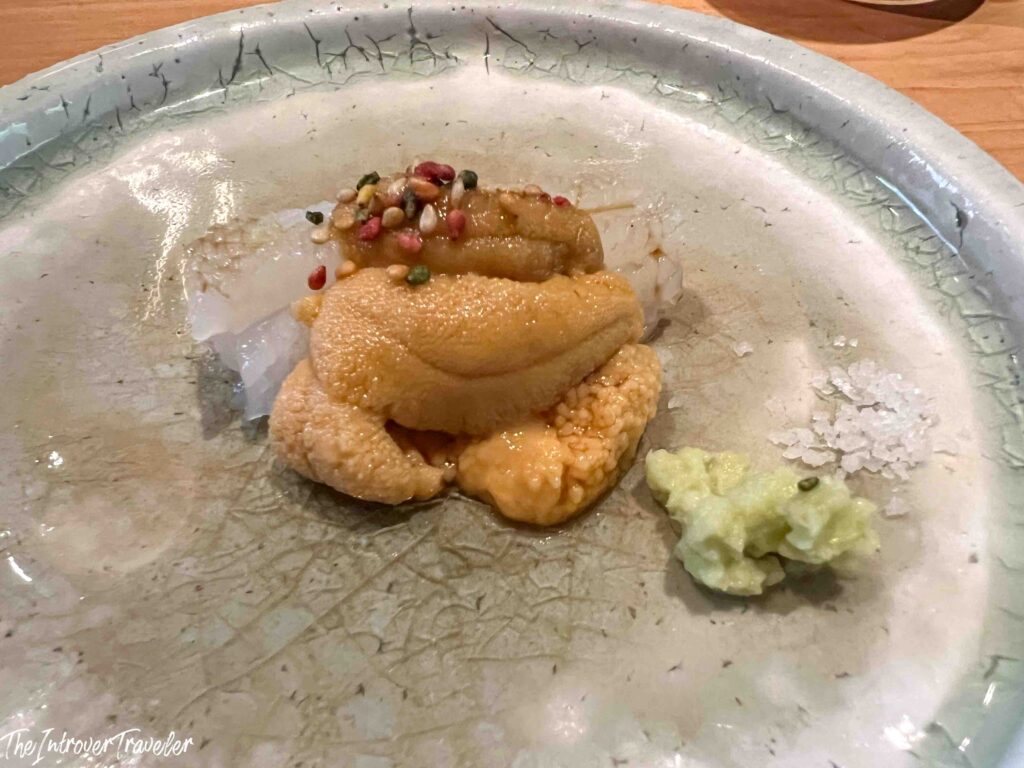
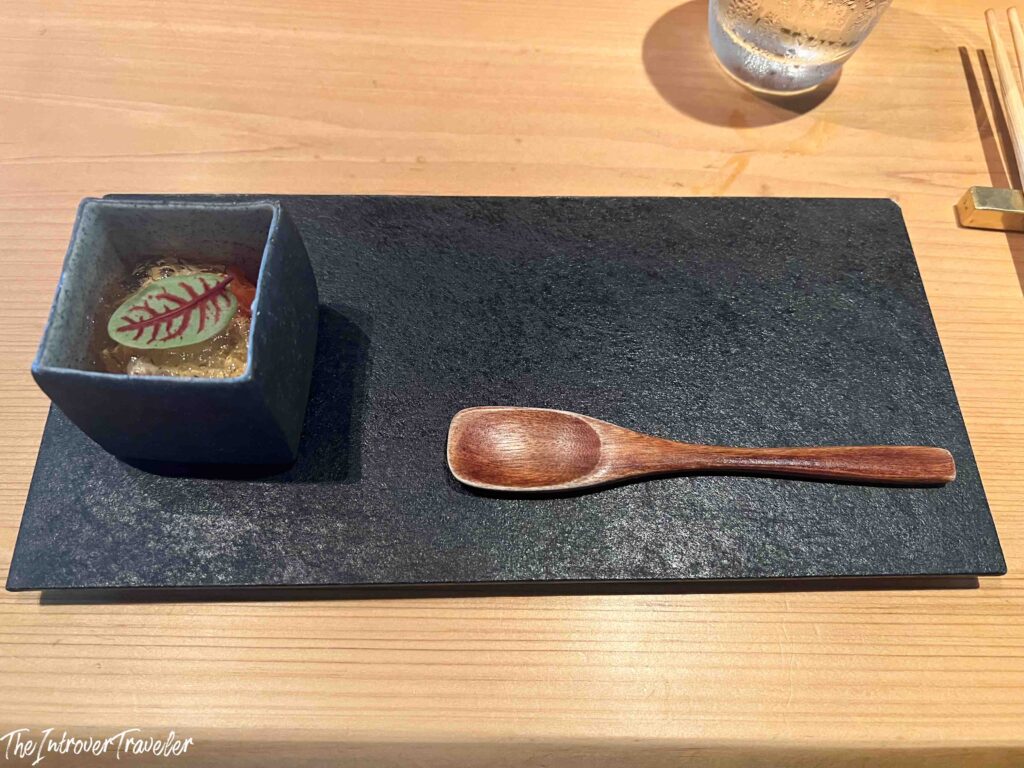
Next comes a chawanmushi with ikura, a particularly fine and delicate execution, with a surprisingly intense egg flavour and ikura that is crisp and deeply savoury, with a strong taste of the sea. Then a dish of squid topped with sea urchin, coloured seeds and berries as garnish, wasabi and flaked salt on the side: the sweetness of the urchin pairs well with the squid’s firm texture, with no trace of the bitter note that would betray urchin past its best.
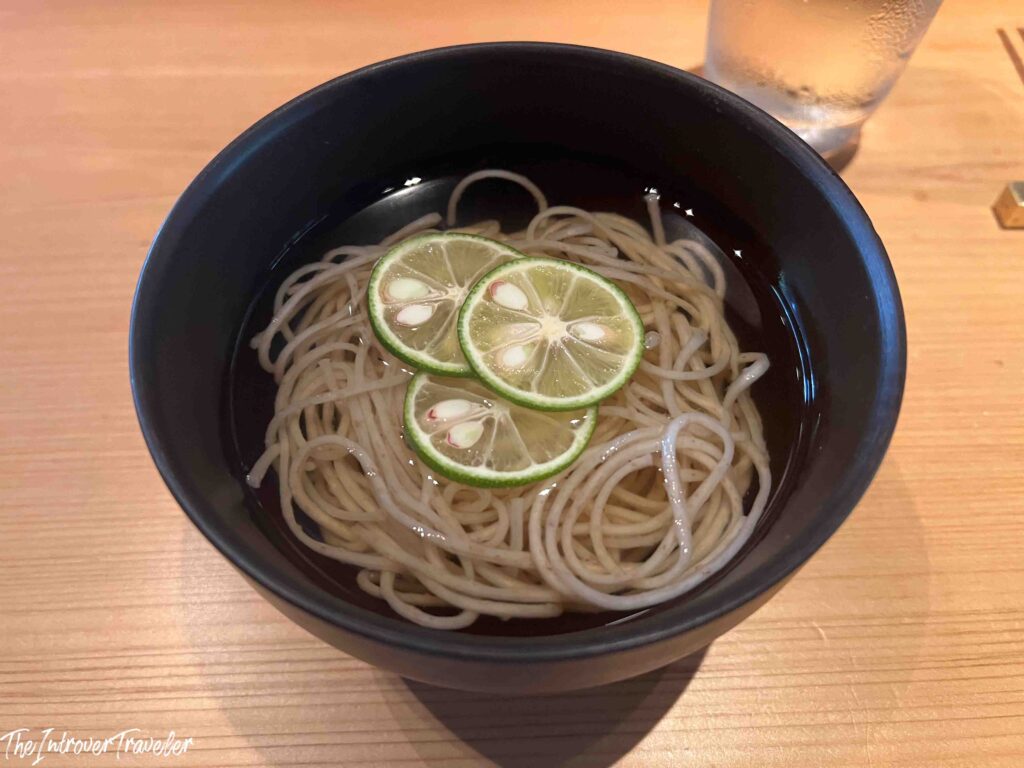
A palate-cleansing course of cold soba in a dark broth, with slices of sudachi floating on top, does its job as a transitional dish without pretending to be anything more.
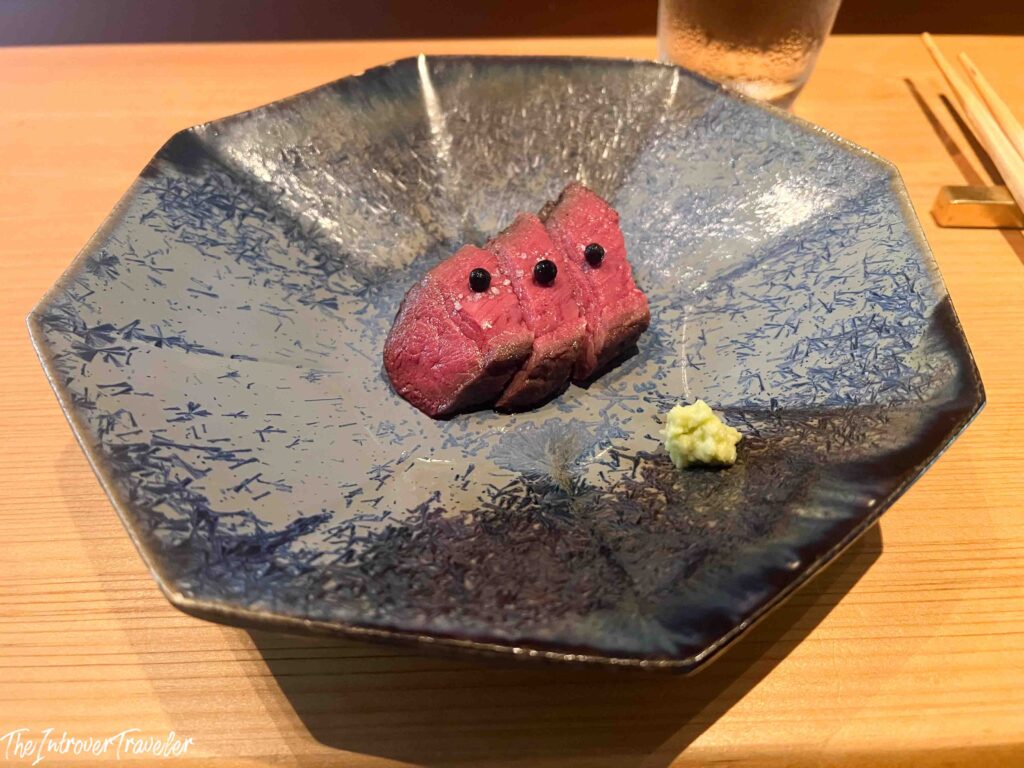
The charcoal-grilled beef, cut thick and served rare, was a change of pace after the run of fish dishes: a lingering smokiness left by the coals, an excellent pairing with the black peppercorn and the wasabi on the side; not the best beef I have eaten in Japan, nor the best dish of Sumi’s line-up, but excellent all the same.
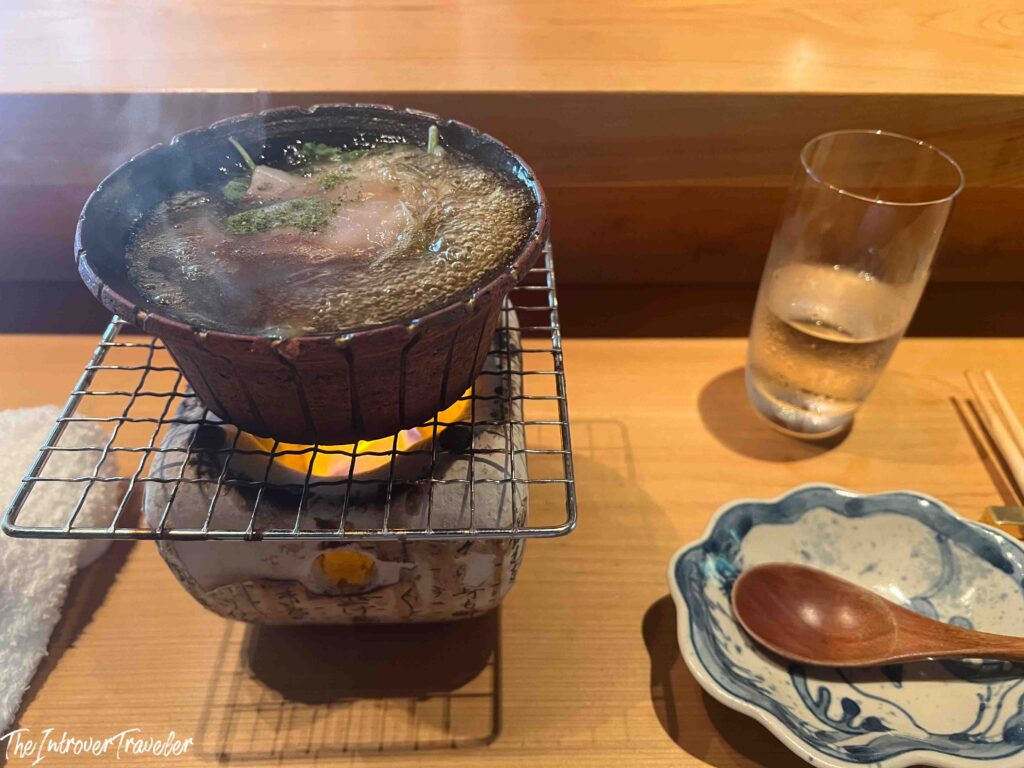
Next comes shabu-shabu cooked literally at the table, in a ceramic bowl brought to the boil on a small grill with a live flame right in front of us: paper-thin slices of meat dipped into the boiling broth, extremely delicate, and set off by a rich, deeply flavoured stock.
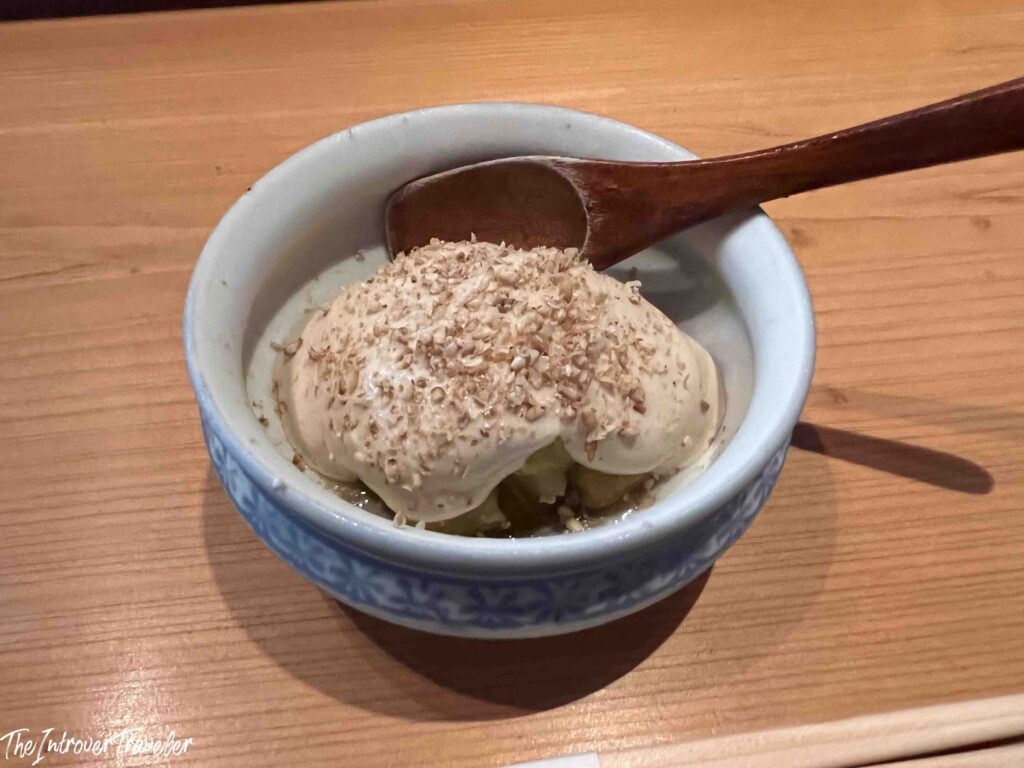
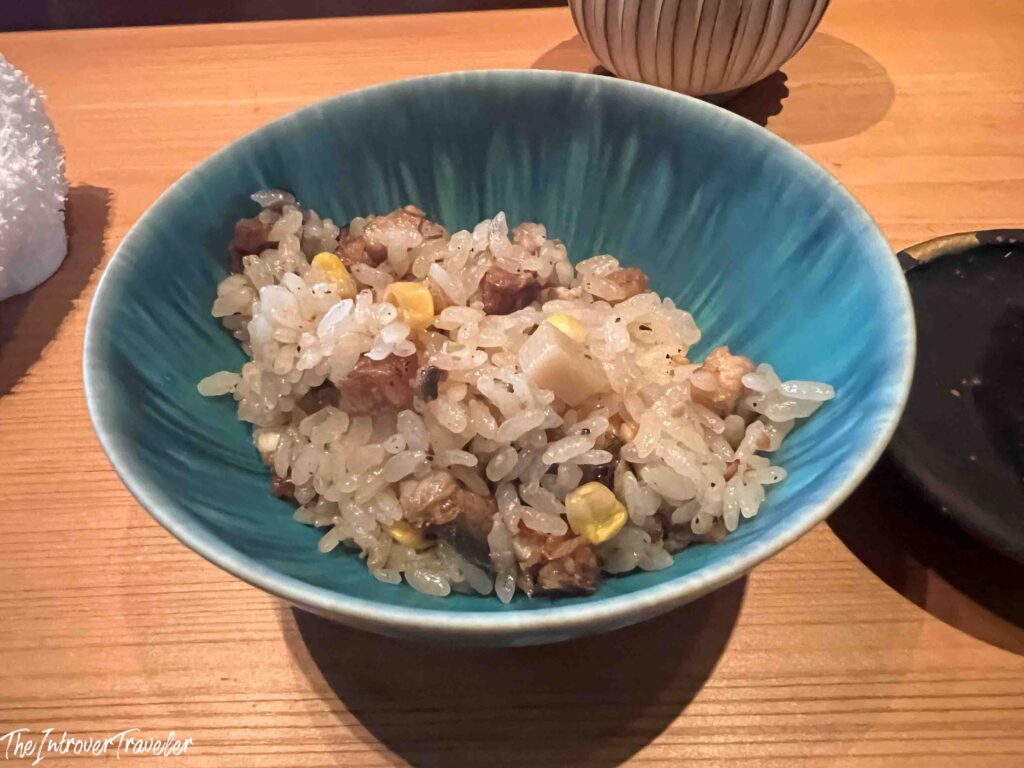
The restaurant’s signature dish, judging by how often it comes up on their own social media, is rice with eel, Nobeoka bamboo shoots and sweet corn, cooked in a black clay pot and scented with sansho pepper: the contrast between the sweetness of the corn, the smokiness of the eel and the tingle of the sansho turns something as apparently simple as rice into something memorable.
The Bill
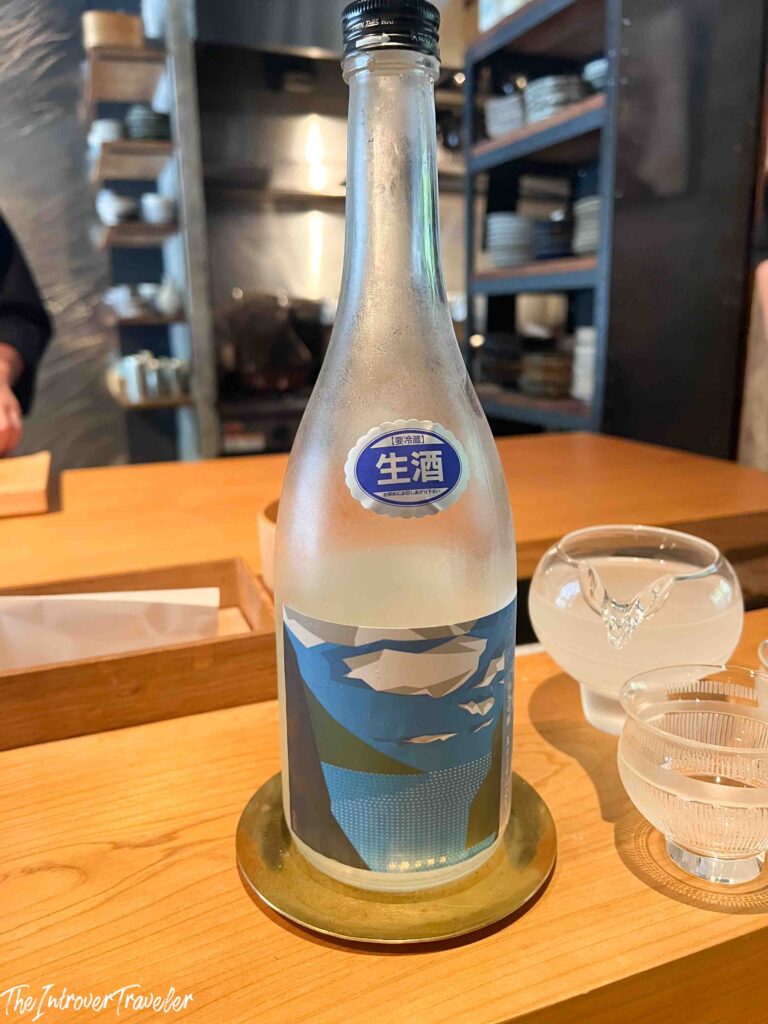
20,000 yen per person for the menu alone (about 108 euros), plus drinks (a smooth, aromatic sake, one of the best I have had in Japan); a sum I would say is more than justified by the quality of the meal.
The Verdict
It is a high-end restaurant and it is priced like one, particularly in the Kiwami version we tried. But for a lunch meant to be an occasion, not a meal in passing, Sumi Kappo Hirac delivers exactly what it promises: serious charcoal technique, carefully chosen ingredients, more than one standout dish (the chawanmushi, the eel, the uni with squid and the eel rice, in particular), and an atmosphere that does not take itself too seriously despite the sound cooking behind it.
After lunch at Sumi, I think I will have to accept Japan’s invitation to go back.