Last visit: October 2026
My rating: 8/10
Price: pasta €16-18, mains €16-22, desserts €7-9 (October 2026)
Address: Via del Conservatorio 58, Rome
Web: rimessaroscioli.com
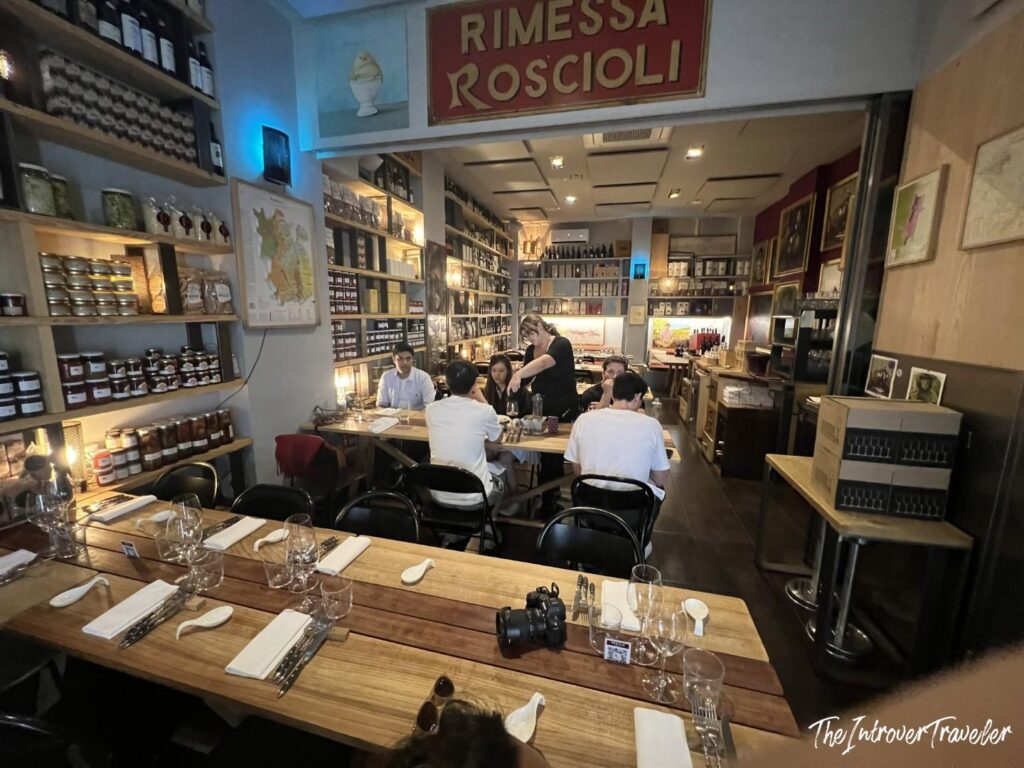
Let’s play a game. Take the list of everything a restaurant in an Italian city centre needs in 2026 to be considered fashionable. Long shared wooden tables, where the introvert ends up elbow to elbow with a family from Seoul and pretends to be deeply fascinated by his own glass. Shelves crammed with jars of preserves, lined up like a nineteenth-century apothecary styled by an art director. A QR code menu, bilingual, with allergens numbered like the footnotes of an academic paper. A chalkboard announcing the wine club, the cooking classes, the tasting dinners and, while they’re at it, an American guest flown in to explain the smash burger to the Romans. A second “concept” venue forty metres away, because one is no longer enough for anybody.
Usually, when a restaurant ticks every box, it’s time to get up and leave. The list is the product, and the food is an accessory. Rimessa Roscioli does exactly what every trendy restaurant does, with one small but decisive difference: it does it very well.
In Rome, the surname needs no introduction. The Roscioli are a family of bakers who opened a bakery in Via dei Chiavari in the 1970s, then a salumeria in Via dei Giubbonari that became a compulsory pilgrimage for half the planet, then a café, and finally this “rimessa”, which is Italian for garage. Along the way they also made it to New York. You’d expect a garage full of supercars, and in a sense it is: except here the supercars are the bottles, and the place was born first and foremost as a wine bar with a kitchen.
The Bread, or the First Temptation
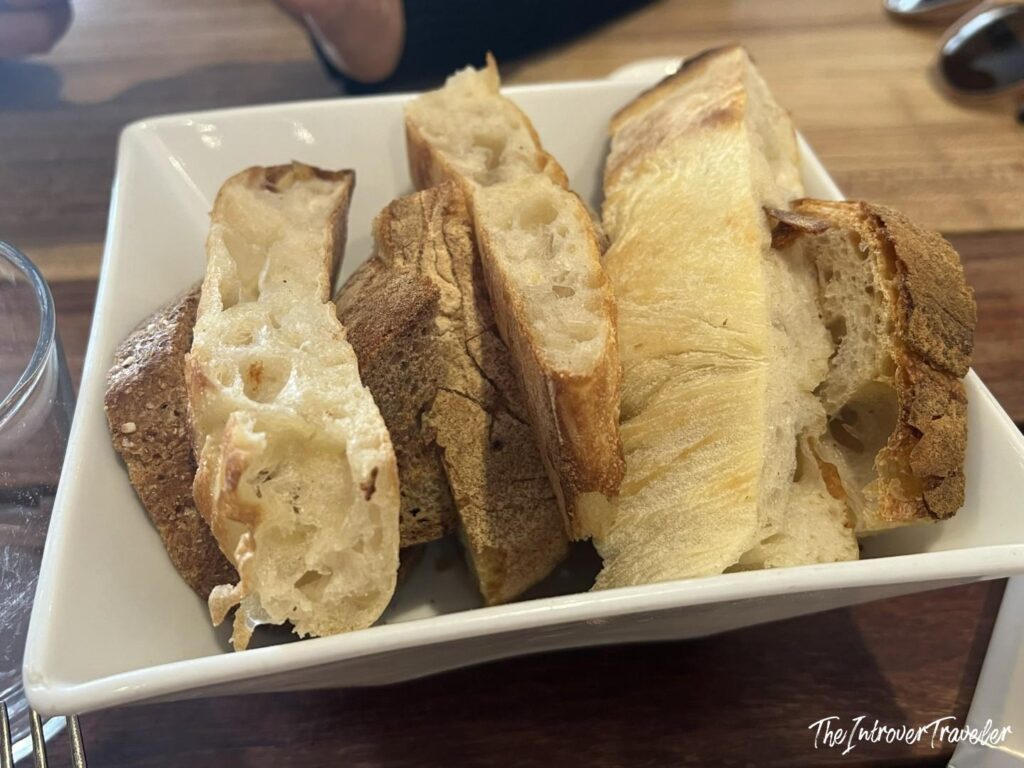
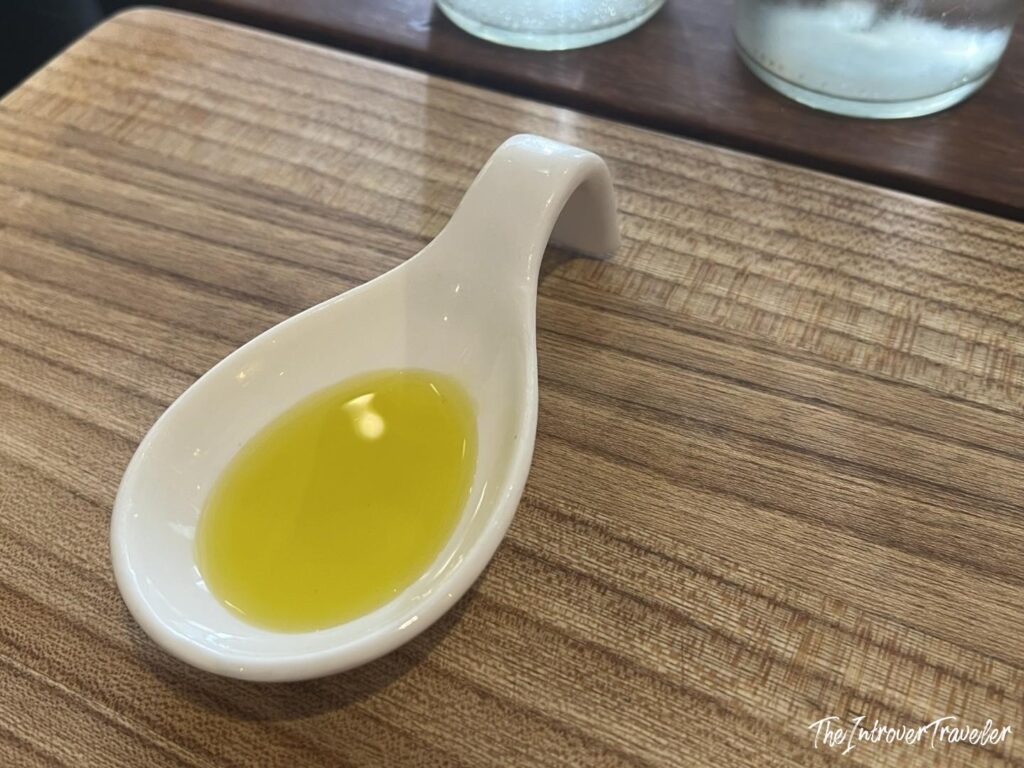
The basket arrives straight away, and this is where the baker’s DNA shows. The focaccia is fresh, fragrant and made in house, with a crust that crackles and a crumb full of holes begging to be filled. Next to it, a porcelain spoon of green-gold olive oil that seems to have been placed there as a test. You fail the test. Dipping the focaccia in the oil isn’t a choice, it’s a spinal reflex, and by the third piece you’ve already compromised the rest of lunch. Bread is charged at three euros, and for once you pay it gladly.
Rating: 8/10
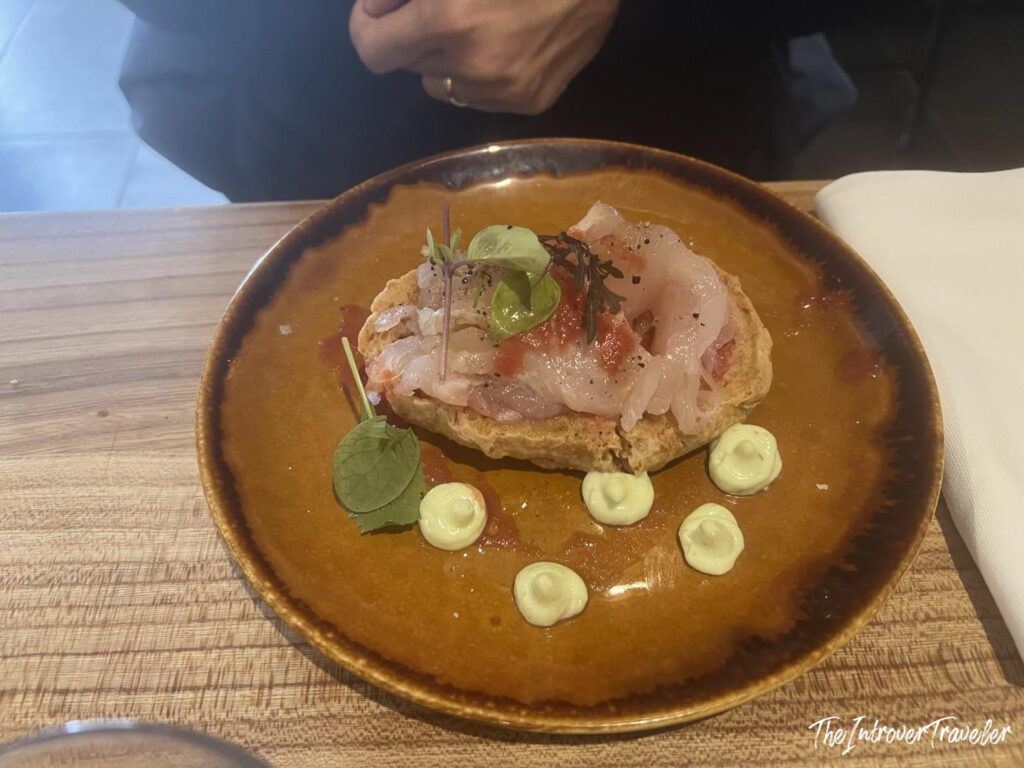
Frisella with Raw Seafood
A frisella made with ancient grains, that is, a twice-baked Apulian bread, topped with raw seafood. There is nothing to say, and I mean that literally: fresh fish, a frisella that holds up without turning into a sponge, a dressing that accompanies rather than smothers. It’s one of those dishes where the skill lies in not ruining anything, and here nothing gets ruined.
Rating: 7.5/10
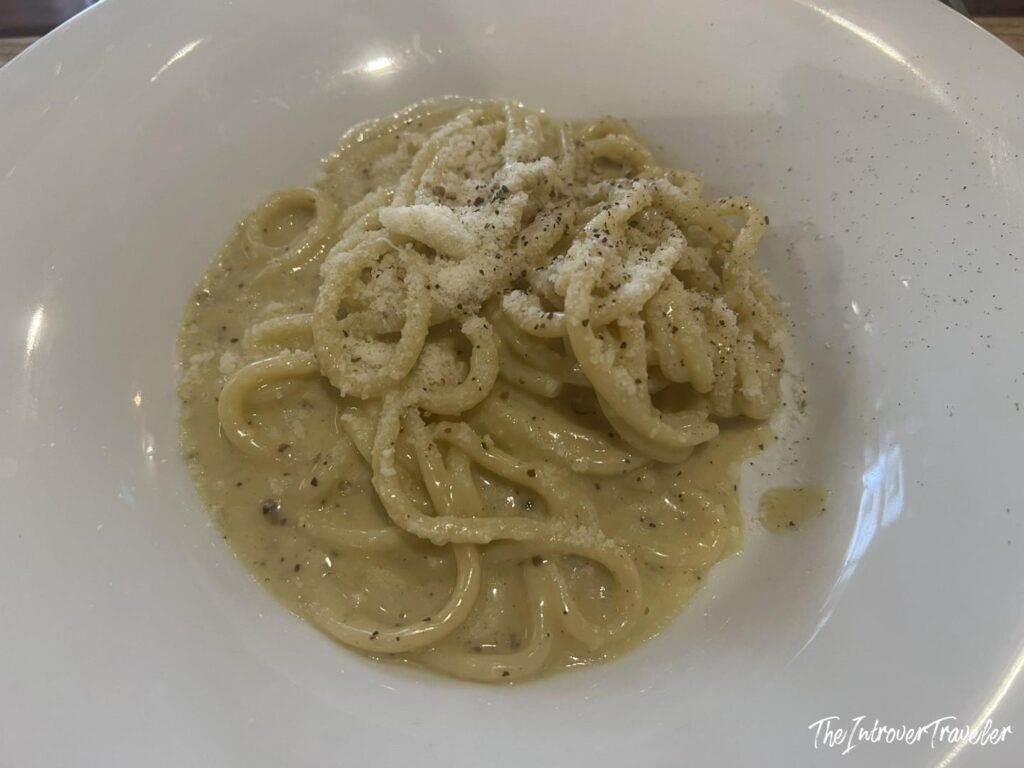
Tonnarelli Cacio e Pepe
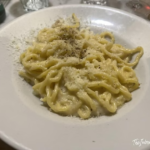
Let’s be honest: the cacio e pepe at Osteria La Quercia is on another planet, and these tonnarelli don’t get there. But at the first forkful something inexplicable happens: you feel like Francesco Totti chipping his famous “cucchiaio” over Van der Sar in the Euro 2000 semi-final shoot-out. The pecorino cream coats the pasta without a single lump, the pepper bites just enough, and for a few seconds you have the same cheek as a man who walks up to the spot in a European Championship semi-final and decides to mock the goalkeeper. The sauce was a touch too runny for my taste, which, admittedly, made it all the more indulgent. I can’t quite put my finger on it: something didn’t fully convince me, but far more of it did.
Rating: 8/10
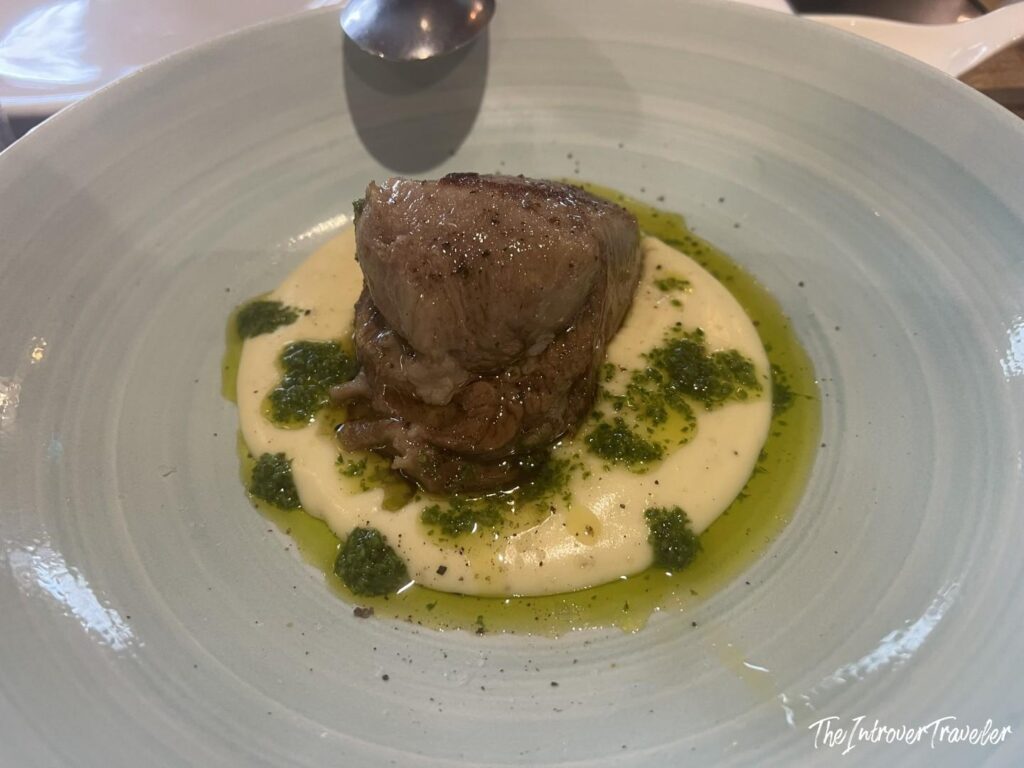
The Quinto Quarto: Tongue
The menu simply says “Roman quinto quarto”, and the vagueness is deliberate: it changes depending on what arrives in the kitchen. The quinto quarto, literally the “fifth quarter”, is what’s left of the animal once the four noble quarters have been sold: offal, tail, tripe and friends. Tradition has it that this was the payment in kind for the workers of the old Testaccio slaughterhouse, and that half of Roman cooking was born right there. It’s a story every Roman repeats, more founding legend than archival record, but the result on the plate is very real.
What I got was tongue with salsa verde, resting on a purée as smooth as cream. A tongue that not only melts in the mouth, which is no given in itself, but releases the flavour of real meat, which very few manage. No rubberiness, no aftertaste of tired boiled beef, and a salsa verde that cuts through the fat with just the right acidity. It’s probably the only tongue in Rome that won’t give you a lashing. In the historic centre, a stone’s throw from Campo de’ Fiori, where half the competition consists of tourist carbonaras with cream hidden in the kitchen, what more could you ask for?
Rating: 9/10
Tiramisù, or the Roman Question
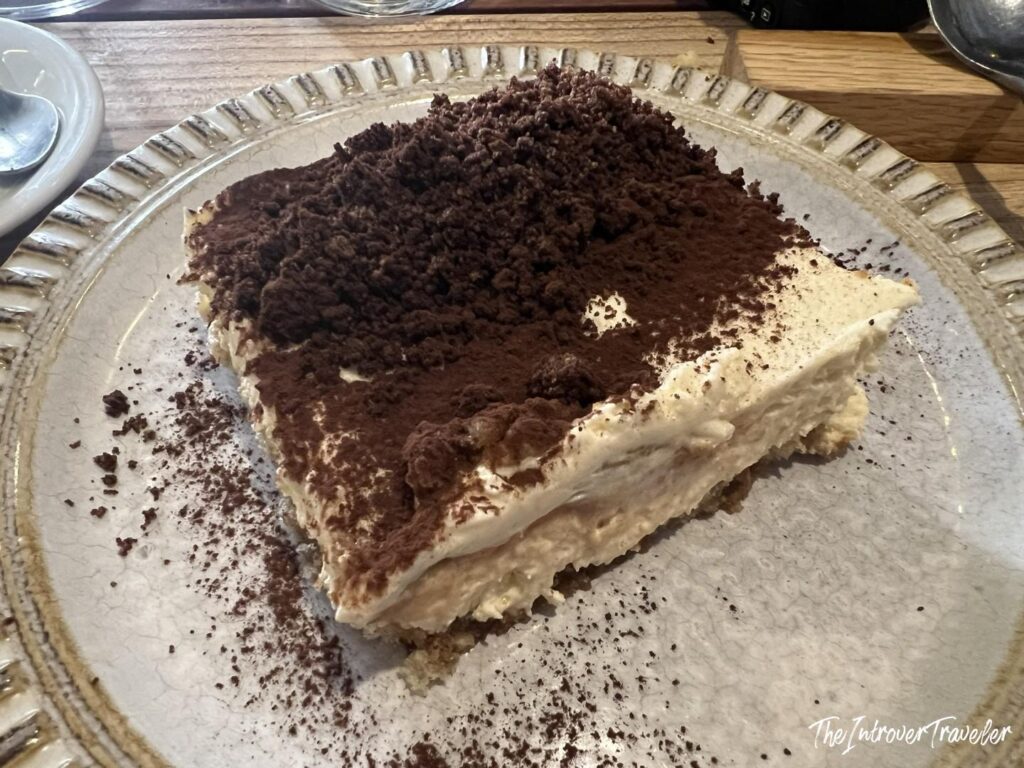
The tiramisù holds its own too: creamy, balanced, with coffee you can actually taste and mascarpone that doesn’t drown everything. It’s a personal interpretation, and a successful one. The problem isn’t the dessert, it’s the question it raises. Why has serving tiramisù become standard practice in Rome? It’s a dessert born somewhere between the Veneto and Friuli, two regions that have been fighting over its paternity for years like two heirs in a notary’s office, and it has as much to do with Rome as I have to do with the Lazio ultras. Yet you find it everywhere, from the osteria with checked tablecloths to the wine bar with cooking classes, as if it were a local speciality to show off to foreigners along with the Colosseum. Here, at least, it’s done well. But the next time I see it on a Roman menu, I’ll expect cannoli and Sachertorte too.
Rating: 7/10
Conclusion
Rimessa Roscioli is proof that trends, on their own, are neither a virtue nor a flaw: they’re a container. Usually the container is empty, and the chalkboard full of events is there to distract you from the plate. Here the container is full, and the substance comes from a family that has been baking bread for half a century and from a kitchen that handles offal better than many trattorias that boast of having done it forever. It isn’t the definitive Roman trattoria, and it doesn’t want to be. It’s an excellent place to eat well in central Rome, drink even better and walk out with a feeling that’s rare in these parts: that you weren’t treated like a tourist. Even if you were.