If you have already read my piece on Ngorongoro, the Maasai, oil and John McEnroe, you know the punchline: a people evicted from their land in the name of conservation, only for that land to reopen as a hunting estate for Gulf royalty. What that post left unanswered is the homework behind the suspicion. Who are these people, exactly? Were they ever the proud aristocrats of the savanna that Karen Blixen wept over, or are they a stubborn pastoralist minority blocking a poor country’s road to development, as a good number of Tanzanians appear to believe? And is anything you see at a roadside Maasai village remotely real?
This is the longer answer. It is not flattering to anyone, which is usually a sign you are getting close to the truth.
Needless to say, I am not an expert on Tanzania, nor on anthropology. I simply did some further research to answer questions that had remained unanswered after my trip to Tanzania. I believe that knowing a little more about the Maasai people is useful for anyone planning to visit Tanzania.
Everything that follows should be taken with a grain of salt: it is the product of some web research and of AI responses to carefully crafted prompts. I do not have the material required to conduct a proper study, nor the time to carry out in-depth research in a library. The purpose of this post is to raise the issue and offer a few superficial answers to legitimate questions, before they occur to you during the trip. And, of course, even with more time to investigate the matter, it would be presumptuous to think one could provide definitive answers to such a complex affair.
Who the Maasai actually are
The Maasai are an Eastern Nilotic people, which is to say their linguistic and genealogical roots run north, to the middle Nile, in what is today South Sudan, not to the Bantu majority that makes up most of Kenya and Tanzania. Their language, Maa, is a cousin of Dinka and Nuer, not of Swahili. Over several centuries they drifted south with their cattle, reaching the grasslands of the Rift Valley by roughly 1750, displacing or absorbing whoever was already grazing there. So the first cliche to retire is the one the Maasai themselves are happy to sell you: that they have been in Ngorongoro “since the dawn of mankind.” They have been there a few hundred years, which is a perfectly respectable tenure, longer than most European nation states, and quite long enough to make a forced eviction a moral outrage. It simply is not primordial.
How many of them live in Tanzania today is genuinely unclear, because Tanzania does not record ethnicity in its census, a deliberate post-independence policy I will come back to. Estimates range from around 430,000 to perhaps double that. They cluster in the Arusha and Manyara regions of the north, around the parks that made them famous and now threaten to unmake them.
A history that is neither noble nor backward
Here is where the postcard and the sneer both fall apart.
The romantic version, the one Karen Blixen sold and a thousand safari brochures recycle, casts the Maasai as untouched warrior aristocrats. The contemptuous version, the one you hear muttered by other Tanzanians and, frankly, by your own safari driver, casts them as primitive cattle-obsessed nomads who never built anything and never will. The historical record supports neither.
I do not expect the average Tanzanian to be an enlightened progressive who has studied the history of his own country in depth and is able to strike a balanced compromise between the needs of a society that has to develop and the rights of minorities. But hearing the widespread resentment of the Bantu majority toward the Maasai, one begins to suspect that this people wins Western sympathy because of its noble and evocative appearance, while in fact being a minority with a backward culture.
In the nineteenth century the Maasai were not gentle herders minding their own business. They were the dominant military force across a huge swathe of East Africa. Their moran, the warrior age-grade, raided cattle over astonishing distances, depopulated rival territories, and by the 1850s were threatening the coastal trading town of Mombasa. Caravans paid to pass. This is the part the noble-savage fans leave out: the Maasai were feared because they were genuinely formidable, not because of some slander.
So why, if they were so warlike, did they lose nearly everything to the British without the heroic last stands of the Zulu or the Plains tribes of North America? Not because they were meek. Because of timing of almost biblical cruelty. Between roughly 1883 and 1902 a cascade of disasters known in Maa as the Emutai, the “wiping out”, tore through Maasailand: rinderpest and bovine pleuropneumonia annihilated the cattle, smallpox killed the people, and drought finished the job. Contemporary estimates put cattle losses at around ninety per cent and human losses at perhaps half the population. The most powerful nomadic society in the region was reduced to starving remnants at the precise moment European powers arrived to carve up the continent. The British did not defeat the Maasai. They walked into a graveyard and signed treaties with the survivors.
Those treaties, in 1904 and 1911, herded the Kenyan Maasai off the fertile highlands the settlers wanted, into reserves. South of the colonial border, drawn through the middle of Maasailand by the Berlin Conference of 1884 to 1885 with the usual indifference to who actually lived there, the German and then British administration of Tanganyika did much the same. The pattern of the next century, conservation eviction included, is just this opening move repeated with better public relations.
The traditions, and what is left of them
Maasai life is organised around two things: cattle and age. Cattle are not merely wealth, they are theology. In Maasai belief the sky god Enkai granted all the cattle on earth to the Maasai, a conviction that historically doubled as a generous licence for cattle raiding, since by definition the cows were already theirs. Diet leaned on milk and blood drawn from living animals, supplemented by meat, a regime that fascinates nutritionists and horrifies vegetarians in equal measure.
Society is sliced into age-sets that move together through life: boys, then moran, then junior and senior elders, with the elders running everything and settling disputes through cattle payment rather than courts or, traditionally, prisons. They live in an enkang or boma, a ring of low houses built by the women from sticks, mud and cattle dung and fenced with thorn to keep predators out. The famous high jumping, the adumu, is a real courtship and status display, not an invention for cameras, even if it is now performed mostly for cameras.
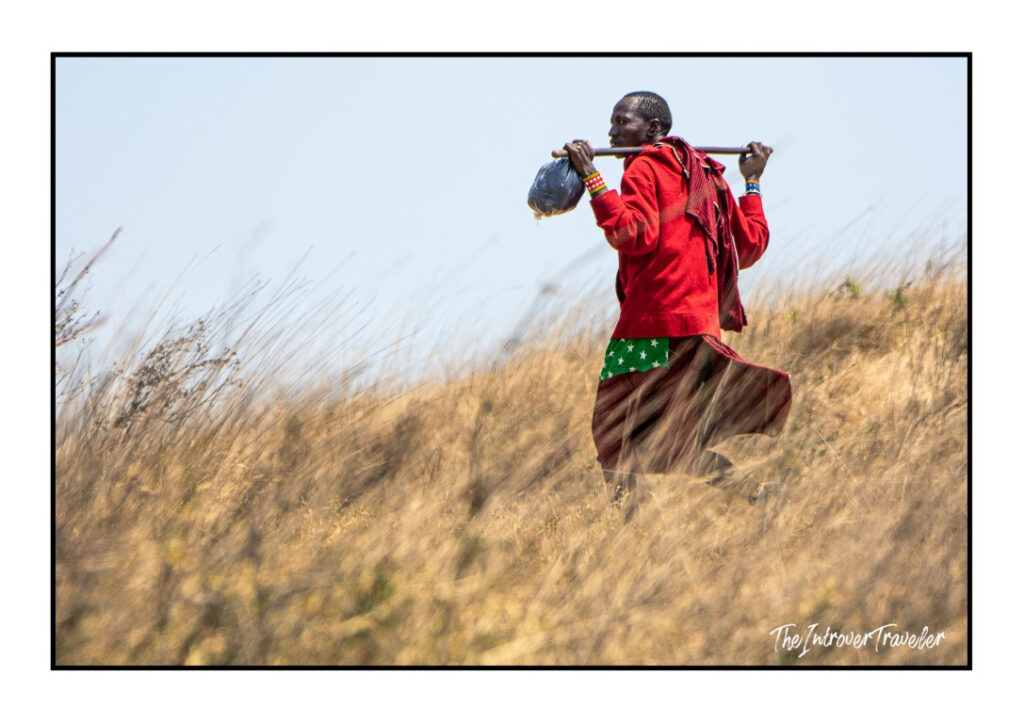
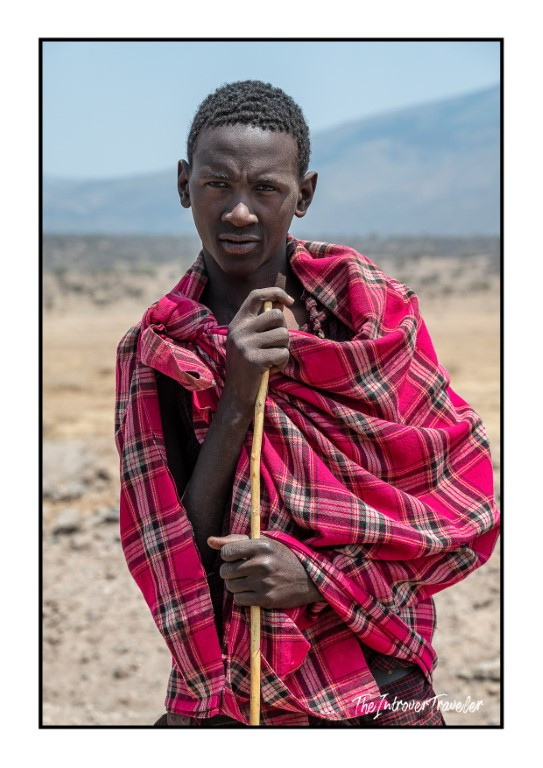
Some of this persists. A great deal has eroded under schooling, land loss, the cash economy and Christianity. The young man you photograph in a red shúkà very likely has a smartphone in the folds of it and a cousin working in a Dar es Salaam hotel. That is not hypocrisy. It is what living cultures do. The hypocrisy belongs to the tourist who wants the man to remain frozen in 1900 for the duration of a photo stop.
The Maasai in modern Tanzania, or why the neighbours can’t stand them
When you will be in Tanzania, you’re going to sense the hostility yourself, and it will not be just your imagination. There is a real and fairly widespread resentment of the Maasai among other Tanzanians, and it is worth understanding rather than tutting at, because the government feeds on it.
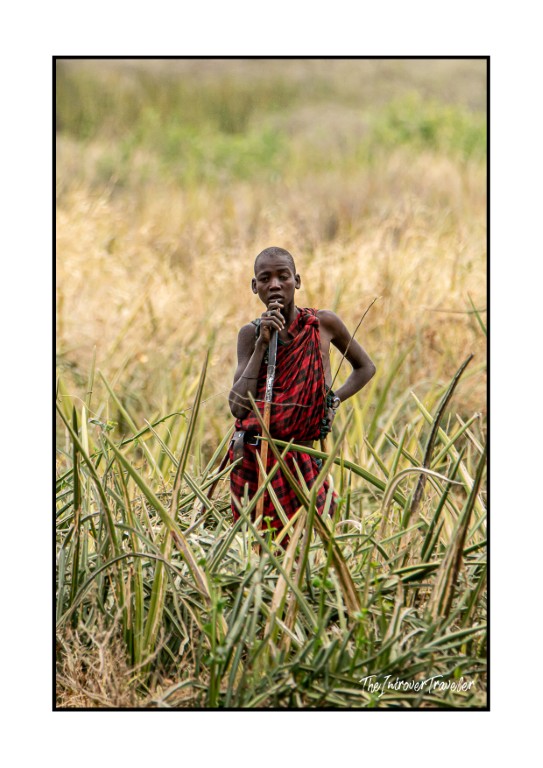
Tanzania was built, ideologically, by Julius Nyerere on a project called ujamaa: a socialist, aggressively nation-first modernism that treated “tribalism” as a colonial poison to be dissolved into a single Tanzanian identity. This is why ethnicity is kept off the census. In that worldview the Maasai are a triple offence. They insist on a separate identity when everyone was meant to melt into one. They practise mobile pastoralism, which the developmental state has always regarded as backward, irrational and a waste of land that could be growing wheat or earning tourist dollars. And they occupy, by an accident of history, some of the most valuable real estate on the continent. To a salaried civil servant in Arusha, the Maasai can look like people who contribute little, refuse to modernise, and sit on a goldmine they will not let anyone else exploit. Envy dressed as progress is a powerful political fuel.
The state pours petrol on it. President Samia Suluhu Hassan has publicly called the Ngorongoro Maasai “World Heritage destructors“, with words that, I must say, seem to me to be instrumentally aimed at appealing to the gut instincts of the population in order to fuel resentment toward a social category, a well-worn pattern that usually says little in favor of those who use it. More remarkably, the Tanzanian government has at times denied that the Maasai are an indigenous people at all, and has floated the convenient fiction that they are recent immigrants from Kenya hosting “foreign” livestock. Once you have rhetorically converted a citizen into a trespasser, eviction stops being a scandal and becomes mere tidying up. This is not an accident of clumsy phrasing. It is the load-bearing argument.
Ngorongoro and Loliondo: is there a logic, or is it colonialism watered with petrodollars?
Let me give the government’s case at its strongest, because it does have one, and pretending otherwise would be lazy.
The Ngorongoro Conservation Area was set up in 1959 as something genuinely unusual: a “multiple land use area” where wildlife and Maasai pastoralists were supposed to coexist, created precisely as a consolation prize after the Maasai were pushed out of the adjoining Serengeti when it became a national park. It became a UNESCO World Heritage Site in 1979. At inscription it held something on the order of 8,000 to 20,000 Maasai and a few hundred thousand head of cattle, a level everyone agreed the land could carry. The problem the government points to is arithmetic. The human population inside the area has grown to roughly 100,000, and livestock numbers have ballooned. UNESCO and the conservation lobby have repeatedly warned that growth on this scale, with the sedentarisation and creeping cultivation that come with it, threatens the very ecosystem the site exists to protect. If you believe that the UN and its agencies always protect the collective interest, that they cannot be driven by partisan economic, political, or ideological interests, and that environmental lobbies operate in the same way, then you have already found the answer to all your questions, especially as to where good lies and where evil lies. If, on the other hand, you are not satisfied with simple answers and enjoy cultivating skepticism, let us continue with the reasoning. On paper this is a textbook carrying-capacity dilemma, and the state can wave UN paperwork while it acts.
The intellectual godfather of this view is worth naming: Bernhard Grzimek, the German zoologist whose 1959 film Serengeti Shall Not Die shaped Western conservation for a generation and who argued, more or less openly, that a true wilderness should have no people in it. This is “fortress conservation”, the idea that nature is best saved by walling humans out, and it has been the operating logic in East Africa ever since, complete with the colonial reflex of deciding that the particular humans to be walled out are the black ones who were there first.
So far, a defender could say, this is hard but coherent: a poor country protecting a global treasure and a tourism economy that earns real money. The Ngorongoro area alone has been the highest-earning protected area per unit of land in East Africa. A little realism, the argument goes, justifies relocating people who are, after all, multiplying past what the land can bear.
And then the argument detonates, and it detonates in a place called Loliondo.
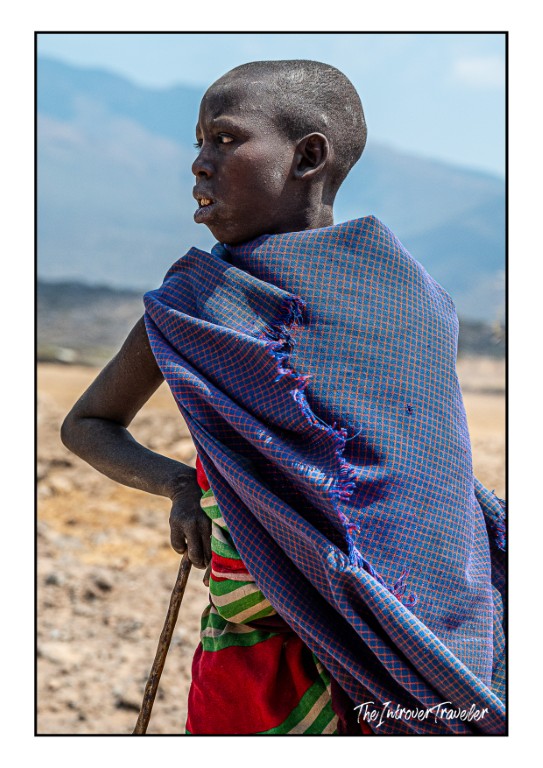
Loliondo is not the crater. It is a separate stretch of 1,500 square kilometres of legally registered Maasai village land nearby. If the operating principle were really “no human pressure on fragile wildlife land”, you would expect the state to clear it of everyone and let the grass grow. Instead, the cleared land has for decades been reserved for the exclusive use of a hunting outfit called the Otterlo Business Corporation (sometimes spelled Ortello), set up in 1992 to host the rulers of Dubai. OBC has been linked to Sheikh Mohammed bin Rashid Al Maktoum, prime minister of the United Arab Emirates. For years, members of Gulf royalty and their guests have flown in to shoot lion, leopard and antelope on land from which Maasai herders are barred whenever the sheikhs arrive, sometimes even denied access to water. Whistleblowers have alleged systematic poaching by the very operation supposedly there to manage wildlife.
This is the detail that collapses the conservation story into farce. The Maasai and their cattle are an intolerable burden on the ecosystem, but a seasonal convoy of armed billionaires gunning down the apex predators is sustainable land use. The grass cannot spare a cow, but it can spare a leopard for a trophy wall in the Gulf. Conservation here is not a principle. It is a pretext, applied to the poor and waived for the rich.
The methods have matched the cynicism. In June 2022 some 700 police and field force units moved into Loliondo to demarcate the area by force; they opened fire on Maasai protesting the seizure, leaving at least one person dead and dozens wounded by bullets and machetes, and thousands fled into the bush. This was in open defiance of a 2018 injunction from the East African Court of Justice. In the conservation area proper, the relocation programme to a place called Msomera, roughly 600 kilometres away near the coast, began the same month. Human Rights Watch documented it in a 2024 report with the unimprovable title It’s Like Killing Culture: homes burned (satellite imagery confirmed dozens of homesteads razed), schools and clinics deliberately run down, the long-serving Flying Medical Service grounded, and, in 2024, residents struck off the voter roll and their villages slated for legal deregistration. None of it sought the free, prior and informed consent that international law requires. The official line is that relocation is “voluntary”. It is voluntary in the sense that staying was engineered to be unliveable.
So, to answer the question directly: is it colonialism watered with petrodollars, or is there a logic? It is both, and that is the ugliest possible answer. There is a genuine ecological pressure in Ngorongoro that an honest government would have to manage. But the actual policy, eviction of citizens by force and fire while their land is handed to foreign trophy hunters and luxury safari operators, is not conservation pursued by crude methods. It is dispossession wearing conservation as a costume, financed by Gulf money and laundered through UNESCO letterhead. The logic is real. It is just not the logic on the press release.
Karen Blixen and the comfortable lie
Which brings us back to Out of Africa. Blixen adored the Maasai, casting them as a doomed warrior aristocracy of natural nobility, beautiful and free and tragic. It is gorgeous prose and it is part of the problem.
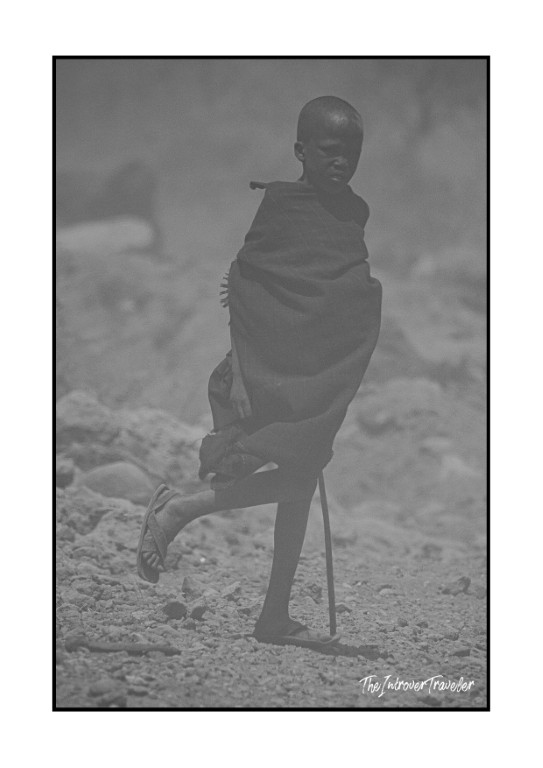
The noble savage pattern flatters everyone except real people. It allows the colonial admirer to feel refined because he appreciates the natives, while doing nothing to defend their land, since a noble people nobly heading toward extinction is a tragedy to be observed, not a political wrong to be stopped. It freezes a living society into an aesthetic object. And it prepares the cruel reversal we see today: the moment the “noble warrior” picks up a phone, asks for a school, or refuses to leave, he is downgraded to a “backward nomad” and an “obstacle to development.” The romantic view and the contemptuous one are not opposites. They are the same denial of full humanity, merely in two different moods.
I think it is reasonable to say that the Maasai have never been noble savages and probably are not backward primitives either. But I wonder whether assigning them to one category or the other is truly useful, beyond satisfying a sterile taxonomic impulse. What is certain is that the postcolonial attitude that emphasizes the purely aesthetic aspect of a noble, very cool people, useful for holiday photographs, is at the very least tainted by bias, to put it politely. And the opposite tendency, which seeks to portray them as an environmental calamity for the benefit of wealthy Arab sheikhs, is just as pernicious.
If I had to draw my conclusions from the data I have found and roughly processed, it seems to me that the pendulum of reason swings slightly toward the Maasai. They should probably allow a voice to prevail within their own community that is willing to negotiate the demands of their demographic growth with those of environmental protection. But such an act of negotiated openness is probably not easy when the government is burning down your houses so that Arabs can come and shoot protected animals.
The tourist boma: is any of it real?
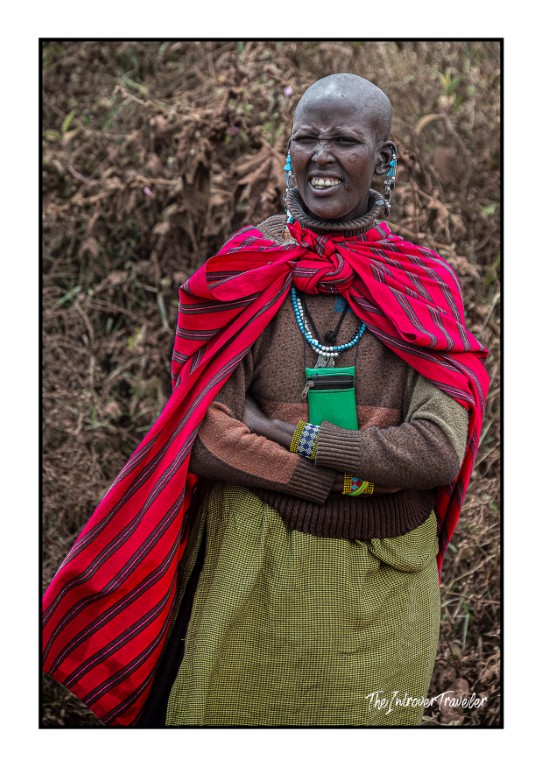
Now the frequently asked question by the average tourist. You pull off the road, pay your fee, a line of men in red shúkà sing and jump, a woman walks you through a dung-walled house, you are steered to a circle of beadwork at gently extortionate prices, and forty minutes later you are gone. Is it authentic, or is it junk for the cheap seats?
The honest answer borrows a useful idea from the sociologist Dean MacCannell, who pointed out half a century ago that tourism runs on what he called “staged authenticity“: a front region dressed up to look like the real back region, performed for visitors who desperately want to believe they are seeing the genuine thing. The roadside boma on the Ngorongoro to Serengeti circuit is the purest specimen of the type. It is a real village in the sense that real Maasai live there and the jumping is a real tradition. It is a staged performance in the sense that the day is organised around extracting money from a rota of jeeps, the “daily life” you witness is daily only in the way a matinee is, and the warm welcome is a service, repeated hourly. Nothing on display is fake, exactly. The framing is.
For my part, I was careful not to turn myself into a character in this consumerist staging, where I would have felt mostly like the useful idiot of the moment. Others, perhaps, might feel like corrupt and privileged Westerners who reduce an exploited population to the role of court jesters. But I have given you all the elements; make of them what you will.
The verdict
The Maasai are not a relic and not a brand. They are a once-dominant society broken by epidemic at the worst possible moment, robbed by the British, inherited as an inconvenience by an independent state that views their way of life as an affront to progress, and currently being shifted off the planet’s most valuable savanna so that the grass can be enjoyed, depending on the patch, by photographing tourists or shooting sheikhs. The conservation argument has a kernel of truth that the conservation policy then betrays in the most flagrant way imaginable.
None of which should stop you going to Tanzania, any more than it stopped me. You will, like me, add your jeep to the convoy and your fee to the till, and the contradictions will travel home in your luggage. The least you can do is go without the postcard in your head. You are not visiting noble savages, and you are not being shaken down by backward primitives. You are passing through a slow, well-documented, internationally financed land grab, narrated by everyone involved as something nobler. The animals and the wilderness really are magnificent.
This post belongs to my full Tanzania travel guide, and is the analytical companion to Ngorongoro, the Maasai, oil and John McEnroe.