Last Visit: June 2026
My Rating: 7/10 (with an asterisk, see below)
Price: €€€/€€€€€
Website: ristorantenatalino.com
Phone: +39 055 289404
Address: Borgo degli Albizi 17R, Florence
Booking: Online reservations available (a genuine practical advantage for foreign visitors)
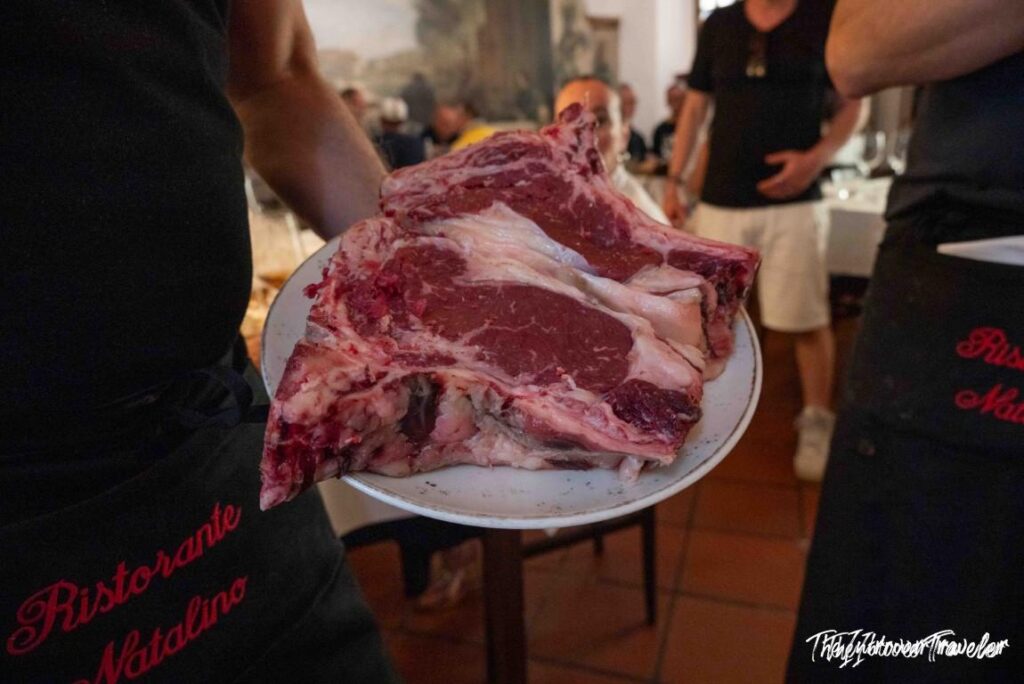
A preliminary and necessary caveat: this is a partial review, and I say so without embarrassment. The evening before this lunch, I had endured one of those corporate dinners from which you emerge as a shipwreck survivor, the kind of event where someone with the authority to choose wines exercises that authority with catastrophic results, serving something that could generously be described as aviation fuel decanted into a Chianti bottle. My stomach, still negotiating the terms of a ceasefire, was not in a condition to push itself. I looked at the bistecca alla fiorentina, which had a genuinely beautiful look, the kind of cut that makes you want to cancel your afternoon plans, and had to concede defeat. The fiorentina will have to wait for a return visit. What follows is therefore a review of what I actually managed to eat, which is not the same thing as a review of everything Natalino can offer.
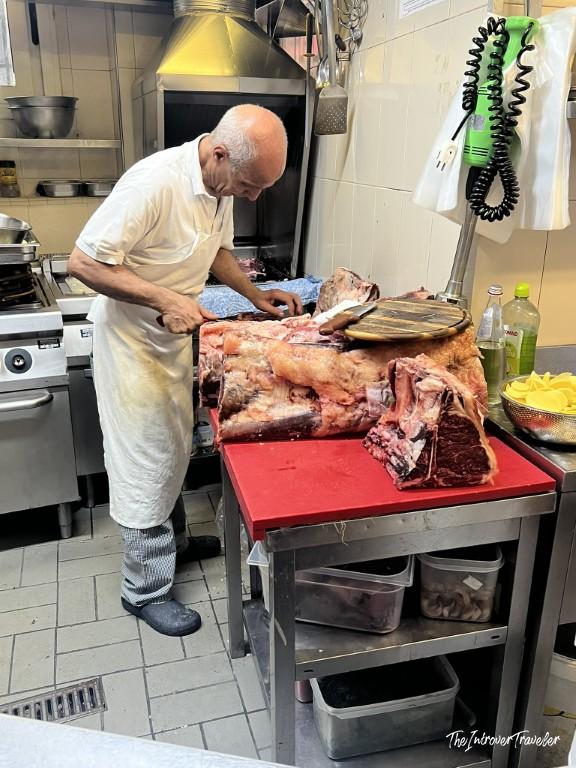
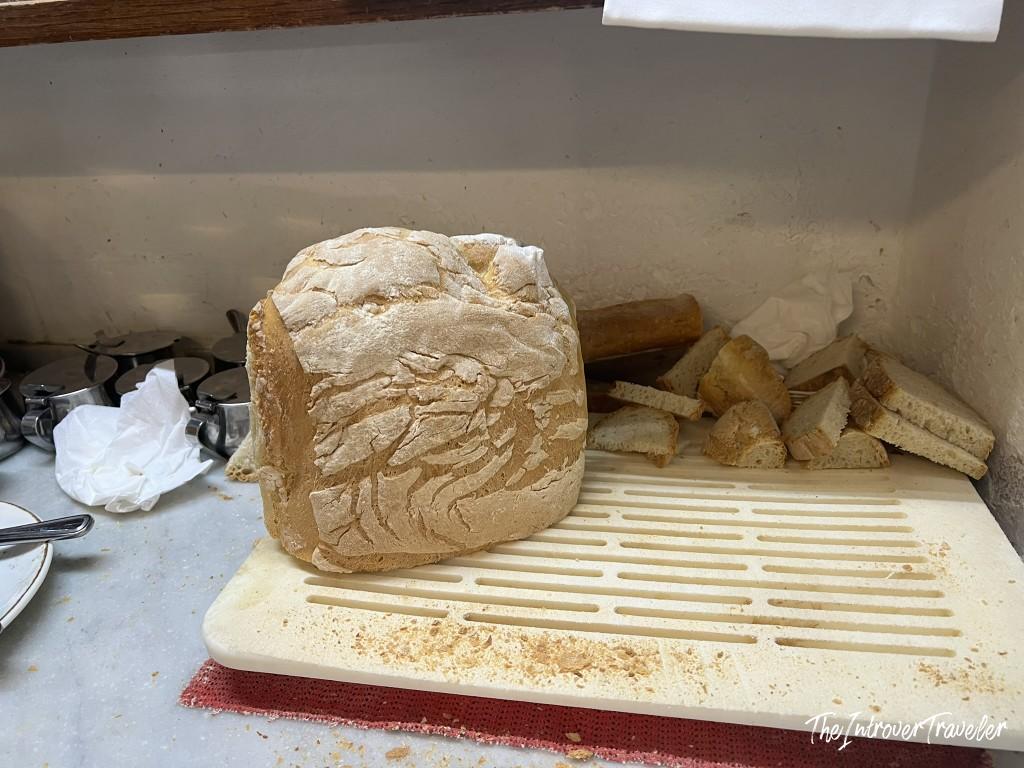
The Venue
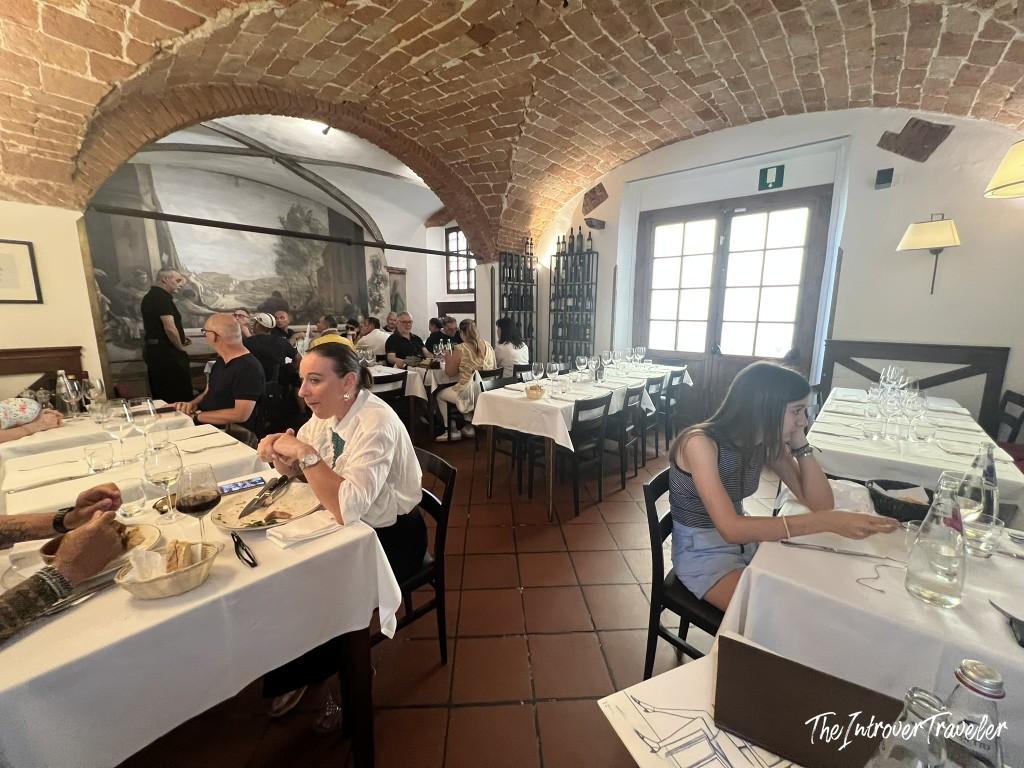
Natalino sits on Borgo degli Albizi, in the historic Santa Croce quarter, on the site where the church of San Pier Maggiore once stood. The church, one of the most important in Florence and patron of the most prestigious Benedictine convent in the city, was demolished in 1784 by order of Grand Duke Pietro Leopoldo, on the pretext that a column had shown signs of structural weakness (though the more compelling motive was almost certainly his desire to curtail the economic power of the religious institutions). What remained, portions of capitals, fragments of frescoes, survived embedded in the buildings that replaced it, including the Arco di San Pierino that still frames one side of the piazza. Natalino, then, does not occupy a deconsecrated church; it occupies the ghost of one, which is, if anything, a more Florentine situation. The restaurant has been here since 1880, is run by the Mazzanti family, and carries the particular credibility that only comes from having outlasted fashions, food journalists, and several generations of tourists convinced they have discovered it; among them Dario Fo, Nobel laureate, who was apparently a regular and whose affection for the place is documented by a drawing he made on a tablecloth, now displayed on the wall. I duly forgot to photograph it.
The setting is that of a classic Florentine osteria, warm and lived-in rather than designed to look warm and lived-in, which is a distinction that matters. Nothing is staged.
The Menu
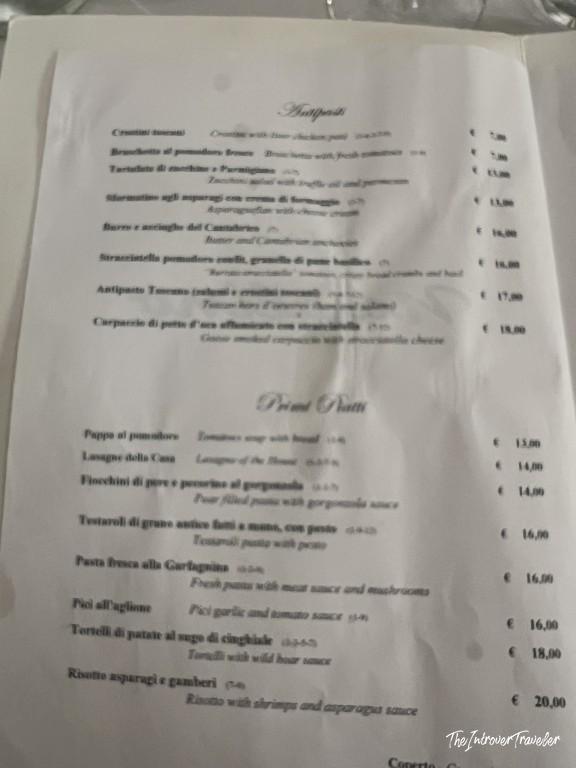
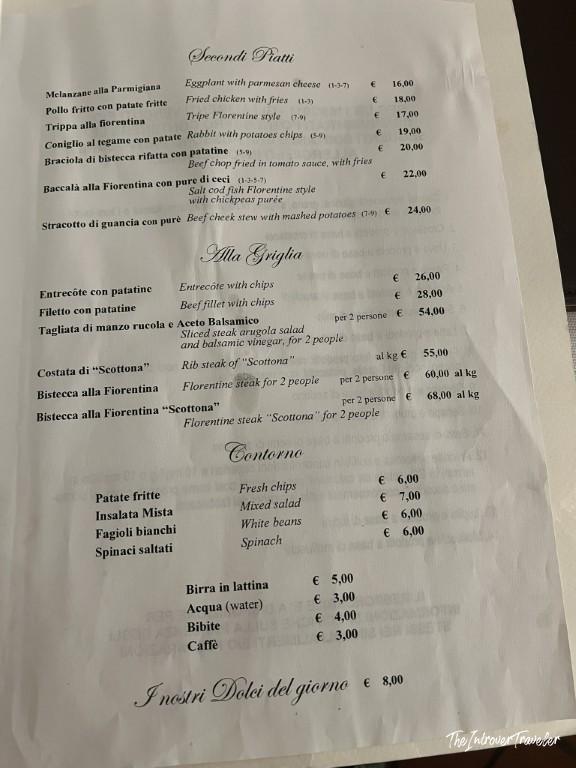
The menu is broadly what you would expect from a Florentine osteria, with some concessions to non-local dishes that I would personally rather not find in a traditional restaurant in Florence, where I would prefer an extra ribollita over Cantabrian anchovies. A disclaimer: the writer loves anchovies so devotedly he would add them to his morning cappuccino, but “Cantabrian anchovies” on Italian restaurant menus is beginning to grate, almost as much as Bronte pistachio in every gelateria in the country; when I’m in Florence I expect to eat local cuisine. Starters: crostini toscani, bruschetta, sformatino agli asparagi, burro e acciughe del Cantabrico, smoked goose breast carpaccio. Among the pasta courses: pappa al pomodoro, the house lasagne, fiocchini di pere e gorgonzola, testaroli al pesto, pasta fresca alla Garfagnina, pici all’aglione, potato tortelli with wild boar ragù, asparagus and prawn risotto. Main courses: melanzane alla parmigiana, fried chicken with chips, trippa alla fiorentina, braised rabbit with potatoes, Florentine-style salt cod with chickpea purée, braised cheek with purée, entrecôte with chips, fillet with chips, beef tagliata with rocket and balsamic, costata di scottona, and (when your stomach cooperates, which mine did not) bistecca alla fiorentina.
It is not a short menu by the standards of this blog (I am always mildly suspicious of kitchens that attempt everything), but it is an honest menu: the kind where every dish belongs there, and nothing appears to have been added to catch tourists who might otherwise go elsewhere.
What We Ate
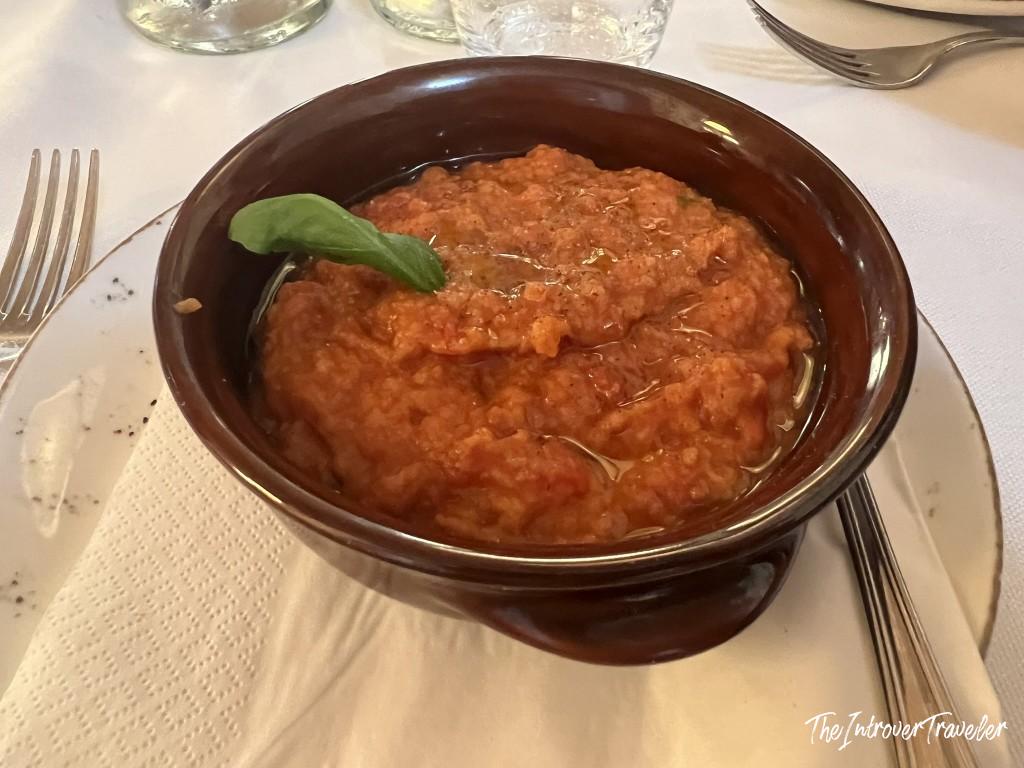
Pappa al pomodoro (Tomato bread soup) — 7/10. Genuine, fragrant, well-seasoned. Not the best I have ever had in Tuscany but more than valid, and appreciably not the watery, oversimplified version that many kitchens produce. The tomato flavour is present and the bread gives it the right, almost porridge-like density. A reliable execution of a dish that requires more care than it appears to.
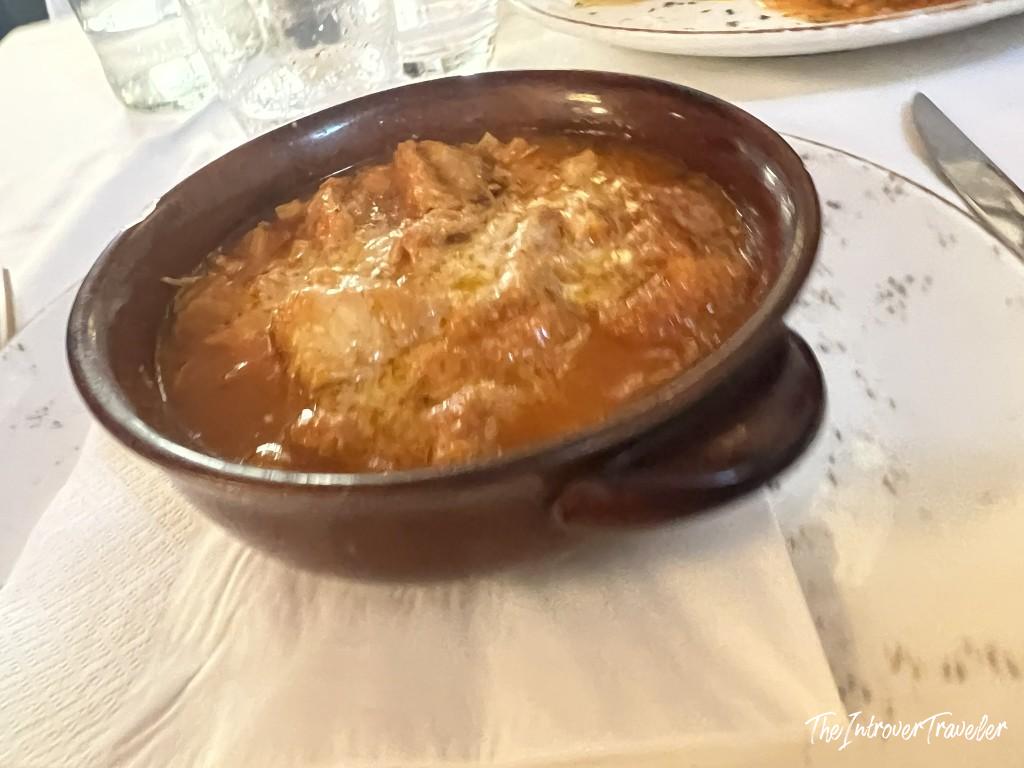
Trippa alla fiorentina (Florentine tripe) — 8/10. This is where Natalino quietly earns its reputation. The tripe is soft without being structureless, the sauce sweet and rounded, the whole thing carrying that combination of delicacy and depth that the dish demands and so rarely achieves in practice. No gratuitous gestures, no attempt to reinvent something that does not need reinventing. You eat it thinking: yes, this is what it should taste like. For those unfamiliar with the Florentine tradition of tripe: think braised offal in a tomato sauce, finished with a grating of cheese. Not a dish for the hesitant, but a considerable pleasure for everyone else.
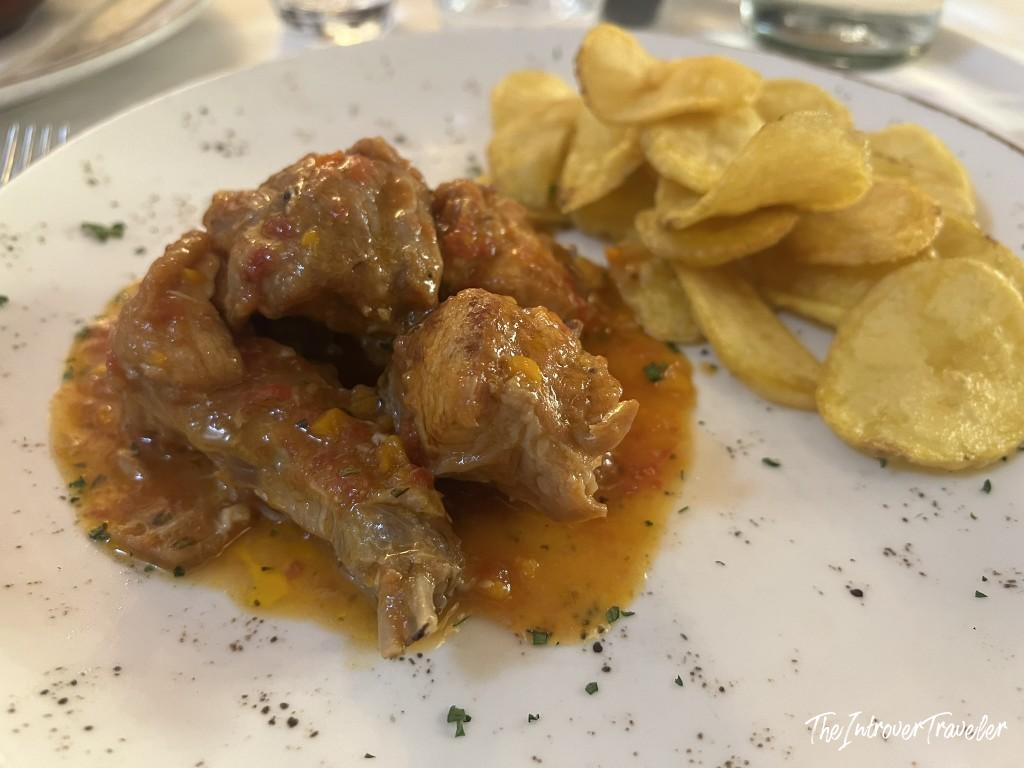
Coniglio al tegame con patate (Braised rabbit with potatoes) — 6/10. An honest enough preparation, but probably not the wisest choice for gauging what this kitchen can do. Braised rabbit with potatoes is one of those dishes that tends toward the worthy rather than the memorable regardless of who makes it, and this version, while technically correct, did not reveal much about the kitchen’s intentions or capabilities; the meat was also on the dry and stringy side, so there is room for improvement. Blame the choice rather than the cooking, though not entirely.
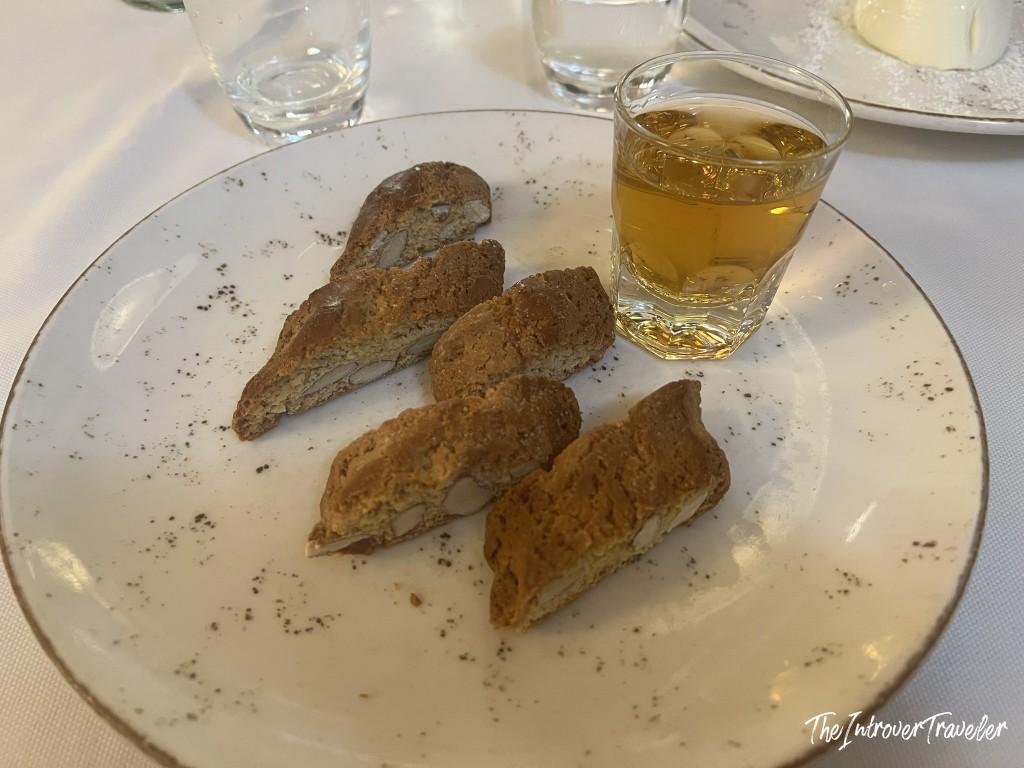
Cantucci con vin santo — 8/10. Freshly made, fragrant, and aromatic in a way that distinguishes them immediately from the industrial version that most restaurants serve without embarrassment. You can tell they have not been sitting in a jar since the previous Florentine republic. The vin santo is what it should be. As an ending to a meal, this combination requires nothing more than itself to succeed.
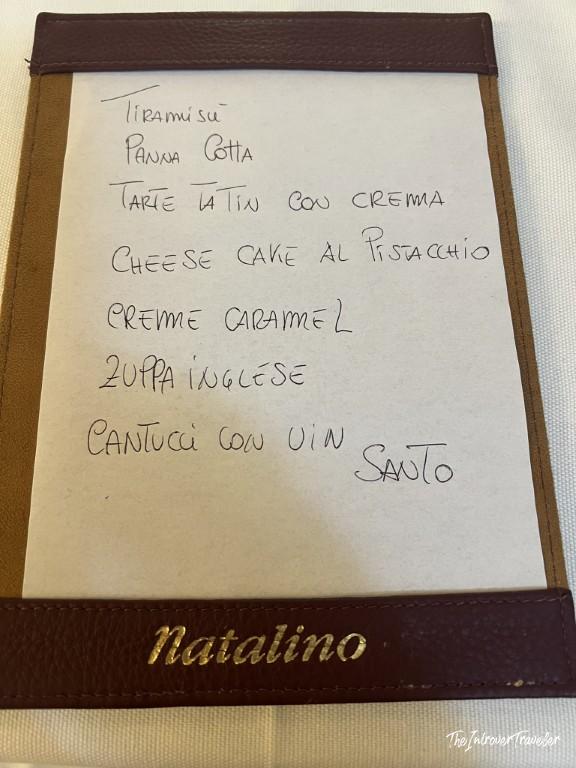
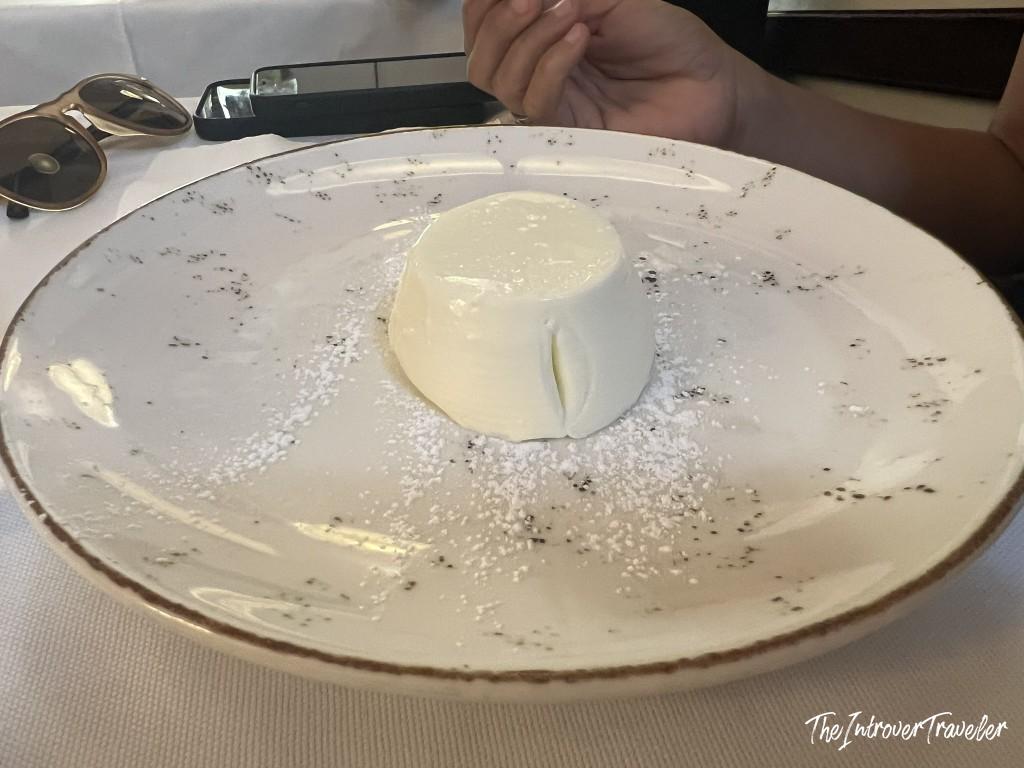
Panna cotta — 9/10. The genuine surprise of the meal. At a place like this (a solid, traditional trattoria with no culinary ambitions beyond executing the canon well) a panna cotta of this quality is not what you expect. Silky, genuinely artisanal, with none of the gummy texture that betrays a kitchen relying on powdered mixes. It has the right yield under the spoon and the right restraint in sweetness.
Service
Particularly cordial and attentive throughout, without the performative warmth that means nothing. The staff manages the room efficiently and without fuss. For a restaurant in the centre of Florence that sees a significant volume of international visitors, this is not to be taken for granted.
Online Booking
Worth noting for non-Italian visitors: reservations can be made online, which is a practical convenience that still cannot be assumed at every restaurant in Florence at this price point.
Conclusion
Natalino is not going to reinvent your understanding of Florentine cuisine, and it has no intention of doing so. What it offers is something rarer and, in the current landscape of central Florence, more valuable: traditional cooking done correctly, in a genuinely atmospheric room, at a price that does not assume you have confused a trattoria for a starred restaurant. It is not a tourist trap. It is the thing that the tourist traps are pretending to be.
My rating carries the asterisk I mentioned at the start: I did not eat the fiorentina, which, judging by its appearance and by the seriousness with which the kitchen handles everything else, might be the dish most worth ordering here. I will return.
If you are planning a trip to Florence, you may be interested in these posts.