Last visit: April 2026
My rating: 7.5/10
Price range: €€€ / €€€€€
Address: Via Giovanni Nicotera, 13, 80132 Naples
Reservation: +39 081416541
Web: https://www.osteriadellamattonella.com/
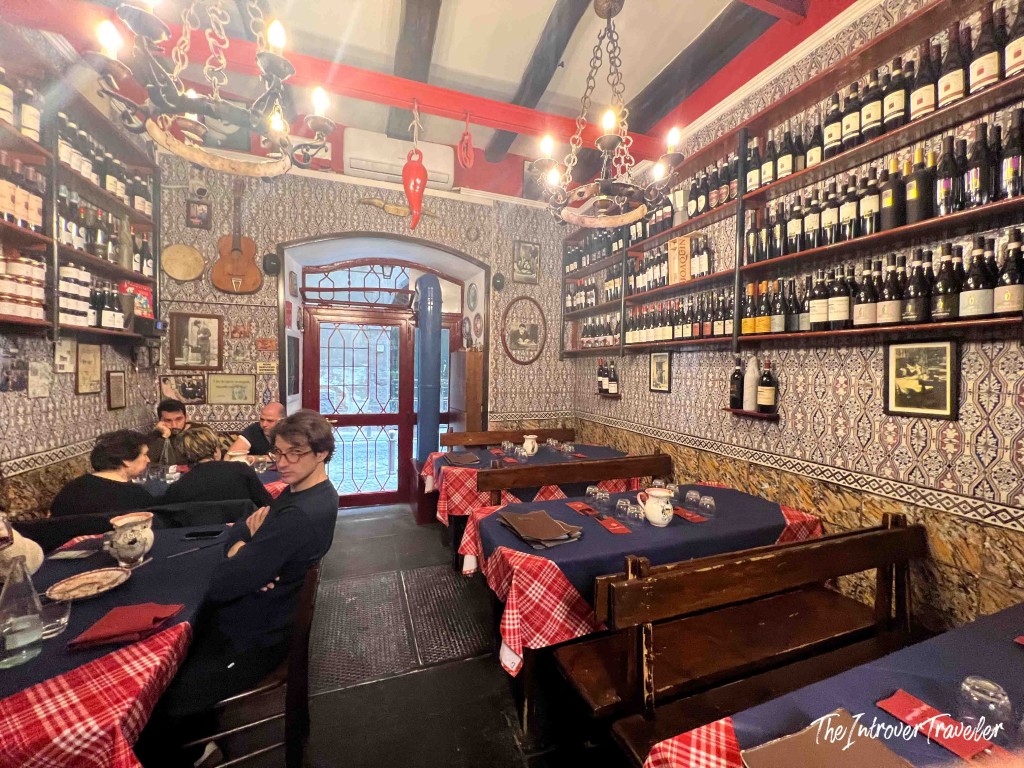
To reach Osteria Mattonella in Naples, coming from Castel dell’Ovo, you have to cross the Pallonetto Santa Lucia, and this is not a logistical note but an existential premise. You climb between police cars parked in the middle of the road for the periodic checks on convicts under house arrest, and graffiti depicting Napoli footballers riddled with bullet holes, in a devotional iconography that hovers somewhere between the votive offering and the mafia warning. Perhaps crossing a neighbourhood like this with a Nikon in hand was an imprudence, but a travel blogger who slips into the water among sharks must have a danger threshold set just above that of Alex Honnold, and so I pressed on, photographing murals like a deranged tourist in hostile territory.
Second premise, before the food, because it has to be dealt with at once: the booking system at this place is a crime against humanity. It opens at eleven in the morning on the day itself, and from that moment you have to glue yourself to the phone and dial the number on a loop like a deranged trader, hoping the line falls on the right side of fate and that a table, just one, is still free. It is a mechanism banned by at least five international conventions, but in Naples they cheerfully couldn’t care less about conventions, and after the fortieth call, just as I was about to give up and tell the whole lot of them where to go, someone at the other end picked up the receiver with the sublime indifference of a person doing me a favour, and with hindsight, it was better that way.
The menu
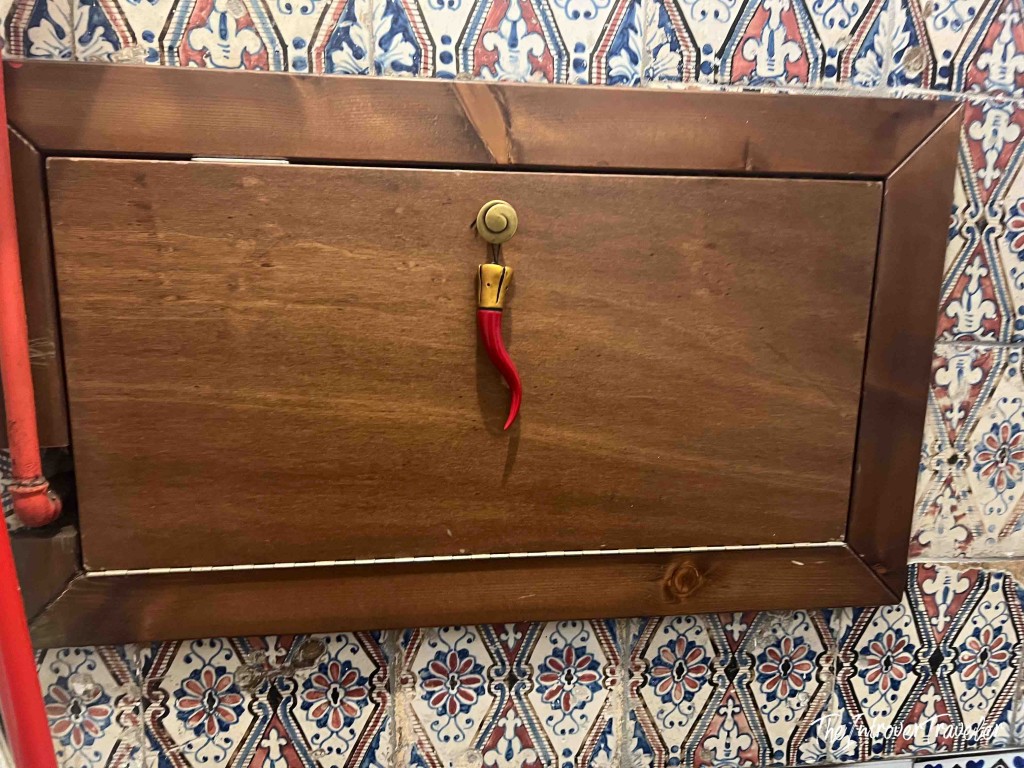
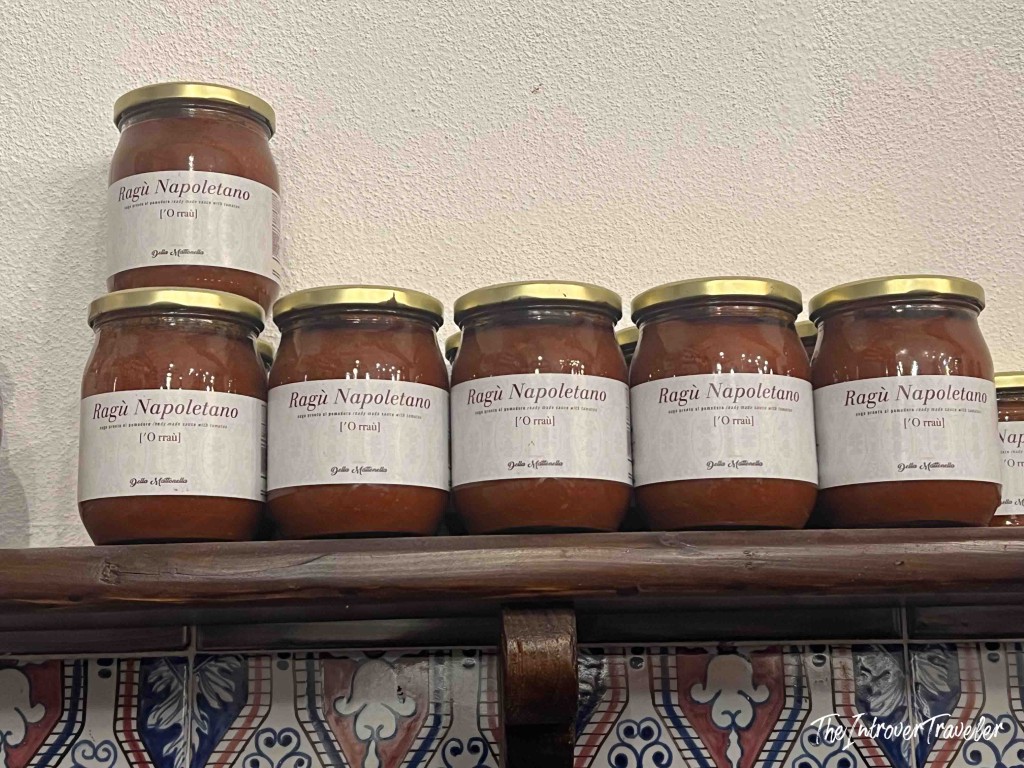
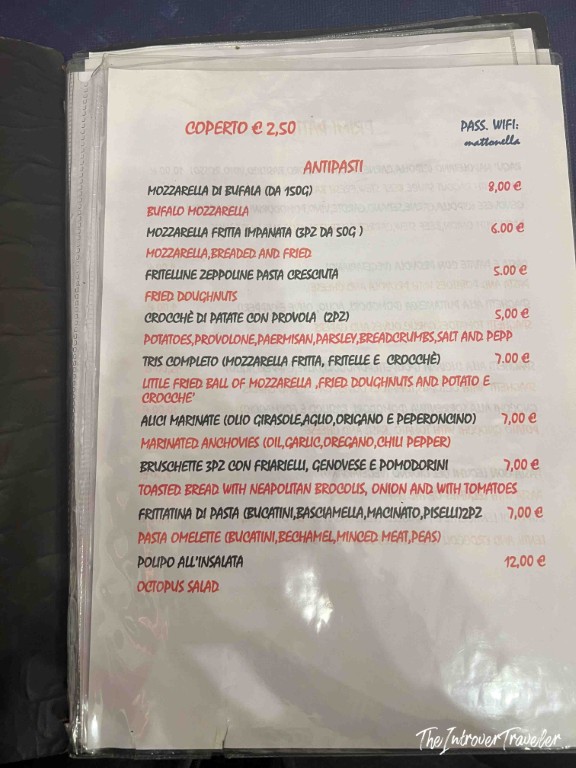
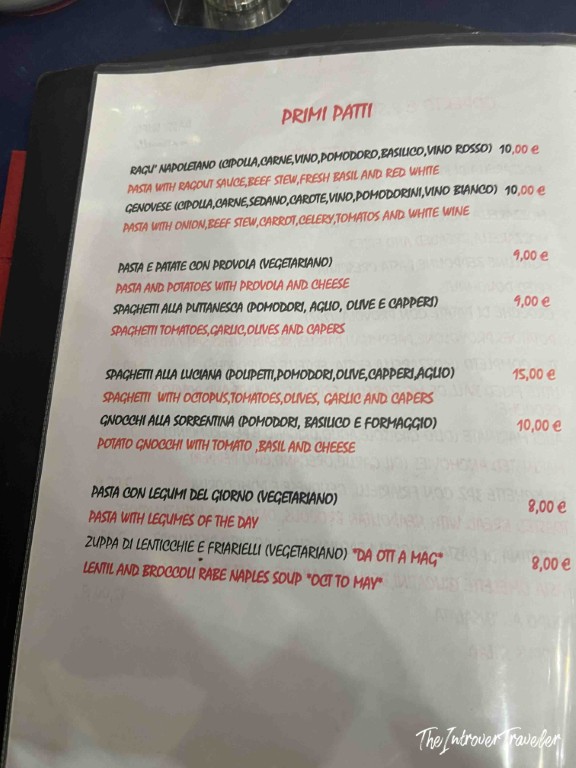
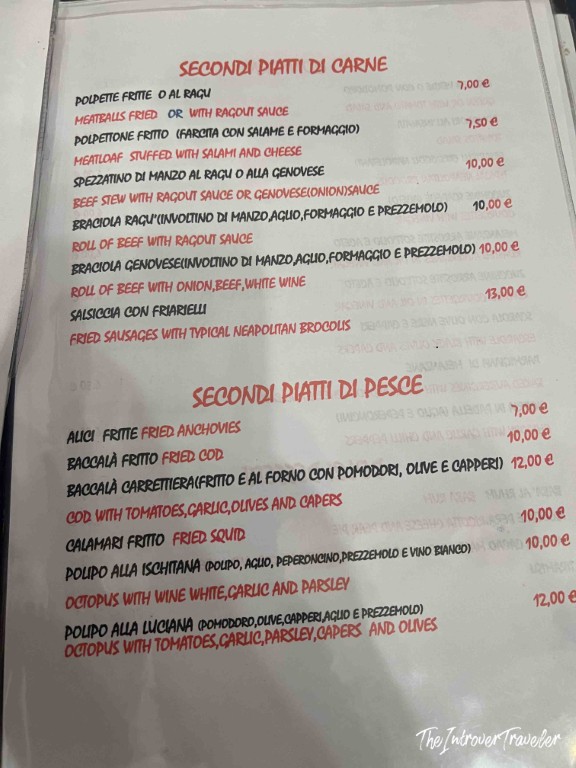
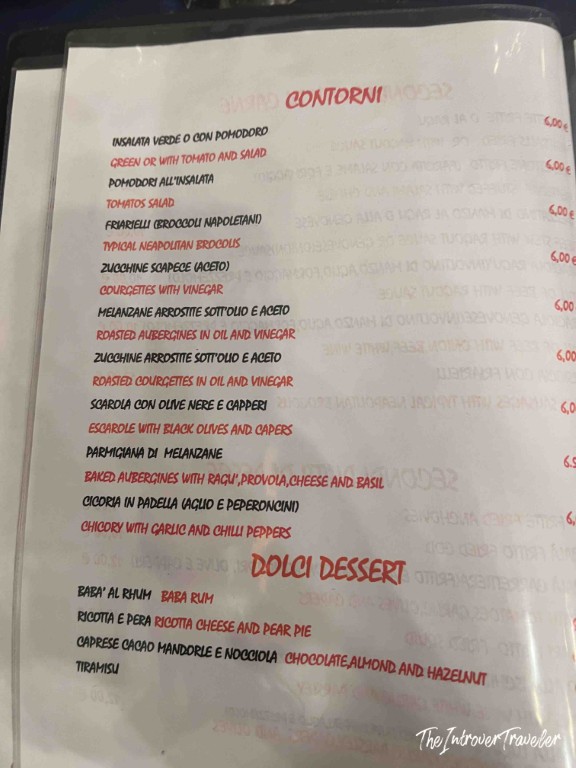
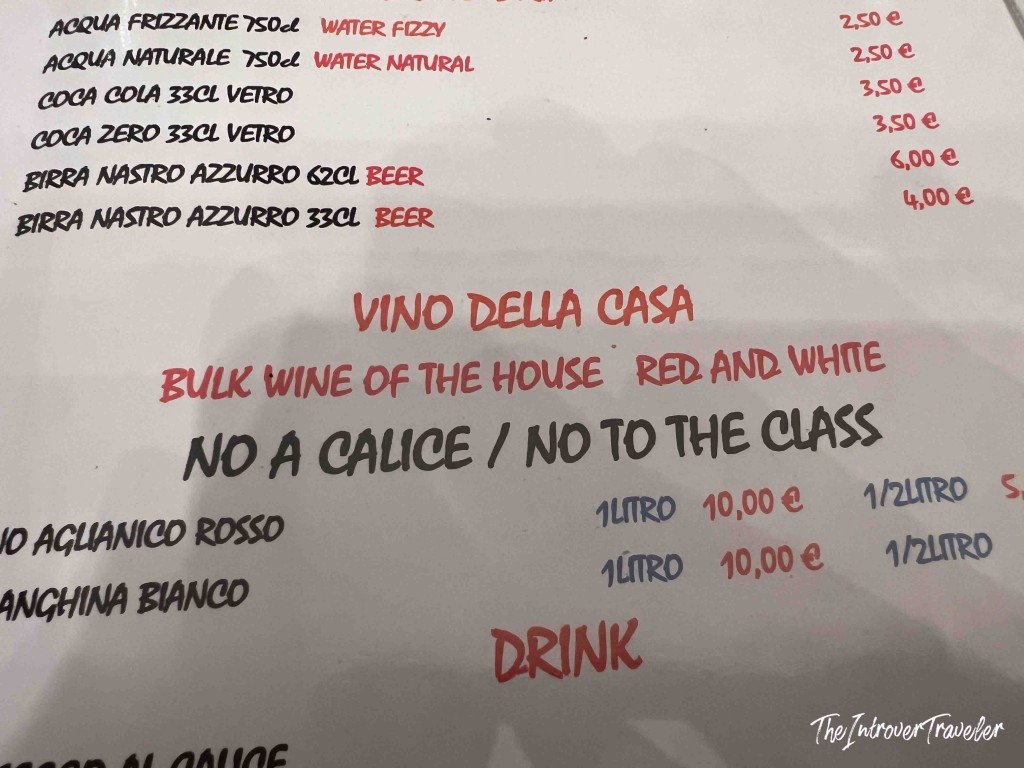
A word on the menu, because it deserves one. It is laminated, handwritten, and translated into an English that achieves a kind of accidental poetry: the house wine, vino della casa, becomes “BULK WINE OF THE HOUSE”, served, the menu sternly clarifies, “NO A CALICE / NO TO THE CLASS”, which I can only assume is a declaration of war on social stratification rather than on stemware. The structure is canonical and reassuringly short: a handful of antipasti, a column of primi, meat and fish secondi, sides, desserts. The prices are honest, mostly clustered between eight and ten euros, which makes the spaghetti alla Luciana, marooned up at fifteen, the conspicuous aristocrat of the primi and the dish the kitchen clearly wants you to take seriously.
Gennarina, or service as a form of resistance
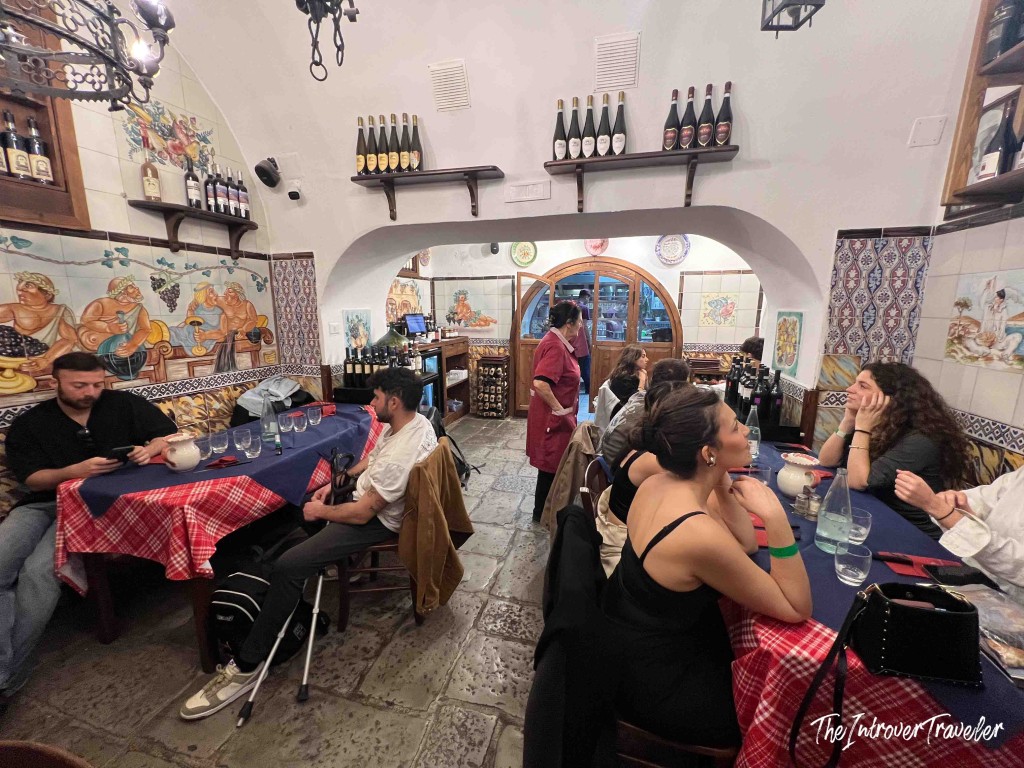
Waiting tables there is a classic Neapolitan grandmother, her manner suspended between the reserved and the gruff, whom for the rest of this piece we shall conventionally call “Gennarina”, because otherwise this review would not contain enough clichés about Naples and the Neapolitan tradition. Gennarina does not smile on principle, not because she is rude, but because the smile, evidently, has to be earned, and not by someone who turns up with a Nikon and the air of a man who writes reviews. She takes the orders with the patience of one who has already seen everything and was not impressed by any of it.
Spaghetti alla Luciana, or the suspicion of nocturnal cooking
After a careful reading of the menu, my first choice fell on the spaghetti alla Luciana. Here I must make a confession: after reading Other Minds by Peter Godfrey-Smith I became a conscientious objector and stopped eating octopus (I know it sounds like a gag dreamed up by some woke Hollywood screenwriter, but it is the truth…). In Naples I made an exception to this rule, which I had respected, not without effort, for several years, because it seemed to me the most tempting and the most Neapolitan of the first courses on offer; the sacrifices a food blogger must make for his readers…
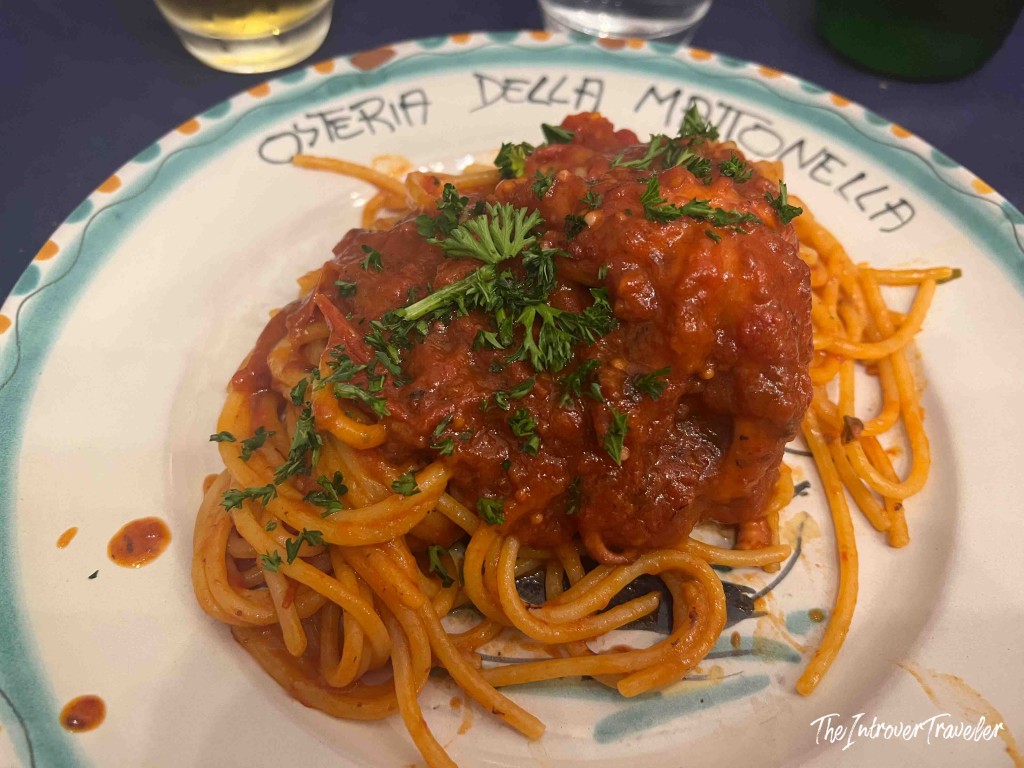
The spaghetti alla Luciana were exactly the spaghetti you expect in a Naples osteria: octopus, cherry tomatoes, olives, capers, and that consistency you obtain only by letting the octopus cook for a length of time that defies all reason, until the flesh surrenders and turns tender. And it is here that the suspicion arises. Because an octopus like this cannot be produced in a single service shift. It has to be watched over, stirred, supervised for hours. Which leads me to a single plausible hypothesis: that the very same Gennarina who waits the tables is, at the end of the evening, gently locked into the kitchen and left there all night to keep watch over the pot, released only the following morning in time for the booking lines to open. I have no proof. I have only the dish, which is the best proof of all. Rating: 7.5.
The lentil soup, or the marital betrayal
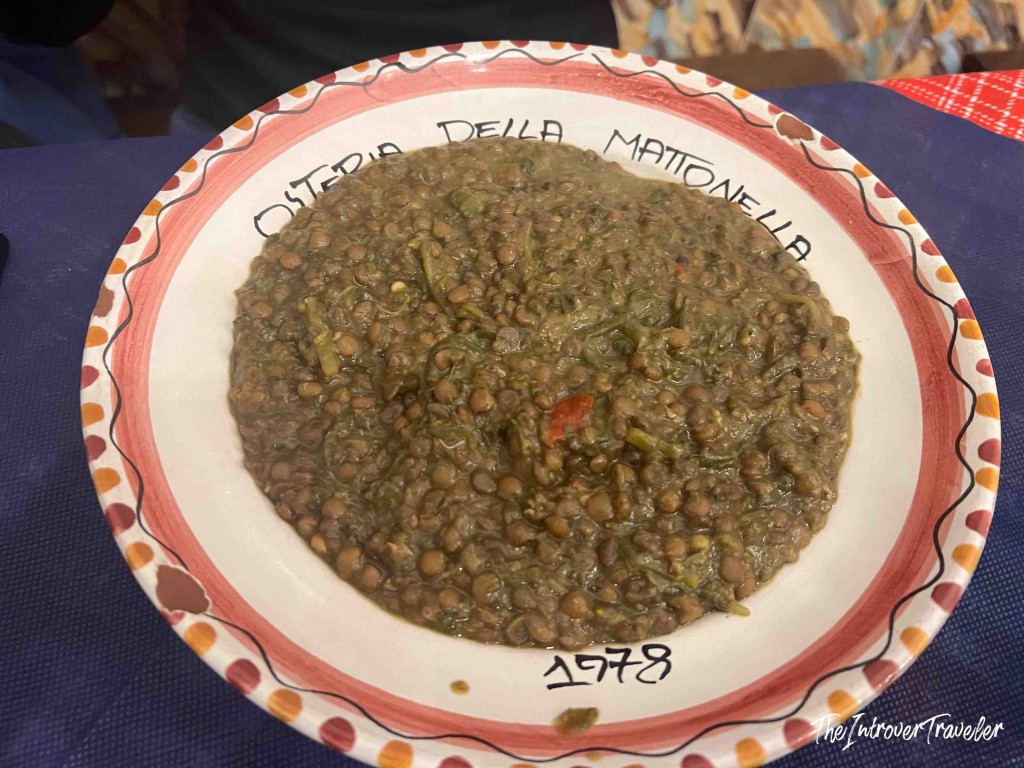
At this point I must confess an episode that put the marriage bond severely to the test. My wife, to atone for the gastronomic excesses of the preceding days in a fit of penitence with something Franciscan about it, ordered a lentil soup. In Naples. In an osteria in the Pallonetto Santa Lucia (it is actually in Chiaia, but allow me the dramatic licence), in front of a menu dripping with sea and tradition, she asked for lentils. For a moment I seriously considered pretending not to know her, moving to another table, calling Gennarina over and declaring that the lady had sat down there by mistake. The soup, for what it is worth, was impeccable. But it remains an act that history will judge.
The baked AND fried baccalà, or ignorance as an art form
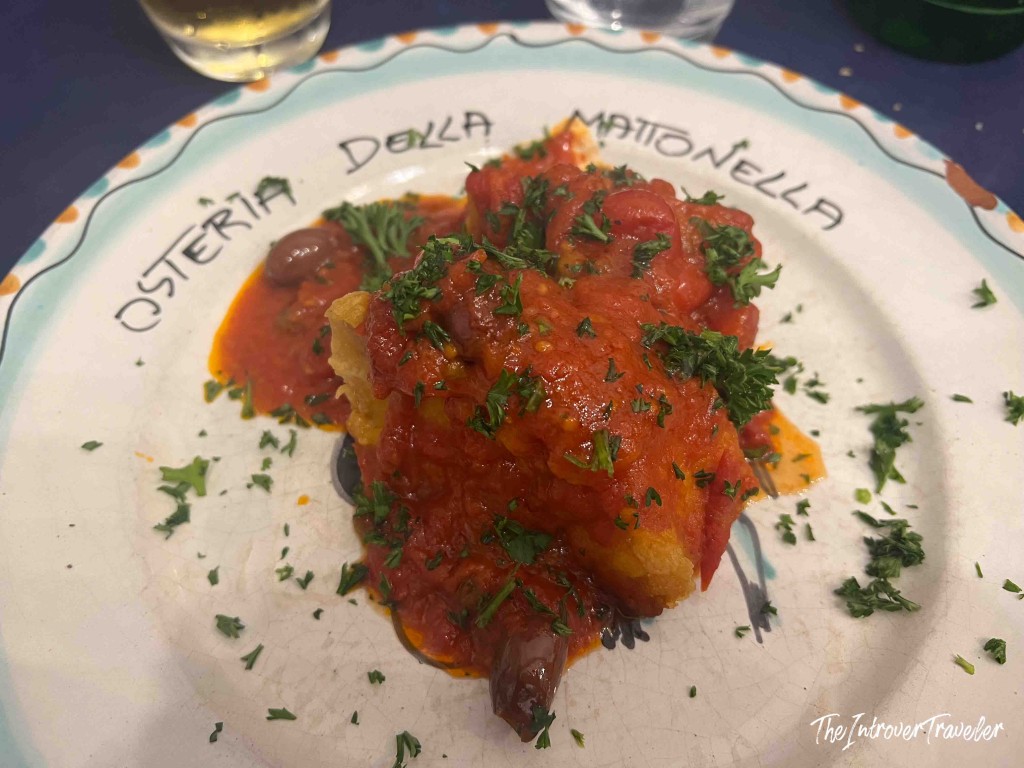
And then he arrived. The baccalà. Not baked. Not fried. Baked AND fried. Let the information settle: these people take the baccalà, cook it in the oven, and then, not satisfied, fry it. Ignorance lavished by the handful, caloric prodigality worthy of the reckless, a preparation conceived in contempt of every notion of public health. Every time this dish is plated, somewhere in the world a cardiologist collapses without a cry. And of course it was delicious, because in Neapolitan cooking the distance between the apoplectic fit and beatitude is measured in millimetres. The moment the parsley grazes the palate, then, the mouthful becomes a Georgic triumph worthy of the Forest Spirit from Mononoke, one of those preparations that make you understand, in retrospect, how mean your life had been before. Rating: 8 for the dish and 9 for the ignorance.
The scarola, or the side dish that did not know it was one
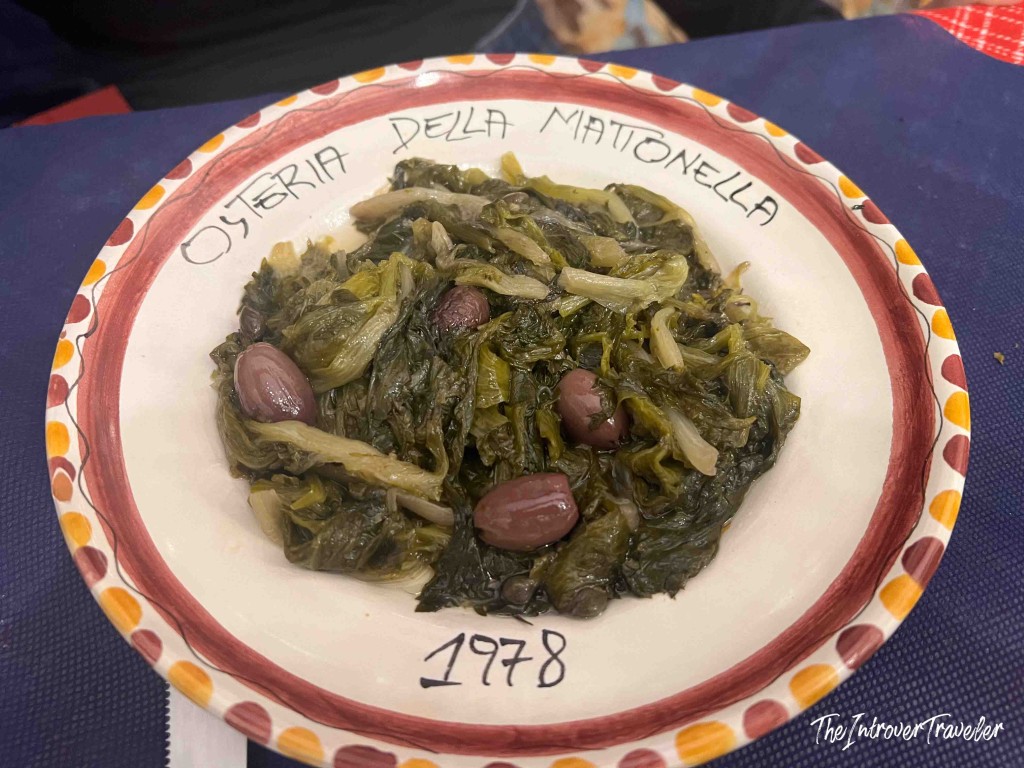
The scarola with olives and capers was delicious, bitter to just the right degree, dressed by the hand of someone who knows that a side dish is not a filler but a declaration of intent. There is not much to add, except that it deserves to be ordered even by those who normally dismiss vegetables as a toll to be paid to the waiter. Not the dish that will send you browsing the property listings in the Sanità quarter, but the worthy accompaniment to a meal at the court of Totò all the same.
The trio of desserts, or the negotiation with Gennarina
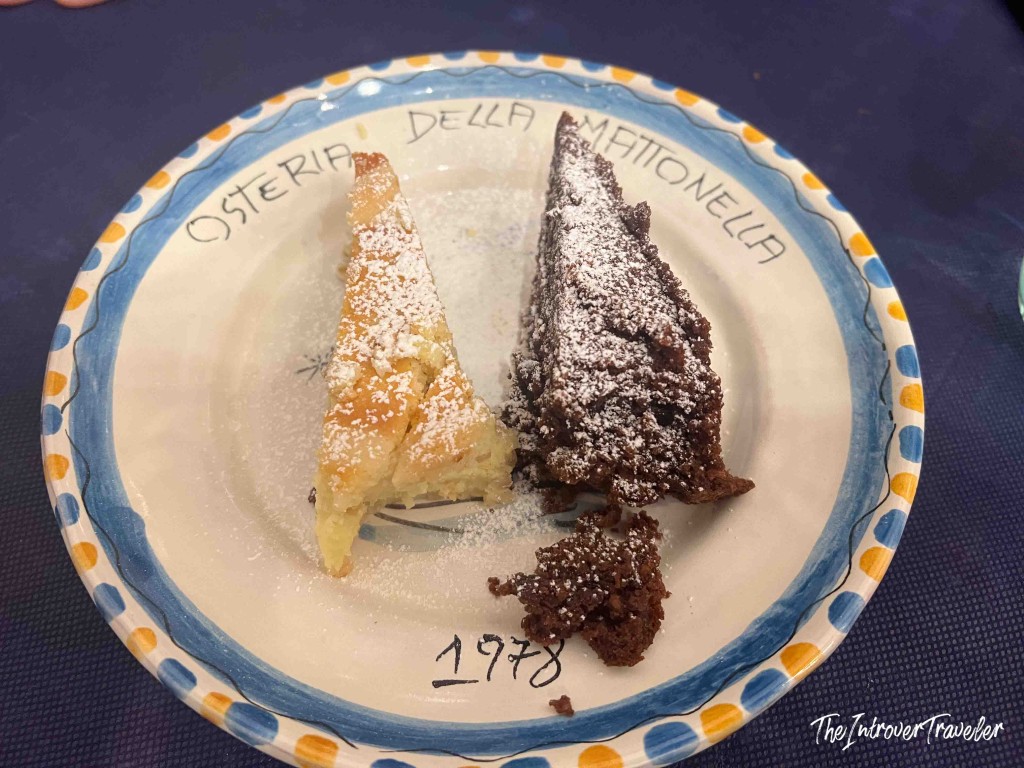
Having reached the desserts, we had no idea what to choose, and so began a brief but intense diplomatic negotiation with Gennarina, at the end of which we settled on a trio: caprese, pastiera and babà. It was an unexpected triumph.
The biggest surprise came from the caprese, which on paper is the most stupid and insignificant dessert in the universe, a cake in which excelling is almost impossible because there is no room for virtuosity, and which here instead was a revelation of cocoa and hazelnut aromas, deep, complex, unjustly good for something so humble.
The pastiera was as luscious and obscene as a self-respecting pastiera ought to be: moist, laden with citrus aromas, the kind that force a second mouthful on you before you have even finished swallowing the first.
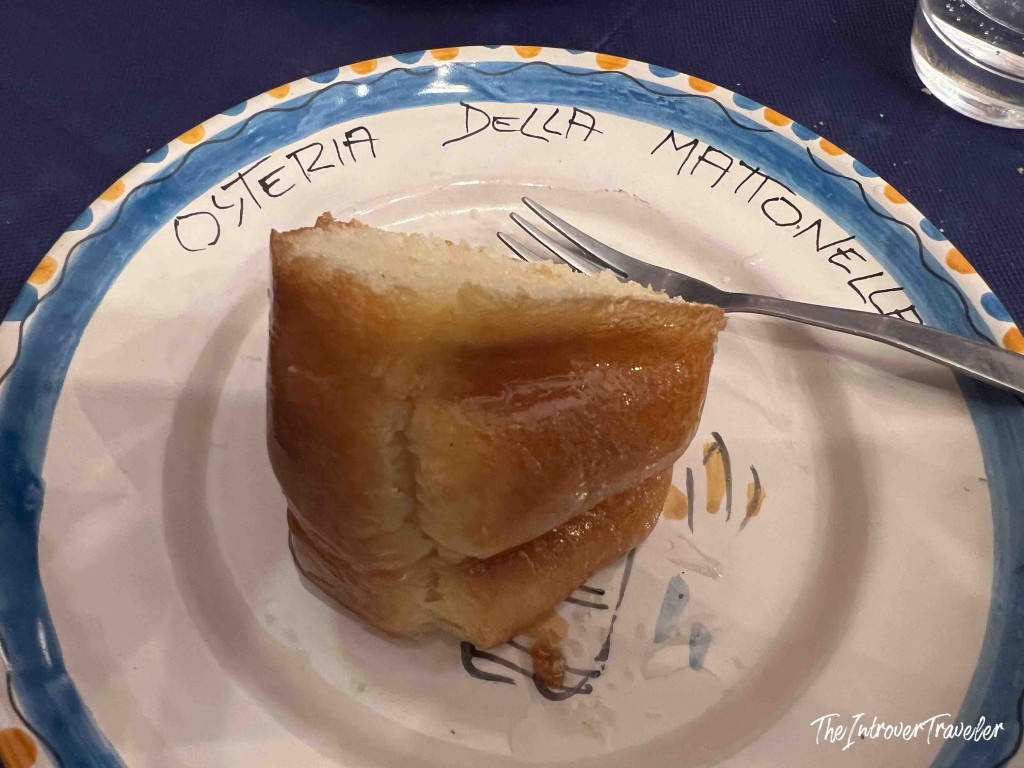
The babà, alas, was not up to standard. Not bad, mind you, but by then I was almost at the point of expecting Pino Daniele and Massimo Troisi to appear before me, ethereal, and serenade me with Tu si ‘na cosa grande, and instead the babà, which ought to be the pièce de résistance of a place like Mattonella, let me down, slightly dry and anonymous, like a Maradona scythed down by a Claudio Gentile tackle from behind two metres outside the box. In a trio, two triumphs and one stumble still make a balance sheet I would sign anywhere. Overall rating for the desserts: 8.
The beer list, or the drinker’s 41 bis
There is only one serious flaw in the whole edifice, and it concerns the cellar. Or rather, the non-cellar. The only beer on the list is bottled Nastro Azzurro. One, and decidedly among the worst. Stuff you wouldn’t serve even to inmates in 41 bis solitary confinement, a hop-scented desolation that jars with the generosity of everything else. You leave Osteria Mattonella full, reconciled with the human race, and faintly grieved only at the thought that all that food cannot be accompanied by anything better than a bottle you would find in the fridge of any vending machine in a maximum-security prison in Italy.
Conclusion
Two hundred metres from Osteria Mattonella, along the same gut of alleyways, there is a commemorative plaque dedicated to a child killed by the Camorra. The sublime and the horrific concentrated in the space of a few dozen metres, the kitchen that redeems and the news that condemns, a city that serves you, on the same plate, baccalà baked and fried and the awareness of where you are. You eat magnificently at Osteria Mattonella, and you leave happy and a little melancholy.