Date of visit: August 2025
Period: 1500 – 1070 B.C.
My rating: 10/10
Visit duration: 2 hours
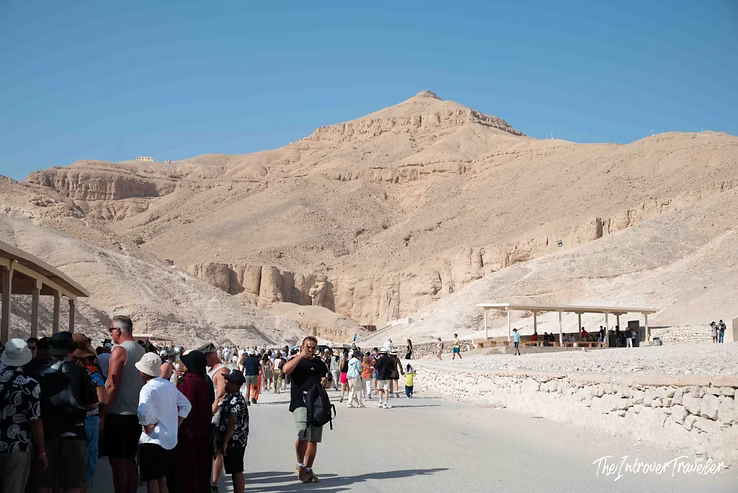
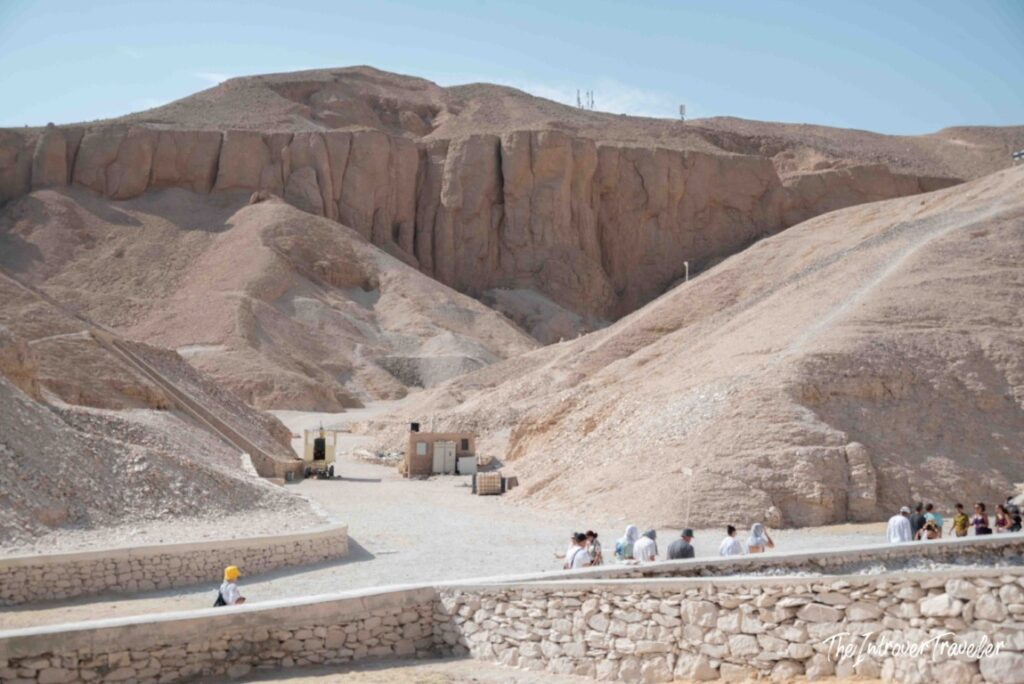
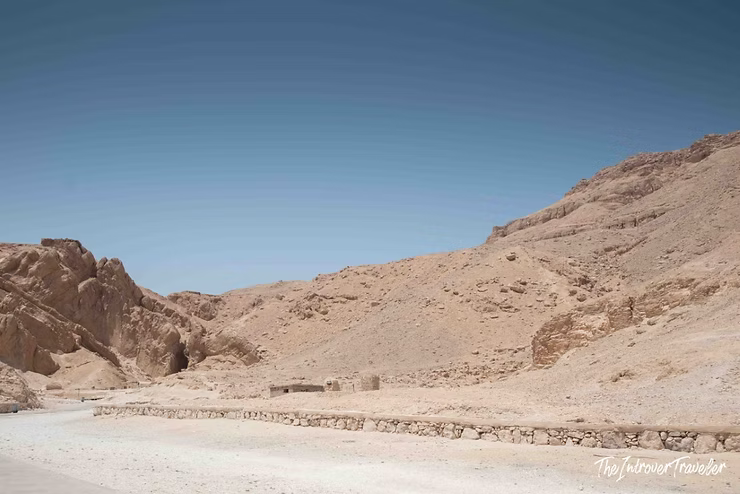
There is a moment, descending into the Valley of the Kings for the first time, when the landscape does something unexpected: it stops. The noise of the road, the haze of Luxor, the Nile, the green strip of cultivation, all of it disappears behind the ridge, and what remains is a bare limestone canyon of absolute aridity, the colour of bone, the silence broken only by the wind and the occasional footstep on gravel. It is a landscape that has been deliberately chosen for its qualities of desolation: remote, enclosed, geologically stable, and on the west bank of the Nile, the side of the setting sun, the side of death. The ancient Egyptians did not stumble upon this valley by accident. They chose it with the precision of people who understood that the place where a god-king was buried was itself a theological statement.
For five centuries, from approximately 1550 to 1070 BC, the rulers of the most powerful empire in the ancient world were brought here and sealed into the rock. Sixty-three tombs have been discovered so far. The last major one was found in 1922. There may be others.
I. From pyramid to cliff: why the pharaohs abandoned the sky
To understand why the Valley of the Kings exists, one must first understand why it replaced something else: the pyramid. For nearly a thousand years, from Djoser’s Step Pyramid around 2650 BC to the last royal pyramids of the Middle Kingdom around 1650 BC, the defining monument of Egyptian kingship had been the pyramid, that cosmological machine built to launch the dead pharaoh into the sky and guarantee his transformation into a divine being. The pyramid was not merely a tomb: it was a theological object, a statement of royal power visible for dozens of kilometers in every direction, a permanent advertisement of the dynasty’s wealth and ambition.
The problem with this arrangement was precisely its visibility. A pyramid announces itself. It says: here is an enormous concentration of treasure, guarded by the living but attended only by the dead. And the dead, as it turns out, are not effective guards. By the end of the Middle Kingdom, virtually every pyramid tomb in Egypt had been robbed, most of them within a few generations of their construction. The bodies of the pharaohs, the objects intended to serve them in the afterlife, the gold and jewellery and furniture of royal burials accumulated over lifetimes: all of it gone, taken by people who understood perfectly well what the pyramid contained and needed only the time and the tools to extract it.
The New Kingdom pharaohs, beginning with Thutmose I around 1504 BC, drew the obvious conclusion. If visibility guaranteed robbery, then invisibility was the answer. The solution was radical in its simplicity: abandon the pyramid entirely, cut the tomb directly into the rock of a hidden valley, disguise the entrance, and separate the funerary cult, which required a visible temple where priests could perform the necessary rituals, from the burial itself, which required absolute secrecy. The mortuary temples were built on the plain at the edge of the cultivation, where they could be seen and used; the tombs were hidden in the cliffs, accessible only to those who already knew where they were.
It did not work, or rather, it worked only partially and temporarily. Almost every tomb in the Valley of the Kings was robbed in antiquity, most of them within a few centuries of their sealing, many of them during the chaotic period at the end of the New Kingdom when the state’s ability to maintain order in the necropolis collapsed. The one significant exception, the tomb of Tutankhamun, survived intact not because the Valley’s security was effective but because it was buried under the debris from a later tomb’s construction and forgotten, its entrance invisible for three thousand years. The history of the Valley of the Kings is, among other things, a history of the persistent failure of secrecy as a strategy against human greed.
II. The art of making the dead immortal: mummification
Before entering the tombs, it is necessary to say something about what they were designed to contain, and about the process by which the Egyptians prepared the dead for the eternity that the tomb was meant to guarantee.
Mummification was not, in its origins, a religious ritual. It was an observation: bodies buried in the hot dry sand of the Egyptian desert desiccated naturally, preserving the features with a fidelity that burial in any other medium did not achieve. The earliest Egyptians noticed this, and drew a theological conclusion from it: the preservation of the body was necessary for the survival of the soul. If the body decomposed, the soul had nowhere to return to. To guarantee immortality, you had to guarantee the body.
The developed practice of artificial mummification, which reached its most sophisticated form during the New Kingdom precisely when the Valley of the Kings was in use, was a process of extraordinary technical complexity that took seventy days to complete and involved a team of specialist priests and embalmers working according to procedures that were simultaneously medical and ritual.
The first and most important step was the removal of the internal organs, which decompose rapidly and would destroy the body from within if left in place. The brain was extracted through the nose using a long hook, liquefied, and discarded: the Egyptians, unlike the Greeks, did not consider the brain the seat of intelligence or personality, which they located in the heart. The heart was left in place, as it would be needed for the judgment of the dead. The lungs, liver, stomach, and intestines were removed through an incision in the left side of the abdomen, cleaned, treated with natron, wrapped in linen, and placed in four containers known as canopic jars, each protected by one of the four sons of Horus: Hapy for the lungs, Imsety for the liver, Duamutef for the stomach, Qebehsenuef for the intestines. In the finest burials, the canopic jars were themselves placed in an elaborately decorated canopic chest, which accompanied the mummy into the tomb.
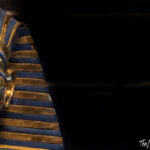
The body cavity was then cleaned, rinsed with palm wine and spices, and packed with natron, a naturally occurring salt compound found in the Egyptian desert, which drew the remaining moisture from the tissues. The body was then covered externally in natron and left to desiccate for forty days. At the end of this period, the body was cleaned again, the cavity repacked with linen, sawdust, or aromatic substances to restore its shape, and the skin treated with oils and resins to preserve its flexibility. The entire body was then wrapped in hundreds of meters of linen bandages, with amulets placed between the layers at specific points on the body according to a ritual map derived from funerary texts. The wrapping itself was a ritual act, accompanied by the recitation of spells and the placement of a funerary mask over the face: in royal burials, this mask was of gold, the most famous example being the mask of Tutankhamun, now in the Grand Egyptian Museum in Cairo.
The final product of this seventy-day process was an object that was simultaneously a preserved human body and a ritual artifact: recognizably the person it had been in life, transformed by the process of preparation into something that existed at the threshold between the human and the divine. The mummy was not a corpse. It was, in Egyptian theological terms, a body made ready for resurrection.
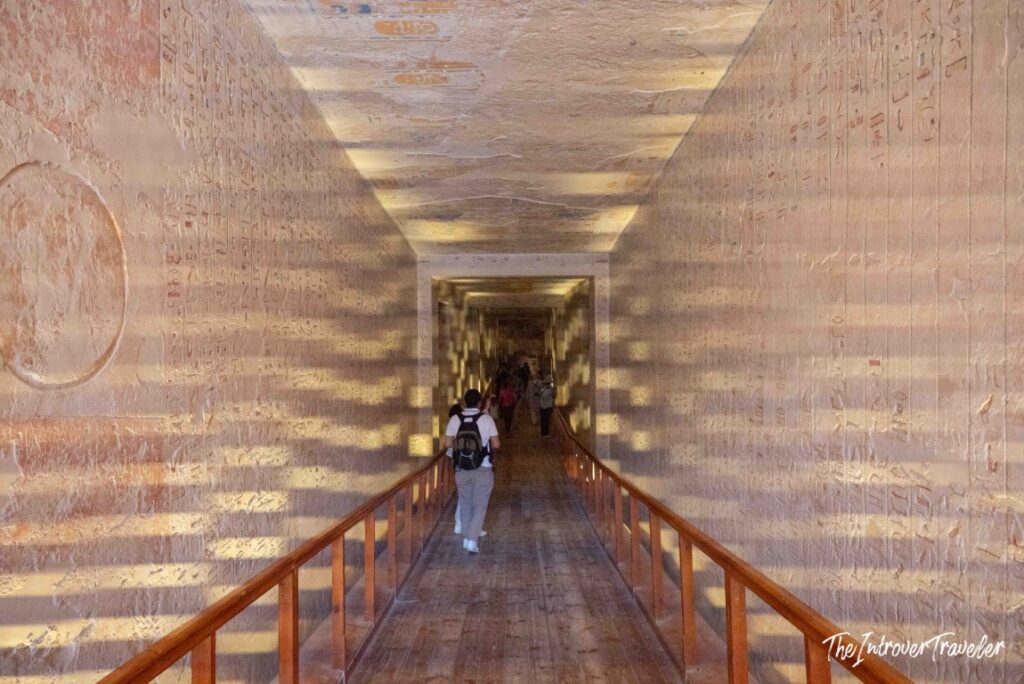
The tombs of the Valley of the Kings were designed around the needs of this transformed body and of the soul that would inhabit it. The burial chamber was only one element of a complex spatial program: antechambers for the storage of grave goods, corridors whose walls carried the texts and images the deceased would need to navigate the underworld, shaft rooms designed to trap or deter robbers, subsidiary chambers for the canopic equipment and the funerary furniture. The deeper into the rock the tomb cut, the more elaborate the decoration became, the walls moving from simple texts near the entrance to the full visual program of the underworld books in the burial chamber itself.
III. The books of the underworld: what the walls say
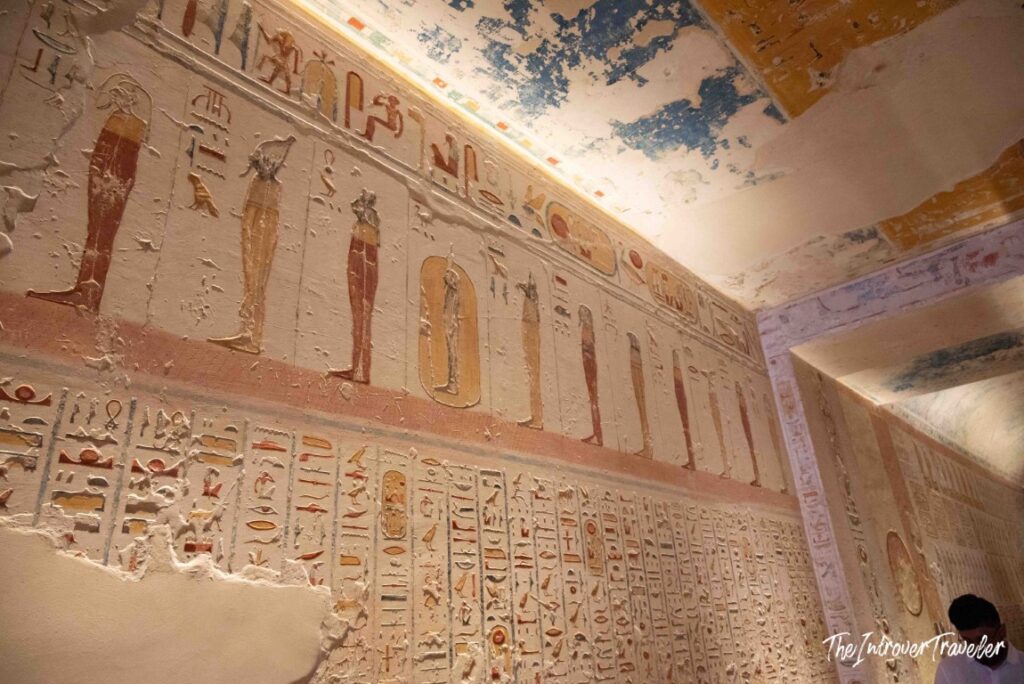
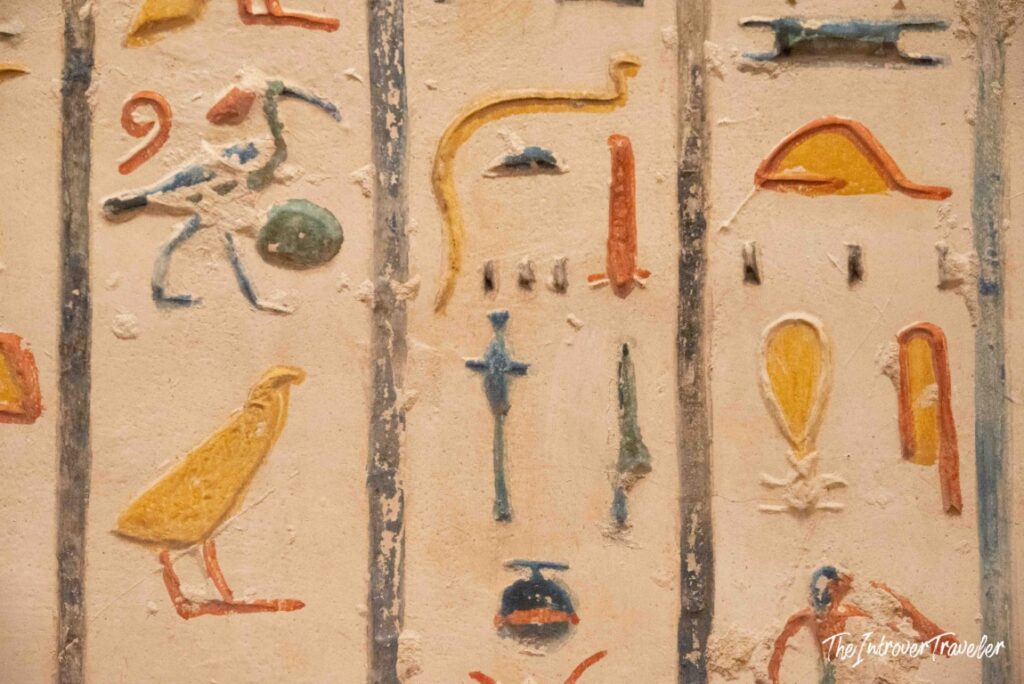
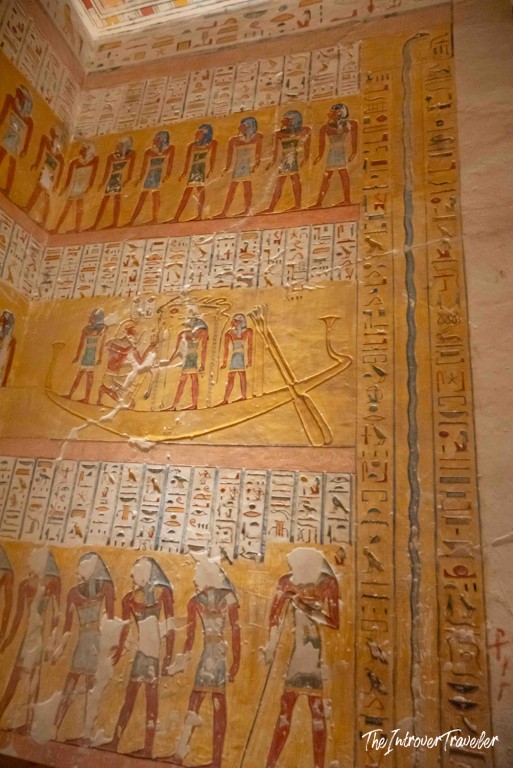
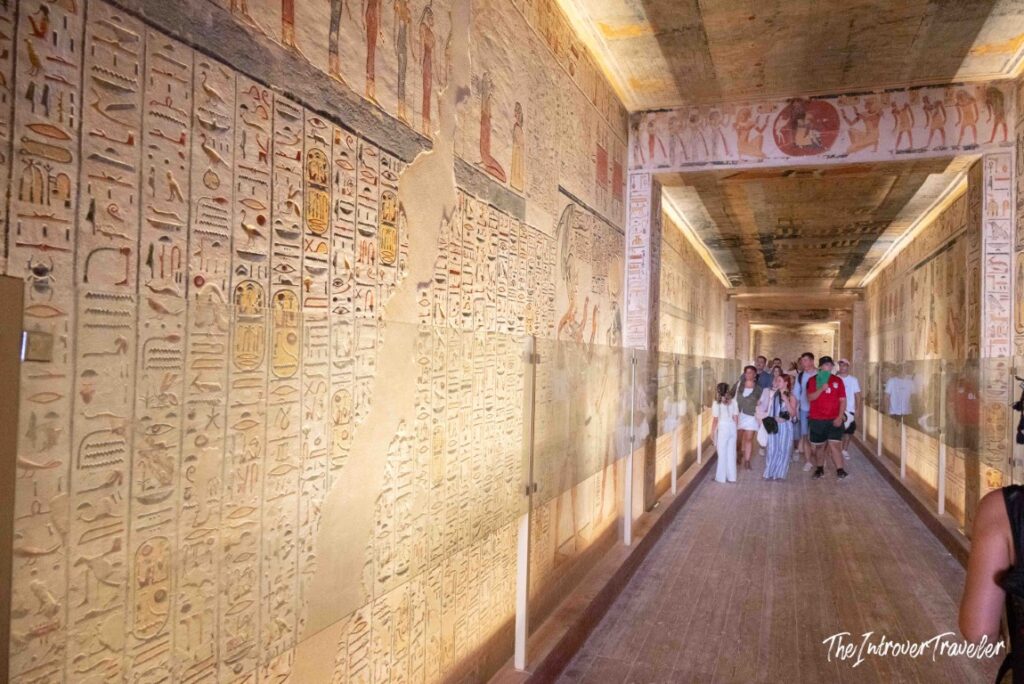
The decoration of the royal tombs in the Valley of the Kings is not decorative in any modern sense of the word. It is functional: a library of texts and images whose purpose was to guide the dead king through the dangers of the underworld and ensure his successful resurrection and union with the solar god Ra.
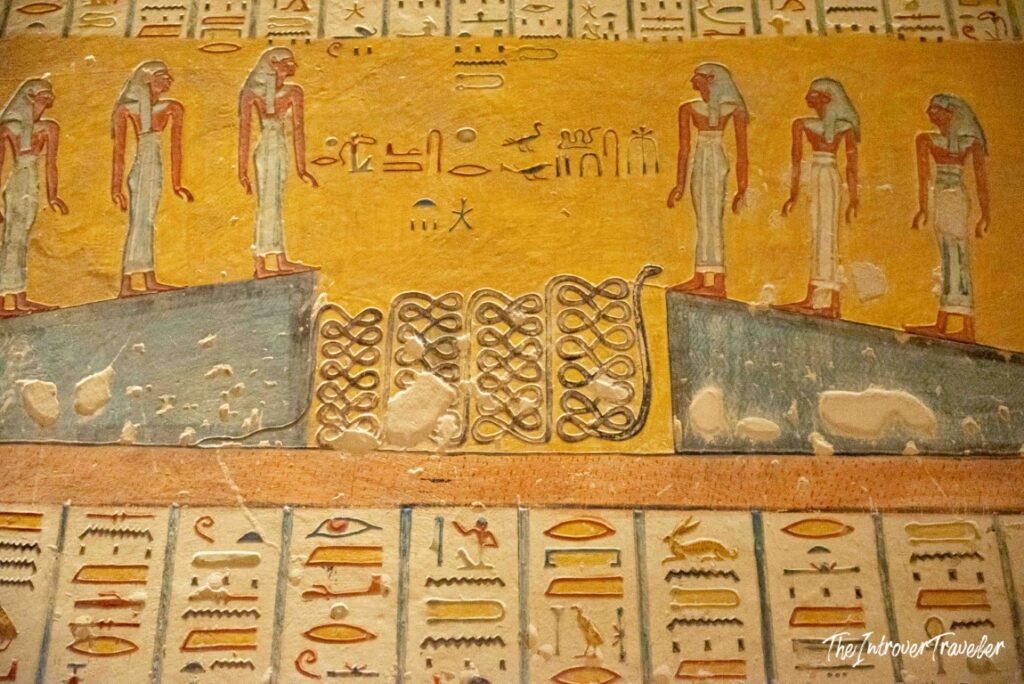
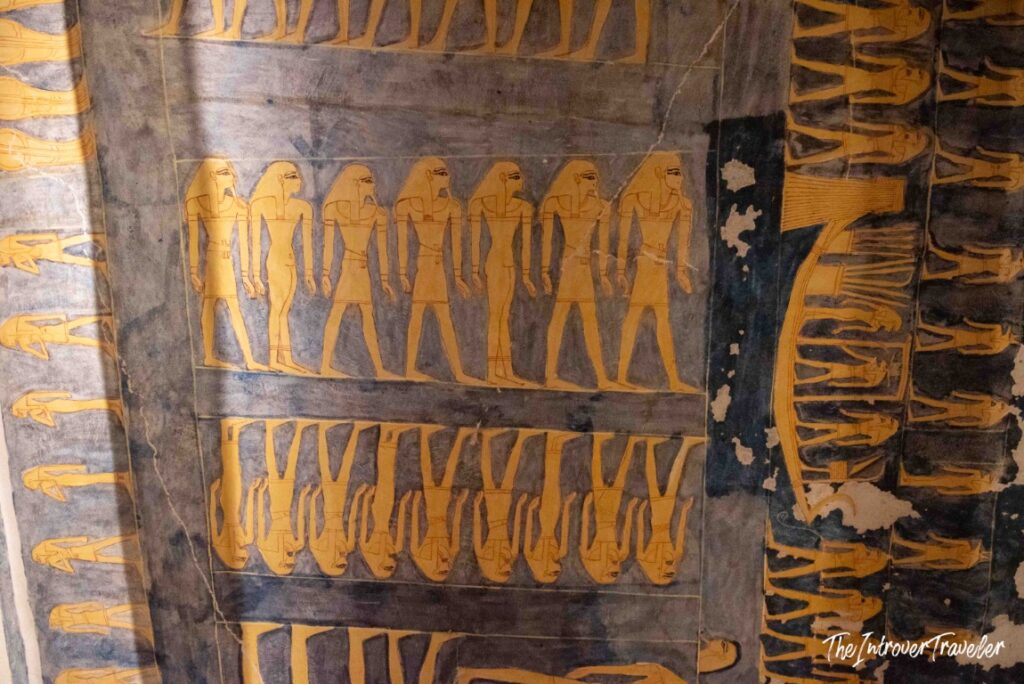
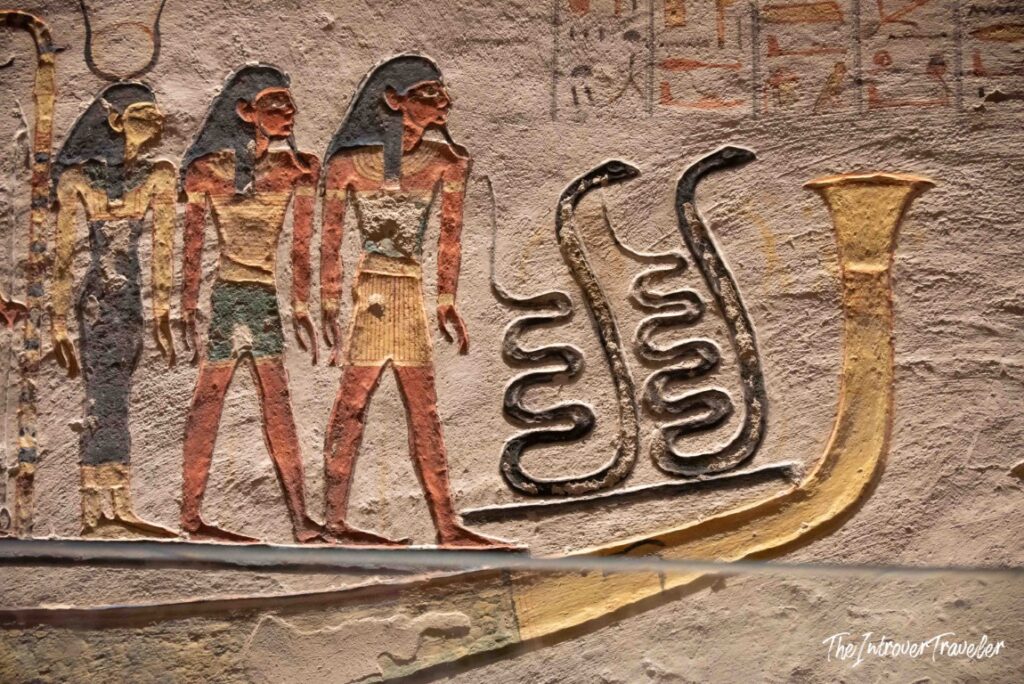
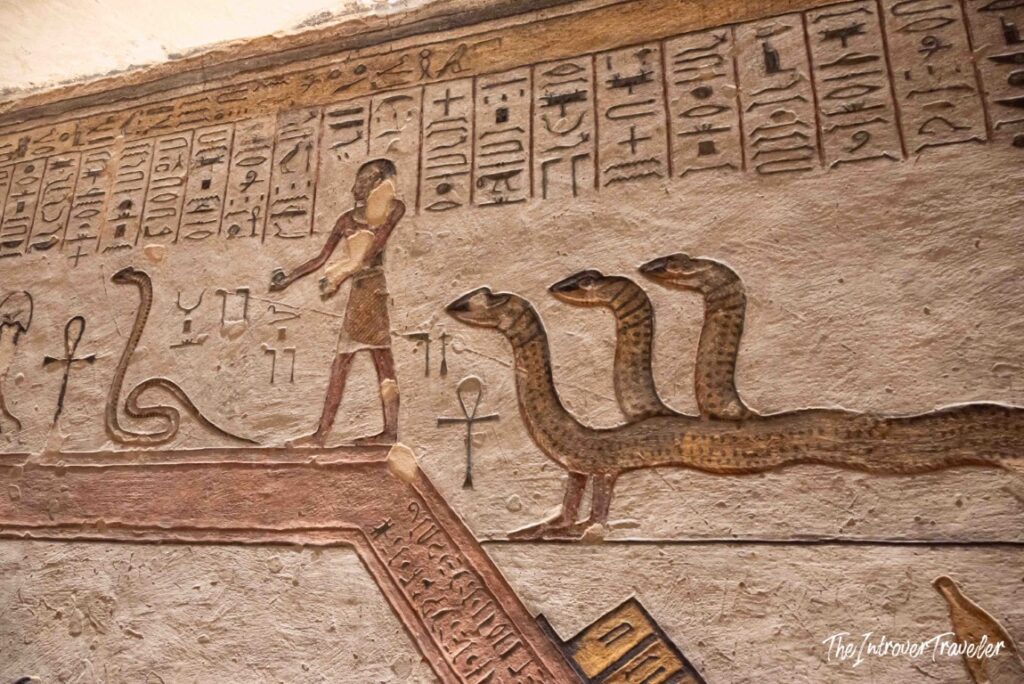
The primary texts used in the New Kingdom royal tombs are known collectively as the Books of the Underworld: the Amduat, or “That Which Is in the Underworld,” which describes the twelve hours of the night through which the sun god travels between sunset and sunrise; the Book of Gates, which depicts the passage through twelve guarded gates; the Book of Caverns; the Litany of Ra; and several others, each representing a slightly different theological model of the afterlife and the mechanisms of solar regeneration. These texts were not public documents: they were royal prerogatives, available only to the pharaoh, whose identification with Ra gave him the right to accompany the sun god on his nocturnal journey and to share in his daily resurrection.
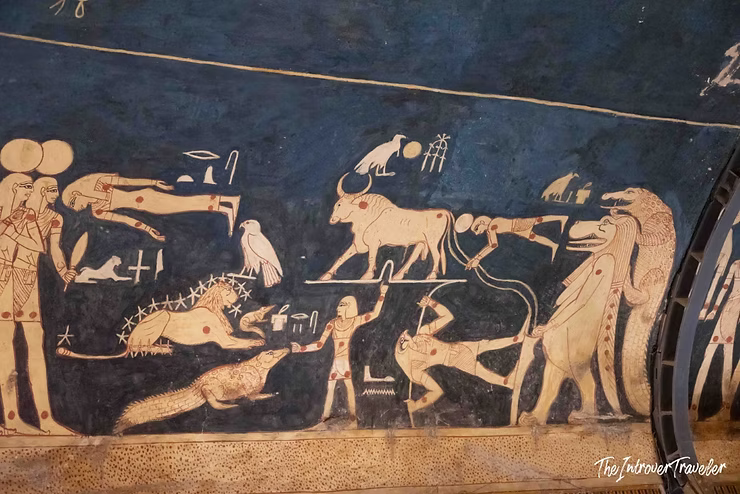
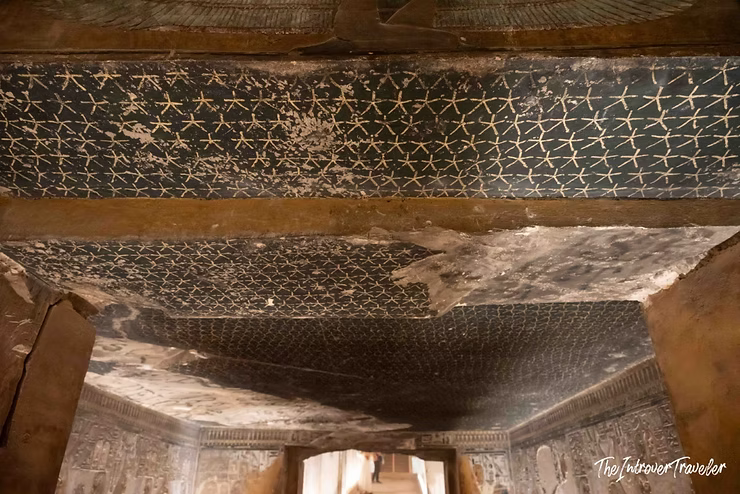
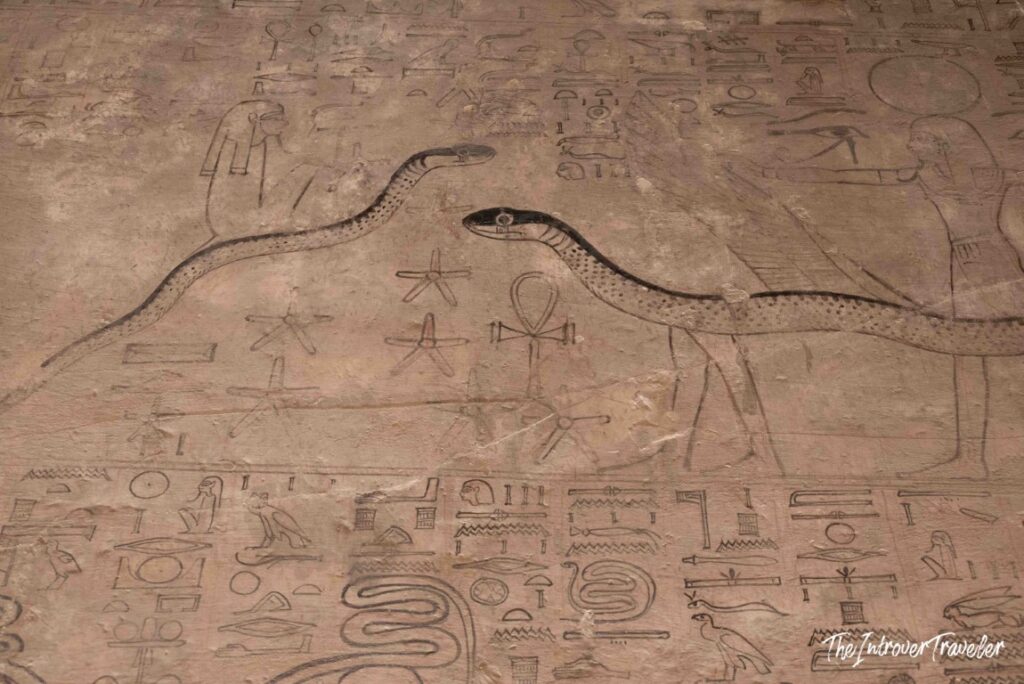
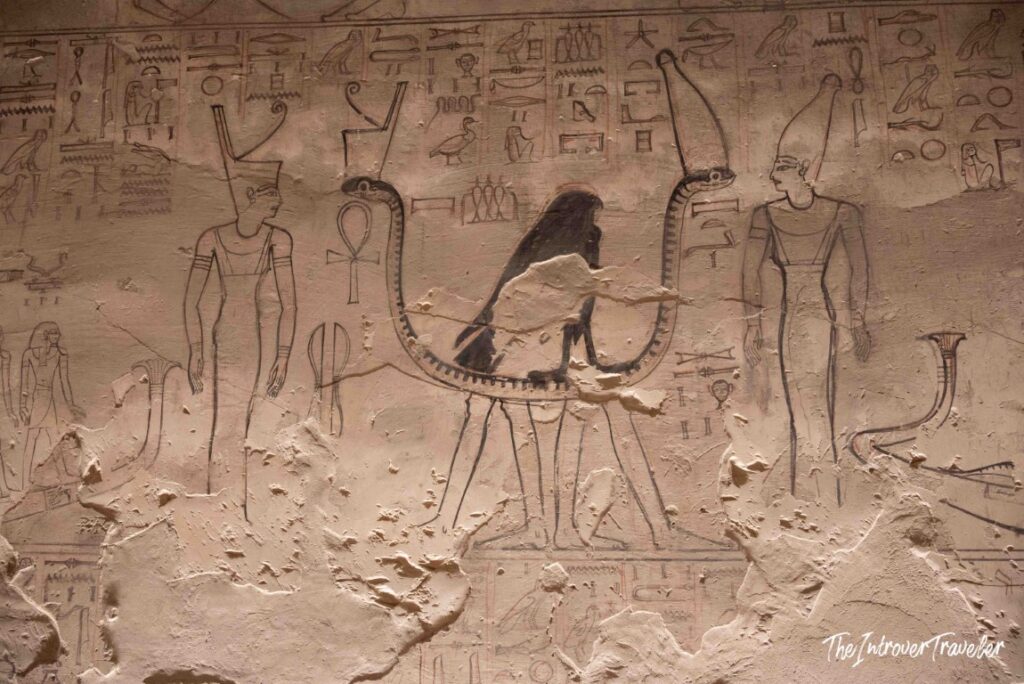
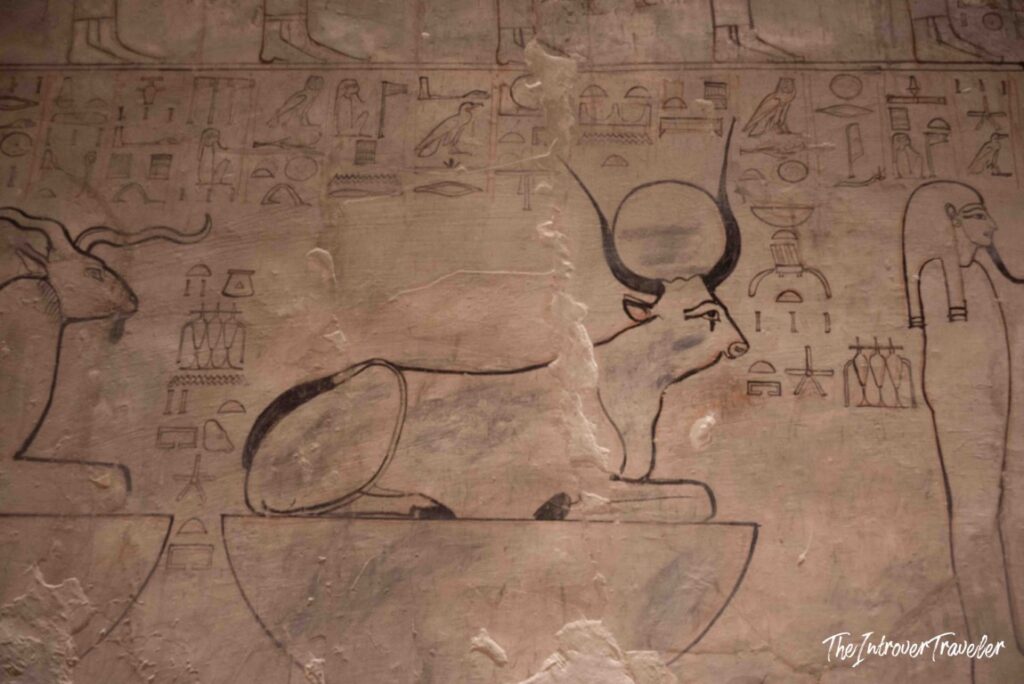
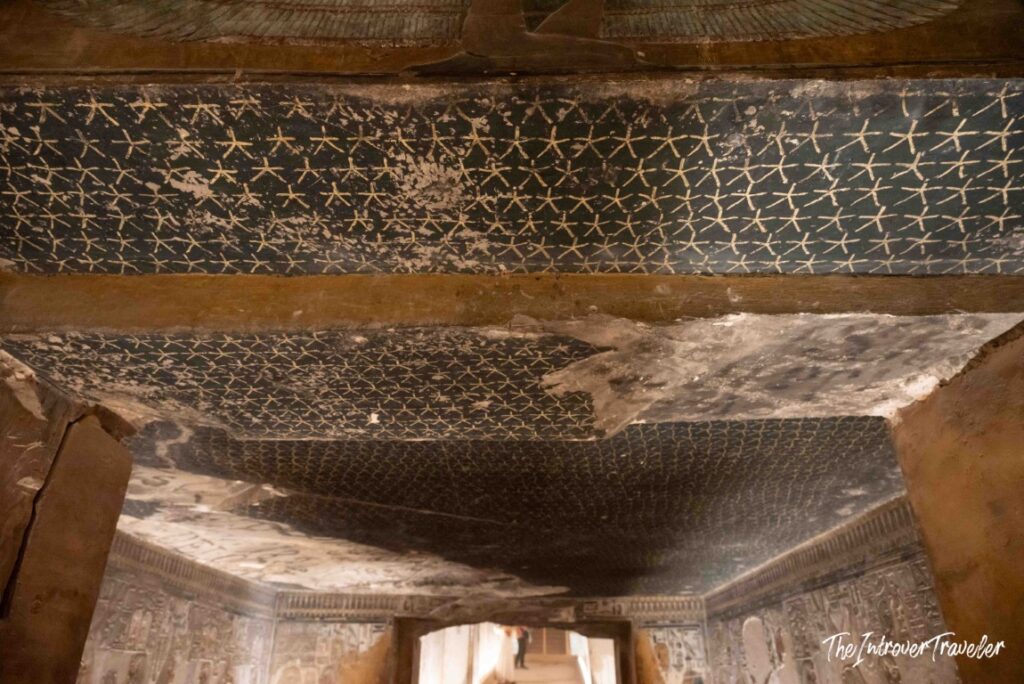
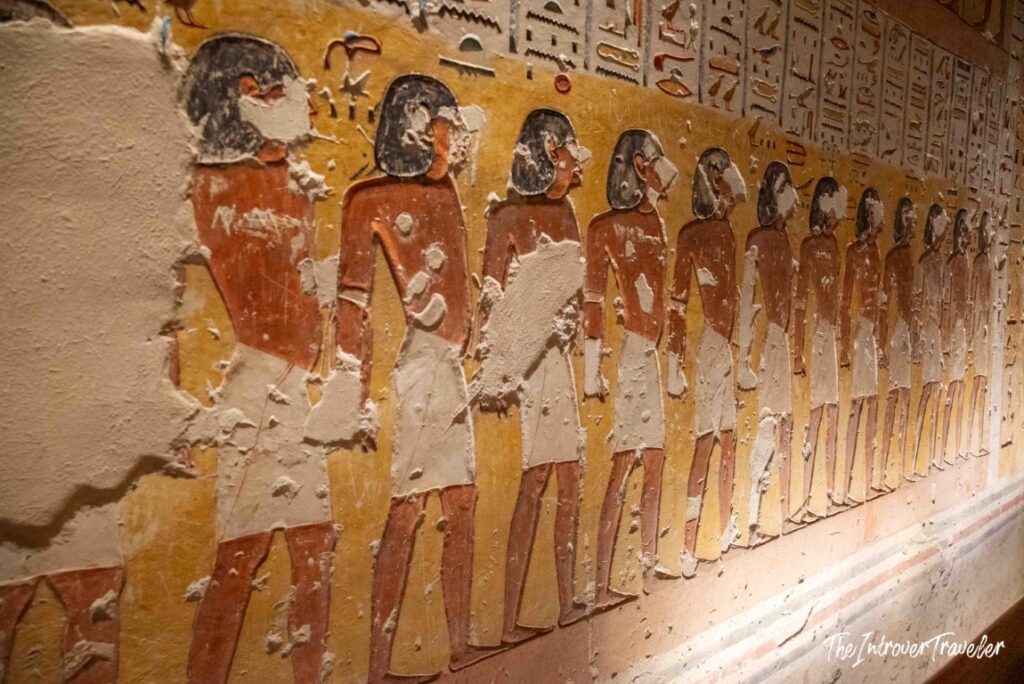
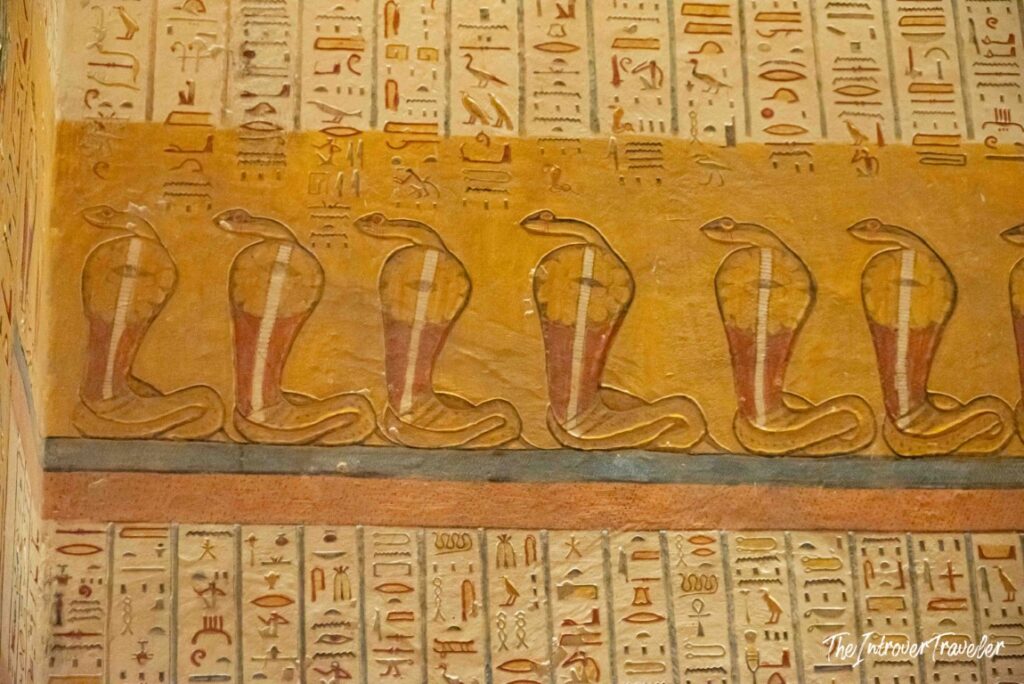
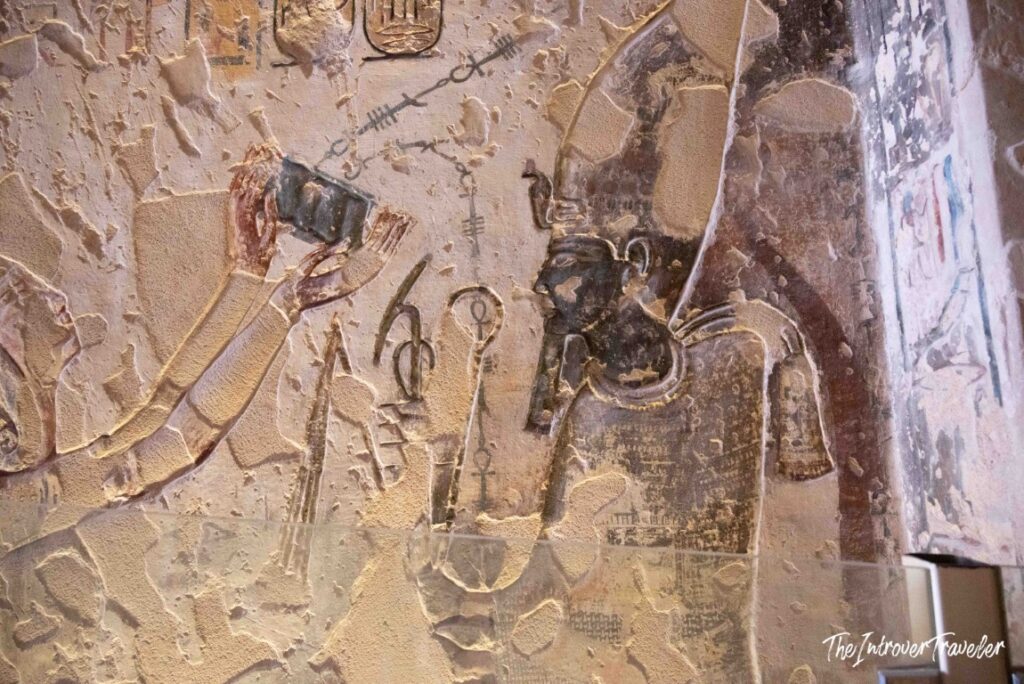
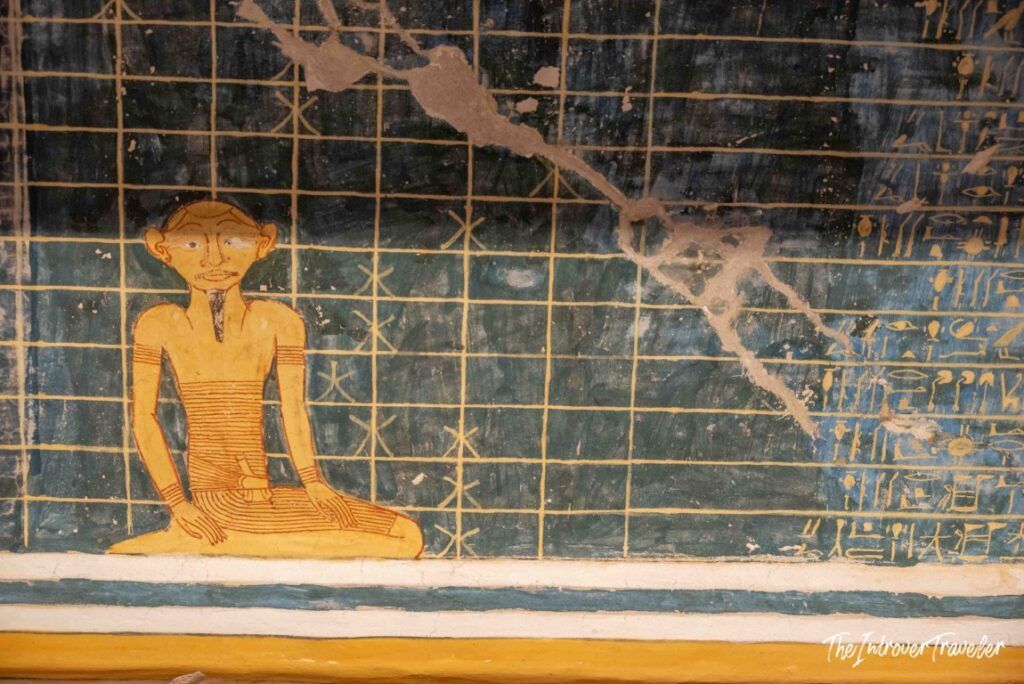
The images that accompany these texts are among the most visually distinctive in all of Egyptian art: registers of figures in profile, gods with the heads of animals, the solar barque navigating through zones of darkness populated by serpents and demons, the hours of the night personified as female figures, the dead king in various stages of his transformation. The color palette tends toward the deep blues and ochres and blacks of a world lit from within rather than from above. The effect, in a tomb whose ceiling is painted with stars on a dark blue ground, is of being inside the sky at night, inside the moment of maximum darkness just before the sun begins its return.
IV. The thieves: a three-thousand-year crime wave
The history of the Valley of the Kings is inseparable from the history of its plunder, and that history begins almost immediately after the first tombs were sealed.
The robbers were not, for the most part, outsiders or criminals in any simple sense. They were locals: workmen who had helped build the tombs, priests who had administered the funerary cults, officials who knew where the entrances were and what lay beyond them. The records of the tomb robbery trials conducted by the Egyptian state at the end of the Twentieth Dynasty, around 1100 BC, survive in papyri that are among the most vivid documents of daily life in ancient Egypt: they record confessions of extraordinary specificity, naming the tombs entered, the objects taken, the gold melted down, the accomplices bribed. One confessor describes finding the royal mummy and stripping it of its gold in language of almost casual matter-of-factness: the gods had been robbed, the eternal had been violated, and the robbers were primarily concerned with the exchange rate for gold at the local market.
The Egyptian state made periodic attempts to address the situation, consolidating the surviving royal mummies into collective caches for protection: one such cache, discovered at Deir el-Bahari in 1881, contained the mummies of more than fifty kings, queens, and priests, wrapped and relabeled by the priests who had gathered them, including Ramesses II, Seti I, and Thutmose III, stacked in a cliff tomb like inventory in a warehouse. The image is both poignant and faintly absurd: the most powerful men in the ancient world, who had built temples and conquered empires and declared themselves gods, reduced in death to anonymous bundles in a shared storage facility, waiting for a French Egyptologist to find them three thousand years later.
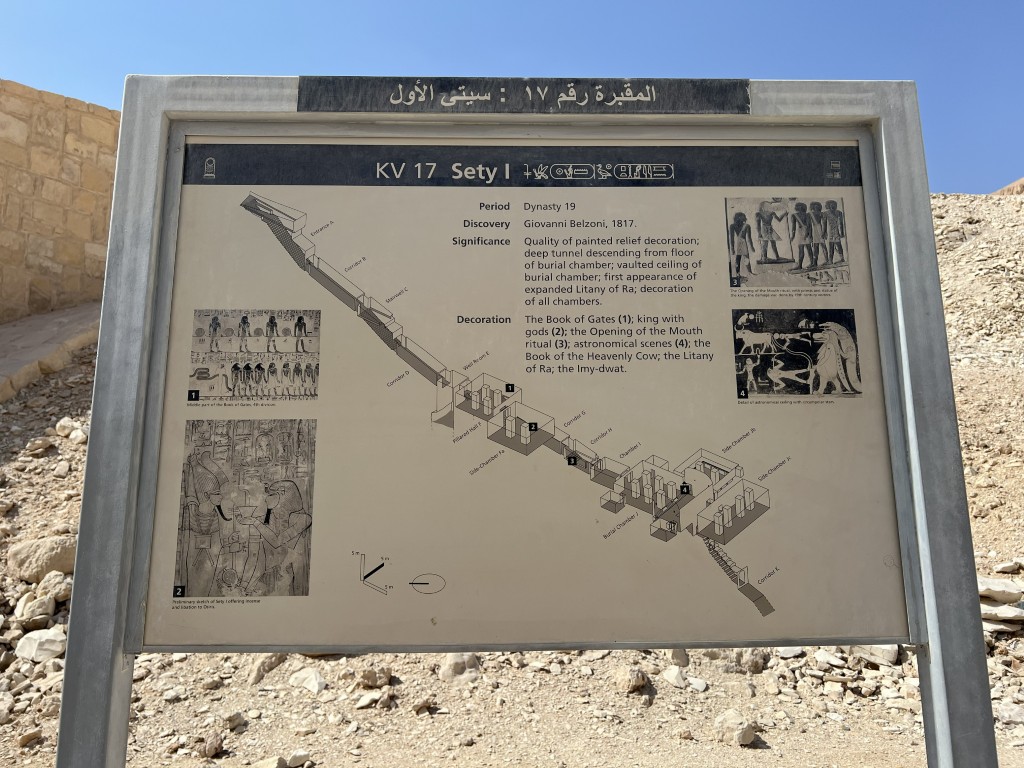
The robbers of the Valley of the Kings were eventually succeeded by a different kind of looter: the European collectors and archaeologists of the eighteenth and nineteenth centuries, who removed objects from the tombs with a thoroughness and a legal impunity that the ancient thieves could only have envied. The contents of many of the Valley’s tombs are now distributed across the museums of Europe and America, separated from their contexts and from each other by the accidents of the antiquities market and the collecting habits of a colonial era. The tomb of Seti I, to take one example, was entered by Giovanni Belzoni in 1817; its extraordinary alabaster sarcophagus is now in the Sir John Soane’s Museum in London, while fragments of its painted reliefs are in the Louvre, the British Museum, and various private collections. The tomb itself is empty of everything except its walls.
V. Seti I: the Sistine Chapel of the Valley of the Kings
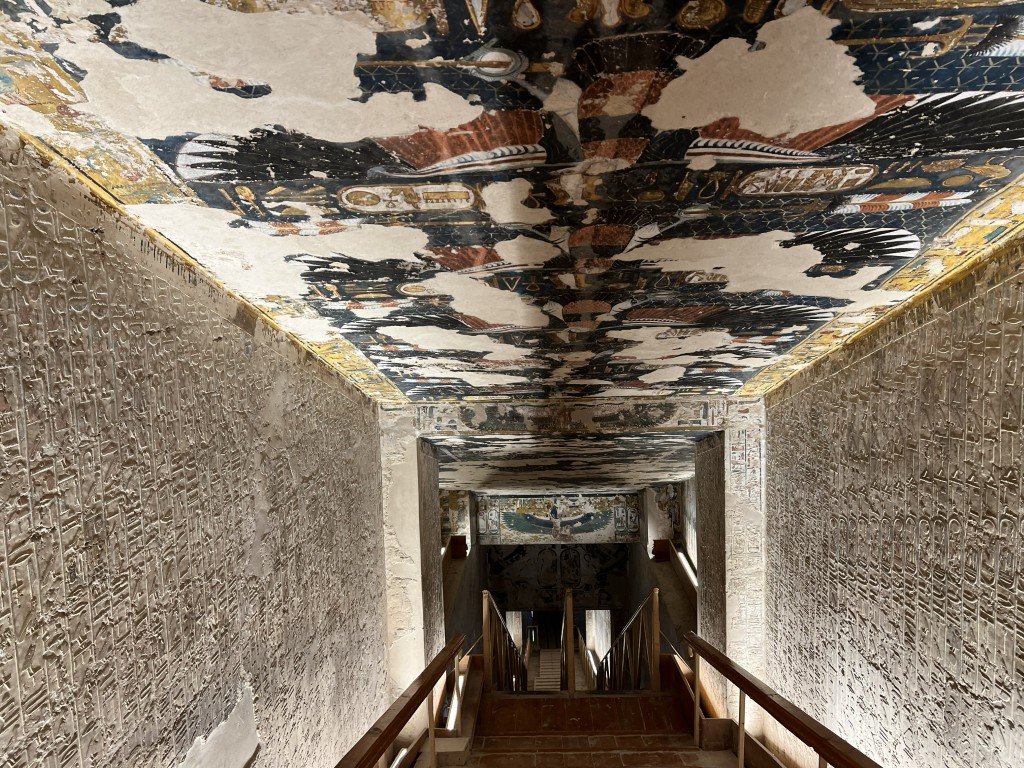
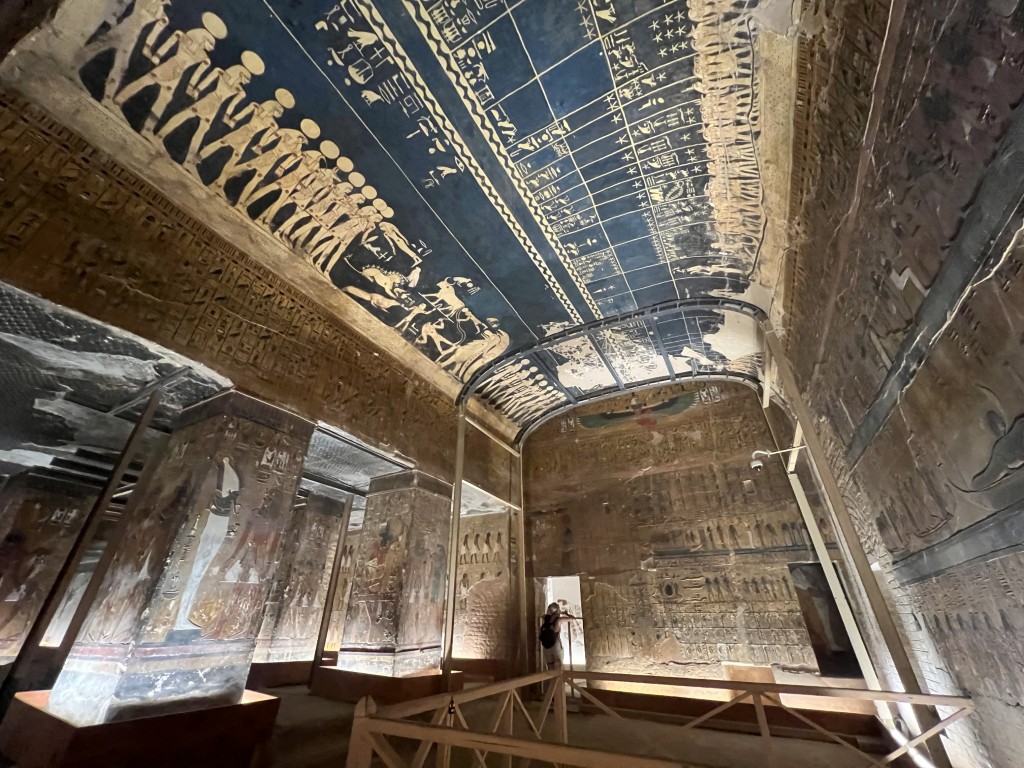
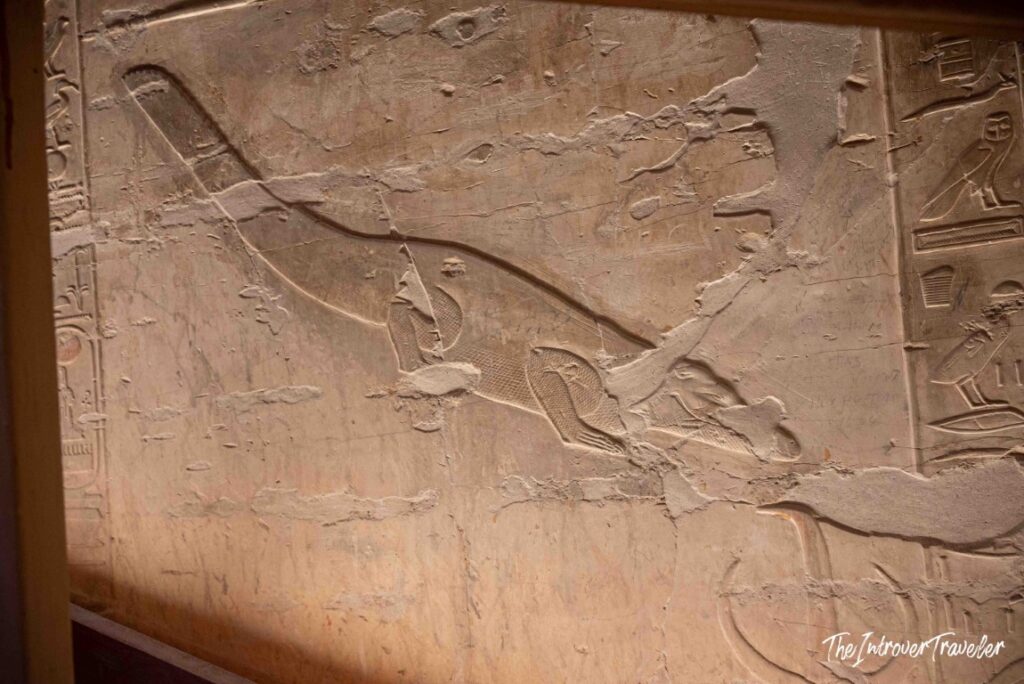
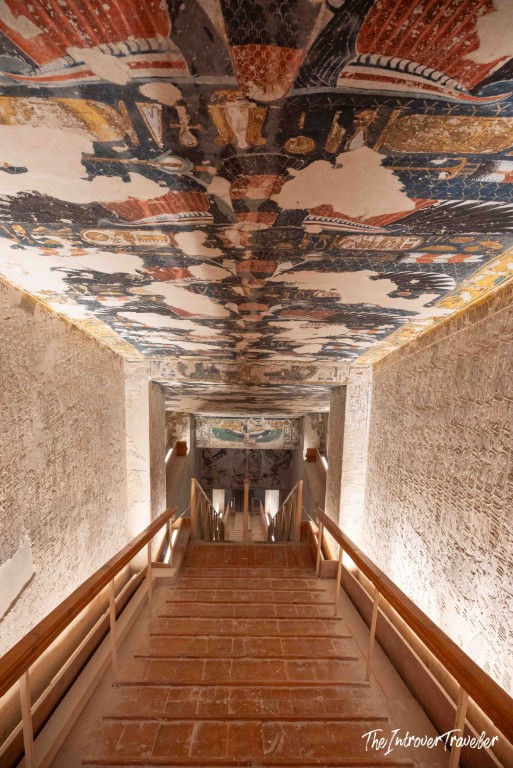
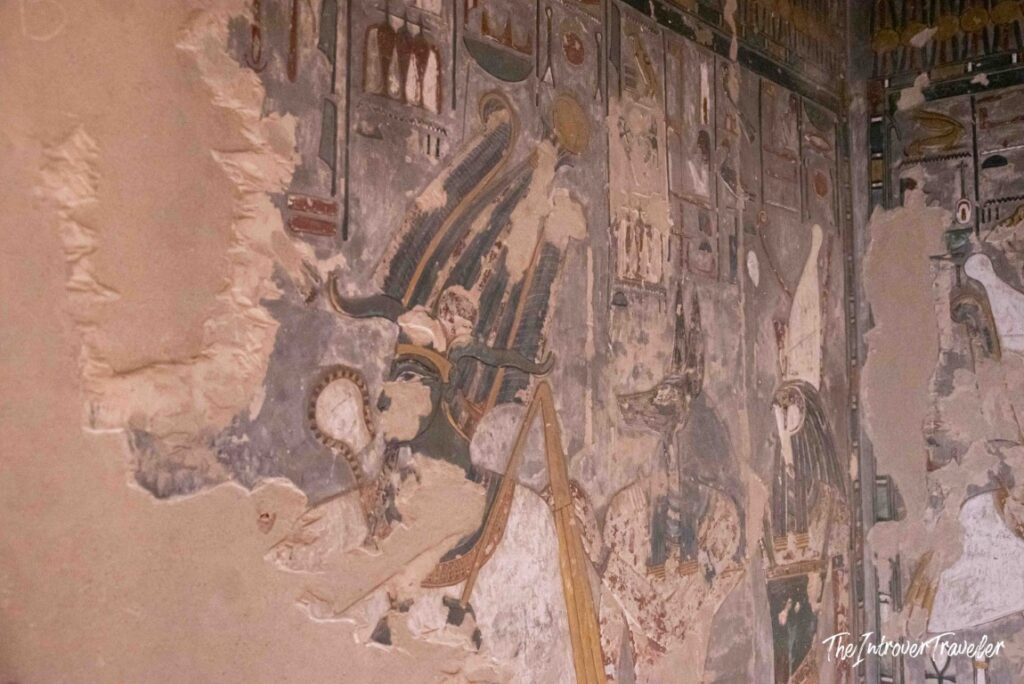
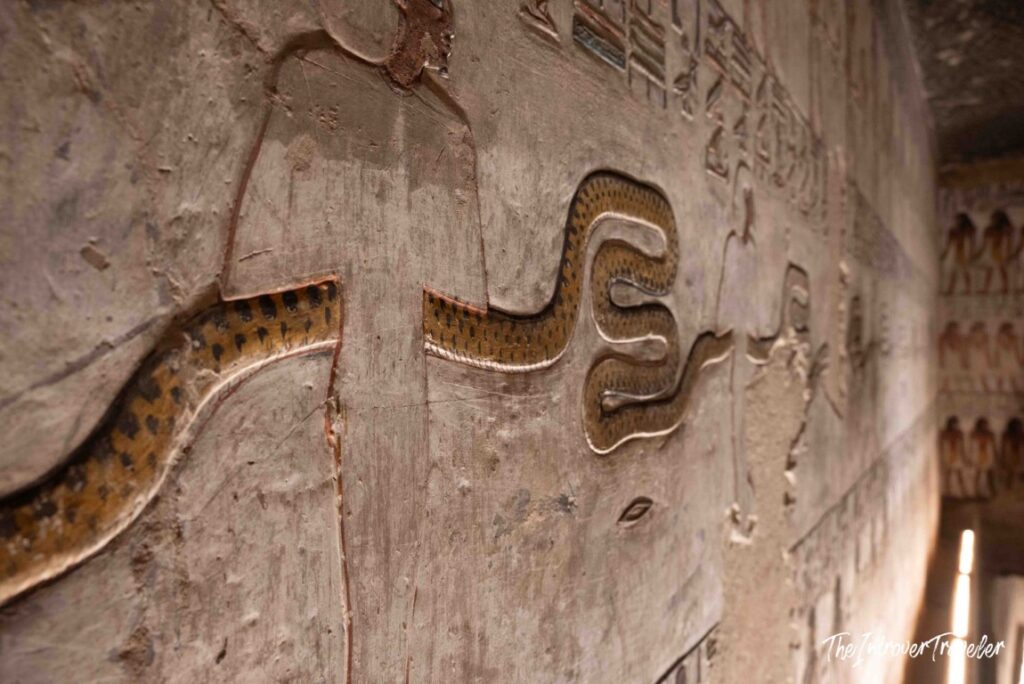
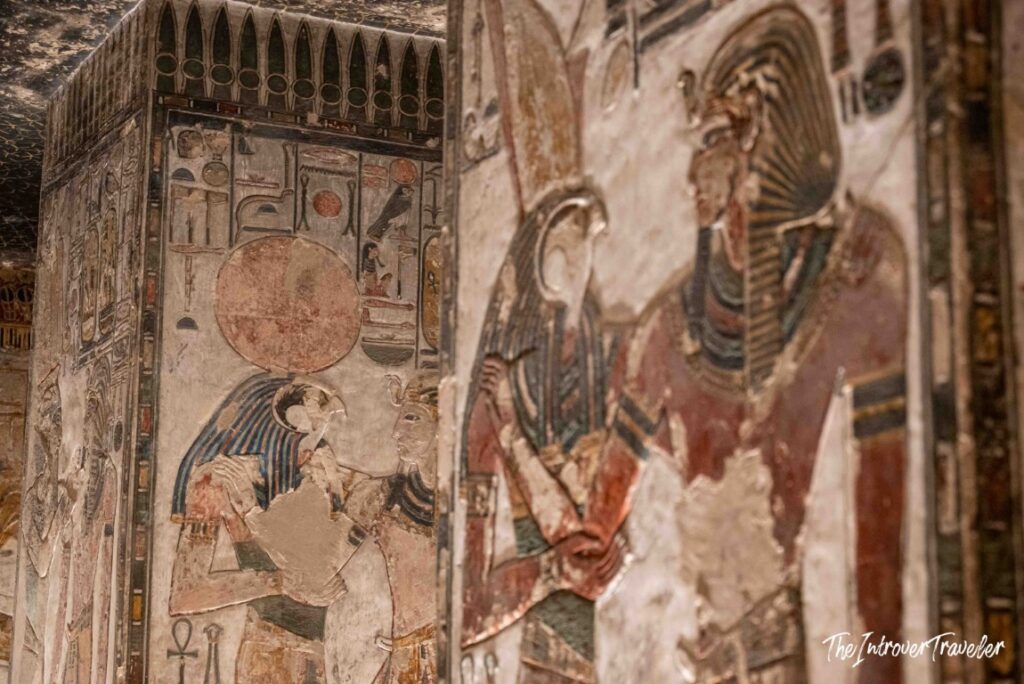
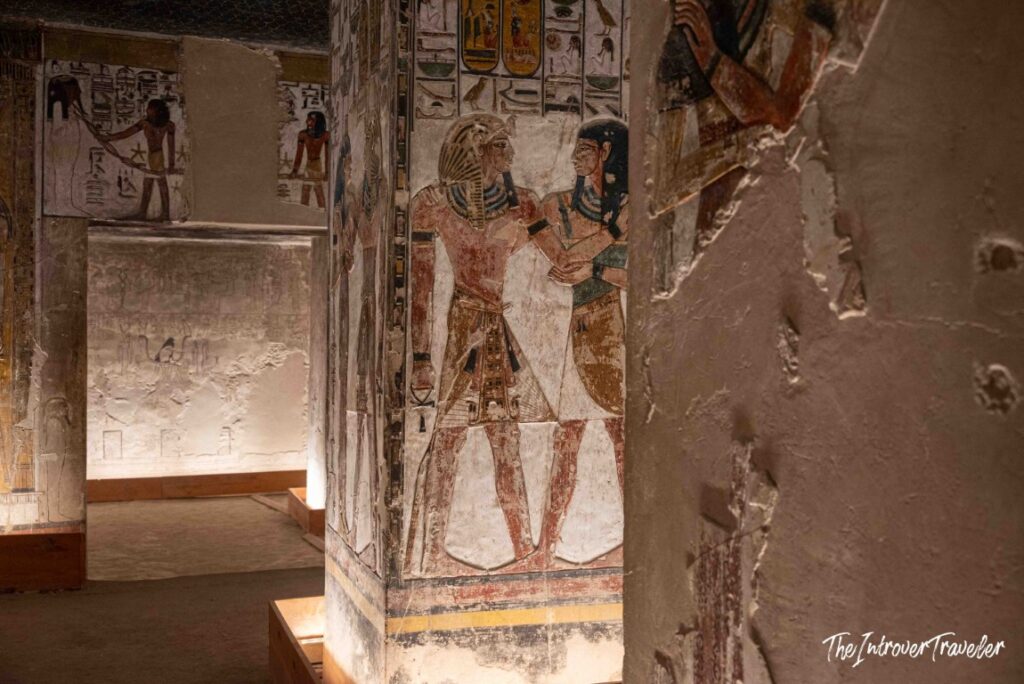
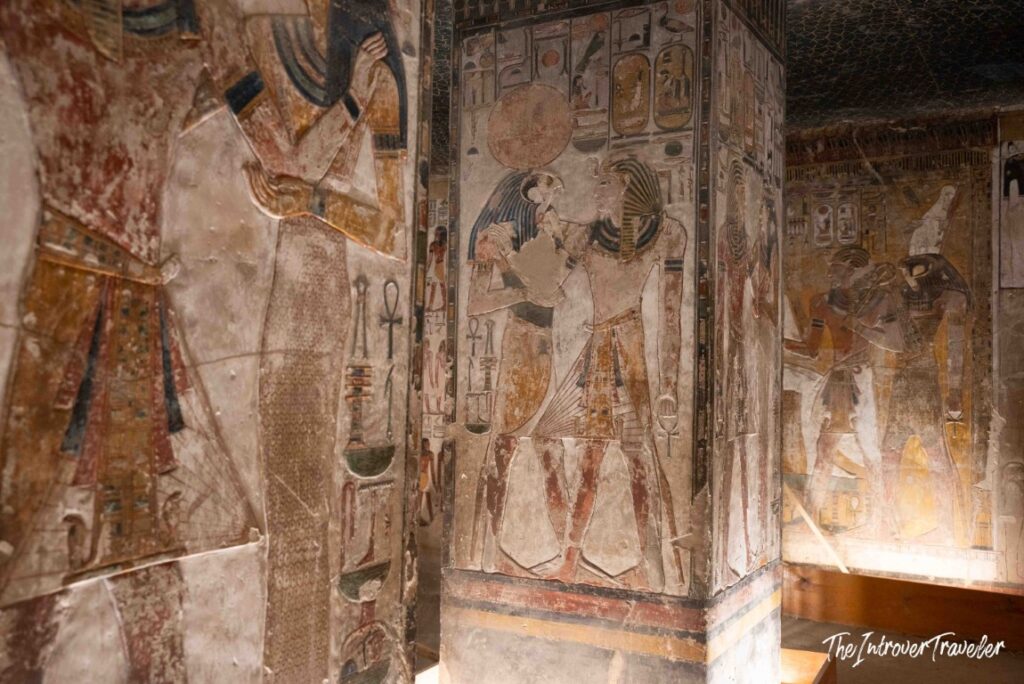
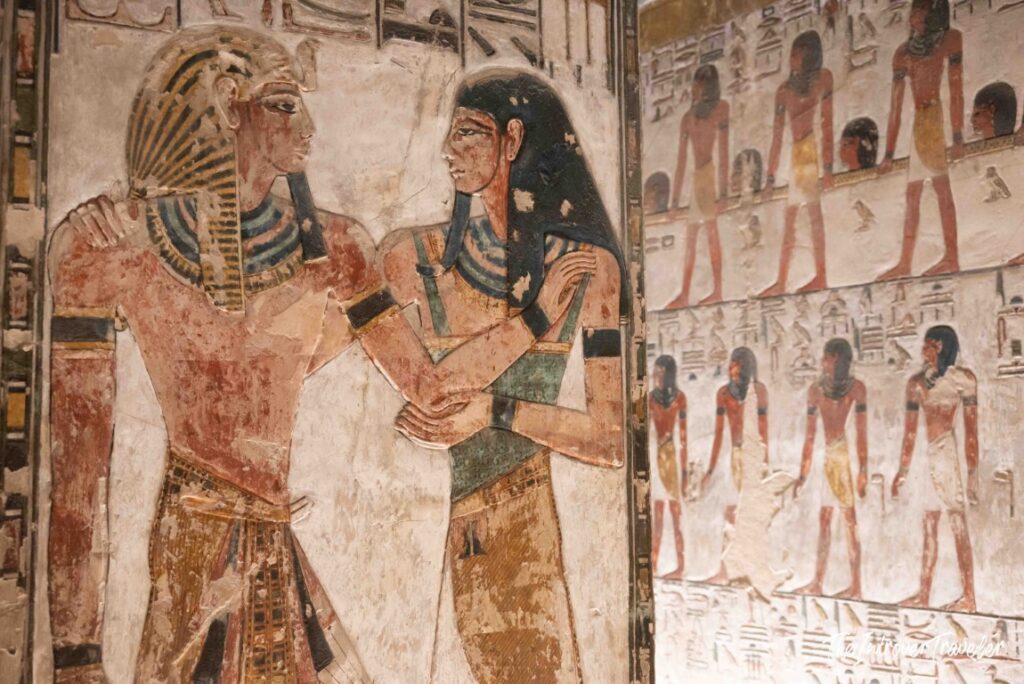
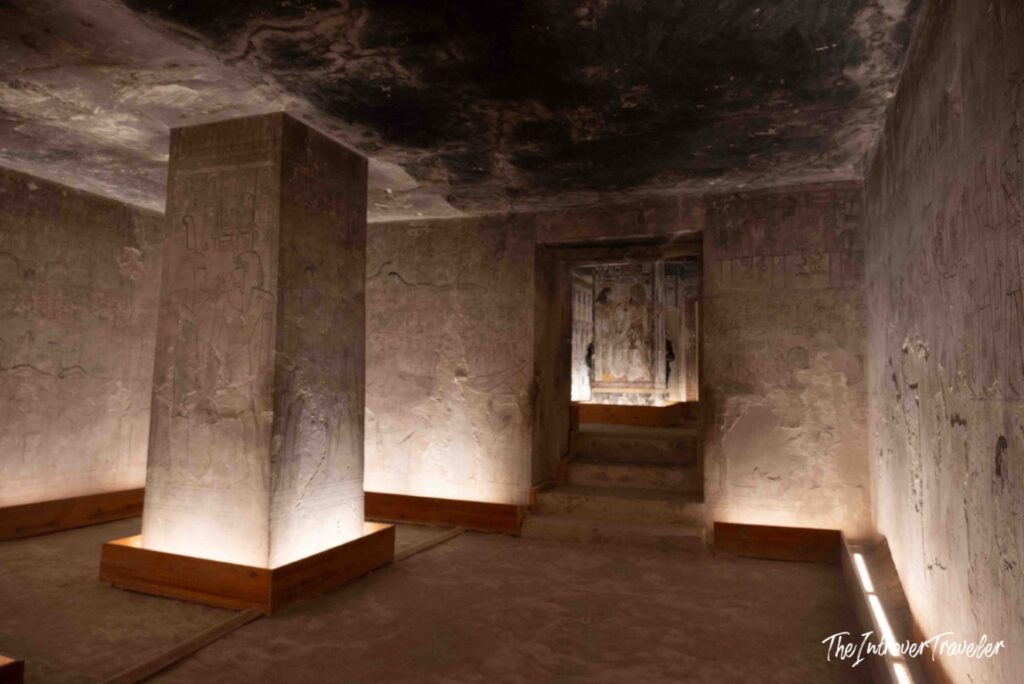
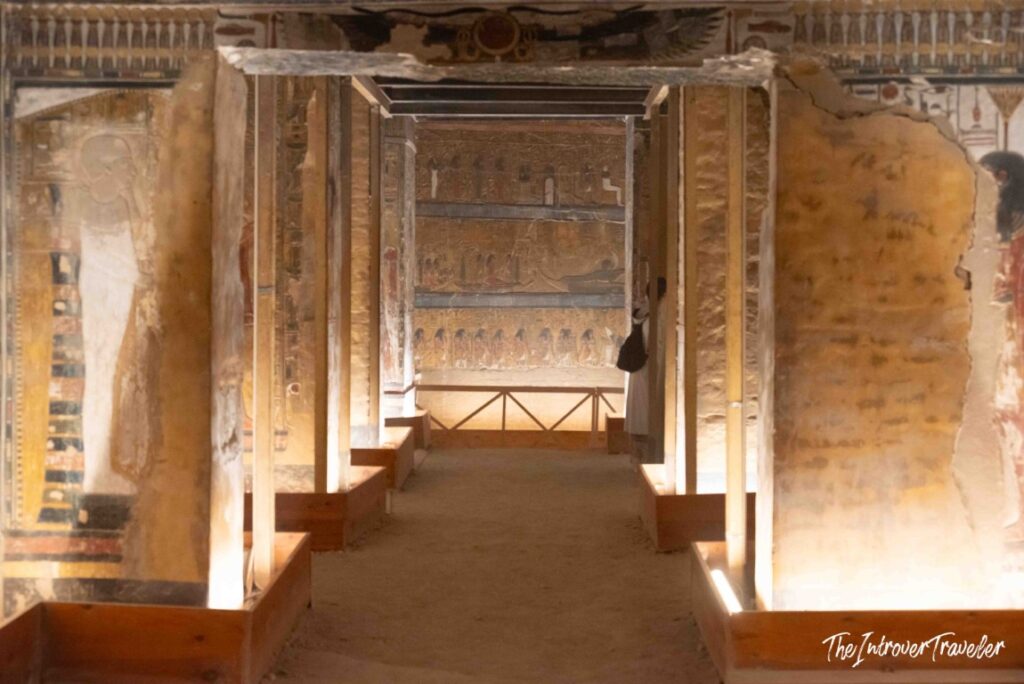
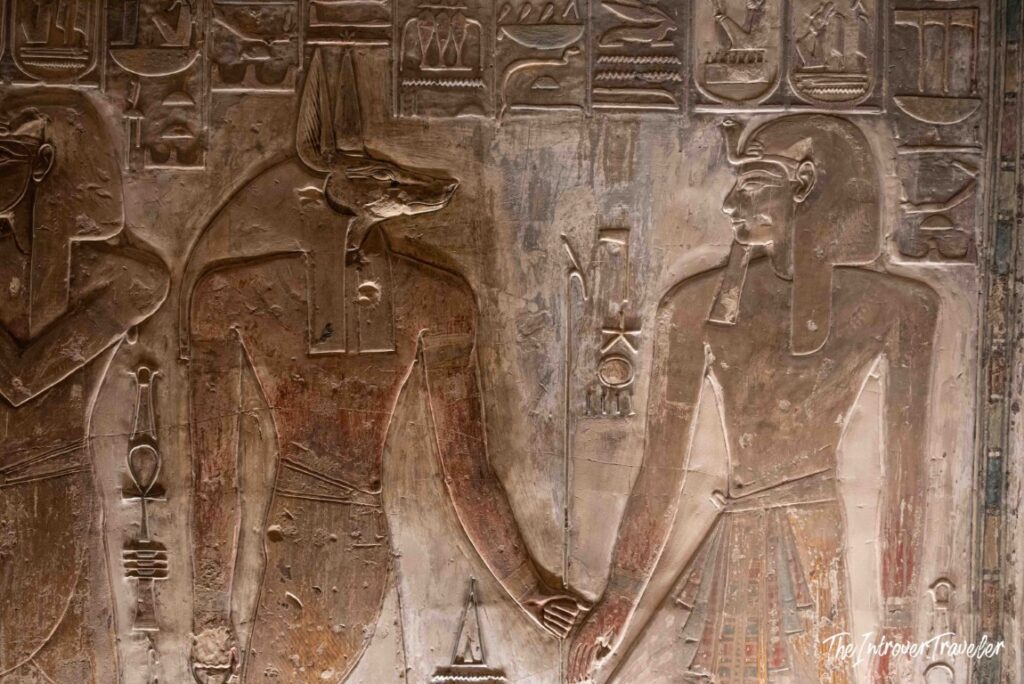
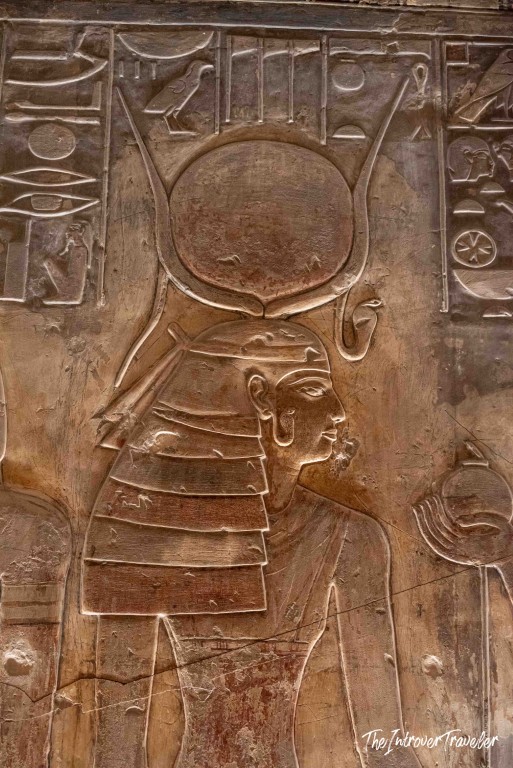
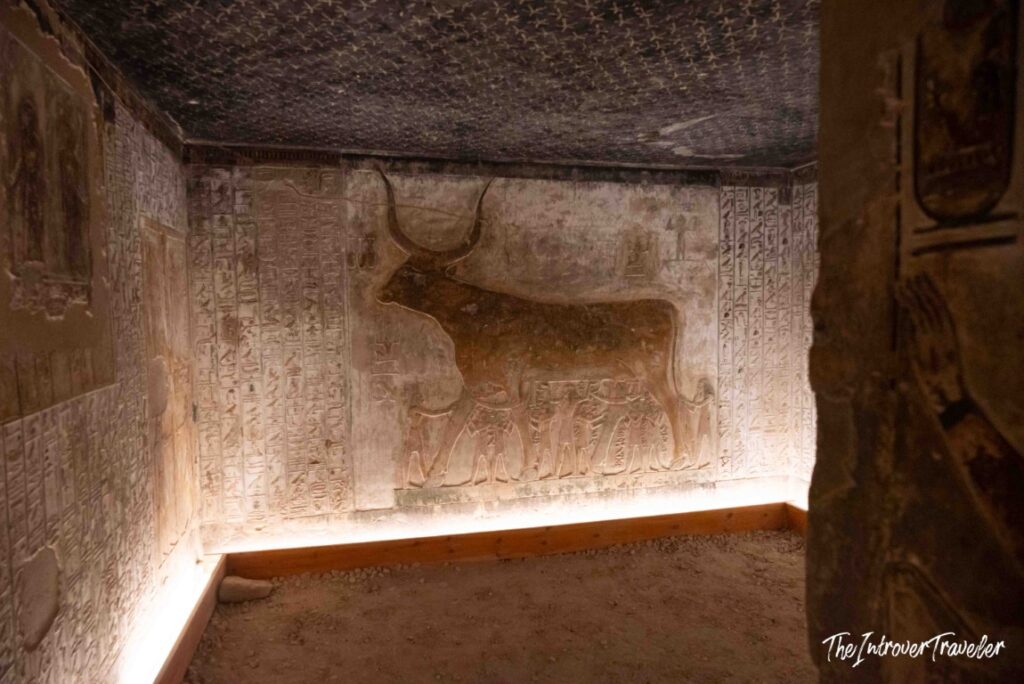
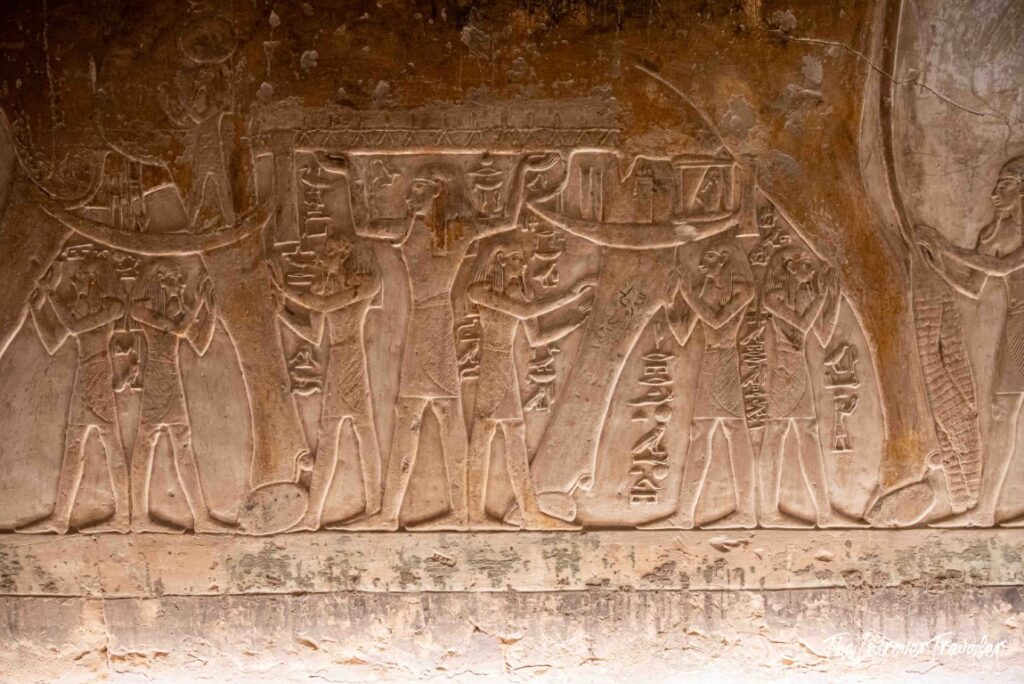
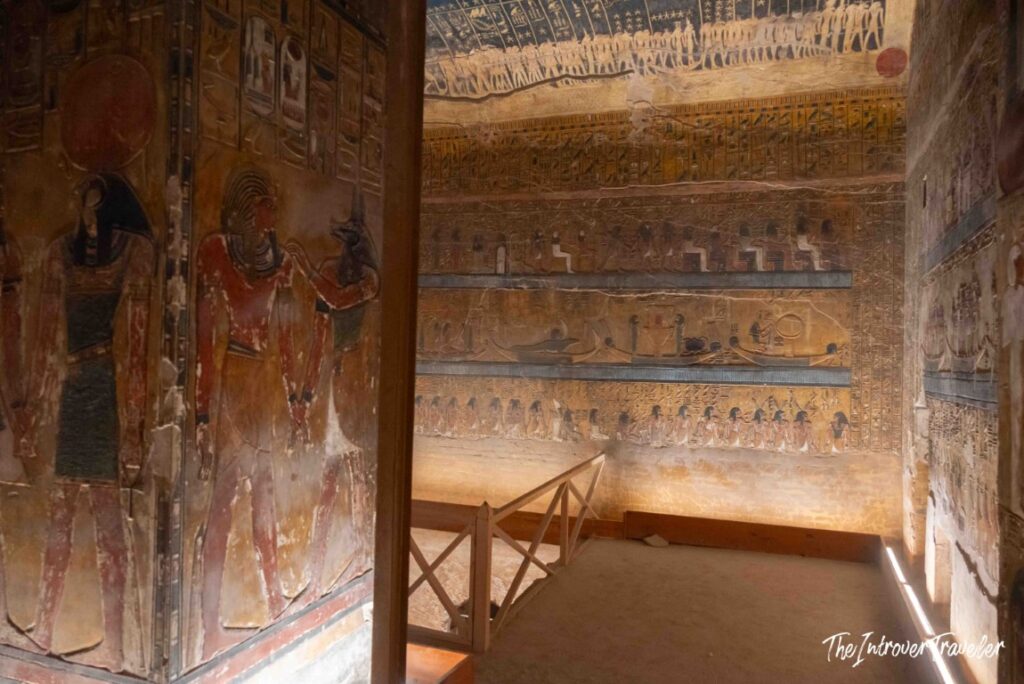
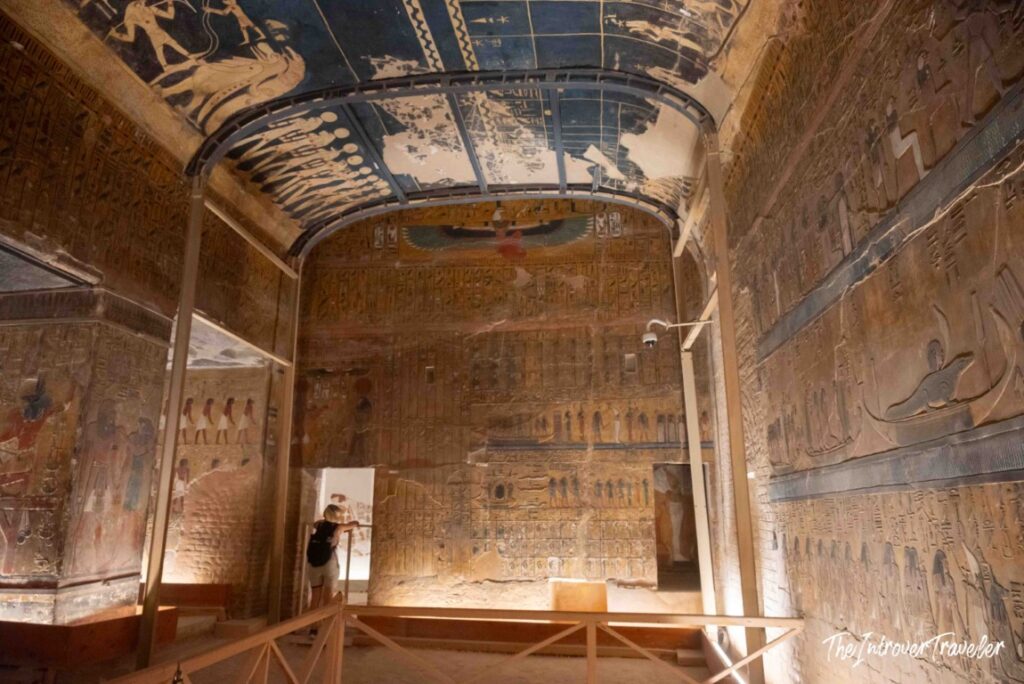
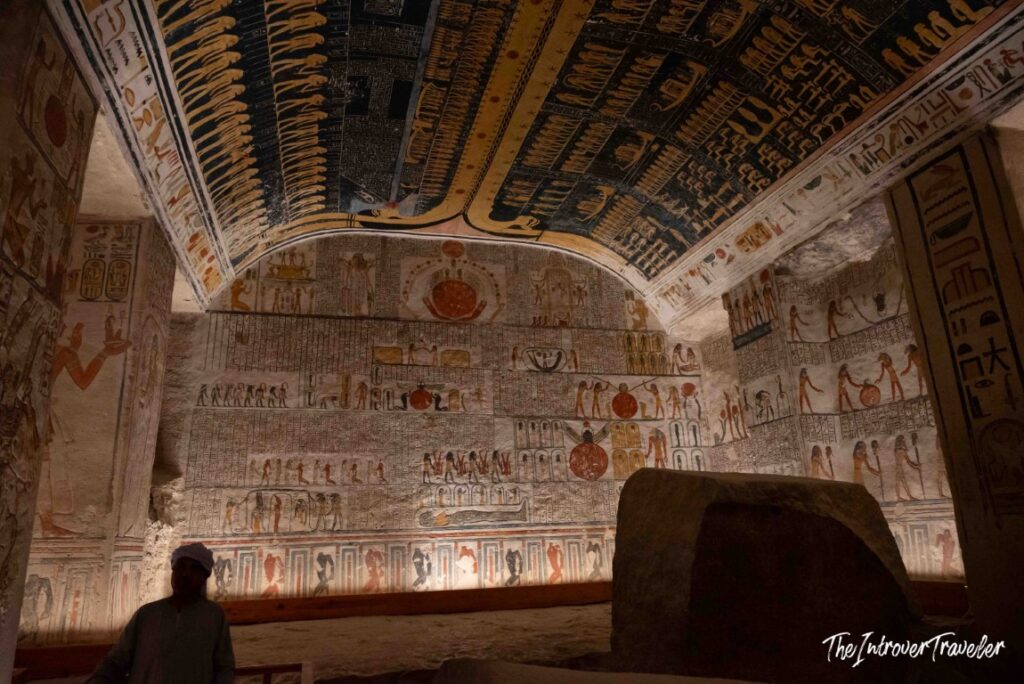
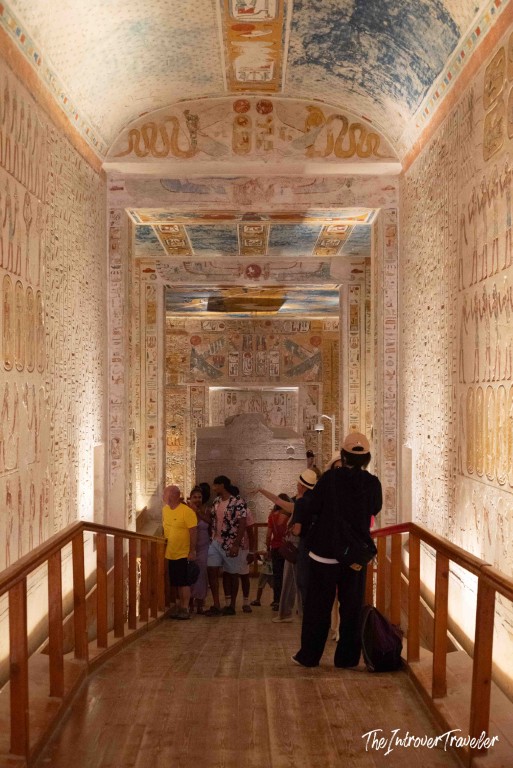
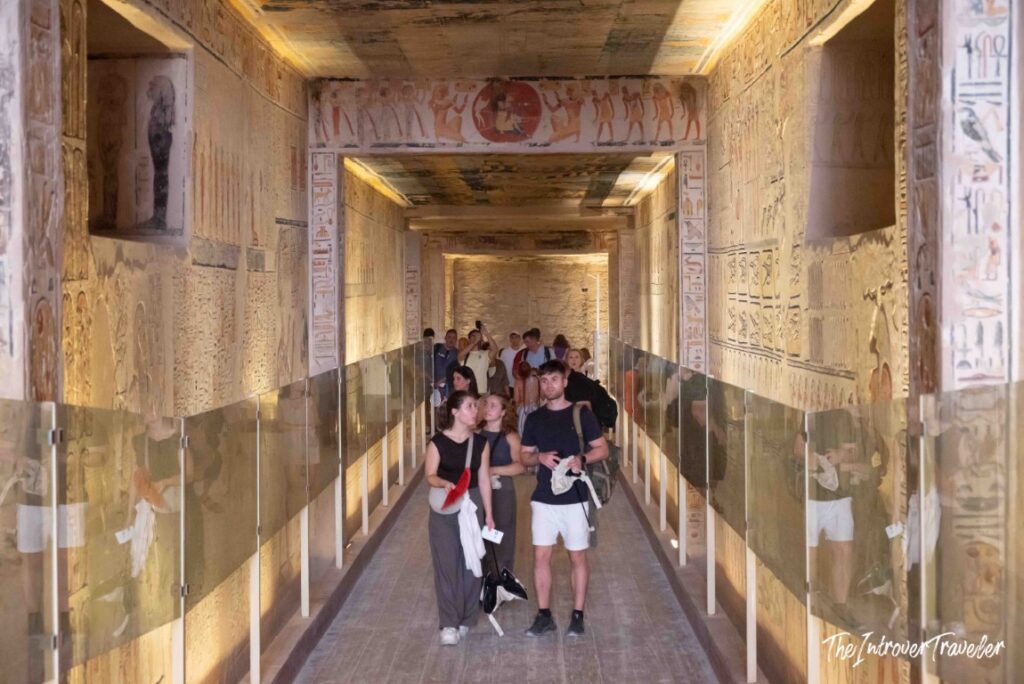
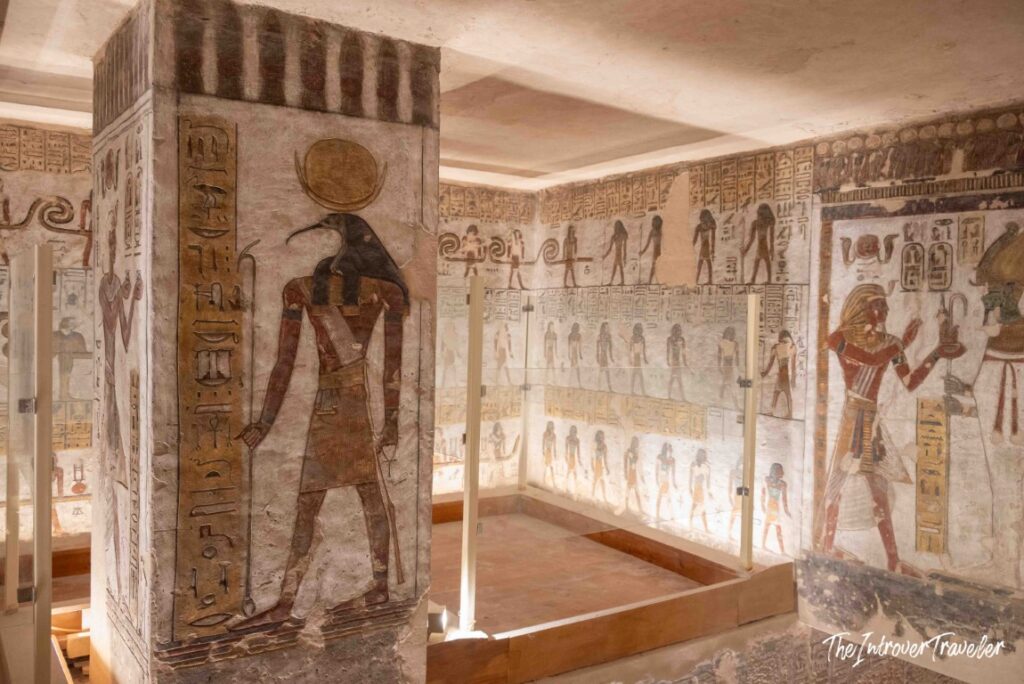
Of all the tombs in the Valley of the Kings, the tomb of Seti I is perhaps the most extraordinary. I want to say this clearly, because the Valley is full of extraordinary things and it would be easy to allow the superlatives to inflate until they mean nothing: the tomb of Seti I is, by a considerable margin, the most beautiful interior I saw in Egypt. Not the most historically significant, not the most famous, not the most emotionally charged: the most beautiful. It is, without hyperbole, the Sistine Chapel of the Valley of the Kings, and the comparison is not merely rhetorical.
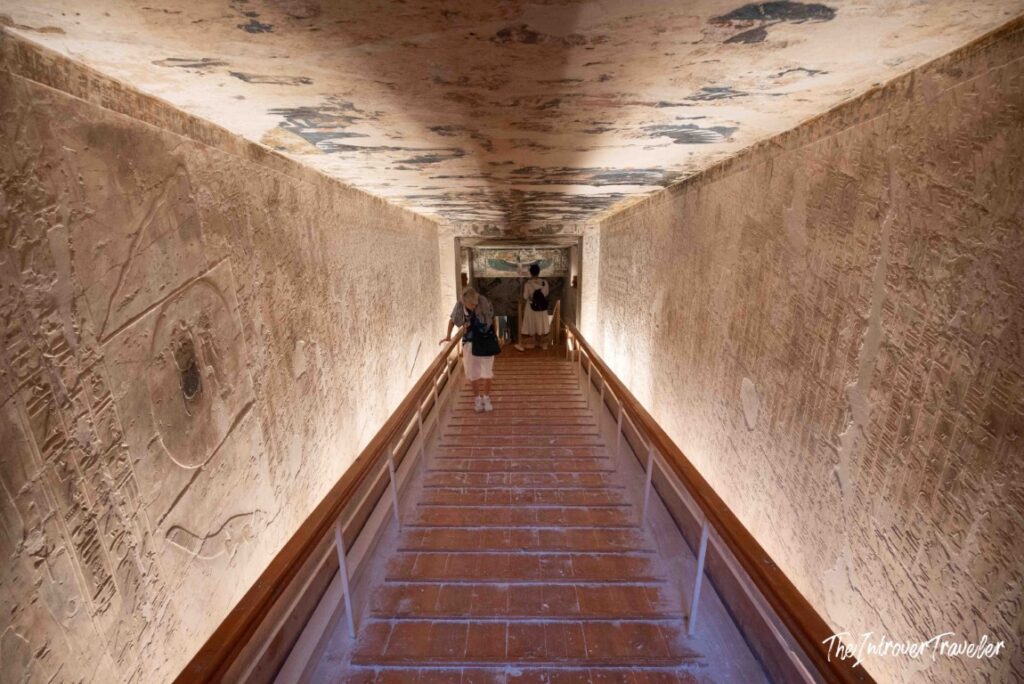
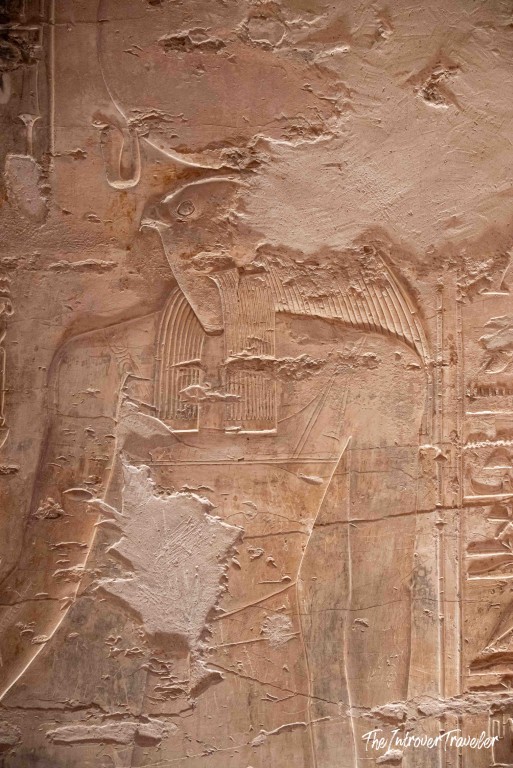
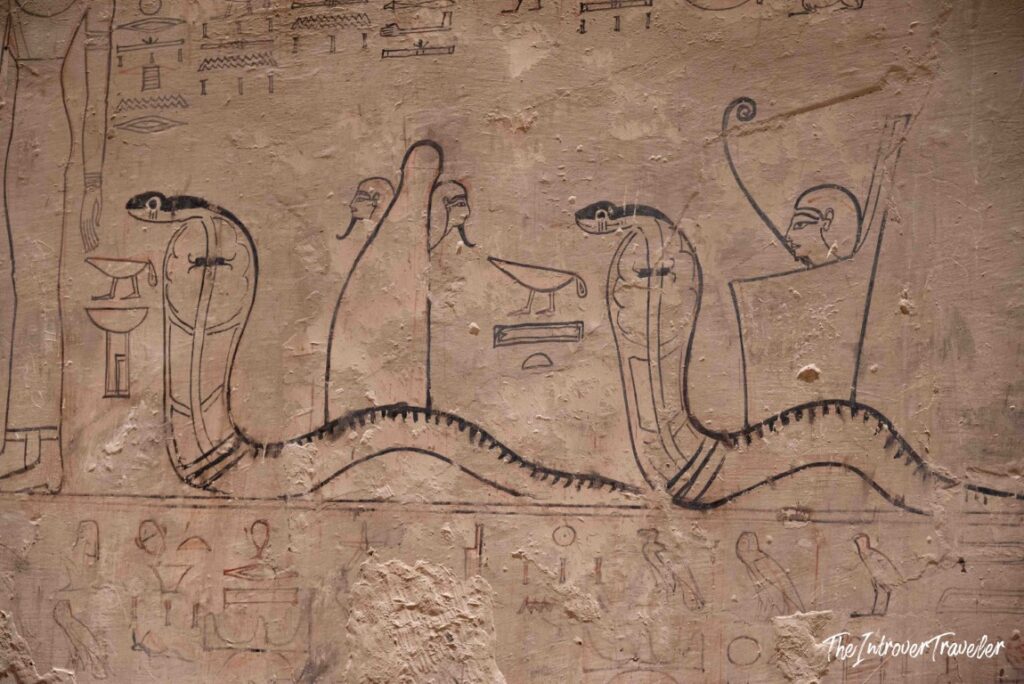
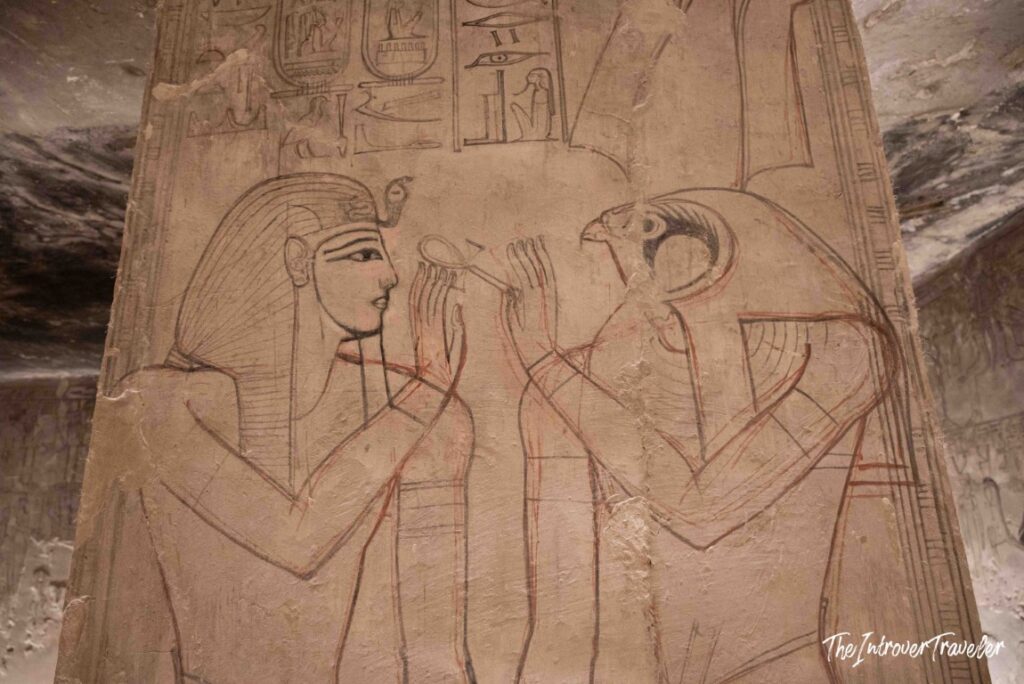
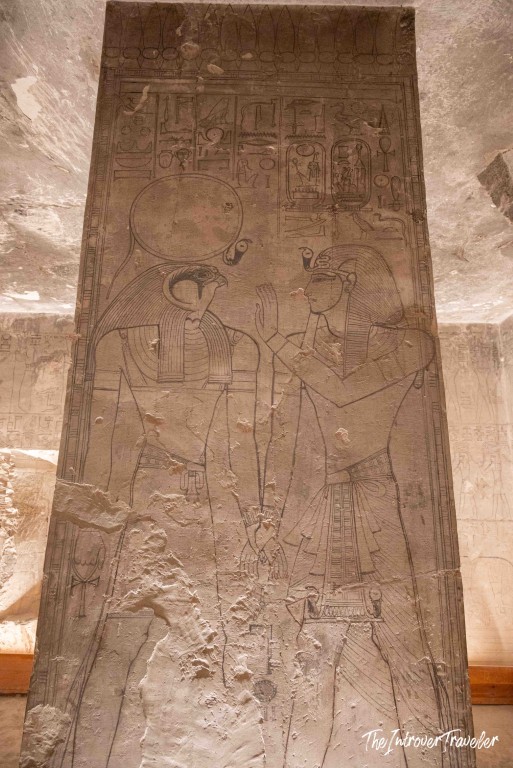
Seti I was the second pharaoh of the Nineteenth Dynasty, father of Ramesses II, and one of the great restorers of Egyptian power after the disruptions of the Amarna period. He reigned from approximately 1290 to 1279 BC, a relatively short reign of about eleven years, but one of intense building activity: the hypostyle hall at Karnak was largely his work, as was the great temple at Abydos, which contains some of the finest painted reliefs in Egypt. His tomb in the Valley of the Kings, the longest and deepest ever cut in the valley at over 130 meters from entrance to burial chamber, was begun early in his reign and was still being decorated at his death, some sections left unfinished by the painters who had not yet completed their work when the king died and the tomb had to be sealed (and this makes it particularly interesting from an artistic point of view, because in this very tomb one can see the drawings traced by hand on the walls before the fresco was executed, including the artists’ revisions, much as happens in the preparatory drawings of many Renaissance masters).
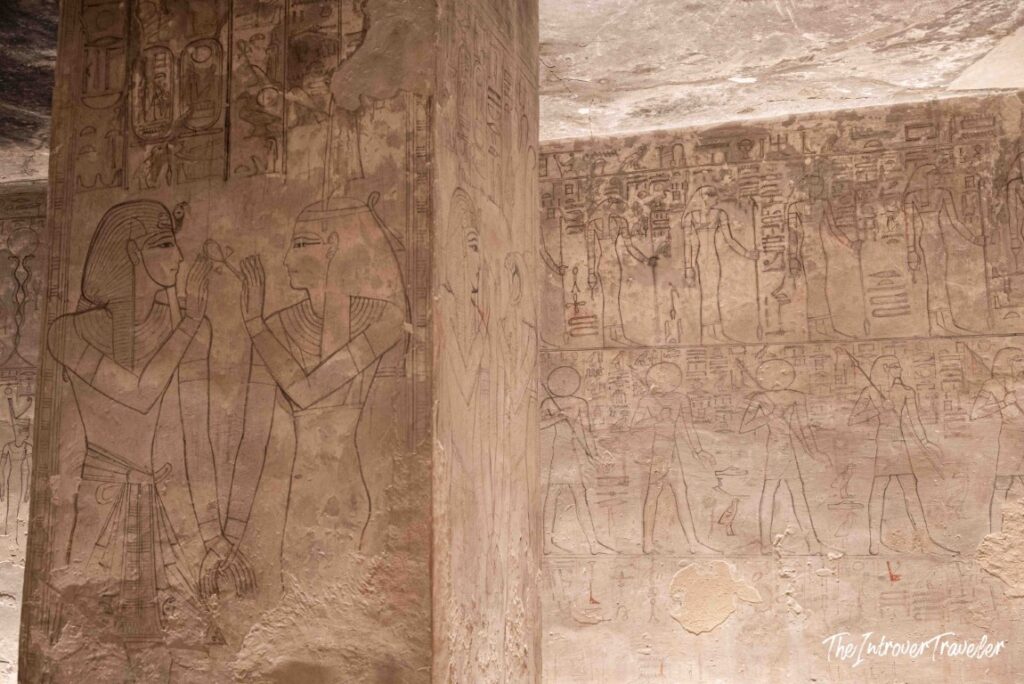
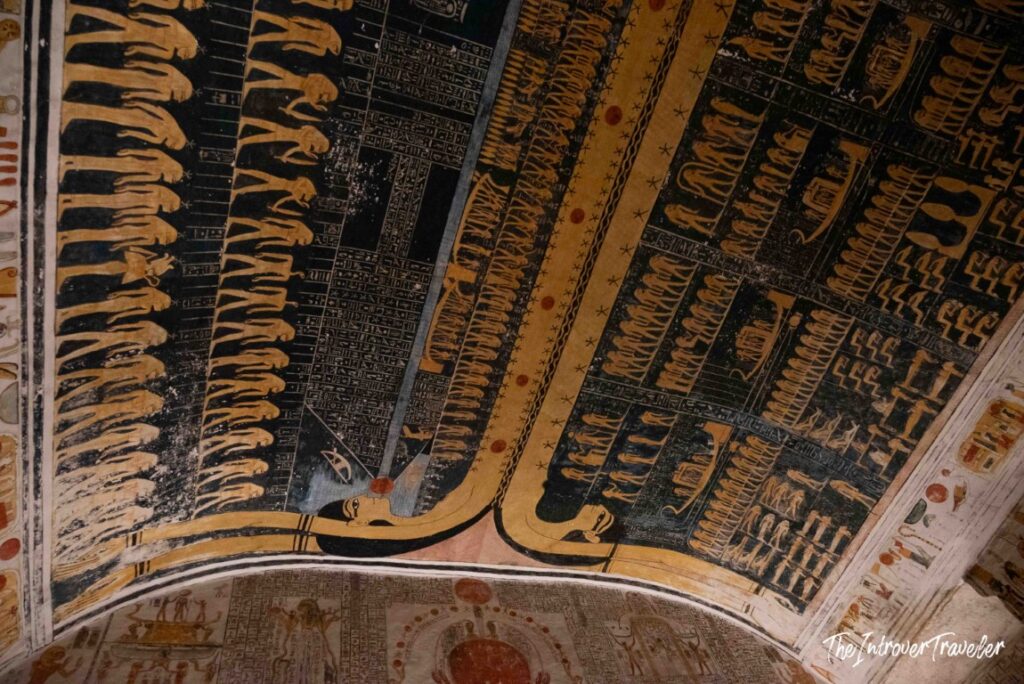
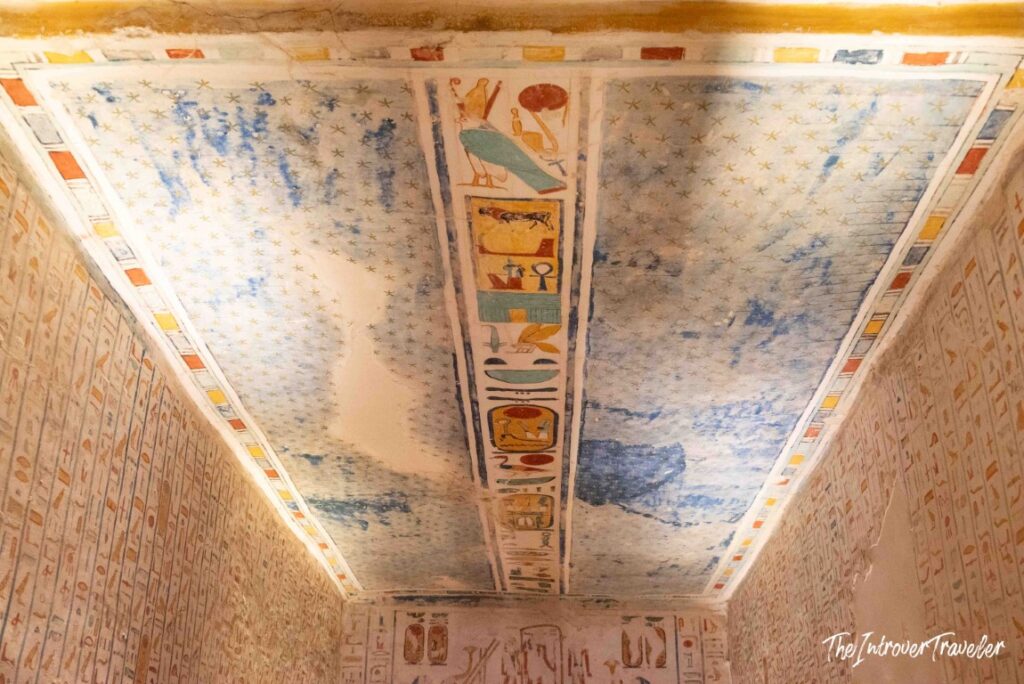
The decoration covers virtually every surface of every corridor and chamber with a completeness and a quality that have no parallel in the Valley. The colors are preserved with exceptional freshness: the blues are still intense, the whites still luminous, the figures still sharp in their outlines. The artistic style of Seti’s reign represents a high point of New Kingdom painting, combining the formal precision of traditional Egyptian art with a softness of modeling and a refinement of detail that give the figures an almost three-dimensional presence. The ceiling of the burial chamber is painted with astronomical diagrams, the constellations and their associated deities rendered in gold on a deep blue ground, a map of the night sky that was intended to orient the dead king within the cosmos he was about to join.
What makes Seti’s tomb exceptional is not only the quality of the individual images but the coherence of the program as a whole: every wall, every ceiling, every passage is integrated into a single theological narrative that moves from the entrance, where the king is greeted by the sun god Ra, through the successive stages of the underworld journey, to the burial chamber, where the resurrection is depicted in imagery of concentrated symbolic power.
The sarcophagus chamber is empty now, the great alabaster sarcophagus removed by Belzoni and its contents long since dispersed. But the walls remain, and they are enough. To stand in the burial chamber of Seti I, in the presence of those painted ceilings and those figures emerging from the stone with a precision and a freshness that make them seem almost recently made, is to understand Egyptian art not as a historical artifact but as a living system: a coherent visual language whose rules are strict and whose expressive range, within those rules, is enormous.
The tomb of Seti I requires a separate ticket and is not included in the general admission to the Valley. It is worth any price asked.
VI. Ramesses V and VI: the tomb that swallowed a king
Ramesses V and VI were the fifth and sixth pharaohs of the Twentieth Dynasty, reigning in the middle of the twelfth century BC during a period in which the New Kingdom was entering its long terminal decline: the empire was contracting, the power of the Amun priesthood at Karnak was growing at the expense of the crown, and the state’s ability to maintain order in the necropolis, as the tomb robbery papyri of the period document in painful detail, was increasingly compromised. Neither Ramesses V nor Ramesses VI was a figure of the historical magnitude of Seti I or Ramesses II; they ruled briefly, left few monuments of consequence beyond their tomb, and are remembered today primarily because of what lies above their burial chamber and what stands inside it.
What lies above it is the tomb of Tutankhamun, whose entrance was buried under the debris from the excavation of KV9 and thereby preserved for three thousand years. The tomb of Ramesses V and VI is, in a sense, the inadvertent guardian of the most famous archaeological discovery in history.
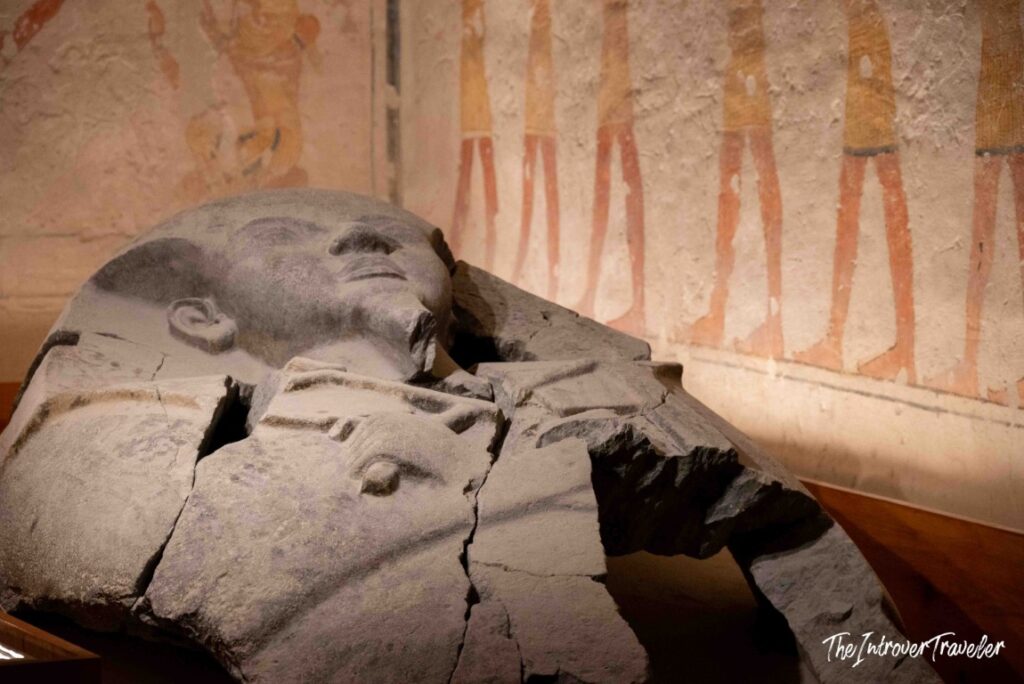
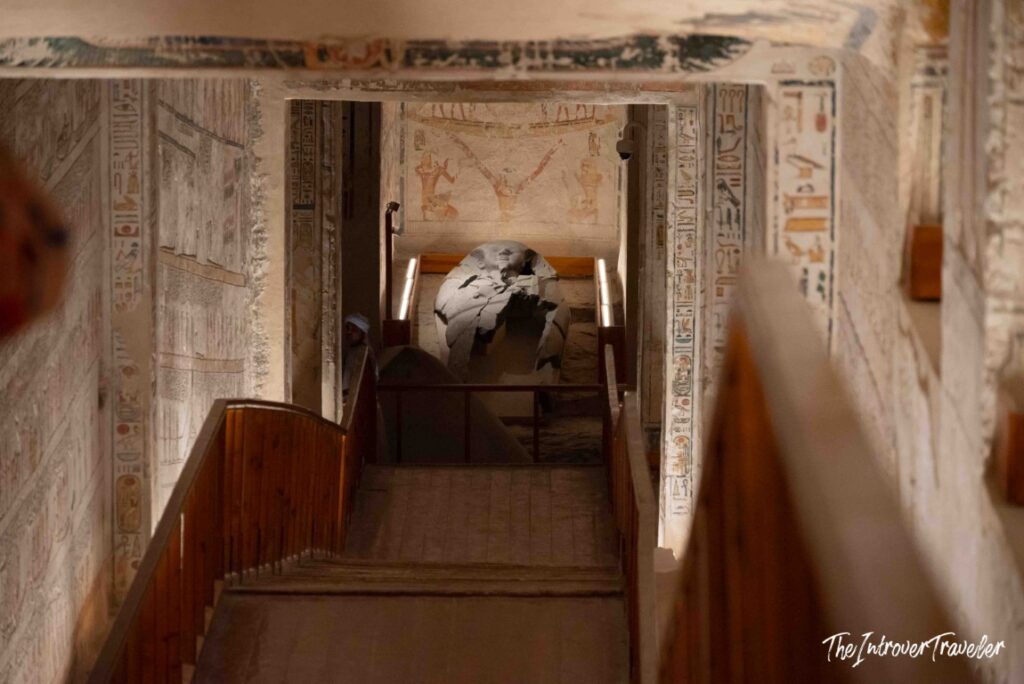
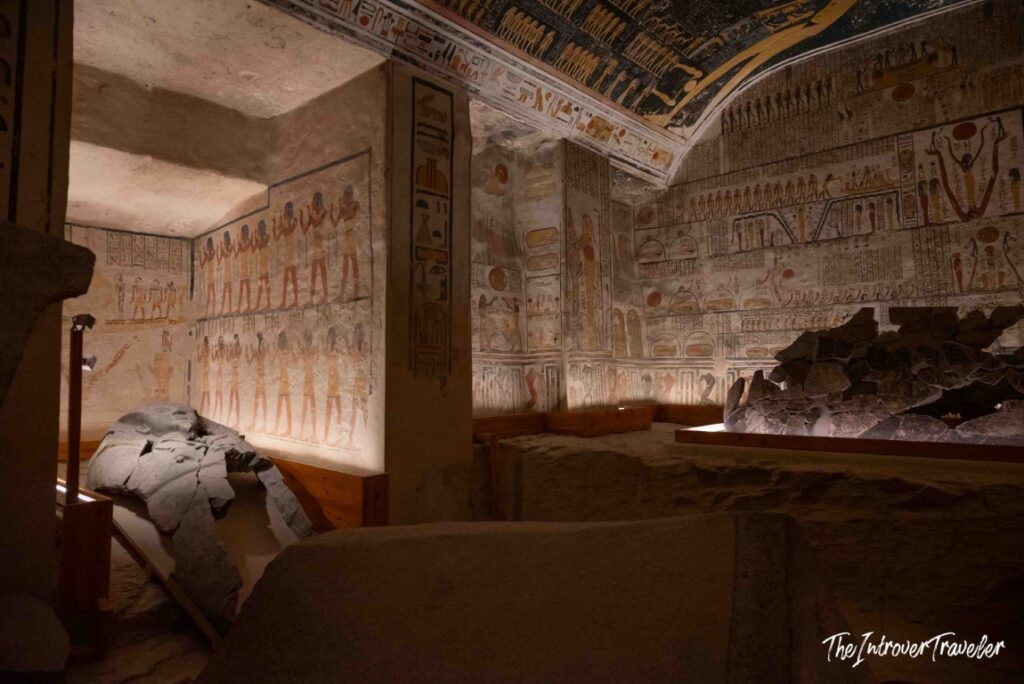
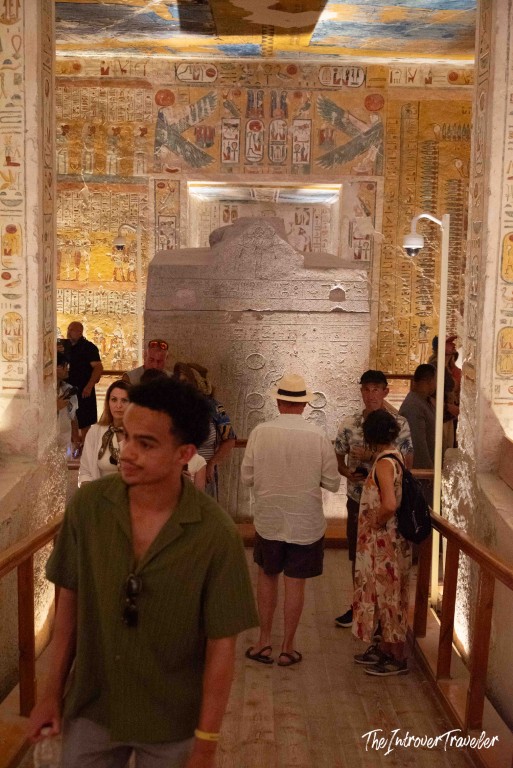
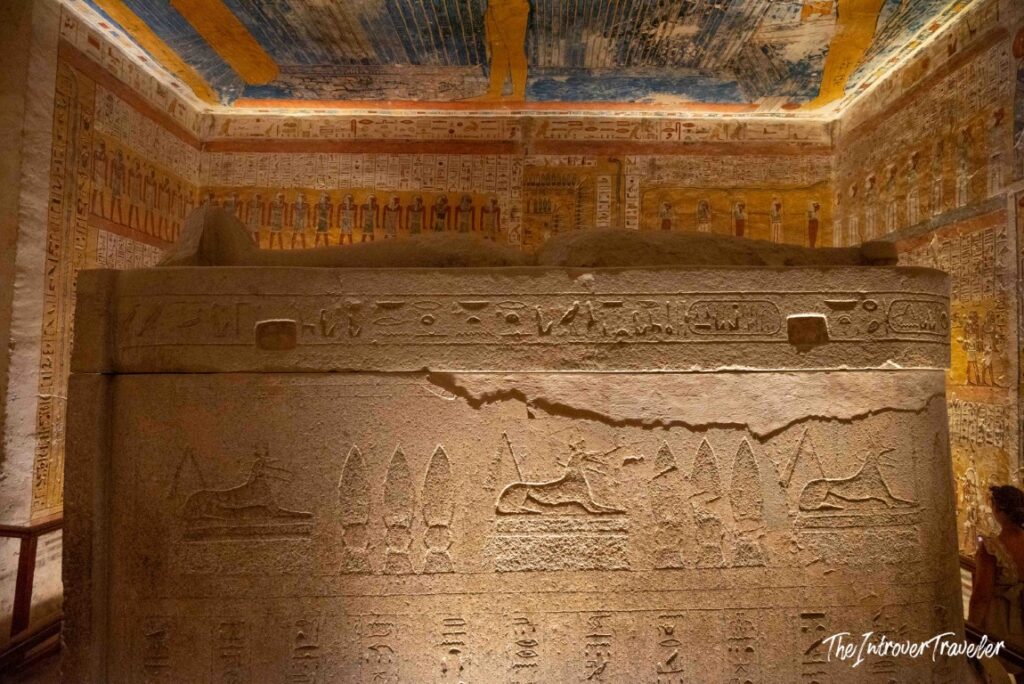
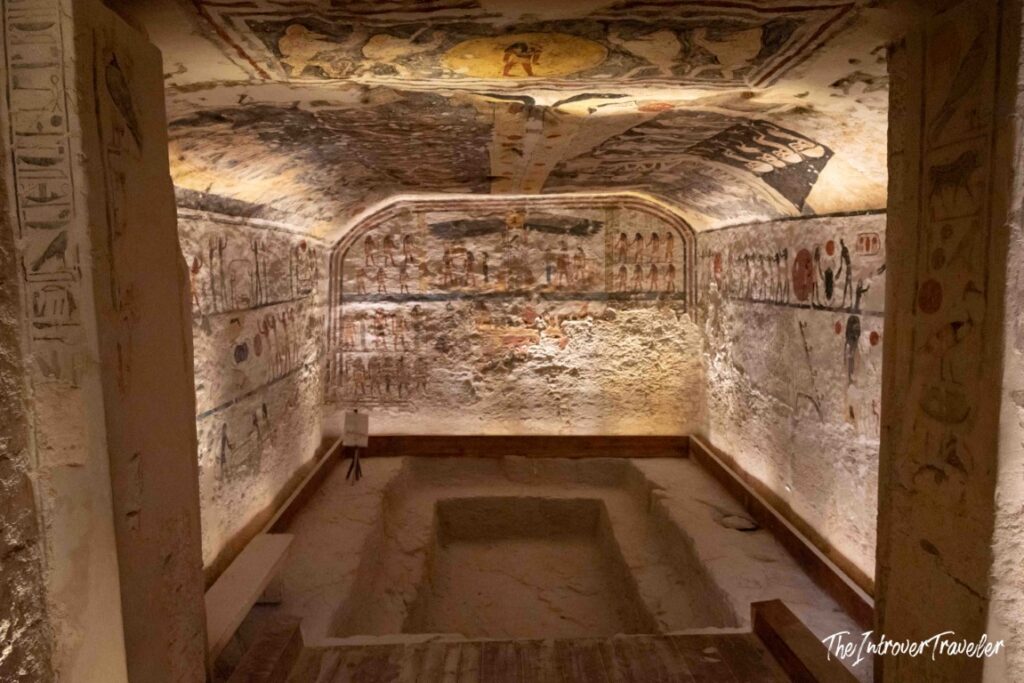
What stands inside it is the sarcophagus: an enormous granite container, among the largest in the Valley of the Kings, shattered into massive fragments by ancient robbers who needed to reach the mummy within and had no particular interest in the integrity of the stone vessel containing it. The violence of the destruction is still vivid after three thousand years: the pieces are large, the breaks jagged, the force required to produce them considerable. Looking at it, you think involuntarily of the people who did this, of the specific night and the specific tools and the specific calculation that a granite sarcophagus in a royal tomb was an obstacle to be overcome rather than an object to be respected. The mummy it contained was stripped of its gold and discarded. The sarcophagus has remained where it fell, in fragments, ever since.
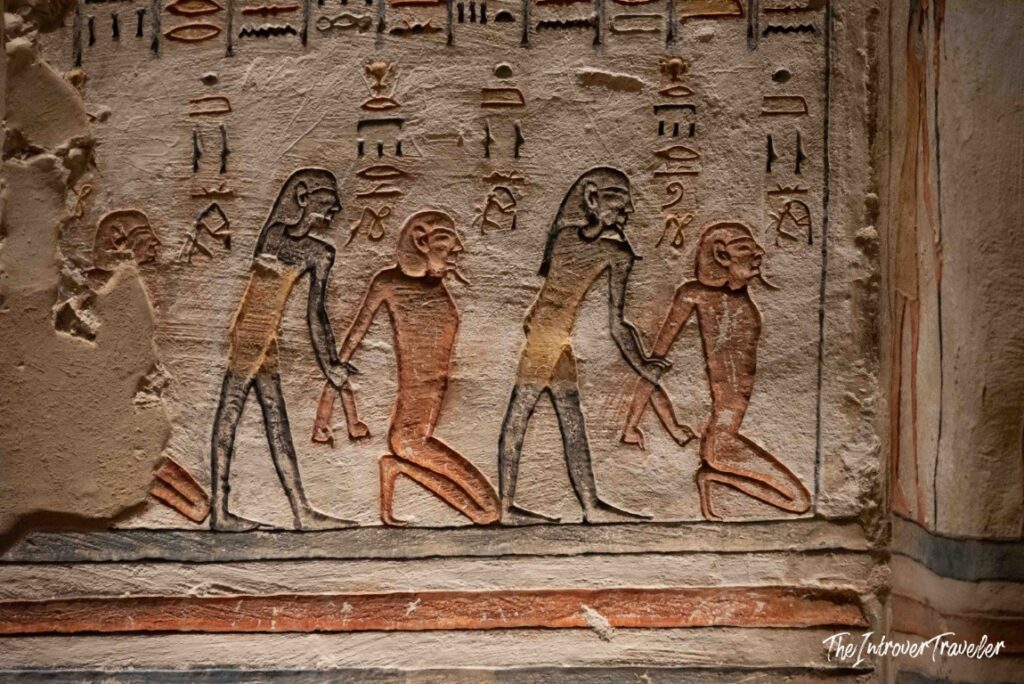
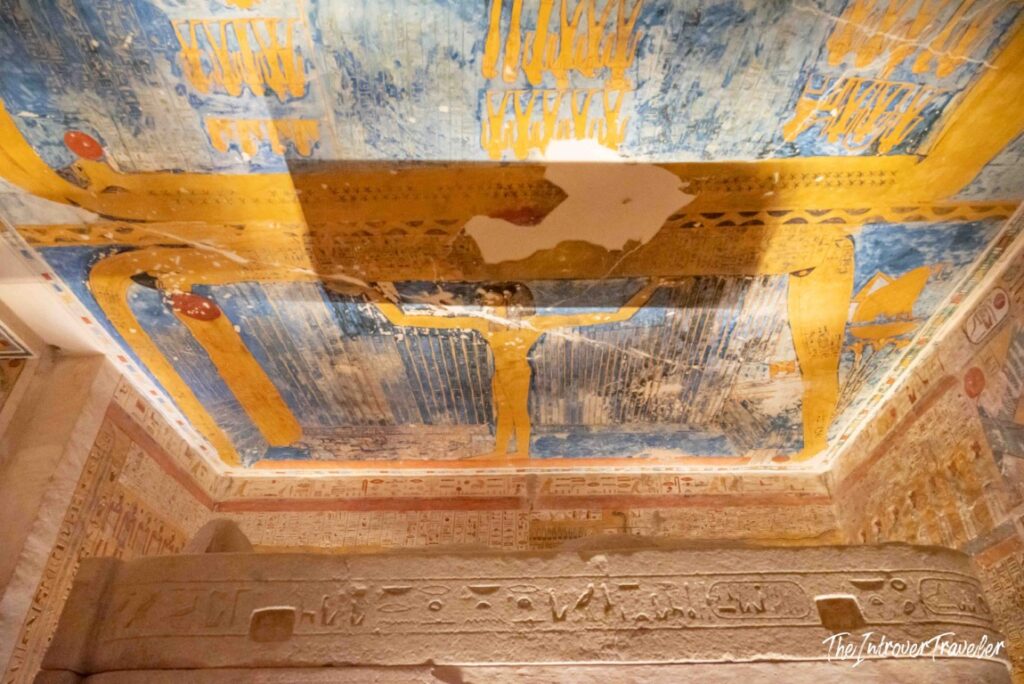
The tomb’s decoration is extensive and well preserved, the walls covered in passages from the Book of Caverns, the Book of Gates, and the Amduat in a density that leaves almost no surface unoccupied. The ceiling of the burial chamber carries an astronomical composition of exceptional quality: a double image of the sky goddess Nut, her body arched across the ceiling, swallowing the sun at dusk and giving birth to it at dawn, the cycle of solar death and resurrection rendered in an image of simultaneously cosmological and visceral power.
It is one of the finest painted ceilings in the Valley, and reason enough on its own to justify the additional ticket.
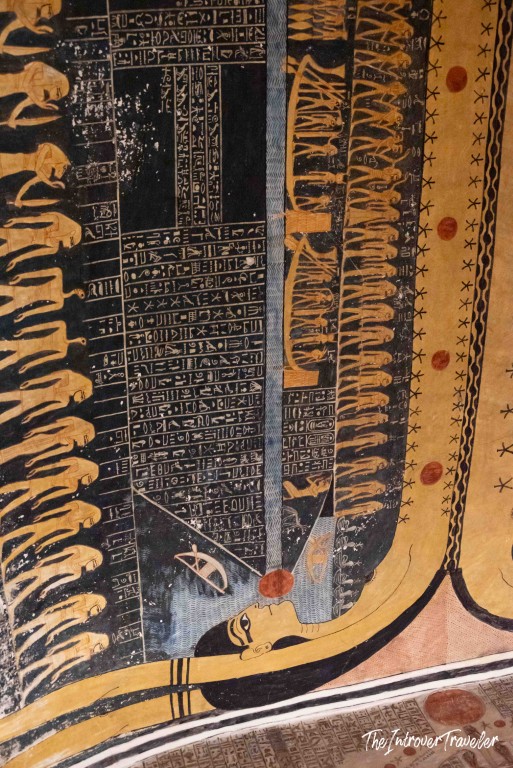
VII. Tutankhamun: the boy king and the greatest discovery in archaeological history
The tomb of Tutankhamun, designated KV62, is the most famous archaeological discovery in history, and probably the most visited tomb in the Valley of the Kings. It is also, by the standards of the valley, one of the smallest: a modest suite of four chambers cut to a relatively shallow depth, with walls decorated in a style that is competent but unremarkable compared to the great tombs of Seti I or Ramesses III. The treasure it contained, now largely in the Grand Egyptian Museum, was extraordinary; the tomb itself, without the treasure, is a more modest proposition. Both of these things are true simultaneously, and both need to be said.
Tutankhamun came to the throne around 1332 BC at an age that is estimated between eight and ten years. He was the son of Akhenaten, the heretic pharaoh who had dismantled the Egyptian religious establishment, abolished the traditional pantheon, closed the temples of Amun, moved the capital to a new city in the desert, and imposed the worship of a single solar deity, the Aten, in a religious revolution whose motivations and full implications are still debated by Egyptologists. Tutankhamun inherited this revolution and then, under the guidance of the older officials who effectively ran the government during his minority, reversed it: the temples of Amun were reopened, the traditional gods restored, the capital moved back to Thebes, and the boy king’s name, originally Tutankhaten, changed to Tutankhamun in explicit acknowledgment of the restored order.
He died around 1323 BC, at approximately eighteen or nineteen years of age. The cause of his death has been the subject of decades of forensic investigation and considerable controversy: malaria, a leg fracture, genetic disorders resulting from inbreeding, assassination, a combination of the above. The current consensus leans toward a combination of malaria and a leg fracture complicated by underlying health problems, but the assassination theory has never been entirely dismissed, and the identity of whoever might have arranged it, if it was arranged, remains unresolved. He left no surviving children; his two daughters were stillborn and buried with him. With his death, the Eighteenth Dynasty effectively ended.
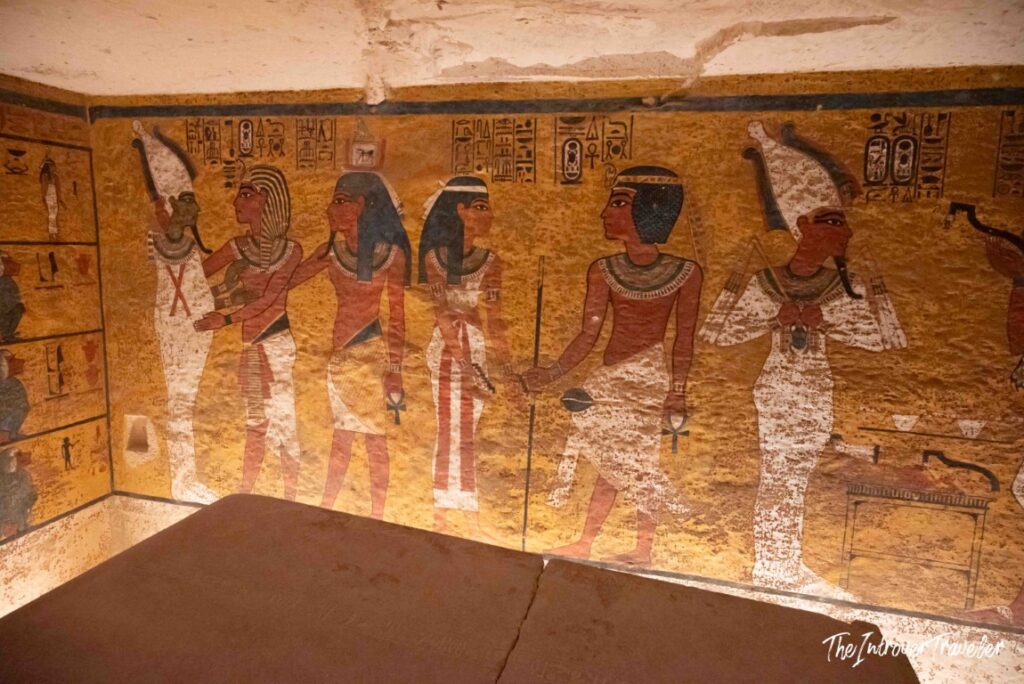
He was buried in a tomb that had almost certainly been prepared for someone else, too small for a king of his status, and sealed in haste. Over the following decades, the entrance was buried under the debris from the construction of the tomb of Ramesses VI directly above it, and forgotten. It remained forgotten for three thousand years, until the morning of 4 November 1922, when a water boy working for the archaeologist Howard Carter’s excavation team uncovered a step cut into the rock, and Carter, after the most famous act of archaeological patience in history, waited three weeks for Lord Carnarvon to arrive from England before opening the sealed door.
What Carter found behind that door, in his own words, was “wonderful things”: a tomb so packed with objects that it took ten years to catalogue and remove them. The golden throne, the ritual couches in the form of animals, the alabaster vessels, the gilded shrines nested one inside another like Russian dolls, the two life-size guardian statues flanking the sealed burial chamber, and finally, inside four nested gilded shrines, a stone sarcophagus containing three nested coffins, the innermost of solid gold, and inside that the mummy of the king, his face covered by the mask that has become the most recognizable image of ancient Egypt in the modern world.
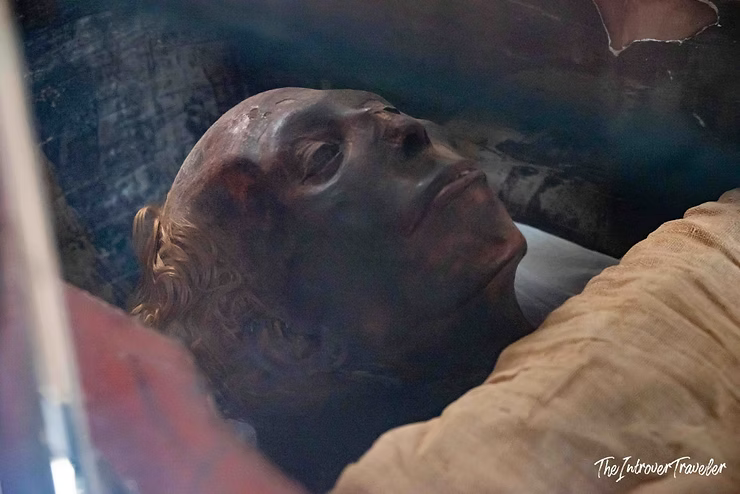
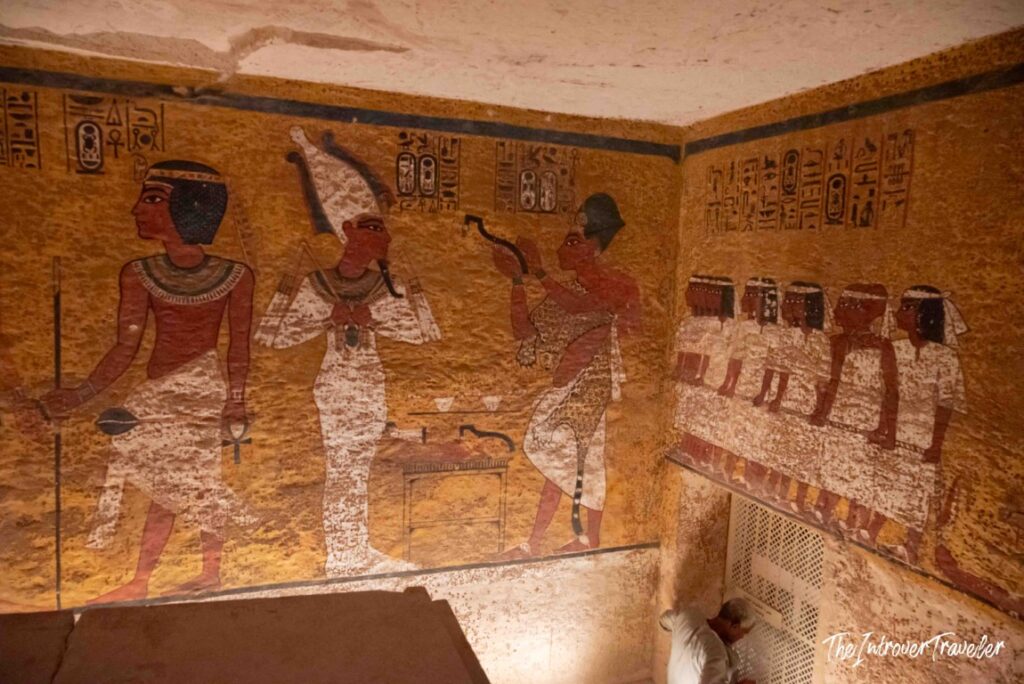
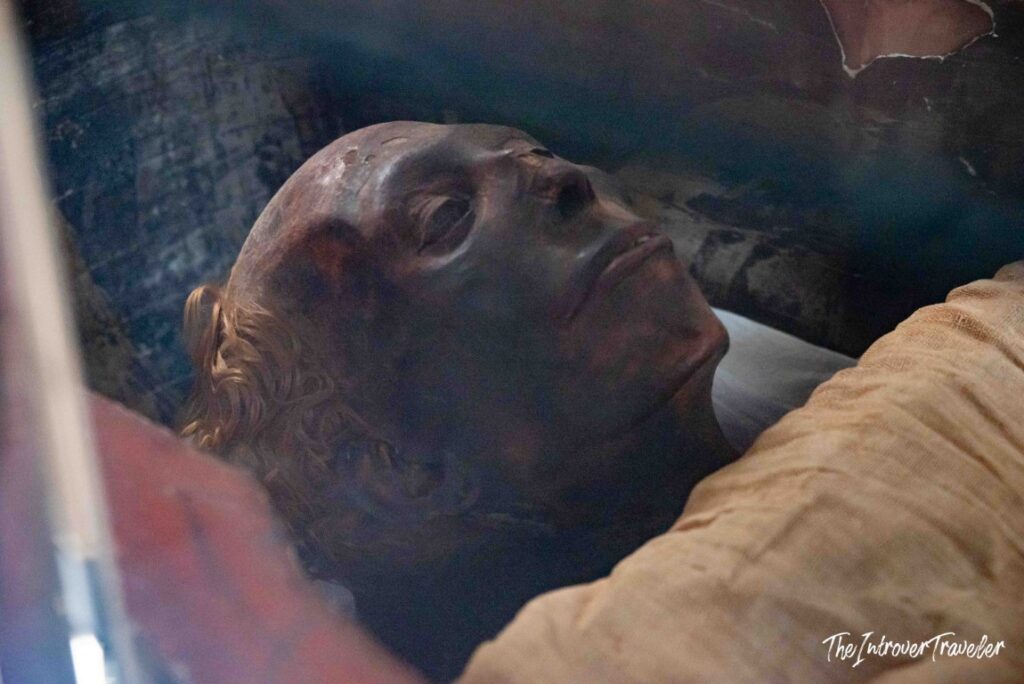
The tomb today contains the outermost of the three coffins, still in the sarcophagus, and the mummy itself, displayed in a climate-controlled case inside the burial chamber. This last detail gave me pause. The mummy of Tutankhamun, the body of a boy who died three thousand years ago and whose burial was intended to guarantee his resurrection and his dignity for eternity, lies in a Plexiglas (or something like that) box just inside the entrance of a tomb that receives several hundred tourists a day, photographed and peered at with a casualness that the circumstances of his discovery, and the circumstances of his life and death, do not seem to me to invite. I understand the arguments for display: the educational value, the direct encounter with history, the practical reality that his mummy has been examined and handled and moved so many times since 1922 that the question of its dignity is already deeply complicated. I understand all of this. Without going so far as the politically correct extremes of the director of the Egyptian Museum of Turin, Christian Greco, who recently stated in an interview that he prefers the expression “human remains” to the word “mummy”, it still made me uncomfortable, in a way I am not entirely able to articulate and not entirely willing to suppress.
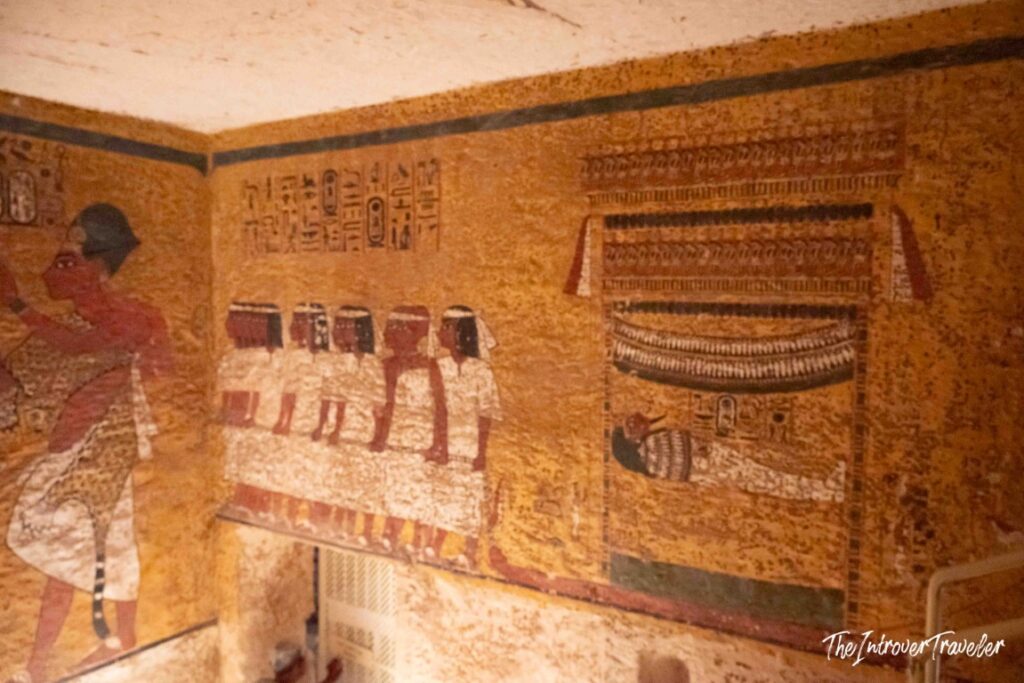
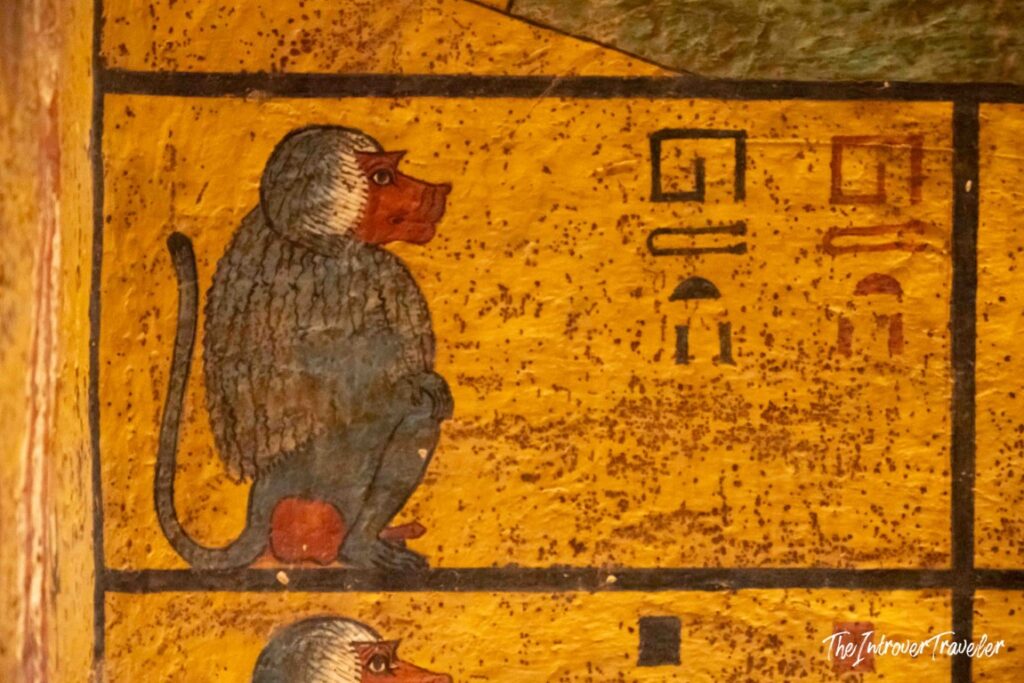
The tomb itself, stripped of its treasure and reduced to its walls and its mummy, is not visually overwhelming. The paintings are good, competent New Kingdom work, showing the funeral of the king and scenes from the Book of the Dead, but they do not approach the sophistication of Seti I. What the tomb offers is something different: the experience of being in a specific place whose history you know, the encounter with a physical reality that connects directly to one of the great stories of modern archaeology. To stand in the burial chamber of Tutankhamun and understand that this is the room Howard Carter entered on 16 February 1923, that the objects whose absence you feel were here, in this space, undisturbed for three thousand years until that morning, is an experience of historical concreteness that has no equivalent. The tomb is worth visiting at any price and under any conditions. Go.
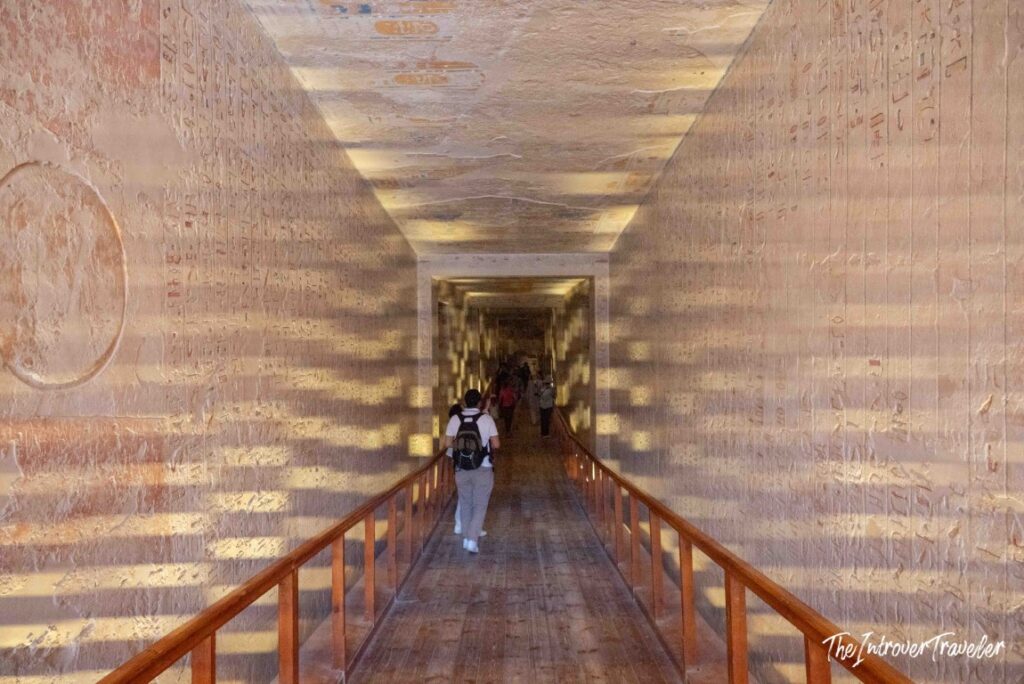
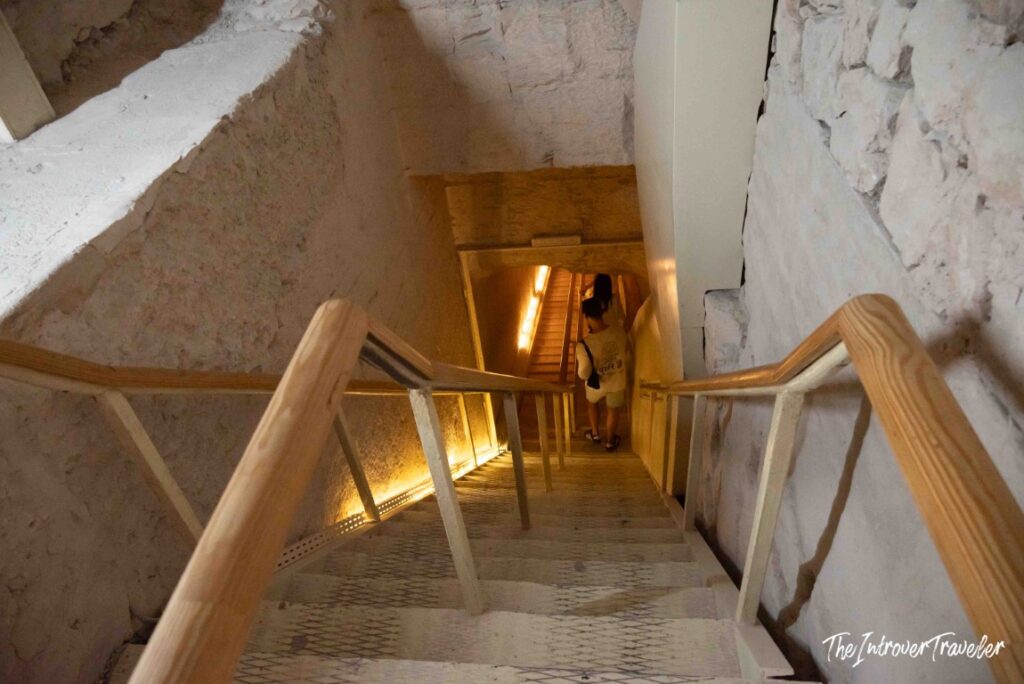
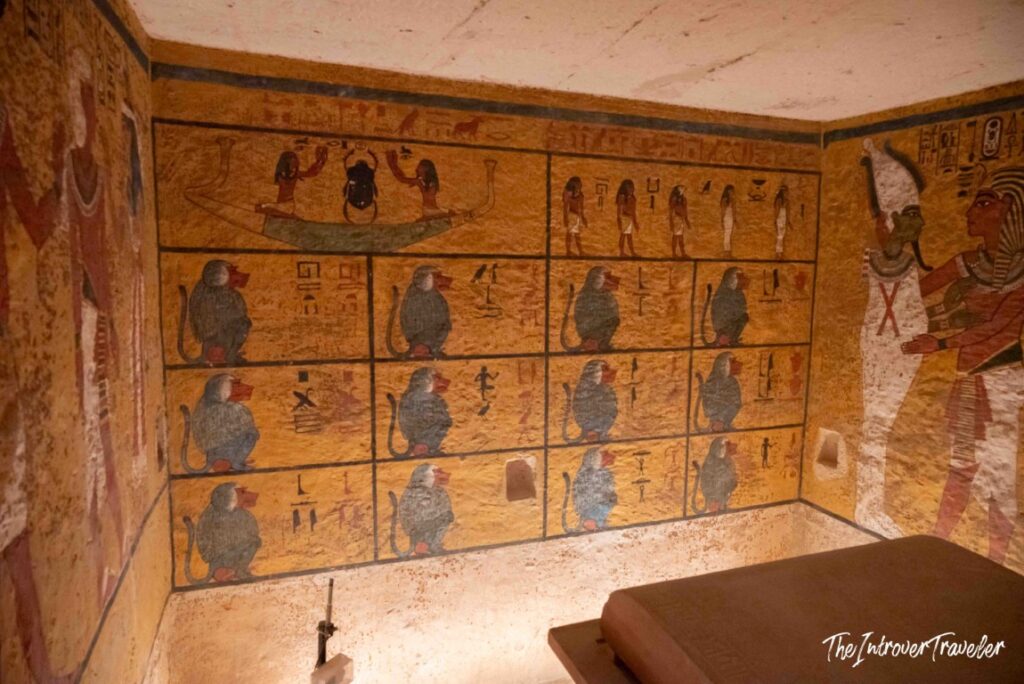
VIII. The standard ticket: three tombs from a rotating list
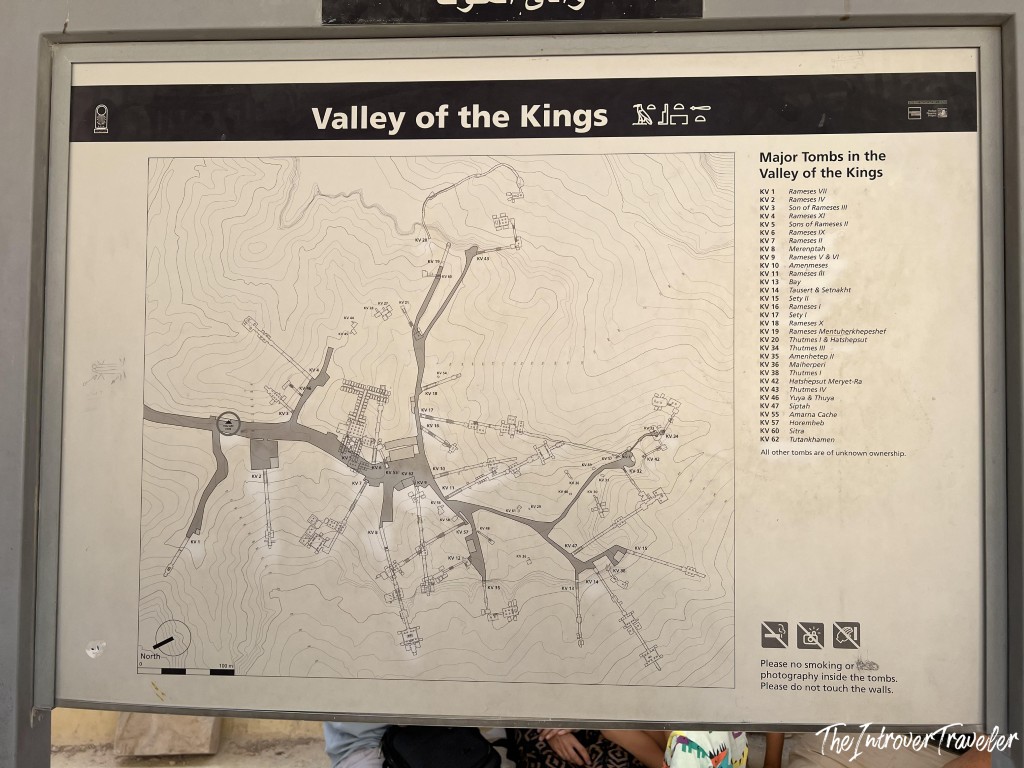
Of the 63 tombs so far discovered and numbered in the Valley of the Kings, only around 10 to 11 are open to visitors at any given time, the remainder closed for conservation, restoration, or ongoing excavation. The selection rotates periodically, which means that the specific tombs available on the day of your visit are not guaranteed in advance: a board at the visitor center shows which tombs are currently included in the standard ticket, from which you may choose three. The three premium tombs, Seti I, Ramesses V and VI, and Tutankhamun, require separate additional tickets and are not part of this rotation.
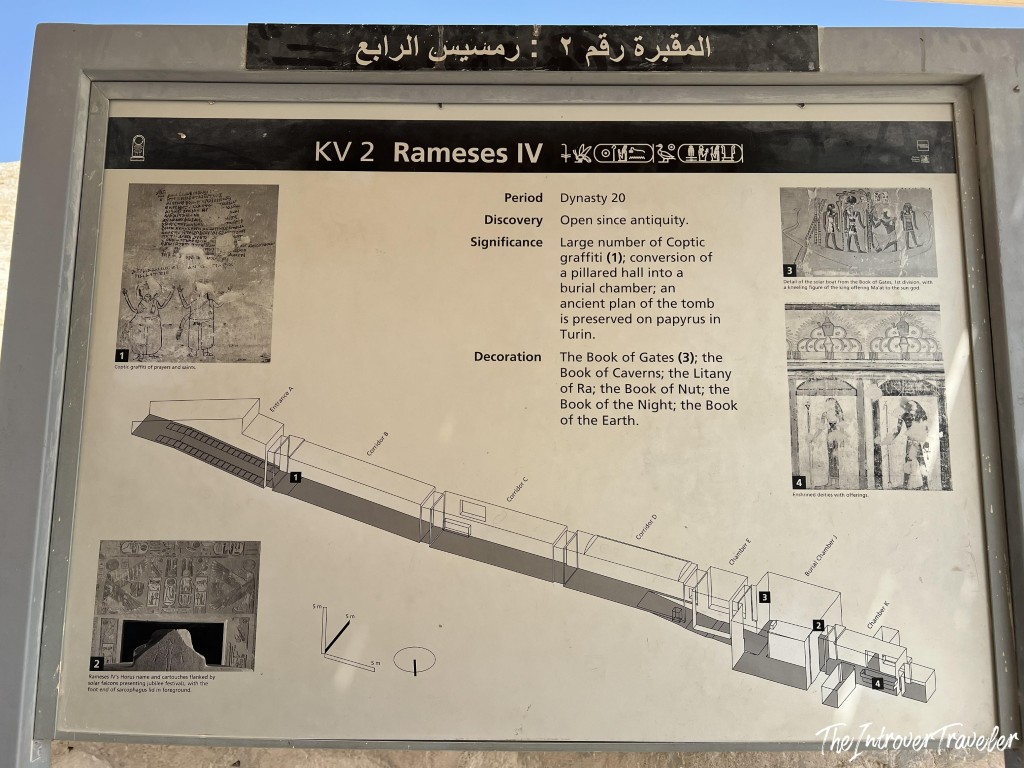
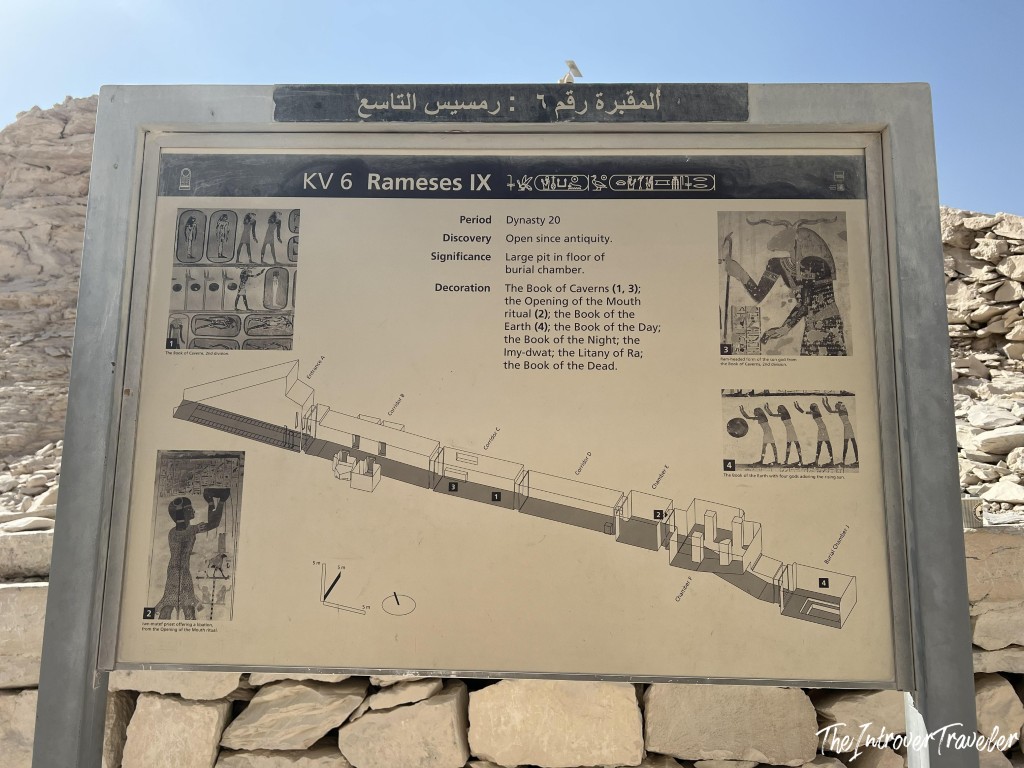
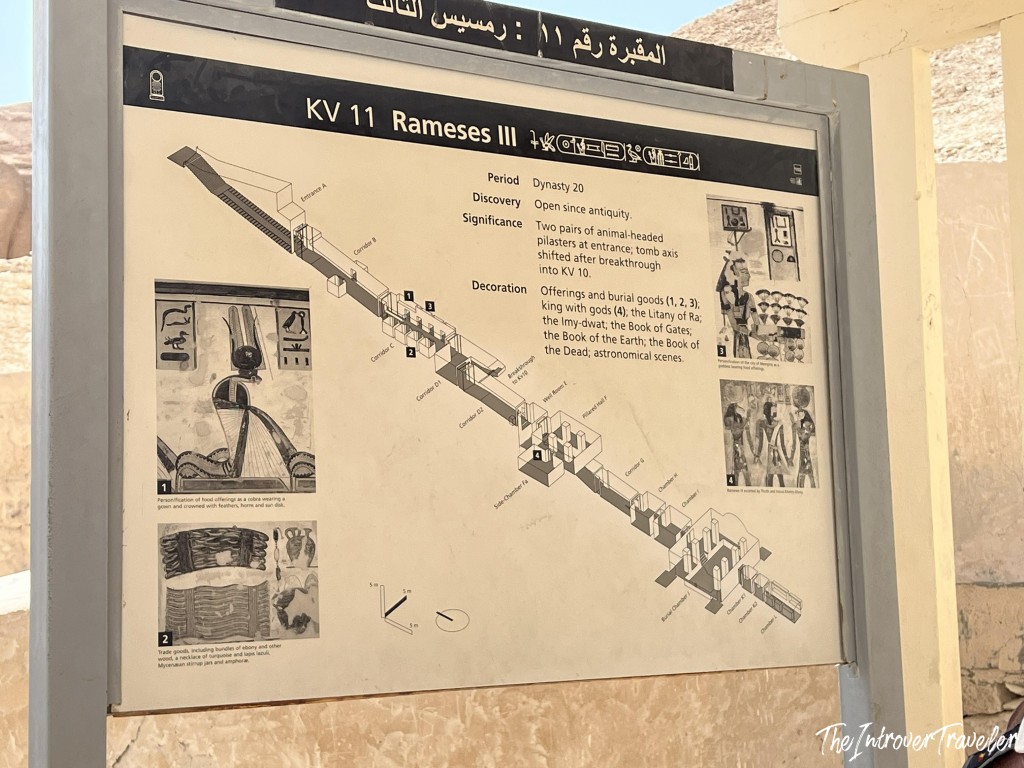
On the day of my visit, my three standard-ticket choices were the tombs of Ramesses IV, Ramesses IX, and Ramesses III, all pharaohs of the late New Kingdom whose historical profiles are considerably less dramatic than those of their more celebrated predecessors, but whose tombs offer, each in its own way, a genuinely rewarding experience.
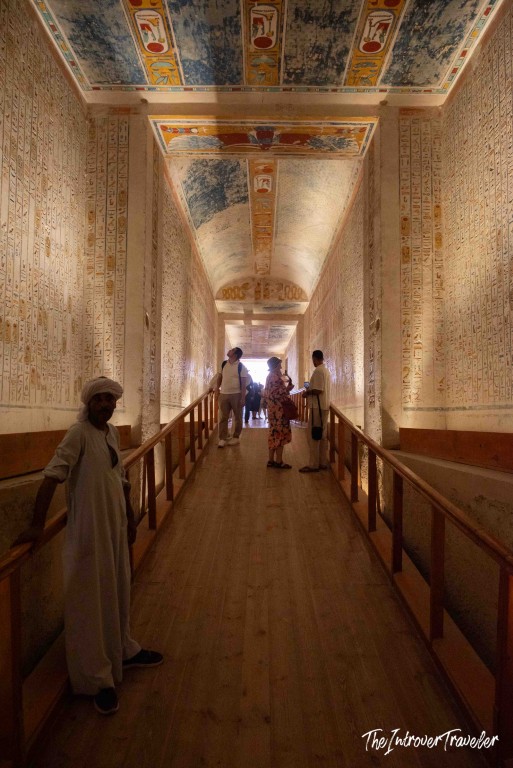
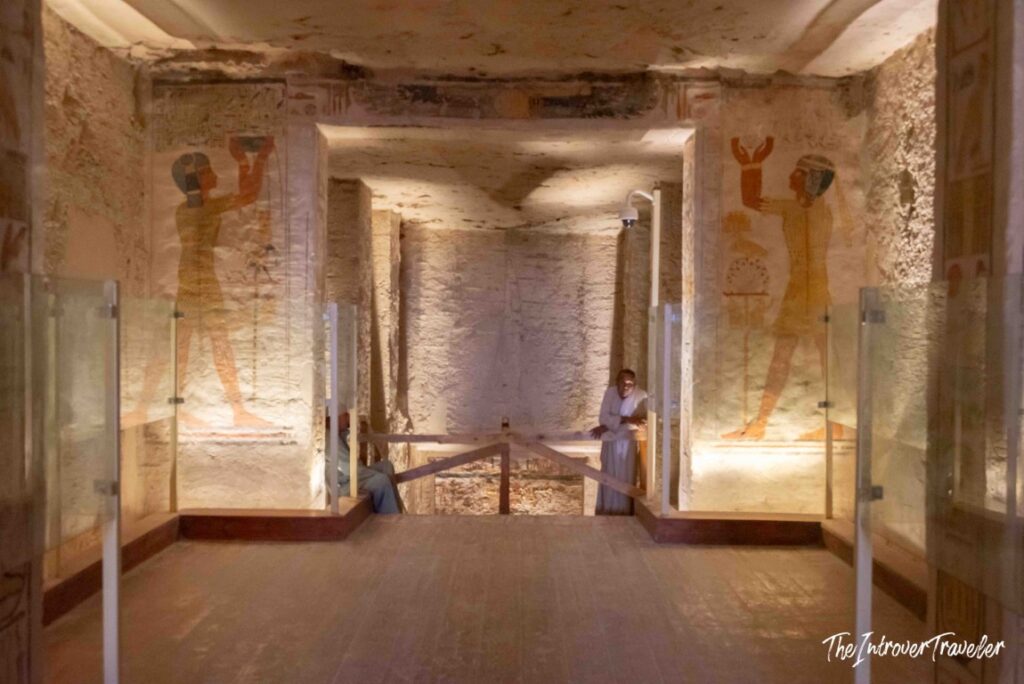
The tomb of Ramesses IV, KV2, is one of the first you encounter from the entrance and one of the most accessible physically: a wide, flat-floored corridor requiring no particular athletic effort, leading to a burial chamber whose ceiling is among the most beautiful in the valley (but I should clarify that in the Valley of the Kings all tombs are easily accessible to anyone in any physical condition, whereas access to the pyramids of Giza and Saqqara requires at least a minimum degree of agility and a partial absence of claustrophobia). The goddess Nut stretches across it twice, her body arched over the astronomical texts in an image of cosmic containment that, combined with the deep blue of the ground and the gold of the figures, produces an effect of extraordinary visual refinement. The sarcophagus is still in place, a large granite container that survived the robbers’ attentions, at least structurally. The walls carry passages from the Book of the Dead and the Amduat in a state of preservation that allows the texts to be read, which is more than can be said for several of the other tombs. As for the richness of its decorations, this tomb probably has nothing to envy in the three tombs not included in the standard ticket. Coptic graffiti in Greek and Latin near the entrance, left by visitors of the Roman era who were themselves tourists in a place already ancient, adds a layer of historical irony that is not entirely without charm.
The tomb of Ramesses IX, KV6, is smaller and less immediately impressive, but the scenes from the Book of the Dead on its walls are executed with a fluency and a graphic confidence that reward close attention. The tomb of Ramesses III, KV11, is one of the largest in the valley, and notable for a feature that has no parallel elsewhere: a side chamber containing the painted image of two blind harpists, their faces serene, their instruments detailed with a precision that suggests the artist had spent considerable time observing actual musicians. The chamber is small and easy to miss; it is worth finding. The tomb’s construction required an abrupt change of direction at a certain point to avoid cutting into a neighboring tomb already in place, a pragmatic adjustment that is visible in the corridor and that gives the tomb an unusual spatial geometry quite different from the standard axial layout.
None of these three tombs approaches the overwhelming quality of Seti I. But taken together, they represent the standard of decoration and ambition that the Valley of the Kings maintained across generations, and they are sufficient, in combination with the premium tombs, to justify the rating of 10 out of 10 that I give this site without hesitation. Not because every element of the visit is perfect, but because the Valley of the Kings, as a totality, is simply without equal: the most concentrated encounter with the ambitions, the beliefs, and the artistic capacity of a civilization that has been dead for three thousand years and that still, in these painted corridors in the Theban rock, speaks with complete clarity.
IX. The Valley of the Queens: a postscript in disappointment
A short distance to the south of the Valley of the Kings lies the Valley of the Queens, the burial ground of royal wives and princes of the New Kingdom. It contains over ninety tombs, of which the most celebrated is that of Nefertari, the principal wife of Ramesses II, whose painted decoration is generally considered the finest in all of Thebes and one of the masterpieces of ancient Egyptian art.
I visited the Valley of the Queens on the same day as the Valley of the Kings. I was, as far as I could determine, the only tourist in the entire complex. A policeman was asleep in a chair near the entrance. A guardian materialized and, with an air of doing me an enormous personal favor, offered to show me the tomb of Nefertari in exchange for a tip negotiated in advance. I paid. We walked to the tomb. The guardian gestured toward a small aperture in a heavy metal door, behind which, in the dimness, I could make out a section of painted wall. This, it emerged, was the visit to the tomb of Nefertari: a view through a gap in a door, lasting approximately thirty seconds, of a fragment of decoration. What I did not know at the time, and discovered afterwards, is that the tomb had been officially closed to the public on 2 March 2024 for conservation work, with no reopening date announced. As of December 2025, it remains closed, and the Egyptian antiquities authorities have not indicated when, or whether, access will be restored. The previous closure, in the 1980s, lasted six years. The guadian who extorted a small tip from me by offering to take me to the tomb of Nefertari did nothing but scam me, as most guards at Egyptian archaeological sites try to do. (In my defense, at the time of my visit the tomb had not been closed for very long, and while preparing the trip I had read many accounts from people who had visited it in previous years; under the sun at over 40 degrees Celsius, I was not inclined to scrutinize matters too closely: I had entered the Valley of the Queens with the primary goal of seeing the tomb of Nefertari, which I believed to be open.)
The remaining tombs open to the general public were, with the exception of one of modest interest, closed. The valley itself is beautiful in the same way the Valley of the Kings is beautiful: bare, enclosed, silent, the limestone the color of old bone. But as an archaeological and artistic experience, on the day I visited and under the conditions I found, the Valley of the Queens offered very little. The tomb of Nefertari, by all accounts extraordinary, its colors among the best preserved in Egypt and its figures among the most graceful in the New Kingdom corpus, is currently inaccessible to everyone, not just to those who neglect to tip the guardian. I record this as a practical warning: until a reopening is announced through official channels, the Valley of the Queens is unlikely to justify a dedicated visit. The valley itself is worth the detour only if the Nefertari tomb is confirmed open on the day of your arrival, a confirmation that, as of this writing, cannot be obtained.
X. Practical notes for your visit
The Valley of the Kings is located on the West Bank of Luxor, accessible by taxi, microbus, or bicycle from the ferry landing. The internal distances within the valley are covered by a small electric shuttle that runs continuously between the entrance and the tomb area: in summer, this shuttle is not optional.
The standard ticket includes access to three tombs of your choice from a rotating selection; the tombs of Seti I, Tutankhamun, and Ramesses V and VI require separate additional tickets. All of the additional tickets are worth buying; Under no circumstances should you go to the Valley of the Kings and then forgo seeing the tombs of Seti I, Ramesses V and VI, and Tutankhamun.
Arriving early in the morning is advisable; transfers from one tomb to another are short; all the main tombs are concentrated within roughly a hundred meters, so there is no need to cover long distances under the blazing sun; inside the tombs, even without air conditioning, the climate is not suffocating; however, as the temperature rises, even the short walks can become unpleasant. As I have written more generally in all my posts about Egypt, I do not regret my decision to visit the country’s archaeological sites in the height of summer: the only place where the heat was truly intolerable was Luxor, but the benefit of visiting the sites at their lowest tourist attendance was non-negotiable, and having seen both the pyramids of Giza and the Valley of the Kings during the supposed low season, I do not dare imagine what infernal crush they must become during the high season. That said, the only recommendation I can give is to bring a generous supply of cold water, although your guide will in any case provide for that.
Stopwatch in hand, the visit to the Valley of the Kings, including entry, security checks, the three tombs included in the standard ticket, and the three “premium” tombs, took only a few minutes more than two hours, taking all the time we needed, much of it devoted to the tomb of Seti I. Even allowing for a slower pace, I do not believe more than three hours could be necessary.
This visit was part of an itinerary organized from Hurghada by Dive UK Hurghada, which, in addition to diving excursions in the Red Sea, organizes trips to the archaeological sites of southern Egypt. The itinerary included one day in Luxor covering the Valley of the Kings, the Valley of the Queens, the Temple of Karnak, and the Mortuary Temple of Hatshepsut, an overnight stay in Luxor, and a pre-dawn departure the following morning for Abu Simbel.