(Or: How to be naked and maintain imperial nonchalance)
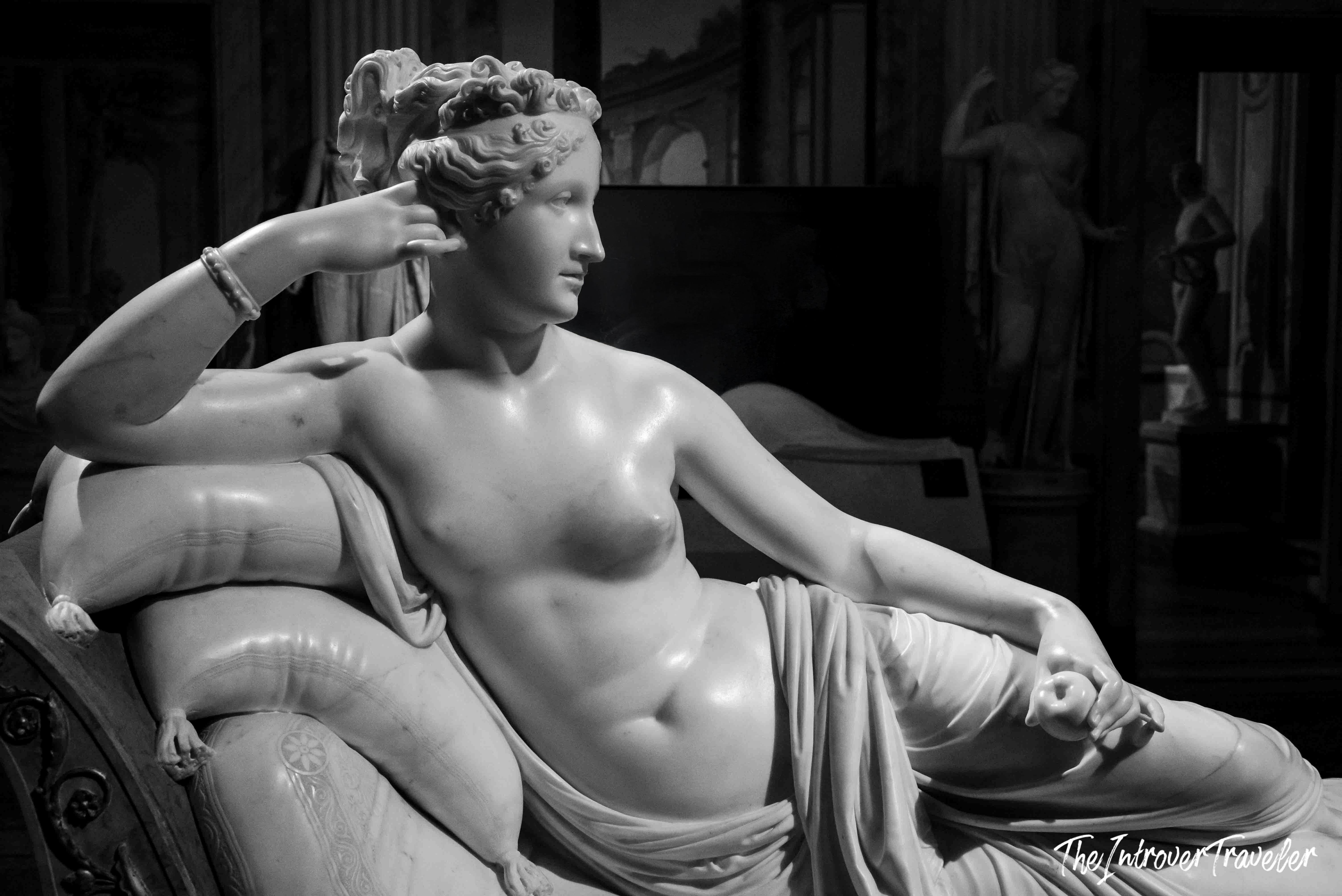
Artist: Antonio Canova (1757-1822)
Date: 1804–1808
Material: Carrara marble
Dimensions: 92 × 200 cm
Location: Borghese Gallery, Rome
Client: Camillo Borghese
My rating : 10/10
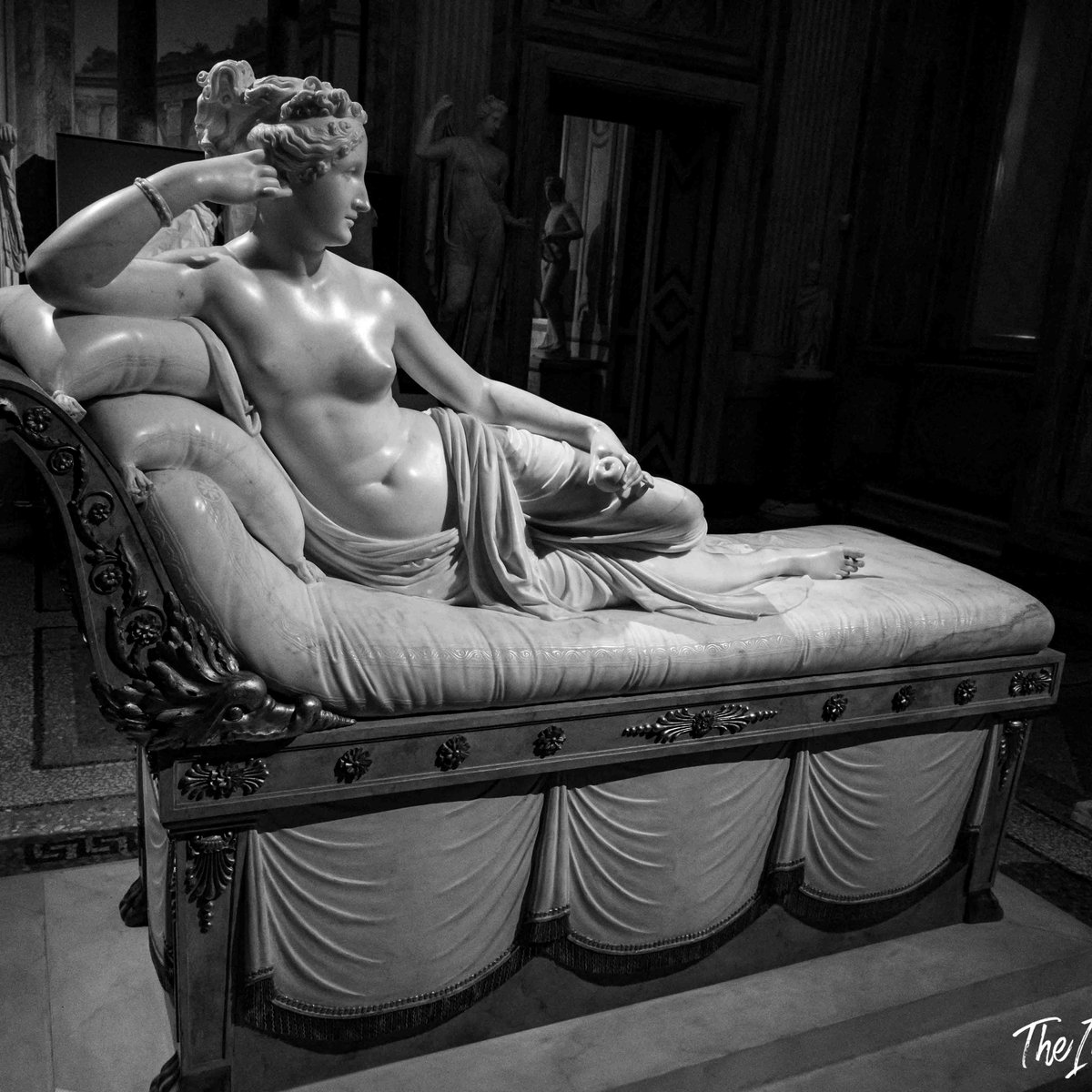
There’s a moment, upon entering the Borghese Gallery, when the silence becomes theatrical. Not because of the sacredness of the art, but because of embarrassment. Everyone knows that there, in the center of the room, a half-naked woman—more alive than certain influencers—lies on a marble triclinium. It is Paolina Bonaparte Borghese, sculpted by Antonio Canova between 1804 and 1808, the “Venus Victorious.” Many ladies proceed directly to the next room, annoyed by such unparalleled sensuality, many gentlemen linger longer than necessary, and a few priests passing from the Vatican observe indifferently, finding the subject decidedly too old-fashioned.
The work caused a veritable scandal in apostolic Rome, overwhelmed by the new Napoleonic customs, because yes, it was indeed Pauline herself who was being portrayed. In flesh, blood, and above all, marble.
1. A marble at the service of power (and the imperial ego)
The context is Napoleonic, and that explains everything: decorum is a facade, glory a family affair. Pauline Bonaparte, sister of the most famous Corsican emperor of all time, had married Camillo Borghese, a Roman patrician, more ancient than virile, in 1803.
Canova, called upon to portray her, faced a dilemma: how to reconcile neoclassical chastity with a model who loved provocation more than a libertine novel? Imagine a Paris Hilton or a Kim Kardashian of the Enlightenment, with a little more culture and grace. The solution was brilliant: Pauline is not Pauline, but Venus Victrix. A perfectly Napoleonic mythological role-playing game. Bourgeois immortality depended on sublimated flesh, and Canova knew it.
The work was created for the Villa Borghese on the Pincian Hill, and from the beginning it was perceived as a scandal. Chronicles tell that Paolina, when asked if she had actually posed nude, responded with the candor of an enlightened mythomaniac:
“Oh, of course! Canova had a stove in his studio.”
Others say that when asked the same question in a more mischievous tone, Paolina replied that yes, she had posed nude in front of Canova and, adding with a hint of politically incorrect commiseration and poorly concealed disappointment, that the artist “was not a real man“.
Again, it is said, that Canova’s first idea was to represent Pauline as Diana the Huntress, but Pauline, at the thought of being represented as a virgin, burst into uncontrollable laughter.
We are in Rome in the early 19th century; the Papal States still play their historic geopolitical role, even though they have been overwhelmed by the Jacobin tsunami; Roman high society is made up of noble and patrician families who all have, or have had, a pope, a bishop, or a cardinal in their family; the names are the high-sounding ones of the Farnese, Colonna, Borghese, Aldobrandini, Barberini, all plastered in a thick blanket of mold; the Council of Trent and the underwear affixed to Michelangelo’s nudes in the Sistine Chapel are more a thing of the past than of history; pedophilia had yet to be introduced into the catechism curriculum; Napoleon’s troops descend on Rome, mounting 200W amplifiers on their wagons, blasting suburban rap and the soundtrack to Mathieu Kassovitz’s “Hate.” At the head of the conquering army, Paolina, like Marianne, douses the soldiers with bottles of champagne like a victorious Formula 1 driver. Her breasts in the wind, she points the way to the troops with her turgid, directional nipples. How I wish I could have been there…
2. Anatomy of Marble: The Body as Engineering
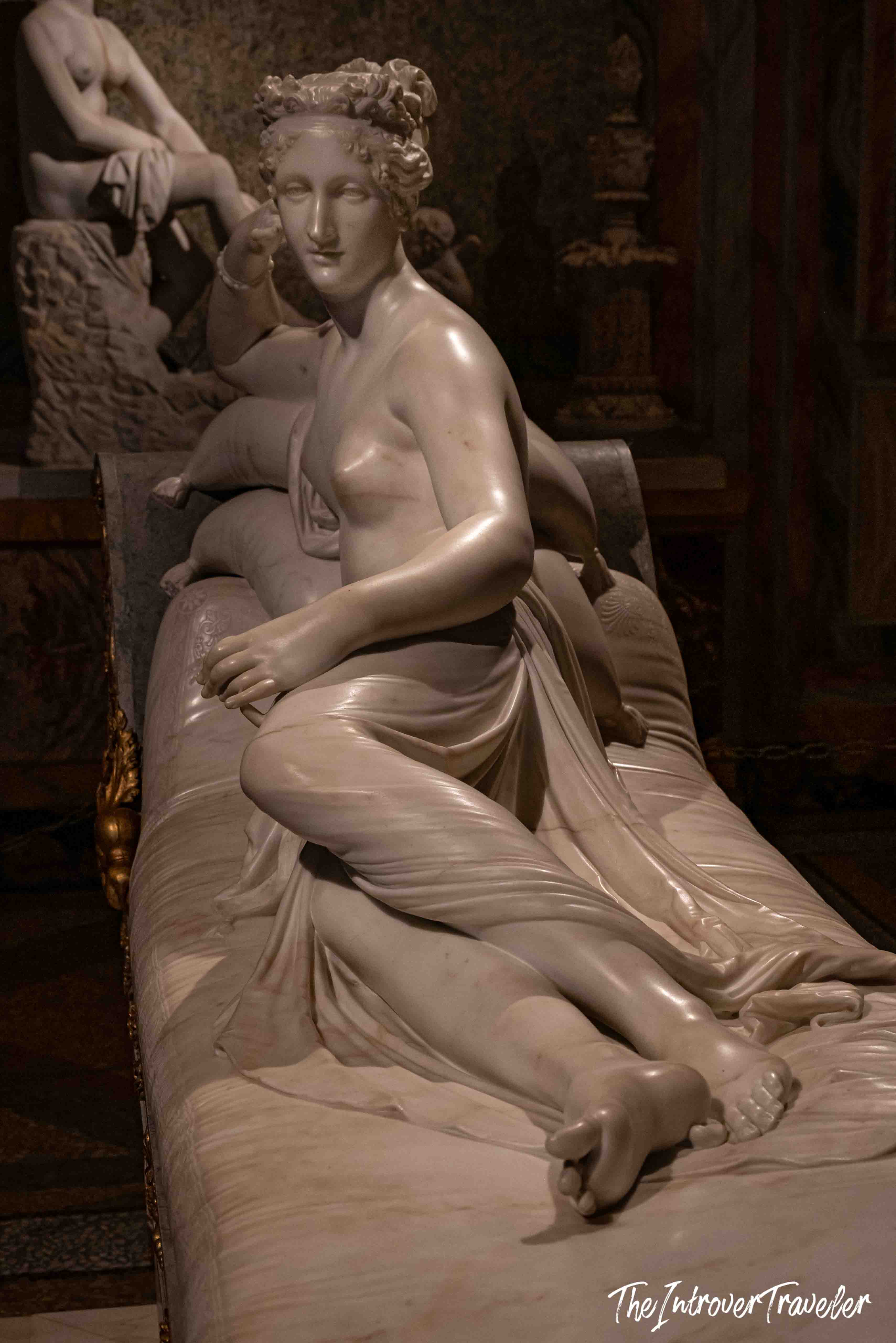
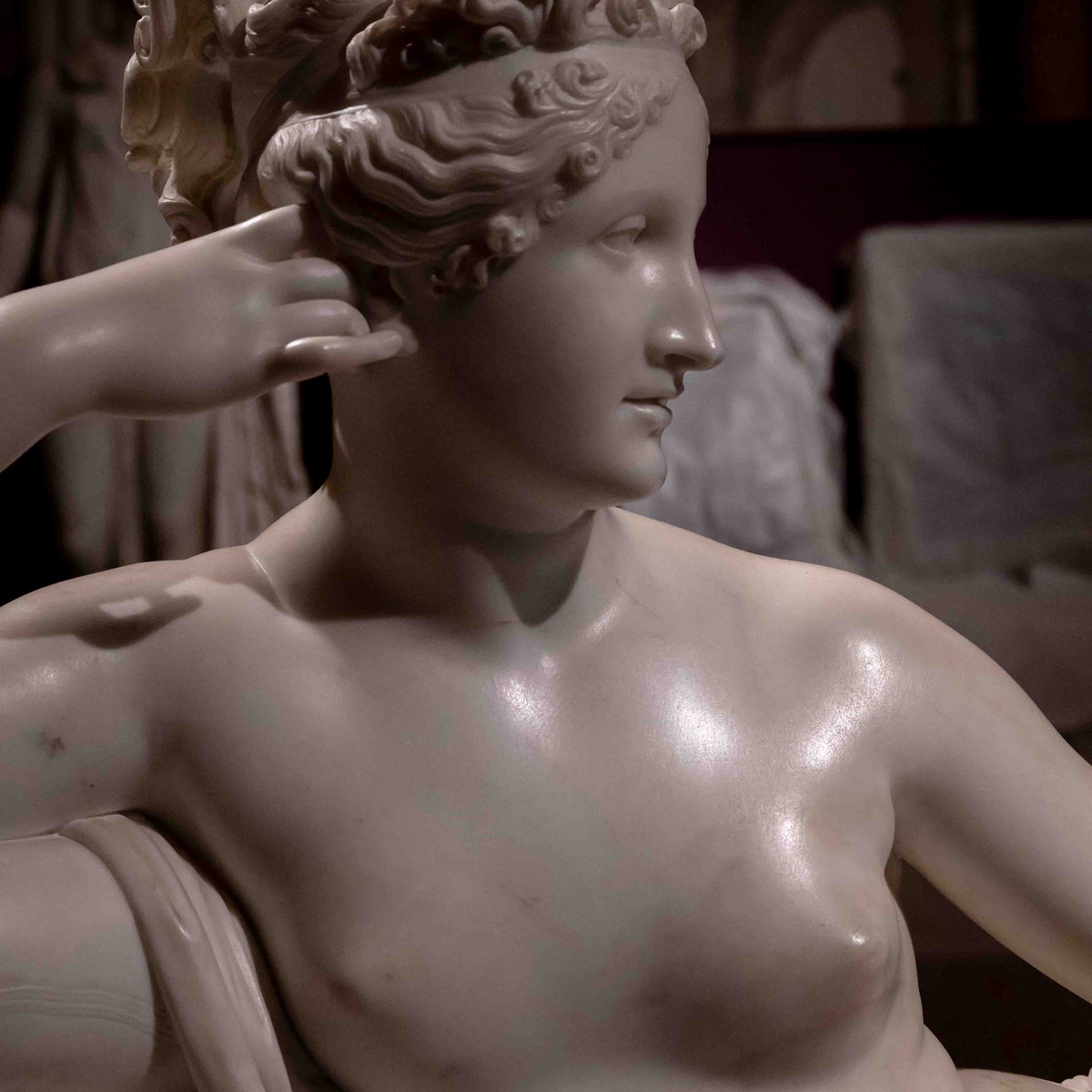
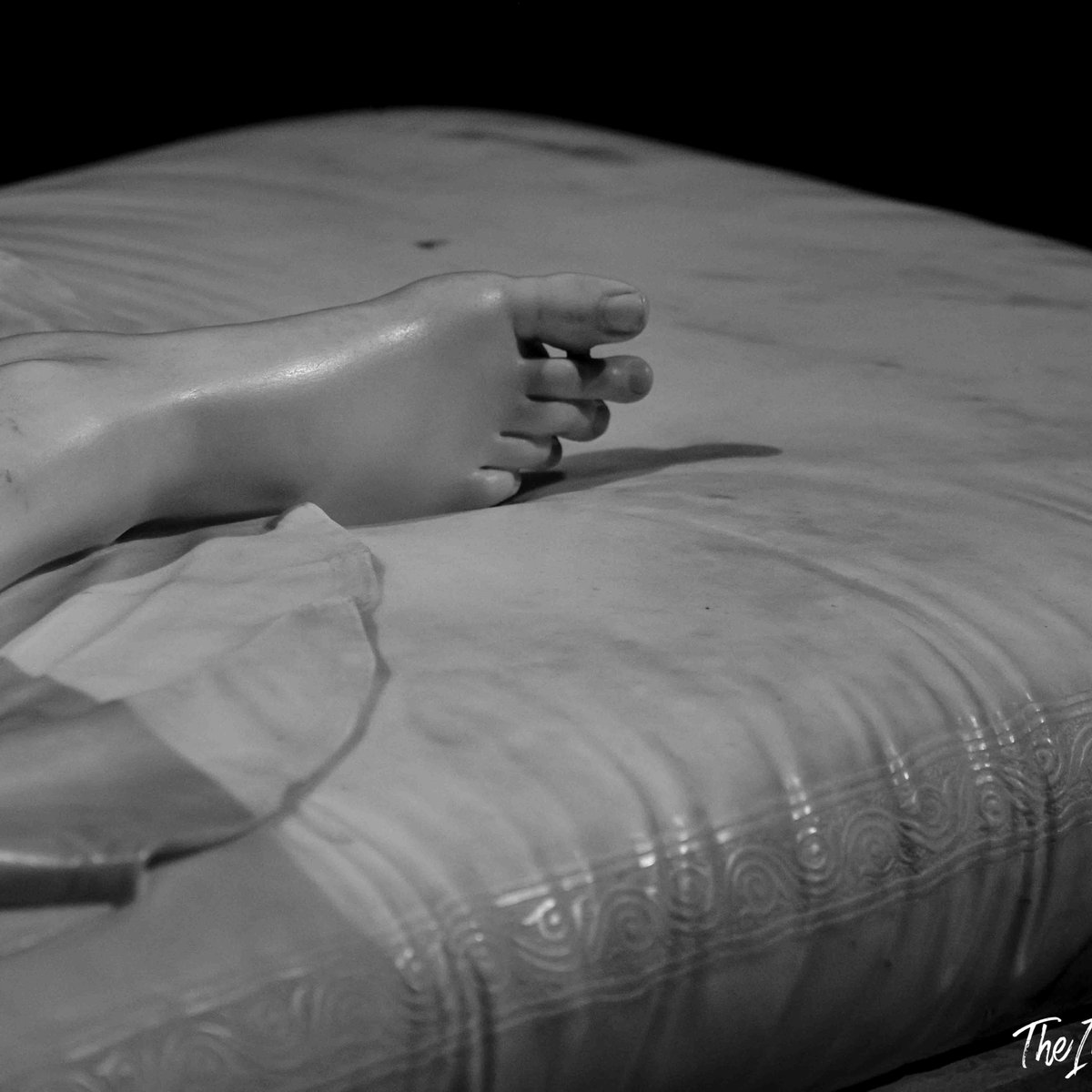
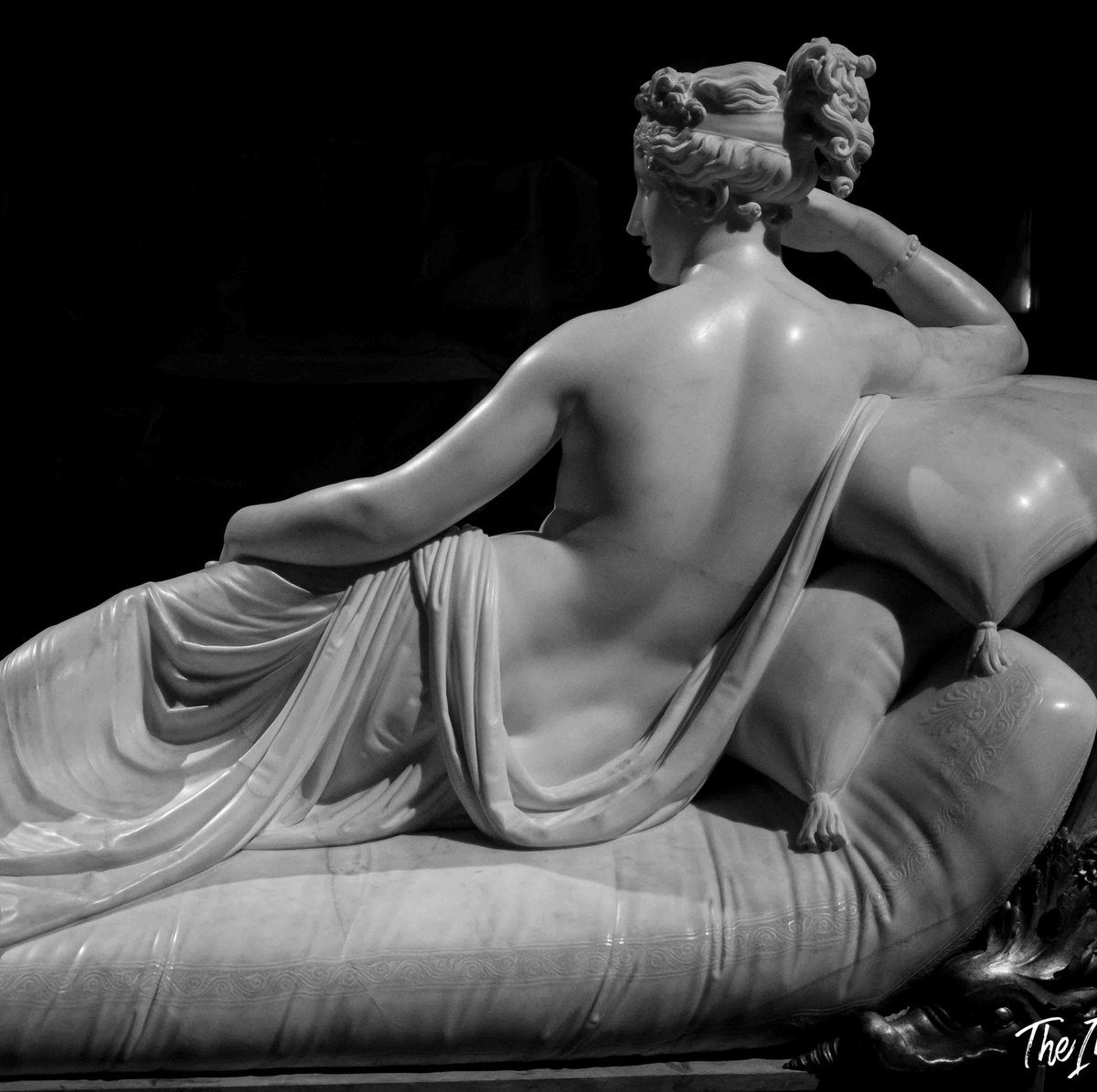
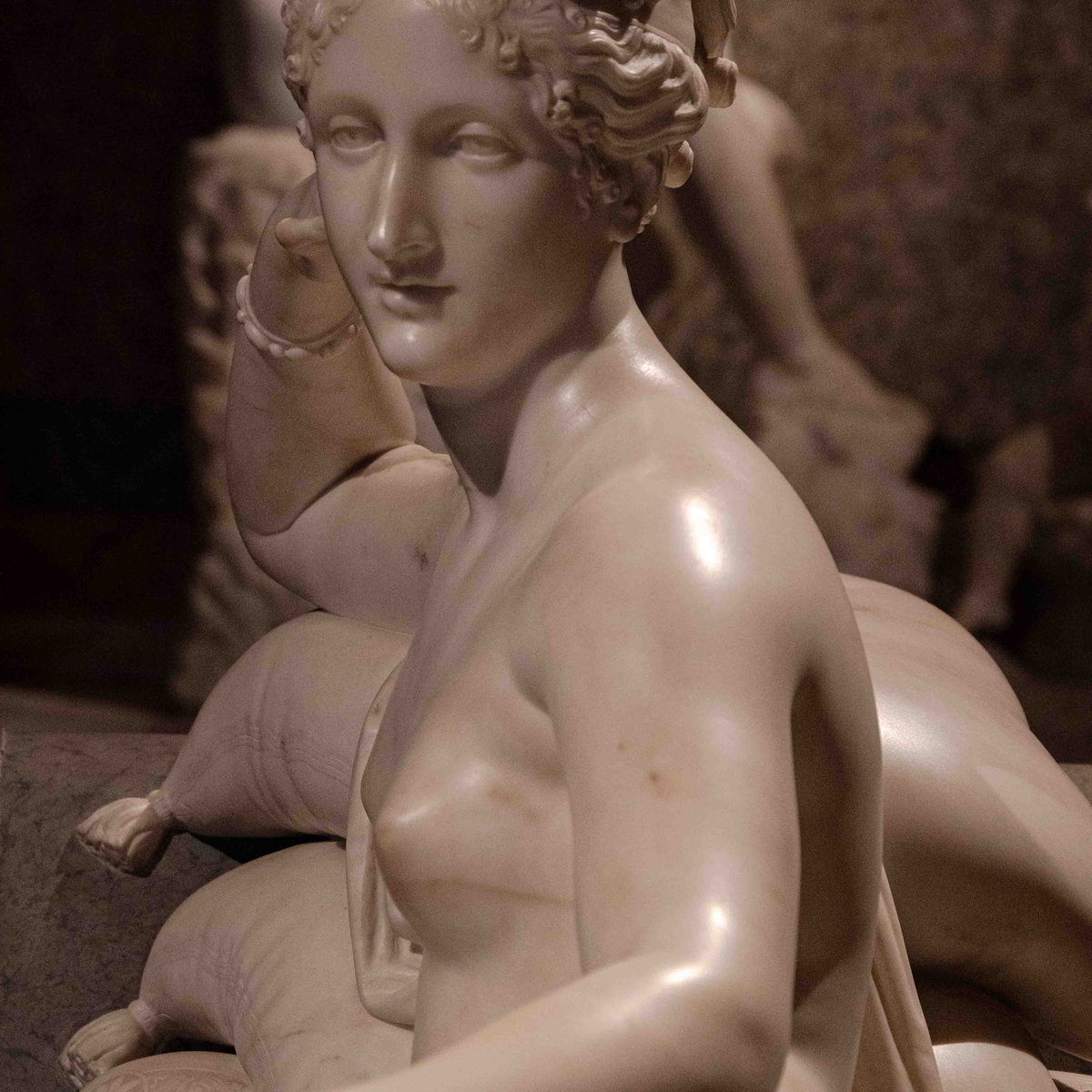
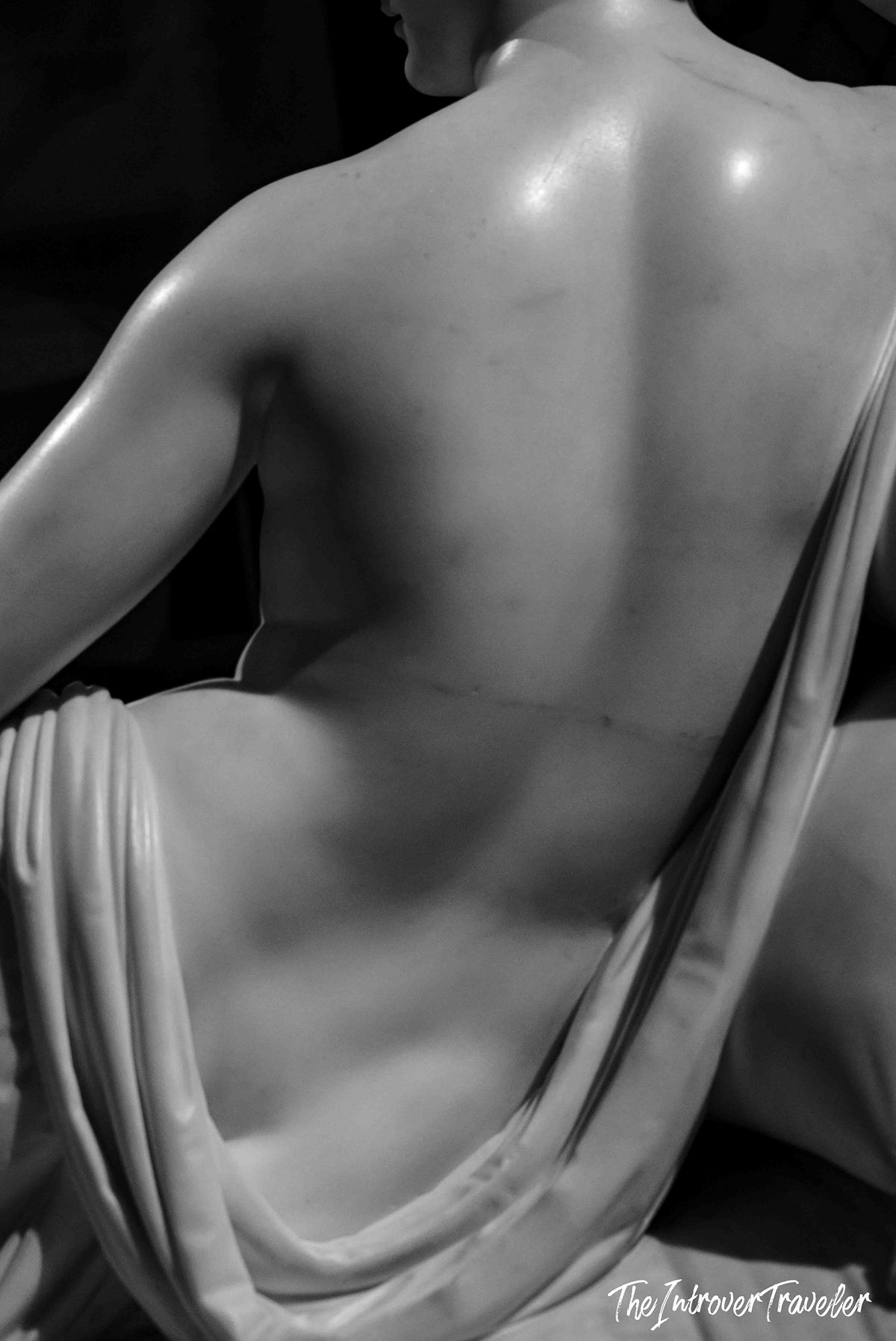
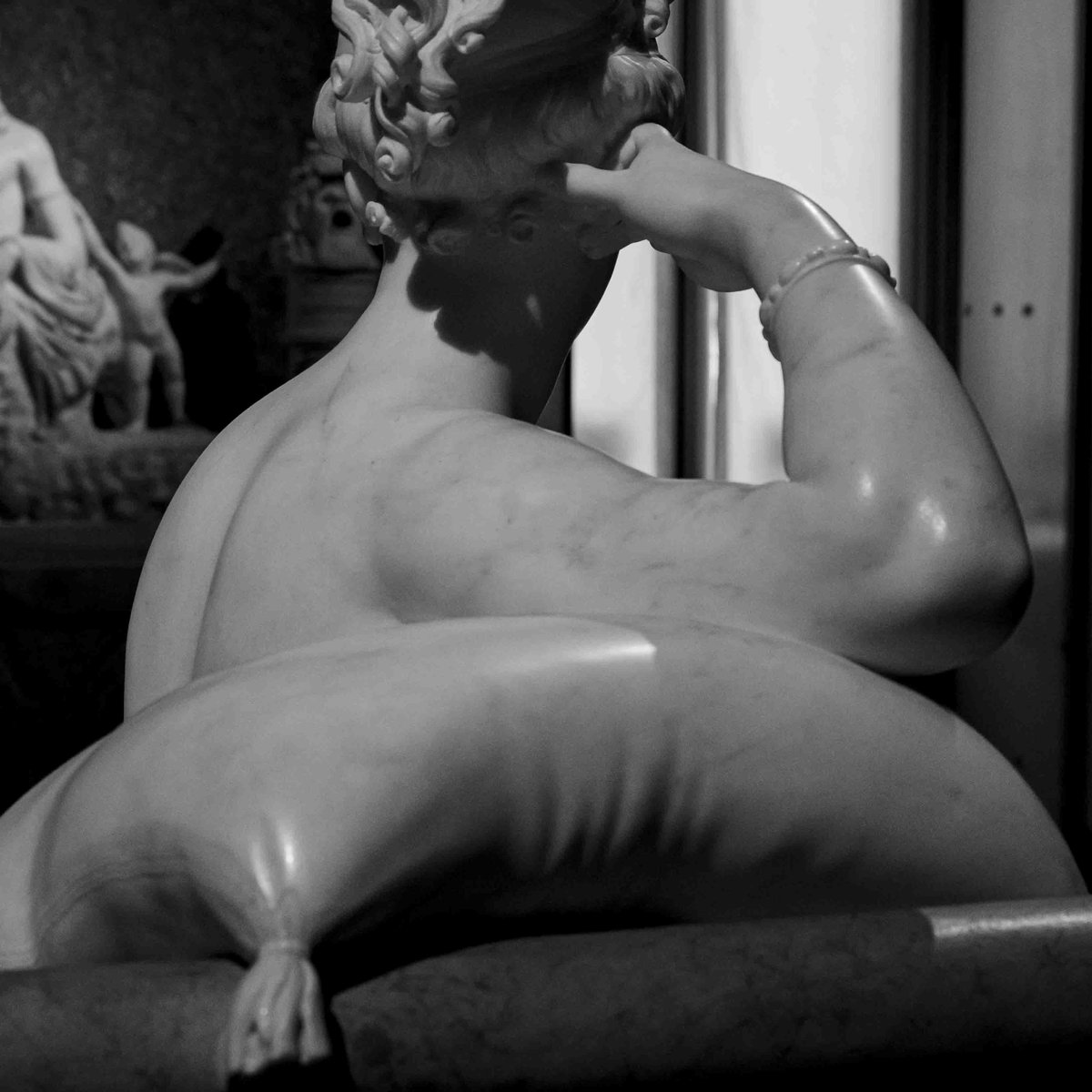
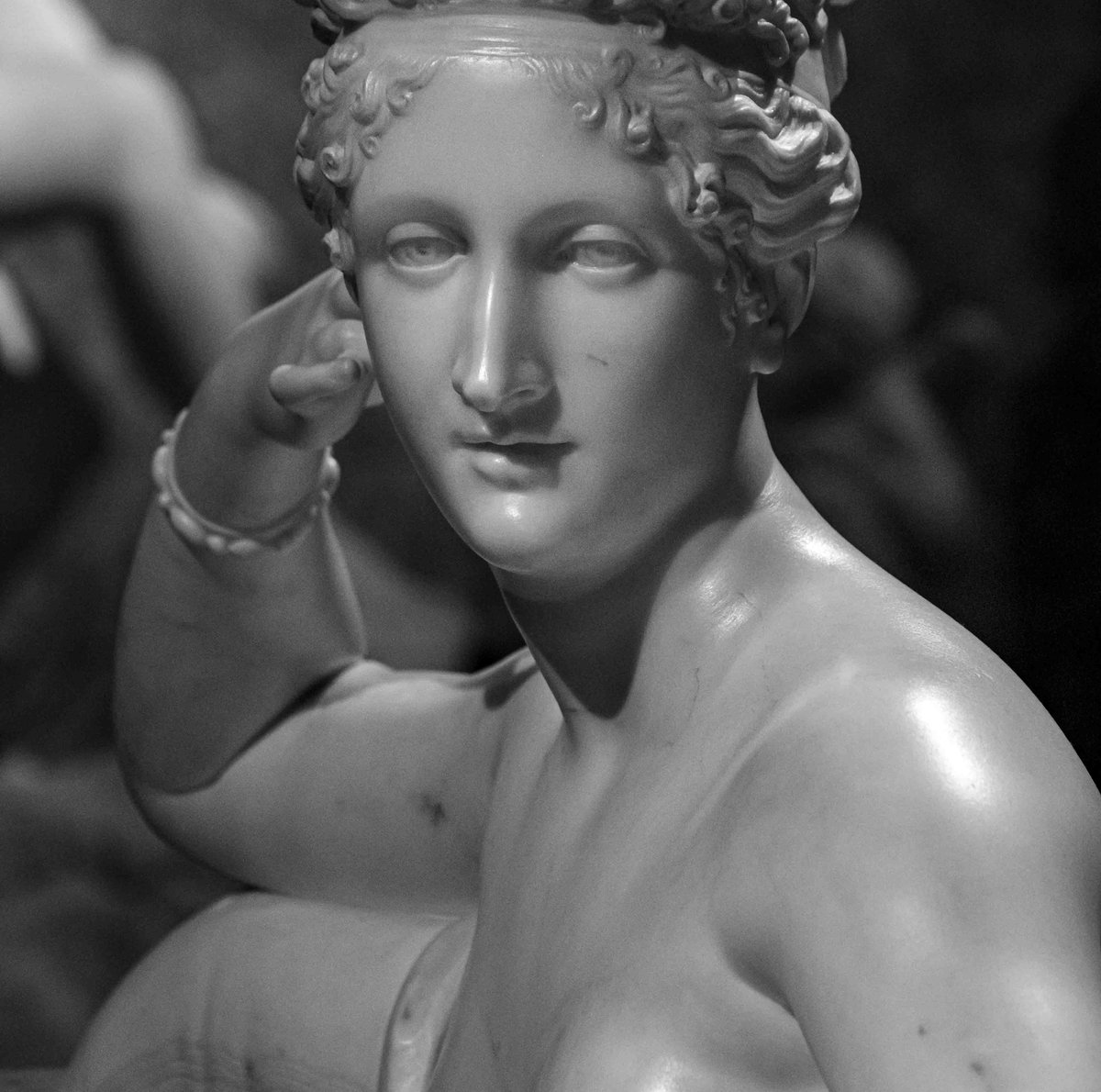
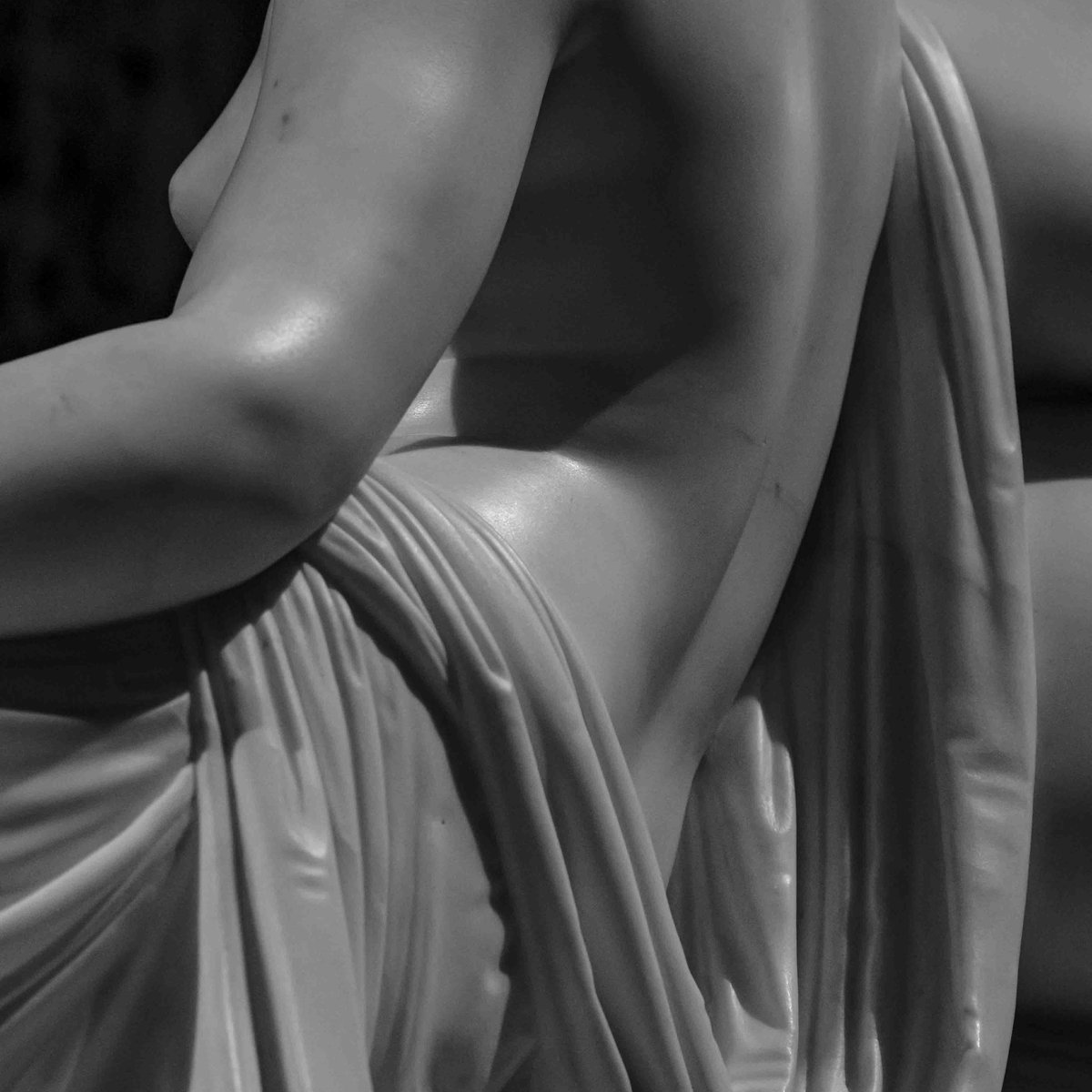
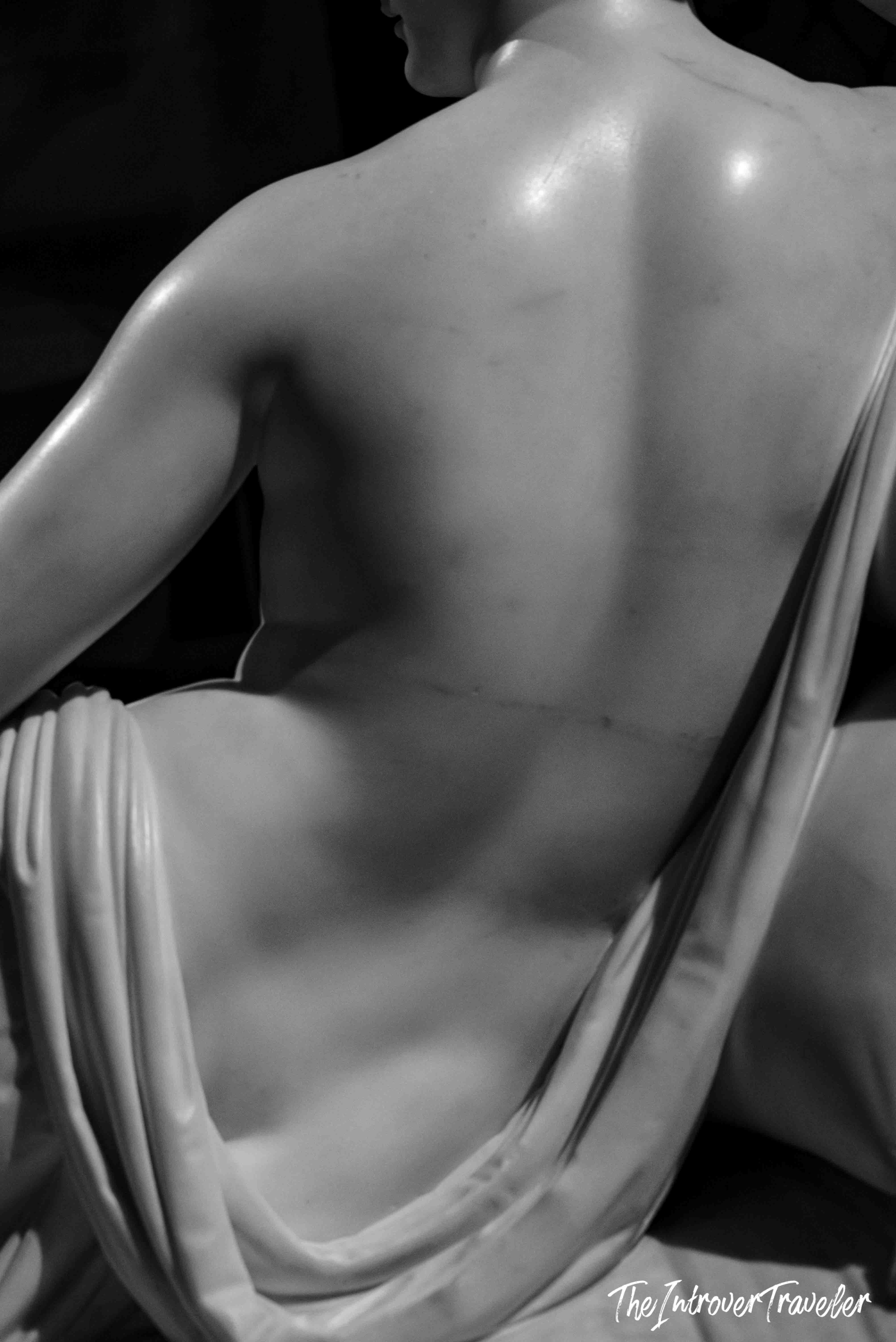
Technically, the work is a masterpiece of sculptural surgery. Canova used a single block of Carrara marble, almost two and a half meters long, carved with the precision of an architect and the devotion of an anatomist. Pauline’s skin appears to sag under the light; but it is marble polished with pumice, tallow, and orange juice—an alchemist’s recipe that today we would call the “glow effect 1808.”
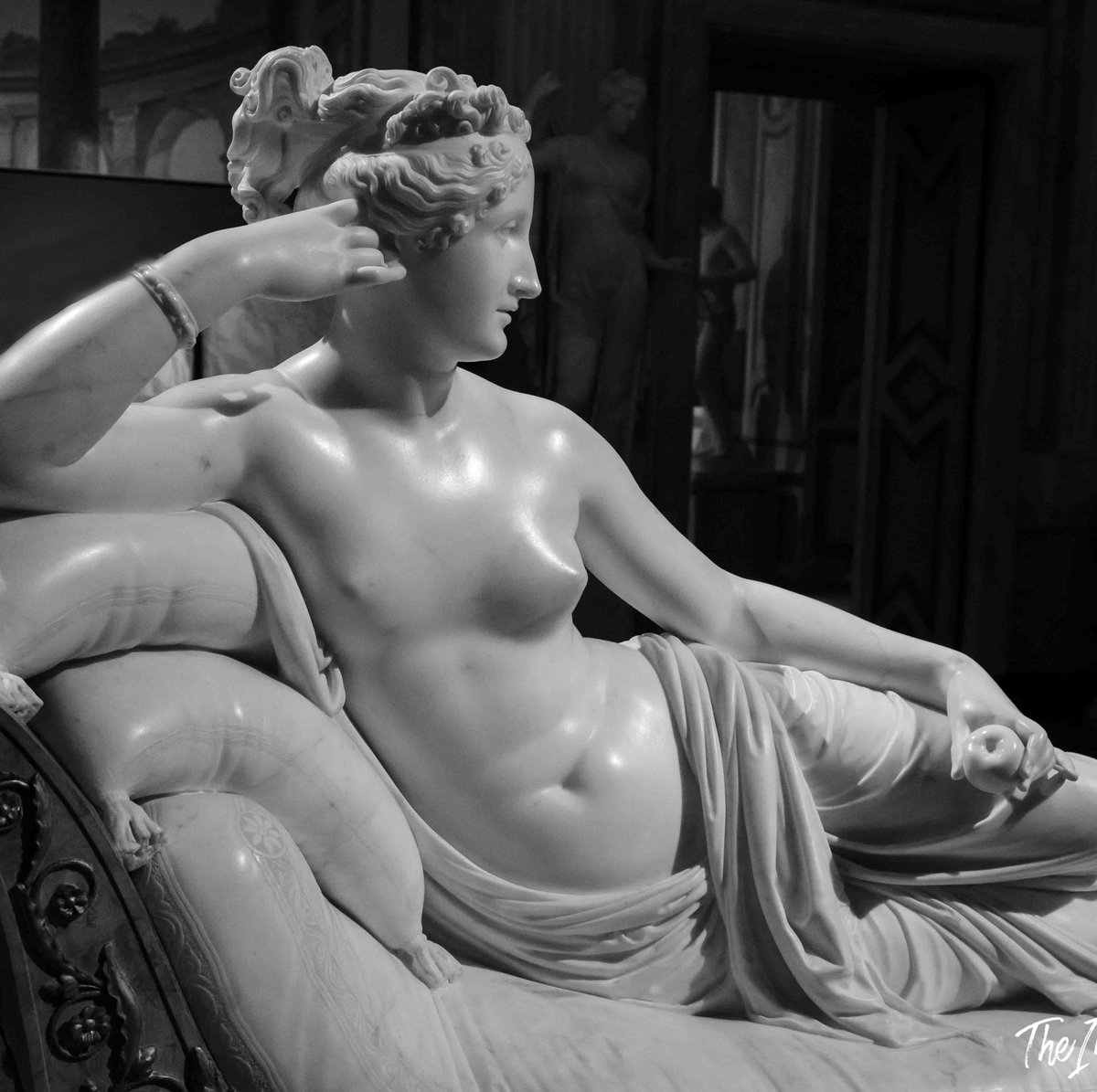
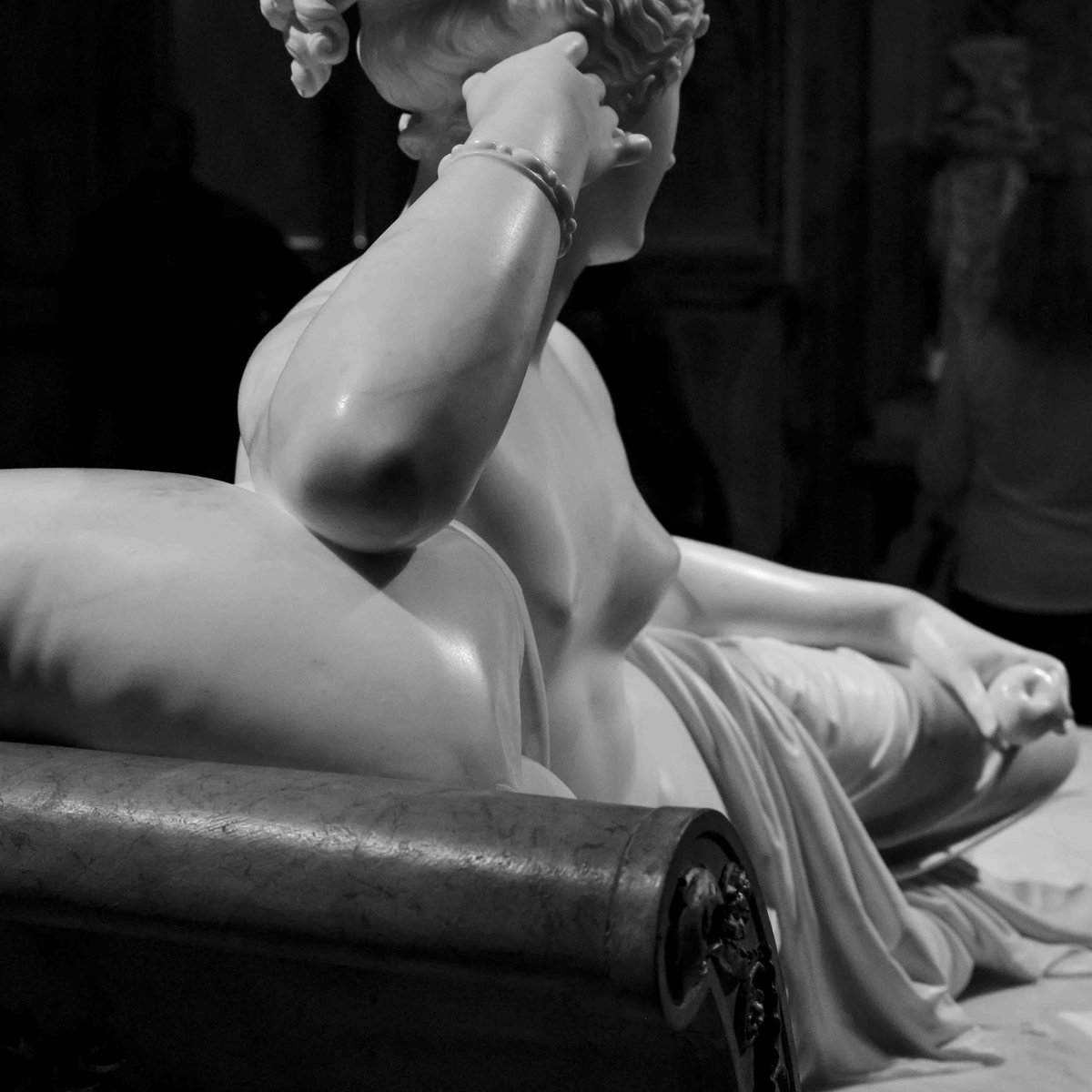
The body reclines in a pose that combines balance and tension: the torso rises slightly, the left leg rotates, the right foot slides over the edge of the cushion. Every detail is designed to suggest movement within stillness. The triclinium is a theatrical device: not a simple bed, but a revolving structure (yes, it really rotated), designed to showcase the work from every angle. A 3D influencer ante litteram: no filters, just marble, bombastic vulgarity, and arrogance.
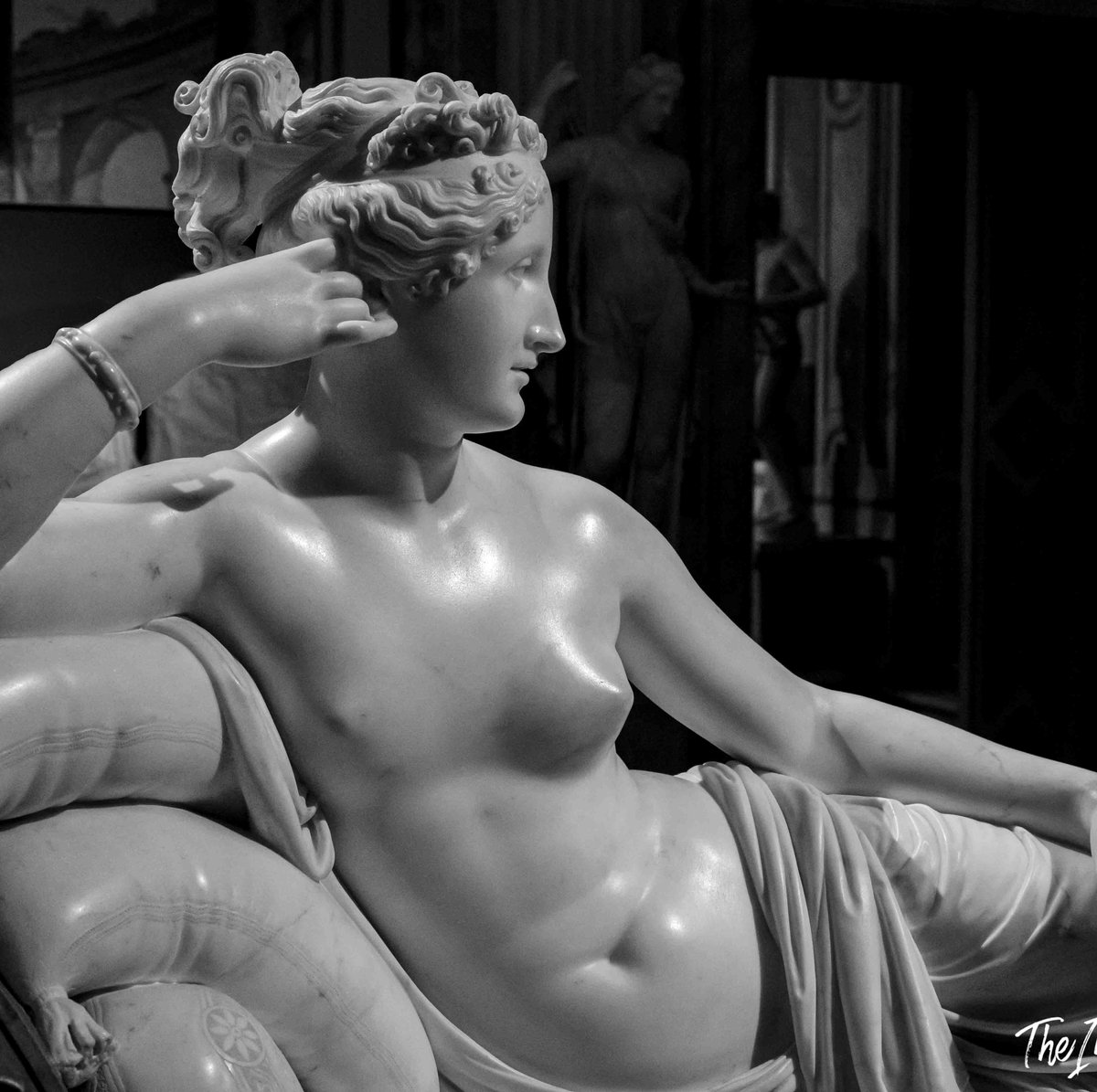
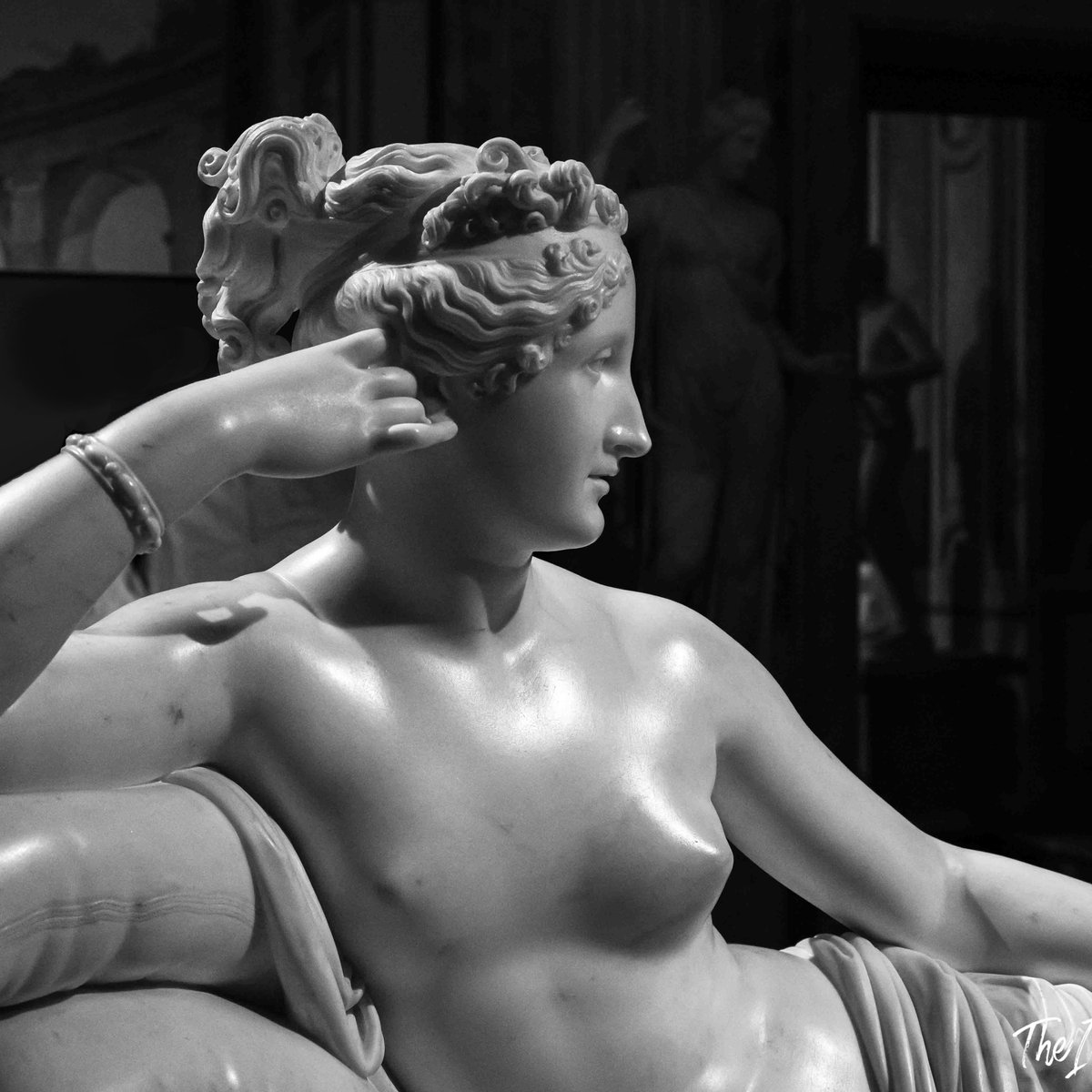
The surface treatment is a triumph of controlled non-finish: Canova distinguishes three levels of polish—smooth and warm leather, silky and reflective drape, and more opaque and tactile cushion—to differentiate materials and depth. It is an example of applied optics, a sculpture that seems to breathe. The light, gliding across the belly and shoulders, behaves like a respectful lover: it never touches the same spot twice.
3. The Intelligence of Modesty (or, when decency is an erotic pretext)
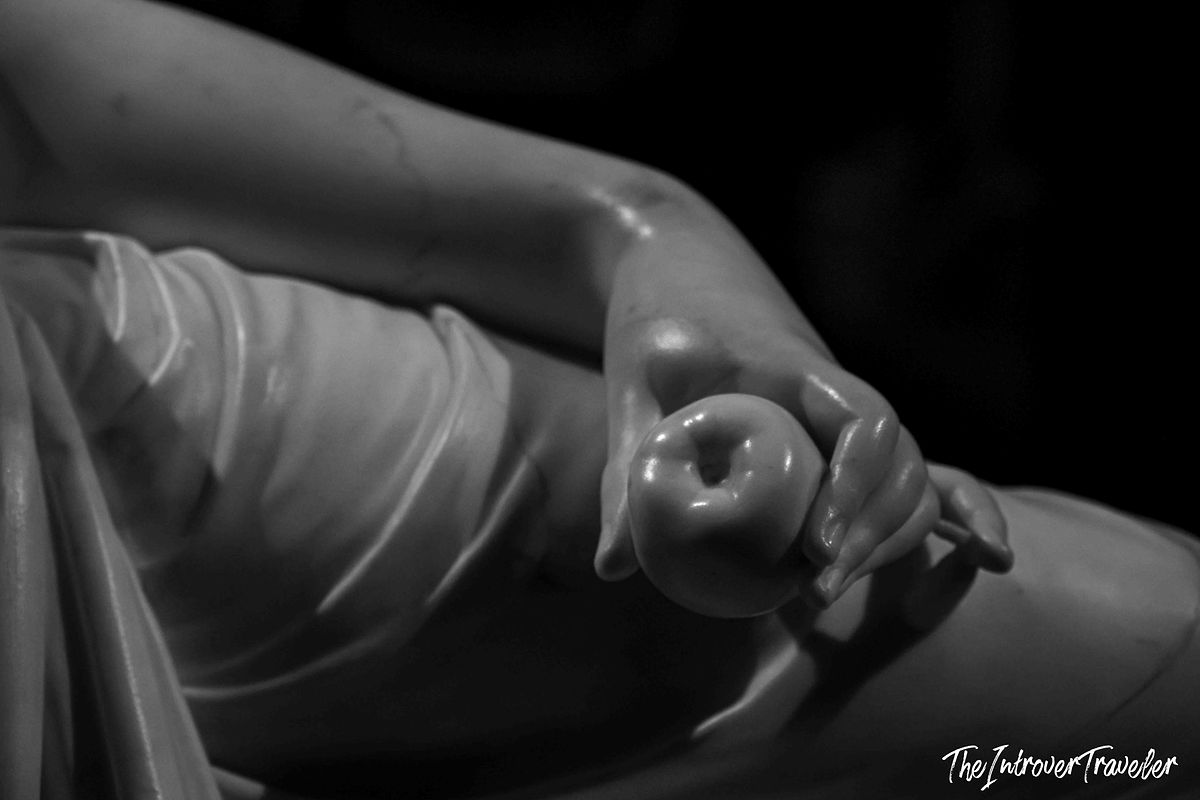
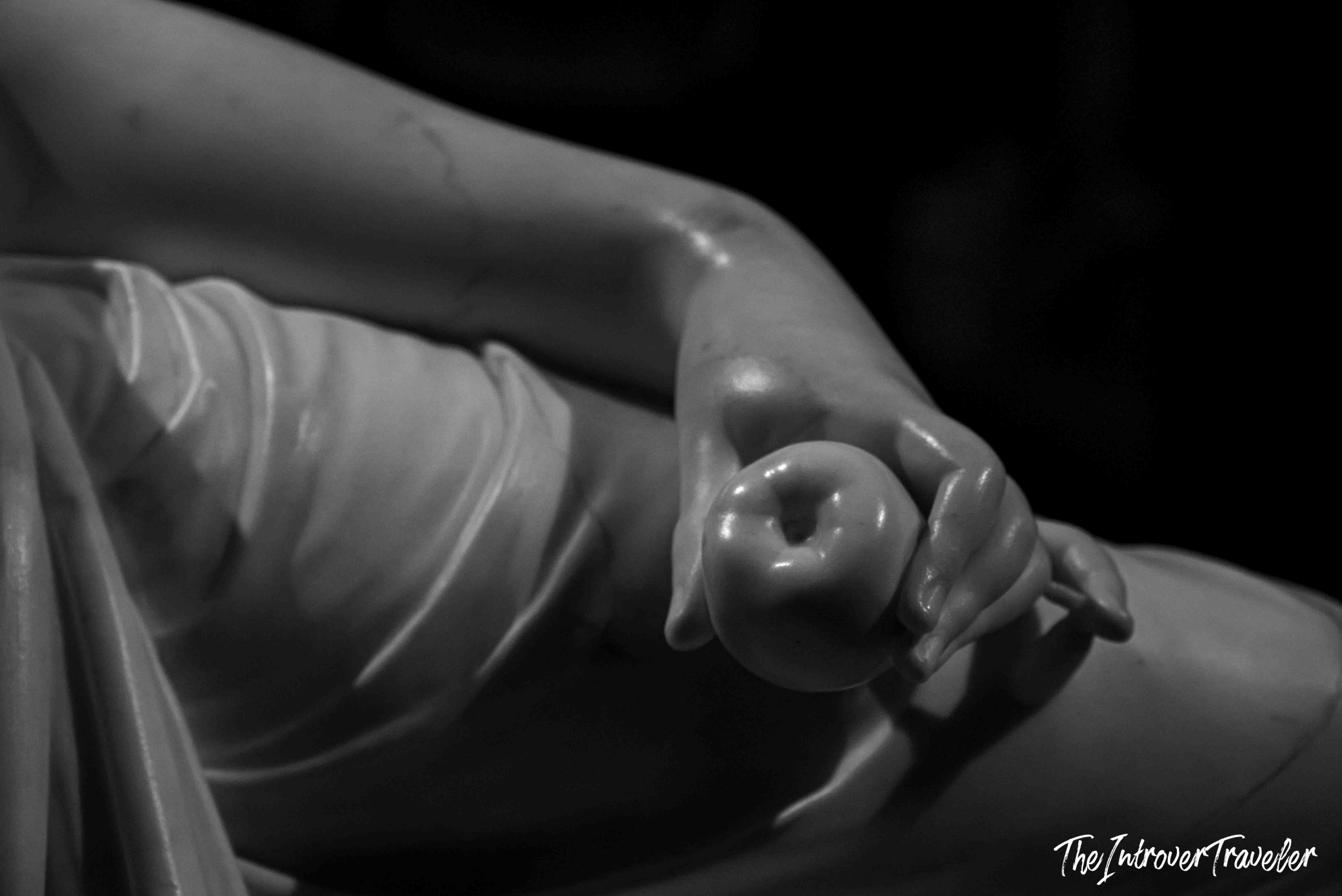
Canova was well acquainted with the theater of bourgeois morality. He gives Pauline an apple, a symbol of Venus’s “victory” in the Judgement of Paris, but also a moral alibi: she is not a naked woman, she is a naked myth. The artist transforms eros into aesthetic theology: the flesh does not scandalize if it speaks Greek.
And yet, that smile—barely hinted at, ironic, almost knowing—betrays the game. It’s a smile that says, “I know what you’re thinking, and yes, you’re right.” Paolina is an icon of awareness: she knows she’s being watched, and she enjoys her role as a spectacle. Here we are at the antipodes of girl power ; this is the inscription in marble, for future reference, of the driving force of the iliac villi of the female phenotype.
Try to imagine the gala dinner at the bourgeois palace, the decrepit countesses with high-sounding names forced by the new power to be present, while Paolina, divinity of the nouveaux riches , displays her portrait with pointed breasts, a buttery navel and a bare back that hints at the beginning of a buttock.
4. Sensuality as geometry: the body balanced between classicism and desire
The composition follows a mathematical rhythm: the diagonal that starts from the right arm and ends at the tip of the foot forms a visual spiral that guides the viewer’s gaze. It is a geometric sensuality, where the harmony of proportions becomes an erotic language. There are no baroque excesses, no dramatic twists: only the calm of one who knows that perfection is more scandalous than excess.
Canova chisels not only the body, but the light. The effect is that of a body traversed by the breath of stone. The viewer is caught in a perceptual short circuit: he knows it’s marble, but he desires it as if it were flesh.
This is where neoclassical genius becomes metaphysical pornography. Venus Victrix is not an invitation, but a trap: art that forces you to confess your impulses in front of a museum.
5. An enlightened eroticism (or, Canova against algorithms)
In a world where sensuality is now pixelated and measured in likes, Paolina Borghese remains a monument to the slowness of desire. She gives nothing away, she doesn’t pretend: she’s marble, she’s distance, she’s ideal. And precisely for this reason, she ignites the brain before the loins—or at least tries.
His body doesn’t offer itself, it resists . It is eroticism as an intellectual category: the ability to embody form without falling into the vulgarity of matter. Canova creates a body that cannot be touched, and for this very reason it becomes an obsession.
6. Antonio Canova’s Paolina Borghese: Sex, Marble, and Divine Irony
The supreme irony is that Pauline, unlike Botticelli‘s Venus, doesn’t need a shell. She has a sofa. She is the goddess of comfort, luxury, and unredeemed pleasure. And if Botticelli paints the birth of beauty, Canova sculpts its conscious maturity: that of someone who knows that beauty does not save, but dominates.
If the Renaissance created man as the measure of the world, Canova creates the girl as the measure of ambiguity. His polished marble combines neoclassical rationalism and pre-Romantic eroticism, virtue and vanity, anatomy and seduction.
Venus is no longer born from the sea, but from gossip.
7. Technical Epilogue (for those who love details as much as curves)
The revolving base, restored in the 19th century, allowed the work to be viewed as if in a 360° fashion show. The surface, treated with waxes and natural oils, is one of the pinnacles of Neoclassical aesthetics. The contrast between gloss and matte, the balanced use of chiaroscuro, and the directionality of natural light in the room make for a “cinematic” viewing ahead of its time.
The Paolina Borghese is not just a sculpture: it is a political statement disguised as a body. It is the right to be desired without shame, to play with one’s image and win; a work intended to empathize with the bourgeoisie with joyful delight, before the decadentists cloaked the principle in boredom and despair. Canova, after all, sculpted the first neoclassical influencer : aware of her own power, ironic about her own myth, and perfectly at ease being both object and subject.
Then came Waterloo, Pauline’s menopause, Ugo Foscolo, the Jacobin wave was covered in dust and cobwebs, the tsunami waters receded, and everything returned to the boring Vatican status quo; at a certain point, Pauline herself, knowing her time had passed, asked that the work be removed from the lustful gazes of the staff, who collected small bribes to organize guided tours of the scandalous masterpiece, knowing her time had passed. McSolaar’s hip hop faded, mais où sont les neiges d’antan , and all that stuff.
If you want to find out where the other works by Antonio Canova are located, you can continue on ArtAtlas.
The itinerary, built and verified
An art lover planning a trip to Rome?
Rome does not organise itself into one museum district the way Florence or Madrid do. The Vatican Museums and the Sistine Chapel need a timed ticket booked well ahead. The Galleria Borghese admits you only in a two-hour slot, booked days in advance. Caravaggio hangs in working churches with midday closures and Mass times, not only in the Capitoline Museums or the Galleria Doria Pamphilj. A general-purpose AI will name the highlights and stop there, leaving you to work out which door is open when.
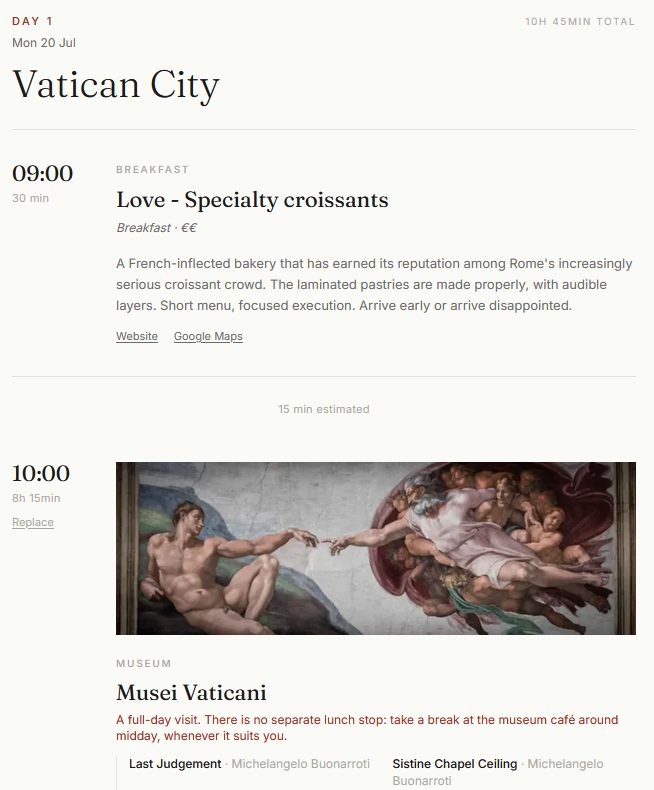
Flâneur builds a personalized Rome art itinerary around all of it. Tell it how deep your interest in art runs and what your days should look like, and it maps a route through the Vatican, the Borghese, the Capitoline, and the churches that hold Caravaggio, Bernini and Raphael, complete with real opening hours, booking windows, transfer times, meal breaks and booking links. Pick the Expert profile and you compose the day yourself, choosing from every work indexed across the city, with a depth, flexibility and precision no chatbot can match.
Related posts:
 Gian Lorenzo Bernini’s Pluto and Proserpina (Borghese Gallery, Rome): a marble narrative between pathos and technical virtuosity
 Apollo and Daphne by Gian Lorenzo Bernini (Borghese Gallery, Rome): marble on the verge of the impossible
 The David by Gian Lorenzo Bernini (Borghese Gallery, Rome): the moment before, frozen in marble